Home Blog Page 35

Pakistan cannot progress without eliminating terrorism, extremism, sectarianism: PM Shehbaz

Pakistan cannot progress without eliminating terrorism, extremism, sectarianism: PM Shehbaz
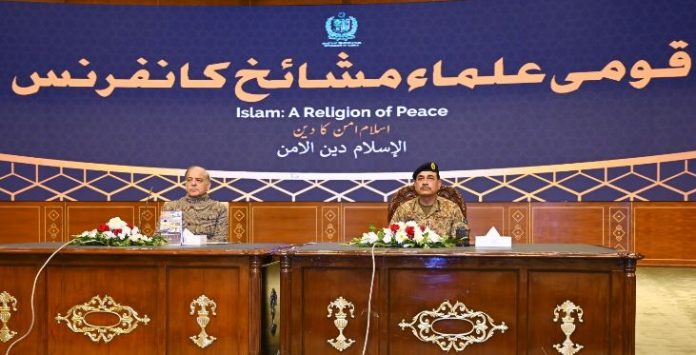
ISLAMABAD, Dec 10 (APP/DNA):Prime Minister Shehbaz Sharif on Wednesday said that the country could not achieve sustainable economic development without the complete elimination of terrorism, extremism and sectarianism from the country.

Addressing the National Ulema Convention here, the prime minister urged religious scholars to play a proactive role in discouraging sectarianism and promoting unity, harmony and brotherhood among all schools of thought. He said creating an atmosphere of national cohesion was essential for ensuring the country’s prosperity and future progress.

The Convention was attended by Deputy Prime Minister and Foreign Minister Ishaq Dar, Field Marshal Chief of Defence Forces Syed Asim Munir, ministers, parliamentarians, and a large number of religious scholars from various schools of thoughts.

The prime minister said that Allah Almighty had blessed Pakistan with a great victory in the maarka-e-haq (battle of truth) against India, which he said was due to the professionalism and bravery of the armed forces, as well as the prayers of the nation.

He said Field Marshal Asim Munir had led the war with courage and unwavering resolve, while all services, the Pakistan Army, Pakistan Air Force and Pakistan Navy, contributed equally to the victory.

The world, he added, was acknowledging Pakistan’s performance, and Muslim countries were expressing pride over the historic victory. Despite this, he noted, certain elements continued to spread propaganda against the armed forces.

Calling out the menace of terrorism, he said the Khawarij were carrying out attacks and targeting innocent citizens and security personnel. He said he often met families of martyred soldiers who expressed pride in the sacrifices of their sons for the country.

As regards the economy, the prime minister said Pakistan had reached a stage from where it was about to take off towards accelerated growth. He said the country’s political and military leadership had worked tirelessly to steer the nation away from the risk of default.

He reaffirmed the government’s resolve to put Pakistan on the path of economic prosperity, saying this was the time for implementation and hard work. By implementing austerity measures, and working collectively, he added, the nation could fulfill the dreams of Quaid-e-Azam Muhammad Ali Jinnah.

PM Shehbaz Sharif said national unity was indispensable for addressing all challenges facing the country and for achieving long-term stability and development.

Nawaz among other nine Pakistani players issued NOCs for BPL

Nawaz among other nine Pakistani players issued NOCs for BPL

ISLAMABAD, DEC 10 – The Pakistan Cricket Board (PCB) has issued NOCs to nine Pakistan cricketers for participating in the Bangladesh Premier League (BPL) till January 23.

According to details surfaced on Wednesday, prominent among those who allowed to feature in BPL included Mohammad Nawaz, Hussain Talat, Ihsanullah, Haider Ali, Abrar Ahmed, Khawaja Nafay, Salman Irshad, Faheem Ashraf.

Last week, it was reported that the senior Pakistani players are unlikely to play the Bangladesh Premier League (BPL) due to the national duty ahead of the T20 World Cup 2026.

According to details, the BPL is scheduled to begin from December 26 to January 23. During this period, the Pakistan national cricket team are scheduled to play the T20I series against Sri Lanka and Australia respectively.

The Pakistan Cricket Board (PCB) has asked the players to prioritise playing for the country over the leagues.

Govt mulls shifting Imran Khan from Adiala amid ‘rising political tensions’

Govt mulls shifting Imran Khan from Adiala amid 'rising political tensions'

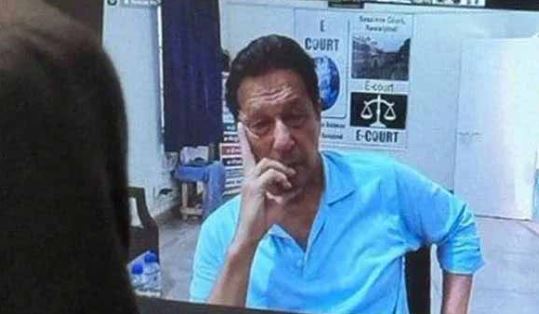
ISLAMABAD: The federal government has begun deliberations on shifting Pakistan Tehreek-e-Insaf (PTI) founder Imran Khan from Adiala jail, with Prime Minister’s Coordinator for Khyber Pakhtunkhwa Ikhtiar Wali warning that political confrontation has reached a point “from where return seems impossible.”

Sources told Geo News that the authorities believe PTI was “pursuing an agenda to destabilise the country”, saying that attempts were underway to foment unrest under the guise of protest.

Addressing a press conference, Wali said the government was seriously examining proposals to move the “prisoner” from Adiala jail. “They want the prisoner shifted from Adiala, and the government is genuinely considering it,” he added.

Wali also claimed that Khyber Pakhtunkhwa Chief Minister Sohail Afridi has a nexus with drug smugglers. “His performance is not zero — it is minus,” he remarked.

He further claimed that CM Afridi’s family members were engaged in the narcotics business “under his patronage”.

The remarks come a day after the PTI founder’s sisters staged a sit-in near Rawalpindi’s Adiala jail after being denied a meeting with their incarcerated brother, which was ended following police action.

The protesters gathered at the Factory checkpoint after Noreen Khan, Aleema Khan and Uzma Khan. The police officials used water cannons to scatter the participants of the sit-in. Some of the protesters resisted the police operation by hurling stones, leading to the arrests of several PTI workers.

Meetings with the PTI founder have been a point of contention between the former ruling party and the government for quite some time, with the last meeting held last week when ex-PM’s sister Uzma was allowed to meet him.

Tensions have escalated outside Adiala jail recently as PTI protests, including scuffles with police and jail staff, continue over meetings with the ousted prime minister, who has been imprisoned there for over two years.

Last month, KP Chief Minister Sohail Afridi staged a 16-hour sit-in outside the facility. Before this, Imran’s sisters Aleema Khan, Noreen Khan Niazi and Uzma Khanum also held a protest outside the jail, which resulted in their brief detention.

However, since then, the government, as confirmed by Information Minister Attaullah Tarar, has imposed a blanket ban on meetings with the incarcerated politician.

The ban came hours after Inter-Services Public Relations (ISPR) Director General Lt Gen Ahmed Sharif Chaudhry termed the PTI founder a “mentally ill person” and a threat to national security.

Separately, National Assembly Speaker Ayaz Sadiq said that both Prime Minister Shehbaz Sharif and he had repeatedly stated their readiness for dialogue. “If the opposition wants to advance talks, it is a welcome development,” he said.

However, he disclosed that the opposition conveyed that it wanted dialogue only with Chief of Defence Staff and Chief of Army Staff Field Marshal Asim Munir. “The very forces that defeated India were targeted with offensive language,” he lamented.

Ayaz Sadiq said the opposition had taken politics to a point “from where return may no longer be possible”, noting that the parliamentary floor was repeatedly used for anti-judiciary and anti-army rhetoric.

“I moved four steps forward for dialogue, but now I have had to retreat 40 steps,” he said. “If Pakistan exists, politics exists, and everything else exists.”

‘No minus formula’
Speaking to journalists outside parliament, PTI Chairman Barrister Gohar Ali Khan condemned the use of water cannon on party workers.

“This is not the corporate world where one can remove one of two people and let the other remain. If attempts are made to minus us, none of them will remain either,” he said.

He added that PTI had come to Parliament to strengthen democracy, “but some people do not want to see the situation improve”.

Meanwhile, PTI leader Asad Qaiser said no one had the courage to impose governor’s rule in KP. “We know how to defend ourselves. This is beyond their capacity,” he added.

He also sought clarity from the Pakistan Peoples Party (PPP), asking whether Faisal Karim Kundi’s comments in favour of governor’s rule represented official party policy.

Qaiser emphasised that PTI desired peace and supported full use of state resources against terrorism, adding that the party would speak “as far as the law allows”.

Dar, US diplomat discuss strengthening Pak-US bilateral relations

Dar, US diplomat discuss strengthening Pak-US bilateral relations

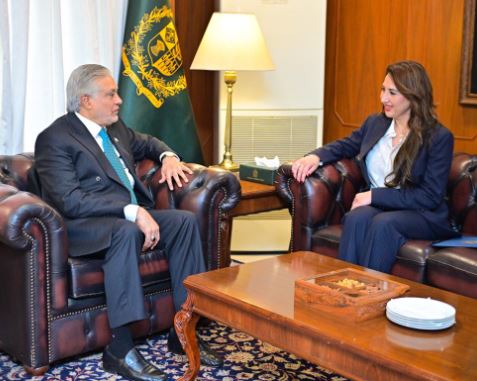
ISLAMABAD, DEC 10 /DNA/ – US Chargé d’Affaires Natalie Baker called on the Deputy Prime Minister/Foreign Minister of Pakistan, Senator Mohammad Ishaq Dar @MIshaqDar50, today.

The DPM/FM highlighted the importance of close Pak–US relations and discussed bilateral matters of mutual interest. They also discussed key regional & international developments.

UAE ambassador meets Deputy PM Dar in Islamabad

UAE ambassador meets Deputy PM Dar in Islamabad

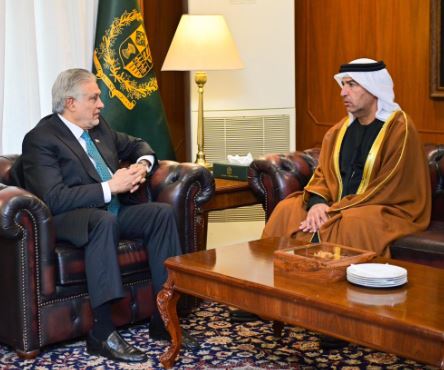
ISLAMABAD, DEC 10 /DNA/ – Ambassador of the UAE to Pakistan, Salem Mohammed Salem Al Bawab Al Zaabi, paid a courtesy call today on the Deputy Prime Minister/Foreign Minister of Pakistan, Senator Mohammad Ishaq Dar @MIshaqDar50.

The DPM/FM extended warm felicitations on the 54th Eid Al Etihad of the UAE, reaffirming the historic fraternal ties and strategic partnership between Pakistan and the UAE, which continue to grow across all domains.

He conveyed best wishes to the Ambassador for a successful tenure in Islamabad, as both nations work to further deepen their enduring bilateral relationship for mutual progress and prosperity.

UK launches major development partnership reset with Pakistan through Development Minister visit

UK launches major development partnership reset with Pakistan through Development Minister visit

ISLAMABAD, DEC 10 /DNA/ – Baroness Chapman, the UK’s Minister for Development, is set to launch a new chapter in the UK-Pakistan development co-operation relationship through the first bilateral Ministerial federal-level development talks in 8 years. This new chapter is set to be one of mutual partnership, bringing benefits to both nations.

The announcement comes as part of an ongoing effort by the UK to go from development donor to investor, using British expertise to support countries to utilise their resources to maximum effect, while delivering growth at home.

Her visit comes as the UK-Pakistan relationship has reached new heights, with bilateral trade for the first time crossing £5.5 billion, and over 200 British businesses operating in Pakistan, bringing growth to both economies.

Together with Prime Minister Shehbaz Sharif, she opened her visit through launching a package of regulatory reforms that help make Pakistan a better operating environment for business, supporting Pakistan’s continued growth and creating future opportunities for UK business.

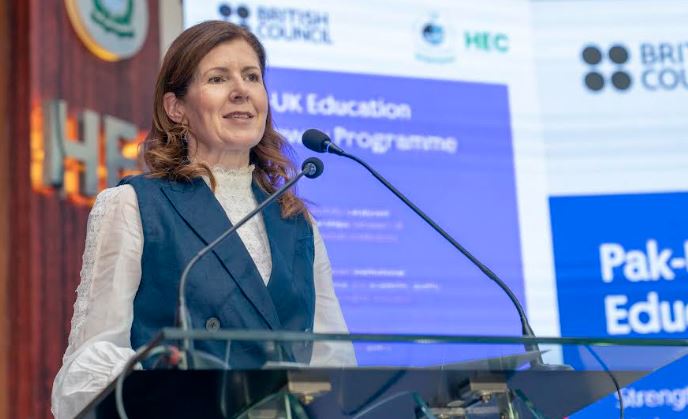
She then launched the next phase of the Pak-UK Education Gateway alongside Minister for Education Khalid Maqbool Siddiqui. Delivered in partnership between the British Council and Pakistan’s Higher Education Commission, this initiative will enable leading academics in both countries to collaborate on shared challenges including climate change and growth. It will launch a start-up fund which will help bring innovative research to the market. And it will promote UK University courses to Pakistani students, giving them the chance to build skills at a British university, without having to leave their home cities.

In her visit, she has expanded areas of collaboration between the UK and Pakistan. Alongside Minister for Climate Change Musadik Malik, she has launched a new Green Compact between the countries. This is set to establish a framework for how the UK and Pakistan will work together to tackle the climate emergency, protecting nature, and harnessing the green revolution, while pushing global climate ambition forward.

The UK’s Development Minister, Baroness Chapman, said:

‘Pakistan is a crucial partner for the UK. We work together to tackle the drivers behind organised crime and illegal migration, keeping both our countries safer. Our strong bilateral trading relationship brings jobs and growth to us both. And we’re working together to tackle climate change, a global threat.

We remain firm friends of Pakistan, including in times of crisis, as shown through our floods response; and we know to accelerate growth in both our countries, we must work together in partnership to tackle the problems we face.’

During her visit, the Minister is set to see the strength of the UK-Pakistan development partnership first-hand. This includes through seeing the UK’s work on health and education; meeting the communities who have been vital to the UK’s efforts to support 2.5 million Pakistani people to better adapt to the effects of climate change in the last year; and meeting the UK-trained officers who are preventing human trafficking at airports.

HEC launches leadership training workshop

HEC launches leadership training workshop

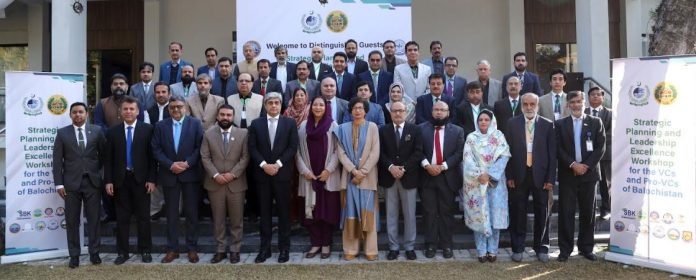
ISLAMABAD, DEC 10 /DNA/ – The National Academy of Higher Education (NAHE), Higher Education Commission (HEC), has launched a three-day leadership training workshop titled “Strategic Planning and Leadership Excellence” for Vice Chancellors and Pro-Vice Chancellors of public sector universities of Balochistan from 10th -12th December 2025. The workshop aims to enhance the leadership capacity of senior university management to effectively address the academic, administrative, and financial challenges faced by higher education institutions.

The training programme is designed to strengthen decision-making, policy formulation, financial sustainability, institutional self-reliance, strategic planning, governance, and innovation in research and learning. It also focuses on developing vision-based strategic planning aligned with institutional goals, applying data-driven decision-making tools, improving governance and accountability mechanisms, and strengthening collaboration and stakeholder engagement.

Minister of State for the Ministry of Federal Education and Professional Training, Ms. Wajiha Qamar, was chief guest of the opening ceremony. Chairman HEC Mr. Nadeem Mahbub, Executive Director HEC Dr. Zia Ul Haq, and Managing Director NAHE Dr. Noor Amna Malik were also present in the session.

Addressing the participants, Minister of State Ms. Wajiha Qamar highlighted her strong personal connection with Balochistan and emphasised the importance of presenting the positive and resilient image of the province to promote national cohesion. She stressed that academic leaders have a critical responsibility to identify challenges in the higher education sector and work collectively to find sustainable solutions. She also emphasised the role of legislation and policy reforms in strengthening the self-reliance of universities. In the context of rapid technological advancement, she underlined the need for institutions to enhance their capabilities to meet emerging demands.

Chairman HEC Mr. Nadeem Mahbub thanked the Vice Chancellors and Pro-Vice Chancellors for their participation and described it as a reflection of their commitment to improving higher education and shaping the future of youth. He highlighted the central role of universities in knowledge creation, skills development, and social progress. He emphasised that the leadership of Vice Chancellors is vital in setting the vision, performance standards, and direction of universities. He also noted that the youth of Balochistan possess immense potential and that universities must play a strong role in nurturing their abilities for national development. He reiterated that although the challenges faced by Balochistan’s universities are significant, they are not permanent, and HEC remains fully committed to supporting the province’s higher education sector.

Earlier, in her welcome remarks, Managing Director NAHE Dr. Noor Amna Malik appreciated the Governor of Balochistan for his guidance in initiating this exclusive leadership programme. She briefed the participants on the structure and objectives of the workshop and explained that the training modules cover key areas of higher education leadership. She expressed hope that the workshop would serve as a valuable learning platform and promote collaborative problem-solving among the participants.

The three-day workshop includes in-depth sessions on key areas of higher education management such as financial governance, quality assurance, research and innovation, financial sustainability, governance and strategic management, digital transformation, internationalization, strategic partnerships, and human resource development. The resource persons include senior officials and experts from HEC, former State Bank leadership, British Council Pakistan, and the Regional English Language Office of US Embassy.

The training initiative reflects the continued efforts of HEC to strengthen leadership capacity in the higher education sector and to support institutional development in Balochistan through structured learning and professional development.

Cambodia-Thailand border clashes send half a million into shelters

Cambodia-Thailand border clashes send half a million into shelters

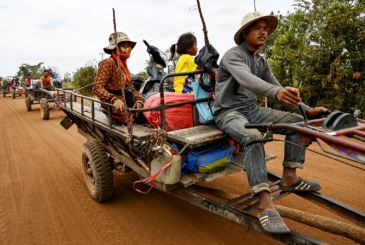
Samraong, Dec 10 (AFP/APP):Half a million evacuees in Cambodia and Thailand were sheltering in pagodas, schools and other safe havens on Wednesday after fleeing fresh fighting in a century-old border dispute in which US President Donald Trump has vowed to again intercede.
                  Five Thai soldiers and seven Cambodian civilians have been killed in the latest fighting, officials said, while more than 500,000 people have fled border regions near where jets, tanks and drones were waging battle.
                  AFP journalists in northwestern Cambodia’s Samraong town on Wednesday morning heard the blasts of incoming artillery from the direction of centuries-old temples in disputed border areas.
                  By the afternoon, hundreds of families were leaving a shelter at a pagoda near Samraong where they had been staying since Monday.
                  “Authorities say it is not safe anymore,” said Seut Soeung, 30, as she rested alongside a road with her family and vehicles passed by loaded with people, dogs and bags of clothes.
                  A policeman who asked not to be named said the displaced families were being evacuated from the temple grounds due to safety concerns after a few Thai jets flew nearby.
                  Thailand and Cambodia dispute the colonial-era demarcation of their 800-kilometre (500-mile) frontier, where competing claims to historic temples have spilled over into armed conflict.
                  This week’s clashes are the deadliest since five days of fighting in July that killed dozens and displaced around 300,000 before a shaky truce was agreed, following intervention by Trump.
                  Both sides blame each other for instigating the reignited conflict, which has expanded to five provinces of both Thailand and Cambodia, according to an AFP tally of official accounts.
                  Thai defence ministry spokesperson Surasant Kongsiri told reporters Wednesday that more than 400,000 civilians have been evacuated to shelters.
                  – ‘Will it hit us?’ –
                  Sugarcane farmer Niam Poda fled her home — just five kilometres from the frontier — in Thailand’s border province of Sa Kaeo for the second time in five months.
                  The 62-year-old said she was doing laundry on Monday when a loud explosion rang out.
                  “I just had to run for my life as soon as I could,” she told AFP at an evacuation centre, adding that she grabbed some clothes but left her medicines behind.
                  “Whatever happens next, I hope peace will come so I can go back to caring for my sugarcane in peace,” she said.
                  In Cambodia, more than 101,000 people have been evacuated to shelters and relatives’ homes, defence ministry spokeswoman Maly Socheata told reporters.
                  “The Thai army fired indiscriminately into civilian areas and schools and especially shelled Ta Krabey temple,” she said, calling the contested border temple a “sacred site of Cambodia”.
                  The Thai army, meanwhile, said Cambodian forces fired rockets early Wednesday that landed in the vicinity of the Phanom Dong Rak Hospital in Surin province — which was struck during previous clashes in July this year and in 2011.
                  Military personnel evacuated hospital staff and critical patients to a shelter on Wednesday, the army said.
                  Cambodia withdrew Wednesday from the Southeast Asian Games taking place in Thailand, with its Olympic committee citing “serious concerns and requests from the families of our athletes to have their relatives return home immediately”.
                  – ‘Make a call’ –
                  The United States, China and Malaysia, as chair of the regional bloc ASEAN, brokered the cessation of fighting in July.
                  In October, Trump backed a follow-on joint declaration, touting new trade deals with Thailand and Cambodia after they agreed to prolong their ceasefire.
                  But Thailand suspended the agreement the following month.
                  The US president said he was planning to “make a phone call” on Wednesday about the renewed clashes.
                  During a speech to supporters in the US on Tuesday, Trump listed various conflicts he has become involved with diplomatically, concluding with Cambodia and Thailand.
                  “Tomorrow, I have to make a phone call, and I think they’ll get it,” he said of the Southeast Asian neighbours.
                  “Who else could say, ‘I’m going to make a phone call and stop a war of two very powerful countries’?”

Satyani receives Franco-German Human rights, rule of law prize

Satyani receives Franco-German Human rights, rule of law prize

The French Ambassador highlighted that since 2016, France and Germany have marked International Human Rights Day, observed on December 10, by honoring individuals who have shown exceptional courage in defending fundamental rights

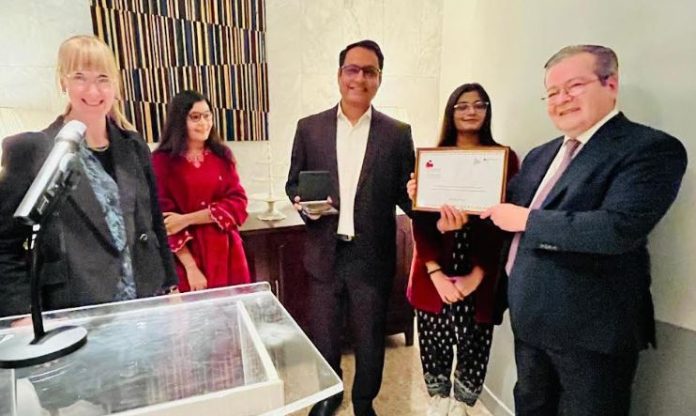
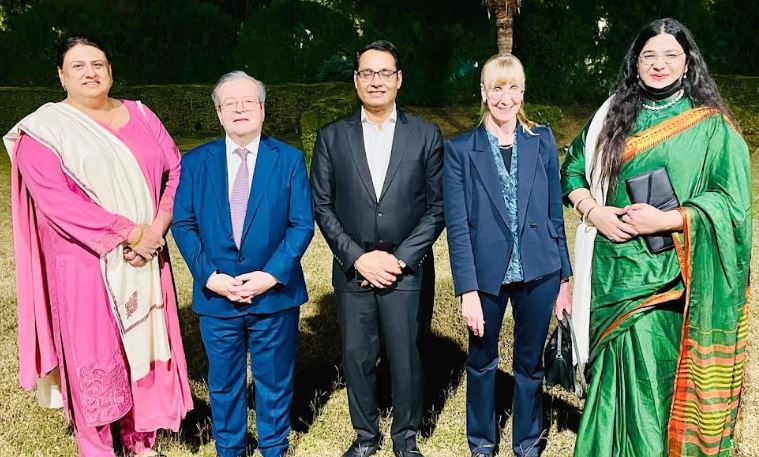
ISLAMABAD, DEC 10 /DNA/ – The French and German Embassies in Pakistan jointly hosted a ceremony to present the 2025 Franco-German Prize for Human Rights and the Rule of Law to Mr. Pirbhu Satyani, a distinguished human rights advocate from Sindh.

The award was formally presented by French Ambassador Nicolas Galey alongside German Ambassador Ina Lepel, in the presence of civil society representatives, previous award recipients, diplomats, journalists, and members of Mr. Satyani’s family.

Ambassador Galey congratulated Mr. Satyani for being selected among 14 laureates worldwide, noting that embassies from both countries had submitted numerous nominations. “Only 14 individuals were selected, including Mr. Satyani — félicitations!” he said. He warmly acknowledged the presence of Satyani’s children, remarking that they could be proud of their father’s unwavering commitment to human rights.

The Ambassador highlighted that since 2016, France and Germany have marked International Human Rights Day, observed on December 10, by honoring individuals who have shown exceptional courage in defending fundamental rights. The prize recognizes journalists, activists, and civil society leaders who work against torture, enforced disappearances, arbitrary detention, discrimination, and violence, while promoting equality, dignity, and freedom of expression.

Recalling the previous Pakistani recipients, Ambassador Galey acknowledged Sarah Belal, founder of Justice Project Pakistan (JPP), awarded in 2016, and Nayyab Ali, a prominent transgender and minority rights activist honored in 2020, who was also present at the ceremony. He commended JPP for its continued partnership and impactful work.

Addressing the contributions of this year’s laureate, Ambassador Galey described Mr. Pirbhu Satyani as a “fervent defender of minority, women’s, and children’s rights, particularly in Sindh,” noting his extensive work with the National Commission for the Rights of the Child. The Ambassador also paid tribute to the Commission’s Chairperson, Ayesha Farooq, for her ongoing commitment to child rights.

Mr. Satyani’s research and advocacy for the Dalit community, which faces double marginalization within religious minority groups, were highlighted as key factors in his selection. Ambassador Galey praised his “discreet yet persistent and efficient” efforts to champion minority rights — an issue of significant importance not only to France and Germany but to the broader European Union, particularly within the context of the GSP+ monitoring framework.

He expressed hope that the award would inspire human rights defenders across Pakistan to continue their work with renewed strength, knowing that their contributions are recognized globally.

The ceremony concluded with Ambassador Lepel’s address and the formal presentation of the medal and diploma to Mr. Satyani.

Indonesian President decorated with award

Indonesian President decorated with award

Saifullah Ansar

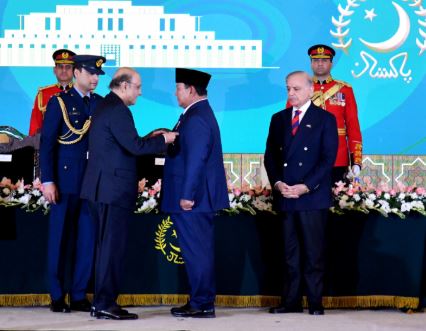
ISLAMABAD, DECE 9 /DNA/ – A special investiture ceremony was held at Aiwan-e-Sadr on Tuesday, where President of Indonesia was conferred the prestigious Nishan-e-Pakistan, the country’s highest civil award. The ceremony was attended by Prime Minister Shehbaz Sharif, Chairman Senate, Speaker National Assembly, and senior military leadership, marking a significant moment in Pakistan-Indonesia bilateral relations.

A dignified ceremony was also held in honour of the visiting Indonesian President, reflecting the deep-rooted ties and mutual respect between the two nations. Later, President of Pakistan held a one-on-one meeting with the Indonesian President, during which the two leaders discussed historic relations and reaffirmed their shared values and longstanding goodwill.

Both sides agreed to enhance cooperation for peace, stability, and prosperity in the region. President of Pakistan expressed heartfelt condolences over the recent floods and landslides in Sumatra, praying for the departed souls and wishing speedy recovery for the injured.

Reiterating their commitment to promoting interfaith harmony and tolerance, the two Presidents decided to build the future partnership on principles of inclusive and comprehensive development. Satisfaction was expressed over the steady growth in bilateral trade, with emphasis on diversifying and balancing economic exchanges. The Joint Trade Committee was acknowledged as an effective platform for strengthening business-to-business ties.

Pakistan and Indonesia agreed to expand collaboration in information technology, agriculture, energy, and tourism. Both leaders underscored joint efforts to tackle climate change, disaster management, and sustainable development. They also expressed the resolve to advance defence cooperation, including training and joint production initiatives.

The two countries reaffirmed their commitment to counter Islamophobia at global forums. President of Pakistan highlighted the need for regional peace and development and briefed the Indonesian President on the situation in Indian Illegally Occupied Jammu and Kashmir.

Later, ministers, senior officials, and top military commanders from both sides joined the delegation-level talks aimed at deepening the multidimensional partnership between Pakistan and Indonesia.

Stay Connected

64FansLike
60FollowersFollow

Latest Reviews

Exchange Rates

USD - United States Dollar
EUR
1.18
GBP
1.35
AUD
0.67
CAD
0.73