Home Blog Page 348

Thailand confirms first civilian killed in week of Cambodia fighting

Thailand confirms first civilian killed in week of Cambodia fighting

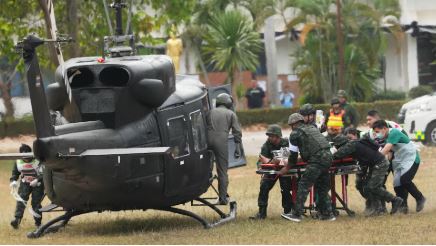
BANTEAY MEANCHEY, DEC 14 (AFP/APP/DNA): Thailand on Sunday announced its first civilian death in a week of fighting with Cambodia, as international efforts fail to stop violence that has forced hundreds of thousands from their homes.

The latest killing comes a day after Bangkok denied US President Donald Trump’s claim that a truce had been agreed between the Southeast Asian neighbours.

The conflict, rooted in a colonial-era demarcation dispute along their 800-kilometre (500-mile) border, has displaced around 800,000 people, officials said.

“I have been here for six days and I feel sad that the fighting continues,” 63-year-old Sean Leap told AFP at an evacuation centre in Cambodia’s border province of Banteay Meanchey.

“I want it to stop,” he said, adding he was worried about his home and livestock.

At least 27 people have been killed, including 15 Thai soldiers and 11 Cambodian civilians, officials said Sunday.

A Thai civilian killed in Sisaket province was the first non-military death recorded in the country since the latest round of fighting began on December 7, health ministry spokesman Ekachai Piensriwatchara confirmed to AFP.

The Thai army said the 63-year-old man was killed by shrapnel after Cambodian forces fired rockets into a civilian area.

Each side has blamed the other for instigating the clashes, claiming self-defence and trading accusations of attacks on civilians.

Trump, who earlier backed a truce and follow-on agreement, said Friday the two countries had agreed to stop fighting.

But Thai leaders later said no ceasefire deal was made, and both governments said Sunday that clashes were ongoing.

Thai defence ministry spokesman Surasant Kongsiri said Cambodia shelled and bombed several border provinces overnight.

The Thai military has imposed a curfew from 7:00 pm to 5:00 am (1200 to 2200 GMT) in parts of Sa Kaeo and Trat provinces.

Cambodia, which is outgunned and outspent by Thailand’s military, said Thai forces had shelled and launched air strikes on Cambodian territory near the border on Sunday.

Crime, Elections and the Erosion of Indian Democratic Norms

Crime, Elections and the Erosion of Indian Democratic Norms

by Muhammad Mohsin Iqbal

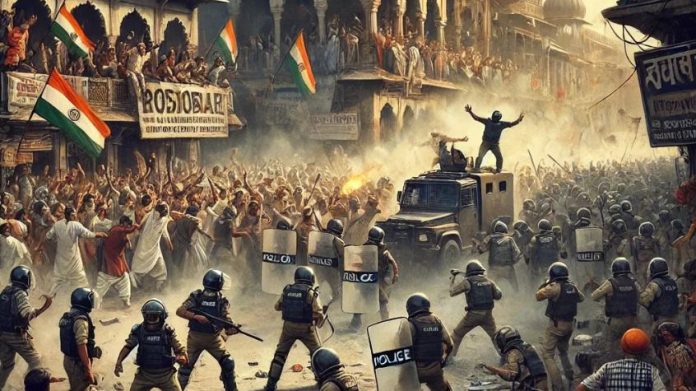
Success in the real world is never born of illusion. It is first bestowed by the grace of Almighty Allah and then shaped by human effort, competence, and the circumstances of history. Nations that rise do so by confronting their realities, correcting their flaws, and building institutions worthy of trust. Yet, there is a curious pattern that has repeatedly surfaced whenever India faces defeat at the hands of Pakistan, whether in war, diplomacy, or other arenas of national comparison. Instead of engaging with facts and introspection, it often seeks refuge in cinematic fantasies, using films and popular culture to manufacture narratives aimed at denigrating Pakistan. This time, their target through films is the Lyari constituency of Karachi. Propaganda, however, loses its potency when confronted with documented truth. A serious examination of India’s own internal challenges, particularly the use of crime-related resources in its electoral politics, tells a far more sobering story—one supported not by rhetoric, but by India’s own official reports, courts, and watchdog institutions.

The nexus between crime and politics in India is neither speculative nor incidental; it is systemic and long acknowledged. From localized strongmen to sophisticated syndicates with transnational reach, criminal networks have entrenched themselves deeply within the political process. Their involvement ranges from financing election campaigns to enforcing electoral outcomes and securing post-election rewards. The most authoritative exposure of this phenomenon came through the Vohra Committee Report of 1993, an official document commissioned by the Government of India. Drawing upon intelligence from the Central Bureau of Investigation, the Intelligence Bureau, RAW, and revenue enforcement agencies, the report warned of a “close nexus” between criminal gangs, politicians, bureaucrats, and businessmen. It documented how organized crime syndicates, sustained by immense financial and muscle power derived from smuggling, narcotics, real estate, and black money, were operating with near impunity due to political patronage, institutional weaknesses, corruption, and poor inter-agency coordination. The report went further, cautioning that these syndicates were evolving into parallel power structures and recommended the creation of a highly secret, centralized nodal mechanism under the Ministry of Home Affairs to dismantle this dangerous convergence.

Historically, criminal elements played a direct role in elections through intimidation, booth capturing, and violence. While the introduction of Electronic Voting Machines and the deployment of central police forces have reduced overt coercion, subtler forms of pressure persist. Threats before polling day, manipulation of local influence, and control through fear or patronage continue to shape electoral outcomes. In many regions, particularly in states like Bihar and Uttar Pradesh, the phenomenon of the “Bahubali” politician—an individual who commands votes through muscle, money, caste allegiance, or coercion—remains deeply entrenched.

Elections in India are enormously expensive, and this financial burden fuels the reliance on illicit capital. The Association for Democratic Reforms (ADRs), the most credible civil society organization tracking electoral integrity, has consistently reported that a significant portion of election expenditure is unaccounted black money. Criminal networks are a major source of this funding, which is used for rallies, inducements, and direct cash distribution to voters. In Punjab and the north-western belt, reports by the Punjab State Narcotics Control Bureau and assessments by the United Nations Office on Drugs and Crime have highlighted the use of drug trafficking money to fund elections. Allegations of collusion between politicians and narcotics cartels, seeking policy protection and immunity from crackdowns, have been repeatedly raised in official and media investigations.

The investment of the underworld in politics is not charitable; it is transactional. Once a candidate wins, repayment comes in the form of lucrative public contracts, protection from law enforcement, manipulation of investigations, and the strategic transfer of officials. This quid pro quo lies at the heart of the criminalization of politics. ADR’s empirical findings are stark. Its 2024 analysis of sitting Lok Sabha members revealed that 19 percent had declared serious criminal cases, including charges of murder, attempt to murder, rape, and crimes against women. Earlier, its 2022 study of state assemblies showed that in some states, such as Bihar and Andhra Pradesh, over 30 percent of legislators faced serious criminal charges.

India’s own institutions have repeatedly sounded the alarm. The Election Commission of India has, through multiple communications to the Law Ministry—widely reported in leading newspapers such as The Hindu—sought enhanced powers to curb criminalization, including the authority to bar candidates accused of serious offences and to audit political party finances. The judiciary, too, has intervened. In Public Interest Foundation versus Union of India (2014), the Supreme Court directed that trials against sitting MPs and MLAs be conducted on a day-to-day basis and concluded within a year. In 2020, the Court again expressed deep anguish over Parliament’s failure to legislate against this menace.

Specific regional cases further illuminate the depth of the problem. In Mumbai, figures associated with the underworld, such as Arun Gawli, entered electoral politics, a linkage examined by the Justice S.N. Variava Commission. In Uttar Pradesh and Bihar, land and drug mafias have repeatedly surfaced in election reports. In the North-East, insurgent groups and smugglers have influenced polls through funding and intimidation, while in Punjab, The Special Task Force (STF) and Narcotics Control Bureau reports have documented the arrest of political workers linked to the drug trade during election periods.

This nexus persists due to weak party accountability, voter dependency in areas with fragile state institutions, a slow judicial process that allows accused individuals to contest elections for years, and opaque campaign finance mechanisms. While measures by the Election Commission, Supreme Court mandates on disclosure, and the use of the Right to Information Act have increased transparency, they have not dismantled the core structure of money, muscle, and patronage.

These are not allegations made by adversaries, nor narratives crafted in studios. They are findings recorded in India’s own official reports, courts, and democratic institutions. Nations are judged not by the stories they tell about others, but by the truths they confront within themselves. Reality, unlike fiction, does not bend to propaganda, and history ultimately records facts, not fantasies.

From Shadows to Power in the West

Qamar Bashir

Qamar Bashir

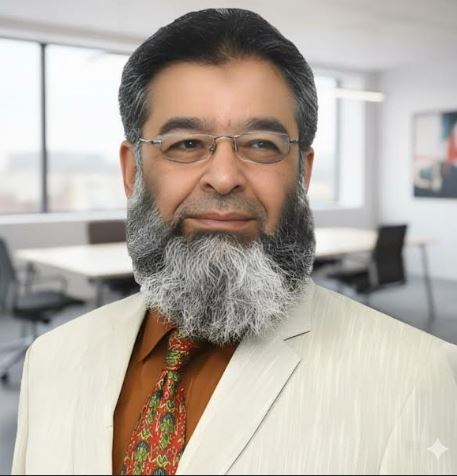
When Zohran Mamdani declared that he was not apologetic for being Muslim, immigrant, or young, he did more than assert personal pride. Speaking in New York, a city that hosts the United Nations and anchors global finance, he gave voice to a generational shift that has been quietly building across Western democracies. For decades, immigrants—particularly Muslims and people of color—were advised to soften identity, mute faith, and avoid visibility in exchange for conditional acceptance. Mamdani rejected that logic outright. His message was simple and disruptive: visibility is not a risk to manage; it is a civic right. That declaration resonated far beyond city limits because it named a shared experience millions recognize but were taught not to articulate publicly.

This refusal to remain invisible marks a turning point in immigrant political psychology. The old bargain promised tolerance in exchange for silence, but it never delivered equality. A younger generation has decided that restraint does not produce belonging; participation does. Across the United States, Canada, the United Kingdom, and Europe, immigrant and Muslim leaders are stepping into public life without apology, claiming rights already guaranteed by constitutions but unevenly honored by societies. What makes this moment consequential is not a change in law, but a change in posture. The question is no longer whether immigrants can assimilate quietly, but whether democracies will accept citizens who insist on full and visible membership.

The backlash has been swift and revealing. In the United States, chants of “go back to your country” have re-entered political discourse, often directed at citizens—naturalized or native-born—who happen to be nonwhite or Muslim. The phrase collapses under constitutional scrutiny. The Fourteenth Amendment is unambiguous: anyone born or naturalized in the United States is a citizen entitled to equal protection. There is no legal hierarchy between a white immigrant from Germany and a brown immigrant from Pakistan if both hold citizenship. The Constitution does not recognize ancestry, religion, or skin color as criteria for belonging. When exclusionists invoke “we” against “they,” they are not making a lawful claim; they are expressing an ideological preference unsupported by constitutional order.

The same contradiction appears across Western societies. In the United Kingdom, citizenship law makes no distinction between a citizen of Irish or Polish descent and one whose family came from Somalia or India. In France, republican principles formally reject ethnic or religious hierarchies. In Canada, multiculturalism is embedded in public policy. Yet the rhetoric of “we” and “they” persists. This reveals the true fault line: not law versus immigration, but law versus an imagined nation defined by race and culture rather than citizenship. The demand that immigrants leave—even when legally indistinguishable from any other citizen—exposes anxiety about status, not threats to legality.

That anxiety intensifies when immigrants move from invisibility to competition. For decades, immigrant labor was tolerated, even welcomed, so long as it remained concentrated in low-status sectors—driving taxis, cleaning offices, harvesting crops, staffing hotels. Western economies depend heavily on this work. But the discomfort grows when immigrants and their children compete openly for political office, executive authority, and intellectual leadership. The issue is not presence; it is parity. The shift from tolerated utility to equal competition unsettles assumptions about who is entitled to lead.

Economic data underscores this dynamic. Immigrants make up nearly one-fifth of the U.S. labor force and are overrepresented in essential blue-collar jobs. At the same time, more than a quarter of foreign-born workers are employed in high-skill fields such as medicine, engineering, and technology. This two-ended presence disrupts stereotypes of immigrants as permanent dependents. They are not merely sustaining economies from below; they are contesting power at the top. The resulting tension is often reframed as cultural conflict, but its roots lie in competition over opportunity and influence.

Demography adds another layer. Muslim and immigrant communities across the West are younger on average than white majorities and tend to have higher birth rates, largely because of age structure. Research consistently shows these gaps narrow with education and income over time, yet demographic momentum is politically potent. Rather than discuss convergence, populist movements amplify fear, casting ordinary population change as existential threat. Against this narrative, the new immigrant leadership emphasizes citizenship over biology. Belonging, they argue, is not inherited by bloodline but exercised through participation.

Misunderstandings about law and culture further inflame the debate. In the UK, for example, sharia councils are often portrayed as parallel legal systems undermining state authority. In reality, they function primarily as voluntary religious mediation bodies in personal matters and have no power to override national law. The controversy illustrates how easily fear replaces fact. The emerging immigrant leaders are not demanding legal exceptionalism; they are demanding equal protection and dignity within existing constitutional frameworks.

Crime statistics are similarly distorted. Variations in arrest and incarceration rates across groups reflect complex factors—age distribution, socioeconomic deprivation, neighborhood effects, and policing practices. Simplistic narratives that equate minority presence with criminality ignore these realities. The unapologetic generation understands this history of distortion, which is why its rhetoric centers on due process, constitutional rights, and equal treatment rather than appeals for tolerance.

What Mamdani’s words crystallized is the end of managed identity. Earlier generations believed safety lay in invisibility. Today’s leaders argue that invisibility never guaranteed safety—only silence. They replace caution with confidence: know your rights, claim your space, and compete openly. This posture is not radical; it is constitutional. It insists that democratic promises apply without qualification.

The significance of this moment lies in its transatlantic scope. From New York to London, from Toronto to Paris, immigrant and Muslim voices are echoing the same refusal: no apology for faith, origin, or age. This is why the reaction has been intense. The shadows are emptying. Communities once encouraged to hide are stepping into public life with assurance.

The challenge facing Western democracies is therefore stark. Citizenship either means equality under law, or it becomes a racialized privilege. If constitutions are taken seriously, there can be no lawful “we” empowered to expel a “they” among fellow citizens. As unapologetic immigrants step into the light, the meaning of belonging must expand to match the law. If it does not, the contradiction will haunt Western democracies far more persistently than immigration itself.

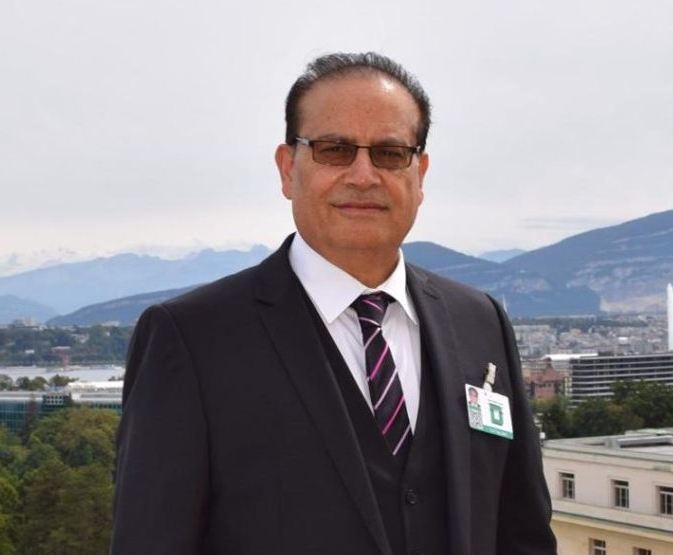
Qamar Bashir
Press Secretary to the President (Rtd)
Former Press Minister, Embassy of Pakistan to France
Former Press Attaché to Malaysia
Former MD, SRBC | Macomb, Michigan, USA

Rana Sanaullah accuses Bajwa of ‘instructing’ narcotics case against him

Rana Sanaullah accuses Bajwa of 'instructing' narcotics case against him

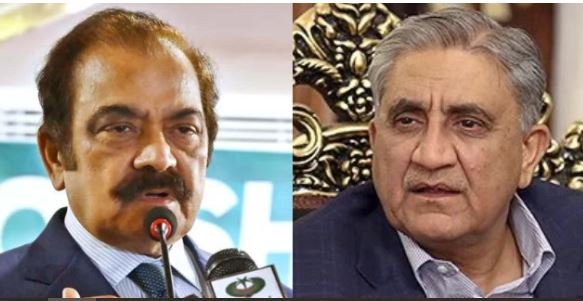
ISLAMABAD, DEC 14 – Prime Minister’s Adviser on Political Affairs Rana Sanaullah has alleged that former army chief Gen (retd) Qamar Javed Bajwa directed the registration of a narcotics case against him back in 2019.

Sanaullah was arrested in July 2019 during the PTI government after the ANF claimed it recovered 15kg of heroin from his vehicle, and was later granted bail by the Lahore High Court (LHC).

Speaking in a podcast, Sanaullah recalled an exchange with Gen Bajwa and former spymaster Hamid, in which the ex-army chief made remarks about the former’s physical condition.

“Gen Bajwa said, ‘Rana, you have become very fat. You were very smart in jail. Faiz, make Rana sahib smart again,’” he said.

Sanaullah said he responded by telling the former army chief that the case against him had been initiated on his instructions. “I told Bajwa that the case against me was made at your behest. May Allah hold you accountable for it in this world,” he added.

He also rejected the notion that serving military officers could act independently of the army chief, saying it was impossible for an in-service officer to fabricate a false case without approval.

“It is not possible for a serving officer to register a false case without the army chief’s consent and not face a court martial the next day,” he said.

The prime minister’s adviser further alleged that during the tenure of PTI founder Imran Khan, state affairs were effectively run with the consent of Bajwa, Hamid.

‘No probe underway against Bajwa’
Meanwhile, following the conviction of ex-ISI chief, certain political and media circles have begun speculating about the possibility of legal action against Qamar Bajwa.

However, informed sources have dismissed such claims, stating that there is neither any probe nor any proceeding underway against Gen (retd) Bajwa, The News reported on Sunday.

The Field General Court Martial (FGCM) sentenced the former spymaster to 14 years of rigorous imprisonment for engaging in political activities, violating the Official Secrets Act, misusing authority and causing wrongful loss to persons, according to a statement issued by the Inter-Services Public Relations (ISPR) on December 11.

Sources said the gossip being circulated in some quarters is baseless. According to them, the military accountability process that culminated in the conviction of the former spymaster was strictly evidence-based and confined to his individual actions, with no material linking the former army chief to the case.

Instead, sources indicate that after the army concluded the accountability process against one of its own senior officers, expectations are growing that accountability could extend beyond the military domain.

Judges, bureaucrats, politicians and even media persons who allegedly played roles in the past political engineering or overstepped constitutional and legal limits may come under scrutiny in the days to come.

India set 241-run target for Pakistan in rain-hit U19 Asia Cup clash

India set 241-run target for Pakistan in rain-hit U19 Asia Cup clash

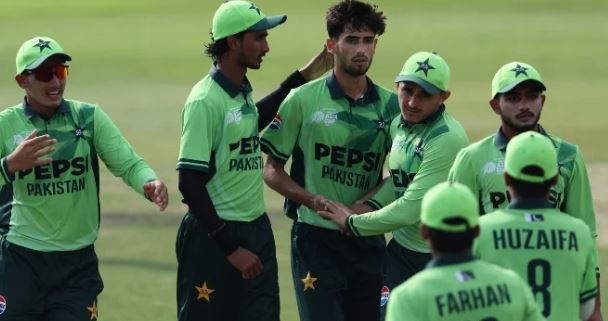
Mohammad Sayyam and Abdul Subhan grabbed three wickets apiece as Pakistan bowled India out for a below-par total in the high-octane ACC Men’s U19 Asia Cup 2025 clash at the ICC Academy on Sunday.

With rain cutting the contest to 49 overs a side, Pakistan captain Farhan Yousaf opted to field first, a call that paid off as India, who had piled up 433/6 against the United Arab Emirates (UAE) in their opener, were dismissed for 240 in 46.1 overs.

India’s innings began on a shaky note when Sayyam removed their previous match hero Vaibhav Suryavanshi for five, caught and bowled in the fourth over with 29 on the board.

Suryavanshi’s dismissal, however, did not bother India much as a blistering 49-run partnership between captain Ayush Mhatre and Aaron George kept them on top.

The quickfire partnership was eventually broken by Sayyam in the 10th over as he got rid of the India captain with a short-pitched delivery. Mhatre remained a notable run-getter with a brisk 38 off 25 deliveries, laced with four fours and three sixes.

Following his dismissal, India lost two more wickets at regular intervals as Niqab Shafiq dismissed Vihaan Malhotra (12) and Vedant Trivedi (seven) cheaply to bring the total down to 113/4 in 19.5 overs.

Holding one end firmly, George then put together a crucial 60-run partnership for the fifth wicket with wicketkeeper batter Abhigyan Kundu before both fell victim to Abdul Subhan in the 32nd over.

George remained the top-scorer for India with 85 off 88 deliveries, smashing 12 fours and a six, while Kundu made a 32-ball 22.

Kanishk Chouhan then took the reins of India’s batting expedition and held their innings together with a run-a-ball 46 until eventually falling victim to Ahmed Hussain in the 45th over.

His dismissal exposed India’s batting tail, which was effortlessly levelled by Ali Raza and Subhan.

For Pakistan, Sayyam and Subhan took three wickets each, followed by Niqab with two, while Ali and Ahmed chipped in with one scalp apiece.

Earlier at the toss, there was no handshake at the toss between the two sides as the India captain, Ayush Mhatre, refused the custom.

Playin XI

Pakistan U19: Usman Khan, Sameer Minhas, Ali Hassan Baloch, Ahmed Hussain, Farhan Yousaf(c), Hamza Zahoor(w), Huzaifa Ahsan, Niqab Shafiq, Abdul Subhan, Mohammad Sayyam, Ali Raza

India U19: Ayush Mhatre(c), Vaibhav Suryavanshi, Aaron George, Vihaan Malhotra, Vedant Trivedi, Abhigyan Kundu(w), Kanishk Chouhan, Khilan Patel, Deepesh Devendran, Kishan Kumar Singh, Henil Patel

APBF warns IMF conditions driving up energy costs

APBF warns IMF conditions driving up energy costs

Syed Maaz says IMF restrictions raise cost of production, weaken competitiveness

ISLAMABAD, DEC 14 /DNA/ – The All Pakistan Business Forum (APBF) has urged the government to reduce excessive reliance on donors and the International Monetary Fund, warning that externally imposed fiscal conditions are distorting the economy, driving up power and gas tariffs and sharply increasing the cost of production for industry.

In a statement, President Syed Maaz Mahmood said repeated hikes in electricity and gas prices under IMF programmes have placed an unbearable burden on businesses, especially export-oriented and small and medium enterprises. They said that while fiscal discipline is important, policies driven primarily by donor conditions without regard for domestic economic realities are undermining industrial competitiveness and long-term growth.

Syed Maaz Mahmood said the continued reduction in power subsidies and strict circular debt targets are translating directly into higher tariffs for consumers and businesses. He noted that rising energy costs are feeding into inflation, weakening purchasing power and squeezing already thin industrial margins. According to him, frequent tariff adjustments, fuel cost surcharges and debt servicing levies have created uncertainty, making it difficult for businesses to plan production or investment.

Chairman Ibrahim Qureshi added that Pakistan’s industrial sector is being asked to bear the cost of systemic inefficiencies in the power and gas sectors, including line losses, poor recoveries and delayed reforms. Instead of fixing governance and operational failures, he said, the burden is shifted to consumers and taxpayers through higher tariffs and budgetary injections, which ultimately slows economic activity.

APBF Chairman said IMF-driven policies are increasingly narrowing the government’s policy space and limiting its ability to support domestic industry. He pointed out that high electricity and gas tariffs are making Pakistani products uncompetitive in regional and global markets at a time when neighboring countries are offering cheaper energy and targeted incentives to exporters.

He stressed that rising energy prices are not only hurting large industries but are also devastating small manufacturers, traders and agricultural value chains. Higher power and gas costs increase production expenses across sectors, leading to higher prices for essential goods and contributing to persistent inflation. This, he said, creates a vicious cycle of declining demand, lower output and job losses.

The APBF leadership said reliance on IMF loans and donor funding has become a short-term survival strategy rather than a sustainable economic solution. They warned that repeated borrowing under stringent conditions is pushing the economy into a cost-push inflation trap, where higher taxes and tariffs reduce growth instead of stabilising finances.

Syed Maaz Mahmood emphasised the need for structural reforms driven by local priorities rather than donor templates. He called for urgent reforms in power distribution companies to reduce theft and technical losses, timely tariff determinations, improved recoveries and greater accountability. He said that without fixing these root causes, increasing tariffs will only worsen the problem.

He urged the government to focus on indigenous solutions, including energy sector reforms, promotion of low-cost power generation, and investment in domestic resources such as hydropower, coal and renewables. He said cheaper and reliable energy is essential for reviving industry, boosting exports and creating employment.

The APBF also called for meaningful consultation with the business community before finalising agreements with international lenders. The leadership said policies that directly affect production costs, employment and investment should not be decided without stakeholder input.

PM Shehbaz says economy out of woods, terms all indicators ‘wonderful’

PM Shehbaz says economy out of woods, terms all indicators 'wonderful'

ISLAMABAD: Prime Minister Shehbaz Sharif on Saturday launched the National Regulatory Reforms, saying Pakistan had come out of severe economic difficulties due to the untiring efforts of the incumbent government and its economic team, with key economic indicators showing strong improvement.

Addressing the launch ceremony, he called the regulatory reforms a “quantum jump,” saying the framework would facilitate business, industry, agriculture, and foreign direct investment from Europe, the Far East, and the Middle East, while also reducing wastage of time and resources that had fueled corruption and nepotism.

He commended federal and provincial teams for working in coordination and thanked the British government and International Development UK for their support, describing the UK as a long-standing partner in Pakistan’s progress.

He also said Pakistan enjoyed strong relations with the United States and looked forward to further cooperation.

The prime minister recalled that when the government assumed office, the country was on the verge of financial default, inflation was soaring, the policy rate was crippling, and business activity was in turmoil, making both local and foreign investment nearly impossible.

He said the government, despite facing daunting challenges, did not lose hope and steered the country out of economic woes through teamwork, planning, and persistent efforts over the past one and a half years. Stressing the need for continued hard work, he said the focus was now on moving forward and accelerating economic growth.

The prime minister also referred to International Monetary Fund (IMF) approval of a $1.2 billion tranche for Pakistan, and noted that excessive rules, regulations, and procedures had previously inflicted serious damage on the business environment.

He said the government was working to attract foreign investment in sectors of mutual benefit, including agriculture, information technology, and mines and minerals. Highlighting Pakistan’s youth bulge, he said vocational training with international certification was being offered to enable young people to secure productive employment at home and abroad.

Speaking on the occasion, Prime Minister’s Special Assistant Haroon Akhtar said the reforms marked a shift from a regulatory state to a developmental state, forming part of a broader transformation based on tariff rationalisation, regulatory modernisation, and export-led industrial revival.

UK Minister of State for International Development Baroness Jenny Chapman termed the reforms a positive achievement, highlighting Pakistan’s entrepreneurial potential, natural resources, and role in global trade, and noted growing trade and investment links between the two countries.

Pakistan Army clinch top spot in 35th National Games final rankings

Pakistan Army clinch top spot in 35th National Games final rankings

KARACHI, DEC 13: Pakistan Army secured the top position in the medal table of the 35th National Games on Saturday, showcasing strong performance across both individual and team events.

The 35th National Games concluded with a closing ceremony in Karachi, with Pakistan Army emerging as the highest medal-winning contingent.

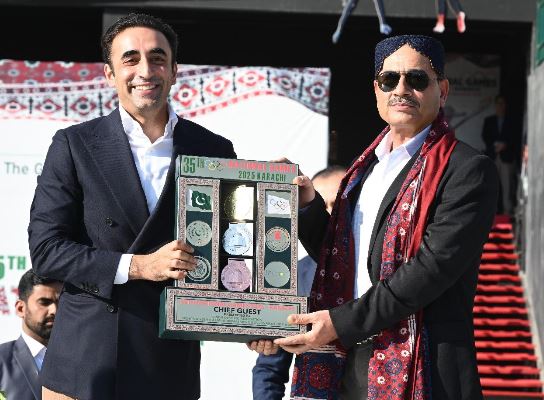
Chief of Defence Forces (CDF) and Chief of Army Staff (COAS) Field Marshal Asim Munir attended as the chief guest, alongside PPP Chairman Bilawal Bhutto-Zardari.

According to the final medal standings shared by the Pakistan Olympic Association (POA), Pakistan Army reigned supreme with a total of 353 medals, including 200 gold medals, 97 silver, and 56 bronze medals.

The Water and Power Development Authority (Wapds) finished second with 85 gold medals, 73 silver, and 74 bronze, while Pakistan Navy remained third with 36 top honours, 39 silver, and 35 bronze.

Punjab was the most successful province in the games, concluding the week-long event with 16 gold medals, followed by Sindh with 11, Khyber Pakhtunkhwa with five, while Balochistan could claim four.

Capital territory Islamabad finished 11th with two gold medals, five silver and 11 bronze.

Azad and Jammu Kashmir (AJK) and Gilgit Baltistan remained the only participating teams which could not win a single medal and only managed seven bronze, and thus finished in the last two positions in the standings.

On the occasion, Bilawal presented CDF Field Marshal Munir with a Sindhi cap and ajrak.

During his address at the ceremony, Bilawal emphasised the broader significance of the National Games, saying: “These National Games were not merely a competition of speed, strength or skill; they were a celebration of Pakistan itself.

“From Gilgit Baltistan to Gwadar, from Khyber to Karachi, from Lahore to Larkana, every athlete who competed here carried the colours of their province but stood united under one flag,” he added.

He expressed pride that Sindh had hosted the prestigious sporting event.

“To our athletes, you are the pride of Pakistan. Whether you return home with medals or memories, you return as ambassadors; ambassadors of discipline, perseverance and national unity.

“You have shown us what Pakistan’s youth can achieve when given the opportunity and encouragement,” Bilawal noted.

He highlighted the values sport instills, saying: “Sport teaches us teamwork, courage, respect for rules and resilience in the face of challenge. These are not just sporting values, they are national values.”

Reflecting on the May conflict with India, the PPP chairman praised the armed forces’ performance, stating that the army, airforce and navy exhibited professionalism, coordination, and strength.

“Pakistan emerged victorious with its sovereignty defended and its honour upheld. This victory was not only a military victory, it was a national one. It reflected the unity of our people, the discipline of our forces and the unbreakable bond between the nation and those who stand guard over it,” he said.

He concluded by wishing that the spirit of the Games would have a lasting impact: “As these National Games conclude, may the friendships formed here endure, may the lessons learnt here guide us and may the unity displayed here continue to define our federation.”

The 35th National Games featured 14 teams, comprising departments and provinces, including hosts Sindh, Punjab, Khyber Pakhtunkhwa, Balochistan, Islamabad, Azad Jammu and Kashmir and Gilgit Baltistan, alongside Pakistan Army, Pakistan Air Force, Pakistan Navy, Wapda, Pakistan Police and Higher Education Commission (HEC).

Police detain organiser of Messi visit after Indian fans rip up seats

Police detain organiser of Messi visit after Indian fans rip up seats

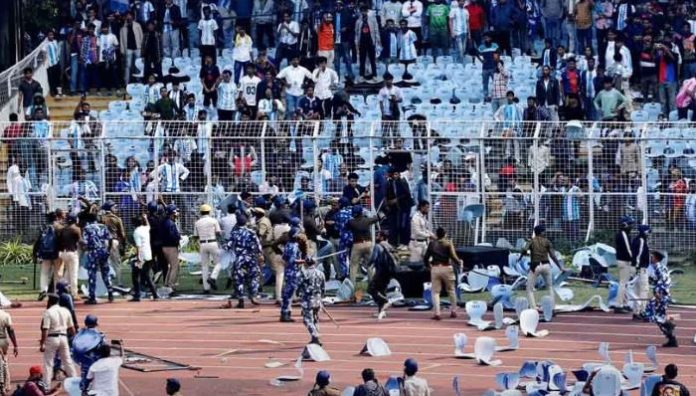
KOLKATA, DEC 13: Lionel Messi’s tour of India kicked off chaotically on Saturday as fans threw objects, ripped up seats and invaded the pitch at Kolkata’s Salt Lake stadium after the Argentine soccer great made only a brief appearance at a ticketed event.

Satadru Dutta, the event’s chief organiser, has been detained by police, said Rajeev Kumar, director general of West Bengal police.

Messi was scheduled for a 45-minute visit to the stadium, but his appearance lasted just 20 minutes. Tickets for the event were priced from around 3,500 rupees ($38.65) – more than half of average weekly income in India – but one fan said he had paid $130.

Fans in the Salt Lake stadium in the capital of the Eastern state of West Bengal threw ripped-up seats and other objects onto the field, while several people climbed a fence around the field and hurled objects.

“I can’t believe there was so much mismanagement,” said Eddie Lal Hmangaihzuala, who had travelled nearly 1,500km from Mizoram over two days to attend the event.

“Messi left quickly, I think he felt unsafe. I hardly got a glimpse of him,” he told Reuters.

The organisers of the tour did not immediately respond to a request for a comment.

“We’ve already detained the main organiser,” Rajeev Kumar told reporters. “We’re taking action so that this mismanagement does not go unpunished.

“He has already pledged in writing that tickets sold for the event should be refunded,” he added.

Chief minister apologises, orders probe
Messi is in India as part of a tour during which he is scheduled to attend concerts, youth football clinics and a padel tournament, and to launch charitable initiatives at events in Kolkata, Hyderabad, Mumbai and New Delhi.

The chief minister of West Bengal, Mamata Banerjee, apologised to Messi and ordered a probe into the incident.

“I am deeply disturbed and shocked by the mismanagement witnessed today at Salt Lake stadium,” Banerjee, who was on her way to the event when chaos broke out, posted on X.

“I sincerely apologise to Lionel Messi, as well as to all sports lovers and his fans, for the unfortunate incident,” she said.

She said she was constituting a committee to conduct a detailed enquiry into the incident, assign responsibility, and recommend measures to prevent such occurrences in the future.

West Bengal, Kerala and Goa states have long had large soccer followings in otherwise cricket-crazed India.

Multiple incidents of fan riots have taken place at Salt Lake stadium, including during a Kolkata derby match between East Bengal and Mohun Bagan in 2012 which was abandoned after a brick thrown from the stands hit a player, seriously injuring him.

Argentine soccer great Diego Maradona twice visited Kolkata, and in 2017 unveiled a statue there of himself holding the World Cup in the presence of thousands of fans.

Messi, who captained Argentina for the first time in a friendly match at the Salt Lake stadium in a 1-0 win over Venezuela in 2011, virtually unveiled a 70-foot statue of himself in Kolkata earlier on Saturday.

Chasing snowfall: Winter forecast draws tourists to northern KP

Chasing snowfall: Winter forecast draws tourists to northern KP
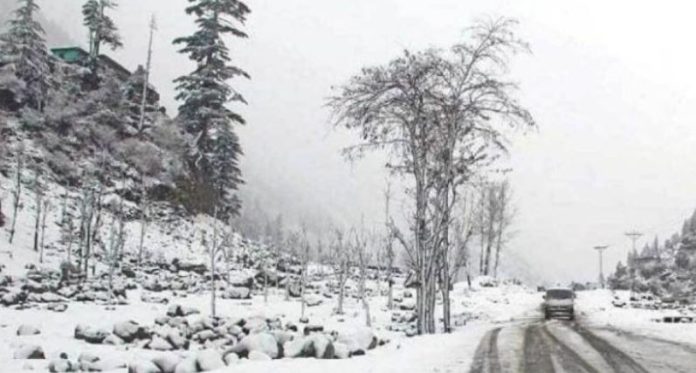
MALAM JABBA, Dec 13 (APP):Northern Khyber Pakhtunkhwa has transformed into a winter wonderland as the season’s first snowfall, forecast by the Pakistan Meteorological Department, has drawn a large number of tourists to the region, eager to experience snow-covered landscapes, trout fish and adventure sports.

As temperatures dipped over the weekend, families, snowfall enthusiasts, foodies and adventure seekers flocked to popular hills destinations including Malam Jabba, Kalam, Swat, Chitral, Upper Dir and Nathiagali.

The cold weather with chances of snowfall turned lush green mountains into breathtaking white vistas amid mesmerizing aromas of trout fish.

Renowned tourist spots such as Nathiagali, Ayubia, Kaghan, Naran, Kalam, Malam Jabba, Kumrat and Bamborat offered ideal settings for family recreation and winter photography, while the towering Hindu Kush, Karakoram and Himalayan ranges upstream added to the region’s dramatic charm with their snow-clad peaks.

While destinations like Kalam, Malam Jabba and Nathiagali are known for family-friendly tourism, areas such as Naran, Kaghan and Ayubia cater to thrill-seekers with activities including chairlift rides, skiing and snowboarding. These attractions continue to draw adventure lovers from across the country.

For those in search of a more immersive winter experience, valleys such as Hunza, Skardu, Naltar, Chitral and Swat provide pristine snowfall, panoramic mountain views and opportunities for snow sports. Swat, often called the “Switzerland of Pakistan,” has emerged as a leading winter tourism and skiing destination in the country.

“I came to Malam Jabba with friends after hearing the Met Office forecast for snowfalls,” said Engr Khushal Khan, a resident of Lower Dir. “Malam Jabba and Kalam receive some of the heaviest snowfall in Pakistan.”

He advised tourists to carry extra warm clothing and added that enjoying Swat’s famous trout fish makes the winter trip even more memorable.

Malam Jabba is regarded as a snowfall paradise, receiving an average of nearly ten feet of snow annually, which is ideal conditions for skiing. Its skiing history dates back to 1962, when the first competition was held there. The area gained international recognition after the establishment of a formal ski resort in 1988 and today offers world-class skiing and snowboarding facilities.

The skiing season typically runs from December to March, attracting thousands of visitors. The resort’s chairlift—one of the longest in Pakistan offers panoramic views of snow-blanketed mountains.

Beyond winter sports, Swat’s appeal is enhanced by its rich cultural heritage, including remnants of the ancient Gandhara civilization.

Adventure activities such as river rafting and fishing, particularly for the famed Swat trout, add to the valley’s charm. Nearby valleys such as Kalam, Mankial and Falaksair provide equally stunning backdrops for winter recreation.

“I love snowfall and wanted to experience Swat’s winter charm before returning to the UAE for work,” said Waqar Khan, a transporter from Nowshera.

“Travelling to nearby peaks on snowy tracks is an unforgettable thrill. Brown trout and skiing make Swat truly priceless.”

However, tourists urged authorities to ensure better maintenance of roads during the December-March period, as snowfall often disrupts travel routes. They said that poor road conditions sometimes dampen the experience and can pose safety risks.

Visitors also called for improved infrastructure, regulated hotel charges and enhanced facilities, saying these measures could help Swat emerge as the winter tourism capital of Pakistan.

Former ambassador Manzoor-ul-Haq, who recently visited the valley, said Swat’s unique blend of snowfall, natural beauty and trout fish is rarely found elsewhere in the world.

“I have travelled widely, but Swat’s snow-covered peaks, archaeological heritage and scenic beauty are exceptional,” he said, highlighting sites such as Falaksair, Elum and the Saidu Sharif Museum as major attractions for both adventure and history enthusiasts.

Recognizing winter tourism as a key source of revenue, the Khyber Pakhtunkhwa Tourism Department is working on several initiatives to fully harness its potential.

“Winter galas and skiing events are being planned this season,” said a spokesperson for the Culture and Tourism Authority.

To reduce congestion at major resorts, new tourist destinations including Sola Tanar, Puchar and Jargo Valley are being developed.

The government is also focusing on environmental preservation through the establishment of camping pods, road improvements and construction of the Mankyal–Bada Sarai road to improve access to snowbound areas.

Plans are also underway for jeep tracks, tourist facilitation centers and an Integrated Tourism Zone with modern amenities at Mankyal under the KITE project. A dedicated tourism police force has been deployed across Swat, Naran and Kaghan to assist visitors and ensure their safety.

Meanwhile, the KP government and the Italian Archaeological Mission have marked 70 years of partnership in Swat, a collaboration that began in 1955 under the patronage of the Wali of Swat. The partnership continues with the launch of the ‘Khyber Path’ project, funded by the Italian government, aimed at excavating and conserving archaeological sites while training local staff.

As winter sets in fully, northern Pakistan once again captivates visitors with its snow-covered landscapes, adventure sports and rich cultural heritage—making it a must-visit destination for snowfall lovers across the country.

Stay Connected

64FansLike
60FollowersFollow

Latest Reviews

Exchange Rates

USD - United States Dollar
EUR
1.14
GBP
1.34
AUD
0.70
CAD
0.71