Home Blog Page 345

PM directs to expedite privatization process of Discos, Gencos

PM directs to expedite privatization process of Discos, Gencos

ISLAMABAD, Dec 15 (APP/DNA):Prime Minister Muhammad Shehbaz Sharif on Monday directed the relevant authorities to expedite the privatization process of power distribution companies (DISCOs) and generation companies (GENCOs).

Chairing a meeting regarding power sector, the prime minister emphasized that the privatization of the energy system, leading to the establishment of a competitive electricity market, was the sustainable solution to the country’s energy issues.

During the meeting, the prime minister was told that measures were taken to privatize three distribution companies IESCO, FESCO and GEPCO and in this regard Expression of Interest (EoIs) will be published soon.

Prime Minister Shehbaz Sharif instructed to complete the relevant development projects on priority to further improve the power distribution system of the country.

To align the electricity system with modern requirements, the prime minister directed to initiate work on a Battery Energy Storage System through public-private partnerships and involvement of the private sector.

During the meeting, the prime minister was briefed on the progress of power sector roadmap, power generation, distribution, privatization of Discos and Gencos and other reforms being taken in the power sector.

The prime minister was told that PC-I of the 500 KV Ghazi Barotha-Faisalabad transmission line was at the approval stage.

Besides, the technical feasibility to shift the imported power plants to Thar Coal has been completed whereas work on the railway line to transport Thar coal to the power plants is also in progress.

The prime minister was also briefed on operationalization of a competitive electricity market.

The concept clearance proposal for the Battery Energy Storage System project has been approved, and the feasibility study is underway, the prime minister was informed.

The briefing added that as a result of continuous efforts, line losses had decreased compared to last year.

The meeting was attended by Federal Ministers Muhammad Aurangzeb, Ahad Khan Cheema, Sardar Awais Ahmed Leghari, Advisor Muhammad Ali, Minister of State for Finance Bilal Azhar Kayani and other senior officials of the relevant departments.

Taleem o Tarbiyah: An Islamic Response to Modern Educational Challenges 

Taleem o Tarbiyah: An Islamic Response to Modern Educational Challenges 

The establishment of mosques in North America during the 1960s and 1970s was driven by the Muslim community’s desire to preserve and practice their faith as religious minorities in a secular society. In Western legal systems, rights are based on citizenship, not religion, which presented unique challenges to maintaining religious identity.

Over time, it became clear that mosques alone were insufficient. Without a structured system to nurture faith, identity, and morality in future generations, assimilation seemed inevitable. This led to the revival and emphasis on Taleem o Tarbiyah—a comprehensive Islamic framework of education and moral development aimed at cultivating conscious Muslims.

While familiar in countries like Pakistan, the need for Taleem o Tarbiyah has become critically urgent today. Modern education systems prioritize experiential learning and secular ethics, often seen as superior to traditional Islamic models. This has created a conceptual divide between Islamic and Western educational approaches.

A key question arises: If Western societies already had established ethics in the 1960s, why did Muslims feel compelled to formalize Taleem o Tarbiyah? The answer lies in the need to preserve Islamic identity through Shariah-based moral frameworks, especially in diaspora contexts.

At its core, Taleem o Tarbiyah is rooted in the concept of ʿAbdiyyah—servitude to Allah. The Quran describes humans as vicegerents on Earth, entrusted with moral responsibility. True submission to Allah defines a Muslim’s identity, and obedience is central to understanding Islamic education.

Worship (ʿIbādah) is often limited to rituals, but in Islam, it encompasses any sincere action performed for Allah’s pleasure within Shariah boundaries. Whether giving water to a thirsty dog or praying, sincerity and compliance make an act worshipful.

A dangerous misconception is that Allah’s mercy alone ensures salvation, regardless of obedience. This undermines worship’s essence, which combines rituals and righteous conduct. Social goodness without obedience cannot represent true submission.

Ultimately, Taleem o Tarbiyah aims to align life with Islamic principles, remove moral blindness, and help recognize Allah’s signs. It encourages the integration of modern knowledge with Quranic wisdom, producing individuals who inspire through character and conduct.

Investing in Taleem o Tarbiyah for children is essential today. In a materialistic world, neglecting this risks losing future generations not only culturally but spiritually.

Massive protest planned for Dec 22 against ‘Anti-Business’ tax move

Massive protest planned for Dec 22 against 'Anti-Business' tax move

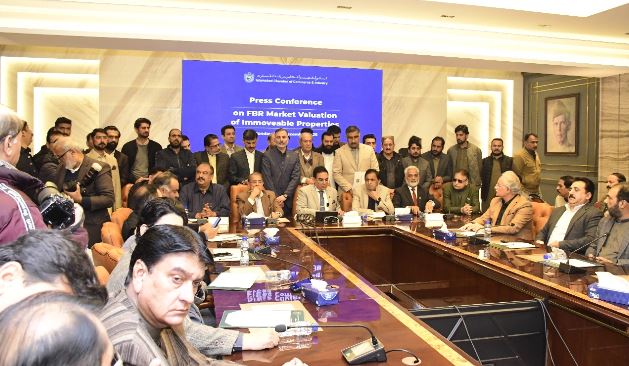
ISLAMABAD, DEC 15 /DNA/ – The business community of the federal capital has categorically rejected the Federal Board of Revenue’s (FBR) notification dated December 8, 2025, which revises the valuation of residential and commercial properties in Islamabad Capital Territory by up to 1,700 percent in certain cases.

This unanimous stance was announced by President Islamabad Chamber of Commerce and Industry (ICCI) Sardar Tahir Mehmood while addressing a largely attended press conference at the Chamber House on Monday evening. He warned that if the controversial notification is not withdrawn, the business community will stage a massive protest and hold a sit-in in front of the FBR on December 22, 2025.

The ICCI President sounded the alarm, stating that the oppressive measure would strangulate trade and industry in the region, leading to severe unemployment, business closures, economic unrest, and the relocation of industries to other regions and countries. He said the abrupt increase has shattered investor confidence and dealt a serious blow to the ease of doing business.

Calling for urgent intervention, Sardar Tahir Mehmood appealed to Prime Minister Shehbaz Sharif and Chief of Defence Forces Field Marshal Asim Munir to take notice of the gravity of the situation and step in to safeguard the country’s broader economic interests. He termed the FBR’s move a conspiracy against the Prime Minister’s tireless efforts to revive industry and create a business-friendly environment, regretting that certain elements appear determined to undermine these initiatives.

Chairman ICCI Founder Group Sheikh Tariq Sadiq strongly endorsed the decision to protest and stage a sit-in.

President All Pakistan Anjuman-e-Tajraan Ajmal Baloch announced that the entire city would join the protest on December 22. He demanded the immediate removal of Federal Finance Minister Mohammad Aurangzeb and an end to corruption in the name of the Point of Sale (PoS) system and called for strict action against those involved. Renowned business leader Ahsan Malik also addressed the press conference, expressing serious concerns over the negative impact of the valuation hike on economic activity.

Earlier, a consultative session was held at ICCI, bringing together leaders from trade, industry, real estate, construction allied sectors and citizens of the capital city. Speakers including Sardar Tahir Mehmood, Sheikh Tariq Sadiq, Chaudhry Abdur Rauf, Kashif Chaudhry, Ajmal Baloch, Israr Mashwani and others unanimously termed the notification unilateral, irrational and anti-business, demanding its immediate withdrawal.

They warned that such abrupt measures without meaningful consultation would have far-reaching consequences for investment, real estate activity and overall economic confidence, emphasizing that trust erosion at this critical juncture could further deepen the country’s economic challenges.

Senior Vice President Tahir Ayub, Vice President Irfan Chaudhry, former President Mian Akram Farid, Mohammad Ejaz Abbasi, Mian Shaukat Masood, executive committee members and a large number of business leaders were also present on the occasion.

AIOU holds its 75th meeting of BASR to review research synopses

AIOU holds its 75th meeting of BASR to review research synopses

ISLAMABAD, Dec 15 (APP/DNA):The 75th meeting of the Board of Advanced Studies and Research (BASR) was held at Allama Iqbal Open University (AIOU) during which 12 PhD and 87 MPhil research scholars from the Faculty of Education, the Faculty of Social Sciences and Humanities & the Faculty of Sciences defended their research synopses.

During the meeting, in order to further enhance research quality, the research synopses of some scholars were returned with instructions for revision.

The meeting was chaired by the Vice Chancellor, Prof. Dr Nasir Mahmood while the agenda was presented by the Director BASR, Prof. Dr Irshad Ahmad Arshad. External experts participated in the meeting, including Prof. Dr Aneela Kamal along with Professors from the National University of Sciences and Technology (NUST), International Islamic University, Fatima Jinnah Women University, University of the Punjab and other renowned universities.

The experts conducted a detailed review of the presented research synopses and offered valuable opinions and suggestions to make them more effective and of higher academic standard.

During the defense of the research synopses, the Vice Chancellor asked various questions to assess the research understanding and competence of the scholars.

The Vice Chancellor further directed that the Doctoral Synopsis Committee (DSC) must ensure thorough and meticulous scrutiny of the quality, comprehensiveness, and academic aspects of research synopses before presenting them to BASR for approval.

Additionally, the Vice Chancellor instructed research scholars that after obtaining approval from the DSC, they should not make any unauthorized changes to their research proposals, so as to maintain continuity, transparency, and quality in the research process.

On this occasion, a large number of deans from various faculties, senior faculty members, and subject experts were present and engaged in detailed and purposeful discussions on research topics.

At the conclusion of the meeting, it was reaffirmed that Allama Iqbal Open University remains fully committed to its vision of promoting research, innovation, and academic excellence.

President Zardari felicitates Kazakh leadership, people on Independence Day

President Zardari felicitates Kazakh leadership, people on Independence Day

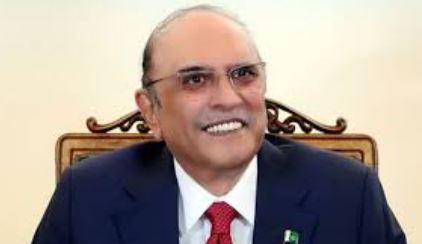
ISLAMABAD, Dec 15 (APP/DNA): President Asif Ali Zardari extended his warm felicitations to the leadership and people of Kazakhstan as they celebrated their 34th Independence Day on December 16.

The president conveyed his sincere wishes to President Kassym-Jomart Tokayev and to the people of Kazakhstan for the continued prosperity and stability.

Pakistan remained committed to deepening its partnership with Kazakhstan in pursuit of regional peace and development, he added.

“This occasion marks the adoption of the Law on Independence and State Sovereignty in 1991—a defining moment that set Kazakhstan on its path toward becoming a modern and forward-looking nation,” President Secretariat Press Wing, in a press release, quoted the president as saying.

He said Kazakhstan’s journey since independence reflected the resilience and steady progress of its people.

This date commemorated Kazakhstan’s declaration as a sovereign democratic state. It also honoured the 1986 Zheltoksan protests in Almaty, where Kazakh youth demonstrated against Soviet policies, symbolizing the people’s resolve for freedom.

“Pakistan and Kazakhstan share close and friendly ties, underpinned by common values and mutual respect. We deeply appreciate Kazakhstan’s steadfast support in international forums, including the United Nations and the Organisation of Islamic Cooperation. Our cooperation continues to strengthen, particularly in trade, energy and regional connectivity, with promising opportunities emerging through CPEC,” he added.

Finance Minister, ADB discuss reform implementation, development partnership

Finance Minister, ADB discuss reform implementation, development partnership

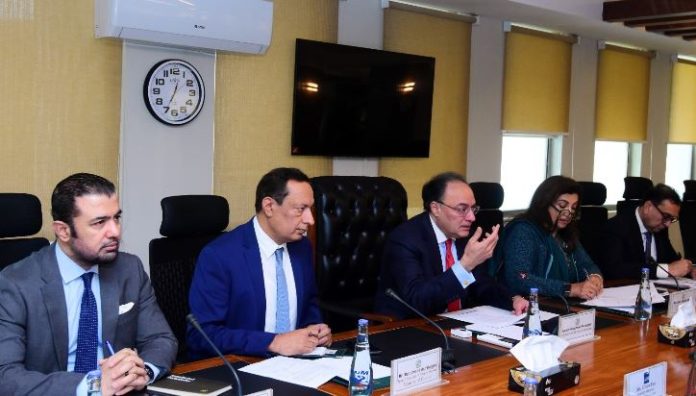
ISLAMABAD, DEC 15 /DNA/ – Federal Minister for Finance and Revenue, Senator Muhammad Aurangzeb, held a comprehensive meeting today with a high-level delegation of the Asian Development Bank (ADB) led by Ms. Emma Fan, Country Director, ADB, and Ms. Leah Gutierrez, Director General for Central and West Asia Department, along with senior officials from the local ADB team. The meeting was held at the Finance Division and focused on strengthening strategic cooperation, enhancing development impact, and accelerating reform implementation in Pakistan.

Welcoming the ADB delegation, the Finance Minister expressed deep appreciation for ADB’s longstanding and timely support to Pakistan, particularly in the areas of budgetary assistance, climate resilience, social sector development, and structural reforms. He underscored the importance of moving towards an impact-led and KPI-driven development partnership, emphasizing that development outcomes, rather than approvals alone, must remain the central measure of success.

The Finance Minister highlighted the Government’s resolve to improve project readiness and implementation, noting that delays in execution had historically diluted development impact, especially in social sectors and climate-related initiatives.

The meeting reviewed Pakistan’s macroeconomic stabilization efforts and reform trajectory under the IMF Extended Fund Facility (EFF). The Finance Minister noted that recent external validations, including improved credit ratings, successful IMF reviews, and the approval of the Climate Resilience Facility, reflected confidence in Pakistan’s reform agenda. He reaffirmed the Government’s commitment to structural reforms, including taxation, energy sector reforms, state-owned enterprises (SOEs), privatization, and public financial management.

Senator Aurangzeb briefed the delegation on recent progress, including the privatization of a small bank, renewed interest in strategic transactions, and ongoing work on energy sector restructuring and distribution companies. He emphasized that successful and visible transactions were critical to building momentum and credibility in the privatization process.

The Finance Minister also highlighted encouraging trends in exports and services, particularly IT services, growth in remittances, and a manageable current account deficit, while stressing the importance of sustaining growth in a balanced and sustainable manner. He reiterated the Government’s commitment to trade liberalization and competitiveness, despite short-term resistance from protected sectors.

Speaking on behalf of ADB, Ms. Emma Fan thanked the Finance Minister and his team for their strong collaboration and facilitation, including the successful visit of the ADB President to Pakistan. She reaffirmed ADB’s focus on development results, noting that faster project readiness and streamlined processes were essential for timely disbursements and tangible outcomes. She emphasized ADB’s willingness to support reforms aimed at improving implementation efficiency and strengthening institutional capacity.

ADB representatives expressed appreciation for Pakistan’s reform progress under the IMF program and confirmed ADB’s readiness to provide further budget support aligned with the EFF. They outlined future areas of engagement, including insurance sector reforms, public-private partnerships, pension reforms, and continued support for climate resilience and social sector development.

The delegation also highlighted ADB’s growing engagement in private sector development, including potential private sector transactions, guarantees, and PPP initiatives, such as proposed airport transactions. The strengthening of ADB’s in-country presence, including the appointment of a new Country Operations Head, was noted as a key step toward deeper engagement and improved project origination.

Both sides reaffirmed their shared commitment to deepening the Pakistan–ADB partnership, with a strong focus on impact, accountability, private sector development, and inclusive and sustainable growth.

The meeting concluded with mutual appreciation and an understanding to continue close coordination as Pakistan advances its reform and development agenda under the forthcoming country partnership framework and the pipeline for 2026 and beyond.

Soldier martyred, seven terrorists killed in DI Khan IBO: ISPR

Soldier martyred, seven terrorists killed in DI Khan IBO: ISPR

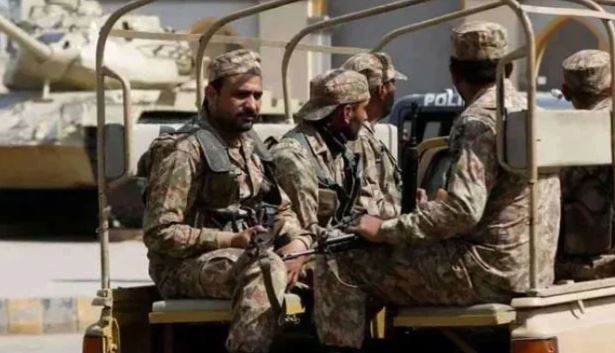
ISLAMABAD, DEC 15 – A Pakistan Army soldier was martyred and seven terrorists belonging to Indian proxy, Fitna al Khwarij, were killed during an intelligence-based operation in Dera Ismail Khan district, Khyber Pakhtunkhwa, the Inter-Services Public Relations (ISPR) said on Monday.

According to a press release from the military’s media wing, security forces conducted the IBO in the Kulachi area of DI Khan on the reported presence of militants.

“During the conduct of operation, own troops effectively engaged the khwarij location, and after an intense exchange of fire, seven khwarij were sent to hell,” read the statement.

During the intense exchange of fire, Naik Yasir Khan, 34, having fought gallantly, paid the ultimate sacrifice and embraced shahadat, it added.

Weapons and ammunition were also recovered from the slain terrorists. The ISPR said that the militants were involved in numerous terrorist activities in the area.

Sanitisation operation is being conducted to eliminate any other Indian-sponsored terrorists found in the area, it added.

The ISPR vowed that the relentless counter terrorism campaign under the vision “Azm-e-Istehkam” by security forces and law enforcement agencies will continue at full pace to wipe out the menace of foreign-sponsored and supported terrorism from the country.

Terrorist attacks have seen a sharp increase in Pakistan, particularly in the bordering provinces of KP and Balochistan, since the Afghan Taliban regime grabbed power in Afghanistan in 2021.

Pakistan has repeatedly called on the Afghan Taliban regime to prevent its soil from being used by terrorists against Pakistan, and the issue recently resulted in heightened tensions featuring cross-border attacks by the Afghan side, resulting in retaliation from Pakistani forces as well.

Recently, a meeting of Afghanistan’s scholars at Kabul University emphasised that the country’s soil must not be used to threaten or harm any other nation.

Islamabad welcomed the resolution as a “positive development”; however, it regretted that such commitments had been made in the past but were not honoured by the Afghan Taliban regime.

Foreign Office spokesperson Tahir Hussain Andrabi, during his weekly briefing on December 11, reiterated Islamabad’s demand for written assurances from Kabul that Afghan territory will not be allowed to be used by terrorist groups to launch attacks inside Pakistan.

Thailand to go to the polls on February 8

Thailand to go to the polls on February 8

Bangkok, Dec 15 (AFP/APP): Thailand’s next general election will take place on February 8, the election commission said Monday, and parties must nominate their candidates for prime minister before the end of this year.

                  “Today the Election Commission has drafted election details and proposed to the Commissioner who agreed that Sunday, February 8, 2026 will be the election day,” the commission said in a statement.

                  Advance voting will take place on February 1.

                  Prime Minister Anutin Charnvirakul, of the conservative Bhumjaithai party, assumed office in September after his predecessor was removed over an ethics violation.

                  He dissolved parliament on Friday, paving the way for the national poll — which under Thai law must be held between 45 to 60 days after the dissolution.

                  The move comes as a conflict stemming from a decades-long border dispute between Thailand and Cambodia reignited this month, with ongoing military clashes killing at least 31 people and displacing around 800,000.

                  Anutin, a cannabis-championing conservative, took power with coalition backing conditional on dissolving parliament, becoming the kingdom’s third leader in two years.

Clean energy shift requires system reform in Pakistan: Analysts

Clean energy shift requires system reform in Pakistan: Analysts

ISLAMABAD, DEC 15 /DNA/ – Pakistan’s energy transition demands coordinated planning, improved forecasting, investment in grid readiness, and targeted climate finance. Without addressing structural barriers such as capacity payments and outdated tariff frameworks, the country will struggle to translate its renewable momentum into a sustainable and resilient energy system.

Experts emphasized this at a high-level roundtable while noting that sustainable progress will depend on coherent policy direction, utility-scale renewable integration, stronger distribution networks, and climate finance mechanisms that support both mitigation and adaptation priorities.

They were speaking at a forum titled “Pakistan’s Energy Transition: Current Standing, Challenges and the Road Ahead” held at the Institute of Policy Studies (IPS), Islamabad. The session brought together leading voices from government, climate finance, academia, distribution companies, and the renewable energy sector. Key speakers included Dr. Sardar Mohazzam, former managing director National Energy Efficiency and Conservation Authority (NEECA), Mekaeel Malik, CEO Climate Finance Pakistan, Faisal Sharif, director environment and sustainability Private Power and Infrastructure Board (PPIB), and Dr. Syed Ali Abbas Kazmi, HOD Electrical Department NUST, who were joined by Khalid Rahman, chairman IPS.

The discussion segment featured a panel of experts, including Hasnat Khan, vice-chairman Pakistan Solar Association (PSA), Arqam Ilyas, manager planning and forecasting LESCO, Tanvir Ahmed, energy officer and country focal person UNHCR, Asim Ejaz, chief engineer IESCO, Dr. Nadia Shahzad, professor USPCAS-E NUST, Muhammad Yousif, assistant professor, Abdullah Qureshi, former deputy director tariff NEPRA, Dr. Faisal Nadeem, associate professor UET Taxila, and Mustafa Anwar, assistant professor NUST.

Sardar Mohazzam highlighted that renewables, including hydropower, constitute a major portion of Pakistan’s current energy mix, but long-term sustainability remains unclear. He stressed the need to plan for hydrogen fuels, new energy vehicles, and most critically, the growing burden of capacity payments that continues to obstruct meaningful progress toward a renewable future.

Regarding the climate finance landscape of Pakistan, Mekaeel Malik noted that 69% of finance comes from international public sources and 31% is private, where over 70% of these flows support mitigation, mainly renewable energy, while adaptation remains underfunded.

Faisal Sharif outlined that the key question of energy transition in Pakistan is how to do so in a way that is economically feasible, socially equitable, and environmentally sustainable.

In this regard, Mustafa Anwar underlined the rising interest in hydrogen fuel but cautioned that costs remain high, limiting near-term uptake despite pilot initiatives.

Discussing solar adoption trends, Hasnat Khan noted that Pakistan has imported 46 GW of solar equipment, of which 35 GW has been installed, mainly behind-the-meter, with only 7-9% under net metering. He noted that the government missed a critical opportunity by not deploying utility-scale solar earlier and is making the same mistake by not adopting batteries.

Building on this point, Dr. Nadia Shahzad emphasized that DISCOs should leverage the battery market. She outlined that the story of solar uptake is both a success and a warning case. She also highlighted the importance of domestic manufacturing, especially laminations, to reduce import dependence.

From the DISCO perspective, Arqam Ilyas stated that the solar revolution and emerging EV trends are placing immediate pressure on Pakistan’s grid, which was designed passively and not for bidirectional flows. He warned that if government action remains slow, consumers may increasingly move toward batteries and become entirely off-grid.

Emphasizing this point, Muhammad Yousif argued that NEPRA’s outdated tariff structure has inflated electricity prices.

Highlighting socio-economic realities, Tanvir Ahmed stressed that energy transition narratives overlook the challenges faced by low-income households struggling with high tariffs, poor service quality, and load shedding, which push them toward solar adoption out of necessity rather than environmental intent.

Lastly, deliberating on planning challenges, Dr. Faisal Nadeem noted that Pakistan’s forecasting has remained flawed for years, making it impossible to accurately determine renewable capacity requirements or optimal deployment locations.

In his concluding remarks, Khalid Rahman acknowledged the depth of the challenges highlighted. However, he emphasized that focusing on opportunities would guide Pakistan toward a more sustainable, equitable, and resilient energy future.

When Silence Becomes Safe

When Silence Becomes Safe

Muhammad Asif   

In every era of human history, the struggle for free expression has been tied to the struggle for dignity, identity, and power, yet perhaps at no point has this struggle been as complex and quietly dangerous as it is today. The modern world, adorned with the language of rights, democracy, and digital empowerment, ironically finds itself witnessing an unprecedented war on free speech one that is subtle, multilayered, and often disguised as protection, national interest, social harmony, or public morality. This war does not always involve jails, guns, or dictators; instead, it unfolds through cancel culture, digital manipulation, selective outrage, online mobs, sophisticated surveillance systems, and legal loopholes that redefine dissent as disloyalty. In such an environment, silence becomes safer than speaking, conformity becomes easier than questioning, and survival becomes more important than truth. At the heart of this global shift lies a troubling realization: in many societies, people are not silenced by force, but by fear. Fear of losing jobs, fear of being misquoted, fear of misinterpretation, fear of digital character assassination, fear of legal repercussions, and even fear of social isolation. Where once oppressive regimes required physical force to silence their people, today societies produce silence voluntarily, shaped by invisible pressures and internalized censorship.

Technology once believed to be the greatest liberator of speech has paradoxically become a powerful tool for suppression. Social media platforms that promised democracy of voices have instead become battlefields of manipulation where algorithms amplify hatred, governments monitor dissent, corporations gather private data, and mobs enforce ideological purity. In many cases, a single post can cost someone their reputation, livelihood, or safety. When public opinion weaponizes outrage, free speech becomes a privilege of the brave and a danger for the ordinary.

Democracies, too, are not immune. Laws framed to curb “misinformation,” “hate speech,” or “security threats” are increasingly used to target activists, journalists, and critics. The line between legitimate regulation and political censorship has blurred dangerously. Governments often claim to protect citizens from harmful content while subtly filtering anything that exposes corruption, misgovernance, or abuse of power. As the digital public square becomes more regulated than the physical one, speaking freely is no longer a right exercised without calculation; it is a risk measured carefully.

Beyond governments and media platforms, society itself has become a silent enforcer. Social polarization has created echo chambers where dissent is treated as betrayal. People increasingly surround themselves with like-minded voices, and any deviation from group opinion invites hostility. The fear of being misunderstood or attacked has pushed many thoughtful individuals into silence not because they lack opinions, but because they no longer see the value or safety in expressing them. Intellectual humility has been replaced by ideological absolutism; dialogue has been replaced by digital shouting matches. As a result, even well-intentioned debates collapse under the weight of aggression, sarcasm, and intolerance. When every disagreement is interpreted as a personal attack or political offense, honest conversation dies.

 The danger of this silent world is profound. When people stop speaking, societies stop thinking. Innovation, justice, and reform all depend on the ability to question, criticize, and imagine alternatives. Silence allows falsehood to flourish, corruption to deepen, and oppression to normalize itself. History shows that no great progress scientific, political, or moral has ever emerged from societies where people were afraid to speak. The suppression of free speech ultimately leads to intellectual stagnation and dysfunctional governance. A society that fears words eventually fears truth, and a society that fears truth becomes easy to manipulate.

Yet, despite the bleakness, the war on free speech is not irreversible. Courage remains the strongest antidote. Around the world, journalists risk their lives to report truth; activists challenge unjust laws; writers and thinkers use metaphors, satire, and art to say what cannot be said directly; ordinary citizens raise their voices despite threats and pressure. The resilience of human conscience is greater than any system of censorship. But courage alone cannot bear the burden. Societies must relearn the value of listening, debating, and disagreeing respectfully. Governments must recognize that suppressing speech, even under noble pretexts, ultimately weakens nations by depriving them of critical thought. Educational systems must teach students not what to think, but how to think. Media platforms must prioritize transparency and fairness over algorithmic manipulation and profit. Above all, people must reclaim the forgotten truth that freedom of speech is not merely the right to speak it is also the responsibility to protect the right of others to speak, even when we disagree with them.

 The war on free speech will not end with a single law, revolution, or technological invention. It will end when societies realize that silence is not safety but surrender. It will end when people understand that speaking the truth may be risky, but abandoning truth is fatal. In the end, the cost of silence is far greater than the cost of speech. The moment we choose silence because it feels safer is the moment we begin losing not only our voice but also our humanity.

Muhammad Asif   

( [email protected] )

Stay Connected

64FansLike
60FollowersFollow

Latest Reviews

Exchange Rates

USD - United States Dollar
EUR
1.14
GBP
1.34
AUD
0.70
CAD
0.71