Home Blog Page 344

Aseefa Bhutto Zardari — A True Reflection of Benazir

Aseefa Bhutto Zardari — A True Reflection of Benazir

By Malik Faisal Munir

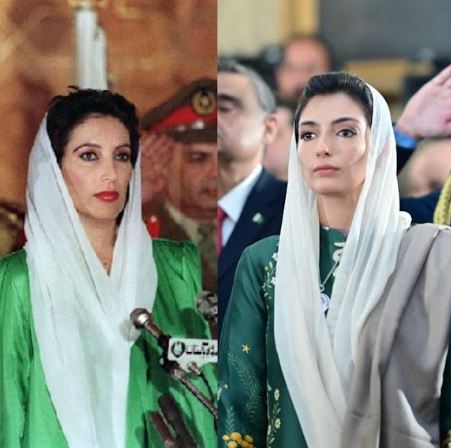
In Pakistan’s political history, some names are not merely individuals; they embody entire traditions, ideologies, and lifelong struggles. From Quaid-e-Awam Shaheed Zulfikar Ali Bhutto to Daughter of the East Shaheed Mohtarma Benazir Bhutto, and onward to Bilawal Bhutto’s political maturity, the journey of the Pakistan People’s Party has always been defined by sacrifice, a bond with the people, and democratic continuity.Some faces remain etched in hearts even after fading into the mist of time. Some voices continue to echo for centuries even after falling silent. And some people, even after departing from this world, leave such deep imprints in their successors that future generations open windows to the past by merely looking at them. Asifa Bhutto Zardari is one such name, a personality whose presence carries the fragrance of Shaheed Mohtarma Benazir Bhutto: her gentle smile, dignified courage, and compassionate leadership are clearly reflected in Asifa’s being.

In this political legacy, a transparent, dignified, and hope-inspiring face is emerging in the form of Asifa Bhutto, a face that instinctively reminds people of Shaheed Mohtarma Benazir Bhutto. At times, when Asifa Bhutto stands at a political gathering, inaugurates a hospital, or addresses a public event, it feels as if the Daughter of the East herself is waving to the people in her signature style. The same softness, the same grace, the same compelling confidence as though time has completed a circle and brought the same scene before us once again.

Her facial features, the flow of her smile, her balanced manner of speaking, and above all, her natural ability to connect with the people make Asifa a living glimpse of Benazir Bhutto. Pakistan’s politics has rarely tested any family with as many trials and tribulations as the Bhutto family. From the moment Asifa Bhutto opened her eyes, she witnessed sacrifice, struggle, and public service deeply embedded in her surroundings. The resonance of Shaheed Benazir Bhutto’s relentless fight for democracy has become an integral part of Asifa Bhutto’s personality. Three fundamental elements stand out in Asifa Bhutto’s political grooming: the people-centric politics of Shaheed Mohtarma Benazir Bhutto, the political wisdom of Asif Ali Zardari, and the modern, balanced leadership of Bilawal Bhutto. These three dimensions shape her into a complete, mature, and serious face of future politics.

Like her mother, Asifa Bhutto is a composed, warm, and empathetic personality who carries the people’s pain within her heart. People sense the same compassion in her tone that was Benazir Bhutto’s hallmark: an acute sense of responsibility, concern for public welfare, and a deep interest in health, education, and human development initiatives. During the COVID-19 days, Asifa Bhutto not only helped raise public awareness but also played a training and organizational role in the Pakistan Peoples Party’s social programs.

Asifa Bhutto Zardari, while belonging to the Pakistan People’s Party, a renowned political household appears on every platform as a representative of Pakistan. Whether at international human rights forums or global health programs, she remains consistently concerned about Pakistan and its people, especially future generations. When the alarm bells rang over the threat of polio, Shaheed Mohtarma Benazir Bhutto chose Asifa Bhutto Zardari as the very first child to be administered polio drops. And when that child grew into a young woman, the United Nations appointed the same Asifa Bhutto Zardari as its ambassador in the fight against polio. All this positions her as an ambassador of soft politics.

The dignity that once graced Benazir Bhutto’s face is reflected in Asifa Bhutto. The resolve that shone in Benazir’s eyes sparkled in Asifa’s gaze. The love Benazir held for the people is felt in Asifa’s words. It feels as though nature has placed the torch of Benazir’s struggle into Asifa Bhutto’s hands asking her to keep it alight for the people, to remain a symbol of hope, and to continue spreading light. The world recognized Benazir Bhutto as a courageous, visionary leader of global stature. When Asifa Bhutto attends political events, her dignified demeanor offers a glimpse of a future era in which the Pakistan People’s Party once again stands strong with a modern, youthful leadership. That is why it is said that the reflection of Shaheed Benazir Bhutto in Asifa Bhutto is not limited to her appearance alone, but is evident in her style of politics as well.

Asifa Bhutto Zardari’s political approach mirrors that of her mother, Shaheed Mohtarma Benazir Bhutto. She remains deeply concerned about the welfare of women and, especially, children in Pakistan. Whether it is visiting hospitals in Sindh, participating in cleanliness drives, or supporting education and health initiatives, she is always actively involved. Pakistan’s younger generation views Asifa Bhutto Zardari as a new political force, one capable of playing a significant role in the future. Her conduct, tolerance, composure, and gentle yet firm tone make her a promising and trustworthy leader. Quietly and with dignity, Asifa Bhutto is carrying forward the spiritual, moral, and intellectual legacy of her mother, Shaheed Benazir Bhutto.

Asifa Bhutto Zardari stands among those rare personalities who, through their grace, simplicity, and continuity of family struggle, are earning a place in people’s hearts. She may be a reflection, but she is not merely an imitation she possesses the ability to carve out her own identity. If she enters practical politics with full force, it is certain that a new chapter in Pakistan’s political history will be written.
Experts emphasize effective implementation of national security policies

Experts emphasize effective implementation of national security policies

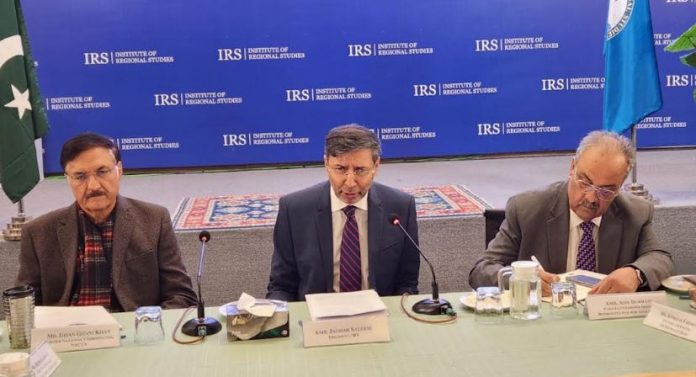
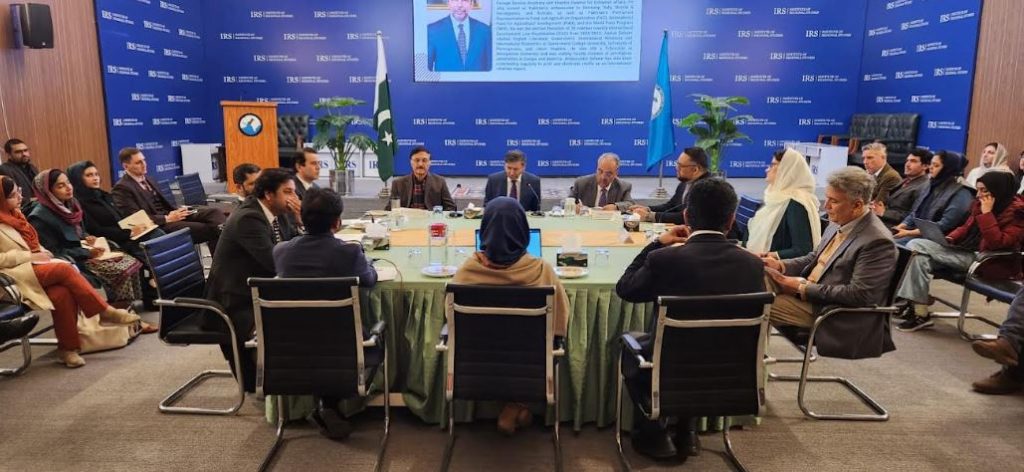
ISLAMABAD, DEC 16 /DNA/ – Participants of a roundtable discussion emphasized the need for effective implementation of national security policies and developing a sustained narrative against terrorist violence. They were speaking at a roundtable discussion on the evolving counterterrorism response of Pakistan and the challenges of cross-border terrorism organized by the Institute of Regional Studies (IRS) in the backdrop of the 11th anniversary of the terrorist attack on the Army Public School (APS) in Peshawar in December 2014.

President IRS Ambassador Jauhar Saleem termed the 2014 APS tragedy a defining moment in Pakistan’s history which paved the way for formulation of the National Action Plan (NAP) with a political consensus. He called for countering the terrorists’ propaganda through a sustained counter-terrorism narrative.

Former National Coordinator NACTA Mr Ihsan Ghani Khan highlighted the gaps in implementation of various good policy documents, including NAP. He maintained that tactical counterterrorism had a limited scope and needed to be bolstered by strategic counterterrorism that included well-thought-out policymaking and effective policy implementation. He added that since terrorism was a crime, the law enforcement mechanisms needed to be strengthened through the revamping of the criminal justice system which was also the last point in NAP.

Pakistan’s former Special Representative for Afghanistan Ambassador Asif Ali Durrani also called for adopting a unified national narrative against terrorism. He urged the strengthening of the police force as first responders in countering terrorism and called for better interagency coordination among various government agencies and departments dealing with counterterrorism.

The Founder and Editor of The Khorasan Diary Mr Iftikhar Firdous said that even though APS was a tragedy in scale and scope, Pakistani policymakers needed to take even attacks targeting the school buildings and not the schoolchildren seriously because in doing that the terrorists were targeting symbols of education in the country. He called for better governance in the merged districts of Khyber Pakhtunkhwa to counter terrorism in those areas.

The Executive Director of the Centre for Law and Security (CLAS) Mr Rehman Azhar said that Pak-Afghan border has certain unique characteristics that need to be considered when devising border security strategies. He also called for implementation of NAP and an effective counter-narrative strategy against terrorism, especially in the two provinces most affected by it. In addition, he also called for seriously addressing the terror and crime nexus in the country.

The Lead of the Afghanistan Program at IRS Mr Aarish U. Khan said that the coming into power of the Taliban government in Afghanistan had necessitated a fresh look at the drivers of terrorism in Pakistan’s bordering areas with Afghanistan.

How Narratives Become Weapons

How Narratives Become Weapons

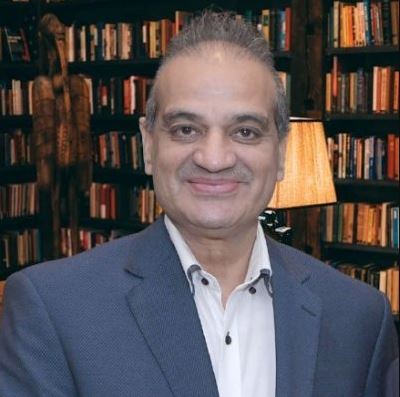
Dr. Muhammad Akram Zaheer

In recent years, the information warfare has become a convenient label for nearly every dispute-taking place on television screens, social media timelines, and diplomatic platforms. Information warfare does not begin with technology; it begins with intent. At its core, it is the organized effort to influence what people believe, how they interpret events, and how they make decisions. The actors involved identify a strategic objective perhaps to discredit an opponent, create doubt around an institution, soften resistance to a policy, or simply distract the public from a sensitive issue. Once the objective is defined, the next step is to design a message that serves this purpose. This message may be entirely false, partly distorted, or based on selective truth. What matters is not factual accuracy, but its ability to achieve the intended psychological effect.

The second layer of information warfare involves identifying the audience. Contrary to the impression created by the sheer chaos of online communication, the targeting of audiences is far from random. Different groups are mapped according to their political leanings, social grievances, emotional triggers, and information habits. Some audiences are chosen because they are sympathetic and can amplify the message; others because they are vulnerable and can be manipulated; still others because they are influential and can legitimize the narrative. In many cases, the same message is packaged differently for each audience, giving the impression of organic conversation while serving a coordinated strategy.

After the message and the target are determined, the next question is distribution. Here, the digital environment becomes central. Social media platforms enable speed, repetition, and scale. A single post, if amplified by networks of aligned accounts, can travel through thousands of feeds in minutes. Bots and anonymous accounts add layers of noise, making it difficult to identify the original source. Sometimes, false or distorted content is seeded in smaller online communities where it can grow without scrutiny before being pushed into mainstream discourse. Traditional media may then pick up fragments of these narratives sometimes unintentionally giving them a sense of legitimacy. Information warfare also relies heavily on timing. Messages are often released to coincide with moments when the public is already anxious or confused during political crises, international conflicts, economic downturns, or major social incidents. In these moments, the boundaries of certainty are thinner, and people are more receptive to simplified explanations or emotionally charged interpretations. A narrative introduced at the right moment can overshadow verified information, crowd out alternative perspectives, or redirect attention entirely.

Another key element is repetition. Even the most implausible claims can begin to feel familiar through constant exposure. Repetition does not persuade through logic; it persuades through familiarity. The more frequently a narrative appears, the more “natural” it seems. This is why information warfare rarely depends on a single message. Instead, it unfolds through a steady flow of posts, comments, videos, statements, and commentary all reinforcing the same underlying theme. Information warfare also thrives on ambiguity. Rather than presenting a clear alternative version of reality, many campaigns focus on creating doubt. The aim is not necessarily to make the audience believe a particular story, but to make them question whether any account can be trusted. This erosion of confidence weakens institutions, undermines civic debate, and leaves the public in a state where strong emotions replace rational judgment. In such an environment, actors promoting disruptive narratives find greater room to operate.

It is also important to understand that not all information warfare is foreign or coordinated. Domestic actors politicians, pressure groups, commercial interests use similar tactics to shape public perception. During elections, governments and opposition parties alike craft selective narratives, highlight or conceal information, and rely on online networks that blur the line between persuasion and manipulation. Similarly, commercial entities may use tailored messaging to influence consumer attitudes or discredit competitors. The techniques may differ in sophistication, but the underlying logic remains similar. A particularly concerning aspect is the speed at which false or misleading content spreads compared to verified information. Verification requires time, evidence, and consistency; misinformation requires none of these. Once a claim circulates widely, corrections rarely achieve the same reach, even when they are clear and authoritative. In some cases, attempts to correct misinformation only reinforce the false narrative by keeping it in public discussion.

Information warfare also benefits from a deepening distrust in traditional institutions. When citizens feel isolated from political processes, disillusioned with public service delivery, or suspicious of mainstream media, they become more receptive to simplified explanations and emotionally charged narratives. This creates fertile ground for actors who operate with minimal accountability. It requires rebuilding public trust through transparency, improving media literacy, and strengthening independent journalism. Citizens must learn to recognize patterns of manipulation, question the origins of the information they encounter, and demand evidence rather than emotion. Institutions, for their part, must communicate more clearly, respond to crises more responsibly, and avoid creating information vacuums that others can exploit.

Bondi Beach suspect father arrived in Philippines as ‘Indian national’: immigration

Bondi Beach suspect father arrived in Philippines as 'Indian national': immigration

The father and son allegedly behind one of Australia’s deadliest mass shootings spent nearly the entire month of November in the Philippines, authorities in Manila confirmed Tuesday, with the father entering as an “Indian national”.

Sajid Akram and his son Naveed, who allegedly killed 15 people and wounded dozens of others at a Hanukkah celebration on Sydney’s Bondi Beach, entered the country on November 1 with the southern province of Davao listed as their final destination.

“Sajid Akram, 50, Indian national, and Naveed Akram, 24, Australian national, arrived in the Philippines together last November 1, 2025 from Sydney, Australia,” immigration spokeswoman Dana Sandoval told AFP.

“Both reported Davao as their final destination. They left the country on November 28, 2025 on a connecting flight from Davao to Manila, with Sydney as their final destination.”

Police and military sources had earlier told reporters they were still in the process of confirming the duo’s presence in the country.

“Early indications point to a terrorist attack inspired by Islamic State, allegedly committed by a father and son,” Australian Federal Police Commissioner Krissy Barrett said at a news conference.

Police also said the vehicle which is registered to the younger male contained improvised explosive devices and two homemade flags associated with ISIS, or Daesh, a militant group designated by Australia and many other countries as a terrorist organisation.

Videos have emerged of the younger shooter preaching religion outside train stations in suburban Sydney. Authorities are still trying to piece together how he went down the path of violence.

The attack on Sunday was Australia’s worst mass shooting in nearly 30 years, and is being investigated as an act of terrorism targeting the Jewish community.

The death toll stands at 16 including Sajid, who was shot by police on spot. The man’s 24-year-old son and alleged accomplice Naveed, was in critical condition in hospital after also being shot.

The 15 victims ranged from a rabbi who was a father of five, to a Holocaust survivor, to a 10-year-old girl named Matilda Britvan, according to interviews, officials and media reports. Two police officers remained in critical but stable condition in hospital, New South Wales police said.

Australian Prime Minister Anthony Albanese said Tuesday that the two men had likely been radicalised by “Daesh ideology”.

Davao is a large urban center located on the eastern side of Mindanao, the Philippines’ largest southern island. Armed groups are known to be active in economically disadvantaged areas of central and southwestern Mindanao.

The Philippine military, however, said it was unable to promptly verify claims that the two individuals had received “military-style training” during their time in the country, despite earlier reports suggesting otherwise.

Mindanao also has a long history of insurgencies against central government rule.

Pro-Daesh Maute and Abu Sayyaf militants — including foreign and local fighters — held Mindanao’s Marawi under siege in 2017.

The Philippine military wrested back the ruined city after a five-month battle that claimed more than 1,000 lives and displaced hundreds of thousands of people.

While insurgent activity in Mindanao has significantly abated in the years since, the Philippine army continues to hunt leaders of groups deemed to be “terrorists”.

A spokesman for the army’s Mindanao-based 6th Infantry Division told AFP on Tuesday that they had heard nothing in recent years about Daesh-linked training camps or foreigners training with local insurgents.

Memorial of flowers
Some 25 survivors are receiving care in several Sydney hospitals, officials said.

Israeli Ambassador Amir Maimon visited Bondi on Tuesday and urged the Australian government to take all required steps to secure the lives of Jews in Australia.

“Only Australians of Jewish faith are forced to worship their gods behind closed doors, CCTV, guards,” Maimon told reporters in Bondi, after laying flowers at the temporary memorial and paying his respects to the victims.

“My heart is torn apart … it is insane.”

A string of antisemitic incidents in Australia has unfolded in the past 16 months, prompting the head of the nation’s main intelligence agency to declare that antisemitism was his top priority in terms of threat to life.

At Bondi, the beach was open on Tuesday but was largely empty under overcast skies, as a growing memorial of flowers was established at the Bondi Pavilion, metres from the location of the shootings.

Bondi is Sydney’s best-known beach, located about 8.2 km (5 miles) from the city centre, and draws hundreds of thousands of international tourists each year.

Olivia Robertson, 25, visited the memorial before work.

“This is the country that our grandparents have come to for us to feel safe and to have opportunity,” she said.

“And now this has happened right here in our backyard. It’s pretty shocking.”

Ahmed al Ahmed, the 43-year-old Muslim father-of-two who charged at one of the gunmen and seized his rifle, remains in a Sydney hospital with gunshot wounds. He has been hailed as a hero around the world, including by US President Donald Trump.

A GoFundMe campaign set up for Ahmed has raised more than A$1.9 million ($1.26 million).

Ukrainian Ambassador rejects Russian narrative

Ambassador Chuchuk also highlighted alleged crimes against Ukrainian children, including unlawful deportations, forced transfers and re-indoctrination

 DNA

ISLAMABAD, DEC 16 /DNA/: The Embassy of Ukraine in Pakistan has strongly rejected a recent statement issued by the Embassy of the Russian Federation, describing it as an exercise in “hybrid information warfare” based on propaganda, disinformation and distorted facts.

In a detailed rebuttal, Ambassador of Ukraine to Pakistan, H.E. Markiian Chuchuk, said Russia’s attempt to label its actions as a “Ukrainian crisis” was misleading and aimed at obscuring responsibility for what he described as a clear act of aggression. He emphasized that under international law, Russia’s actions since 2014 — including the annexation of Crimea and the full-scale invasion launched on February 24, 2022 — constitute an international armed conflict initiated by Moscow.

The ambassador cited multiple UN General Assembly resolutions condemning Russia’s actions and reaffirming Ukraine’s territorial integrity, stating that Ukraine is exercising its lawful right to self-defence under Article 51 of the UN Charter. He dismissed Russian claims of external provocation as “legally null and void.”

Ambassador Chuchuk also highlighted alleged crimes against Ukrainian children, including unlawful deportations, forced transfers and re-indoctrination. He referred to figures acknowledged by Russian officials and international bodies, noting that the International Criminal Court issued arrest warrants in March 2023 against Russian President Vladimir Putin and Russia’s Children’s Rights Commissioner over alleged war crimes related to child deportations.

Addressing Russia’s criticism of international legal mechanisms, the Ukrainian envoy said accountability and reparations were essential for a just and lasting peace, adding that asset freezes and damage registers were lawful responses to grave violations of international law.

He rejected Russian claims questioning the legitimacy of Ukraine’s leadership, stating that elections could not be held due to the war initiated by Russia and that Ukraine’s constitutional framework clearly provides for continuity of governance under martial law.

The ambassador also condemned what he described as nuclear threats contained in the Russian statement, calling them a serious violation of international norms, and criticized Moscow’s use of anti-colonial rhetoric while pursuing what he termed a neo-colonial war of territorial expansion.

Referring to Pakistan, Ambassador Chuchuk said interpreting Islamabad’s neutrality as support for Russia was a “gross manipulation.” He thanked the Government of Pakistan for consistently upholding the principles of sovereignty and territorial integrity and for its support of a just and lasting peace.

Concluding his statement, the Ukrainian envoy said the Russian embassy’s remarks demonstrated a lack of genuine willingness to pursue peace based on international law, while reaffirming Ukraine’s commitment to negotiations grounded in the UN Charter.

Hamas ‘reserves right to retaliate’ as Israel continues violating ceasefire

Hamas 'reserves right to retaliate' as Israel continues violating ceasefire

UN officials say at least 300,000 tents urgently required for displaced Gazans

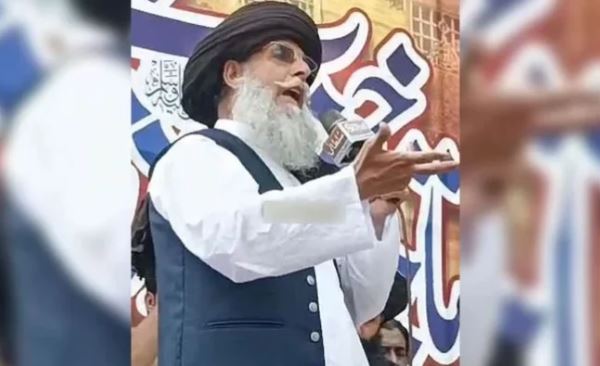
TLP leader sentenced to over 35 years for threats against ex-CJP Isa

TLP leader sentenced to over 35 years for threats against ex-CJP Isa

LAHORE: An Anti-Terrorism Court (ATC) in Lahore has sentenced banned Tehreek-e-Labbaik Pakistan (TLP) leader Pir Zaheerul Hasan Shah to 35 years and six months in prison for issuing threats to former chief justice Qazi Faez Isa.

ATC judge Arshad Javed announced the verdict after completing the trial of the case registered in 2024.

Shah was arrested on July 29 last year in Okara, after a first information report (FIR) was registered against him in Lahore’s Qila Gujjar Singh police station.

Shah, who is also the vice emir of the banned TLP, was booked for a speech made during a protest rally outside the Lahore Press Club during a demonstration against the Supreme Court verdict in the Mubarak Sani case.

Apart from the TLP leader, the FIR also nominated 1,500 party workers for issuing death threats to the then-chief justice.

The FIR included provisions of the Anti-Terrorism Act (ATA) and those related to spreading religious hatred and anarchy, pressuring and threatening the higher judiciary, interference in state affairs, obstructing in performance of legal duties and others.

During today’s hearing, the ATC Lahore convicted the TLP leader on multiple charges and sentenced him to jail, in addition to imposing a fine of Rs600,000.

In October, the federal government declared the religio-political party a proscribed organisation under the Anti-Terrorism Act (ATA), following a series of violent protests.

A notification, issued by the Ministry of Interior on October 24, stated that the government had “reasonable grounds to believe that Tehreek-e-Labbaik Pakistan is connected with and concerned in terrorism.”

A demarche too far? Norway, the Supreme Court, and Pakistan’s diplomatic dilemma

A demarche too far? Norway, the Supreme Court, and Pakistan’s diplomatic dilemma

Analysis

Ansar Mahmood Bhatti

The recent visit of the Norwegian Ambassador to Pakistan to the Supreme Court to witness the proceedings involving lawyer Iman Mazari and her husband has triggered a significant diplomatic and political debate, raising questions about diplomatic norms, judicial transparency, and Pakistan’s engagement with the international community on issues of rule of law and human rights.

Following the ambassador’s attendance at the court proceedings, Pakistan’s Ministry of Foreign Affairs summoned the Norwegian envoy and conveyed a formal demarche, expressing displeasure over what it termed an “unwarranted” action. Notably, Norwegian foreign ministry representative has defended the act of the ambassador, while Pakistani media has extensively highlighted and debated the development from multiple angles.

Supporters of the ambassador’s gesture argue that European countries, including Norway, have long championed the principles of rule of law, judicial independence, and human rights. Although Norway is not a member of the European Union, it accords immense importance to democratic values and regularly aligns itself with international human rights norms. From this perspective, the ambassador’s presence in court is seen not as interference, but as an expression of concern for legal transparency and due process.

Critics, however, believe the visit crossed diplomatic boundaries and warranted a formal response from the Foreign Office. They argue that foreign diplomats must exercise restraint in domestic legal matters, particularly in politically sensitive cases. This divergence of opinion has deepened the debate on where the line should be drawn between diplomatic observation and perceived interference.

It is important to note that this is not the first-time foreign diplomats have observed judicial proceedings in Pakistan. History offers a notable precedent in the case of former Prime Minister Zulfikar Ali Bhutto, whose trial was witnessed by several foreign observers and diplomats. At that time, their presence did not trigger such strong official reactions, despite the fact that a dictatorial regime was in place. This historical context strengthens the argument that observing court proceedings and commenting on them are two entirely different actions.

According to available information, the Norwegian Ambassador did not make any public or private remarks on the proceedings. He merely attended the hearing as an observer. In diplomatic practice, observation without commentary is generally considered permissible, particularly when proceedings are open to the public. Viewed in this light, the Foreign Office’s reaction appears premature and, in the eyes of some analysts, unnecessary.

There are also reports suggesting that the decision to summon the ambassador was not taken independently by the Foreign Office but was instead influenced by powerful quarters. If true, this has placed Foreign Office officials in a difficult position. Diplomats within the ministry, speaking on condition of anonymity, have reportedly expressed concern that while the directive may have originated elsewhere, it is the Foreign Office that must now justify the decision both domestically and internationally.

These officials caution that Pakistan’s missions abroad may face challenges defending the move, especially in countries where court monitoring by diplomats and human rights observers is considered routine. The episode, they fear, could complicate diplomatic engagements with European capitals and international rights bodies.

In today’s global landscape, the European Union remains one of the few collective bodies that consistently speaks about human rights, democratic norms, and the rule of law. The United States also claims to champion democracy and human rights, but its approach is often criticized as selective, acting forcefully where it aligns with strategic interests and remaining silent elsewhere.

The EU, despite raising its voice on rights issues, is also part of a global political nexus largely dominated by the super powers. As a result, it often balances principle with pragmatism. This balancing act is evident in its past and present dealings with Pakistan.

A notable example is the 2002 general elections in Pakistan. The EU deployed an election observation mission headed by John Cushnahan, the Member EU parliament from Ireland, that produced a comprehensive 100-page report, describing the elections as highly flawed and rigged. In response, the EU initially distanced itself from Pakistan. However, within a short span of time, relations were normalized, and the European Union resumed engagement with the very government it had earlier criticized. In 2003, during my visit to Brussels, I personally met John Cushnahan and raised this apparent reversal with him; he could only express his disappointment over the EU’s backtracking.

A similar pattern emerged following Pakistan’s 2024 general elections. The EU once again prepared an expert report highlighting serious concerns and irregularities. Yet, the Pakistani government has not made the report public to date. Interestingly, the EU itself has not strongly pushed Islamabad to release the document, reflecting its cautious and calculated approach.

Despite persistent concerns over governance, rule of law, and human rights, Pakistan continues to enjoy the EU’s GSP Plus trade status. There has been little tangible improvement in these areas, yet the likelihood of renewal of GSP Plus remains strong. This underscores the reality that such decisions are often political rather than strictly merit-based.

Against this backdrop, the reaction to the Norwegian Ambassador’s court visit appears disproportionate to many observers. They argue that if Pakistan continues to engage with Europe on trade, development, and diplomatic cooperation, it must also be prepared to tolerate symbolic gestures rooted in concern for judicial transparency.

The episode highlights a broader dilemma facing Pakistan’s foreign policy establishment: how to balance sovereignty and sensitivity with openness and international engagement. While protecting national institutions is essential, overreaction risks projecting insecurity and undermining Pakistan’s own stated commitment to rule of law and justice.

Whether this incident becomes a footnote or a turning point in Pakistan’s diplomatic conduct will depend on how pragmatically the situation is handled in the days ahead.

Govt pledges full support to Islamabad land survey affectees

Govt pledges full support to Islamabad land survey affectees

ISLAMABAD, DEC 15 /DNA/ – The government has pledged its full support to address the grievances of citizens whose properties were affected by a controversial land survey conducted over a decade ago.

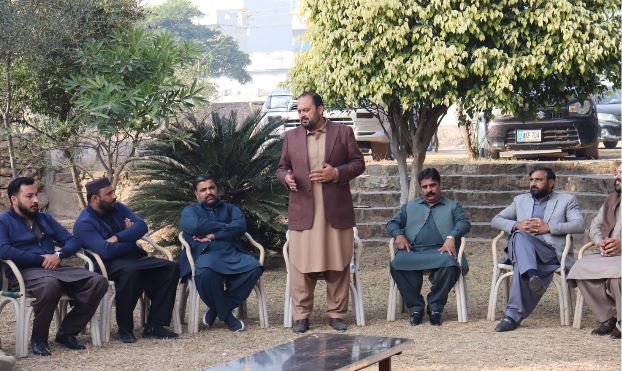
During a high-level meeting on Saturday, Syed Zeeshan Ali Naqvi, the Focal Person for the Prime Minister’s Youth Program, assured representatives of the Islamabad Affectees Alliance that their struggle for justice would be actively championed at the highest levels of government.

The core issue revolves around the 2008 survey conducted using Google Earth and SUPARCO (Space and Upper Atmosphere Research Commission) imagery, which the affectees claim inaccurately demarcated land and led to injustices in property rights. The alliance has consistently rejected the findings of this survey.

In a significant show of solidarity, Mr. Naqvi and the affectees’ representatives unanimously declared the 2008 survey as “completely unacceptable.” Mr. Naqvi committed to a multi-pronged action plan to resolve the long-standing dispute.

“The fight to protect the rights of the affectees and to ensure they receive justice will continue. Their voice will be raised on every relevant forum,” stated Mr. Naqvi.

He announced that meetings would soon be arranged between the alliance’s committee and key officials, including the Chairman of the Capital Development Authority (CDA). Furthermore, he stated that with the assistance of the Prime Minister’s Advisor, Dr. Tariq Shah, the matter would be brought directly to the attention of Prime Minister Shehbaz Sharif for intervention.

The meeting was attended by prominent members of the affectees’ community, including Malik Mehraban, Kashif Qureshi, and Malik Jamshed, among others. The discussion focused on the persistent problems stemming from the 2008 survey, with attendees demanding a fair and transparent resolution.

This development marks a potential turning point for the affected citizens, who have sought governmental support for years to overturn the survey’s implications and secure their property rights in the federal capital.

Nation remembers APS martyrs as Abdul Aleem Khan reaffirms resolve against terrorism

Nation remembers APS martyrs as Abdul Aleem Khan reaffirms resolve against terrorism

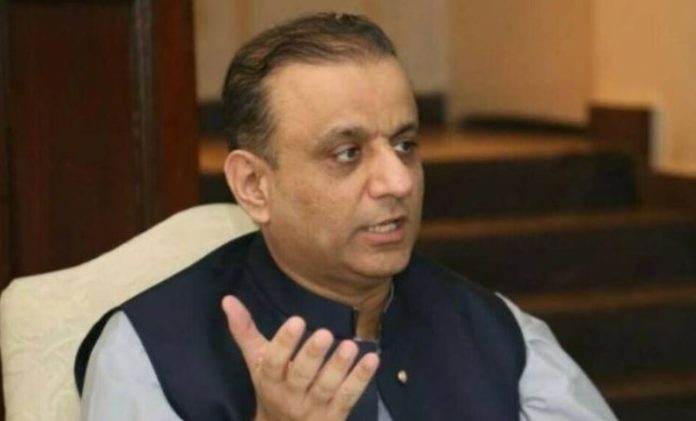
ISLAMABAD, Dec 15 (APP/DNA):Federal Minister for Communications Abdul Aleem Khan on Monday said that the Army Public School (APS) tragedy in Peshawar remains one of the darkest and most painful chapters in Pakistan’s history, adding that the brutal attack on innocent children can never be forgotten.

In a message on the commemoration of the APS tragedy, he said that December 16, 2014, was a day of profound national grief, when extreme brutality was inflicted upon students who had gathered to seek education. He said the tragic incident shook the entire nation and continues to live in the collective memory of the people, said a press release.

Abdul Aleem Khan further stated that the young martyrs laid down their precious lives for the future of the motherland, adding that Pakistan lost many of its future doctors, engineers, teachers, and leaders on that tragic day.

He said that the indiscriminate firing on students who had come to seek education was the height of cruelty and savagery. The Minister further added that the courage, patience and resilience shown by the affected parents in enduring this immense loss are worthy of the highest admiration and serve as a guiding light for the entire nation.

Abdul Aleem Khan said that the sacrifices of these innocent children will never go in vain; rather, they will continue to strengthen our resolve in the fight against terrorism.

He said that Pakistan’s Armed Forces have been engaged in a relentless war against terrorism for decades and remain steadfast on the front lines at all times to ensure peace and stability in the country. He said that the Armed Forces are our guardians, and those who spread propaganda against them are enemies of both the state and the nation, today, the resting places of the martyrs have become symbols of bravery, loyalty and sacrifice.

He said that the APS tragedy is a monumental tale of sacrifice that will forever be etched in history in golden letters. Abdul Aleem Khan pay profound tribute and salute the martyrs of the Peshawar tragedy and pray that may Allah Almighty to elevate their ranks, grant patience and strength to their bereaved families, and protect Pakistan from ever facing such a tragedy again.

Stay Connected

64FansLike
60FollowersFollow

Latest Reviews

Exchange Rates

USD - United States Dollar
EUR
1.14
GBP
1.34
AUD
0.70
CAD
0.71