Home Blog Page 3415

Queen Elizabeth honors Pak volunteers

ISLAMABAD, JUNE 6 (DNA) – Her Majesty The Queen has honoured two outstanding volunteers with a Commonwealth Points of Light Award during a phone call hosted by British High Commissioner, Christian Turner CMG.

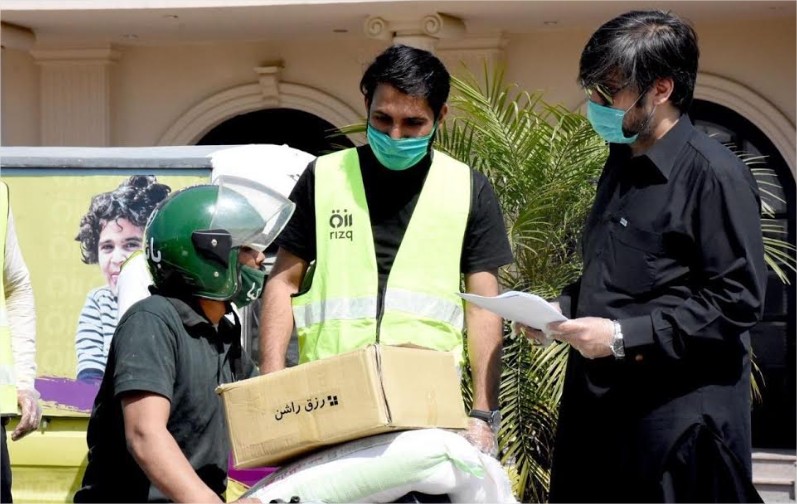
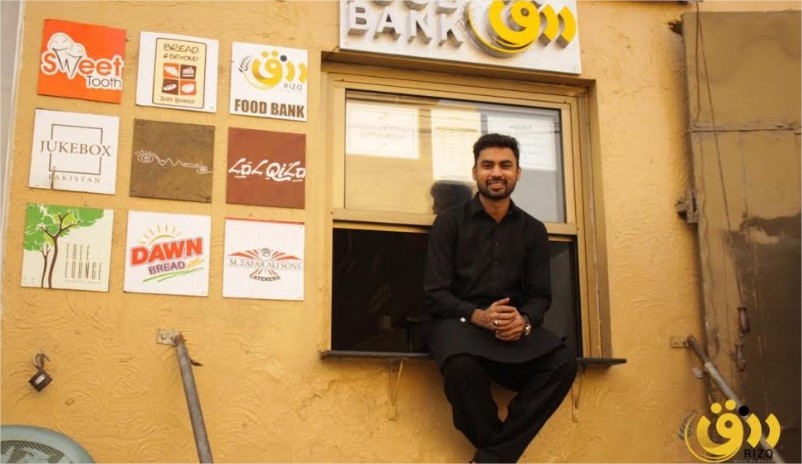
The award to Huzaifa Ahmad (Co-Founder and CEO Rizq) and Hassaan Irfan (Executive Director, Rizq), recognised their work providing food security to local communities, especially during the coronavirus pandemic.

celef the contribution millions of people make across the UK through volunteering

The call with Her Majesty The Queen also marked National Volunteering Week in the UK, an annual celebration of the power and contribution of volunteering.

DNA 6-18

Social enterprise Rizq, which started as a university project in 2015 aimed at ensuring a hunger free Pakistan by distributing excess food to the most vulnerable.

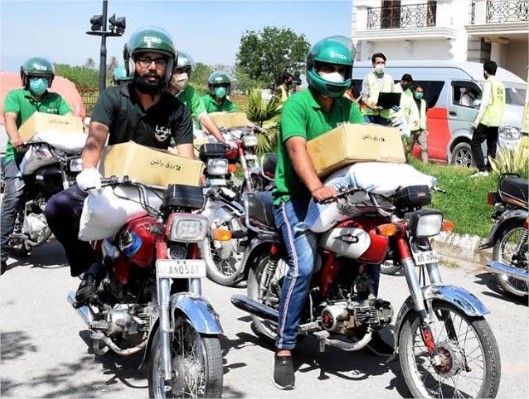
During the coronavirus pandemic and in the holy month of Ramazan, mobilised a network of over 3,000 volunteers to distribute over 2.2 million meals to across 23 cities.

‘Food is a fundamental need. For every human to reach his or her true potential it is important for this basic right to be accessible, affordable and available.

‘‘I want to thank the Commonwealth for recognising our efforts and honouring us with this award. I would like to dedicate it to our amazing volunteers and Rizq heroes.’

Hassaan Irfan said: ‘We have more food than ever before yet more people than ever go hungry every day. We all have an individual responsibility to eliminate hunger – no one should go without a daily meal.

DNA 6-17

“This award is a tribute to the people of Pakistan, the work of volunteers in Pakistan, and our strong tradition of helping each other.’

The British High Commissioner, Dr Christian Turner CMG, said:

“It was an honour to hear Her Majesty recognise Rizq’s remarkable work to tackle food insecurity. Moments like this are examples of the profoundly positive relations between the UK, Pakistan and Commonwealth”. DNA

1

===========

Centre fooling the masses by playing with numbers: Bilawal

The federal government is fooling the masses by playing with numbers relating to the coronavirus pandemic, Pakistan Peoples Party Chairman Bilawal Bhutto Zardari said Saturday.

The PPP chairman was speaking at a press conference in Karachi. He said the centre was not assisting in increasing the testing capacity.

Bilawal said they were stressing a further increase in Sindh’s testing capacity.

“The mortality rate in Khyber Pakhtunkhwa is higher than what it is in other provinces,” he said.

“The highest number of people recovered from the virus in Sindh.”

The PPP chairman, however, lamented that the Sindh government was being criticised since the day one.

“Did anyone inquire the PTI why are there so many cases in KP,” he questioned.

Bilawal said hospitals in the country were running out of space. Pakistan now has more cases than China, he noted.

“Doctors, healthcare professionals have been shouting about the gravity of the situation,” he said.

“Listen to the ones who have been risking their own and their families’ lives.”

The PPP chairman also demanded security allowance for healthcare professionals.

Emirates reaffirms its green commitment on World Environment Day

DUBAI / KARACHI, JUNE 6 (DNA) – While people around the planet continue to grapple with the pandemic, there’s also a call to pause and reflect on another cause – Time for Nature, the theme of the UN’s World Environment Day on 5 June.

Emirates, acutely aware of its role in the planet’s natural ecosystem, has continued to make progress in the attainment of its environmental goals. The airline showcased this environment performance in its annual financial report for 2019-20, painting a holistic picture and filling in the context of its achievements.

An important cause close to Emirates’ heart is keeping wildlife in the wild. The airline is committed to tackling the illegal trade in the sale of wild animals either as pets, or for their hides, tusks or other body parts for use in food, medicine, exotic leathers, jewellery and ornaments – all worth around US$ 20 billion every year.

Emirates is active across industry and international efforts, and is part of United for Wildlife, ROUTES (Reducing Opportunities for Unlawful Transport of Endangered Species), and the World Travel and Tourism Council (WTTC).

Emirates has a zero tolerance on carrying banned species, hunting trophies or any products associated with illegal wildlife activities.

The airline’s ground-handling team is trained in IATA’s Live Animal Regulations and its internal policies, and more than 2,500 airport services employees were trained last year to recognise and report suspicious cargo. Employees have access to a dedicated reporting channel to stop illegal trade. Customer awareness was heightened through interviews, wildlife programmes and films on ice, its inflight entertainment system, and the inflight magazine.

Emirates’ efforts in the areas of wildlife conservation are well known. The airline has been helping protect Australia’s extraordinary flora and fauna for over 10 years at Emirates Wolgan Valley, the conservation-based resort in New South Wales.

The resort worked closely with the local community to evacuate on-site animals as bushfires swept across the country last year. Involving guests who were keen to volunteer, the resort created a one million-plus seed bank, representing 25 local native species that will play a vital role in repopulating damaged areas. Native wildlife like kangaroos, wallabies, wombats, reptiles and birdlife have already returned to the area.

Emirates’ 20-year partnership with the Dubai Desert Conservation Reserve (DDCR) continued to build on its successful programmes to track, maintain and reintroduce native wildlife species, such as the Arabian oryx, Arabian gazelle, sand gazelle.

In January, the reserve released 250 MacQueen’s bustards into its natural habitat – a remarkable achievement by any standard. The DDCR continues to be a regional leader in ecological research, actively collaborating with local and international universities.

The reserve was accepted as a candidate for the IUCN Green List for Protected and Conserved Areas, a global standard for the world’s most effectively managed of protected areas, in 2018.

Reducing carbon emissions is central to Emirates’ environmental sustainability strategy, which is underpinned by its young, technologically advanced fleet with an average age of just 6.8 years. The airline’s comprehensive fuel efficiency programme, which analyses and implements ways to reduce unnecessary fuel burn and emissions wherever operationally feasible, delivered a 1.9% improvement in passenger fuel efficiency for the full year.

The airline’s efforts to optimise flight plans and fuel uplift, while ensuring safety and operational integrity, alone saved an estimated 38,000 tonnes of fuel or around 120,000 tonnes of CO2 emissions. This was supported by data-driven methodologies and awareness programmes for pilots.

Emirates is committed to environmental stewardship, and uses the power of collaboration, consensus and change right along its ecosystem – from framing internal policies to empowering employees and mandating standards with partners and vendors. Last year, the Emirates Group’s leadership team approved an updated Environmental Framework, and throughout the year, the airline took positive action, both big and small, to make impressive progress.=DNA

===========

Govt to enhance tax ratio on tobacco products to generate Rs.140 billion

ISLAMABAD: JUNE 6 / DNA / = The government is likely to increase the tax on tobacco products in a bid to generate revenue of around Rs.140 billion in next fiscal year 2020-21 against projected collection of Rs116 billion in current fiscal year. Imposing a tax on cigarette pack is one of the options, which can help increase government revenues from the tobacco sector, officials said.

In March this year, the National Health Services Division had also presented a draft Bill, proposing imposition of a levy on cigarettes. However, the Federal Board of Revenue opposed the levy on the cigarette manufacturing industry but the Finance Division agreed to impose the tax on cigarette, they said.

The government is also considering to increase the ratio of advance tax on tobacco crop from Rs10 per kg to Rs500 per kg in the next budget.

According to industry representatives, the tobacco industry has proposed the government for jacking up Rs400 on tier-1 of Rs5,600 per thousand cigarettes and slash down same amount (Rs400) on tier-2 of Rs1250 per thousand cigarettes in the upcoming budget for 2020-21.

With approval of this proposal for Federal Excise Duty (FED) for the budget makers from one of the major revenue spinners, they estimated that the FBR revenues could go up to Rs140 billion in next fiscal year 2020-21 against projected collection of Rs116 billion in outgoing financial year 2019-20, registering 20 percent increase in tax collection in shape of FED in coming financial year.

The FBR’s revenue has declined with hike in taxes as industry argued that the legitimate volume of production reduced from 65 billion sticks in 2018-19 to 42.6 billion sticks in 2019-20. So the tax revenues also slashed down from Rs124 billion in fiscal year 2018-19 to Rs116 billion in current fiscal year. Against the desired target of Rs147 billion, the FBR has been facing a shortfall of Rs31 billion in the outgoing fiscal year from this sector alone.

Industry stakeholders and farmers bodies’ representatives also met with Pakistan Tobacco Board (PTB) leadership and appealed to raise voice and announce support in this regard.

Farmers’ representatives expressed concern that advance tax on tobacco crops will diminish the number of tobacco dealers, killing the local tobacco industry and millions associated with this cash crop.

Industry experts suggested that in a bid to increase revenues from the tobacco sector, the government should take stern action against the nationwide sale of smuggled and illicit cigarettes and increase taxes on tobacco packs.

Anjuman Tahafuze Haqooqe Kashtkaran president Haji Naimatullah said if the government increase taxes, it would add further to the miseries of a daily wagers of tobacco sector. He said that tobacco farmers and the industry labors play a vital role for the Pakistani tobacco sector and indirectly towards the national economy.

Jordan takes major step towards post-coronavirus normality

AMMAN (DNA) -The Jordanian government is moving ahead with steps to resume most economic activities and end movement restrictions after months of lockdown measures aimed at curbing the spread of the coronavirus.

Starting on Saturday, business activities, cafes and restaurants will be allowed to serve customers again while a ban on travel between cities will also be lifted.

Residents will be able to use their vehicles daily between 6am and 12pm without the need for special permits, while domestic flights will also resume.

Authorities have also allowed regular and congregational prayers at the country’s mosques and churches provided that worshippers will obey physical-distancing guidelines and wear face masks.

International travel, however, will remain shuttered for now, while schools, colleges, kindergartens, public parks, movie theatres and festival activities will also stay closed.

With a total of 784 confirmed coronavirus cases so far, including 571 recoveries and nine related deaths, Jordan has a pandemic situation that is now classified as “moderate risk” – a level above the lowest category of “low risk”, Prime Minister Omar al-Razzaz said on Thursday.

The lifting of the restrictions comes more than months since King Abdullah on March 17 approved a national defence law that gives the government sweeping powers to enforce a state of emergency.

As part of the emergency measures, Jordan closed its airspace and land border crossings to all commercial passenger travel in and out of out of the country to help it combat the coronavirus pandemic.

Iran braces for new coronavirus wave after surge in infections

TEHRAN (DNA) -An alarming flare-up in coronavirus cases in Iran has raised fresh fears of a broad COVID-19 resurgence, sparking official warnings of new restrictions and underlining the sanctions-battered country’s challenge of returning to post-virus normality.

Since June 1, the number of new COVID-19 infections has been hovering near or above 3,000, reaching on Thursday its highest-ever daily total: 3,574. “It is a worrying sign,” Mansoureh Bagheri, the Iran Red Crescent Society’s director of international operations, told media.

While Bagheri acknowledged that a factor behind the jump was an increase in coronavirus testing, she noted that another reason was that “some don’t take it [the pandemic] seriously anymore” as fewer people seem to strictly obey physical distancing rules and avoid long-distance travel.

According to a poll cited last week by Deputy Health Minister Iraj Harirchi, public belief in physical distancing has dropped from 90 percent to 40 percent, while trust in stay-at-home orders has also slumped, from 86 percent to 32 percent.

Calling the findings “a disaster”, Harirchi has been just one of several government officials in recent days to rebuke the public for ignoring public health advice including maintaining physical distancing and wearing masks in public.

“People seem to think the coronavirus is over,” Health Minister Saeed Namaki said during a news conference on Tuesday. “The outbreak is not over yet, and at any moment it may come back stronger than before.”

India’s coronavirus infections surpass Italy’s

NEW DELHI (DNA) -India overtakes Italy as the sixth worst hit country by the coronavirus pandemic after another record single-day spike in confirmed infections, bringing the total to 236,657 cases.

The World Health Organization (WHO) has changed its position on face masks and is now encouraging people to wear them in crowded places, citing anecdotal evidence that supports their value in stopping the spread of the coronavirus.

United States President Donald Trump has called for a shift in strategy against the coronavirus pandemic to focus resources on protecting “high-risk populations” while calling for a total end to stay-at-home orders in states throughout the country.

Brazil’s President Jair Bolsonaro has threatened to pull his country out of the WHO, accusing the body of being “partisan” and “political”. With more than 34,000 coronavirus deaths, Brazil now has the third-highest toll in the world.

About 6.7 million coronavirus cases have been confirmed around the world, according to data from Johns Hopkins University. More than 394,000 people have died, including some 109,000 in the United States. More than 2.9 million people have recovered.

French army kills al-Qaeda’s Abdelmalek Droukdel

PARIS (DNA) – France said on Friday that its military has killed al-Qaeda’s North Africa chief Abdelmalek Droukdel, a key fighter who its forces had been hunting for more than seven years, during an operation in Mali.

“On June 3, French army forces, with the support of their local partners, killed the emir of al Qaeda in the Islamic Maghreb, Abdelmalek Droukdel, and several of his closest collaborators, during an operation in northern Mali,” French Armed Forces Minister Florence Parly wrote on Twitter. There was no immediate confirmation of his death from al-Qaeda in the Islamic Maghreb, known as AQIM.

Droukdel’s reported death comes almost six months after French President Emmanuel Macron and the leaders of the G5 Sahel group – Mauritania, Mali, Burkina Faso, Niger and Chad – launched a new plan combining their military forces under one command structure to fight armed groups linked to al-Qaeda and the ISIL (ISIS) group.

France, a former colonial power in the region, deployed 600 additional soldiers to its Barkhane force, raising the number of troops there to 5,100.

International online conference: “Improving financial literacy and protecting the rights of consumers of financial services”

Tashkent, Uzbekistan, JUNE 6  — Representatives of the Central Bank took part in the Conference of the Regional Initiative of the Countries of Eastern Europe and Central Asia (ECAPI) of the Alliance for Financial Accessibility (AFI), held in an online format on 1-3 June 2020, the press service said Central Bank.

During the conference, initiatives and innovations in the practice of countries in the field of financial accessibility, protecting the rights of consumers of financial services and improving financial literacy were discussed. Particular emphasis was placed on products related to financial technology and their increasing role in these areas of activity.

Presentations and studies were carried out on the ECAPI online platform, which are carried out with the participation of representatives of all member countries, including practical recommendations and conclusions to improve the effectiveness of regulatory policies in the field of improving financial affordability.

In addition, taking into account the current situation in the world, measures taken by central banks to mitigate the negative impact of the COVID-19 pandemic on the economies of countries, to maintain the financial stability of enterprises and the well-being of citizens were also discussed.

Representatives of the ECB and the Central Bank of Finland made a presentation at the conference, sharing their experience in organizing processes in the areas of ensuring cybersecurity and improving digital financial literacy.

Uzbek President pays visit to Uz-Segang

Tashkent, Uzbekistan , JUNE 6 — The Head of the state got acquainted with the activities of Uz-Segang joint venture in Tashlak district of Ferghana region.

About 20 fruit, vegetable and viticulture clusters were created in 6 specialized districts of Fergana region. This year they plan to produce 288 thousand tons of products and export 120 thousand tons. For this, there are refrigerated warehouses with a capacity of more than 330 thousand tons, 25 logistics centers and 90 processing enterprises.

Uz-Segang is capable of processing and exporting 16 thousand tons of agricultural products per year. A modern logistics center worth 100 billion UZS has been created here, which is equipped with advanced technologies from Italy, Turkey, South Korea and China.

So, according to Italian ICEOL technology, cherries are sorted and packaged by color and size. The line is capable of detecting and isolating defective fruits with a laser.

The South Korean SNP line sorts pomegranates in the same way, showing which fruits have not ripened or started to rot. This contributes to gaining customer confidence and supplying only selected products to the market. The company’s products have Global G.A.P. international certificate.

This year, products worth US$20 million will be exported to China, South Korea, the United Arab Emirates, Poland, Russia and Kazakhstan. 250 young men and women work here.

The President paid special attention to the issue of a constant supply of raw materials to the enterprise. He gave instructions on cooperation with local gardens and organization of new gardens and laboratories.

Stay Connected

64FansLike
60FollowersFollow

Latest Reviews

Exchange Rates

USD - United States Dollar
EUR
1.15
GBP
1.32
AUD
0.69
CAD
0.72