Home Blog Page 341

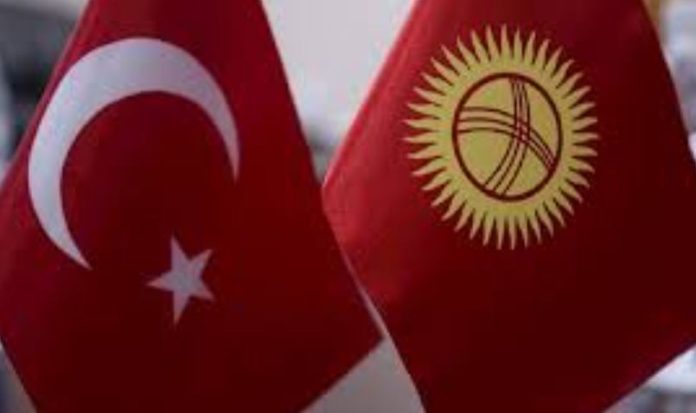
Kyrgyzstan, Türkiye to expand cooperation in air transportation

Kyrgyzstan, Türkiye to expand cooperation in air transportation

ASTANA, DEC 19: Manasbek Samidinov, Chairman of the Board of Kyrgyzstan Airports, and Bilal Eksi, Chairman of the Board of Turkish Airlines, held a working meeting in Istanbul, Qazinform News Agency cites Kabar. 

The meeting was held with the support of the Consulate General of the Kyrgyz Republic in Istanbul, led by Consul General Chyngyz Toktobekov.

During the talks, the Turkish side expressed its readiness to cooperate with Kyrgyzstan’s state-owned Asman Airlines and confirmed plans to increase both cargo and passenger flights. The parties also discussed the possibility of operating flights with technical stops at Manas International Airport.

Eksi emphasized the importance of strengthening ties with Kyrgyzstan and expressed his commitment to further developing the partnership.

During the meeting, Samidinov invited Bilal Eksi to attend the opening of the renovated airport complex at Manas International Airport next summer.

Notably, Ankara becomes the Tourism Capital of Turkic World for 2026.

Pak-Libya vow to strengthen bilateral defence collaboration 

Pak-Libya vow to strengthen bilateral defence collaboration 

By Malik Faisal Munir

The official visit of Chief of Defence Forces Field Marshal Syed Asim Munir to Libya marks not only a significant milestone in Pakistan’s defence diplomacy but also reflects the country’s expanding strategic role in the region. This high-level visit underscores Pakistan’s commitment to strengthening bilateral relations through security cooperation, mutual trust, and shared regional responsibilities.

During his official visit, Field Marshal Syed Asim Munir, NI (M), HJ Chief of Army Staff and Chief of Defence Staff  held important meetings with Field Marshal Khalifa Belqasim Haftar, Commander-in-Chief of the Libyan Arab Armed Forces.

The discussions focused on the prevailing regional security environment, emerging challenges, and ways to further enhance bilateral defence cooperation. Special emphasis was placed on collaboration in the areas of military training, capacity building, and counterterrorism. Lieutenant General Saddam Khalifa Haftar, Deputy Commander-in-Chief of the Libyan Arab Armed Forces, was also present during this significant interaction.

The reception accorded to Pakistan’s Chief of Defence Forces, including the presentation of a Guard of Honour, reflects the high regard in which Libya holds Pakistan’s military leadership and armed forces. This ceremonial gesture symbolizes the mutual respect, confidence, and growing strength of relations between the two nations.

On this occasion, Field Marshal Syed Asim Munir reaffirmed Pakistan’s resolve to further strengthen defence ties with Libya based on mutual interests and respect. His remarks highlight the continuity of Pakistan’s foreign and defence policy, which prioritizes peace, stability, and cooperation with friendly countries.

In response, Field Marshal Khalifa Haftar expressed a strong desire to expand defence collaboration, indicating Libya’s interest in establishing a long-term strategic partnership with Pakistan. Such cooperation is expected to extend beyond the military domain and may yield positive diplomatic and strategic outcomes in the future.

Defence cooperation is rapidly emerging as a cornerstone of Pakistan Libya relations. Pakistan’s armed forces enjoy a strong global reputation for professionalism, training excellence, and contributions to international peacekeeping missions. Libya, having faced prolonged internal challenges, is keen to benefit from Pakistan’s experience.

In this context, military training programs, defence exchanges, and enhanced security cooperation hold great promise for both sides. Beyond defence, there is considerable scope for economic collaboration between Pakistan and Libya.

Libya is rich in energy resources, while Pakistan possesses substantial expertise in energy development, construction, healthcare, and human resource management. Enhanced cooperation in investment, trade, and technical assistance could bring mutual economic benefits. Pakistani skilled manpower can also play a meaningful role in Libya’s reconstruction and development initiatives.

The meetings with Libyan military leadership during this visit further demonstrate that Pakistan seeks to play a responsible role in promoting regional peace rather than limiting engagement to bilateral defence ties alone. Cooperation in counterterrorism, military experience-sharing, and security coordination can significantly strengthen relations between the two countries.

North Africa and the Middle East continue to face complex security challenges, including terrorism, non-state actors, and internal instability. In such circumstances, Pakistan  with its extensive and successful counterterrorism experience can serve as a valuable and reliable partner for Libya. Emphasis on training and capacity building was a particularly important aspect of the discussions. Pakistan’s armed forces are widely recognized for their discipline, professionalism, and advanced training standards.

The Libyan leadership’s appreciation of Pakistan’s military capabilities reflects confidence in Pakistan’s ability to contribute positively to strengthening the operational capacity of Libyan forces.

Under the leadership of Field Marshal Syed Asim Munir, Pakistan’s military has demonstrated not only readiness to meet modern defence challenges but also strong diplomatic insight. His leadership style reflects a balanced approach that combines military strength with a commitment to peace, dialogue, and adherence to international norms.

This visit to Libya is a continuation of that vision, reinforcing Pakistan’s image as a peace-loving and responsible state. In conclusion, Field Marshal Syed Asim Munir’s visit to Libya signifies Pakistan’s emergence as a credible and responsible military power at both regional and global levels.

Such engagements not only deepen bilateral ties but also enhance Pakistan’s positive image and defence diplomacy. The practical outcomes of enhanced Pakistan Libya defence cooperation in the coming years will stand as clear evidence of the success and strategic importance of this landmark visit.

Court acquits Qureshi; sentences Yasmin, others

Court acquits Qureshi; sentences Yasmin, others

Omer Sarfraz Cheema, Mian Mehmoodur Rashid and Ejaz Chaudhry got 10 years of imprisonment each

Bureau Report

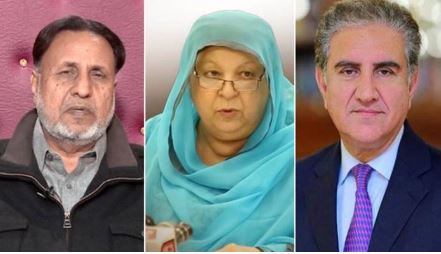
LAHORE: An anti-terrorism court (ATC) on Friday acquitted PTI leader Shah Mahmood Qureshi, while sentencing four other leaders, including Dr Yasmin Rashid, Omer Sarfraz Cheema, Mian Mehmoodur Rashid and Ejaz Chaudhry, to 10 years of imprisonment each in a case related to the May 9 riots.

These PTI leaders have already been jailed after being indicted by different courts in Punjab in cases pertaining to violence on May 9, 2023. On that day, supporters and workers of the party, reacting to founder Imran Khan’s arrest, vandalised and torched military installations and government properties.

Judge Manzer Ali Gill announced the verdict inside Kot Lakhpat Jail, concluding the trial in first information report number 852/2023, which pertains to an attack on the entrance gate of Government Officers’ Residence-I Club Chowk. The Racecourse police had registered the case and submitted a challan against 25 suspects, including PTI leaders and workers.

This marks the fifth case in which PTI leaders Dr Yasmin, Cheema, Mian Mehmoodur, and Chaudhry were convicted, while former foreign minister Qureshi was acquitted.

Earlier verdicts were delivered in cases related to an attack on the Shadman police station, violence at Sherpao Bridge, the burning of police vehicles near Rahat Bakery, and the torching of a Supreme Court judge’s squad vehicle near Jinnah House during the May 9 protests.

US pauses green card lottery program

US pauses green card lottery program

News Desk

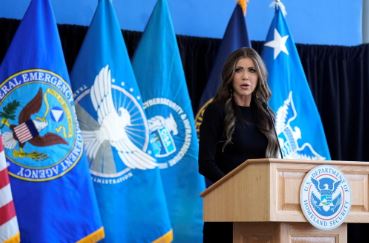
WASHINGTON: US Homeland Security chief Kristi Noem ordered the suspension of the diversity visa lottery progamme on Thursday after saying it was used by the suspect in a mass shooting at Brown University.

“The Brown University shooter, Claudio Manuel Neves Valente, entered the United States through the diversity lottery immigrant visa programme (DV1) in 2017 and was granted a green card,” Noem wrote on social media.

“At president Trump’s direction, I am immediately directing US Citizenship and Immigration Services (USCIS) to pause the DV1 programme to ensure no more Americans are harmed by this disastrous programme,“ she said.

According to the Associated Press, the diversity visa programme makes up to 50,000 green cards available each year by lottery to people from countries that are little represented in the US, many of them in Africa.

The lottery was created by Congress, and the move is almost certain to invite legal challenges, AP reported.

Officials said earlier that the suspect was dead as investigators said he also killed a Massachusetts Institute of Technology professor two days after the rampage at Brown.

He had been a PhD student in physics who was familiar with the building where the shooting took place, officials said.

Providence police Chief Oscar Perez and Rhode Island Attorney General Peter Neronha, speaking at a Thursday night press conference, said that Valente took his own life and investigators believe he acted alone.

PSL 11: Registration of foreign players begins

PSL 11: Registration of foreign players begins

KARACHI, DEC 19: The registration process for foreign players has officially begun for the 11th edition of the Pakistan Super League (PSL 11), marking a key step in preparations for the upcoming season.

According to PSL officials, the last date for registration has been set for January 20, 2026. Interested international players have been invited to complete the registration process within the stipulated timeframe to be eligible for the league.

PSL 11 is scheduled to be played from March 26 to May 3, 2026, promising another action-packed season of top-tier T20 cricket.

In a major development, the auction for two new PSL teams will be held in Islamabad on January 8. The event will be broadcast live, allowing fans to witness the expansion of the league in real time.

With the addition of two new franchises, the number of teams in the Pakistan Super League will increase from six to eight, a move aimed at enhancing competition, expanding the league’s footprint, and providing more opportunities for both local and international players.

Meanwhile, Pakistan Cricket Board (PCB) Chairman Mohsin Naqvi has said that every effort was being made to hold the PSL 11 matches at the Muzaffarabad stadium.

A Board of Governors (BoG) meeting was held on Tuesday under the chairmanship of the PCB chairman where he also approved the second phase of reconstruction at the National Cricket Stadium in Karachi.

India’s manipulation of water threatens food, economic security of Pak

India's manipulation of water threatens food, economic security of Pak

Indian actions could trigger a severe humanitarian crisis in Pakistan, says deputy prime minister

Saifullah Ansar

ISLAMABAD: Pakistan has termed India’s recent unilateral suspension of the Indus Water Treaty (IWT) in the aftermath of April’s Pahalgam attack a threat to the country’s food and economic security which “could trigger a severe humanitarian crisis”.

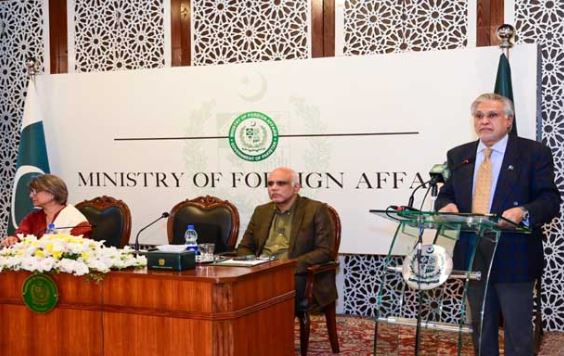
During a briefing to foreign diplomats, Deputy Prime Minister and Foreign Minister Ishaq Dar condemned India’s move to suspend the treaty in April 2025, describing it as a clear example of weaponising water resources.

He warned that such actions threaten Pakistan’s food security and have the potential to trigger a severe humanitarian crisis.

“Indian manipulation of water at critical time of our agriculture cycle directly threatens the lives and livelihoods as well as food and economic security of our citizens,” Dar said.

“The Indus Water Treaty is a cornerstone for peace and stability in South Asia,” he added, noting that India has halted the exchange of hydrological data and disrupted the joint monitoring mechanism agreed upon under the treaty, further escalating tensions.

The statement came only a day after Pakistan demanded an answer from India over its continued and abrupt variations of the flow of River Chenab, asking the international community to take notice of India’s continued disregard of a bilateral treaty as New Delhi once again resorted to “weaponisation of water”.

Spokesperson Tahir Andrabi, during the weekly media briefing on Thursday, pointed out that Pakistan had observed abrupt variations in the flow of the River Chenab during the past week, particularly 7 December onwards.

In today’s presser, the deputy prime minister said that millions of people in Pakistan who rely on the river for agriculture, water, sanitation, and healthy ecosystems are being adversely affected, with their rights to work, livelihood, water, food, and an adequate standard of living being undermined.”

“On the one hand, it (suspension) threatens the inviolability of international treaties, and on the other, it poses serious risks to regional peace and security, as well as principles of good neighbourhood and norms that govern interstate relations,” he added.

DPM Dar said that the Permanent Court of Arbitration (PCA) has reaffirmed the continuing validity of the Indus Water Treaty in its June and August 2025 rulings. He recalled that the court ruled that the treaty and its dispute resolution mechanism remain binding on both parties and made clear that India cannot claim immunity from its provisions.

He stated that Pakistan remains committed to resolving disputes with India peacefully but will not compromise on the water rights essential to its citizens.

DPM Dar also urged the international community, particularly members of the UN Security Council, to take immediate action to address the situation.

The nuclear-armed neighbours signed the Indus Water Treaty in September 1960, which was mediated by the World Bank. The agreement split the Indus and its tributaries between the two countries and regulated water sharing.

India was granted the use of water from three eastern rivers — Sutlej, Beas, and Ravi — while Pakistan was granted most of the three western rivers — Indus, Jhelum, and Chenab.

There is no provision in the treaty for either country to unilaterally suspend or terminate the pact, which has clear dispute resolution systems.

Following the tensions between Islamabad and New Delhi after the killing of 26 people in Indian Illegally Occupied Jammu and Kashmir (IIOK) in April 2025, New Delhi unilaterally held the IWT in abeyance.

New Delhi accused Islamabad of orchestrating the deadly militant attack, an allegation that Pakistan denies.

PIDE hosts policy session on successful IMF second review completion

PIDE hosts policy session on successful IMF second review completion

ISLAMABAD, DEC 19 /DNA/ – The Pakistan Institute of Development Economics (PIDE) convened a policy session on the International Monetary Fund’s (IMF) Extended Fund Facility (EFF), focusing on the successful completion of the second review, at its Islamabad office. The session was delivered by Mr. Mahir Binici, Resident Representative of the IMF in Pakistan, marking his first official visit to PIDE. The event brought together faculty members, researchers, students, and policy professionals for an in-depth exchange on Pakistan’s macroeconomic trajectory and reform priorities.

The session was formally inaugurated by Dr. Karim Khan, Dean of Academics at PIDE, who emphasized the importance of informed, evidence-based policy dialogue in addressing Pakistan’s economic challenges. Highlighting PIDE’s role as a platform for rigorous research and policy engagement, Dr. Khan outlined the core objectives of the IMF-supported program, including fiscal sustainability through achieving a primary balance, maintaining a sustainable debt-to-GDP ratio, strengthening macroeconomic prudence, enhancing climate resilience in light of Pakistan’s vulnerability to climate shocks, and reinforcing social protection mechanisms.

In his presentation, Mr. Mahir Binici provided a comprehensive overview of the completion of the second review under Pakistan’s IMF Extended Fund Facility, approved on December 8, 2025. He noted that the 2024 EFF has been designed by incorporating lessons from previous arrangements, with a stronger emphasis on building economic resilience and supporting sustainable growth. The presentation covered key elements of the program, including macroeconomic stabilization, fiscal consolidation and revenue mobilization, inflation dynamics, monetary policy stance, and developments in the external sector and foreign exchange market. While acknowledging recent improvements in economic indicators, Mr. Binici cautioned that macroeconomic vulnerabilities persist, underscoring the need for continued and credible reform efforts.

Highlighting progress under the program, Mr. Binici pointed to reductions in external imbalances, improved functioning of the foreign exchange market, and a gradual easing of pressure on foreign exchange reserves. He stressed that these stabilization gains must be preserved through policy continuity, discipline, and consistency to ensure long-term durability. On fiscal policy, he underscored the importance of consolidation to ensure debt sustainability, identifying tax base broadening, stronger tax administration, and rationalization of untargeted subsidies as key reform priorities necessary to create space for development spending and social protection.

Addressing inflation and monetary policy, Mr. Binici acknowledged the adverse impact of high inflation on households and emphasized the role of a tight and credible monetary policy framework in restoring price stability. He highlighted the importance of central bank independence and anchoring inflation expectations as foundations for sustainable economic growth. On the external sector, he reiterated the value of a market-determined exchange rate in absorbing external shocks, enhancing export competitiveness, and supporting foreign exchange reserve accumulation.

Mr. Binici also emphasized that structural reforms remain central to the IMF-supported program, particularly in the energy sector, state-owned enterprises, and governance and transparency frameworks. He noted that these reforms are critical not only for macroeconomic stabilization but also for strengthening long-term economic resilience. Recognizing the social costs associated with adjustment measures, he stressed the importance of targeted social safety nets to protect vulnerable segments of society from the impact of inflation and reforms.

Concluding his remarks, Mr. Binici underscored the importance of strong domestic ownership and consistent implementation of reforms for the success of the program, noting that nationally driven and well-communicated reforms help build investor confidence and support durable growth. He also appreciated PIDE’s role in facilitating constructive engagement between academia and policymakers, emphasizing that research-driven analysis and informed debate are essential for effective economic policymaking. The session concluded with an interactive question-and-answer segment, reflecting strong academic and policy interest in Pakistan’s ongoing engagement with the IMF.

Photo exhibition marks new chapter in Pak–Uzbek cultural relations

Photo exhibition marks new chapter in Pak–Uzbek cultural relations

Culture minister praises photographers work; Uzbek ambassador says exhibition shows deep bilateral culture bonds

Ansar Mahmood Bhatti

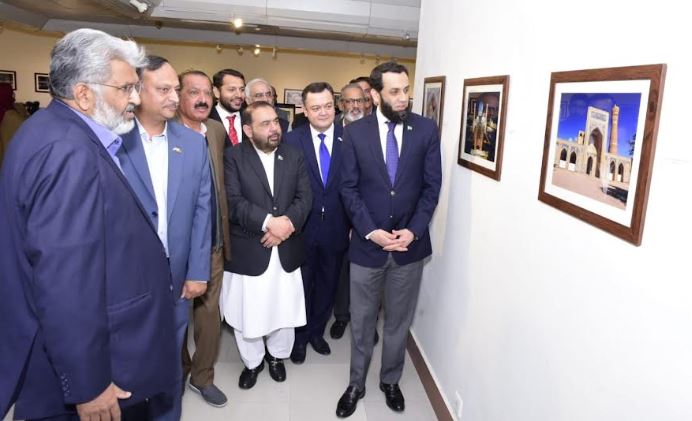
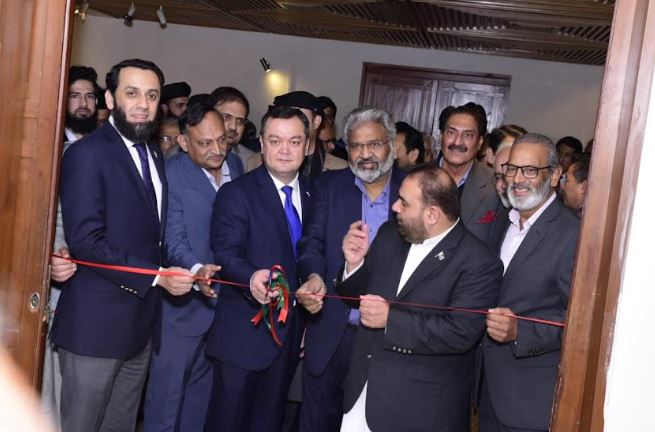
ISLAMABAD, DEC 19: /DNA/ – Federal Minister for Information and Broadcasting Attaullah Tarar has announced the launch of a journalists and photojournalists exchange programme between Pakistan and Uzbekistan, aimed at promoting mutual understanding and familiarising media professionals with Pakistan’s culture, history and heritage.

He made the announcement while speaking at the opening of a photo exhibition at the Pakistan National Council of the Arts (PNCA), featuring works by Pakistani photojournalists who recently visited Uzbekistan on an official invitation. The exhibition showcased the rich cultural heritage, landscapes and everyday life of Uzbekistan as captured through the lenses of Pakistani photographers.

Photo exhibition marks new chapter in Pak–Uzbek cultural relations

The photojournalists include Ramzan Mughal, Shahid Qureshi (Raju), Suleman. Azhar Hafeez and Gulrez Ghauri.

Federal Minister for Culture and National Heritage Aurangzeb Khan Khichi was also present on the occasion, along with diplomats, artists, journalists and a large number of students and culture enthusiasts.

Addressing the gathering, Attaullah Tarar said the exchange programme would provide journalists and photojournalists from both countries an opportunity to learn from each other, share professional experiences and gain firsthand exposure to the cultural and historical richness of Pakistan and Uzbekistan. He noted that Uzbekistan had recently hosted a delegation of Pakistani journalists, and now Pakistan was keen to reciprocate the gesture by inviting Uzbek media professionals.

The information minister said Pakistan attached great importance to its relations with Uzbekistan, describing the bilateral ties as rooted in shared history, culture and values. He added that the leadership of both countries — Prime Minister Shehbaz Sharif and Uzbek President Shavkat Mirziyoyev — was fully determined to further strengthen cooperation and take their nations forward on the path of development and prosperity.

Recalling his recent visit to Uzbekistan, Attaullah Tarar praised the warm hospitality extended to the Pakistani delegation. He said the visit helped deepen understanding between the two sides and opened new avenues for cooperation, particularly in the fields of culture, media and people-to-people contacts.

He further stated that, in collaboration with the Ministry of Culture and National Heritage, a comprehensive plan would be devised to promote and showcase Pakistan’s culture, history and heritage to the outside world. Such initiatives, he said, were essential to project Pakistan’s soft image and highlight its rich civilisational legacy at the international level.

Federal Minister for Culture and National Heritage Aurangzeb Khan Khichi, speaking on the occasion, lauded the outstanding work of the Pakistani photojournalists whose photographs were on display. He said the exhibition not only reflected professional excellence but also served as a bridge between the two friendly nations.

Khichi assured that his ministry would continue to extend full support to cultural and artistic activities in the coming days. He emphasised that cultural exchanges, exhibitions and people-to-people contacts played a vital role in strengthening bilateral relations and fostering mutual respect and understanding among nations.

Uzbekistan’s Ambassador to Pakistan, Alisher Tukhtaev, also addressed the ceremony and said that Pakistan and Uzbekistan enjoyed excellent and ever-growing relations. He noted that Uzbekistan was progressing by leaps and bounds under the dynamic leadership of President Shavkat Mirziyoyev, with significant reforms and development initiatives transforming the country.

The ambassador praised the efforts of Pakistani photojournalists, saying their work beautifully captured the essence of Uzbekistan’s culture, heritage and daily life. He expressed hope that such exchanges would continue in the future and further enhance cooperation between the two countries in the fields of media, culture and tourism.

The exhibition was widely appreciated by the audience, who described it as a powerful visual narrative highlighting the close cultural bonds between Pakistan and Uzbekistan and the important role of media in bringing nations closer.

EU agrees 90-bn-euro loan for Ukraine, without Russian assets

EU agrees 90-bn-euro loan for Ukraine, without Russian assets

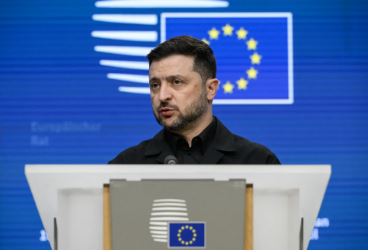
BRUSSELS, DEC 19: EU leaders struck a deal Friday to provide Ukraine a loan of 90 billion euros to plug its looming budget shortfalls — but failed to agree on using frozen Russian assets to come up with the funds.

The middle-of-the-night agreement reached at summit talks in Brussels offers Kyiv a desperately needed lifeline as US President Donald Trump pushes for a quick deal to end Russia’s nearly four-year war.

“Today’s decision will provide Ukraine with the necessary means to defend itself and to support the Ukrainian people,” European Council head Antonio Costa, who chaired the summit, said.

PM Shehbaz Reaffirms Solidarity with Australia After Bondi Beach Attack

Ansar M Bhatti

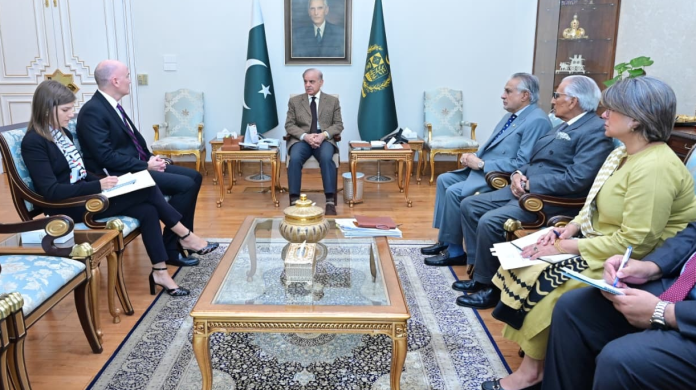
ISLAMABAD, DEC 19 — Ambassador Tim Kane, the newly appointed High Commissioner of Australia to Pakistan, paid a courtesy call on Prime Minister Muhammad Shehbaz Sharif at the Prime Minister’s House on Friday.

Deputy Prime Minister and Foreign Minister Senator Mohammad Ishaq Dar, Special Assistant to the Prime Minister Tariq Fatemi, and the Foreign Secretary were also present during the meeting.

The Prime Minister warmly felicitated Ambassador Tim Kane on his appointment and expressed confidence that his tenure would further strengthen the long-standing, friendly and multifaceted relations between Pakistan and Australia. He underscored the importance Pakistan attached to its ties with Australia and reaffirmed Islamabad’s commitment to expanding cooperation across various sectors.

Prime Minister Shehbaz Sharif conveyed Pakistan’s deepest condolences over the tragic loss of innocent lives in the terrorist shooting at Bondi Beach, Sydney, on December 14, 2025. He strongly condemned the cowardly act of terrorism and reiterated Pakistan’s unwavering solidarity with the people and government of Australia in their hour of grief. Emphasizing that terrorism has no religion, the Prime Minister stressed that it must be condemned in all its forms and manifestations, adding that collective international action was essential to eradicate this global menace.

Welcoming the positive trajectory of Pakistan–Australia relations, the Prime Minister highlighted the need to further expand bilateral trade and investment. He identified agriculture and livestock as promising sectors for enhanced cooperation and noted Australia’s interest in Pakistan’s mining and minerals sector. Referring to the Reko Diq project, he described it as a shining example of the immense potential Pakistan offered to international investors.

The Prime Minister also lauded the valuable contribution of the vibrant Pakistani diaspora in Australia, terming it a vital bridge that strengthened people-to-people ties and mutual understanding between the two countries. He noted that Pakistan and Australia enjoyed strong cultural linkages, further reinforced by their shared passion for cricket, which continued to bring the two nations closer.

During the meeting, Prime Minister Shehbaz Sharif conveyed his warm regards and best wishes to the Australian leadership and expressed his desire to work closely with them to build stronger and more comprehensive bilateral ties.

Ambassador Tim Kane thanked the Prime Minister for the warm welcome and expressed Australia’s keen interest in further enhancing Pakistan–Australia relations. He reaffirmed his country’s commitment to working with Pakistan across all areas of mutual interest, including trade, investment, people-to-people contacts and regional cooperation.

Stay Connected

64FansLike
60FollowersFollow

Latest Reviews

Exchange Rates

USD - United States Dollar
EUR
1.14
GBP
1.34
AUD
0.70
CAD
0.71