Home Blog Page 3396

Financial Times declares Pakistan frontier emerging market for investors

LONDON, JUN 17 (DNA) – Pakistan has brought notable improvements in business sentiment and macroeconomic policymaking and its outlook improved markedly since the victory of Imran Khan, reported UK daily Financial Times.

The international daily newspaper admitted in its report that the present government in Pakistan made effective improvements to provide ease in doing businesses and declared Pakistan as one of the frontier emerging markets for investors.

It said, “The outlook has improved markedly in Pakistan since the 2018 general election victory of PM Imran Khan, whereas, the country has seen notable improvements in business sentiment and macroeconomic policymaking in a short period.”

Moreover, the State Bank of Pakistan (SBP) has undergone a complete makeover to transform it into the mould of a modern central bank under its new leadership, said the report.

It also stated that investors should not overlook the considerable post-Covid potential of frontier emerging markets. The reasons are straightforward: resilient government balance sheets, improving governance and promising growth trajectories. = DNA

=============================

More than $100 million of credit resources to be allocated for service sector projects

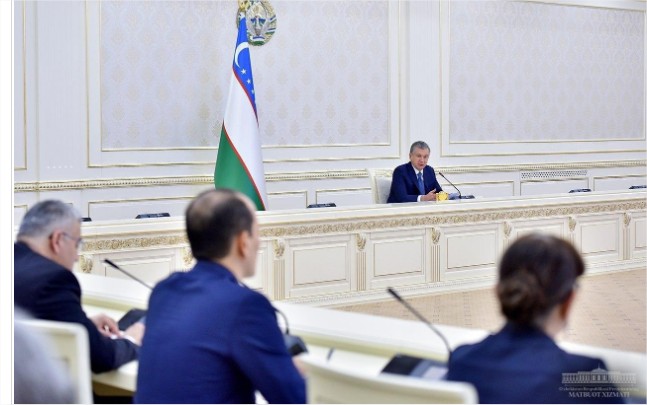
On June 16, the President of the Republic of Uzbekistan Shavkat Mirziyoyev chaired a video conference on development of services and domestic tourism.

The Head of the state dwelt on the epidemiological situation in the country and drew attention to the fact that recently the number of people infected with coronavirus has significantly increased, moreover, many cases are detected among the population.In particular, over the past two weeks 482 out of 551 cases were detected among the population in the city of Tashkent. It is regrettable that in 57 cases, the source of infection remains unknown.

Such a disturbing situation is also observed in Tashkent, Navoi and Kashkadarya regions.“All of this shows that the situation with coronavirus is becoming increasingly complex.

The moment has come for a significant increase in vigilance and responsibility in the fight against the pandemic. At this stage, we must strictly follow the quarantine rules, no matter how difficult it is. Each of us must carry out the work carefully, thoroughly considering the consequences, deeply aware of the responsibility not only to ourselves, but also to the family and children.

Otherwise, all our efforts will come to naught. I am sure that our generous and courageous people, having gained a lot of knowledge and experience during this time, will worthily overcome this stage”, said Shavkat Mirziyoyev.

UzA - More than $100 million of credit resources to be allocated for service sector projects - Google Chrome

The Republican Special Commission has been instructed to strengthen disinfection and sanitary control in enterprises and markets, in shopping malls and organizations that resume business, to expand awareness-raising among the population through the media, as well as in labor collectives. The importance of regular testing among employees of all institutions providing services and whose activity involves direct contact with the population was emphasized.The service sector is one of the main sources of employment both in cities and in rural areas. Its share in the gross domestic product of Uzbekistan is 35 percent. According to the International Labour Organization, an increase in the service industry by 1 percent will reduce the number of poor by 1.5 percent.At the meeting, it was noted that the possibilities of the service sector in Uzbekistan are not fully used. It is indicated that local services such as repair of household appliances, dry cleaning, computer design, accounting, advertising, paid medical care are not sufficiently developed.This indicates the huge potential in the service sector. According to estimates, at least 160 thousand jobs can be created in this sector of the economy.21 young freelance programmers are working in the city of Tashkent, Bukhara, Navoi and the capital regions. These specialists export services for $50 thousand per year and are in the top 3 percent of the Top Talent rating.The Head of the state noted the importance of supporting such talented youth, creating conditions for training the population in providing modern services.The Deputy Prime Minister was instructed to develop, together with the khokims, a program for developing the services sector in each district and city. At the same time, the task was set to streamline this sphere, to bring its methodology and statistics in line with international standards.Development of the sphere is impossible without financial support. For this reason, the President of Uzbekistan signed a resolution providing for the allocation from the Fund for Reconstruction and Development of more than $100 million or more than 1 trillion UZS of credit resources for projects in the service sector. These funds will be allocated both through state and private banks with a rate of no more than 15 percent.It was emphasized that regional leaders should effectively seize this opportunity and develop specific projects that will allow creating more jobs in the service sector as soon as possible.President Shavkat Mirziyoyev paid special attention to the issues of training and employment of graduates.This year, more than 451 thousand graduated from schools, 188 thousand boys and girls graduated from colleges. Even taking into account the increase in admission quotas this year, 103 thousand will be able to enter higher education institutions, and 90 thousand of them will go to technical colleges. Therefore, it is necessary to take care of the employment of the rest of the youth. In addition, this year 71 thousand students are graduating from higher education institutions.“Which of the khokims is thinking about this problem, who personally met with the graduates? Where will our young boys and girls apply for employment tomorrow? Is there a reserve of jobs for them in the region?” the Head of the state raised a question.

UzA - More than $100 million of credit resources to be allocated for service sector projects - Google ChromeS

About 2 thousand students complete pedagogical directions in Surkhandarya region. Currently, there is a shortage of teachers in rural schools of Sariosiyo, Oltinsoy and Uzun districts. It was emphasized that the khokim of the region and the leaders of the sectors should meet with these graduates and help them in employment. Deputy Prime Ministers were instructed to stimulate young professionals who decided to work in remote areas, to introduce a system of providing them with primary material assistance and housing.The Ministry of Employment and Labor Relations has been instructed to create “Ishga Markhamat” monocenters in Karakalpakstan and in all areas, to open training centers by professions and in business fundamentals for young people, as well as training courses in makhallas.As is known, on June 8, the President of Uzbekistan signed a resolution “On measures to simplify state regulation of entrepreneurial activity and self-employment”. According to the document, the types of activities that self-employed persons can engage in are increased from 24 to 67, requirements for obtaining permits and taxes are minimized. It was noted that this is a huge reserve for ensuring employment.The Central Bank was instructed to allocate 300 billion UZS of credit resources for self-employed persons within the framework of family entrepreneurship programs, and the Ministry of Finance – to introduce a system of subsidies for unemployed citizens starting a business to cover their costs associated with renting buildings for 3 months.Issues of developing domestic tourism were also discussed at the meeting.Calculations showed the possibility of providing employment for more than 200 thousand people in this sphere. It is planned to create many jobs in related industries, such as catering, transportation, retail.It was noted that in each region there are many opportunities for this, including tourist attractions. For example, 1,500 people can be provided with work in Yangikurgan district of Namangan region through the restoration of 16 sanatoriums, about 8 thousand can be employed in Bostanlyk district of Tashkent region by creating tourist camps using lightweight structures. Moreover, tourism opportunities in the ancient cities of the country are not fully used. Many compatriots have not had a chance to visit them.The State Committee for Tourism Development was instructed, together with ministries, agencies and khokimiyats, to open new routes for domestic tourism, increase the number of tourism centers of light construction, develop medical and health tourism. Khokims and sector leaders were instructed to ensure strict observance of quarantine rules at all tourist sites, in hotels and restaurants.Deputy Prime Ministers, officials in charge of the sphere and khokims provided information on the issues discussed at the videoconference.Taking advantage of the presence of relevant leaders at the meeting, issues of harvesting grain were discussed.It was noted that due to heavy rainfall in spring and the supply of a sufficient amount of material and technical resources and mineral fertilizers, it was possible to get a rich grain crop despite the pandemic conditions.It was noted that there are all the possibilities to complete the harvest season earlier than usual, for which it is necessary to organize the work correctly. Instructions were given for consistent plowing of fields and planting repeated crops.

Uzbek-Swiss Bilateral Agreement on National Water Resources Management Project has been signed

Tashkent, Uzbekistan, JUNE 17  –– The Government of the Republic of Uzbekistan represented by the Ministry of Water Resources (MoWR) and the Government of Switzerland represented by the Swiss Agency for Development and Cooperation (SDC) signed the Agreement on the National Water Resources Management Project (NWRM) in Uzbekistan, Phase 2. The Agreement was signed by H.E. Mr. Olivier Chave, the Ambassador of the Swiss Confederation to Uzbekistan and Minister of Water Resources of the Republic of Uzbekistan Mr. Shavkat Khamraev.

“The new Phase of the National Water Resources Management project is designed as a logical extension of SDC’s interventions within the framework of its Central Asian Regional Water Programme. The project will contribute to improving livelihoods of rural population through integrated water resources management in Uzbekistan”, – says Sokhib Akramov, Program Manager, Swiss Embassy in Uzbekistan .

The project will support the water sector reform by assisting the MoWR in creating overall strategic and regulatory Integrated Water Resources Management (IWRM) framework for the country’s water sector. It will include finalization of the Water Sector Development Concept 2020-2030 and drafting of the Water Management and Irrigation Sector Strategy based on the IWRM principles to achieve the water sector’ sustainability. In parallel, the project will empower the Information Analytical Resource Center (IARC) under the MoWR as the driver for the implementation of the IWRM framework.

In a medium-term perspective, capacities of farmers and water management organizations to use water resources efficiently and sustainably will be built at local level and innovative irrigation technologies allowing transition to advanced intensive farming practices will be promoted across Uzbekistan. Accordingly, the project aims at strengthening water saving technology related knowledge base in the vocational colleges specialized on agriculture and water management as well as among farmers. The project will also focus on modern ICT-based knowledge dissemination tools, with special emphasis on promoting empowerment of women in water management sector.

The Phase 2 of the project will be implemented from 2020 to 2024 with the overall budget of 4.6 million Swiss Francs.

Army chief expresses grief on demise of legendary broadcaster Tariq Aziz

COAS Gen. Qamar Javed Bajwa expressed grief on demise of legendary broadcaster & outstanding Artist Tariq Aziz.“His services for Pakistan will always be remembered.May Allah bless the departed soul in eternal peace and give strength to the bereaved family, Aameen.” COAS

13th Session of Advisory Council on Foreign Affairs

ISLAMABAD, JUNE 17 – Foreign Minister Makhdoom Shah Mahmood Qureshi chaired a session of the Advisory Council on Foreign Affairs at the Foreign Office today.

Federal Minister for Planning and Development, Asad Omar; Special Assistant to the Prime Minister on National Security Division and Strategic Policy Planning, Dr. Moeed Yusuf; Parliamentary Secretary on Foreign Affairs, Andaleeb Abbas; Foreign Secretary Sohail Mahmood; former Foreign Secretaries, eminent academics who are members of the Council, and representatives of various Ministries along with senior officials of the Foreign Office attended the meeting.

Foreign Minister Qureshi apprised the Council about Pakistan’s continuing outreach to friends and partners in the international community, efforts to highlight the dire humanitarian and human rights situation in Indian Occupied Jammu & Kashmir, as well progress on Prime Minister Imran Khan’s Global Initiative on Debt Relief for developing countries.

The Council discussed regional and global developments in the backdrop of the Covid-19 pandemic.

The Advisory Council on Foreign Affairs provides a platform to channel independent inputs into Pakistan’s foreign policy formulation process and meets regularly under the Chairmanship of the Foreign Minister.

The meeting today marked its 13th Session.

PNCA condoles death of Tariq Aziz

ISLAMABAD, JUNE 17 (DNA) – People like Tariq Aziz are born once in centuries. He was an academy in himself and has played a very important and vibrant role for the promotion of creative arts. His multidimensional personality left undeniable imprint in the history of television said Dr. Fouzia Saeed a researcher, educationist and the  director general Pakistan National Council of the Arts.

Tariq Aziz was the first T.V. compare,actor and social worker. He was more than a legendary T.V. host. His contribution to the PTV and the performing arts will always be a guideline for the new entrants. He was a true supporter of the humanity and has spent his life accordingly without compromise. He was a beacon for the young generation and a source of inspiration. The golden era of PTV is incomplete without his name. A popular program Nelaam Ghar was a true reflection of his love with literature and knowledge. His political struggle also reflects his love  with humanity.

May Allah rest his soul in eternal peace.

Pakistan wasted 800,000 acre feet water since April 1: IRSA

The Indus River System Authority said on Wednesday that Pakistan has wasted 800,000 acre feet of usable water since April 1.

The country lost Rs132 billion by not utilising this water over the past two and a half months, according to Irsa officials. This huge quantity of water flowed down into the Arabian Sea.

The wasting of one million acre feet water causes a loss of around $1 billion, they said.

The authority has estimated a loss of 20 million acre feet water this year due to a shortage of water reservoirs.

It says 4 million acre feet water has been rendered unusable due to sand and mud accumulation in different dams.

Irsa officials have recommended immediately establishing water reservoirs with a capacity of 20 million acre feet.

CDA approves budget for financial year 2020-21

ISLAMABAD, JUNE 17 / DNA / = Capital Development Authority has approved the landmark development focused budget estimates with total outlay of 49 billion rupees with surplus of 10 billion rupees for the Financial year 2020-2021. As per approved budget estimates, expected receipts are 49 billion rupees while expected expenditure is 39 billion rupees.

Out of 39 billion expenditure, 24.5 billions which is 63 percent will be spent on 89 development projects while 14.4 billion which is 37 percent will be spent on non development expenditure.

  The budget estimates for Financial Year 2020-2021 are in contrast to previous year  whereby total budget outlay was 20 billion with 36  percent development while 64 percent non development expenditure .Out of 49 billion rupees receipts, CDA will receive 5843.288 million rupees  from Federal from PSDP and 2601.44 rupees from Federal Government as maintenance grant.

CDA will generate 4310 million rupees from its own revenues including transfer fee, building fee , water charges, property tax etc. Similarly CDA is expected to generate 24585 .28 million rupees from auction proceeds including sale of new Blue Area sale, sectoral auctions, Extension of Park Enclave etc while amount of  1568.77 million rupees is expected to be transferred from MCI. Revised estimates for Financial Year 2019-2020 have also been approved.  The approval was granted by CDA Board in its meeting held at CDA  headquarters on Wednesday.CDA has managed 49 billion rupees budget despite the fact that in last four years CDA spent more than 22 billion rupees on MCI out of which around 16 billion rupees are still outstanding.

As per approved budget estimates for year 2020-2021, Capital Development authority will spend money on 89 development projects in Islamabad, the largest ever number for single year of development projects in the capital city. Out of these 89 development projects, 66 development projects are new while 23 are the ongoing development projects. The main development projects for next financial year include Construction of Korang Bridge, PWD Underpass, Water from Indus feasibility and land acquisition and Construction of 10th Avenue from Public Sector Development Program (PSDP). From its own resources CDA will fund the projects which mainly include City Rehabilitation Projects which includes low cost housing for slums, cleaning of nullahs, public toilets, Smart traffic system, Housing for BS1-01 to BPS-16 employees, preservation of green areas , forests parks, land fill and public transport. Similarly Projects like construction of Interchange at 7th Avenue and Park Enclave Extension will also be funded from CDA s own resources. Non Development expenditure will include 2601.44 million rupees as maintenance grant, 11877 million rupees as employees related and operational expenses and 2112.40 million rupees as MCI expenditure for three months.

Proposed budget depicts lack of creative thinking to address economic challenges: IPS webinar

ISLAMABAD, JUNE 17 (DNA) – The government can only improve its revenue side by creating an environment conducive for economic activity especially in the current unprecedented challenging external and internal circumstances. However, the budget presented by the federal government shows severe lack of any well-thought-out approach in policy- and budget-making in the turbulent times Pakistan is faced with.

These views emerged at a webinar on Federal Budget 2020-21 organized by Institute of Policy Studies (IPS).

Khalid Rahman, executive president, IPS said that the country is experiencing extraordinary circumstances and in this situation some innovative ideas were expected in the proposed budget. Addressing the economic challenges the country is experiencing needs out-of-the-box thinking to boost revenue generation, he stressed.

He deplored that the country’s actual problem is governance deficit, which is going from bad to worse. “Examples of this can be seen in the petrol shortages and healthcare issues during the pandemic,” he said.

Zaheeruddin Dar, former civil servant, and economic policy analyst expressed his concern that a 27 per cent increase in FBR revenue was unrealistically expected in the budget. The FBR tax collection target has been set at Rs4.963 trillion while the revised estimate of the closing year was Rs3.908 trillion. In the current situation even collecting Rs3.500 trillion would be a miracle, he remarked.

He said all FBR revenues are consumption related including sales tax and customs duty. Tax collection will not increase without generation of economic activity. “More revenue cannot be collected just by hiking tax rates,” he added.
Over the years Pakistan has not invested in those sectors that can generate additional revenue. He said education, health and economic infrastructure are the three sectors that provide enablement to those economic sectors that generate revenue.
He said the country’s consumption pattern is changing. The lower middle income and lower income groups are highly sensitive to inflation and their consumption patterns change immediately. The government must protect the lower middle income and lower income groups even at the cost of higher income groups.

Mirza Hamid Hasan, former federal secretary, water and power also seconded Dar stating that the government has projected a 27 per cent increase in tax revenue collection next year without any changes in the tax structure or collection system. “This looks like wishful thinking or maybe this target was fixed because it would be acceptable for the IMF keeping in view their conditions,” he said.

He said the government reduced the power sector subsidy from Rs200 billion to Rs124 billion, which will be harmful for the sector. The independent power producers may go into default and as a result electricity tariffs might increase.

The agriculture sector provided the silver lining in last year’s government performance as the only sector with a positive growth of 2.74%. However, now the sector is facing threat from locust attacks and the government needs to make more provisions. The other threat to the sector is from more than normal floods expected this year due to climate change. Due to these factors he was not too hopeful about the outlook for the agriculture sector.

Discussing the pressures in which the current budget has been made, Zafar-ul-Hassan Almas, Chief Macroeconomics, Planning Commission of Pakistan said the financial constraints can be seen in the federal budget and how the government aims to support growth with a large fiscal deficit is beyond comprehension.


He explained that the federal government’s revenue – after paying the due share of provinces – was a meagre 3.7 billion approximately. The government will actually start its business with a deficit of Rs1 trillion!

In addition, he said, the provinces, despite having autonomous powers of managing most of their issues post 18th amendment and getting major share of revenues from federal collections, still look towards the federal government in dealing with the calamities like pandemic.

He said that the exports at present were showing a very grim situation and remittances too were declining due to the pandemic. The bankruptcy of various small entities due to the outbreak of pandemic also needed immediate intervention of the government. One of the positive developments however compared to the previous year was a significant increase in FDI (Foreign Direct Investment), whereas the declining trends in inflation and low policy rate may also provide some relief to the public, he stated.

Almas said more than 70 per cent of the growth handles including agriculture, industrial policy, services, etc. rest with the provinces. As such the provincial budgets will determine whether they support the country’s growth policy.

He was of the view that the situation after the pandemic ends will be important in the sense that how much hand-holding is done by the federal government. A lot of bankruptcies are expected while the SME sector is in dire straits. Meanwhile, the rising locust attacks are the main threat to growth of the agriculture sector and its future depends on how successfully the government handles the issue.

The provinces have traditionally been dependent on the federation despite the 18th Amendment and due to Covid-19 and locust attacks they are again seeking help from the federal government.

Syed Muhammad Ali, senior research fellow at IPS was of the opinion that Pakistan should collaborate with other countries affected by locust swarms to make provisions in a more effective way during budget-making.

Ambassador (retd)Tajammul Altaf, senior IPS associate said the size of the “Covid budget” has been set at Rs7.137 trillion of which 41% would be spent on repayment of loans and 12.7% on defense, which is more than half of the total. Unless there is a concerted effort to reduce loans even the best budget-maker in the world would not be able to move things in the right direction.
Dr Atiquzzafar Khan, former DG International Institute of Islamic Economics, International Islamic University, Islamabad and Dr Anwar Shah, Assistant Professor Quaid-i-Azam University, Islamabad also presented their views on the occasion.

Corps Commander‘s Conference held at GHQ

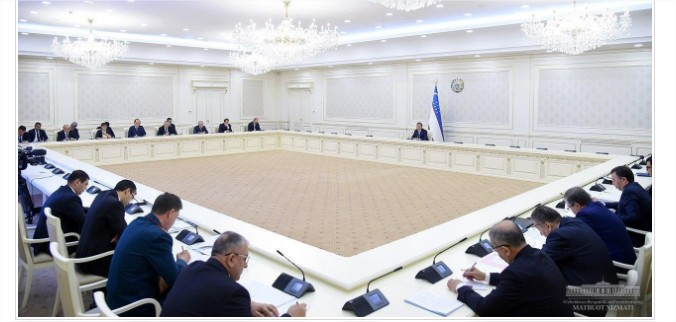
RAWALPINDI, JUNE 17 / DNA / = Corps Commander‘s Conference was held today at GHQ. Forum was briefed on national and regional security situation.

Forum expressed satisfaction on continued reduction in incidents of violence across the country, gradual positive effects of ongoing Afghan Peace Process along the Western Border  and resolved to keep supporting the normalization process through national institutions.Noting the Indian aggression, forum resolved to continue thwarting Indian designs and expose Indian targeting of innocent civilians in Kashmir and open support to terrorist outfits. Forum also discussed Army’s ongoing support to Government against COVID-19 , Locust threat, Polio campaign and ways to improve the same, within available resources.

It was underlined that COVID-19 can only be fought as a ‘whole of nation approach’ wherein every individual will have to play a role to ensure success through observation of basic procedures and discipline.

Stay Connected

64FansLike
60FollowersFollow

Latest Reviews

Exchange Rates

USD - United States Dollar
EUR
1.16
GBP
1.33
AUD
0.69
CAD
0.72