Home Blog Page 3395

CPEC role vital in post COVID-19 period: Qureshi

ANSAR M BHATTI

ISLAMABAD (DNA)- Foreign Minister Shah Mahmood Qureshi while participating in the Video Conference on Belt and Road International Cooperation: Combating Covid-19 with Solidarity, hosted by China said CPEC, a flagship project of BRI, could play an important role in boosting regional growth and recovery in the post-COVID-19 period.

In that regard, he added, Pakistan and China were taking requisite measures which would help in timely completion of CPEC projects.

Mr. Wang Yi, State Councilor and Foreign Minister of China, chaired the Conference in which Foreign Ministers of a large number of ‘Belt and Road Initiative’countries participated.

Foreign Minister Qureshi underscored that besides causing deaths the “COVID-19 pandemic had shaken the world and led to economic slowdown, bankruptcies, financial fissures, job-losses and disruption in global supply-chains.” Highlighting the dangers the pandemic had posed to social and political stability, the Foreign Minister said it was time for the world community to “demonstrate unity, solidarity, and multilateral cooperation to fight this pandemic.”

Foreign Minister Qureshi underlined that Pakistan was resolutely confronting the outbreak of COVID-19 and taking all possible measures to strengthen the existing health system. The primary focus remained on both saving lives and saving livelihoods. In order to alleviate the sufferings, Prime Minister Imran Khan had introduced major initiatives includingUS $ 8 billion relief package for the most vulnerable people and Ehsaas Emergency Cash Program to help the needy.

While supporting the idea of ‘Health Silk Road’mooted in the Conference by China, Foreign Minister Qureshi proposed that the COVID-19 vaccine, as and when it was developed, must be declared a “global public good” and made available on an equitable basis.The Foreign Minister appreciated China’s role in organizing the Conference and hoped that it will play an instrumental role in successfully fighting COVID-19.

Nigerian envoy gives an emotional send off to citizens

50 Nigerians who were stranded in Pakistan amid corona pandemic, were evacuated through a chartered aircraft

DNA

ISLAMABAD: As many as 50 Nigerians who were stranded in Pakistan amid corona pandemic, were evacuated through a chartered aircraft.  The departure turned into an emotional farewell.

 The Nigeria High Commissioner to Pakistan, Maj Gen (Rtd) Ashimiyu Olaniyi Oon addressed his departing country fellows in an emotional way.

He reminded them that coronacirus was a disease that was ravaging all nations across the world. All countries with no exception have adopted measures to combat this pandemic, including lockdowns which affected economies of various countries in the world including the airline operations, hence your inability to have returned to Nigeria at the end of your business activities in Pakistan.

 He said that today you are boarding a chartered Aircraft operated by TARCO Aviation which will take you to Abuja.

‘I am aware of the challenges you must have experienced in the last 3 months as this pandemic caught everybody unprepared. He commended the patience and adoptivity of Nigerians during this tough period of time here in Pakistan’.

He also appreciated the Government and “good people” of Pakistan for their love, compassion and generosity towards the Nigerians and their military officers who were on training at various Pakistani military institutions.

He acknowledged and thanked the efforts of Pakistan Foreign Office for accommodating the movement of Nigeria nationals from Lahore, Quetta and Karachi to Islamabad through special PAF flight arrangements.

He further appreciated the Pakistan Air Force leadership for making available the aircraft that airlifted the Nigerian military officers from their places of training, and the Punjab Government for arranging the vehicles that conveyed stranded Nigerians from Lahore to Islamabad Airport.  He said that all this love shown by Pakistani government organizations are clear indications of strong bilateral relations between our brotherly countries. He offered special prayers for Pakistan and its People.

He further asked his departing country fellows to fully adopt and follow the Covid-19 prevention protocol which includes wearing of face masks, hand sanitizing, keeping safe distance wearing of hand gloves. He concluded his address by wishing them a safe flight home. The High Commissioner concluded his address by saying Pakistan – Nigeria friendship Zindabad.

A total of 50 Nigerians and one Pakistani boarded the chartered aircraft operated by TARCO AVIATION Co Ltd which took off from the Islamabad International Airport at about 1605 hrs.

The High Commissioner Ambassador Maj Gen (Rtd) Ashimiyu Adebayo Olaniyi and staff of the High Commission including the Defence Advisor, Consular officer were at the departure hall to see off the evacuating Nigerians.   

Central TV Channels Broadcasting Documentary Film Treason

DNA

DUSHANBE, JUNE 19 :  Today the third part of the documentary film Treason will be shown on central television channels.

The documentary is about the leadership and members of the banned terrorist and extremist organization of the Islamic Revival Party, who during the years of independence with the support of foreign powers have been working to subvert the Tajik state and nation.

The horrific scenes, the terror experienced by political, cultural and scientific figures, representatives of international organizations, the hostage-taking and destruction of homes in different parts of the country during the 1990s and its aftermath were the main tactics used by its members.

The film shows physical evidence and interviews of witnesses.

The first and second part of the documentary was shown on June 16 and 17. The film is also available on social networks, including YouTube and Facebook.

Two Rangers personnel, one civilian killed in Ghotki blast

GHOTKI : At least two Rangers personnel and one civilian lost their lives when a blast took place near a security forces vehicle in Sindh’s Ghotki on Friday, according to DSP Hafiz Qadir.

DSP Qadir said that Rangers personnel were buying meat in the market that a loud blast took place.

He said that the bodies and wounded were shifted to District Hospital Ghotki.

Indian troops martyr six more youth in occupied Kashmir

SRINAGAR : Indian troops in their fresh acts of state terrorism martyred six more Kashmiri youth in Shopian and Pulwama districts of occupied Kashmir on Friday.

During cordon and search operations, the troops martyred four youth at Bandpawa Chitragam in Shopian and two others inside a mosque in Pampore area of Pulwama, today. The troops had martyred one youth each in these areas, yesterday.

Indian police and troops also used brute force and fired teargas shells in Pampore on the demonstrators protesting against the killings. Meanwhile, the troops continued violent military operations in different areas of Pulwama, Shopian, Islamabad, Kulgam, Kupwara, Baramulla and Bandipore districts.

On June 8, Pakistan had strongly condemned the extra-judicial killings of nine Kashmiri youth at the hands of Indian forces in the Indian Occupied Kashmir (IOK) in fake encounters.

In a message posted by Foreign Office Spokesperson Aisha Farooqui on Twitter, she condemned the extra-judicial killings during so-called cordon and search operation in Shopian area of the occupied territory.

Pakistan witnesses record 136 coronavirus deaths in past 24 hours

DNA

ISLAMABAD JUNE 19 : The countrywide tally of coronavirus cases has jumped to 165,062 after 4,944 new infections were detected in Pakistan over the past 24 hours while 136 more people succumbed to the deadly disease.

According to data released by the National Command and Operation Center (NCOC), 61,678 cases have been detected in Punjab so far, 62,269 in Sindh, 20,182 in Khyber Pakhtunkhwa, 8,998 in Balochistan, 9,941 in Islamabad, 769 in Azad Jammu and Kashmir and 1,225 in Gilgit Baltistan,

With 136 more Covid-19 related fatalities recorded over the past 24 hours, the number of people dying from the disease in the country has soared to 3,229. A total of 4,944 new cases were detected when 28,042 tests were conducted during this period. The number of people defeating the deadly virus has reached 61,383. So far, 1,011,106
tests have been conducted across the country.

Global coronavirus cases

The number of coronavirus infection cases across the world has surpassed over eight point five million while the pandemic has so far claimed more than 455,000 lives.

The United States tops with over two point two million cases and more than 120,000 deaths.

Brazil with over 983,000 cases and more than 47,000 deaths is the second badly hit by the virus.

Over four point five million patients have so far recovered from the disease across the world.

Indonesian Embassy, PBC discuss COVID-19 impacts  


DNA

ISLAMABAD: Though, COVID 19 continues to play havoc with human lives and global economies, nevertheless, simultaneously the damage control efforts are also in full swing to minimize the devastating socio-economic impacts of the pandemic. To contain and fight off the financial downturn the friendly nations through consultations are identifying ways for mutual cooperation for the enhanced sustainable economic activities between them.

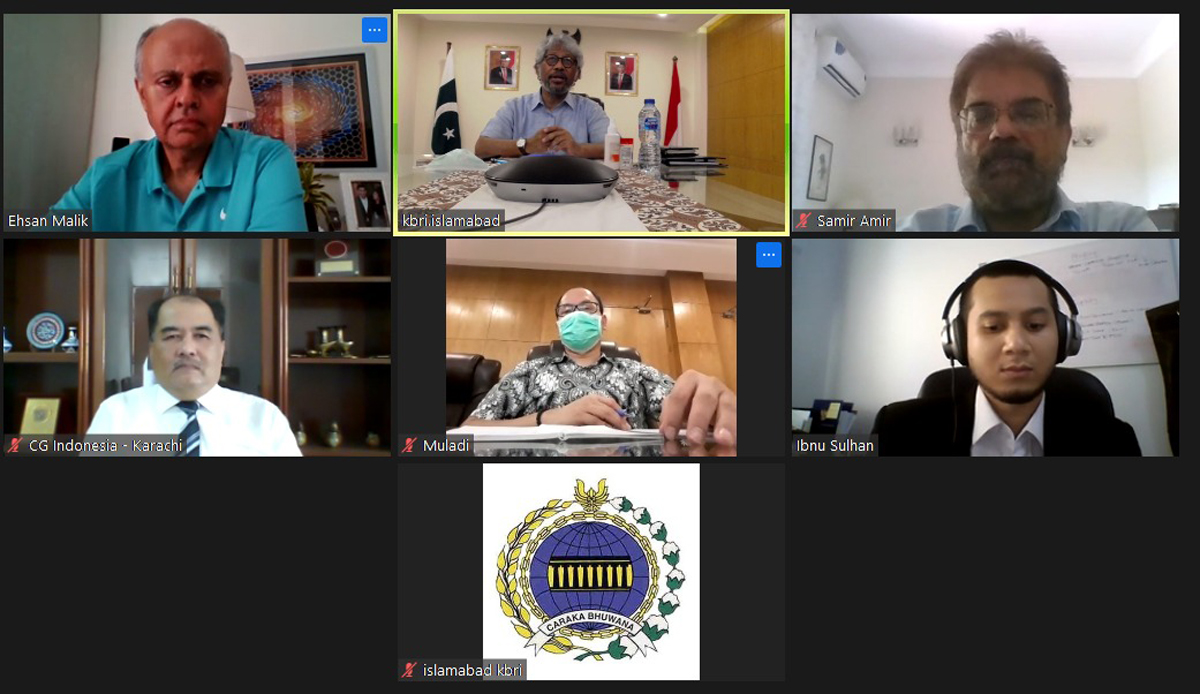
With the same spirit, the Indonesian Embassy in Islamabad organized a virtual meeting with the Pakistan Business Council (PBC) which is headquartered in the Pakistani economic hub of Karachi. It represents country’s leading Corporate and Business Groups and as an advocacy forum work to improve the general business environment of the country. Through its research projects, it also provides valuable input to the Government of Pakistan for bilateral agreements such as the Preferential Trade Agreement (PTA) and the Free Trade Agreement (FTA) between Pakistan and other countries.

The Indonesian Ambassador Iwan S. Amri and the Indonesian Consul General in Karachi Totok Prianamto attended the virtual meeting. The Indonesian Embassy has always worked closely with PBC and this time the meeting was aimed at discussing and evaluating the bilateral economic and trade situation arising out of the COVID 19 pandemic.

Speaking on the occasion, Indonesian Ambassador Iwan Suyudhie Amri highlighted the current issues concerning the bilateral economic cooperation between the countries and stressed on the significance of fostering the sustainable bilateral trade relations. “Indonesia and Pakistan must work together for the sustainable trade relations between them,” Ambassador Iwan Amri observed.

The Envoy believed that the concerted communication and consultations with the PBC and other stakeholders in Pakistan will certainly build greater confidence and improve environment for the both countries to uplift business, economic and other aspects of the bilateral ties.

“We would like to encourage and elevate bilateral trade and overall economic cooperation between the two countries that was sustainable, equitable and mutually beneficial corresponding to their respective supply &demand potential,” remarked Ambassador Iwan Amri.

Pakistan Business Council’s CEO Ehsan Ali Malik, in his remarks, reciprocated Ambassador’s views and highly commended the Indonesian Embassy in Islamabad and the Indonesian Consulate General in Karachi for their timely initiative and being persistent towards optimization of cooperation with Pakistan in various potential spheres.

42b45537-6bcc-4239-9ada-0a649a8841f5

Ehsan Ali Malik said that with the realization of the China Pakistan Economic Corridor (CPEC) strategic project the economic outlook in Pakistan was way more dynamic. He expressed his confidence that CPEC projects offered Indonesia a great opportunity to increase its economic cooperation and investment in Pakistan.

Ambassador Iwan Amri noted with pleasure that Indonesia’s trade relations with Pakistan have been on upward trajectory. The total trade value between Indonesia and Pakistan in 2019 reached USD 2.3 billion with surplus of USD 1.6 billion favoring Indonesia. While shedding some light on the research carried out by the Embassy, the Ambassador hoped that the PBC could play its vital role towards making Pakistan the hub of Indonesia’s palm oil business to Central Asia and the Middle East.

The successful implementation of the Indonesia-Pakistan Preferential Trade Agreement (PTA) in 2013 opened the door for the Indonesia’s superior and competitive products in the Pakistani market such as palm oil and its derivatives, viscos rayon materials, coal, polyester, paper, rubber, motor vehicle parts, tractor accessories, clove, broom, brush, vein chloride and others products.

Following the establishment of concrete trade cooperation within the PTA framework, currently the two countries were moving towards the Free Trade Agreement (FTA) within the framework of the Trade in Goods Agreement (TIGA).

On the occasion, PBC’s CEO, Ehsan Ali Malik lauded the Indonesian Government’s policies that created an investment friendly climate in the country and have been very successful in attracting foreign investors. “We would like to learn from Indonesia’s success story in encouraging the relocation of multinationals and other large companies for instance from the US and Japan to Indonesia.

Tourism sector, people to people contacts and removing non-tariff barriers for bilateral trade were among other issues that also came under discussion at the meeting.

The successful two-hour long wide-ranging virtual meeting concluded with the Indonesian Embassy in Islamabad and the Pakistan Business Council agreeing to continue to work together by means of mutual consultations and sharing of the information about existing and emerging economic opportunities and potential business cooperation that can be focused and capitalized by Indonesia and Pakistan,” concluded Ambassador Iwan Amri.

___

Indian envoy summoned over LoC violations

ISLAMABAD (DNA) -Indian Charge d’Affaires Gaurav Ahluwalia was summoned on Thursday by Director General (South Asia & SAARC) Zahid Hafeez Chaudhri, to register Pakistan’s strong protest over the ceasefire violations by the Indian occupation forces along the Line of Control (LoC) on 17 June 2020, resulting in shahadats of four innocent civilians and serious injuries to one.

Due to indiscriminate and unprovoked firing by the Indian occupation forces in Bagsar and NikialSectors of the LoC;27 year old Razeem s/o Saleem;25 year old Tehzeeb s/o Saleem; 13 year old Ali Maroof s/o Muhammad Maroof, residents of Ratta Jabbar village in Nikial Sector, and 60 year old Rasheeda Bibi w/o Muhammad Hussain, resident of Lewana Khaiter village in Bagsar Sector, embraced shahadat. Also, 61 year old Muhammad Hussain s/o Fateh Ali,resident of Lewana Khaiter village sustained serious injuries.

The Indian occupation forces along the LoC and the Working Boundary (WB) have been continuously targeting civilian populated areas with artillery fire, heavy-caliber mortars and automatic weapons. This year, India has committed 1410 ceasefire violations to date, resulting in 12 shahadats and serious injuries to 102 innocent civilians.

Condemning the targeting of innocent civilians by the Indian occupation forces, the DG (SA & SAARC) underscored that such senseless acts, in clear violation of the 2003 Ceasefire Understanding and complete disregard for international human rights law and international norms, further vitiate the already tense atmosphere.

 He added that by raising tensions along the LoC and the WB, India cannot divert attention from the worsening human rights situation in the Indian Occupied Jammu and Kashmir (IOJ&K).The Indian government must realize that its irresponsible policies and unilateral actions are increasingly imperiling peace and security in the region. India must act responsibly in the interest of regional peace and stability.

Azerbaijan through the prism of BRI

Yunis Sharifli

At a time when U.S. influence in the South Caucasus is declining and the European Union is not fully engaged in the region, the People’s Republic of China (PRC) has emerged as a strategically important new player in the South Caucasus, which has the potential to enhance Azerbaijan’s capacity as a regional transit hub. In particular, the Belt and Road Initiative (BRI), announced by the President of PRC Xi Jinping in 2013 in Nur-Sultan (formerly known as Astana), Kazakhstan, has aroused interest in Azerbaijan from its very beginning.

During the visit of the Azerbaijani President Ilham Aliyev to China in 2015, the two countries signed a memorandum of understanding on joint promotion of the Silk Road Economic Belt”. Since regaining its independence, Azerbaijan has been seeking to invest in infrastructure projects to take advantage of its favorable geographical position. The availability and operation of the already built infrastructure has further increased the strategic importance of Azerbaijan for the PRC. The Baku-Tbilisi-Kars Railway (BTK) and the Baku International Sea Trade Port (BSTP) play a crucial role in the plans of both Azerbaijan and China.

On October 30, 2017, Azerbaijan and Georgia, along with Turkey, officially launched the 826-kilometer Baku-Tbilisi-Kars railway. On July 24, 2019, it for the first time delivered cargo from Turkey to Georgia. The BTK has a capacity of 5 million tons of cargo per year and offers a viable alternative to other railway routes on the East-West corridor. In addition to the BTK, the “construction of the New Baku International Sea Trade Port Complex” began in the Alat settlement, 70 km south of Baku, according to a decree signed by the President of Azerbaijan on March 18, 2007. The first phase of the port has already been completed. At the initial stage, the port’s loading capacity is expected to be up to 15 million tons. Upon completion of the second phase, the loading capacity will increase to 25 million tons. The BSTP is located at the intersection of the East-West and North-South corridors, as well as key highways and railways of Azerbaijan. The adoption of the law on the establishment of the Alat Free Economic Zone increases the importance of the port and attracts the attention of both regional and non-regional countries.

Azerbaijan is located within the Middle Corridor of the Silk Road Economic Belt. Covering 4,256 km of railways and 508 km of sea routes, this corridor stretches from the Chinese-Kazakh border to Azerbaijan (via the Caspian Sea), Georgia and Turkey. The location of both the BTK and the BSTP in the central corridor turns Azerbaijan into a key country in terms of realizing and reaching full potential of the BRI.

The Middle Corridor is shorter and more cost-effective than other alternatives. Goods shipped from China by sea take 36 days to reach Europe, while shipping along the Trans-Siberian route takes 20 days. The Middle Corridor, however, offers a timespan of 12 days for the Chinese goods to reach the same destination. In addition to being economically attractive, the Middle Corridor is also more politically viable for China, as the countries along this corridor are more secure, both geographically and due to stable relations with other countries. In addition, the corridor allows China to diversify its exports, reduce its dependence on Russia, a major player in the Northern Corridor, and safely ship its products to Europe without using the Southern Corridor through U.S.-sanctioned Iran.

From Azerbaijan’s point of view, the Middle Corridor strengthens the country’s position as a regional transit center and contributes to the further deepening of the Azerbaijan-Georgia-Turkey strategic triangle. Baku’s decisive role in this corridor increases Azerbaijan’s strategic importance not only for China, but also for European and regional countries. A greater role in the East-West corridor increases the country’s attractiveness along the North-South corridor and encourages countries in the neighborhood, especially Iran and Russia, to deepen cooperation with Azerbaijan. Moreover, the Middle Corridor may help Azerbaijan to diversify the national economy and reduce dependence on oil. The development of the Azerbaijani-Chinese relations may also attract more Chinese investment and increase the region`s potential to become a transport hub by developing the business environment and making it an integral part of the country’s international supply network. Politically, China’s growing influence in the region could help balance Russia and increase Azerbaijan’s maneuverability in the political arena and develop relations with international organizations in which China has a leading role (e.g.: Asian Infrastructure Investment Bank).

With the outbreak of the COVID-19 in China and its rapid spread to other regions, international trade has stagnated. During the pandemic, air and sea routes lost their functionality as a result of restrictive measures of many countries to prevent the spread of the virus. The closure of air and maritime routes due to the pandemic is having a serious impact on multiple industries. Experts predict that many European ports are going to be running only at 20-30% of their capacity in the coming months. At this time, elevated air shipping prices and longer transit times in both air and ocean freight means that the railways connecting Europe and China, remain the only reliable means of transportation for companies.

On April 19, a 940-meter freight train (the longest to have ever operated on the BTK) carrying 82 containers was sent from Turkey to Uzbekistan via Azerbaijan, Kazakhstan and Turkmenistan along the Middle Corridor. During the pandemic, a container transfer system was installed at the Canbaz station on the Turkish side of the Turkey-Georgia border to increase the capacity of the railway line to 3,500 tons due to the growing demand for freight on the BTK railway. The increase of the BTK`s freight capacity and the growing demand for freight along this route may further increase the strategic importance of Azerbaijan within the BRI framework. This situation can continue in the post-pandemic period and increase Azerbaijan’s geopolitical and geostrategic value for China. This is also a promising perspective for Azerbaijan against the backdrop of the sharp drop in oil prices and the pandemic-related burden on the national economy.

The Middle Corridor seems to dispose of an enormous potential to become the safest and shortest trade route between Europe and Asia, with Azerbaijan playing a key role in this initiative. Given the rapid development of the Azerbaijani-Chinese relations since 2015, the sharp drop in oil prices and the growing pressure on the Azerbaijani economy due to the pandemic, as well as the increasing strategic importance of railways, Azerbaijani-Chinese relations may receive a further impetus. Chinese investment in Azerbaijan would also be necessary for reviving the post-pandemic economy and more active participation of Azerbaijan in the BRI. Moreover, the deepening of relations can contribute to the development of Azerbaijan as a regional transport hub, as well as China’s diversification of export routes, reduction of transport costs and delivery of goods to Europe along the shortest route.

Yunis Sharifli is an intern at Topchubashov Center, Baku-based think tank. He studies at the Azerbaijan State University of Economics, Faculty of Turkish World Economics, majoring in International Relations. His areas of expertise cover Central Asia and Caucasus in China`s foreign policy, as well as Belt and Road Initiative.

Stay Connected

64FansLike
60FollowersFollow

Latest Reviews

Exchange Rates

USD - United States Dollar
EUR
1.16
GBP
1.32
AUD
0.69
CAD
0.72