Home Blog Page 338

Domestic challenges make Gaza mission politically toxic

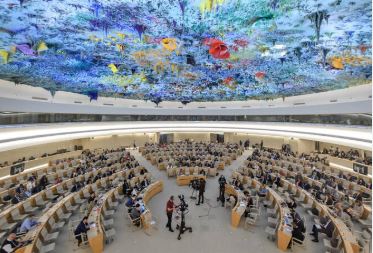
A demarche too far? Norway, the Supreme Court, and Pakistan’s diplomatic dilemma

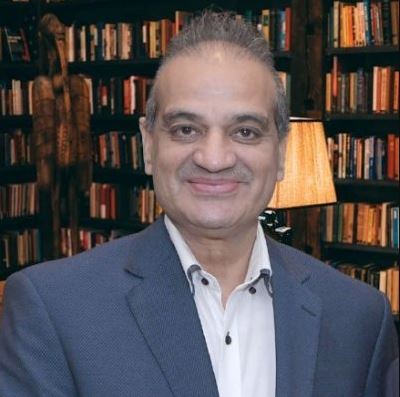
Ansar Mahmood Bhatti

US Secretary of State Marco Rubio has publicly acknowledged Pakistan’s willingness to “consider being part” of the proposed International Stabilisation Force (ISF) for Gaza. The idea, though not officially confirmed by Pakistani side, has stirred debate in Islamabad. When asked about these reports, Pakistan’s Foreign Office responded cautiously, stating that “no decision has been made on this issue so far.” The choice of words is telling: the spokesperson did not outright refute the reports, leaving room for speculation that discussions may indeed be underway.

For Pakistan, however, the matter is far from straightforward. The country faces multiple internal challenges political instability, economic fragility, and rising public discontent all of which make it extremely difficult for the government to sell such an idea to its people. The clergy, in particular, would be reluctant to endorse any move that involves Pakistani forces being deployed in Gaza, regardless of whether the mission is framed as humanitarian or military. Religious parties, which wield significant influence over public opinion, would think twice before putting their weight behind such a proposal.

Public opinion in Pakistan is deeply sympathetic to the Palestinian cause. Any suggestion that Pakistani troops might be deployed in a mission that could be perceived as undermining Hamas or other Palestinian factions would be met with strong resistance. The clergy, already skeptical of Western-led initiatives in the Muslim world, would likely oppose the move outright. For them, the optics of Pakistani soldiers operating under a U.S.-backed mission in Gaza would be unacceptable. Even if the mission were purely peacekeeping, the perception among ordinary Pakistanis would be difficult to mold in favor of participation.

Another major obstacle is financial. Reports suggest that countries contributing forces to such a mission would have to bear the expenses themselves. For Pakistan, already grappling with a severe economic crisis, this is simply not feasible. The government is struggling to meet its own budgetary needs, and the idea of funding a foreign deployment in Gaza would be politically toxic. The public would question why scarce resources are being diverted abroad when Pakistan itself faces pressing challenges at home from inflation to unemployment to security threats.

Beyond finances and public opinion, there are serious security risks. If Pakistani forces were deployed in Gaza and came under attack from Hamas or other militant groups, it would create an untoward situation. Any such situation would inflame domestic anger and destabilize the government further. Conversely, if Pakistani or other Muslim countries’ forces were used to disarm Hamas, the backlash would be even greater. Such a move would be seen as Muslims fighting against fellow Muslims, a scenario that would be politically and morally unacceptable in Pakistan.

Pakistan has already made it clear that it will not become part of any initiative that involves disarming Palestinian groups or siding against them. The government has consistently maintained that Pakistan supports the Palestinian cause and calls for a just resolution based on international law and UN resolutions. Any deviation from this stance would be seen as a betrayal of Pakistan’s long-standing position and would invite fierce criticism both domestically and internationally.

Despite these challenges, reports suggest that the U.S. President is likely to raise the issue with Pakistan’s civil and military leadership in the coming days. Washington may argue that Pakistan’s participation would lend credibility to the mission and demonstrate solidarity with international efforts to stabilize Gaza.

The idea of Pakistan sending forces to Gaza is fraught with complications. Financial constraints, public opinion, clerical resistance, and the risk of escalation all make it a non-starter. While the Foreign Office has left the door slightly ajar by not refuting the reports outright, the reality is that Pakistan cannot afford politically, economically, or morally to take part in such a mission. The government will likely continue to tread cautiously, reaffirming its support for the Palestinian cause while resisting external pressure to commit troops.

The coming days may bring more pressure from Washington, but Islamabad’s political leadership knows that agreeing to such a mission would be a perilous gamble one that Pakistan simply cannot afford.
G-14/1 stalemate continues as allottees await Justice

G-14/1 stalemate continues as allottees await Justice

Many of the affected allottees are retired government employees who invested their life savings with the hope of securing a home in the federal capital. As delays dragged on, several allottees approached the Islamabad High Court (IHC) and even the Supreme Court, seeking justice, transparency, and a clear timeline for the resolution of their cases

By Saifullah Ansar

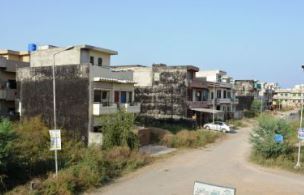
ISLAMABAD: More than two decades after its launch, Islamabad’s Sector G-14 continues to be mired in disputes, with Sub-Sector G-14/1 emerging as a symbol of administrative paralysis, illegal encroachments, and prolonged injustice faced by genuine allottees.

Sector G-14 was launched in 2004 by the Federal Government Employees Housing Authority (FGEHA) in collaboration with the Capital Development Authority (CDA) to provide affordable and planned housing to federal government employees. Spread over four sub-sectors—G-14/1, G-14/2, G-14/3, and G-14/4—the project offered a total of 5,486 residential plots of various sizes, ranging from 25×40 feet to 50×90 feet. While the vision promised a modern residential community, the reality for many allottees has been years of frustration and uncertainty.

Among all sub-sectors, G-14/1 remains the most problematic. Despite the passage of over 15 years, a vast majority of genuine allottees have yet to receive possession of their plots. Illegal encroachments, disputed built-up properties, and unresolved claims have brought development to a near standstill. According to official sources, only around one percent of the area in G-14/1 has been cleared so far, leaving the rest under occupation or dispute.

Many of the affected allottees are retired government employees who invested their life savings with the hope of securing a home in the federal capital. As delays dragged on, several allottees approached the Islamabad High Court (IHC) and even the Supreme Court, seeking justice, transparency, and a clear timeline for the resolution of their cases. Courts have repeatedly emphasized the need for lawful action, but tangible progress on the ground remains elusive.

The IHC, in one of its directives, instructed authorities to first complete the measurement of built-up properties (BUP) in G-14/2. While this step was aimed at addressing legal complexities, it inadvertently left G-14/1 in a state of limbo. No comprehensive eviction or clearance operation has yet been initiated in the sub-sector, further compounding the grievances of allottees.

Sources within the administration reveal that powerful local groups are allegedly backing illegal occupants, making enforcement a daunting task for CDA and FGEHA. Political interference, coupled with weak implementation of court orders, has further stalled the process. Despite repeated assurances by concerned authorities, the ground situation remains largely unchanged.

The prolonged delay has taken a heavy toll on allottees. Many have suffered financial losses due to rising construction costs and prolonged uncertainty, while others have endured emotional distress after years of waiting. Tragically, several original allottees have passed away without ever seeing their dream of owning a home fulfilled. Their families continue to pursue the cases, hoping that justice delayed will not become justice denied.

The contrast between G-14/1 and neighboring sub-sectors is striking. G-14/2, G-14/3, and G-14/4 have witnessed gradual development, with infrastructure slowly taking shape and residents beginning to settle. In comparison, G-14/1 appears frozen in time, reflecting a failure of governance and accountability.

Urban planning experts warn that continued inaction could further erode public trust in housing authorities and government-backed schemes. They stress the need for transparent identification of genuine claims, strict action against illegal encroachments, and coordinated implementation of court directives.

Unless CDA and FGEHA act decisively to clear encroachments, resolve disputes fairly, and restore confidence among allottees, the promise of Sector G-14 risks turning into a broken dream. For now, G-14/1 stands as a stark reminder of how bureaucratic inertia, political pressure, and unlawful occupation can derail a project meant to serve hardworking citizens of Pakistan.=DNA

Iran appreciates President Zardari’s goodwill message

Iran appreciates President Zardari’s goodwill message

Mahnoor Ansar

ISLAMABAD: /DNA/ – Ambassador of the Islamic Republic of Iran to Pakistan, Reza Amiri Moghadam, on Sunday expressed deep appreciation for the goodwill message conveyed by President of Pakistan Asif Ali Zardari as his aircraft transited through Iranian airspace.

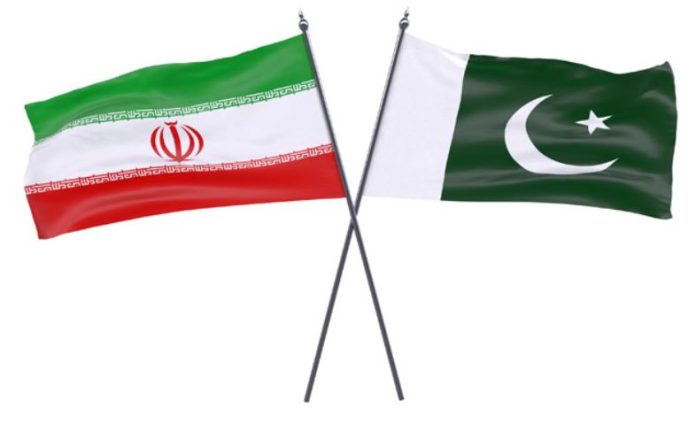
In a statement, Ambassador Moghadam said it was an immense honor for Iran to warmly welcome the flight of the President of the Islamic Republic of Pakistan and to receive his gracious message of goodwill. He termed the gesture a clear reflection of the deep-rooted bonds of mutual respect, solidarity, and enduring friendship and fraternity between Iran and Pakistan.

The Iranian ambassador noted that such thoughtful exchanges at the highest level underscore the historic, cultural, and civilizational ties that bind the two neighboring countries. He emphasized that Iran values its close relationship with Pakistan and views these expressions of goodwill as a reaffirmation of the strong foundations upon which bilateral relations continue to grow.

Reza Amiri Moghadam further stated that the Islamic Republic of Iran.

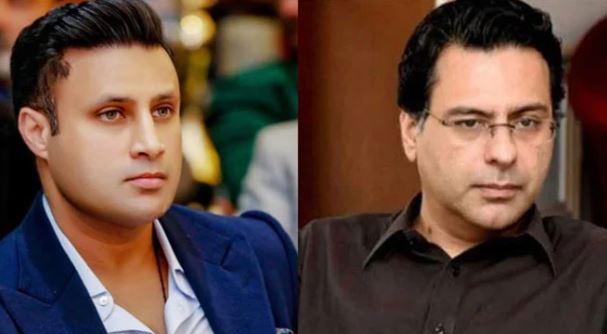
After Moonis Elahi Interpol drops Zulfi extradition case

After Moonis Elahi Interpol drops Zulfi extradition case

Interpol’s General Secretariat says PTI leader no longer “subject to an Interpol notice or diffusion”

DNA

LONDON/LYON: A month after giving a clean chit to senior Pakistan Tehreek-e-Insaaf (PTI) leader Moonis Elahi in the corruption allegations case seeking his arrest and extradition to Pakistan, Interpol has dropped the terrorism case extradition request for Zulfi Bukhari by the Government of Pakistan — in a big setback to the interior ministry’s efforts to repatriate exiled and wanted PTI leaders.

The General Secretariat of the International Criminal Police Organisation (Interpol) has confirmed that it has dropped its investigation into Bukhari and that he is no longer “subject to an Interpol notice or diffusion”.

Around two years ago, the interior ministry approached Interpol seeking red notices against Moonis and Bukhari. The case against Moonis was based on an alleged murder conspiracy from London to Gujarat and the alleged corruption cases during former prime minister Imran Khan’s government — that the PTI leader was behind the murder case in Gujarat after leaving Pakistan over three years ago, and made money through corrupt means when in power.

Against Bukhari, the interior ministry alleged in its Interpol complaint that he was involved in terrorism outside the Judicial Complex during PTI founder Khan’s appearances, as well as other incidents of terrorism. The interior ministry had also told Interpol that Bukhari should be handed over to Pakistan for his role in the Al-Qadir Trust case, since he was the central character in the case alongside Bushra Bibi and Khan.

The quite mental strain on students

The quite mental strain on students

Komal Waqar

In Pakistani universities, it is common to see students sitting quietly in classrooms while their minds are somewhere else. They attend lectures, take notes, and complete assignments, yet many of them feel deeply tired by the end of the day. This tiredness does not come from physical labour or long hours of manual work. Instead, it comes from constant thinking, worrying, and pressure. Many students feel exhausted even on days when they have not done anything physically demanding. This silent exhaustion has become a normal part of student life in Pakistan.

Mental tiredness is difficult to see, but it is easy to feel. It is the kind of tiredness that does not go away with sleep alone. It means overthinking small matters, replaying conversations in the mind, and constantly worrying about what comes next. Many students feel restless even during rest. Their minds remain busy with thoughts about exams, grades, deadlines, and expectations. Even while trying to relax, their thoughts continue to race, leaving them feeling drained without doing much physical work.

Academic pressure is one of the biggest reasons behind this mental exhaustion. Pakistani students face a continuous cycle of quizzes, assignments, presentations, midterms, and final exams. There is little time to pause or recover between assessments. The syllabus often feels heavy, and students are expected to perform well in every subject. For many, studying never feels complete. There is always another topic to revise or another test to prepare for. This constant pressure keeps the mind active at all times, leaving little space for mental rest.

Fear of failure adds another layer to this pressure. Many students are afraid of disappointing their families, teachers, or even themselves. Grades are often treated as a measure of intelligence and worth. A single low result can affect confidence and self-esteem. This fear forces students to remain alert and anxious even outside academic hours. As a result, the mind rarely feels free or relaxed, which slowly leads to mental fatigue.

Family expectations also play a strong role in students’ mental tiredness. In many Pakistani households, education is seen as the only path to success and financial stability. Parents often remind students of the sacrifices made for their education. While this support comes from good intentions, it can create a heavy sense of responsibility. Students begin to feel that failure is not an option. Comparisons with cousins, neighbours, or family friends are common and often unintentional. Simple comments about someone else’s achievements can increase self-doubt and stress.

Instead of feeling relaxed at home, many students continue to feel pressure there as well. Home, which should be a place of comfort, becomes another space where expectations exist. Students feel the need to constantly prove that they are working hard and moving forward. This ongoing pressure makes it difficult for the mind to truly rest, adding to mental exhaustion.

Social media has further increased this mental burden. Platforms like Instagram, LinkedIn, and TikTok are filled with stories of success, productivity, and achievement. Students constantly see others showcasing skills, internships, businesses, and academic milestones. These posts often show only the highlights, not the struggles behind them. However, when students compare their own journeys with these online images, they begin to feel late or left behind.

This comparison creates a sense of urgency. Students feel that they should be doing more, achieving more, and moving faster. Even rest starts to feel unproductive. Many students feel guilty for taking breaks, believing that they are wasting time. As a result, mental pressure increases, and relaxation becomes difficult. The mind remains active, even during moments meant for rest.

Another major factor behind mental tiredness is uncertainty about the future. Many Pakistani students worry about job opportunities, financial stability, and whether their degrees will truly help them succeed. Rising inflation, limited employment options, and frequent changes in economic conditions increase anxiety. Students often question whether their hard work will pay off. This uncertainty stays in the background of their minds, creating constant tension and worry.

Mental tiredness should not be confused with laziness or lack of motivation. Most students genuinely want to succeed and are willing to work hard. However, when pressure comes from academics, family, society, and social media all at once, the mind becomes overloaded. Without proper mental rest, this exhaustion affects focus, creativity, and confidence. Over time, students may feel disconnected, demotivated, or emotionally drained.

It is important for society to recognize that mental tiredness is real and serious. Educational institutions should encourage balance instead of constant pressure. Families should offer understanding rather than comparisons. Students need reassurance that rest is not a weakness but a necessity. Mental health support, open conversations, and realistic expectations can help reduce this silent burden.

In the end, a healthy mind is just as important as academic success. If we want students to learn better, perform better, and contribute positively to society, we must first understand the invisible mental load they carry every day. A generation that is mentally supported will be stronger, more confident, and better prepared for the future.

Komal Waqar is

Student of BS-Media and communication studies 6th semester, National University of Modern languages Rawalpindi

[email protected]

Rubio’s Gaza Signal and Pakistan’s Strategic Crossroads

Qamar Bashir

Qamar Bashir

When US Secretary of State Marco Rubio publicly acknowledged Pakistan’s willingness to “consider being part” of the proposed International Stabilisation Force (ISF) for Gaza, he did more than offer diplomatic gratitude. He placed Pakistan—quietly but unmistakably—at the center of the most sensitive post-war experiment in the Middle East. Rubio’s words, carefully hedged yet pointed, signaled that Washington sees Pakistan not as a peripheral participant, but as a key pillar of a force designed to oversee Gaza’s transition from devastation to an uncertain peace.

For Islamabad, this moment marks a profound strategic crossroads. Participation in the ISF may promise international relevance, economic relief, and renewed favor in Washington. Yet it also carries the risk of deep domestic backlash, ideological rupture, and entanglement in a conflict where the lines between peacekeeping and coercion are dangerously blurred.

At the heart of the issue lies the mandate itself. President Donald Trump’s 20-point Gaza peace plan—endorsed by the UN Security Council—envisions an international force, composed largely of troops from Muslim-majority countries, stepping in after Israel’s withdrawal to oversee stabilisation, reconstruction, and security. Officially, the ISF is framed as a neutral mechanism to prevent chaos and facilitate recovery. In practice, however, its most controversial task is implicit: the disarmament of Hamas and other Palestinian resistance groups.

This is where Pakistan’s dilemma begins. Unlike Israel, which under the plan is required to vacate Gaza, or Western powers reluctant to deploy ground troops, Pakistan would enter Gaza with boots on the ground and credibility among Muslim populations. That very credibility is what makes Islamabad attractive to Washington—and simultaneously vulnerable at home. A Pakistani soldier confronting a Palestinian fighter will not be seen as a neutral peacekeeper by Pakistani public opinion; he will be seen, fairly or not, as enforcing a US-backed order against fellow Muslims.

Field Marshal Asim Munir, now the most powerful military figure Pakistan has seen in decades, stands at the center of this storm. Recently elevated to oversee all three armed services, granted an extension until 2030, and shielded by constitutional immunity, Munir possesses unparalleled authority to take strategic risks. His close personal rapport with President Trump—symbolized by an unprecedented White House lunch without civilian officials—has restored trust between Washington and Rawalpindi after years of strain.

But power does not eliminate consequences. It merely concentrates responsibility. Supporters of participation argue that Pakistan’s military is uniquely qualified for the mission. It is battle-hardened, experienced in counterinsurgency, and among the world’s largest contributors to UN peacekeeping operations. Financially, such missions bring dollar-denominated compensation, easing pressure on a struggling economy and reinforcing an institutional model the Pakistani military knows well. Diplomatically, participation could elevate Pakistan as a responsible global actor and secure US investment and security cooperation at a critical time.

Yet these gains are contingent—and fragile. The most glaring weakness in the ISF proposal is mandate ambiguity. Peacekeeping traditionally rests on consent, neutrality, and limited use of force. Disarmament does not. If Hamas and other resistance factions refuse to surrender weapons voluntarily—as they have already signaled—then enforcement becomes unavoidable. In such a scenario, Pakistani troops would not merely stand between factions; they would become a party to coercion.

Compounding this is the absence of reciprocal enforcement mechanisms. The peace plan offers no clarity on what happens if Israel fails to fully withdraw from designated areas or violates post-withdrawal commitments. There is no indication that the ISF would be empowered to confront Israeli forces. The result is a one-sided enforcement architecture: Palestinian groups disarmed under international supervision, while Israel operates beyond the ISF’s reach. For Pakistan, this asymmetry is politically toxic.

At home, the risks multiply. Pakistan’s Islamist parties—particularly groups with strong street power such as JUI factions and Jamaat-e-Islami—are deeply opposed to US and Israeli policies in Palestine. Even with bans, arrests, and crackdowns, their ideological reach remains intact. Any perception that Pakistani soldiers are killing or detaining Palestinians—even in Gaza, even under UN authorization—could ignite nationwide protests, destabilizing cities and overwhelming civil order.

The backlash would not be confined to religious parties. Large segments of the public, already alienated by domestic political engineering and military dominance, would frame ISF participation as another example of Pakistan’s security establishment acting without popular consent. The absence of parliamentary debate or a national consensus would magnify this perception. In a country where legitimacy increasingly comes from the street rather than the chamber, this is a perilous omission.

There is also a quieter but no less serious concern: morale within the ranks. Pakistani soldiers are drawn from a society that overwhelmingly sympathizes with the Palestinian cause. Asking them to enforce disarmament against Palestinian fighters—while Israeli forces face no comparable restraint—could strain discipline and cohesion. Militaries can obey orders, but they are not immune to moral dissonance.

Internationally, Pakistan faces the risk of strategic isolation if the mission falters. Gaza remains volatile, traumatized, and heavily armed. If the ISF encounters resistance, sustains casualties, or becomes mired in urban conflict, global enthusiasm may fade. Major powers can distance themselves; troops on the ground cannot. Pakistan could find itself trapped in an open-ended deployment with no clear exit strategy, absorbing blame while others retreat to diplomatic safety.

Yet opportunities do exist—if handled with exceptional care. Pakistan could leverage its importance to insist on strict limitations: a mandate centered on civilian protection, humanitarian access, and policing ceasefire lines, explicitly excluding forced disarmament. It could demand written guarantees on rules of engagement, funding, timelines, and collective Muslim participation to avoid unilateral exposure. Properly negotiated, participation could position Pakistan as a mediator rather than an enforcer.

But such outcomes require transparency, parliamentary involvement, and a willingness to say no if red lines are crossed. The fundamental question is not whether Pakistan can participate in the Gaza stabilisation force. It is whether it can afford to do so on the terms currently envisioned.

Without clarity, consensus, and balance, ISF participation risks becoming a strategic trap: modest diplomatic gains purchased at the cost of domestic instability, moral authority, and long-term security. Field Marshal Munir’s unprecedented power may allow him to make the decision—but it will not shield Pakistan from its consequences.

History offers a cautionary lesson. Nations that enter foreign conflicts under vague mandates often discover too late that stabilisation is easier to promise than to deliver. For Pakistan, Gaza is not merely a distant theater. It is a mirror reflecting the tension between power and legitimacy, ambition and restraint. How Islamabad responds will shape not only its role in the Middle East, but the fragile equilibrium at home.

In this moment, strategic prudence—not proximity to power—may prove the ultimate test of leadership.

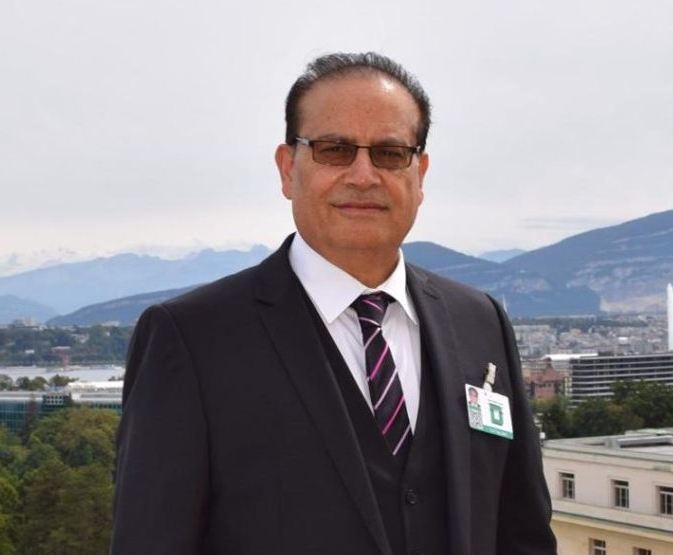
Qamar Bashir
Press Secretary to the President (Rtd)
Former Press Minister, Embassy of Pakistan to France
Former Press Attaché to Malaysia
Former MD, SRBC | Macomb, Michigan, USA

PSL 11 bidding deadline shifted to Dec 24

PSL 11 bidding deadline shifted to Dec 24

ISLAMABAD, DEC 20: The new deadline for submission of bids for the two new teams in the 11th edition of the Pakistan Super League (PSL) has been set for December 24.

Sources divulged on Saturday that the deadline for submitting bids for the two new PSL teams has once again been changed. The first deadline for bid submission had earlier been fixed for December 15, while the second date was set for December 22. However, franchises have now been given additional time.

The sources pertaining to the development said that the names of eligible bidders for the new PSL franchises will be announced on December 27, while the formal auction for the new teams will be held on January 8.

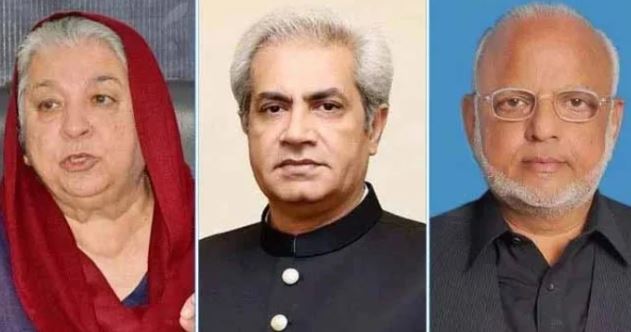
Yasmin Rashid, Ijaz Chaudhry, other PTI leaders sentenced to 10 years in May 9 cases

Yasmin Rashid, Ijaz Chaudhry, other PTI leaders sentenced to 10 years in May 9 cases

LAHORE: An anti-terrorism court (ATC) on Saturday sentenced four Pakistan Tehreek-e-Insaf (PTI) leaders — Dr Yasmin Rashid, Omer Sarfraz Cheema, Mian Mehmoodur Rashid, Ejaz Chaudhry and three others to 10 years in prison in cases related to the May 9 riots.

ATC Judge Arshad Javed announced the verdict inside Kot Lakhpat Jail.

EU greets Pakistan on its UN human rights council seat

EU greets Pakistan on its UN human rights council seat

BRUSSELS, DEC 20 /DNA/ – The 15th session of the European Union-Pakistan Joint Commission concluded in Brussels on Wednesday, marking a significant step in reaffirming and advancing the multifaceted strategic partnership between the two sides. The high-level meeting provided a comprehensive platform to review the broad spectrum of bilateral cooperation under the 2019 Strategic Engagement Plan (SEP), spanning political dialogue, trade, human rights, development, and regional security.

Co-chaired by Muhammad Humair Karim, Secretary of Pakistan’s Ministry of Economic Affairs, and Ms. Paola Pampaloni, Acting Managing Director for Asia and the Pacific at the European External Action Service, the commission underscored a shared commitment to a partnership “underpinned by shared interest in promoting regional stability.”

A central focus of the discussions was Pakistan’s continued participation in the EU’s Generalized Scheme of Preferences Plus (GSP+), a trade arrangement pivotal to bilateral commerce. The EU, Pakistan’s second-largest trading partner, acknowledged progress made by Islamabad in implementing the 27 international conventions related to human rights, labour, and governance that are conditional for GSP+ benefits. The talks covered follow-up actions from a recent GSP+ monitoring mission and Pakistan’s upcoming re-application under the new EU regulation. Both sides emphasized improving the overall business environment, with plans to advance this agenda at the High-Level EU-Pakistan Business Forum scheduled for April 2026 in Islamabad.

In parallel Sub-Group meetings, dialogues delved into specific cooperation areas. The Sub-Group on Democracy, Governance, Rule of Law and Human Rights, which met earlier this month, saw the EU congratulate Pakistan on its recent election to the UN Human Rights Council. Discussions covered progress on Pakistan’s National Action Plans on Human Rights and Business and Human Rights, alongside exchanges on freedom of expression, media independence, minority rights, and labour standards. The EU welcomed steps to align the application of the death penalty with international standards and the creation of a Commission on Minorities.

The Development Co-operation Sub-Group confirmed the continued relevance of EU support in priority areas: green inclusive growth, human capital development, and governance. Pakistan welcomed the EU’s sustained support for climate resilience, notably through a ‘Team Europe’ approach. A landmark development on the sidelines was the European Investment Bank’s (EIB) signing of its first credit financing agreement in Pakistan’s water sector since 2015, signalling a re-engagement of the EU’s lending arm with the country.

Migration and mobility formed another critical pillar of the talks. The commission reviewed progress under the Comprehensive Dialogue on Migration, appreciating Pakistan’s concrete steps to improve cooperation. Both sides emphasized the importance of fully implementing the EU-Pakistan Readmission Agreement and noted with satisfaction the recent endorsement of a Roadmap for the Talent Partnership, which aims to foster legal migration pathways.

On regional and global issues, the EU and Pakistan affirmed their support for the implementation of the Comprehensive Plan to end the Gaza Conflict, stressing the need for all parties to adhere to the ceasefire and work towards a two-state solution. The situation in Afghanistan, including security threats emanating from its territory and the need for continued humanitarian assistance, was also discussed. The EU reiterated its position on Russia’s war against Ukraine, while Pakistan briefed on the issue of Jammu and Kashmir and the Indus Waters Treaty.

The meeting concluded with an agreement to hold the next session of the Joint Commission in Islamabad in 2026, reflecting a mutual desire to maintain the positive momentum in a relationship the EU described as with a “reform-driven, innovation-ready” Pakistan.

Police arrest 12 in border district drug crackdown

Pakistan removes harsh clauses from anti-Israel UN Resolution

Qazi Shoaib Khan 

ATTOCK, DEC 20: /DNA/ – Attock Police arrested 12 drug pushers along with recovery of narcotics worth rupees million from their possession during a crack down launched through out the bordering district ATTOCK.

According to details, on the instructions of District Police Officer Attock, Sardar Mowaran Khan, a strict crackdown against drug dealers is underway across the district. Continuing this campaign, Assistant Sub-Inspector Wahid Khan of Police Station Hazro, during patrolling, recovered 1,400 grams of hashish from Aurangzeb son of Qalandar Khan, a resident of Hameed, Tehsil Hazro. Similarly, Assistant Sub-Inspector Adnan Ahmad recovered 10 liters of liquor from Rawaid Khan son of Shahbaz Khan, a resident of Hameed.

Likewise, Assistant Sub-Inspector Muhammad Ikram of Police Station Jand, along with his team, during checking recovered 1,640 grams of hashish from Danish Khan son of Azmat Khan, a resident of Mohallah Takia Jand. Sub-Inspector Nawazish Hussain recovered 1,260 grams of hashish from Ali Raza son of Muhammad Riaz, a resident of Mohallah Ghousia Jand, while Sub-Inspector Habdar Hussain Shah recovered 1,400 grams of hashish from Muhammad Tariq son of Feroz Din, a resident of Domel, Tehsil Jand.

Similarly, Assistant Sub-Inspector Ijaz Naseem of Police Station Pindigheb recovered 1,400 grams of hashish from Zahid Mehmood son of Zulfiqar, a resident of Ikhlas, during patrolling. Assistant Sub-Inspector Ghulam Raza recovered 550 grams of hashish from Muhammad Irfan son of Muhammad Zubair, a resident of Pindigheb. Assistant Sub-Inspector Naeem Ahmad recovered 520 grams of hashish from Atif Shehzad son of Mushtaq Ahmad, a resident of Mohallah Lari Adda, Pindigheb.

Likewise, Assistant Sub-Inspector Aamir Nazir of Police Station City Hassanabdal, along with his team, during checking recovered 1,400 grams of hashish from Ejaz Hussain son of Mumtaz Hussain, a resident of Hassanabdal. Sub-Inspector Ghulam Mujtaba recovered 10 liters of liquor from Aamir Shehzad son of Muhammad Yaqub, a resident of Hassanabdal.

Similarly, Assistant Sub-Inspector Fayaz Abbas of Police Station Bahtar recovered 20 liters of liquor from Muhammad Banaras son of Ghulam Haider, a resident of Dhoke Ahmad Khan Jhang, during checking. Meanwhile, Assistant Sub-Inspector Imtiaz Hussain Shah of Police Station Saddar Hassanabdal arrested Faizan Ali Shah son of Tahir Hussain Shah, a resident of Taxila, after recovering 10 liters of liquor from him. All suspects were arrested and put behind bars, and separate cases have been registered against them.

Stay Connected

64FansLike
60FollowersFollow

Latest Reviews

Exchange Rates

USD - United States Dollar
EUR
1.14
GBP
1.34
AUD
0.70
CAD
0.71