Home Blog Page 335

Genocide in Gaza: The End of Israel’s Moral Shield

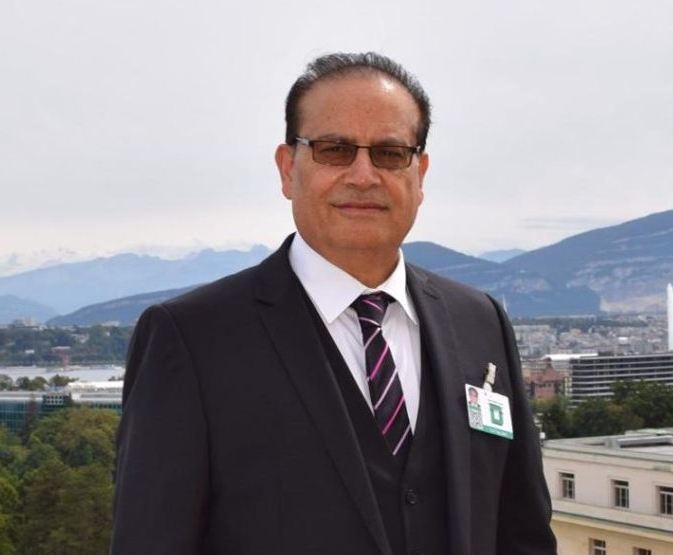
Qamar Bashir

By Qamar Bashir

The tide is now unmistakably turning against Israel—not merely because of its confrontations with Iran, nor its airstrikes that nearly ignited World War III—but more so due to the unrelenting and now undeniable genocide in Gaza, live-streamed and broadcasted to the world in real time.

For decades, Israel successfully cast itself as the perpetual victim, defending its sovereignty from existential threats. But today, that narrative is collapsing under the weight of horrifying images of amputated children, starving families, and entire neighborhoods reduced to rubble. What once were whispers of dissent have become roars of condemnation, not just from Arab nations, but from Israel’s staunchest European allies, including Germany, France, and Ireland.

In an extraordinary shift, even mainstream Western commentators have begun to question the moral standing of Israel’s conduct. Among them is British journalist Piers Morgan, who directly confronted an Israeli official in a live interview with the damning question: “Do you even know how many children you’ve killed?” Morgan continued, “You are killing a lot of children on a daily basis—that is indisputable. He exposed Israel’s failure to account for the thousands of civilian deaths, particularly children, in contrast with the military’s confident estimates of Hamas fighters killed. Morgan concluded: “You’re killing a lot of children every day—and that is not propaganda, it’s a fact.”

The media silence is beginning to fracture. The Financial Times, a historically conservative and pro-business British newspaper, published an editorial titled “The West’s Shameful Silence on Gaza.” It outlined how Israel’s escalating offensive has reached a catastrophic point, causing unfathomable suffering to 2.2 million people in Gaza. The editorial concluded that every possible war crime had likely been committed—with many Israeli officials boasting about these actions publicly.

More than 179 journalists have been killed in Gaza since the war began, including 171 Palestinians. Some were targeted deliberately. Hundreds of international reporters have signed open letters condemning the deliberate targeting of media professionals, the obstruction of aid, and the genocide of civilians. Even within major Western outlets like the BBC, journalists are expressing outrage at their management’s failure to humanize Palestinian suffering.

Medical professionals have echoed this horror. A U.S. surgeon speaking at the United Nations described deliberate shootings of children, as well as appalling injuries such as amputations, burns, and traumatic brain damage. British and American doctors who have worked in Gaza recounted treating endless streams of civilians, especially children, maimed by Israeli weapons. Dr. Mads Gilbert, who served in Gaza during previous assaults, called the volume and brutality of the injuries he saw “almost too large to comprehend.”

UN representatives have corroborated these accounts. Philippe Lazzarini, Commissioner-General of UNRWA, stated that even though Western media is largely absent from Gaza, Palestinian UN staff have documented genocide in real time. Their reports, replete with evidence, are often sidelined by powerful governments that refuse to act. A former U.S. State Department envoy admitted that his detailed daily dispatches on Gaza’s devastation—including images of dead and dismembered children—were ignored.

And yet, it is not just journalists, doctors, and diplomats who are speaking out. British lawmakers, once steadfast supporters of Israel, are beginning to distance themselves. Conservative MP Mark Pritchard, a twenty-year supporter of Israel, delivered a moving statement in Parliament. He declared, “I got it wrong. I condemn Israel for what it is doing to the Palestinian people in Gaza and in the West Bank.” He added, “The life of a Palestinian child is as precious as the life of a Jewish child.” His speech reflected a seismic shift within the political elite.

Key Israeli leaders have also broken ranks. Former Prime Minister Ehud Olmert, writing in Haaretz, called the current Israeli campaign in Gaza “a war of devastation: indiscriminate, limitless, cruel and criminal killing of civilians.” He denounced the Israeli government as a “criminal gang” and labeled the onslaught as amounting to war crimes. In separate interviews with The Guardian and the BBC, Olmert warned that Israel is committing crimes that could lead to lasting condemnation from the international community.

Yair Golan, former Deputy Chief of Staff of the Israel Defense Forces, stated, “A sane country does not wage war against civilians, does not kill babies as a pastime, and does not engage in mass population displacement.” These internal voices add even more gravity to the international condemnation Israel now faces.

Even German Chancellor Olaf Scholz, a longstanding supporter of Israel, condemned certain Israeli actions. While reiterating Germany’s historic solidarity with Israel, he described as “absurd” any notion that Palestinian civilians can be collectively punished. Scholz rebuked Israeli proposals for forced migration of Gazans as “scandalous” and warned that such actions breached international law. His statements represent a growing unease among European powers.

Echoing this, the European Parliament has now pledged to impose sanctions on Israel over what it labeled as “ethnic cleansing” and systemic violations of international law. Citing collective punishment, indiscriminate bombings, and forced displacement, a resolution passed with overwhelming support demands the suspension of preferential trade terms and immediate accountability for crimes against humanity.

The turning tide was also manifested in one of the most highly contested New York City mayoral elections, where Zohran Kwame Mamdani, a South African-born Muslim progressive, ran against a pro-Israel candidate. Mamdani won by a significant margin, signaling the shift in American public opinion. He has been vocal and unapologetic in defending the Palestinian right to exist peacefully. One of his early moves as mayor-elect was to halt city-level charity funds being funneled—often unknowingly by citizens—toward organizations supporting illegal Israeli settlements in Gaza and the West Bank. In a viral interview, Mamdani referred to Israeli Prime Minister Benjamin Netanyahu as a war criminal wanted by the International Criminal Court, pledging that should Netanyahu ever visit New York, “he will be arrested.”

All of these voices—Morgan’s, the Financial Times’, the doctors’, the diplomats’, the MPs’, the Israeli dissenters’, European leaders like Scholz, and now even American voters—form a growing chorus against Israeli impunity. The consistent message is that while Hamas bears responsibility for its own crimes, Israel’s response has gone far beyond self-defense. The destruction of Gaza is not just military retaliation; it is the deliberate dismantling of a people’s future.

What amplifies this horror is the complicity of the United States. Every attempt at the United Nations to condemn Israel’s actions or even call for a ceasefire has been blocked by American vetoes. U.S. financial, military, and diplomatic support gives Israel carte blanche to operate with total impunity. It is for this reason that many critics now blame Washington as much as Jerusalem.

This moment is becoming a defining chapter in modern history. The atrocities are too vast, too documented, too horrific to be buried under propaganda. As one commentator put it: “Every atrocity in history was made possible by the silent.” Silence now is complicity.

The question is no longer whether war crimes have been committed—that is self-evident. The question now is whether the world will summon the courage to hold the perpetrators accountable and give justice to the victims of Gaza. The tide has turned, and history is watching.

By Qamar Bashir

 Press Secretary to the President (Rtd)

 Former Press Minister, Embassy of Pakistan to France

 Former MD, SRBC | Macomb, Michigan, USA
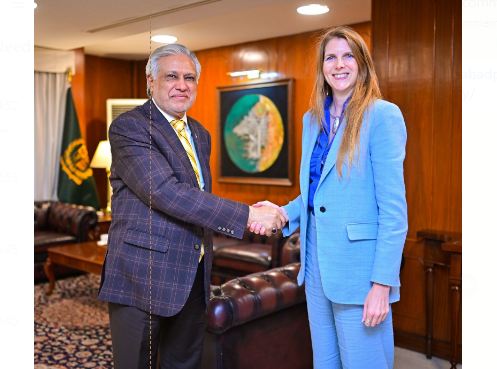
British High Commissioner meets DPM Ishaq Dar

British High Commissioner meets DPM Ishaq Dar

ISLAMABAD, JUN 27: /DNA/ – British High Commissioner to Pakistan, Jane Marriott @JaneMarriottUK, called on Deputy Prime Minister/Foreign Minister, Senator Mohammad Ishaq Dar @MIshaqDar50, today in Islamabad.

During the meeting they discussed bilateral cooperation across various sectors; regional & international developments; and upcoming multilateral engagements including Pakistan’s Presidency of the UN Security Council in July.

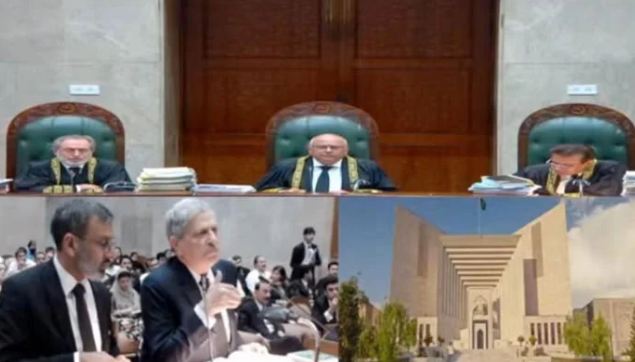
Big blow to Imran Khan-founded party as SC declares PTI ineligible for reserved seats

Imran Khan

ISLAMABAD, JUN 27: In a major setback for the Pakistan Tehreek-e-Insaf, the Supreme Court’s Constitutional Bench has accepted review petitions and ruled that the Imran Khan-founded party is not entitled to seats reserved for women and minorities in the national and provincial assemblies.

The verdict was announced by a 10-member bench headed by Justice Aminuddin Khan on Friday.

Announcing the short ruling, Justice Aminuddin Khan said, “Justice Aminuddin Khan, Justice Mussarat Hilali, Justice Naeem Akhtar Afghan, Justice Shahid Bilal Hassan, Justice Hashim Khan Kakar, Justice Aamir Farooq and Justice Ali Baqar Najafi all review petitions are allowed and impugn majority judgement dated July 12, 2024 is set aside as a consequence thereof civil appeals … filed by SIC are dismissed and judgement rendered by the PHC is restored.”

The head of the bench further said: “Whereas Justice Jamal Khan Mandokhail for reasons to be recorded, later the party allowed the review petitions and maintained its review petitions and maintained his original order with regard to 39 seats but reviewed the majority judgement to the extent of 41 seats. Whereas, Justice Mohammad Ali Mazhar and Justice Syed Hasan Azhar Rizvi, for reasons to be recorded later, also reviewed the judgement and allowed the review petitions with the rider that since the factual controversy or disputed questions of fact neither could be resolved by the PCH or this court in original or review jurisdiction. Therefore, directions are issued to the ECP to examine and consider the nomination papers/declaration and other relevant documents of all 80 returned candidates by means of noble exercise with regard to their affiliation …”

The Pakistan Muslim League-Nawaz (PML-N), the Pakistan Peoples Party (PPP), and the Election Commission of Pakistan have filed review petitions against last year’s Supreme Court July 12, 2024 ruling that the Pakistan Tehreek-e-Insaf (PTI) was entitled to reserved seats for women and minorities in the national and provincial assemblies.

Justice Mansoor Ali Shah of the SC’s full bench announced the 8-5 majority verdict, nullifying the Peshawar High Court’s (PHC) order wherein it had upheld the Election Commission of Pakistan’s (ECP) decision denying the reserved seats to the Sunni Ittehad Council (SIC).

In its July 12 verdict, eight out of 13 judges ruled that 39 out of a list of 80 MNAs were and are the returned candidates of the PTI.

The Fallout at Fordow: Conflicting Narratives

Qamar Bashir

By Qamar Bashir

The aftermath of the U.S. airstrike on Iran’s Fordow nuclear research facility has plunged the global media into a storm of speculation, contradiction, and geopolitical reckoning. The strike, executed by stealth B-2 bombers, was intended as a decisive blow to Iran’s nuclear program. However, the effects remain murky.

While the United States claimed the site was “completely obliterated,” setting Iran’s program back by “several years,” Iran downplayed the damage, admitting to a temporary disruption of “a few months” but insisting that its nuclear scientists, engineers, and infrastructure remain intact and resolute.

Even Israeli intelligence agencies and atomic energy officials acknowledged significant damage but were unsure of the long-term impact. Then came the contradictory statements from President Trump himself. In one breath, he asserted that Iran had advance warning and evacuated all personnel, saving lives. In another, he insisted that Iran failed to remove its enriched uranium and sensitive equipment before the attack—indicating the material was destroyed.

Amid these contradictions, the International Atomic Energy Agency (IAEA) took a professional stance: unless inspectors are allowed back into Iran’s nuclear facilities, any claims—American, Israeli, or Iranian—remain speculative.

Amid this narrative warfare, Iran has taken a bold and provocative step. In a sharp rebuke to the international community, Iran’s parliament passed legislation permanently banning IAEA inspectors from accessing any of its nuclear facilities. Iranian officials accused IAEA inspectors of acting as “spies” for the United States and Israel, allegedly providing intelligence that aided the airstrike on Fordow.

While Iran admitted that the site was damaged and pushed back temporarily, its leadership emphasized that the knowledge, expertise, and capability of its nuclear scientists remain undiminished. The program, they declared, will not only be restored but advanced beyond previous levels—with the strategic advantage of zero international oversight from here forward.

In a chilling warning, an Iranian spokesperson declared that while Iran may not need nuclear weapons to defeat Israel, any future confrontation would result in a “complete knockdown” of Israel—once and for all.

Iran’s fury wasn’t only directed at the military assault. Tehran reserved special condemnation for the IAEA’s Director General, accusing him of cowardice and double standards. Despite Iran being a signatory of the Nuclear Non-Proliferation Treaty (NPT) and abiding by international protocols, no condemnation came from the agency after the unilateral strike on a sovereign, peaceful state.

The U.S. and its Western allies justified the attack by invoking Israel’s “right to self-defense,” a phrase that has now become, to many in the international community, an Orwellian euphemism. Iran was not the aggressor. It launched no missiles. It issued no military threat. And yet it was bombed—without provocation, without due process, and without international consensus.

In the same breath, Western leaders repeated the refrain—“Israel has the right to exist”—as justification not only for the Iran strike but also for Israel’s campaigns in Gaza, Lebanon, Syria, and beyond. But global patience is wearing thin.

A fiery speech in the European Parliament recently captured this moral exhaustion. “I’m sorry,” a female member of parliament declared, “that we could not protect the Palestinian children. I’m sorry for the hospitals we failed. I’m sorry for the doctors, paramedics, and UN staff killed by Israeli bombs. We’ve lost our ethics. We’ve lost our moral compass. And with that, we’ve lost our humanity.”

What is emerging in 2025 is a historic pivot in global opinion. The sympathy that Israel once commanded has eroded. For the first time, we are witnessing a near-consensus backlash against Israeli militarism and Western hypocrisy.

Enter Zohran Kwame Mamdani, the newly elected Muslim mayor of New York City, whose bold remarks have gone viral across the globe. He announced an aggressive clampdown on New York-based charities funneling millions into illegal Israeli settlements. He vowed to shut down financial channels that siphon taxpayer funds to build settlements “on stolen land, at the expense of the original Arab and Palestinian inhabitants.”

Even more striking was his legal stance: Mamdani has pledged to arrest Israeli Prime Minister Benjamin Netanyahu if he ever sets foot in New York City, invoking the International Criminal Court’s warrant for war crimes. Netanyahu, Mamdani declared bluntly, is a “war criminal.”

This represents not just a political shockwave—it’s a symbolic break from decades of blind support. Israel’s aura of invincibility is now under siege—not from Iranian bombs, but from collapsing global credibility.

Despite its nuclear arsenal, advanced technology, and unmatched military capabilities in the region, Israel has failed to crush Iran’s strategic depth or dismantle its deterrent capability. Iran has now proven that without even using nuclear weapons, it can survive, retaliate, and escalate on its terms.

Moreover, criticism is no longer limited to outsiders. Even within Jewish communities worldwide, dissent is growing. Increasingly, Jewish intellectuals, religious leaders, and diaspora voices are questioning the direction of Israeli policies. Many argue that Israel has become the most dangerous place on Earth—for Jews themselves. Why? Because in the name of security, Israel is isolating itself diplomatically and endangering Jewish lives through perpetual war.

Jews live peacefully in countries across Europe, Asia, and the Americas—without fear of daily missile strikes. Only in Israel do they live under constant threat, surrounded by adversaries created by their government’s own aggressive actions.

What began as a U.S. airstrike on Fordow has ignited a crisis that now spans nuclear diplomacy, global ethics, and public opinion. The U.S., Israel, and their allies hoped to showcase strength—but may have instead exposed weakness.

Iran may have lost centrifuges, but it has gained something more powerful: global sympathy, diplomatic leverage, and internal resolve. Israel, once seen as the victim of aggression, is increasingly viewed as an occupier, a warmonger, and—perhaps most damagingly—a pariah.

This isn’t just a regional story. It’s a civilizational shift, where morality, accountability, and truth are being redefined. And in that battle, missiles may shatter walls—but narratives shatter empires.

By Qamar Bashir

 Press Secretary to the President (Rtd)

 Former Press Minister, Embassy of Pakistan to France

 Former MD, SRBC | Macomb, Michigan, USA
Pakistan, Uzbekistan aim for $2 billion trade in new push

Pakistan

ISLAMABAD, JUN 27 /DNA/ – In a significant step towards deepening economic cooperation between Pakistan and Uzbekistan, an 18-member high-level delegation of Uzbek businessmen led by Mr. Bakhrom Yusupov, Commercial Attaché, visited the Islamabad Chamber of Commerce and Industry (ICCI) on Friday. The visit was organized in collaboration with the Prime Minister’s Youth Programme (PMYP) and featured focused B2B meetings aimed at boosting trade and industrial linkages between the two countries.

The Uzbek delegation included notable figures such as Tukhtaev Akobirjon Khakimovich, Deputy Chairman of the Uzbekistan Chamber of Commerce and Industry;  Djumaniyazov Mukhammadjon Bakhramovich, Deputy Chairman of the Uzbek Textile Association; Latipov Aliyor Shahkriyorovich and  Islombekov Davronbek Shuratgbek Ugli from the Uzbek Leather Association; and representatives from sectors including textile, leather goods, surgical instruments, and fisheries.

Welcoming the delegation, ICCI President Nasir Mansoor Qureshi emphasized the strong commitment of both nations to expand their trade, enhance connectivity, and promote people-to-people linkages. He appreciated Uzbekistan’s rapidly growing economy and underscored the need to elevate bilateral trade to the $2 billion mark. He also stressed the importance of launching direct flights to facilitate business, tourism, and educational exchange.

 Bakhrom Yusupov highlighted the deep cultural, religious, and historical bonds between Pakistan and Uzbekistan, urging both sides to expand cooperation in agriculture, energy, pharmaceuticals, leather, textiles, food processing, and the digital economy. He invited Pakistani businesses to tap into Uzbekistan’s emerging markets and investment-friendly climate.

 Tukhtaev Akobirjon Khakimovich, Deputy Chairman, Uzbekistan Chamber of Commerce and Industry, introduced the delegation members and expressed optimism that the close emotional and cultural affinity between the two peoples would translate into tangible economic partnerships through such engagements.

Representing the Prime Minister’s Youth Programme, Focal Persons  Malik Rauf Awan and Dr. Rana Khalid Mehmood pledged full support from the government of Pakistan to foster industrial and entrepreneurial collaboration, particularly among youth in both countries.

Both sides reaffirmed their resolve to transform the longstanding diplomatic relationship into concrete economic cooperation, especially in housing, construction, and urban development.

Former ICCI President Mian Akram Farid moderated the session by highlighting the historic ties between Pakistan and Uzbekistan. In his vote of thanks, ICCI Senior Vice President Abdul Rehman Siddiqui reiterated the Chamber’s commitment to strengthening business and commercial links with friendly nations through institutional partnerships.

Other prominent attendees included ICCI Vice President  Nasir Mehmood Chaudhry, Executive Members Ms. Khadija Azim, Ms. Shumaila Siddiqui,  Sanaullah Khan,  Zulqurnain Abbasi, Imran Minhas,  Waseem Chaudhry,  Umer Khayyam Abbasi,  Ishaq Sial, and several leading entrepreneurs from the region.

Islamic scholars challenge western legal frameworks on child marriage

Islamic scholars challenge western legal frameworks on child marriage

ISLAMABAD, JUN 27 /DNA/ – Sustainable solutions to child marriage require more than the enforcement of punitive laws. They demand a holistic approach to nurtures moral development, encourage inclusive discourse, and fosters societal responsibility. A comprehensive strategy, grounded in public awareness, education, family support, and community dialogue, is crucial to addressing the root causes of early marriage. Only through collective efforts that combine legal safeguards with cultural sensitivity and ethical upbringing can meaningful and long-term social progress be achieved.

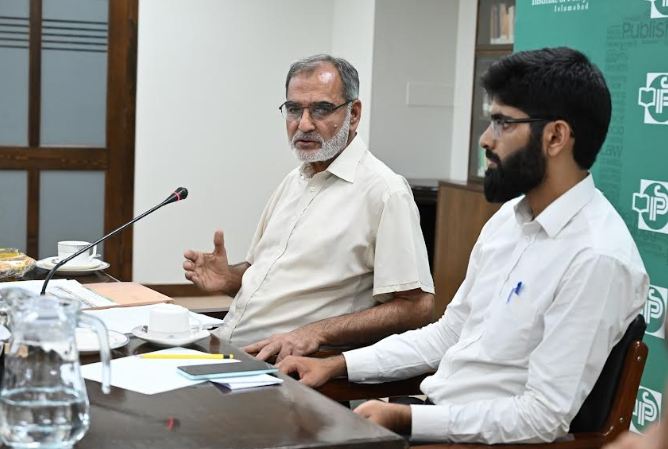
This was discussed during a session titled, “ICT Child Marriage Restraint Act 2025 – Legal, Social, and Religious Perspectives,” held at the Institute of Policy Studies, Islamabad. The session was addressed by Khalid Rahman, chairman, IPS, Hammad Saeed Dar, advocate, High Court, Dr Umm-e-Kulsoom, physician and Islamic scholar, and Dr Ghazala Ghalib, senior lecturer, International Islamic University, Islamabad, among other scholars and practitioners.

The discussion highlighted that Pakistan’s laws on child marriage are still rooted in colonial-era legislation, such as the Age of Consent Act of 1891 and the Child Marriage Restraint Act of 1929, under which the minimum age for marriage is 16 years for females and 18 years for males. While Sindh repealed the 1929 law in 2014, setting the legal marriage age at 18 for both males and females, it remains in force in provinces like Punjab, where inconsistencies persist, noted Hammad Dar.

Recent developments, including the ICT Child Marriage Restraint Act 2025 legislation in Islamabad, have criminalized marriages involving individuals under 18, making such offenses non-bailable and non-compoundable. Although contracting marriage below the prescribed age limit is criminalized, there remains a pressing need to align these laws with ground realities, social values, and cultural sensitivities.

During the discussion, the harmful consequences of child marriage, such as teenage pregnancies, maternal health risks, and emotional trauma, were highlighted as urgent public health and social concerns by Dr Umm-e-Kulsoom. However, it was stressed that neither can the legislation alone prevent these outcomes nor should the focus remain restricted to marriages. A wholesome approach should address myriads of issues related to male-female relations in a fast-changing social environment where societal and technology-induced changes have posed new challenges to family institution. A comprehensive strategy that encompasses public awareness, education, family support, and community dialogue is crucial for achieving meaningful change.

From a legal perspective, Dr Ghazala Ghalib explained that Islam does not mandate marriage by a certain age, but bases it on puberty and maturity, a combination of physical and mental attributes. She cautioned that the trend of criminalization in the current legal practice of Pakistan follows a Western punitive framework that may overlook cultural sensitivities and Islamic values of moral and spiritual development at individual and collective levels. She stressed the need for flexibility in the law to cater with diverse circumstance where marriage offers the only viable solution for a person’s safety and wellbeing. A mechanism for ensure wellbeing and welfare of the person concerned should be devised through a smooth process of approval or satisfactory alternate arrangements.

Concluding the session, Khalid Rahman emphasized the dangers of polarization in legislative discourse, particularly on sensitive issues related to family affairs. He cautioned that such laws cannot function in isolation, as introducing one piece of legislation often generates new challenges and leads to demands for additional laws within the same domain, addressing related but distinct issues.

Rahman highlighted that setting rigid age limits is neither a mandatory international law obligation nor logical in view of religious edicts and social realities. Instead, a healthy change should be brought about through education, awareness, and comprehensive social reform, while allowing legal flexibility for exceptional cases.

The discussion concluded with consensus on the need for a holistic approach, where legal safeguards, moral education, community awareness, and family strengthening go hand in hand to address child marriage in a culturally and religiously respectful manner.

Finance Minister stresses focused reforms, strengthened governance

Finance Minister

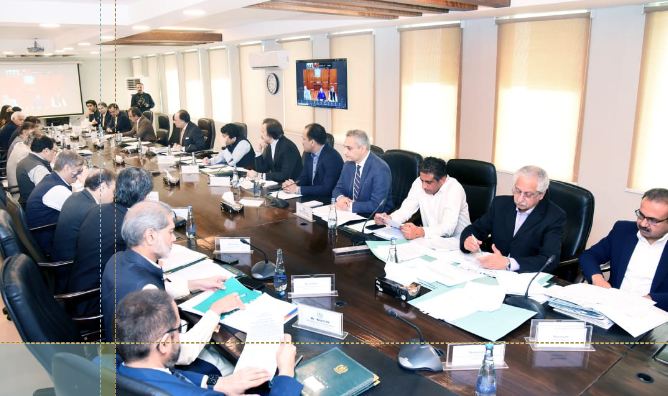
ISLAMABAD, JUN 27 /DNA/ – Federal Minister for Finance and Revenue Senator Muhammad Aurangzeb has reaffirmed the government’s commitment to strengthening the governance, operational efficiency, and financial sustainability of key public sector entities.

Chairing a meeting of the Cabinet Committee on State-Owned Enterprises (CCoSOEs) today, the Finance Minister stressed the importance of aligning business plans with national priorities and addressing operational challenges in a timely and coordinated manner. Federal Minister for Power Sardar Awais Ahmed Khan Leghari, Minister for Maritime Affairs, Muhammad Junaid Anwar Chaudhry, Minister for Science and Technology Khalid Hussain Magsi and senior officials from relevant Ministries and Divisions attended the meeting.

The Committee heard a detailed briefing from the Central Monitoring Unit of the Finance Division on a biannual report on the Federal SOE Performance covering the period from July 2024 to December 2024. The report included a detailed overview of the state of affairs and key challenges confronting State-Owned Enterprises (SOEs), including cumulative losses amounting to Rs 5.8 trillion, with Rs 342 billion incurred in just six months.

The Committee was told that the circular debt in the oil, gas, and power sectors had crossed Rs 4.9 trillion, severely affecting cash flows and asset valuations. The government’s fiscal support to SOEs—through grants, subsidies, loans, and other injections—had also exceeded Rs 600 billion in six months, equivalent to nearly 10% of total revenue receipts. In addition, unfunded pension liabilities in DISCOs and other SOEs, estimated at Rs 1.7 trillion, remain off the books, as do railways’ pension obligations, the meeting was told.

It was also highlighted that government guarantees currently stand at Rs 2.2 trillion, while rollover costs and financial restructuring liabilities further compound fiscal pressures. Governance concerns persist, with low levels of transparency in beneficial interest disclosures under IFRS Section 30 and other compliance gaps. The lack of strategic alignment in business plans and operational inefficiencies across SOEs were identified as critical areas requiring urgent reform.

The Cabinet Committee noted with concern the staggering cumulative losses of SOEs amounting to Rs 5.8 trillion, with Rs 342 billion incurred in just the last six months—equating to a daily loss of Rs 1.9 billion. The Chair emphasized that issues such as inefficiencies in DISCO operations, slow network upgrades by NTDC, unfunded pension liabilities, and low governance standards continue to erode fiscal space and undermine investor confidence.

The Chair also stressed the importance of timely reforms, particularly in the power and energy sectors where circular debt has crossed Rs 4.9 trillion, and reiterated the government’s resolve to bring greater transparency, financial discipline, and accountability to the SOE landscape.

The chair also emphasized the directors representing the government on the boards of State-Owned Enterprises must exercise due diligence and play an active role in safeguarding the financial health and operational performance of these entities through informed and responsible input.

During the meeting, separate summaries submitted by the Power Division for appointment of Chairman on the Quetta Electric Supply Company (QESCO) Board; constitution of the Board of Directors of the Independent System Market Operator (ISMO); appointment of Independent Director/Chairman on the Board of Gujranwala Electric Supply Company (GEPCO) and Independent Director on GENCO Holding Company Limited (GHCL), submitted by the Power Division; and nomination of Independent Directors on the Board of Multan Electric Power Company (MEPCO), Power Information Technology Company (PITC), and constitution of the Board of Energy Infrastructure Development and Management Company (EIDMC), were also discussed and approved.

Additionally, a summary moved by the Ministry of Railways for winding up of three railway companies—RAILCOP, PRACS, and PRFTC was also discussed and approved.

ECC Approves TSGs for Various Projects, Natural Gas Pricing Structure for FY2025-26

ECC Approves TSGs for Various Projects, Natural Gas Pricing Structure for FY2025-26

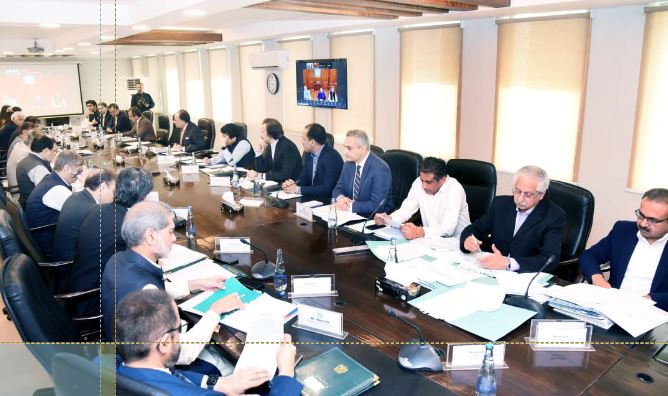
ISLAMABAD, JUN 27 /DNA/ – The Economic Coordination Committee (ECC) of the Cabinet met today under the chairmanship of Federal Minister for Finance and Revenue, Senator Muhammad Aurangzeb.

The meeting was attended by several key federal ministers, including Minister for Power, Sardar Awais Ahmed Khan Leghari, Minister for Petroleum Ali Pervaiz Malik, Special Assistant to the Prime Minister on Industries and Production Haroon Akhtar Khan, and senior officials from various ministries and divisions were also present.

During the meeting, the ECC reviewed and approved several Technical Supplementary Grants (TSGs) to meet the cost of ongoing projects and initiatives from different ministries and divisions during the current financial year 2024-25 as per following details:

Rs 15.839 billion TSG for the Ministry of Defence to cover the shortfall in admissible pay and allowances, in employees-related and non-employees related expenditures and clear the outstanding dues as part of the PM’s Package for the martyrs of the recent Pak-India war.

Rs 63 million TSG for Finance Division to cover the shortfall under unavoidable and mandatory expenditures on account of rent for office and residential buildings of the Department of the Auditor General of Pakistan during the current FY2024-25.

Rs 829.67 billion TSG and Rs. 1,774.20 billion TSG for Finance Division for repayment of domestic debt and for foreign loan repayments respectively.

Rs 100 million TSG for Ministry of Foreign Affairs to meet the expenditure under the Head of Account “Other Delegation Abroad” during the current FY2024-25.

Rs 1.765 billion TSG for Ministry of Interior & Narcotics Control to meet the operational requirements as well as to clear the outstanding/pending liabilities of the Frontier Corps KP (North and South) and Frontier Corps Balochistan (North & South) during the current FY2024-25.

Rs 300 million TSG for Ministry of Interior & Narcotics Control to clear outstanding liabilities under various Heads of Account of the ICT Police during the current FY2024-25.

Rs 100 million TSG for Ministry of Interior & Narcotics Control to clear the outstanding liabilities of various vendors provided services and supplies during the law and order situations in the ICT region during the current FY2024-25.

Rs 52.241 million TSG for Ministry of Interior & Narcotics Control to meet the cost of up-gradation/uplifting and availability of latest investigation equipment and friendly environment at ICT Police stations during the current FY2024-25.

Rs 100 million TSG for Ministry of Interior & Narcotics Control in respect of Frontier Corps KP (North) during the current FY2024-25.

Rs 5.5 billion TSG for Strategic Plans Divisions as rupee cover to Pakistan Space & Upper Atmosphere Research Commission (SUPARCO) during CFY 2024-25.

Rs 117.97 million TSG for Petroleum Division to meet the cost of PSDP project titled ‘Expansion & Up-gradation of Pakistan Petroleum Corehouse during the current FY2024-25.

Rs 254.57 million TSG for Finance Division for onward release to Government of Balochistan in terms of incentive package for PAS/PSP officers posted under it.

Rs. 198 million TSG for Ministry of Interior and Narcotics Control for repair and maintenance of the Executive Building, Islamabad.

Besides the TSGs, the ECC took up a summary submitted by the Petroleum Division, seeking approval for a revised natural gas pricing structure for the fiscal year 2025–26, to take effect from July 1, 2025.

Under the OGRA Ordinance, the federal government is required to notify revised consumer gas prices within 40 days of OGRA’s determination to ensure cost recovery and regulatory compliance. The submission also aligns with structural benchmarks agreed with the International Monetary Fund (IMF), including rationalization of captive power tariffs and a shift from cross-subsidies to direct, targeted support for low-income consumers.

The ECC considered the proposed adjustments in energy sector tariffs and decided to maintain gas prices to protect household consumers with only fixed charges re-adjusted in domestic sector to recover the asset costs. It also allowed price of gas for bulk consumers, power plants operating on natural gas and industry to be increased by an average value of around 10%.

The ECC also considered a proposal brought on by the Ministry of National Food Security and Research (MNFSR) for import of sugar to stabilize the sugar prices. The ECC discussed the summary and approved the proposal of the Ministry for constitution of a 10-member steering committee led by Federal Minister for MNFSR and including Federal Minister for Commerce, SAPM to Ministry of Foreign Affairs, Secretary Finance Division, Chairman FBR and others to come back to the ECC with their recommendations on the matter.

The ECC also discussed a summary by the Finance Division regarding changes in the home remittances incentive schemes, and tasked the State Bank of Pakistan and the Finance Division to propose and present a proper plan by 31st July to ECC, ensuring impact analysis and a roadmap for a properly-managed transition

The Cabinet body also considered a summary by the Finance Division for the launch of a risk coverage scheme for small farmers and under-served areas, and accorded in-principle approval to the proposal with instructions for further fine-tuning and incorporating in it additional safeguards before its planned launch on 14th August 2025. The ECC was told that the scheme would likely bring 750,000 new agricultural borrowers into the formal financial system and generate an incremental credit portfolio of Rs 300 billion during its disbursement tenure of 3 years from FY 26 to FY 28. The budgetary requirement for meeting risk coverage and operational cost of the banks is estimated to be Rs 37.5 billion, spread over FY 27 to FY 31.

Japan donates 92 books to Pakistan’s NUTECH to boost ties

Japan donates 92 books to Pakistan’s NUTECH to boost ties

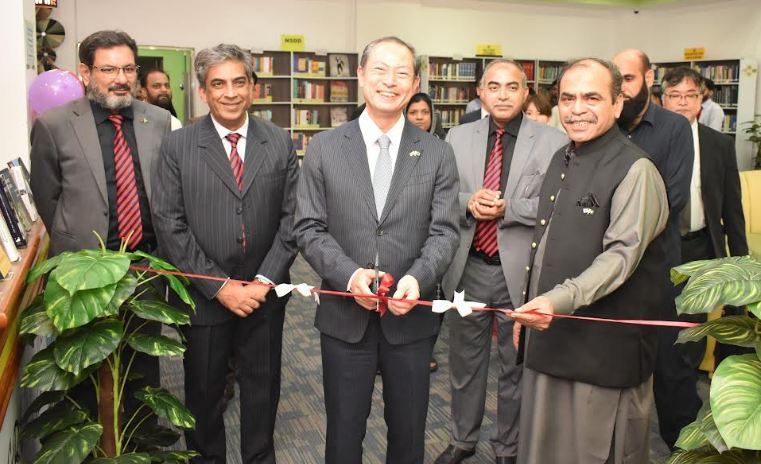
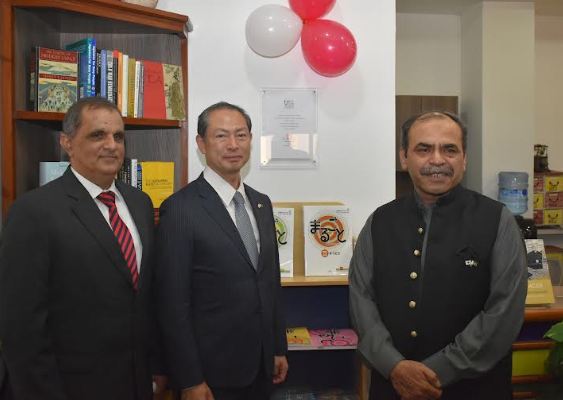
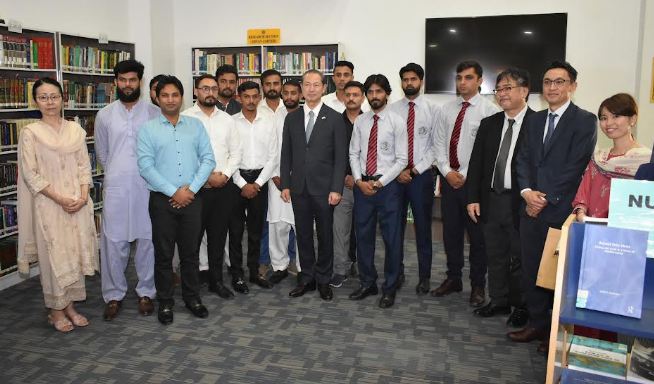
ISLAMABAD, JUN 27 /DNA/ – The Embassy of Japan in Pakistan, in collaboration with the Nippon Foundation, has donated a collection of 92 books on Japan to the National University of Technology (NUTECH) Islamabad as a part of the “Read Japan Project” aimed at fostering a deeper understanding of Japan’s rich culture, politics and economics through books.

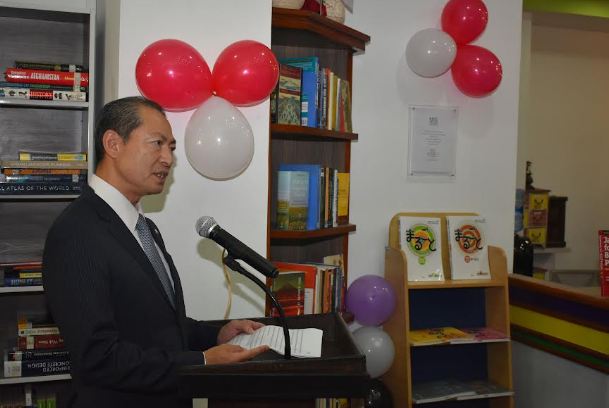
AKAMATSU Shuichi, the Ambassador of Japan to Pakistan, on behalf of the Nippon Foundation, presented the books to Rector NUTECH, Lt. General (Retd) Mr. Moazzam Ejaz at a ceremony held on Friday June27 at the university premises. The 92carefully selected books in English language cover a range of topics related to Japan such as history, politics, economy, security, philosophy, literature, art and culture.

Speaking on the occasion, H.E. Ambassador AKAMATSU congratulated the students and teachers for receiving this valuable gift from the Nippon Foundation and expressed the hope that with these books, students, faculty members, and intellectuals will have more fascinating information on Japan as these books are windows into Japan’s rich history, vibrant culture, advanced technology, and unique values.

The Ambassador appreciated the services rendered by NUTECH for offering not only the degree programs but also vocational training and language courses and has cultivated talented students, contributing to Pakistan’s human capital. He said that NUTECH’s relationship with Japan is noteworthy as it’s a registered organization which is sending interns for Japan’s Technical Intern Training Program (TITP). “I believe that NUTECH is playing a pivotal role in people-to-people exchange between Japan and Pakistan,” said the Ambassador.

In his remarks, the Rector NUTECH Lt. General (Retd) Moazzam Ejaz thanked the Nippon Foundation  and the Embassy of Japan for their generous gift of knowledge, expressing hope that the students will use this opportunity to learn about Japan and strengthen future Japan-Pakistan bilateral relations.

The “READ JAPAN PROJECT” was initiated by the Nippon Foundation in 2008 to promote the understanding of Japan through the donation of Japan related books in English to universities and libraries around the world.

CJCSC visits Australia for 14th Defence, Security Talks

CJCSC

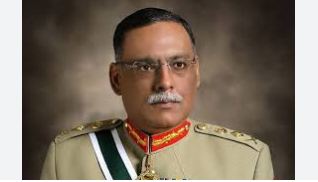
Rawalpindi, JUN 27 /DNA/ – General Sahir Shamshad Mirza, NI (M), Chairman Joint Chiefs of Staff Committee (CJCSC) visited Australia to attend 14th session of Annual Defence and Security Talks.

During the visit, Chairman JCSC met high ranking civilian and military leadership of Australia including Admiral David Johnston, Chief of Defence Forces, Mr Andrew Shearer, Director General Office of National Intelligence (ONI), Lieutenant General Simon Stuart, Chief of Australian Army and Ms Gemma Huggins, Ambassador Counter Terrorism at Department of Foreign Affairs and Trade.

Defence and Security Talks aimed at strengthening mutual understanding and identifying areas for further expanding defence collaboration between the respective militaries. During the meetings, both sides engaged in discussions on wide range of issues including evolving global and regional environment, security challenges and opportunities to enhance existing bilateral military exchanges.
During the visit, CJCSC delivered a lecture in Australian Defence College (ADC) on Pakistan’s Security Perspective and highlighted Pakistan’s contributions to regional peace and stability; and also visited Australian naval ship HMAS Adelaide.
Earlier upon arrival at CDF office, a smartly turned-out tri-services contingent presented guard of honour to CJCSC.

Stay Connected

64FansLike
60FollowersFollow

Latest Reviews

Exchange Rates

USD - United States Dollar
EUR
1.17
GBP
1.34
AUD
0.67
CAD
0.72