Home Blog Page 334

China willing to offer platform for dialogue between Cambodia, Thailand: Special Envoy

China willing to offer platform for dialogue between Cambodia, Thailand: Special Envoy

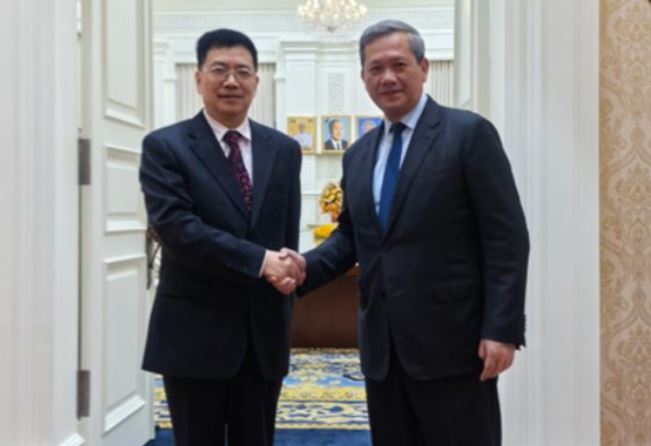
BEIJING, Dec 23 (APP/DNA): China is willing to create conditions and provide a platform for dialogue and negotiations between Cambodia and Thailand, Deng Xijun, special envoy for Asian Affairs of the Ministry of Foreign Affairs has said.

From December 18 to 23, Deng visited Cambodia and Thailand, and conducted shuttle mediation on the recent border clashes between the two countries, CGTN reported.

He met with leaders of both countries, stressing that the most urgent task is to achieve a ceasefire as soon as possible, restart dialogue, and resolve the dispute in a peaceful manner.

Field Marshal Asim Munir outlines Pak’s complex, multi-domain security challenges

Field Marshal Asim Munir outlines Pak's complex, multi-domain security challenges

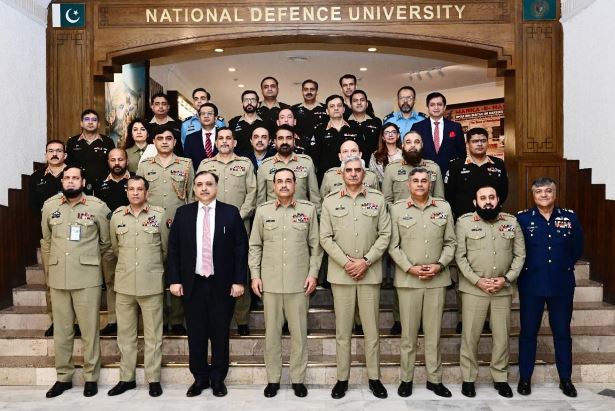
RAWALPINDI, DEC 23 /DNA/ – Field Marshal Syed Asim Munir, NI (M), HJ, COAS & CDF, visited the National Defence University (NDU), Islamabad today, where he was briefed by panel of civil and military participants of ongoing National Security and War Course on their academic perspective about challenges to national security and imperatives for overcoming them.

In his interaction, the Field Marshal outlined the complex and evolving global, regional and internal security environment, emphasizing that the country faces broad and persistent challenges. He noted that these challenges span conventional, sub-conventional, intelligence, cyber, information, military, economic and other domains, requiring comprehensive multi-domain preparedness, continuous adaptation and synergy amongst all elements of national power.

The Field Marshal highlighted that hostile elements increasingly employ indirect and ambiguous approaches, including the use of proxies to exploit internal fault lines, rather than overt confrontation. He stressed that future leaders must be trained and remain alert to recognize, anticipate, and counter such multi-layered cognitive challenges.

The Field Marshal also highlighted that decision-making under uncertainty with clarity and intellectual resilience are critical attributes for operating in today’s contested and diffused security environment.

The Field Marshal lauded NDU’s role as a premier institution in developing strategic thinkers capable of translating rigorous training and academic insight into effective policy formulation and operational outcomes. He underscored that professional military education remains central to strengthening institutional capacity, fostering indigenous capability, and ensuring long-term national resilience.

Concluding his address, the Field Marshal appreciated the panels’ sharp analysis and conclusions and urged the participants to remain vigilant, adaptive, and steadfast in upholding the values of integrity, discipline, and selfless service.

Upon arrival, the COAS & CDF was warmly received by the President NDU.

Japanese ambassador opens new eye surgery centre in Havelian

Japanese ambassador opens new eye surgery centre in Havelian

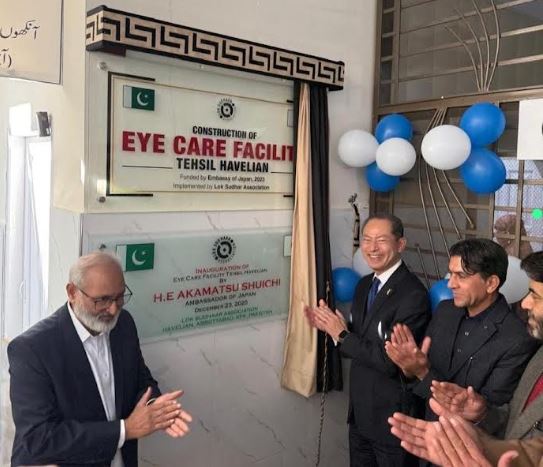
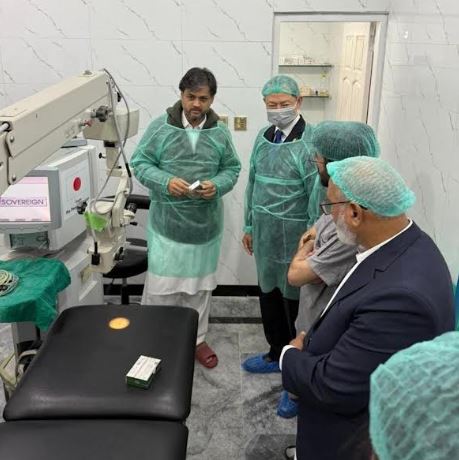
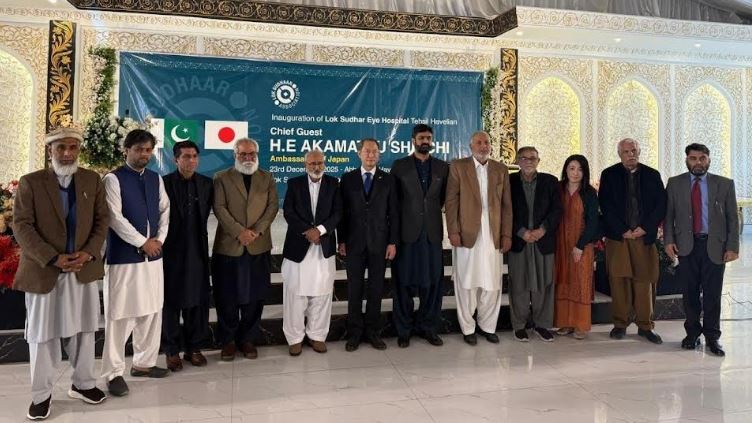
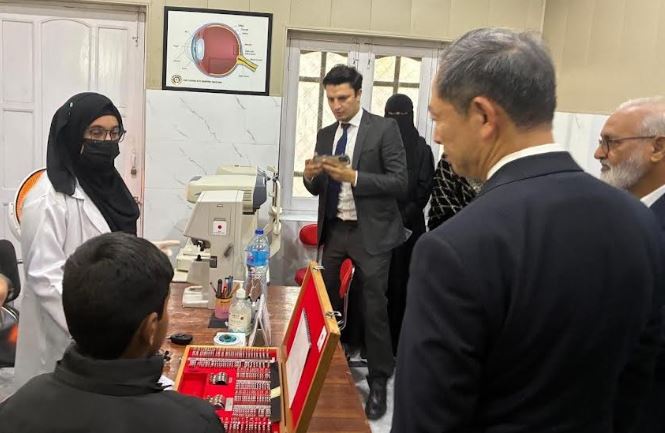
ISLAMABAD, DEC 23: /DNA/ – Akamatsu Shuichi, Ambassador of Japan to Pakistan, on Tuesday, 23rd December 2025, inaugurated a project for the construction of eyecare facility in Tehsil Havelian, District Abbottabad. The project was implemented by Lok Sudhar Association, a non-governmental organization working to improve the essential eyecare services for underserved communities in Havelian. The Government of Japan, under its Grant Assistance for Grassroots Human Security Projects (GGP) Program, had provided financial assistance of 51,407 USD which was allocated in 2024 for the construction for eyecare facility and provision of advanced ophthalmology equipment used in the diagnosis of different ophthalmic diseases and cataract surgeries. The inauguration ceremony was attended by the Japanese Embassy officials, NGO board members and local community representatives.

Lok Sudhar Association, with more than twenty five years of experience in community uplift and social sector initiatives, has worked collaboratively with various donors to deliver impactful projects. This project funded by the Government of Japan, improved the quality of eyecare service in Havelian, especially enabled to access cataract surgery for the first time in this region. 

This initiative responds to the pressing medical needs of over 350,000 people in Tehsil Havelian and adjoining areas. After the completion of the project, almost 30,000 patients have undergone treatment and 1,260 cataract surgeries were operated in this facility in one year. This facility significantly reduces the financial and physical burden on elderly and vulnerable patients who often faced delays in receiving timely medical care.

H.E. Mr. Akamatsu Shuichi, while speaking at the ceremony, congratulated Lok Sudhar Association on the successful completion of the project. Ambassador Akamatsu emphasized that provision of affordable health facility is the one of the top priorities in Japan’s assistance policy toward Pakistan. Ambassador Akamatsu also highlighted that the access to quality treatment is the basic prerequisite for any nation to achieve social prosperity. Ambassador Akamatsu stressed that Government of Japan would continue to support the people of Pakistan, to improve their living standards and represented his sincere wish that this project would certainly strengthen the longstanding friendship between the people of Japan and Pakistan.

Urbanisation – The Azerbaijan Model

Urbanisation – The Azerbaijan Model

By Ansar Mahmood Bhatti

President of Azerbaijan Ilham Aliyev has signed an order declaring 2026 as the “Year of Urban Planning and Architecture” in Azerbaijan. The initiative is aimed at safeguarding the country’s centuries-old traditions of urban planning and architectural heritage, while simultaneously encouraging the development and wider application of modern, innovative approaches in the sector. The decision reflects Azerbaijan’s commitment to addressing contemporary urban challenges, ensuring sustainable development, and harmonizing historical legacy with forward-looking architectural and planning practices.

Azerbaijan’s urbanisation journey is not only reshaping its own cities but also extending its influence abroad, reflecting the country’s growing role as a partner in sustainable development. Since independence in 1991, Azerbaijan has transformed from a largely rural society into a majority urban one, with the urban population rising from 45 percent in 1993 to nearly 58 percent in 2025. This transformation has been guided by a deliberate strategy that integrates smart city technologies, sustainable planning, and inclusive governance.

The domestic model is anchored in resilience and digital connectivity. Azerbaijan inherited a Soviet legacy of industrial hubs and large housing blocks, but in the three decades since independence, it has crafted policies that emphasize sustainability, inclusivity, and modern infrastructure.

The Karabakh region, devastated by conflict, has become the flagship of this transformation. Aghali, rebuilt as the country’s first smart village, now boasts renewable energy grids, digital governance platforms, and eco-friendly agriculture. Shusha, the cultural capital, is being redeveloped as a “15-minute city” with electric public transport, underground waste collection, and heritage-led planning. These projects demonstrate how Azerbaijan is embedding sustainability into reconstruction, turning post-conflict recovery into an opportunity for innovation.

Yet Azerbaijan’s urbanisation vision does not stop at its borders. The country has begun to share its expertise and financial support with other nations, including Pakistan. In Islamabad, Azerbaijan has contributed to upgrading and beautifying key areas, particularly those frequented by tourists.

This cooperation has enhanced the capital’s aesthetic appeal and infrastructure, strengthening its position as a modern, welcoming city. The initiative underscores the close ties between Pakistan and Azerbaijan, reflecting not only diplomatic goodwill but also a shared belief in the transformative power of urbanisation. By investing in Islamabad’s uplift, Azerbaijan demonstrates that its urbanisation strategy is not merely a domestic priority but a cornerstone of its international outreach.

This collaboration highlights two important dimensions of Azerbaijan’s approach. First, it shows that urbanisation is central to its national identity and foreign policy. For Azerbaijan, building modern, sustainable cities is not just about domestic development but about projecting soft power and fostering partnerships. Second, it illustrates how urbanisation can serve as a bridge between nations.

 By supporting Islamabad’s beautification, Azerbaijan strengthens cultural and economic ties with Pakistan, creating a model of cooperation that blends urban development with diplomacy.

At home, Azerbaijan continues to host the National Urban Forum (NUFA), most recently NUFA3 in 2025, where experts discussed energy-efficient cities, green planning, and digital municipal management.

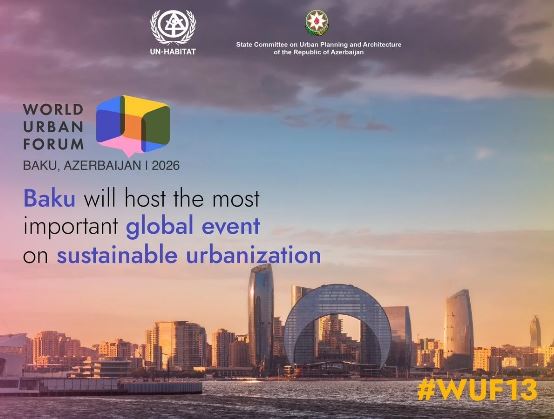
Azerbaijan builds on COP29 legacy by hosting the 2026 World Urban Forum. At the 3rd session of the Executive Board of the UN-Habitat Program held in Kenya, it was announced that the 13th World Urban Forum (WUF13) will be held in Baku in 2026.

This forum will highlight the country’s commitment to tackling challenges such as traffic congestion, ecological sustainability, and housing shortages. Abroad, its support for Islamabad shows that Azerbaijan is willing to export its urbanisation expertise, helping partner nations modernize their cities while reinforcing bilateral relations.

Comparisons with regional neighbors further underscore Azerbaijan’s uniqueness. While most of the countries grapple with the complexities of mature, overcrowded urban systems, Azerbaijan is building modern cities almost from scratch, embedding sustainability and smart technologies from the outset. Its shorter independent history explains the modest urbanisation figures, but also provides the opportunity to leapfrog older models. By extending this vision to Pakistan, Azerbaijan demonstrates that its urbanisation model is not only nationally transformative but also internationally relevant.

In essence, Azerbaijan’s urbanisation strategy is about more than expanding cities. It is about creating resilient, green, and digitally connected urban spaces that serve as engines of national development and symbols of post-conflict recovery.

The Karabakh reconstruction stands as a flagship example, while Islamabad’s beautification reflects the country’s growing role as a partner in global urban uplift. Together, these efforts show that for Azerbaijan, urbanisation is both a domestic imperative and a diplomatic instrument, shaping cities at home and abroad while strengthening bonds with allies like Pakistan.

The writer is a senior journalist who has visited Azerbaijan on multiple occasions. This article is based on his personal experiences and firsthand interactions.

Gazans fear renewed displacement after Israeli strikes

Gazans fear renewed displacement after Israeli strikes

KHAN YUNIS, DEC 23: When her children, trembling with fear, ask where the family can go to escape Israel’s continued bombardment in southern Gaza’s Khan Yunis area, Umm Ahmed has no answer.

In her small, devastated village near Khan Yunis city, recent Israeli drone and artillery strikes shattered the tenuous sense of peace delivered by a ceasefire that has largely held since October 10.

Residents say the strikes have targeted neighbourhoods east of the so-called Yellow Line — a demarcation established under the truce between Israel and Hamas.

 The Israeli military says its troops are deployed in the area in accordance with the ceasefire framework, accusing Hamas militants of “crossing the Yellow Line and carrying out terrorist activities”.

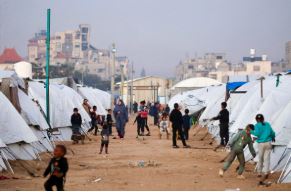
More than two years after Hamas’s October 7 attack on Israel sparked a devastating war, tens of thousands of Gazans still live in tents or damaged homes in these areas, where the Israeli army maintains control and operates checkpoints.

                  Now, many fear being forced from their homes, compelled to move west of the Yellow Line.

                  “We don’t sleep at night because of fear. The bombardments in the east are relentless,” said Umm Ahmed, 40.

                  “My children tremble at every explosion and ask me, ‘Where can we go?’ And I have no answer.”

                  Her home in Bani Suheila has been completely destroyed, yet the family has stayed, pitching a tent beside the ruins.

                  “Staying close to our destroyed home is easier than facing the unknown,” Umm Ahmed said.

                  Crossing the Yellow Line to Al-Mawasi, west of Khan Yunis, is not an option for them.

                  There, makeshift camps stretch as far as the eye can see, housing tens of thousands of Palestinians who fled the fighting.

                  “There is no place left for anyone there, and not enough food or water,” Umm Ahmed said, as Gaza remains trapped in a catastrophic humanitarian crisis.

                  – ‘We will not leave’ –

                  The Israeli military blames continued threats from Hamas militants for its actions in the area.

                  “The IDF’s current operations in Gaza, and their deployment in the Yellow Line area in particular, are carried out to address direct threats from terrorist organisations in Gaza,” the Israeli military said in a statement to AFP.

                  The war in Gaza began with Hamas’s attack on Israel on October 7, 2023 that resulted in the deaths of 1,221 people, mostly civilians, according to an AFP tally based on official Israeli figures.

                  Since the war began, more than 70,000 people have been killed in Gaza, according to the Hamas-run territory’s health ministry.

                  The vast majority of Gaza’s more than two million residents were displaced during the war, many multiple times.

                  A fragile ceasefire has been in place since October 10, though both sides regularly accuse each other of violations.

                  Under the truce, Israeli forces withdrew to positions east of the Yellow Line.

                  Earlier this month, Israeli army chief Lieutenant General Eyal Zamir described the Yellow Line as the “new border line” with Israel.

                  “The Yellow Line is a new border line — serving as a forward defensive line for our communities and a line of operational activity,” he said to reserve soldiers in Gaza.

                  For Palestinian officials, the line is seen as a tool for permanent displacement.

                  “The objective is to frighten residents, expel them from their areas, and force them west,” said Alaa al-Batta, mayor of Khan Yunis, denouncing the bombardments as “violations of the ceasefire agreement”.

                  Mahmud Baraka, 45, from Khuzaa, east of Khan Yunis, described constant artillery fire and home demolitions in the area.

                  “It feels like we are still living in a war zone,” he said.

                  “Explosions happen as if they are right next to us. The objective of the occupation is clear: to intimidate us and drive us out, so the region is emptied.”

                  For now, residents feel trapped between bombardment and displacement, uncertain how long they can endure.

                  Despite the danger, Abdel Hamid, 70, refuses to leave his home located north of Khan Yunis, where he lives with his five children.

                  “We will not leave… this is our land,” he said.

                  “Moving would not be a solution, but yet another tragedy.”

KP’s health initiative brings relief to thousands of diabetes patients

KP's health initiative brings relief to thousands of diabetes patients

PESHAWAR, Dec 23 (APP):The Khyber Pakhtunkhwa government's flagship health initiative, the "Extension of D-TALK and Insulin for Life Project," continues to provide essential free medicines and insulin to thousands of deserving diabetes patients across the province.

According to Project Focal Person Dr. Ashfaq, the program offers free treatment to Type-1 diabetes patients, pregnant women with diabetes, and eligible Type-2 patients from any district in Khyber Pakhtunkhwa.

He highlighted that the initiative has become a significant source of relief for poor and underprivileged families, though occasional medicine shortages pose challenges.

Dr. Ashfaq credited the project’s success to the provincial government’s efforts and the foundational work of former Project Director Dr. Aamir.

He praised current Project Director Dr. Abrar for his professional leadership and dedication, which have enhanced the program’s effectiveness.

Under Dr. Abrar’s supervision, greater transparency in medicine distribution has been achieved, with increased focus on district-level monitoring, administrative reforms, and timely delivery of services to patients. These measures have led to notable improvements in overall performance.

Beneficiaries have appealed to the government for priority allocation of additional funds to address shortages, ensuring uninterrupted treatment and preventing severe complications from diabetes.

Dr. Ashfaq expressed hope that, with Dr. Abrar’s continued leadership, the project could expand further, positioning Khyber Pakhtunkhwa as a leading province in diabetes care and welfare-oriented healthcare.

ECC approves 600 MHz spectrum auction as govt eyes rolling out 5G in six months

ECC approves 600 MHz spectrum auction as govt eyes rolling out 5G in six months

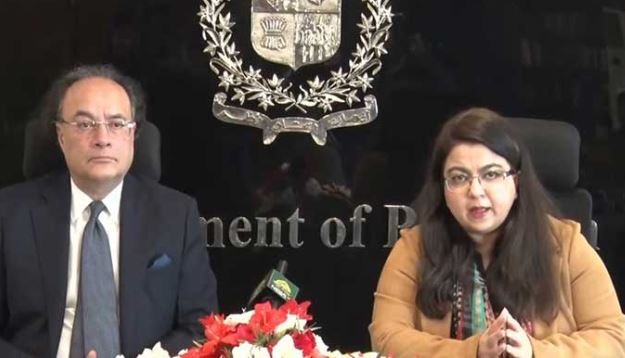
ISLAMABAD: The Economic Coordination Committee has approved auction of 600 MHz spectrum which would not only improve the internet speed but also pave way for the roll out of 5G internet in the country, Information Technology and Telecommunication (IT) Minister Shaza Fatima Khawaja said on Tuesday.

Addressing a joint presser along with Finance Minister Muhammad Aurangzeb, the IT minister said the federal government was eyeing completing the internet spectrum auction by early 2026 after the ECC’s nod.

Expanding on the matter, IT Minister Khawaja said that spectrum advisory committee’s recommendations will be taken to the cabinet soon and that consultation with other relevant parties, including the telecom sector, will be ensured during the process.

“Due to a lack of spectrum, internet speed in Pakistan is not up to world standards,” the minister noted, adding that the government is going to hold an auction of 600 MHz spectrum.

Shaza further said that efforts were underway to roll out 5G in six months.

ٓAn overview of internet speeds across country. — Ookla website
Highlighting that the internet formed the basis of the entire digital system, she said that the government will increase both the speed as well as internet access and that efforts were being made to complete the auction in the first week of February 2026.

The spectrum auction announcement comes as slow internet speed, coupled with intermittent outages and restricted access on various occasions, are not uncommon for the netizens in the country.

As per Ookla Speedtest Global Index, Pakistan ranked 97th globally with regards to mobile internet speed which was measured at 24.79Mbps in November. The statistics were much worse for fixed broadband speed where the country ranked 146 with download speed of mere 18.27Mbps.

Province-wise overview of internet speeds across country. — Ookla website
However, last month, the country significantly expanded its international internet capacity with the launch of the South-East Asia-Middle East-Western Europe (SEA-ME-WE) 6 submarine cable system.

The 19,200-kilometre high-capacity fibre network connects the country to major digital hubs between Singapore and France.

The system, offering over 100 terabits per second (Tbps) of total capacity, provides one of the lowest-latency routes between Southeast Asia, the Middle East and Western Europe.

Under the deployment, Pakistan had been allocated 13.2 Tbps, of which 4 Tbps has been activated immediately — a major boost that will support cloud computing, data centres, fintech, e-commerce, streaming platforms and the broader digital economy.

The new SEA-ME-WE 6 network features more fibre pairs and more than double the capacity of earlier SEA-ME-WE systems, ensuring greater resilience across high-traffic Asia-Europe routes.

Turkiye and Iran can’t be excluded from regional proceedings, Iranian expert

Turkiye and Iran can’t be excluded from regional proceedings, Iranian expert

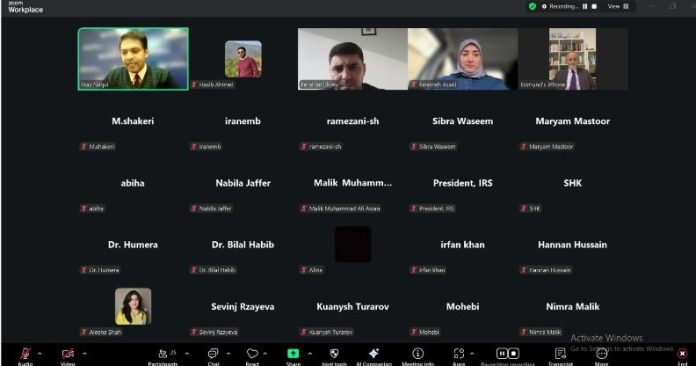
ISLAMABAD, DEC 23 /DNA/ – “Turkiye and Iran are natural partners because of their close proximity to each other”, marked Ms Fatemeh Asadi, a foreign affairs specialist based in Tehran. She was speaking to an event organized by Institute of Regional Studies Islamabad to discuss the prospects of Turkiye and Iran collaboration in the Middle East. 

Speaking to a wide range of audience, Ms Asadi viewed that Syrian situation was volatile and required attention by regional stakeholders. She was of the opinion that no country could influence Syria completely and therefore, it was in the interest of regional stakeholders to find common grounds. She rejected the notion of Iran’s weakness and instead opined that Iran’s priorities had changed vis-à-vis the region and that Iran now sought pragmatism in its relations. Since Israel seeks the division of Syria which could cause instability in the entire region, Turkiye finds in Iran a feasible partner to keep Syria unified, Ms Asadi pointed out. 

Ambassador Edmund Fitton-Brown, Senior Fellow at Foundation for Defense of Democracies (USA), argued that despite having upper hand in its relations with Iran, Turkiye sought to manage the bilateral relations. However, the partnership between Turkiye and Iran is limited since Turkiye desires to keep the US on board as well, Ambassador Brown noted. He also viewed the increased fragmentation in the geopolitical landscape with the possible emergence of KSA-UAE arrangement that could be detrimental to Turkiye’s interests in Syria. Finally, Ambassador Brown highlighted that if Syria fails to form an inclusive government, it could lead to renewed sectarian tensions which might force the US to disengage from the Turkiye-backed setup in the country. 

Mr Ferahim Eliyev, Research Fellow at Crescent Research Center, Azerbaijan, described Turkiye-Iran partnership as tactical based on realpolitik instead of any ideology. Turkiye views Israeli actions as destabilizing in the region and therefore, is willing to cooperate with Iran to manage the Syrian crisis, he added. Mr Eliyev also outlined that Turkiye wanted to present itself as a credible mediator between the new administrator in Syria and Iran and that’s why, the partnership between the two is situational. Furthermore, Turkiye is adamant to continue cooperating with Iran in economic sphere despite sanctions which makes their bilateral partnership in Syria even more crucial.

Azerbaijan: a global model of religious tolerance

Azerbaijan: a global model of religious tolerance

By Ansar Mahmood Bhatti

Azerbaijan stands as a unique geographical and cultural bridge between East and West, situated at the strategic crossroads of Europe and Asia. In a global landscape often marred by sectarian strife and religious polarization, the Azerbaijani government’s approach to religious tolerance has emerged as a beacon of peaceful coexistence. The nation has successfully cultivated an environment where diverse faiths including Muslims, Christians, and Jews exist in a state of genuine harmony, supported by a state apparatus that views interfaith dialogue not just as a policy, but as a fundamental cornerstone of its national identity.

The foundation of this pluralism is rooted in the country’s secular constitution, which defines Azerbaijan as a republic where religion is formally separated from government affairs. This secular framework is essential, as it prevents any single faith from dominating the political or social sphere, thereby ensuring that all citizens, regardless of their personal beliefs, enjoy equal rights and protections.

 This legal neutrality provides a safe harbor for the country’s Shia and Sunni populations to coexist without major sectarian conflicts. In Azerbaijan, it is common to see these two branches of Islam praying together in the same mosques, a rare and powerful symbol of unity.

Beyond the Islamic majority, Azerbaijan is home to a rich tapestry of religious minorities that have flourished for centuries. One of the most notable is the Jewish community, which is among the oldest in the region. The Mountain Jews of Azerbaijan have lived in the country for over two millennia, reporting a history of peaceful coexistence and an absence of state-sponsored anti-Semitism. Similarly, Christian communities, including Russian Orthodox, Catholics, and the descendants of the ancient Caucasian Albanians, practice their faith openly. The state provides active financial and logistical support for the maintenance and restoration of churches and synagogues, demonstrating a commitment to preserving the physical heritage of all its religious groups.

President Ilham Aliyev has consistently championed the idea that multiculturalism and tolerance are not just political slogans but a lifestyle for the Azerbaijani people. He has often emphasized that every year in the country is a year of tolerance, reflecting a cultural identity that embraces diversity as a strength. To project this image on the world stage, the government regularly hosts and organizes prestigious international forums, such as the “From Interreligious and Inter-civilizational Dialogue towards Cooperation” forum in Baku. These events position the capital as a global hub for discussions on peace, effectively using the nation’s internal harmony as a tool for international diplomacy and soft power.

International observers, including myself, have frequently visited Azerbaijan and lauded the Azerbaijani model. Rabbi Marc Schneier, a prominent advocate for interfaith relations, has noted that tolerance in Azerbaijan is deeply embedded in the daily life and psyche of the people rather than being a superficial or temporary campaign. By institutionalizing this respect through secular law and active state promotion, the government has created a stable society that prioritizes national unity over sectarian division.

As a unique example of this inclusive ethos, the Azerbaijani government has extended its commitment to religious preservation to the churches, particularly within the newly liberated territories. In these years, the state has implemented rigorous measures to ensure that no harm comes to any place of worship.

A prominent example of this magnanimity is the Armenian Church of St. Gregory the Illuminator in the heart of Baku. Despite the fact of the cultural genocide committed by Armenia against the Azerbaijani sites, including holy places, the government of Azerbaijan has fully restored and maintained the mentioned church. 

By treating the religious monuments of its neighbors with dignity and respect, Azerbaijan’s leadership demonstrates a high degree of statesmanship. This policy of safeguarding the heritages underscores the Azerbaijani government’s belief that religious sites belong to humanity and must be protected as part of a shared global heritage. Such actions not only preserve history but also serve as a vital gesture toward long-term reconciliation and peace in the South Caucasus.

While some international human rights groups observe that the government’s model prioritizes stability and state control, the tangible results of this policy are visible in the peaceful streets of Baku and the diverse villages across the country. Azerbaijan’s commitment to supporting minority communities and maintaining a secular framework allows it to stand out as a model of harmony. By preserving its centuries-old tradition of coexistence, Azerbaijan offers a vital blueprint for how the modern world can navigate the complexities of religious diversity in the twenty-first century.

The writer is a senior journalist who has visited Azerbaijan on multiple occasions. This article is based on his personal experiences and firsthand interactions.

Islamabad roundtable highlights growing Russia–Pakistan cooperation

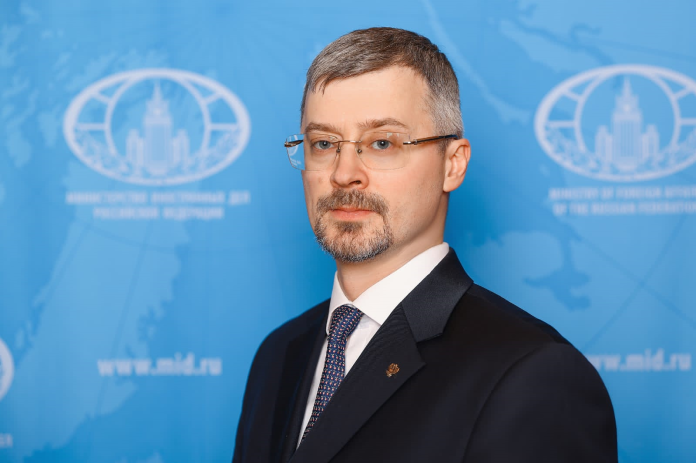
In his opening remarks, Russian Ambassador Albert P. Khorev highlighted the growing momentum in Russia–Pakistan political dialogue and noted the increasing engagement between the legislative bodies of the two countries

DNA

ISLAMABAD: The Embassy of the Russian Federation in Islamabad hosted a roundtable discussion titled “Russia–Pakistan: Overview of the Modern Stage of Bilateral Relations,” in collaboration with the Consortium for Asia Pacific and Eurasian Studies (CAPES). The forum brought together more than 40 representatives from leading universities and research institutions across Pakistan, including Islamabad, Peshawar, Lahore, Faisalabad, Karachi, Sargodha, and Okara.

In his opening remarks, Russian Ambassador Albert P. Khorev highlighted the growing momentum in Russia–Pakistan political dialogue and noted the increasing engagement between the legislative bodies of the two countries. He underscored the steady expansion of cultural ties and the constructive interaction between religious organizations in Russia and Pakistan, stressing that the peoples of both nations are united by their shared commitment to traditional spiritual and moral values.

The Ambassador reaffirmed Russia’s readiness to intensify efforts toward the implementation of joint projects aimed at deepening cooperation between the two friendly neighboring countries, particularly within the broader Eurasian region.

Addressing the participants, Russian Trade Representative in Islamabad Denis Nevzorov outlined key trends in bilateral trade and economic cooperation during 2025. He also briefed the audience on the 16th INNOPROM International Industrial Exhibition, scheduled to be held in Yekaterinburg, Russia, from July 6 to 9, 2026, and invited Pakistani stakeholders to actively participate in the event.

The roundtable featured interactive discussions that generated a number of proposals to enhance people-to-people contacts between Russia and Pakistan. Key initiatives included the resumption of direct flights between the two countries, the launch of joint educational programs between Russian and Pakistani universities, and the translation of Russian classical and contemporary literary works into Urdu.

The event concluded with a shared understanding of the strong interest within Pakistan’s academic and scientific communities to further expand dialogue with the Russian Federation and to promote closer economic, cultural, educational, and humanitarian cooperation between the citizens of the two friendly states.

Stay Connected

64FansLike
60FollowersFollow

Latest Reviews

Exchange Rates

USD - United States Dollar
EUR
1.14
GBP
1.34
AUD
0.70
CAD
0.71