Home Blog Page 333

PIA finally privatised: a bold economic step or another costly gamble?

After decades of debate, failed reform attempts and mounting financial losses, Pakistan International Airlines (PIA) has finally been privatised, marking one of the most significant economic decisions taken by the government in recent years. The national flag carrier was sold for a bid of Rs 135 billion, with the Arif Habib Group emerging as the successful bidder. According to Arif Habib, the Fauji Foundation will also join the consortium, a move that, in the view of many observers, adds considerable strength to the deal due to the institutional and military-backed presence of the Fauji Foundation.

The government has expressed immense satisfaction over the transaction. Federal ministers and senior officials have openly celebrated the sale, describing PIA as a “white elephant” that had been draining national resources for years. According to official figures, the airline had accumulated massive losses, relied heavily on government bailouts, and was unable to compete with regional and international carriers. For the government, privatisation represents a long-awaited relief for the national exchequer and a step toward fiscal discipline.

Government leaders argue that the sale reflects economic pragmatism rather than ideological preference. They maintain that the state’s role is not to run commercial enterprises but to focus on governance, regulation, and public welfare. In their view, PIA’s privatisation will end political interference, improve efficiency, and enable professional management to turn the airline into a profitable and world-class carrier. Both the government and the buyers have projected optimism, promising that PIA will be given a new corporate identity, its fleet will be expanded and modernised, and service standards will be raised to international levels.

The inclusion of the Fauji Foundation in the consortium has been highlighted as a stabilising factor. Supporters believe its presence will bring discipline, credibility, and long-term commitment, addressing concerns about governance and sustainability. The consortium has assured that PIA’s revival plan includes fleet enhancement, route expansion, better customer service, and restoration of the airline’s global reputation.

However, the decision has also triggered strong criticism from various quarters. Many citizens, labour unions, and political commentators have slammed the privatisation, calling it the sale of a national asset and a clear admission of state failure. According to critics, selling PIA means the government has effectively acknowledged its inability to run public sector institutions. They see the move as evidence of bad governance, chronic mismanagement, and lack of political will to reform state-owned enterprises.

For many Pakistanis, PIA is not just an airline but a symbol of national pride, once regarded as one of Asia’s finest carriers. Critics argue that instead of privatising, the government should have focused on internal reforms, accountability, and professional management. They fear that public interest may be compromised in the pursuit of short-term financial relief.

Scepticism is further fuelled by Pakistan’s past experience with privatisation, particularly the case of Pakistan Telecommunication Company Limited (PTCL). Almost 19 years ago, PTCL was handed over to the UAE-based Etisalat group. That deal remains controversial to this day. The UAE company is still alleged to owe money to Pakistan, while Etisalat maintains that the Pakistani government failed to hand over certain assets promised under the agreement. More importantly, public perception of PTCL has deteriorated sharply since privatisation. Service quality declined, customer support weakened. As a result, millions of users abandoned landlines in favour of mobile phones and alternative service providers.

Another major concern relates to human resources. After PTCL’s privatisation, many skilled and experienced employees left the company, either due to retrenchment policies or dissatisfaction with the new management’s attitude. Critics fear a similar scenario at PIA, where thousands of employees may face layoffs or choose to leave, leading to a loss of institutional knowledge and operational expertise. Labour unions have already voiced concerns about job security, working conditions, and the future of employees under private management.

There is also apprehension that aggressive cost-cutting measures may undermine service quality, at least in the short term. Aviation experts caution that turning around a struggling airline is a complex process that requires not just capital injection but also strategic planning, regulatory support, and sustained commitment.

Despite these fears, some analysts believe that privatisation was inevitable. They argue that PIA had reached a point where continued state ownership was no longer viable. Chronic political interference, overstaffing, poor decision-making, and mounting debt had crippled the airline. From this perspective, private ownership offers the only realistic chance for revival, provided the process is transparent and well-regulated.

Ultimately, PIA’s privatisation represents both hope and risk. It could mark the beginning of a successful turnaround story, transforming a loss-making airline into a competitive global player. Alternatively, it could repeat past mistakes, deepening public distrust in privatisation policies. The real test will lie in implementation: how the new consortium manages the airline, protects employees’ rights, improves services, and delivers on its promises. Only time will tell whether this historic decision brings good news for Pakistan’s aviation sector or becomes another cautionary tale in the country’s economic history.

HEC showcases Rs2.9bn push to turn lab ideas into profit

HEC

ISLAMABAD, DEC 24 /DNA/ – The Higher Education Commission (HEC), Pakistan is set to host the landmark “Technology Development Fund (TDF) Impact Showcasing 2025 (TIS’25)” on December 30, marking a defining moment in the country’s transition towards a knowledge-based economy. The event will bring together business leaders, industry experts, policymakers, researchers, and investors to witness the scale and maturity of Pakistan’s applied research landscape and the technological solutions emerging from local universities.

Launched with an investment of Rs. 2.9 billion approved under the Public Sector Development Programme, TDF has proven to be a vital engine for national growth by transforming academic intellectual property into tangible economic assets. Over the past several years, TDF has evolved into a national engine for commercialization and technology transfer, linking university-based R&D with industry needs.

The programme’s footprint has expanded considerably, with 200+ projects awarded to date and 192 already completed. These projects have collectively produced 192 prototypes and process improvements, 300+ research publications — including 241 in impact factor journals — and a growing portfolio of intellectual property comprising 116 national and international patents.

The momentum of commercialization is equally notable, with 162 technology licenses signed, 18 startup and spin-off initiatives nurtured, and 23 projects generating revenue. In addition, TDF-backed projects have supported job creation across economic sectors, while universities have benefitted from over Rs. 680 million worth of technical and research equipment added through TDF-supported initiatives.

TIS’25 aims to translate this accumulated impact into an interactive platform where over 100 TDF-funded technologies will be showcased to the country’s industrial and corporate ecosystem. These innovations span over critical domains such as Health, Agriculture, Biotechnology, Engineering, Energy Systems, Environmental Management, and Emerging Technologies.

For industry and private-sector decision-makers, the event offers an opportunity to explore indigenous solutions that reduce import dependence, strengthen supply chains, and improve production efficiency. For investors, it opens access to deal flow based on verified technologies that are backed by academic expertise and prototype validation.

The event will feature a series of focused panel discussions and a fireside chat, bringing together prominent voices from government, academia, and the private sector. These conversations will examine the structural disconnects that have traditionally limited Pakistan’s research-to-market pipeline and highlight ways in which stronger Triple Helix cooperation — among universities, industry, and government — can accelerate value creation.

For businesses grappling with rising input costs and increased competition, the technologies on display at TIS’25 will demonstrate how local innovation can serve as a practical lever for growth. TDF’s growing results are particularly relevant at a time when Pakistan ranks 99th out of 139 countries in the Global Innovation Index 2025 and continues to struggle with low industrial competitiveness and high import dependence. With a youth population of over 62 million, leveraging indigenous innovation is a strategic necessity.

Through demand-driven funding, TRL-based progression frameworks, and stronger commercialization support within universities, TDF is helping convert academic knowledge into economic outcomes, creating pathways for local production, job creation, and technology localization.

For Pakistan’s corporate community and industrial sector, TIS’25 arrives as an important reminder: the solutions to many of the country’s most persistent challenges are being developed within its own universities. What is now required is a stronger bridge between research and industry — a bridge that TDF has built and TIS’25 aims to strengthen further.

Saudi Arabia condemns attack on police

Saudi Arabia condemns attack on police

News Desk

RIYADH: The Saudi Ministry of Foreign Affairs on Wednesday has condemned an attack that targeted Pakistani police in the country’s northwest, killing five personnel.

Five Pakistani police personnel were killed on Tuesday when their van was ambushed in a bombing and shooting attack claimed by the militant Pakistani Taliban.

“The Kingdom reiterates its total rejection of all terrorist and extremist acts and its condemnation of attempts to undermine the security and stability of Pakistan and it’s brotherly people,” a statement by the foreign ministry said.

The ministry also expressed the kingdom’s “sincere condolences and sympathy to the families of the victims and to the government and people of Pakistan in this painful loss.”

Punjab CM not happy with LHC verdict

Punjab CM says LHC stay on land protection law will 'embolden grabbers'

Bureau Report

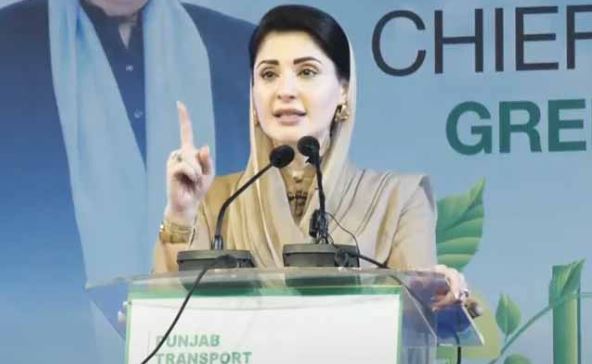
LAHORE: Punjab Chief Minister Maryam Nawaz Sharif expressed strong concern on Tuesday on the suspension of the Punjab Protection of Ownership of Immovable Property Act, 2025 by the Lahore High Court (LHC), arguing that the move would “benefit encroachment and land-grabbing mafias”.

Maryam‘s statement issued by the CM’s Office comes a day after LHC Chief Justice Aalia Neelum issued an interim order suspending the operation of the newly enacted Punjab Protection of Ownership of Immovable Property Act, 2025, which empowers dispute resolution committees led by deputy commissioners to resolve property disputes.

The ordinance was approved by the Punjab chief minister on Oct 31 and mandates the resolution of land disputes within 90 days.

The law has been challenged in the LHC, about which Maryam argued that its enactment was aimed at providing “long-awaited relief to millions of citizens suffering from prolonged land and property disputes”.

“The legislation, for the first time, fixed a 90-day time frame for the resolution of land and property cases that have historically dragged on for years and even generations,” she said, terming the law a “major step” toward protecting ordinary citizens from powerful land grabbers and mafias.

Maryam emphasised that the “democratically elected Punjab Assembly had passed the law to free the public from the grip of influential land mafias”.

The legislation, she insisted, empowered citizens to safeguard their legally owned land and properties.

The legislation was “evidence-based and comprehensive”, covering both administrative and legal dimensions to ensure justice for the oppressed, the CM said.

Maryam further maintained that the LHC‘s decision to suspend the ordinance’s operation “is not in line with the settled principles laid down by the superior judiciary”.

Its suspension would “benefit encroachment and land-grabbing mafias”, and the public would perceive it as state patronage of such elements, she said.

Israel defence minister vows to stay in Gaza

dna

TEL AVIV: Defence Minister Israel Katz on Tuesday vowed Israel will remain in Gaza and pledged to establish outposts in the north of the Palestinian territory, according to a video of a speech published by Israeli media.

Speaking at an event in the Israeli settlement of Beit El in the occupied West Bank, Katz said: “We are deep inside Gaza, and we will never leave Gaza — there will be no such thing.”

“We are there to protect, to prevent what happened (from happening again),” he added, according to a video published by Israeli news site Ynet.

“When the time comes, God willing, we will establish in northern Gaza, Nahal outposts in place of the communities that were uprooted,” Katz said, referring to military-agricultural settlements set up by Israeli soldiers.

“We will do this in the right way and at the appropriate time.”

Punjab CM says LHC stay on land protection law will ’embolden grabbers’

Punjab CM says LHC stay on land protection law will 'embolden grabbers'

LAHORE, DEC 23: Punjab Chief Minister Maryam Nawaz on Tuesday criticised the Lahore High Court’s decision to halt the implementation of the Punjab Protection of Ownership of Immovable Property Ordinance, 2025, warning that the move would be perceived by the public as backing the “land-grabbing mafia”.

In a statement, CM Nawaz said the provincial government had enacted the law to provide long-awaited relief to millions of citizens who had suffered for years, and even generations, due to protracted property disputes.

She noted that the legislation introduced a strict 90-day timeline for the resolution of land and property cases that otherwise linger for decades.

“The elected provincial assembly passed this law to free ordinary citizens from the grip of powerful land mafias,” the chief minister said, adding that the ordinance empowered people for the first time to protect their legally owned land and property.

The chief minister maintained that the suspension of the law did not harm her personally or politically, but would instead affect the poor, widows, the helpless and the oppressed segments of society who had finally begun to receive justice under the new framework.

She stressed that lawmaking was the constitutional right of the provincial assembly and could not be curtailed.

She further argued that the court’s decision was not in line with well-established judicial principles, cautioning that halting the law would directly benefit illegal occupiers. “The public will see this suspension as support for the qabza mafia,” she said.

A day earlier, the Lahore High Court temporarily halted the implementation of the ordinance during hearings on petitions filed by Abida Parveen and others, challenging its legality.

The proceedings were presided over by Chief Justice Aalia Neelum, who removed procedural objections to the petitions and recommended the formation of a full bench to hear the matter.

The court also ordered the repossession of properties that had been allocated under the suspended law.

The Punjab government had promulgated the ordinance to protect lawful property owners and ensure swift remedies against illegal occupation.

Under the law, Dispute Resolution Committees, headed by deputy commissioners, and property tribunals, chaired by former or serving district judges, were empowered to resolve disputes and take administrative action.

The ordinance also criminalised illegal possession of immovable property, prescribing five to ten years’ imprisonment and fines of up to Rs1 million.

We spray because we are afraid. Knowledge takes that fear away

We spray because we are afraid. Knowledge takes that fear away

By Azhar Jatoi

Muzaffargarh: Every morning before the sun rises, Muhammad Afzal steps into his tomato field with a mixture of habit and worry. Farming is not just his profession; it is his inheritance. His father tilled this land before him, and for nearly four decades Afzal has done the same. Now his son works beside him, guiding the plough and carrying seed trays, but Afzal wonders whether the cycle will end with him.

“We grew vegetables all our lives,” he says, looking across his ten acres. “But I don’t know if my son will stay. Farming has become too expensive, too risky.”

The biggest worry is pests. Afzal knows what lies ahead each season: 12 to 15 rounds of chemical pesticide spraying before the tomatoes are ready. Each spray costs about Rs6,000 per acre. By harvest, he will have spent more than Rs60,000 per acre on chemicals alone.

“You spray because you are afraid,” he says. “If you don’t spray, you lose everything. If you spray too much, you still lose. Either way, the farmer suffers.”

In the adjoining district of Multan, 48-year-old Muhammad Iqbal walks slowly through his vegetable crop. His hands are rough, his shoulders stooped from years of labour, but it is not the physical work that troubles him most. “I spray every week,” he says. “Sometimes twice. Still the pests come back. The cost of pesticides keeps increasing, but my harvest does not.”

Like thousands of small farmers, Iqbal learned farming from his elders. When pests appear, you spray. When the spray fails, you try a stronger one. He has never heard of Integrated Pest Management. He does not know which insects help his crops and which destroy them.

“The dealer tells me what to buy,” he says simply. “If it doesn’t work, I buy another one.”

What Iqbal does not see are the insects disappearing from his fields, the tiny predators and pollinators that once kept pests under control. What he does see is debt.

“Farming used to feed my family,” he says quietly. “Now it only creates tension.”

Agriculture experts say this story is painfully common. Excessive pesticide use destroys beneficial insects and upsets the natural balance of the field. Pests return stronger, and farmers respond with heavier doses. It is a cycle that traps farmers economically and damages the land.

“When farmers apply too many pesticides, they kill the insects that protect their crops,” explains Asadullah Khan, an agriculture extension officer in Multan. “The farmer thinks the pesticide failed, so he increases the dose. It becomes a dangerous loop.”

But the damage does not stop at the edge of the field.

In a modest home Muzaffargarh, Rubina Bibi (name changed) still keeps the cupboard where she once stored a bottle she believed was harmless. A housewife and part-time farm labourer, Rubina had helped a neighbour mix pesticide and poured the leftover chemical into an empty cough syrup bottle.

“I thought it would be safe if the lid was tight,” she says, her voice trembling. “I didn’t know it could kill.”

That night, her daughter visited with her three-year-old son, who had a mild cold. Following habit, Rubina asked her daughter to give him a spoon of “cough syrup.” Minutes later, the child began vomiting violently.

“We rushed him to the hospital,” Rubina says, wiping her eyes. “The doctor told us the pesticide was too strong. There was nothing he could do.” The child died before midnight.

Doctors say such tragedies happen far more often than reported. Pesticides are commonly stored in unlabelled bottles, sometimes in kitchens or sleeping areas. Women, who handlestorage and cleaning, are rarely trained about the dangers.

“Children are the most vulnerable,” says Ome Kulsoom, a community activist and progressive farmer from Muzaffargarh. “These deaths happen because people don’t know the risks.”

Pakistan has seen a continuous increase in the use of pesticides every year. As climate stress increases pest pressure, farmers respond by spraying more, often without protective equipment, correct dosage or knowledge of safer alternatives. Women are excluded from decisions, despite bearing the greatest health risks.

This is where the Centre for Agriculture and Bioscience International (CABI) decided something had to change, not just in what farmers use, but in how they think.

Instead of focusing only on products or techniques, CABI developed a Social and Behaviour Change Communication (SBCC) strategy tailored for Pakistan. The goal was simple but ambitious: change everyday behaviour around pesticide use-who decides, how much is used, where chemicals are stored, and whether safer options are considered.

“Farmers are not careless,” says Azmat Abbas, Development Communication Manager, Asia, CABI, “They are doing what they think is right with the information they have. Our job is to give them better information; in a way they can trust.” He said the SBCC strategy has been developed in collaboration with the government and with the input of key stakeholders including, farmers and chemical pesticide industry. “It aims to address the excessive and exclusive use of chemical pesticides, unsafe application, storage and disposal, and ensure gender inclusivity in pesticide-related decision making.”

As part of activities to address behavioural challenge, more than, 4000 farmers have been reached through 200 awareness sessions in Multan and Muzaffargarh. These sessions were led by trained extension officers and community activists. Using visuals, stories and real examples, these sessions explain pest identification, safe handling, correct spraying intervals and the role of beneficial insects.

Importantly, CABI also recognised the influence of pesticide dealers. More than 170 dealers and salesperson, who are often the first point of advice for farmers, have been engaged in awareness activities to promote responsible use instead of aggressive selling.

“If the dealer changes his message, the farmer listens,” says Rana Intizar Ali, a CABI-trained pesticide dealer. “That’s why they are key to behaviour change.”

Women are now being included too. Sessions teach safe storage, proper disposal and the dangers of reusing chemical containers. For many, it is the first time they are part of the conversation.

“If I had known this earlier, my grandson would still be alive,” Rubina says softly. “Now I tell other women: don’t keep these things in the house. Learn first.”

Slowly, change is becoming visible. Farmers who once sprayed blindly are beginning to observe their fields. Some report cutting pesticide use by using Trichogramma cards, saving money while protecting their crops.

“When farmers see that fewer sprays still work, their fear reduces,” says Narjis Fatima, a field implementing partner. “They start trusting nature again.”

Back in Muzaffargarh, Iqbal recently attended his first awareness session after hearing about it from a neighbour. He now walks his fields differently.

“They taught us to look before spraying,” he says. “They told us about friendly insects. I didn’t know they existed.”

He smiles faintly. “Maybe farming still has a future.”

CABI’s SBCC work may not grab headlines, but in quiet ways it is reshaping lives, helpingfarmers protect their income, keeping families safe, restoring biodiversity and giving dignity back to farming. “Knowledge is the best pesticide,” Azmat Abbas says. “And when farmers have it, everything changes.”

Pakistan Embassy Beijing hosts 2nd Pakistan-China TVET Forum

Pakistan Embassy Beijing hosts 2nd Pakistan-China TVET Forum

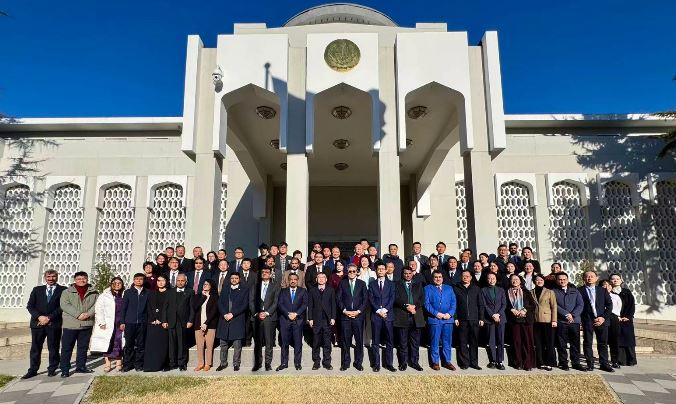
BEIJING, DEC 23 /DNA/ – The Embassy of Pakistan in Beijing successfully hosted its 2nd Technical and Vocational Education and Training (TVET) Forum, with a dedicated focus on fostering skills and talent cultivation for Pakistan’s agriculture sector.

The event brought together senior Pakistani and Chinese officials, leading Chinese and Pakistani agricultural TVET institutions and enterprises to explore joint partnerships for sector-specific skills development.

The forum highlighted the critical importance of targeted vocational training for key agricultural sub-sectors such as agri-tech, food processing, livestock, dairy, and food-grade packaging. In their pre-recorded messages, Pakistan’s Federal Minister for Planning, Development & Special Initiatives, National Food Security & Research, and the Chairperson of the National Vocational & Technical Training Commission, commended the Embassy’s timely initiative. Keynote speakers from Chinese Ministries of Education and Human Resources lauded the forum as a concrete step to further strengthen Pakistan-China collaboration through sector-focused partnerships in skills enhancement and talent cultivation aimed at promoting national development goals.

Speaking on the occasion, Ambassador Khalil Hashmi emphasized the critical need to align technical and vocational education with mobilization of Chinese investments in Pakistan’s priority economic sectors, particularly agriculture. He highlighted the imperative of sustained skills development, firmly grounded in academia-industry collaboration, which remained central to enhancing productivity, ensuring food security, and driving inclusive growth in the country. The Ambassador acknowledged the participants’ contributions and reiterated the Embassy’s commitment to facilitating development-focused, sectoral TVET collaboration between Pakistan and China.

The forum underscored a shared resolve to harmonize academic and industrial expertise with the specific needs of Pakistan’s agricultural sector.

Royal Bahrain naval chief meets Pakistani counterpart

Royal Bahrain naval chief meets Pakistani counterpart

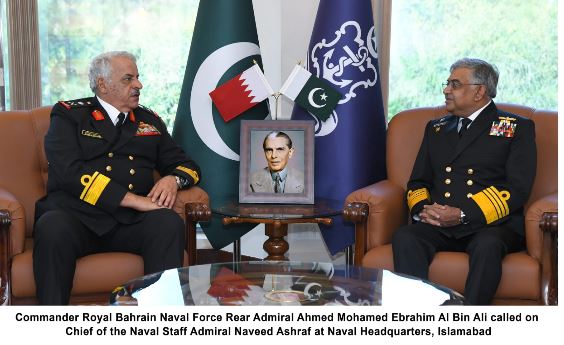
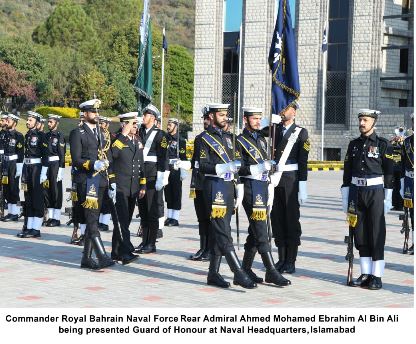
ISLAMABAD, DEC 23 /DNA/ – Commander of the Royal Bahrain Naval Force, Rear Admiral Ahmed Mohamed Ebrahim Al Bin Ali, visited Naval Headquarters, Islamabad and called on Chief of the Naval Staff Admiral Naveed Ashraf. Upon arrival, the dignitary was received by the CNS.

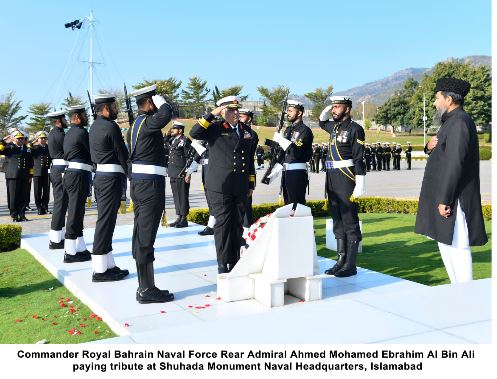
A smartly turned out contingent of Pakistan Navy presented Guard of Honour to Commander of the Royal Bahrain Naval Force. Later, the dignitary laid floral wreath at Shuhada Monument to pay homage to the martyrs of Pakistan Navy. He was then introduced to the Principal Staff Officers at NHQ.

During the meeting with Chief of the Naval Staff, matters of mutual interest, regional maritime security and avenues for bilateral naval cooperation were discussed. Both sides reaffirmed their commitment to further enhance professional interaction and defence collaboration between the two navies.

The visit underscores the strong and friendly relations between Pakistan and Bahrain and reflects the shared resolve to promote peace and stability in the region.

CDA auctions Islamabad plots worth Rs14.8bn in two days

CDA auctions Islamabad plots worth Rs14.8bn in two days

ISLAMABAD, DEC 23 /DNA/ – The auction process for residential and commercial plots in the Federal Capital, Islamabad, organized by the Capital Development Authority (CDA), continued on the second day at the Jinnah Convention Centre. A total of PKR 14.809 billion worth of plots have been auctioned in the first two days of the auction. The process is being supervised by the Chairman of the Auction Committee, Member Finance Tahir Naeem, and the members of the Auction Committee.

According to details, on the second day of the public auction, Plot No. 12 in Sector D-12 Markaz was auctioned for PKR 1.04 billion. Similarly, Plot No. 284ـA in Sector F-10/3 was auctioned for PKR 24.60 crore. Thus, a total of PKR 1.28 billion worth of plots were sold on the second day of the auction.

Furthermore, on the first day of the public auction, Plot No. 15 in the Blue Area (F-8/G-8) was auctioned for PKR 3.52 billion, while Plot No. 17, also in the Blue Area (F-8/G-8), was auctioned for PKR 9.15 billion. On the first day of the auction, Plot No. 37ـC in the Orchards Scheme, Murree Road, was auctioned for PKR 42.20 crore, and Plot No. 37ـD in the same Orchards Scheme, Murree Road, was auctioned for PKR 42 crore.

The auction of residential and commercial plots will continue until 24 December at the Jinnah Convention Centre. Plots of various categories are being offered for investment in the auction.

Investors are being provided various discounts and facilities under investor-friendly measures at the auction. An additional 5% discount will be given for payments in US Dollars for commercial plots. A 5% discount will also be given for lump-sum payment within 30 days of the approval of the bid for commercial plots. The facility of building plan approval is also being provided after the initial 25% payment, while possession of the plot can be obtained upon 75% payment. The received bids will be presented before the CDA Board after complete scrutiny, which is the authorized forum to approve or reject the bids.

Chairman CDA Muhammad Ali Randhawa said that the revenue generated from the public auction of residential and commercial plots will be spent on the construction, development and beautification of the Federal Capital, Islamabad.

PIA privatisation: Arif Habib consortium wins bid with Rs135bn offer

PIA privatisation: Arif Habib consortium wins bid with Rs135bn offer

ISLAMABAD, DEC 23: The Arif Habib Corporation Limited–led consortium acquired a majority stake in Pakistan International Airlines (PIA) with the highest bid of Rs135 billion for the privatisation process of the national flag carrier.

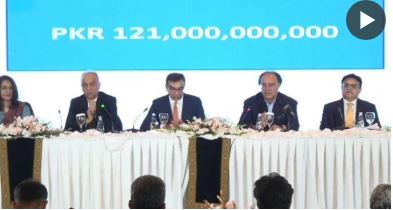
Arif Habib raisd its bid from Rs135 billion to Rs121 billion after the Lucky Cement Limited–led consortium increased its earlier bid of Rs101.5 billion to Rs134 billion in the second round of the open-bidding.

The first round saw a Privatisation Commission official opening the bids in the country’s second televised attempt to privatise the national airliner.

Meanwhile, Finance Minister Muhammad Aurangzeb said that whoever succeeds in the bidding process for the national airline, the victory would ultimately belong to Pakistan.

Addressing the ceremony, the finance minister noted that all bidders participating in the privatisation process were Pakistani, calling it a “major and encouraging development” for the country’s investment climate.

“All the bidders today are from Pakistan, which is a huge thing. The best and biggest business groups are competing for the national airline, and the airline will be led by large, seasoned Pakistani investors,” Aurangzeb said.

He added that the bidding process would help promote foreign investment indirectly by strengthening investor confidence and demonstrating Pakistan’s commitment to transparent economic reforms.

The finance minister said the government wanted state-owned institutions to stand on their own feet and described the participation of domestic investors as a positive sign for the economy.

Aurangzeb also congratulated Adviser to the Prime Minister on Privatisation Muhammad Ali and his team for conducting what he termed a professional and credible process.

“I congratulate Muhammad Ali and his team for running a process that only professionals like yourselves can deliver,” he said.

‘Majority of bid amount for improving PIA’
Speaking before the open bidding, Ali said that privatisation of the national flag carrier was part of the government’s reform agenda.

“Government’s aim is not to sell the national airline but to make it stand on its own feet,” he added.

Ali said that the privatisation of PIA will bring investment to the country, adding that the government wanted to revive the past glory of the airline.

He said the government had decided to privatise between 51% and 100% of the national airline’s shares, adding that some bidders had expressed interest in acquiring a 75% stake.

Ali said the government ultimately decided to sell 75% shareholding in the airline. He stated that 92.5% of the amount generated through the bidding process would be spent on improving the national airline, while the remaining portion would go to the government.

He further explained that bidders would be allowed to make payments in phases, with two-thirds of the amount payable upfront and the remaining one-third at a later stage.

The adviser added that bidders have also been permitted to include up to two additional parties after the bidding process is completed.

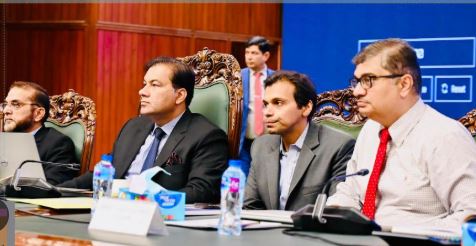
The first round of open-bidding ceremony for the privatisation of Pakistan International Airlines (PIA) held in Islamabad, with three bidders in the race to acquire a majority stake in the national flag carrier.

As two bids exceeded the government’s reference price of Rs100 billion, the successful bidder will now be determined through an open auction.

The subsequent round will give the lower-priced bidder the opportunity to match or raise their offer above the highest bid.

The bidders included a consortium led by Lucky Cement Limited, comprising power producer Hub Power Holdings Limited, Kohat Cement Company Limited KOHC, and investment firm Metro Ventures.

A second consortium was led by Arif Habib Corporation Limited, comprising fertiliser maker Fatima Fertiliser Company Limited, private school network City Schools and real estate firm Lake City Holdings Limited. The third bidder was private airline Air Blue (Private) Ltd.

The auction is Pakistan’s second televised attempt at selling the once storied flag carrier after a bungled process last year drew only a solitary bid that fell far below the government’s reference price, derailing what would have been Pakistan’s first major privatisation in nearly two decades.

The bids opened in a ceremony starting at 4:30 pm in the presence of the bidders.

Representatives of the bidding groups walked in one by one on Tuesday to deposit sealed offers into a transparent box during the live broadcast, briefly fumbling as they pushed envelopes through the slot in a public ceremony broadcast on state television.

Bids for a majority stake in PIA are scheduled in two phases. A second open-bidding ceremony is set for later in the day, officials said.

“I am thankful to the ministers and head of the Privatisation Commission for making the process transparent,” Prime Minister Shehbaz Sharif said, calling on cabinet members to attend the second ceremony.

Meanwhile, Fauji Fertiliser Company Ltd, earlier viewed as a leading contender for the 75% stake in Pakistan International Airlines (PIA), had last week formally withdrawn from the privatisation bidding.

Of the amount paid for the 75% stake, 92.5% will be invested in PIA, while 7.5% will go to the government. The remaining 25% stake retained by the government is considered valuable, and bidders will have the option to acquire it later or leave it with the state.

Officials said the structure was designed to accommodate bidders interested in either 75% or full ownership. Those who do not participate in the bidding cannot later join the winning consortium, a restriction that no longer applies to Fauji Fertiliser now that it has formally withdrawn.

Under the payment terms, the winning bidder must pay two-thirds of the bid amount within 90 days, while the remaining one-third can be paid within 12 months.

The government has assured 12 months of job security for PIA employees. Pension liabilities, medical benefits, and other post-retirement perks will be handled by the holding company, while current salaries and benefits will be paid by the new owners.

PIA currently has rights to 78 destinations and holds about 170 landing slots worldwide. Officials said the airline urgently needs fresh investment and professional management to turn around its operations.

Last year, the government set a minimum price of $305 million for a 60% stake, but received a single bid of $36 million from real estate developer Blue World City, which declined to raise its offer, citing concerns over PIA’s finances and “significant leakages”.

PIA’s prospects have since improved. Islamabad has assumed most of the airline’s legacy debt, the carrier has posted its first pre-tax profit in two decades, and Britain and the European Union have lifted a five-year ban that had cut PIA off from its most lucrative routes.

The reopening of those routes could materially lift revenues and support a higher valuation than in last year’s failed auction, analysts and government officials have said.

The airline’s sale forms part of a broader privatisation push under Pakistan’s IMF bailout, which also includes plans to offload stakes in state-owned banks, power distribution companies and other loss-making enterprises as the government seeks to curb fiscal drain and restore investor confidence.

Stay Connected

64FansLike
60FollowersFollow

Latest Reviews

Exchange Rates

USD - United States Dollar
EUR
1.14
GBP
1.34
AUD
0.70
CAD
0.71