Home Blog Page 3315

England face selection problem as West Indies eye historic series win

Manchester : England cricket team is facing a selection dilemma ahead of the final Test and series decider against West Indies at Old Trafford, Manchester.

The hosts have too many choices in pace department with Anderson, Jofra Archer, and Mark Wood all looking to return to the team.

Archer has been recalled after breaching Covid-19 protocols before the second Test but has complained about mental fragility after suffering from online racist abuse.

Veteran pacer Anderson is also hoping to pair with his old-time partner Stuart Broad, who made a valuable contribution in the second Test win at Anderson’s home ground.

“I presume the best three players will play but it’s going to be a difficult decision for Joe Root and Chris Silver wood and there will be some disappointed guys,” Anderson said to reporters on Wednesday.

Left-arm spinner Jack Leach, who will turn the ball away from the majority of West Indies’ right-handed batsmen, may be recalled in place of fellow Somerset spinner Dom Bess.

On the other hand, West Indies will once again hunt to clinch the final Test to claim the Wisden Trophy for the first time in England since 1988.

“We’re constantly reminding them that they have got a chance to change something that has not happened for 32 years,” said West Indies assistant coach Roddy Estwick,

West Indies could play the same pace attack of Shannon Gabriel, Kemar Roach, Alzarri Joseph, and captain Jason Holder for all three matches, however, both Gabriel and Joseph left the field with minor injuries during the second Test.

“Shannon was ready to go into the nets today (Wednesday) to have a bowl. The rain curtailed that but I think they’ll be fine. I saw Kemar last night and he was looking fresh,” Estwick added.

One major problem for West Indies would be number one Test all-rounder and number three batsman in the batting charts, who showed his masterclass in the last encounter by scoring 176 and 78 not out, as well as taking three wickets.

Tourists’ batsmen also have to rise on the occasion as they have yet to post an individual hundred, although several batsmen have stepped up with fighting fifties.

Traditional games of Punjab lost in the dust of time

MUHAMMAD TAHIR

Punjab’s childhood and traditional games lost in the busy city life. Razia Bibi and her husband Abdul Razzaq , a local citizen of Faisalabad City shared their old days stories. The brokenhearted family memorizing their childhood, the local games and sports they played, said we don’t understand, where to start our stories of good old time.

This is our great appetency to watch our grandchildren playing these sports of our heritage. This will also help us to sobs of our childhood memories can be lessened.

Paved floors of homes and harsh routine of city life is swallowing these sports of our rich culture. We will be obsessed with remembering the sports of our childhood. Around six seven decades ago Punjab is full of joy and colors, Children played many games at their home and in the peaceful ambiance of the countryside, other indigenous games were also played with enthusiasm.

But children of today are very busy in their mobile and computer activities, Beautiful bicycles are not the only opportunity they have now. It’s hard for modern children to find the time for old days sports that over time only left in the reminiscence of their grandparents.

The reminding the most famous sports of these days like Goli Danda, ChupanChupai, Rasi Phalangna, KoklaChpaki, JhulaJhulna, LatuChalana, KanchayAkhrootkhelna and playing with homemade GudayGudian. Abdul Razzaq said I also I miss the raw courtyard and the mud walls without doors, Kabaddi was once a once a popular sports. There used to be very famous kabaddi players in our time, Their amazing strength and exercise was applied to the annual festivals.  If a player fails it would have a bad effect on his reputation so he had to work hard again. Players get nothing in cash but respect and fame for all this in all the villages around the Punjab. Kabaddi is still playing, but it is no longer popular among young men, they turn red with youthful enthusiasm instead of consciousness.

There will probably be many more games like these, but there is no one left to tell about them. The names of their creators are unknown, no one to explain the rules and regulations of these simple sports. In the villages, these games were first played by older children and young children learned the rules of these games from them. There would be some such talk during these games which had to be memorized and repeated. The children memorized the words related to the game along with the game. Most of the games were attributed to one or the other. The process continued from generation to generation.

Gulli Danda can still be seen in the villages. This game is about two feet long stick other than wood, a five-inch wooden gully is bounced and hit. The gulli is sharpened on both sides so it can bounce in the air with a slight hit.

City resident Razia Bibi said, girls of our age played games like Jhula Jhulna, Rasi Kudna, Guday Gudionkay khel, which are now extinct. In our time, both boys and girls could play together. And the night life of the village was also very beautiful. These games were at their peak in the moonlight. Chupan Chupai and Lukan Mitti were very famous among Children and Teens.

She says this is a spring and summer game. The children hide in different places in a mansion, the other team is looking for them. In order to bring the children together, one child chants and repeats aloud,

Golra Chupaki is also very famous. The children sit in a circle; no one is allowed to look back or give a signal. A child makes a wipe out of cloth and revolves around the circle. Meanwhile, he secretly puts the wipe behind someone. If he finds out, then fine, otherwise by completing the circle the child picks up the whip and starts beating him. If he found out, he would pick up the one who had it and beat him. The boy also chants songs aloud during this time.

But now these games have been replaced by the Internet and computer games. The biggest disadvantage of these games is that children lose contact with each other. Urban and rural children are now deprived of the blessing of communication. The tragedy is that on the one hand, we are losing cultural values and doing nothing to preserve them.

Kuwait’s emir travels to US for medical treatment

Kuwait’s 91-year-old ruler Sheikh Sabah al-Ahmad Al-Sabah left for the United States Thursday to undergo medical treatment, his office said, days after he had surgery for an undisclosed illness.

The emir, who has ruled the oil-rich Gulf state since 2006, had been in hospital since the weekend.

Sheikh Sabah “left the country today at dawn to go to the United States to complete his medical treatment”.Earlier, it had said he would make the journey “based on the advice of his medical team to complete treatment following the successful surgery”.

The statements did not reveal the nature of his illness, the type of surgery he had undergone in Kuwait, or what treatment was planned in the US.

In September 2019, he underwent medical tests shortly after arriving in the United States, leading to a meeting with President Donald Trump being called off.

The emir had his appendix removed in 2002, two years after having a pacemaker fitted. In 2007, he underwent urinary tract surgery in the United States.

Under Kuwaiti law, when the emir is absent, crown prince Sheikh Nawaf al-Ahmad Al-Sabah, 83, the emir’s half-brother, is appointed acting ruler.

Sheikh Nawaf is an elder statesman who has held high office for decades, including the defence and interior portfolios.

He is widely regarded as the architect of modern Kuwait’s foreign policy.

Trust, negotiation key WTO improvement areas: Saudi nominee

ISLAMABAD Jul 22 : Saudi nominee for the post of Director General World Trade Organization (WTO), Muhammad Al Tuwaijri pointed out that organization needed multidimensional approach for its proactive functioning role.

He said building mutual trust among the trade disputing members, improving negotiation process and performance measurement were the key areas WTO needed for its professional delivery which he noted was the essence of the international body.

In a virtual press conference with Pakistani media on Wednesday, Tuwaijri said he beloved In time management to resolve international trade disputes which needed mutual trust among the WTO members. He noted efforts go futile without setting deadlines for resolution of bilateral and multilateral international trade disputes.

Tuwaijri further went on saying flow of information would enhance negotiation process by bringing the disputes on table. He said WTO was lacking this area that has caused delays in settlements. He highlighted that multi dimensional mechanism should be devised to address negotiation process with included proactive, anticipative and preemptive approaches.

The Saudi nominee said WTO also needed technical capabilities including performance measurement for transparent delivery.

It is worth mentioning here that current DG WTO, Roberto Azevêdo has announced he will step down in August this year. Saudi Arabia has chosen a vast experienced professional for its bid for seat of Director General WTO.

SBP yet to recocver Rs 1508 mn from a forex dealer

NEHAL MIRAJ

ISLAMABAD: State Bank of Pakistan advanced Rupees 1508million to a forex dealer in year 2000, when Dr. Ishrat Husain was the Governor of the Bank, to buy US dollars from the market and then almost Rupees 493 million never got recovered.

Dr Ishrat Husain currently is Advisor to the Prime Minister on Institutional reform.

Auditor General of Pakistan’s report points out that State Bank of Pakistan has failed to recover money from Malik Muhammad Bostan Khan, one of the most powerful private sector forex dealer in the country, despite this being recoverable since the year 2000.

State Bank was reminded of the lapse in recovery in the Auditor General Pakistan’s office reminding the financial regulator of the country in August 2018 that it has failed to recover the amount. The state bank continued to hide behind legalities and technicalities by saying that the case was under arbitration and scheduling of the hearing and the subsequent judgment for the case are not in the direct control of the bank. AGP’s report has found these responses as unsatisfactory.

The AGP report points out that a large sum of Rupees 1508 million were advanced to Malik Bostan without following due process and without securing guarantees. The report has recommended that the matter should be investigated with a view to fix responsibility on the individuals at fault besides recovery of the amount.

The facts of this case are astonishing as in January 2000 the then management paid Rs. 1,508 million as advance for purchase of US$ to Malik Muhammad Boston a money changer. Out of which an amount of Rs.1,014 million was adjusted in five installments on supply of dollars. However, Rs. 493.673 million remained outstanding against him. The last serious attempt to recover the amount was carried out in March, 2012 when arbitration meetings were held. The issue since then has been thrown into cold storage.

Webinar held to discuss challenges of China-Pak bilateral cooperation

BEIJING, July 23 (dna): A webinar focusing on new opportunities and challenges of China-Pakistan bilateral cooperation in the post-epidemic era was held aiming to deepen the friendly bilateral cooperation and make it the best practice of Belt and Road construction.

Upholding the spirit of “Putting People and Life First”, “Connectivity”, “Openness and Inclusiveness”, the webinar attracted government officials, think tank experts and entrepreneurs from both China and Pakistan.

They discussed bilateral cooperation in a wide range of areas such as public health, economic development, and digital transformation and upgrading.

The topics of the webinar included promoting construction of the China-Pakistan Health Corridor and building the China-Pakistan community of common health, accelerating the construction of new infrastructure and realizing the digital transformation and upgrading of the China-Pakistan Economic Corridor (CPEC).

The event was also aimed at strengthening cooperation between industrial parks, and adding new impetus to bilateral economic and trade exchanges and industrial cooperation.

A joint initiative on promoting international cooperation in COVID-19 prevention and control and high-quality development of CPEC was released on this webinar by Wei Wei, Vice General Manager of Xinhua Silk Road Information Department, China Economic Information Service.

All the participants reached the consensus that the spirit of a community with a shared future for mankind should be adhered to in fighting the COVID-19 pandemic.

The World Health Organization’s leading role in international cooperation should be supported.

Based on the initiative, the principle of broad consultation, common contribution and mutual benefits in constructing the Belt and Road should be adhered to despite the challenges of COVID-19.

All the participants believed the Belt and Road countries’ capacities of transnational communicable disease prevention and control, especially the joint emergency response, should be further strengthened. Parties to the Belt and Road should explore a new path for the Belt and Road cooperation in the current situation of the world.

Under the Guidance of Silk Road Think Tank Association, the webinar was co-hosted by China Center for Contemporary World Studies, National Institute of International Strategy of Chinese Academy of Social Sciences (CASS), “Belt and Road” Initiative International Think Tank of CASS, Sustainable Development Policy Institute, and Research and Development International.

It was undertaken by Pakistan-China Institute, with Xinhua Silk Road of China Economic Information Service, China Daily, China Economic Net and China.org.cn providing media support.

Unity, cooperation two pillars in Pak-China relation in post-epidemic era

DNA

BEIJING, July 23 : Chinese Ambassador Yao Jing and Senator Mushahid Hussain Syed agreed that unity and cooperation are two pillars of China-Pakistan friendship, which has been demonstrated through their joint fight against the COVID-19 pandemic and solid support for each other on major issues of the international community.

According to Gwadar Pro, they made the remarks while attending the webinar on New Opportunities and Challenges of China-Pakistan Cooperation in the Post-epidemic Era as guest speakers on Wednesday.

The webinar, upholding the spirit of putting people and life first, connectivity, and openness and inclusiveness, aims to deepen the friendly cooperation between China and Pakistan and make it the best practice of the Belt and Road construction.

Joint Initiative on Promoting International Cooperation in COVID-19 Prevention and Control and High Quality Development of CPEC was released at the conference.

Under the guidance of Silk Road Think Tank Association, the webinar was co-hosted by China Center for Contemporary World Studies, National Institute of Int’l Strategy of CASS, BRI Int’l Think Tank of CASS, Sustainable Development Policy Institute and Research and Development Int’l, and Pakistan-China Institute.

Vice Chair of the 12th NPC Foreign Affairs Committee, Chair of the Advisory Committee of BRI International Think Tank, CASS, and Chair of Advisory Committee of RDI Ms. Zhao Baige chaired the webinar.

Hailing the valuable mutual support between China and Pakistan, Yao Jing said that the China-Pakistan Economic Corridor had not once stopped during the coronavirus outbreak, and meanwhile no one working at the CPEC projects has found infected.

Bearing in mind the progress of the CPEC projects, at least 10 chartered flights have been arranged so far to transport Chinese technicians to Pakistan.

Yao said, at this challenging time, China and Pakistan are more united in pushing forward the development of CPEC, a major force in driving the economic revival and export of Pakistan.

The recently-launched Kohala hydropower plant, Azad Pattan hydropower plant, and Diamer Basha hydropower plant that will bring investments and thousands of job opportunities to local communities are vivid examples of CPEC’s inner-power.

Yao also stressed the importance of building the Silk Road of Health in Pakistan, adding that the 2nd phase of CPEC will endeavor to improve the social welfare by building hospitals, laboratories, and provide medical equipment to relevant organizations.

Echoing the remarks of Ambassador Yao, Mushahid Hussain said the unity and cooperation are proven to be two pillars of Pakistan-China relationship and expressed thankfulness to China for sending medical supplies and experts to help Pakistan combat the pandemic.

He recognized the success of the 1st Phase of CPEC and took delight in the good start of the 2nd phase with three hydropower plants rolling out.

Keynote speakers from Chinese think tanks, included Director General of China Center for Contemporary Studies Jin Xin, Executive Vice President of Fudan Institute of Belt and Road & Global Governance Huang Renwei, and Deputy Director-General of National Institute of International Strategy of CASS Ye Hailin.

They discussed about the significance of global cooperation in confronting with the ruthless pandemic that knows no boundaries.

On the Pakistani side, keynote speakers Director General (China) of Ministry of Foreign Affairs Muhammad Mudassir Tipu, Deputy Director of Ministry of NHSR&C Samra Mazhar, Deputy Director of Ministry of NHSR&C Mustafa Hyder Sayed, and Director of Asia Study Center of SDPI addressed the meeting.

They agreed that the Chinese-style anti-epidemic experience has set a model for the global war against the epidemic, and believed the Pakistan-China cooperation in health, education, technical training and people’s livelihood under the framework of CPEC is promising.

At the panel discussion, Zhang Baozhong, Chairman of China Overseas Ports Holding Company (COPHC) reviewed the latest progress in Gwadar, including the operationalization of Afghan transit trade via Gwadar Port, the expansion of Faqeer Middle School, and Gwadar’s first LPG (liquefied petroleum gas) Terminal.

He dismissed slanders and rumors on CPEC, saying that the progress is visible and benefits to the local people tangible.

Representatives from other Chinese and Pakistani enterprises, including Chairwoman of Wuhan Landing Intelligence Medical Co., Ltd. Sun Xiaorong, Deputy General manager of CCCC-FHDI Engineering Co., Ltd. Liao Jianhang, President of JW SEZ Group, Director of China-Pakistan Study Center of ISSI Tallat Shabbir and ED CPEC Center of Excellence Liaqat Ali Shah also delivered speeches.

Pak-China Online fair held to boost CPhI trade

DNA

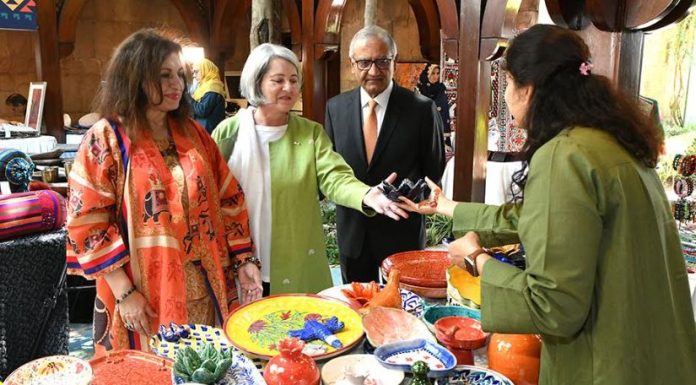
BEIJING, , July 23 : Pak-China Zhejiang Export Online 2020 Fair of Chemical Pharmaceutical Ingredient (CPhI) for Pakistan was held in the Chinese city of Hangzhou, China Economic Net reported on Thursday.

Over 50 CPhI enterprises from the province attended the fair, according to Han Jie, the Deputy Director of the Department of Commerce of Zhejiang province.

Han said, the fair aims to build a bridge to cement CPhI trade between Pakistan and China’s Zhejiang province, as the latter is a main exporter of medicine material.

Hussain Haider, Pakistani Consul General in Shanghai, said that China is Pakistan’s largest trading partner. Pakistan’s pharmaceutical market and sector offer huge potential for both trade and investment. This fair is just an opportunity to turn that possibility into a reality, he added.

Haider also noted that Pakistan is building nine Special Economic Zones across the country, under the framework of the China-Pakistan Economic Corridor (CPEC).

Chinese enterprises are welcomed to invest in Pakistan and get benefits from the government’s incentives policies. Pakistan and China will further strengthen cooperation and economic and trade relations, Haider said.

He also expected the Pakistan-China trade ties to reach a new level.

Pakistan declared ‘most improved’ country in nuclear assets security

Nuclear Threat Initiative (NTI), a leading US non-proliferation watchdog, has ranked Pakistan as the most improved in the security of those countries holding nuclear materials, improving its overall score by seven points.

According to an NTI Nuclear Security Index report released for the year 2020, Pakistan has ranked most improved among countries with materials in 2020, which improved its overall score by adopting new on-site physical protection and cybersecurity regulations, improving insider threat protection measures, and more.

The Nuclear Threat Initiative further said that Pakistan’s score improvement for regulatory measures is the second-largest improvement for regulations in the Index since 2012.

“In 2016, it passed new cybersecurity regulations. In 2018, it improved its insider threat protections. Its newest regulations mark a much larger shift.”
“The majority of Pakistan’s improvements are in the Security and Control Measures category (+25) because of its passage of new regulations. Pakistan also improved in the Global Norms category (+1),” according to a report.

Among countries with weapons-usable nuclear materials, Australia ranked first for the fifth time. It also ranks first in the sabotage ranking for the third time

Meanwhile, Pakistan Ambassador to the United States Asad Majeed has welcomed the Nuclear Threat Initiative index for the year 2020.

“We welcome that Nuclear Threat Initiative on weapons of mass destruction has categorized Pakistan as the most improved country for nuclear security measures in its Nuclear Security Index 2020,” he said in a Tweet.

He said Pakistan’s improvement is also the second-largest ever by a country since the NTI Index was launched in 2012.

Pakistan reports 32 coronavirus deaths in last 24 hours

ISLAMABAD: Pakistan has confirmed 32 deaths in last 24 hours by novel coronavirus as the number of positive cases has surged to 269,191. The nationwide tally of fatalities has jumped to 5,709.

According to the latest figures released by the National Command and Operation Center (NCOC) 1,763 persons have been tested positive for COVID-19 in 24 hours.

Pakistan has so far conducted 1,799,290 coronavirus tests and 22,408 in last 24 hours. 213,175 coronavirus patients have recovered in the country whereas 1,382 patients are in critical condition.

Sindh remains the worst-hit province by the pandemic in terms of cases followed by Punjab, Khyber Pakhtunkhwa and Islamabad.

Till now 115,213 coronavirus cases have been confirmed in Sindh, 91,129 in Punjab, 32,753 in Khyber Pakhtunkhwa, 11,517 in Balochistan, 14,722 in Islamabad 1,896 in Gilgit-Baltistan and 1,961 in Azad Kashmir.

Furthermore 2,100 individuals have lost their lives to the epidemic in Punjab, 2,060 in Sindh, 1,158 in KP, 136 in Balochistan, 162 in Islamabad, 45 in GB and 48 in Azad Kashmir.

Don’t expect first COVID-19 vaccinations until early 2021: WHO expert

Researchers are making “good progress” in developing vaccines against COVID-19, with a handful in late-stage trials, but their first use cannot be expected until early 2021, a World Health Organization (WHO) expert said on Wednesday.

WHO is working to ensure fair vaccine distribution, but in the meantime it is key to suppress the virus’s spread, said Mike Ryan, head of WHO’s emergencies programme, as daily new cases around the globe are at near-record levels.

“We’re making good progress,” Ryan said, noting that several vaccines were now in phase 3 trials and none had failed, so far, in terms of safety or ability to generate an immune response.

Stay Connected

64FansLike
60FollowersFollow

Latest Reviews

Exchange Rates

USD - United States Dollar
EUR
1.17
GBP
1.35
AUD
0.71
CAD
0.72




