Home Blog Page 3306

Azerbaijani president greets people of Azerbaijan on Eid al-Adha

BAKU – Azerbaijani President Ilham Aliyev has congratulated the people of Azerbaijan on the occasion of Eid al-Adha. “Dear compatriots! I sincerely congratulate you and all our compatriots living in different parts of the world on the occasion of Eid al-Adha and wish you all the best,” Azerbaijani president said.

“Eid al-Adha, a symbol of solidarity and brotherhood, humanism and compassion amongst people, is one of the main holidays of Islam. On this auspicious day, Muslims experience the joy of closeness to God through sacrifices in the name of the Almighty and demonstrate their readiness to display heroism for the sake of benevolent deeds,” the head of state said.

“For hundreds of years, Islam has played an exceptional role in the formation of an exemplary environment of coexistence based on mutual respect, trust and the preservation of ethnic and cultural diversity in Azerbaijan, where people of different nations and religions live as a loving family.

The religious holidays held in our country every year become a celebration of progressive national and spiritual values, social assistance and display of kindness. Although this year’s Eid al-Adha occurs at a difficult time facing the world, our devout citizens are fulfilling their moral duties in the way of God and religion and strengthening the spirit of unity and equality in our society by their noble deeds,” Azerbaijani president said.

“Dear sisters and brothers! During these holidays, I remember with gratitude the immortal memory of our martyrs who died for the independence and territorial integrity of Azerbaijan, and wish patience to their relatives and all our people. I do hope that your prayers and wishes for the prosperity and well-being of our people, the prosperity and progress of our Motherland will be materialized,” the head of state said.

“I once again convey my sincere holiday congratulations to each of you, wish your families good health, happiness and abundance to your homes. Happy Eid al-Adha!” Azerbaijani president said.

Issues of reducing shadow economy and preventing corruption discussed

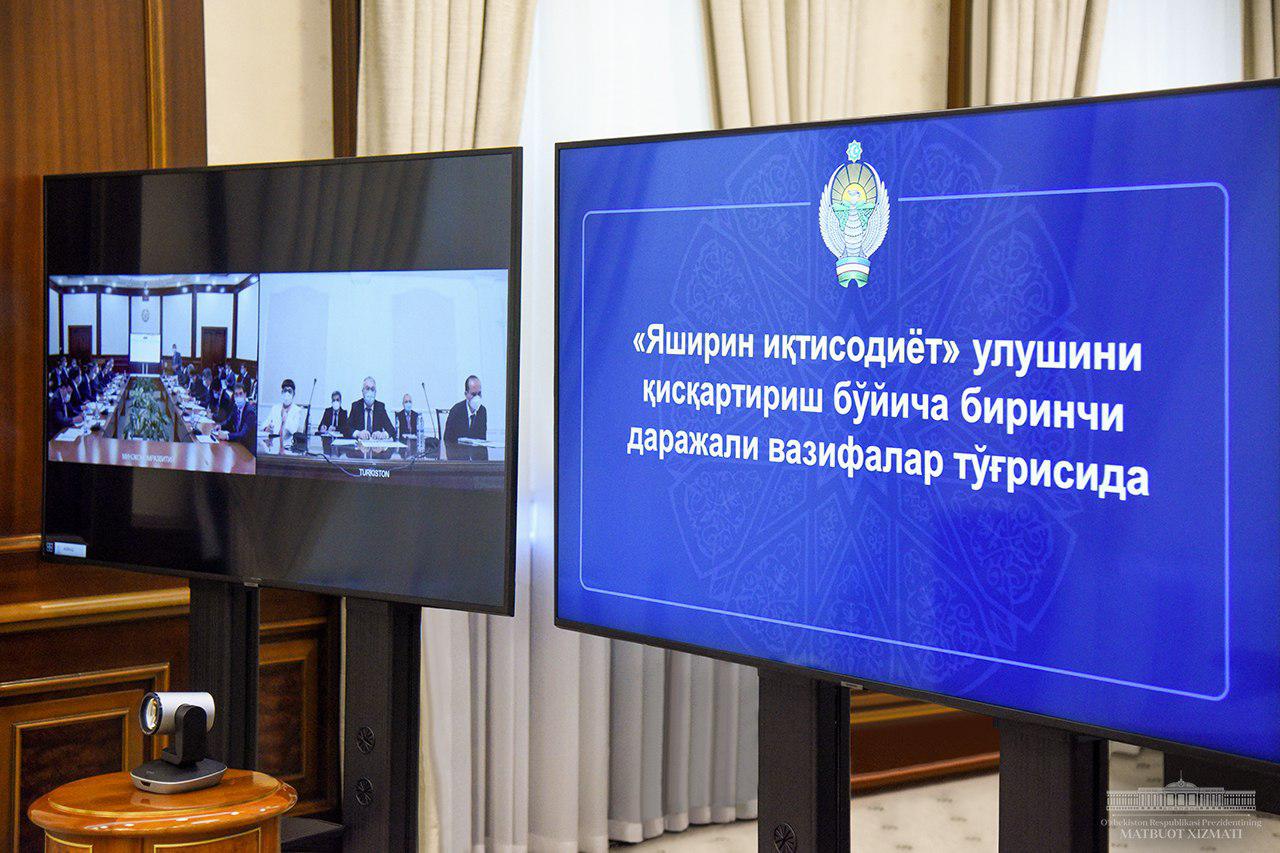
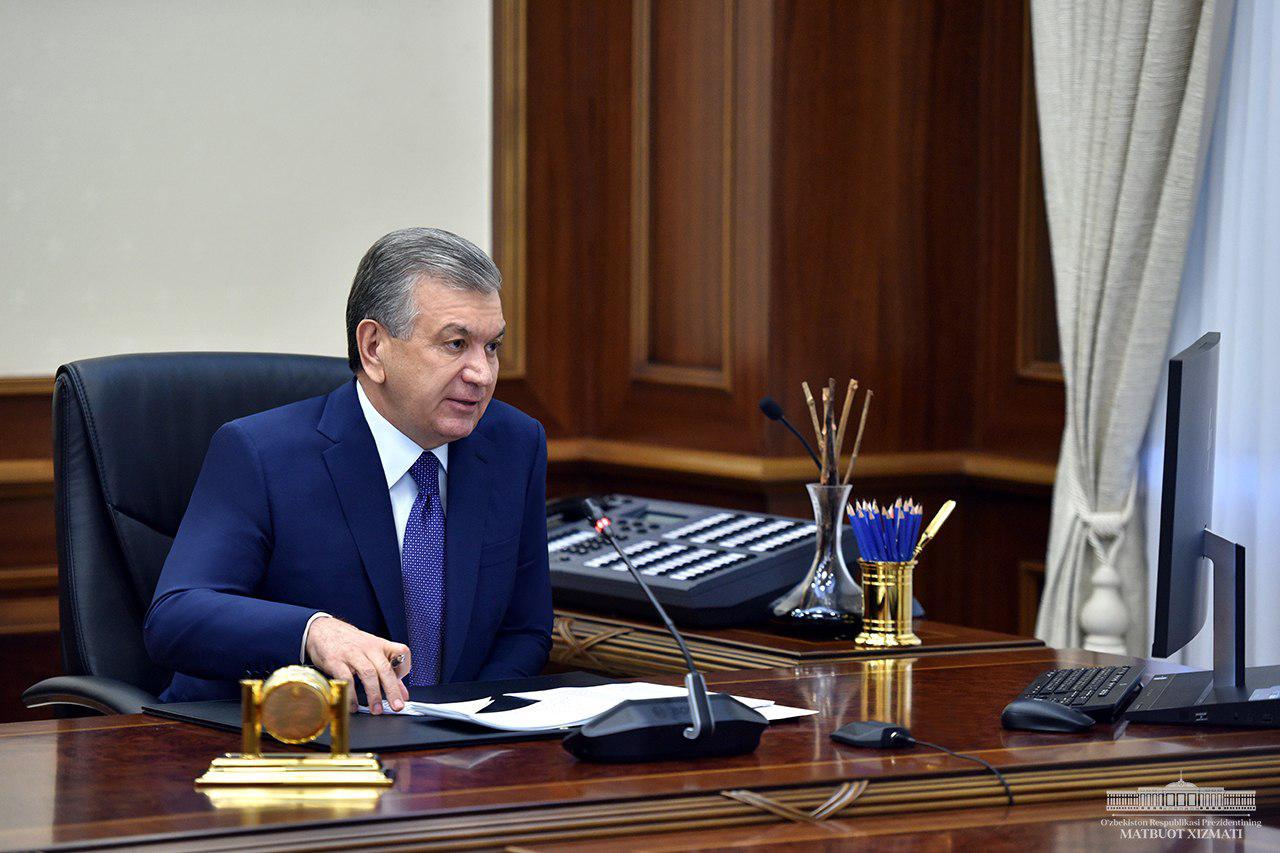
On July 27, President of the Republic of Uzbekistan Shavkat Mirziyoyev held a meeting to discuss ongoing activities to reduce the shadow economy.

Uzbekistan has a high level of shadow economy. Therefore, in recent years, measures have been taken to reduce the share of shadow economy by making it easier to do business. In particular, foreign exchange market was liberalized, a new tax system was introduced, and about 100 permitting and licensing procedures were reduced.

As a result, the share of informal sector in the industry has fallen from 20 to 6 percent over the past 5 years.Activities carried out in this direction were discussed and further tasks were identified. Instruction was given to develop a strategy to reduce the shadow economy with involvement of experts from international organizations.

The Head of the state noted the importance of being careful while countering the shadow economy, so as not to harm economic activity and work in this direction together with business and public.The task was set to consistently continue tax reforms and introduce a system that would exclude shadow activity.

An instruction was given to develop a conscientious taxpayer system and test it in Tashkent.Special attention was paid to cleaning up corruption in public procurement and investment projects.

In order to ensure transparency in these spheres, strengthen public control and competition, the Ministry of Finance has been instructed to launch an information portal for public procurement.It was determined that from now on each project will undergo an anti-corruption examination.

The task was set to apply this procedure to all projects implemented at the expense of centralized funds starting 2021.State bodies are also implementing compliance control system against the shadow economy and corruption. This work has started, in particular, in the Ministries of Construction, Health, Higher and Secondary Special Education, Uzbekneftegaz and Uzkimyosanoat JSCs. It was noted that by the end of the year, this system should be implemented in 14 more organizations and 10 banks with a state share.Instructions were given to develop roadmaps to combat corruption in the context of spheres and directions, to prevent corruption in public procurement and investment projects.The task was set to develop a methodology for calculating the rating of corruption and shadow economy for state bodies, enterprises and regions. Starting 2021, the results of this rating will be announced with an assessment of personal responsibility of all managers.Customs and tax system issues were also considered at the meeting.The need was noted for excluding human factor in customs system, strengthening customs control over cases of smuggling and artificially lowering the customs value of goods.The State Customs Committee and the State Tax Committee have been tasked with creating a single database on import, customs clearance and sale of imported goods. The task was also set to introduce customs audit information system from January 1, 2021.The President noted that in order to reduce the shadow economy, it is necessary to help people work legally and get them interested in it.For example, as a result of simplification of self-employment system in July, 184 thousand citizens started working in the formal sector.However, the level of informal employment in construction, trade and catering, transport and other services is still high. Overall, only 4.9 million out of 13.5 million people employed in the economy pay income tax.The need was noted for targeted work in these areas, removing unofficial actors from shadow economy through the use of incentive mechanisms. It was proposed not to include payments via plastic cards and other types of contactless payments in the tax base while calculating the turnover tax of entities operating in trade, public catering, transport and consumer services.The Head of the state noted the need for simplifying tax administration for small business and further reducing procedures for allowing and licensing business activities.

For example, it is possible to reduce 100 types of licenses and 34 types of permits with their transfer to notification procedure, simplify a number of procedures, reduce time for issuing 14 types of documents by 2 times. Thanks to these measures, entrepreneurs can save 125 billion UZS a year.In addition, it was instructed to critically examine 270 control functions of 43 agencies and reduce their powers contributing to risks of shadow economy and corruption.The need was noted for strengthening responsibility of unscrupulous entrepreneurs involved in corruption and shadow schemes.A weak level of analysis of shadow economy by industry and sphere was noted. In this regard, it was noted that it is necessary to maintain shadow economy statistics for each area with involvement of international experts.The main force in the fight against corruption and shadow economy is business and public. Therefore, it is important to form an intolerant attitude to these negative phenomena in society, to cover their consequences in media and through social networks.– The fight against shadow economy does not mean punishing entrepreneurs or hindering their activities. This is especially important during a pandemic. It is necessary to take strict measures against domestic corruption, strengthening public control at places, – said Shavkat Mirziyoyev.Each ministry and industry has a task to achieve key performance indicators (KPIs) by the end of the year as part of implementation of measures defined at the meeting.

Uzbekistan delegation visits Turkey

On July 26, a delegation of Uzbekistan led by Deputy Prime Minister, Minister of Investments and Foreign Trade Sardor Umurzakov arrived in Turkey.

Delegation includes representatives of ministries and agencies, regional khokimiyats. In Ankara, it is planned to discuss issues of deepening bilateral ties in trade, economic, investment and other fields.

The delegation will hold a meeting with Vice President of Turkey Fuat Oktay, after which negotiations will take place with representatives of Turkish business people and a number of members of the Turkish government.

Sardor Umurzakov is expected to address an event on “Economic diplomacy during a pandemic: Experience of Uzbekistan and Turkey”.According to the program of the visit, the delegation will hold meetings and negotiations with the heads of ministries and agencies, leading economic and financial structures of Turkey to substantively discuss the prospects for the implementation of investment projects in Uzbekistan.

Humanitarian aid from Germany

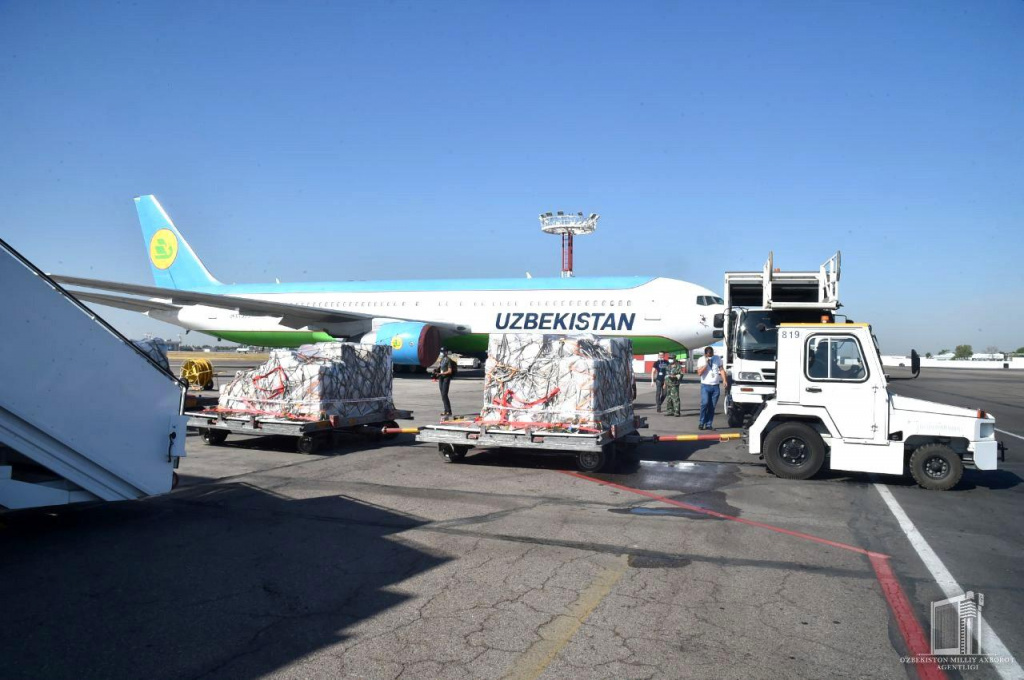
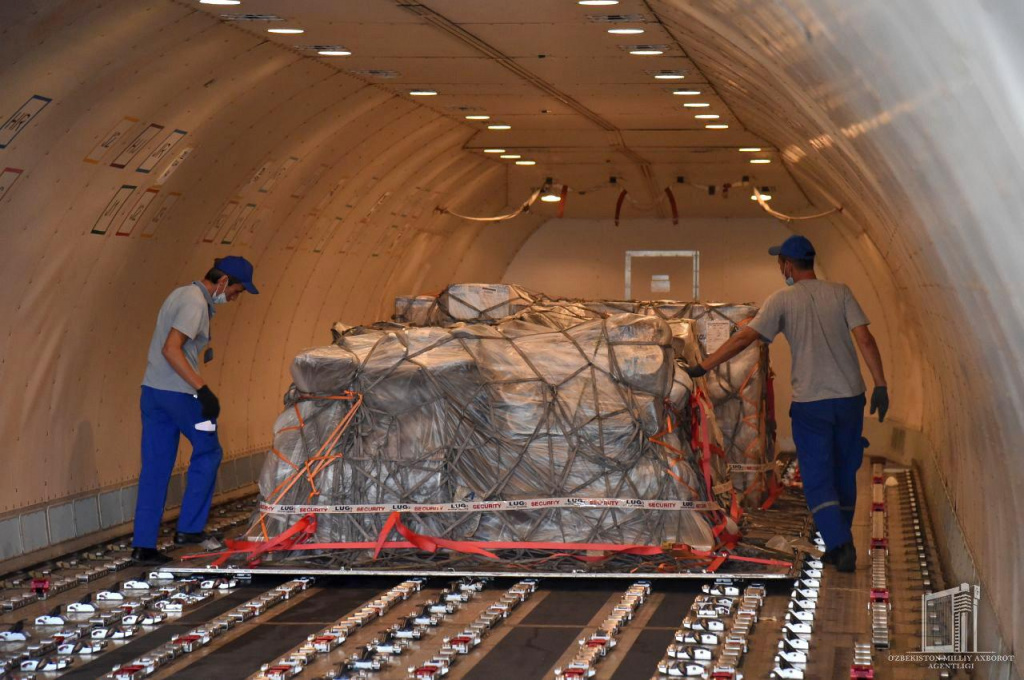
TASHKENT – A humanitarian cargo from Germany has landed at Tashkent International Airport named after Islam Karimov. It consists of oxygen cylinders, medical masks, protective gowns and other personal protective equipment.The cargo is currently being unloaded.

photo_2020-07-28_09-38-45.jpg
photo_2020-07-28_09-38-46.jpg
photo_2020-07-28_09-31-18.jpg

Pakistan industry to face new technology challenge in New Norm

DNA

ISLAMABAD, JUL 28 – Experts have opined that industry would have to reemerge with new parameters and practices based on the knowledge economy than the previous human resource centric practices. Pakistan needs to develop a comprehensive framework for the new industrial look incorporating new technologies. Poverty struck and resource deficient Pakistan needs to develop more IT driven startups to engage youth for productivity.

They mentioned that preemptive measures would be crucial to avoid Covid-19 spread in the clusters. The UN organizations all together are engaged with the federal government and the Planning Commission of Pakistan to develop and finalize the Standard Operating Procedures (SPOs) for different types of industries including Small and Medium Enterprises (SMEs).

The webinar on the “Industrial Outlook in the New Normal-Risks and Challenges for Pakistan” was organized by the Development Communications Network (Devcon-Pakistan) and DTNTV on Tuesday. The speakers included the UNIDO National Programme Coordinator Masroor Ahmed Khan, Faculty Head of HR and Business at the PIDE University Prof. Dr Nadeem Ahmed Khan, Focal Person of the Pakistan Ship-breakers Association from Gaddani (Balochistan) Jawed Ahmed, ILO supported Pakistan Workers Federation Assistant Secretary General Shaukat Ali Anjum, and Anwar ul Haq, a young small-scale industrialist from Attock. Webinar was hosted and conducted by the Devcom-Pakistan and DTNTV Director Munir Ahmed.

Talking about the post-covid19 impact on the industry, Masroor Ahmed Khan said unemployment and poverty would go high in the first phase where national GDP and exports would also suffer severely. Food processing and packaging, consumer goods, provision of logistic services, e-commerce, health technology, and promotion of digital world and tourism would have immense opportunities for all tech savvy people.

He said: As we navigate the current threats to human wellness, to economies and to the planet, the timely adoption of sustainable consumption and production (SCP) patterns is key to building back stronger and more resilient societies. In the wake of COVID-19, choosing more efficient production methods and implementing better use of natural resources is one of the most effective ways to reduce our impact on the environment while simultaneously advancing human wellbeing.

Dr Nadeem Ahmed Khan said: Human reliance on machines and robots will be enhanced in the New Normal. Since there would be least human interference preferred it would result in lesser number of Jobs. Systems will be automated, and will be made functional with lesser human interference. World is already of the view that Robotic medicine may be the weapon the world needs to combat the coronavirus. Critical thinking, complex problem solving, creativity, interdisciplinary knowledge, automation systems design will be the requisite skills in the job market.

He said “Work from anywhere” concept will prevail, which will work by forming virtual teams to carry tasks using virtual platforms. This will boost creativity and productivity. Artificial intelligence, Machine learning, Control Systems, Data science, Big data will be the most emerging fields of the future.

He mentioned as many as nine skills will be needed in the post-covid19 New Normal including adaptability and flexibility to the new environment, tech savviness, creativity and innovation, data literacy, critical thinking, digital and coding skills, leadership with new vision, emotional intelligence, and committing to a lifetime of learning of new ways and means to remain relevant in the market.

Devcom-Pakistan and DTNTV Director Munir Ahmed said Pakistan needs to urgently jump in revamping the industries at different tiers to mitigate the adverse impact of the covid-19. So far, we see no vigorous plans on the front. Slow pace would hamper economic activities and growth at all tiers. We need to learn from the Chinese Cottage Industry model to uplift the poor from the poverty line. It would also improve the macroeconomic indicators too.

Shaukat Ali Anjum said his organization is more interested in the SOPs implementation to ensure the health and safety of the workers as how the owners of the industries implement the SOPs ad who is going to monitor in letter and spirit.

Jawed Ahmad said the ship-breaking industry is already implementing SOPs in the ship-breaking sector according to instructions laid down in different ISO certification. Whatever the new SOPs come from the provincial and federal government would be implemented accordingly.

Anwar ul Haq said the small industrial units are passing through hardships due to the pandemic. Government should come up with the support mechanism to such small units that cannot approach to the soft loans. Our workers have suffered a lot, even we are gone hand to mouth.

Ambassador of Japan condemns terrorists attacks in Balochistan

DNA

Islamabad: 28 July – Matsuda Kuninori, Ambassador of Japan to Pakistan, has expressed grief over the loss of precious lives in the two separate incidents of terrorism in Kech and Turbat districts, Balochistan last week and offered condolences to the families of the victims.

“Any act of terrorism cannot be justified for whatever reason or purpose. I express my deepest condolences to the martyrs’ families, and I pray for the speedy recovery of those injured in the attacks,” said the Ambassador in his message on Monday.

Paying tributes to the colossal sacrifices by the Pakistani forces towards peace and stability, he assured that Japan, together with the international community, is continuing to support the Government of Pakistan and its valiant security forces to combat terrorism.

“To this effect, the Government of Japan is concerned about the situation in Balochistan, and has been supporting various projects of counter-terrorism in Pakistan such as the improvement of facilities and equipment of Pakistani law enforcement agencies dealing with terrorism” said Ambassador MATSUDA.

Khusro Bakhtyar Participates in China-Afghanistan-Pakistan-Nepal Quadrilateral Foreign Ministers’ Video Conference

DNA

ISLAMABAD, JUL 28 – Federal Minister for Economic Affairs, Makhdum Khusro Bakhtyar, Participates in China-Afghanistan-Pakistan-Nepal Quadrilateral Foreign Ministers’ Video Conference on Joint Response to COVID-19Makhdum Khusro Bakhtyar, Federal Minister for Economic Affairs, represented Foreign Minister Shah Mahmood Qureshi in China-Afghanistan-Pakistan-Nepal Quadrilateral Foreign Ministers’ Video Conference on Joint Response to COVID-19.

Hosted by China, State Councilor and Foreign Minister Wang Yi chaired the Video Conference.The Minister underlined that COVID-19 had inflicted a punitive human and economic cost globally and had disrupted the social and political architecture of the world.

Pakistan was ready to both enhance cooperation in combating COVID-19 and in post-pandemic economic recovery with the participating countries, the Minister added.Makhdum Khusro Bakhtyar underscored that Pakistan was resolutely and successfully confronting the outbreak of COVID-19 and taking all possible measures to strengthen the existing health system. The primary focus remained on both saving lives and securing livelihoods. In order to alleviate the sufferings of the masses, Prime Minister Imran Khan had introduced major initiatives including Pakistan Preparedness and Response Plan (PPRP) of worth $ 595 million, US $ 8 billion relief package for the most vulnerable people and Ehsaas Emergency Cash Program and launched ‘Global Initiative on Debt Relief’ for developing countries to overcome economic losses due to COVID-19.

The Minister emphasized that Pakistan’s “smart lockdown” policy has delivered demonstrable results with new infection rate and fatality rate substantially going down.

Minister Khusro Bakhtyar emphasized on building strong and effective quadrilateral mechanism for joint prevention and control of COVID-19 and urged to take pragmatic and practical steps for economic recovery of pandemic-stricken countries. He also urged that the vaccine against COVID-19 may be declared a ‘global public good’ as and when it becomes available.

It was underscored by the Minister Bakhtyar that CPEC, a flagship project of BRI, could play an important role in boosting regional growth and recovery in the post-COVID-19 period.Drawing attention to the increased plight of the people of Indian Occupied Jammu and Kashmir (IOJ&K) in the wake of COVID-19, Makhdum Khusro Bakhtyar called for lifting of the military siege, allowing access of international health experts to IOJ&K, and immediately extending requisite medical help to the besieged Kashmiris.In his video-message for the Conference, Foreign Minister Shah Mahmood Qureshi lauded the initiative for the Quadrilateral platform for joint response to the pandemic and stressed that the global community needed unity, solidarity and multilateral cooperation to fight COVID-19 that knew no boundaries, no religion and no ethnicity.

Asad Umar hints at opening of wedding halls after Eidul Azha

ISLAMABAD: Federal Minister Asad Umar has promised reopening of the wedding halls after Eidul Azha to a delegation of the wedding industry.

A delegation of the wedding halls and restaurants owners met the Federal Minister for Planning and Development and requested for reopening of the marriage halls under SOPs, which were closed across the country due to the coronavirus pandemic.

Asad Umar, hinted at reopening of the marriage halls and restaurants adding that the matter will be decided in the meeting of the National Command and Operation Center (NCOC) after the Eidul Azha.

Khalid Ayub, Habibullah and other members represented the wedding and restaurant industries in the meeting.
It is to be mentioned here that the Sindh government and marriage halls association in a meeting this month reached to an agreement to reopen the halls before August 02 after successful talks.

“The government has sought recommendations on SOPs from the owners,” an official of the Marriage Halls Association Rana Raees had confirmed after the meeting.

He said that the marriage halls would completely abide by the government SOPs.

It is pertinent to mention here that the Punjab government also announced to reopen marriage halls in the province from the first week of the September amid country-wide protest from the halls association over continuous closure of businesses during coronavirus pandemic.

This was announced by the provincial Minister for Commerce Mian Aslam Iqbal, who reached out to the protesting owners of the wedding halls outside the Punjab Assembly.

“You will be allowed to arrange wedding functions from the first week of September,” he assured.

Pakistani rupee recovers against US dollar

KARACHI: The Pakistani rupee appreciated by 30 paisa against the US dollar in the intraday trade.

According to forex dealers, the greenback is currently trading at 166.57 against the domestic currency at the interbank foreign exchange market.

The dollar had finished at Rs166.87 against the local unit the other day.Meanwhile, the dollar bounced off a two-year low globally on Tuesday as selling pressure faded ahead of a Federal Reserve meeting and as political wrangling over the next U.S. fiscal rescue package moved closer to a conclusion.

The world’s reserve currency has been tumbling since May and was dumped in recent days as cracks in the U.S. coronavirus recovery and crumbling yields sent investors elsewhere.

The New Zealand dollar NZD=D3 touched an eight-month top of $0.6702 and then dipped back to $0.6656, while sterling GBP= retreated from a four-month high to sit at $1.2850.

The Japanese yen JPY= weakened 0.3% to sit just below its strongest since mid March at 105.65, and the euro EUR=EBS was last 0.2% softer at $1.1725. The Aussie dollar AUD=D3 gave up early gains dip 0.2 to $0.7133.

Stay Connected

64FansLike
60FollowersFollow

Latest Reviews

Exchange Rates

USD - United States Dollar
EUR
1.17
GBP
1.35
AUD
0.71
CAD
0.72