Home Blog Page 330

Pakistani Students Earn Global Acclaim at 2025 APAC Solution Challenge

Pakistani Students Earn Global Acclaim at 2025 APAC Solution Challenge

MANILA, JUN 30 /DNA/ – The Embassy of Pakistan in Manila is proud to announce that a student team from Pakistan have achieved prestigious honors at the 2025 Asia-Pacific (APAC) Solution Challenge—a premier global tech competition supported by Google and the Asian Development Bank (ADB).

Out of more than 750 teams representing 12 countries across the Asia-Pacific region, Team GeoGemma from the Institute of Space Technology (IST), Islamabad, was awarded the Best AI Use Award. The competition’s Top 10 finalists included teams from South Korea, Japan, Singapore, the Philippines, and Indonesia.

GeoGemma’s groundbreaking solution leverages satellite imagery and artificial intelligence through the Gemini API to deliver early warning alerts and risk assessments for disaster-prone areas. Their system holds life-saving potential by using geospatial technology. The team—comprised of Ahmed Iqbal, Hanzila Bin Younas, Khalil Ur Rehman, and Abdullah Asif—was commended for its innovative use of geospatial technology in disaster preparedness.

Team i+1 from NUCES FAST also made Pakistan proud by securing a spot among the Top 10 finalists. Their AI-powered document classifier, also developed with Gemini tools, aims to make complex texts more accessible for neurodivergent individuals, promoting inclusivity and access to knowledge.

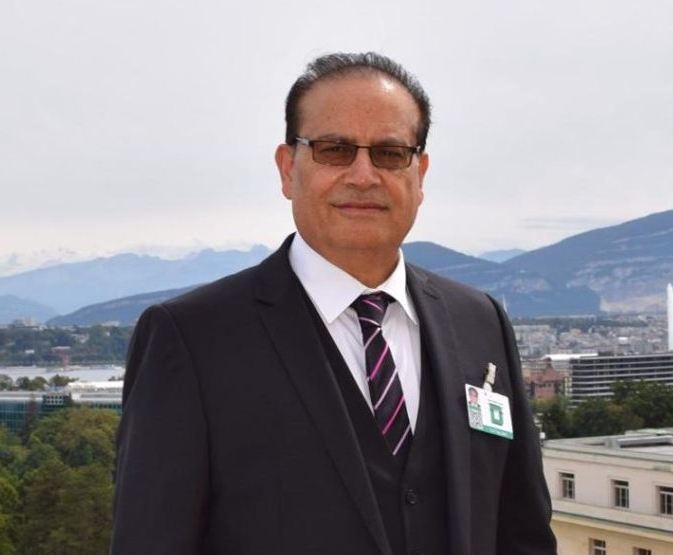
In celebration of their achievements, Pakistan’s Ambassador to the Philippines, Dr. Asima Rabbani, hosted both teams at her official residence. Congratulating them on their success, she remarked, “You represent the bright future of Pakistan. Your innovation, determination, and global recognition are a source of pride for the entire nation.” She also commended the role of academic mentors, institutions, and competition organizers, emphasizing that such accomplishments signal Pakistan’s growing potential in the global AI and innovation ecosystem.

“These victories serve as powerful inspiration for aspiring technologists across Pakistan,” she added. “They also demonstrate how Pakistani youth are contributing solutions to some of the world’s most pressing challenges, including disaster preparedness and accessibility.”

WB appoints new Country Director for Pakistan

Pakistan

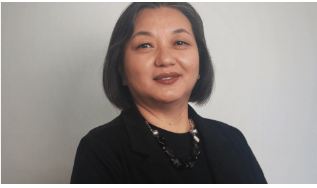
ISLAMABAD, Jun 30 (APP):The World Bank (WB) has appointed Ms. Bolormaa Amgaabazar the new World Bank Country Director for Pakistan effective from July 1.
According to WB press release Ms Amgaabazar is succeeding Najy Benhassine in this role.
“I am delighted to be appointed the World Bank’s new Country Director for Pakistan,” said Ms. Amgaabazar.

“The World Bank and Pakistan have a long-standing partnership that has benefited millions of people over generations. I look forward to deepening our engagement with the federal and provincial governments, local institutions, civil society, the private sector, development partners, and other stakeholders.”
Ms. Amgaabazar, a Mongolian national, has over two decades of international development experience.

She joined the World Bank in 2004 and has worked in the East Asia and Pacific, Africa, and Eastern Europe and Central Asia regions.

She has also held managerial responsibilities in the Bank’s country offices in Kyrgyz Republic and, most recently, in Indonesia and Timor-Leste. Prior to joining the Bank, Ms Amgaabazar worked in international development in Mongolia, Indonesia and Timor-Leste.
“We will continue to support Pakistan to address some of its most acute development challenges including child stunting, learning poverty, its exceptional exposure to the impacts of climate change, and the sustainability of its energy sector,” added Ms. Amgaabazar.

Trump’s “Big, Beautiful Bill”: A Legislative Breakdown

Qamar Bashir

By Qamar Bashir

It is one of the greatest ironies of the American political system that the President of the United States wields near-unchecked power on the international stage—able to bomb foreign nations, greenlight wars, broker ceasefires, and tip the global balance of power without even consulting Congress. Yet, when it comes to domestic policymaking—specifically, delivering on economic promises like tax reform or welfare restructuring—the same president often appears as powerless as a ceremonial figurehead.

President Donald J. Trump now faces this paradox head-on as his much-hyped “Big Beautiful Bill” stalls in the U.S. Senate. This sprawling legislative package—central to his campaign and populist economic vision—was supposed to be signed into law on July 4, 2025. But despite controlling the White House and a slim Senate majority, Trump faces intense resistance not from Democrats alone, but from inside his own party.

The bill, estimated at nearly $4 trillion, was introduced as a sweeping effort to reduce taxes, boost consumer income, strengthen border security, and overhaul federal entitlement spending. It includes generous income tax exemptions for military, veterans, police, and firefighters, as well as deductions on tips ($25,000) and overtime pay ($12,500) through 2028, part of Trump’s promise to “put more money in the hands of working Americans.”

But where would this money come from? Trump’s answer: tariffs. By taxing foreign imports, the bill aims to fund domestic tax cuts and infrastructure investments. In theory, it’s a bold nationalist formula: tax the world, enrich America. But critics—many of them conservative—say this strategy is deeply flawed.

One of the most vocal critics is Elon Musk, once Trump’s trusted ally and now his most formidable tech-world adversary. In a firestorm of posts on X, Musk slammed the bill as “insane,” “destructive,” and “political suicide,” arguing that it favors outdated industries at the cost of clean energy and future innovation. “It puts America in the fast lane to debt slavery,” Musk warned, pointing to projections that the bill will inflate the national deficit by $2.8 trillion by 2034, according to the nonpartisan Congressional Budget Office.

Musk’s criticism cuts deep because it reflects growing unease within Trump’s own base. A recent NBC News poll shows that 40% of Republican voters now view reducing the national debt as their top priority, while a majority believe existing spending on programs like Medicaid must be preserved. These concerns have led GOP Senators like Rand Paul, Thom Tillis, Lisa Murkowski, and Susan Collins to express opposition to various provisions of the bill—ranging from Medicaid cuts and the debt ceiling hike to restrictions on Planned Parenthood funding.

And therein lies Trump’s domestic dilemma: while the international stage presents him as a unilateral powerhouse—stopping wars in Pakistan and India, halting Iranian retaliation after the bombing of the Fordow nuclear facility, or reshaping global alliances—he finds himself cornered and constrained in the democratic trenches of Capitol Hill.

Even elements of Trump’s own “America First” coalition are rebelling. Farmers and agribusinesses recently forced the administration to roll back immigration-related work restrictions on undocumented workers in agriculture. Without these migrants, they warned, the entire U.S. food supply chain would collapse, bringing economic shockwaves across rural America and driving food prices through the roof. This public pressure forced Trump to carve out exceptions—a rare reversal that underscores how little space even the President has when facing economic realities and political mobilization.

Simultaneously, America’s political diversity is rising in ways Trump did not anticipate. The election of Zohran Mamdani—a young, South Asian, progressive voice—as Mayor of New York City marks a cultural and political counterpoint to Trumpism. A vocal critic of Israeli aggression in Gaza and a staunch advocate for Palestinian rights, Mamdani represents a rising class of elected officials who openly oppose Trump’s policies—from tax cuts for the rich to full-throated support for Netanyahu’s war machine.

Trump labeled Mamdani a “communist lunatic,” but the new mayor’s confident, smiling response reflected something deeper: a generational shift that even presidential authority cannot reverse. Mamdani has pledged to arrest Netanyahu if he ever visits New York—citing the International Criminal Court’s genocide charges—and has blasted Modi’s Gujarat massacre record. These bold declarations indicate just how much the grassroots of American politics is diverging from the executive narrative.

Back in Washington, Trump’s bill faces another challenge: the gutting of essential safety nets. Proposed Medicaid cuts, totaling hundreds of billions, would strike at the very heart of American welfare—affecting the elderly, disabled, veterans, and low-income families. The Senate Parliamentarian has already ruled against parts of the bill that tried to remove funding for gender-affirming care and limit coverage for undocumented immigrants. But the damage to public perception has been done.

And what about Social Security? While Trump promised to make its payouts tax-free, the bill also tightens eligibility and introduces new scrutiny provisions, leaving many fearing future erosion of benefits. This comes at a time when 67 million Americans—across class, race, and party lines—depend on Social Security as their financial lifeline.

Ironically, Trump’s economic record gives him some legitimacy. Inflation, which soared to nearly 8% under President Biden, has now stabilized at 2.4%–2.6% under Trump’s second term. That’s no small feat. However, if the price for that stabilization is a massive increase in the deficit, reduced healthcare access, and shrinking consumer protections, the political costs could outweigh the economic gains.

This complex reality is what Trump now faces: he campaigned on a promise to “raise incomes, cut taxes, and build America.” But the mechanisms to fulfill that promise—tariffs, spending cuts, and partisan loyalty—are faltering. He is now encountering what every president eventually faces: domestic politics is far messier than foreign policy.

The President may yet pull off a miracle and get the bill passed—perhaps with revisions, compromises, or brute-force pressure. But the real question is: what kind of America will emerge from this legislative gamble? One that is economically revitalized? Or one that is politically fractured, strategically weakened, and fiscally unbalanced?

Only time—and the Senate—will tell.

By Qamar Bashir
 Press Secretary to the President (Rtd)
 Former Press Minister, Embassy of Pakistan to France
 Former MD, SRBC | Macomb, Michigan, USA

Ogra notifies 50% increase in fixed gas charges for domestic consumers

Ogra

Fixed charges for protected category increased from Rs400 to Rs600

DNA

ISLAMABAD: The Oil and Gas Regulatory Authority (Ogra) on Sunday announced revised gas prices for the fiscal year 2025-26, notifying a 50% increase in fixed gas charges for domestic consumers, effective from July 1.

“The federal government, in response to Ogra’s determinations of SNGPL [Sui Northern Gas Pipelines Limited] and SSGCL [Sui Southern Gas Company Limited] of estimated revenue requirement for FY 2025-26, has advised revised category-wise natural gas sales effective July 01, 2025,” stated a notification issued by Ogra..

According to the notification, the federal government increased the fixed charges for protected category from Rs400 to Rs600, while those in the non-protected category will now pay Rs1,500, up from Rs1,000.

For non-protected consumers whose gas consumption exceeds 1.5 cubic hectometres (hm³), fixed charges have been raised from Rs2,000 to Rs3,000, it stated.

Despite the hike in fixed charges, the actual gas tariffs remain unchanged, the notification clarified. The sale prices for both protected and non-protected domestic consumers, as well as for tandoors, commercial units, CNG stations, and ice factories, will remain the same.

However, the gas sale prices for general industries, power stations and independent power producers have risen.

The development came two days after the Economic Coordination Committee (ECC) of the Cabinet approved a revised natural gas pricing structure for the fiscal year 2025–26, allowing a hike in prices for bulk consumers.

Under the Oil and Gas Regulatory Authority (Ogra) Ordinance, the federal government is required to notify revised consumer gas prices within 40 days of determination to ensure cost recovery and regulatory compliance.

The move also aligns with structural benchmarks agreed with the International Monetary Fund (IMF), including rationalisation of captive power tariffs and a shift from cross-subsidies to direct, targeted support for low-income consumers.

The ECC decided to maintain gas prices for household consumers, with only fixed charges re-adjusted in the domestic sector to recover asset costs.

China ‘rolls over’ $3.4bn of commercial loans to Pakistan

China

Foreign loans, particularly from China, vital for stabilising Pakistan’s depleted foreign exchange reserves

DNA

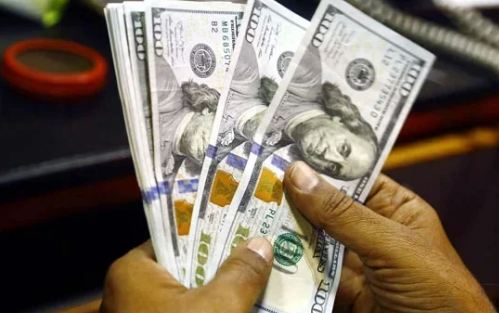
BEIJING: China has rolled over $3.4 billion in loans to Pakistan, which together with other recent commercial and multilateral lending will boost Pakistan’s foreign exchange reserves to $14 billion, a finance ministry source said on Sunday.

Beijing rolled over $2.1 billion, which has been in Pakistan’s central bank’s reserves for the last three years, and refinanced another $1.3 billion commercial loan, which Islamabad had paid back two months ago, the source said.

Another $1 billion from Middle Eastern commercial banks and $500 million from multilateral financing have also been received, he said.

“This brings our reserves in line with the IMF target,” he said.

The loans, especially the Chinese ones, are critical to shoring up Pakistan’s low foreign reserves, which the IMF required to be over $14 billion at the end of the current fiscal year on June 30.

Pakistani authorities say that the country’s economy has stabilised through ongoing reforms under a $7 billion IMF bailout.

Two fugitives wanted by Pakistan nabbed in Spain on Interpol’s red notice: ministry

Two fugitives wanted by Pakistan nabbed in Spain on Interpol's red notice: ministry

MADRID, JUN 29: Spanish authorities have arrested two fugitives wanted by Pakistan in cases related to terrorism, murder, and abduction for ransom following the issuance of Interpol’s red notice, interior ministry said on Sunday.

The proclaimed offenders will be handed over to Pakistan after formal formalities, the ministry’s spokesperson said, adding that one of the accused, Nawazish Ali Hunjra, was wanted in 23 cases of terrorism, murder, abduction for ransom, and others.

Furthermore, the second fugitive arrested in Spain was Haroon Iqbal. Iqbal was also wanted by Pakistani authorities in several cases, the statement added.

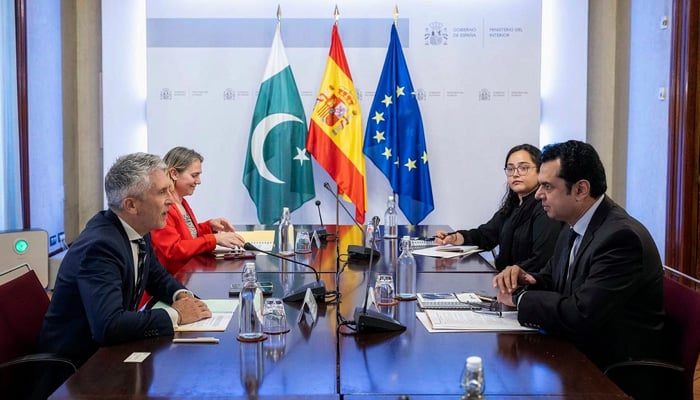
This development came after Minister of State for Interior Talal Chaudhry’s recent visit to Spain where he met his counterpart, Fernando Grande-Marlaska.

Minister of State for Interior Talal Chaudhry (right) holding a meeting with Spanish counterpart Fernando Grande-Marlaska. — PTV News/File

During the visit, Chaudhry sought action on the red notices issued against dozens of suspects.

Speaking on the development, Minister Talal Chaudhry thanked the Spanish government and Interior Minister Marlaska for their prompt action and cooperation.

He expressed confidence that this success marks the beginning of a broader crackdown on fugitives who flee Pakistan to avoid legal consequences.

“This is a major step forward in our commitment to justice. I am grateful to the Spanish authorities for understanding the gravity of the situation and taking swift action. We hope to see the remaining fugitives arrested and extradited soon,” said Chaudhry in a statement.

Legal proceedings are now underway to facilitate the extradition of the arrested individuals to Pakistan, where they will face trial under the country’s anti-terrorism and criminal laws.

Pakistan has long been seeking the arrest and extradition of 38 fugitives from Spain, most of whom are wanted in serious criminal and terrorism-related cases.

These individuals had managed to evade justice for years, exploiting legal loopholes and a lack of coordination between international enforcement agencies.

The development is being hailed as a milestone in international law enforcement cooperation, and a sign that Pakistan is intensifying efforts to bring back criminals who have found refuge abroad.


— With additional input from APP

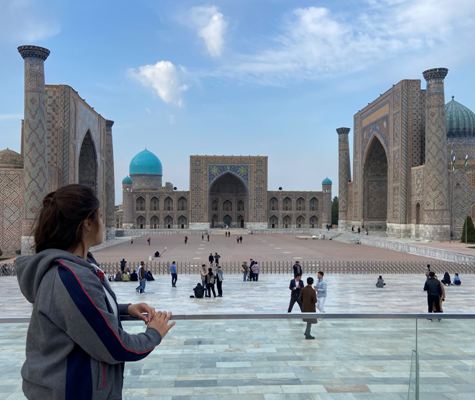
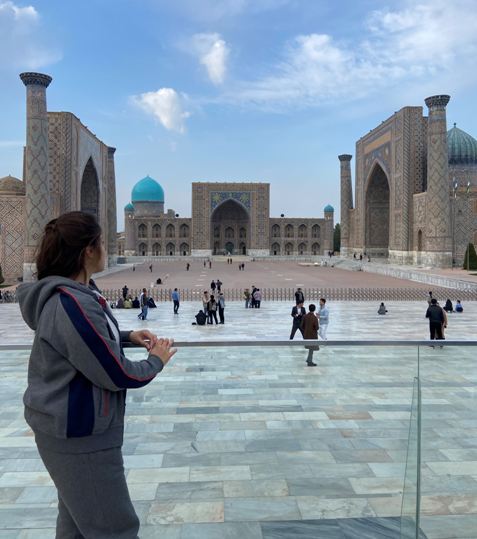
SAMARKAND The Blue City

SAMARKAND The Blue City

Written by Munaza Kazmi

When we read the name Samarkand, unconsciously our mind took us to the blue gigantic monuments, glittering Domes, spices bazaars and to the Kingdom of Timur. Besides, travelling, Samarkand can be more than this, beside it dated back to 6th Century BCE as ancient Afrasiab, when it served the capital of Sogdian Dynasty, with which the city is associated with many archeological sites and a couple of mystical Persian legends.

However, much of the significant development it took was under the region of Timur from 14th to 15th Centuries, when it was center of powerful Temurid realm. And today Samarkand is known as the crossroad of world’s cultures, and corridor of ancient trade.

Located in a large oasis in the valley of the Zerafshan River, in the north-eastern region of Uzbekistan. The historical part of Samarkand consists of three main sections. In the north-east there is the site of the ancient city of Afrosiab, founded in the 6th century BCE and destroyed by Genghis Khan in the 13th century, which is preserved as an archaeological reserve.

Archaeological excavations have revealed the ancient citadel and fortifications, the palace of the ruler and residential and craft quarters. There are also remains of a large ancient mosque built from the 8th to 12th centuries.

Towards the south, there are architectural ensembles and the medieval city of the Temurid epoch of the 14th and 15th centuries, which played a seminal role in the development of town planning, architecture, and arts in the region. Where the old town still contains substantial areas of historic fabric with typical narrow lanes, articulated into districts with social centers, mosques, madrassahs, and residential housing. The traditional Uzbek houses have one or two floors and the spaces are grouped around central courtyards with gardens; built in mud brick, the houses have painted wooden ceilings and wall decorations. The contribution of the Temurid masters to the design and construction of the Islamic ensembles were crucial for the development of Islamic architecture and arts and exercised an important influence in the entire region, leading to the achievements of the Safavids in Persia, the Mughals in India, and even the Ottomans in Turkey.

To the West there is the area that corresponds to the 19th and 20th centuries expansions, built by the Russians, in European style. The modern city extends around this historical zone. This area represents traditional continuity and qualities that are reflected in the neighborhood structure, the small centers, mosques, and houses. Many houses retain painted and decorated interiors, grouped around courtyards and gardens.

The major monuments include the Registan mosque and madrasahs, originally built in mud brick and covered with decorated ceramic tiles, the Bibi-Khanum Mosque and Mausoleum, the Shakhi-Zinda compound, which contains a series of mosques, madrasahs and mausoleum, and the ensembles of Gur-Emir and Rukhabad, as well as the remains of Ulugh-Bek’s Observatory and the Tomb of Imam Bukhari.

The monuments are well maintained, however, some of the medieval features have been lost, such as the city walls and the citadel, as well as parts of the traditional residential structures especially in areas surrounding major monuments. Nevertheless, it still contains a substantial urban fabric of traditional Islamic quarters, with some fine examples of traditional houses, but on the whole it’s on the edge of fading.

The architectural ensembles of Samarkand as well as archacological remains of Afrosiab preserved all characteristic features related to the style and techniques and have maintained traditional spatial plans of the urban quarter. However, inadequate restoration intervention well as the challenges faced in controlling changes, particularly the construction of mod buildings, and the modemization on private properties have affected the authenticity of property and make the property vulnerable to further changes.

Looking upon the social and cultural ethos, the Uzbeks seem to lost the respect of religion and their customs, as they openly denounce Islam, saying Uzbekistan is a Democratic country not Islamic, plus the wine is an everyday business, night clubs, and bars are operating freely, people specially youth don’t follow the basic Islamic laws. More to say they don’t even respect the name of Taimur, as everybody was entering into the tomb without even removing their shoe.

However, with this there were obviously some positive perspectives of the country , one such thing was that, they reserved I think specially in Samarkand Monday for cleaning, however I found more women than men in this occupation.

On the whole, I found Samarkand average, excluding the old blue architecture.

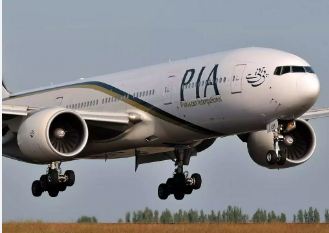
AG accuses PIA aviation medical safety standards with non-doctor in key role

PIA

By Nazir Siyal


KARACHI, JUN 29 /DNA/ – In a startling revelation, the Auditor General of Pakistan has raised serious concerns over Pakistan International Airlines’ (PIA) appointment of a senior cargo official to lead its Medical Services Department—bypassing long-standing requirements for medical qualifications and aviation health expertise.

According to the official audit report for the period 2022–2024, PIA appointed Mr. Tariq Hussain Khan, formerly General Manager (GM) Cargo, won the role of GM Medical Services. The position was historically held by a Chief Medical Officer (CMO)—a role requiring a specialized degree in Aviation Medicine and substantial clinical experience.

The audit highlights that PIA revised the eligibility criteria for this medically critical role in 2017, removing the condition for a medical degree and instead allowing candidates with a master’s or MBA to qualify. This change, the report argues, has diluted the medical integrity of the position and poses a risk to both passengers and crew.

“The decision to appoint a non-medical professional to a post that directly affects health certification, crew medical monitoring, and aviation safety is unjustified,” the report stated.

The auditors emphasized that such a move compromises international aviation health compliance and liaison with airport and emergency medical facilities.

In response, the Auditor General has issued the following recommendations:

Restore the original post of Chief Medical Officer (CMO)

Realign the job description with international aviation medical standards

Re-evaluate Mr. Tariq Hussain’s appointment based on relevant medical expertise. Ensure appointment of a qualified senior medical professional without delay

PIA Management Silent over the irregularity was officially communicated to PIA management on March 11, 2025. However, no formal response has been received.

The audit warns that continued negligence in addressing the issue could damage PIA’s operational safety record and credibility at the international level.

When contacted, PIA spokesperson Mr. Abdullah Khan told this scribe that “There is no new appointment as such safety or harm passengers technically.

The role is administrative only, and Mr. Tariq Hussain will deal solely with internal administrative affairs. He is already serving within the organization.”

However, the Auditor General’s report disputes this explanation, arguing that the role of GM Medical Services directly oversees health-related matters and cannot be reduced to administrative coordination alone.

Gas prices set to increase from July 1

Gas prices set to increase from July 1

ISLAMABAD, JUN 29: The federal government has issued a notification announcing an increase in gas prices for certain sectors, effective from July 1 (Tuesday).

According to the notification, the price hike applies to bulk consumers, the power sector and other industrial segments. However, there is no change in gas tariffs for domestic consumers, although their monthly fixed charges have been increased.

Prices for domestic users, tandoors, the commercial sector, general industry, CNG stations, cement and fertiliser sectors remain unchanged.

Naqvi hails security forces for Duki operation against India-linked terrorists

Mohsin Naqvi

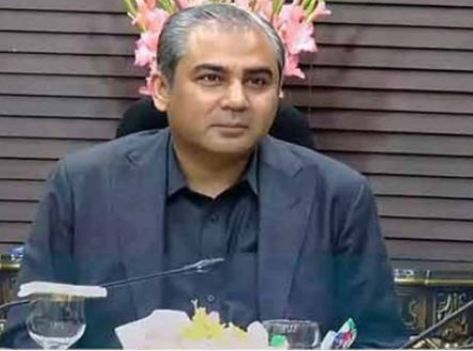
ISLAMABAD, JUN 29 /DNA/ – Federal Interior Minister Mohsin Naqvi has paid tribute to the security forces for their successful operation against India-backed terrorists in the Duki area of Balochistan.

Mohsin Naqvi praised the professional capabilities of the security forces for sending two terrorists of the India-backed network to hell and saluted the brave personnel for the successful operation.

He emphasized that the elimination of these India-backed terrorists will be ensured at all costs, adding that the entire nation stands shoulder to shoulder with the security forces in eradicating this menace.

Stay Connected

64FansLike
60FollowersFollow

Latest Reviews

Exchange Rates

USD - United States Dollar
EUR
1.16
GBP
1.34
AUD
0.67
CAD
0.72