Home Blog Page 330

Deputy Mayor takes notice of civic issues

Pakistan: A Pivotal Bridge Aligning Economic Interests Between China and the Middle East

HYDERABAD, Dec 26 (APP):Deputy Mayor Chaudhry Mubashir Arain on Friday has taken immediate notice of serious civic issues caused by marriage halls operating along Maryam Road, including poor sanitation, cooking activities that block the road, discharge of dirty water onto streets, prolonged traffic congestion, and severe parking problems.

Taking cognizance of public complaints, the Deputy Mayor issued directives to the concerned municipal departments and assured citizens that marriage hall owners would be strictly bound to follow existing rules and regulations. He emphasized that there would be zero tolerance regarding cleanliness, drainage, traffic flow, and parking management.
He said that strict action would be taken against violators to ensure public convenience and restore order in the area. Citizens have welcomed the Deputy Mayor’s initiative and expressed hope that immediate and practical steps would be taken to resolve these long-standing issues.

CAF, IRS hosts Post-COP30 panel discussion

CAF, IRS hosts Post-COP30 panel discussion

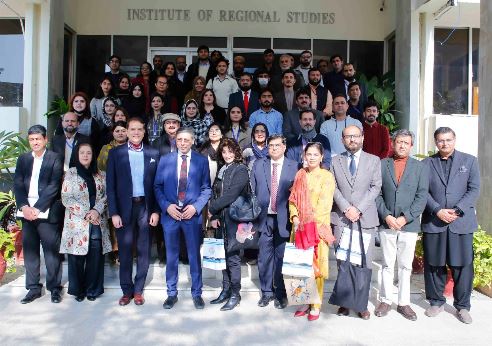
ISLAMABAD, DEC 26 /DNA/ – Climate Action Forum (CAF) in collaboration of Institute of Regional Studies (IRS) and Institute of Rural Management (IRM) has successfully hosted Post-COP30 panel discussion with a strong focus on translating global climate commitments into national policies and grassroots action relevant to Pakistan’s context.

The event brought together over 100 participants from government departments, academia/students and civil society. 

The event was graced by Ms. Khalida Bashir, Joint Secretary, Climate Finance Wing, Ministry of Climate Change & Environmental Coordination(MOCC&EC), as Chief Guest, said a press release.

Distinguished panelists included Khalida Bashir (Joint Secretary, Climate Finance Wing, MoCC & EC), Dr. Roomi S. Hayat (Chair CAF & CEO IRM), Aisha Khan (CEO, CSCCC), Arif Goheer (Executive Director, GCISC), and Dr. Khalid Waleed (Research Fellow, SDPI) with Ambassador Jauhar Saleem, President, IRS as the esteemed moderator of the panel discussion. The discussion featured diverse, intellectual, and substantive perspectives on COP30 outcomes by the esteemed panelists.

JS, MoCC & EC Khalida Bashir responding to a question regarding the loss and damage fund said, “Ministry is working on ideas to leverage this fund. NDRMF & NDMA is working in this regard & Ministry is also seeking provincial support to strengthen the institutional capacity to channelize these funding streams.”

Dr. Hayat, Chair of the Climate Action Forum and CEO of IRM, highlighted that strengthening coordination can significantly improve climate action in Pakistan. He emphasized the need for better integration of scientific research, technical data, and indigenous knowledge to enhance responses to climate shocks. He also noted that engaging civil society would greatly improve the efficiency and impact of climate action initiatives.

Mr. Arif Goheer, ED GCISC responding to the progress of NDCs mentioned, ‘Last 2 NDCs were delayed, they were submitted one year delayed from their deadline, however, this time we tried our best to meet the deadline which was 2025 and submitted them right in time before the COP30 this year’

CEO, CSCCC Aisha discussing regarding the COP30 outcomes stated, “We do not have limited resources for climate action, what we need to do is to translate those promises to protection and ground for the communities that are the badly hit by the climate change.”

Dr. Khalid Waleed furthered the discussion with the mention of Just Transition and Belem Political Package and added, ‘The Belem Political Package at COP30 this year was based on ‘Mutirão’ which means collective action. COP provides this multilateral platform to discuss local problems with global context. In terms of Pakistan, Institutional Mutirão should be given priority.’

During the concluding remarks, Joint Secretary, Khalid Bashir appreciated the efforts of organizing such events for the casue of knowledge sharing.

The session highlighted the importance of Post-COP dialogues in linking international agreements with local priorities. As many  practitioners, policymakers, and communities are not directly involved in COP negotiations, such forums are crucial for unpacking outcomes, fostering critical reflection, and ensuring that global agreements are understood, owned, and meaningfully followed up at home.

Pak space journey soars, moon mission planned

Pak space journey soars, moon mission planned

Director stated that next year, Pakistan will continue its momentum with multiple satellite launches, further solidifying its presence in space exploration. Looking ahead, he confirmed that Pakistan’s ambitions will expand, with plans to reach both the Moon and Mars

DNA

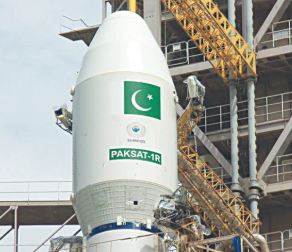
ISLAMABAD: SUPARCO Director Shafaat Ali Friday proudly announced that 2025 will be remembered as a breakthrough year for Pakistan in space projects, with the nation’s sights already set on the Moon in 2026, backed by the collaborative support of both Pakistani and Chinese governments.

While speaking with a local media channel, Director called 2025 a turning point for Pakistan, marking significant progress in space technology and exploration.

He further emphasized that with continued collaboration between the Pakistani and Chinese governments, 2026 will see Pakistan make its mark on the Moon.

He emphasized that the partnership between Pakistan and China in space exploration highlights the growing collaboration in science and technology.

He added that 2025 will mark a historic milestone for Pakistan, as the country will launch three satellites for the first time in its history.

Responding a query, Director stated that next year, Pakistan will continue its momentum with multiple satellite launches, further solidifying its presence in space exploration. Looking ahead, he confirmed that Pakistan’s ambitions will expand, with plans to reach both the Moon and Mars.

Responding to another query, he revealed that by the end of 2026, Pakistan will send its first astronaut to China’s space station, setting a new benchmark in international space collaboration. He emphasized that this historic achievement will not only demonstrate Pakistan’s growing capabilities in space but also strengthen its partnership with China in groundbreaking scientific exploration.

Talking about space education in the curriculum, he reaffirmed his commitment to advancing space-related knowledge in Pakistan.

He emphasized that, with the full support of the government, various space education programs are being launched for students, aiming to inspire and equip the next generation with the skills needed for the future of space exploration.

Babar Azam’s poor form continues in BBL 15

Babar Azam's poor form continues in BBL 15

SYDNEY: Pakistan star batter Babar Azam’s struggles with the bat continued in the ongoing Big Bash League (BBL) 15, as he was dismissed for just two runs while playing for Sydney Sixers in Friday’s clash against Melbourne Stars at the Sydney Cricket Ground (SCG).

Babar fell victim to Sam Curran, whose consistent out-swing deliveries troubled the right-handed batter.

He missed the first-three balls, which went straight into the hands of the wicketkeeper, before edging the fifth delivery—sharply swinging late—towards slip fielder Glenn Maxwell, who took a simple catch. He faced seven deliveries in total.

This marks the third time the former Pakistan captain has been dismissed for single-digit scores in the tournament. In his debut against Perth Scorchers, he was out for two off five balls, contributing to his side’s loss.

In his second match against Adelaide Strikers, he managed only nine runs off 11 deliveries, including a boundary, as Sydney Sixers suffered back-to-back defeats.

Babar’s form improved in the third game, where he scored his first BBL fifty, making 58 off 42 deliveries, including five fours and two sixes, helping Sydney Sixers register their first win of the tournament.

It is pertinent to mention that the 31-year-old recently returned to T20Is after a hiatus since December 2024, facing South Africa at home.

His comeback match saw him dismissed for a duck, followed by scores of 11 and 68 in the next two games.

In the T20I tri-series featuring Zimbabwe and Sri Lanka, Babar has accumulated 127 runs in five matches at a strike rate of 112.38, including one fifty.

Pakistan rolls out red carpet for UAE President Mohamed bin Zayed Al Nahyan

Pakistan rolls out red carpet for UAE President Mohamed bin Zayed Al Nahyan

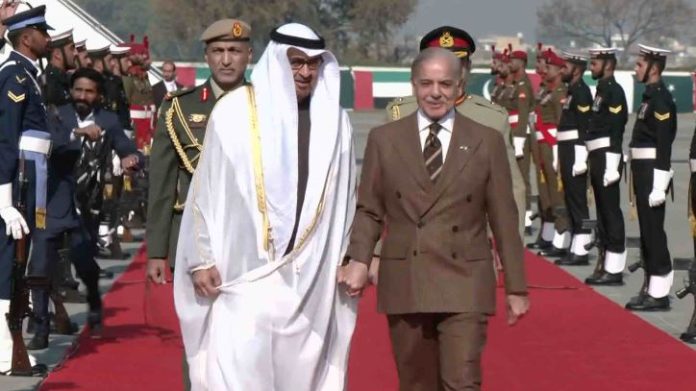
ISLAMABAD, DEC 26: United Arab Emirates (UAE) President and Ruler of Abu Dhabi Sheikh Mohamed bin Zayed Al Nahyan, accompanied by a high-level delegation, arrived in Islamabad on Friday on an official visit to Pakistan at the invitation of Prime Minister Shehbaz Sharif.

The UAE president was received by Prime Minister Shehbaz Sharif, Chief of Defence Forces Field Marshal Asim Munir along with a number of ministers and senior officials upon his arrival at Nur Khan airbase.

As the president’s aircraft entered Pakistani airspace, it was escorted by a formation of Pakistan Air Force (PAF) jets in a gesture of welcome and respect.

The national anthems of both countries were played, a 21-gun salute was fired, and an honour guard lined up to salute the UAE president.

Military and traditional bands delivered ceremonial performances, while groups of children waving the flags of both nations lined the route.

The UAE president is accompanied by a high-level delegation comprising his advisers, Sheikh Sultan bin Hamdan Al Nahyan, Sheikh Mohammed bin Hamad bin Tahnoun Al Nahyan, and UAE Ambassador to Pakistan Salem Mohammed Al Zaabi.

The UAE delegation also includes several federal ministers and senior officials.

According to the Foreign Office, this is Al Nahyan’s first official visit to Pakistan as the UAE president. He had earlier visited Pakistan on a private trip in January this year.

The FO said that during the visit, the UAE president will hold a meeting with PM Shehbaz, where the two leaders will review the entire spectrum of bilateral relations and exchange views on regional and international issues of mutual interest.

The visit, the FO added, will provide an important opportunity to further strengthen the longstanding brotherly relations between Pakistan and the United Arab Emirates.

Meanwhile, a public holiday has been declared in Islamabad in view of the President Al Nahyan’s visit to Pakistan.

According to a notification issued by the Islamabad High Court (IHC) registrar, the Islamabad High Court and Islamabad district courts will remain closed on December 26. The Senate Secretariat and the National Assembly Secretariat will also remain closed today.

The registrar of the Federal Constitutional Court has likewise announced a public holiday, canceling today’s cause list.

However, under a Cabinet Division notification, banks, essential services offices, including those of Capital Development Authority (CDA), police, IESCO, and Sui Northern Gas Pipelines Limited, will remain operational.

Field Marshal’s Strategic Offer to the Muslim World

Qamar Bashir

Qamar Bashir

During his recent visit to Libya, Pakistan’s Field Marshal addressed a high-level gathering that included senior Libyan leaders and top military officials. What he presented was not a routine diplomatic message but a strategic doctrine shaped by Pakistan’s own experience of war, sanctions, and pressure. He reminded the audience that Pakistan learned long ago that depending on foreign military technology becomes dangerous when the nation faces existential threat. In moments of conflict, supplier nations often convert technology into leverage—delaying or freezing spare parts, blocking software updates, halting ammunition supply, or suspending technical support. When the survival of the nation hangs in the balance, such dependency can turn fatal. That is why Pakistan deliberately chose to minimize reliance on imported technology and began developing its own air defence systems, land warfare platforms, naval capabilities, cyber and electronic warfare tools, and—above all—independent and secure communication systems. This was a long and difficult journey, born not of luxury but of necessity.

The Field Marshal explained that this strategy was tested decisively during the twelve-day confrontation with India, when Pakistan’s integrated cyber, communications, missile defence and air combat systems were exposed to real battlefield stress. According to him, Pakistan did not lose a single aircraft, while neutralizing India’s most advanced platforms including Rafale, MiG-29 and Tejas fighters. Indian command-and-control networks were disrupted by cyber operations. Even India’s S-400 missile defence system failed to deliver the deterrence New Delhi expected. These developments, he said, proved that Pakistan had achieved technological parity—and even superiority in certain domains—despite facing a much larger and wealthier adversary.

But what turned his address into a historic moment was not the recounting of Pakistan’s battlefield resilience; it was the offer that followed. The Field Marshal declared that Pakistan is now ready to share its indigenous defence technologies with Muslim countries who seek strategic autonomy, self-respect, and credible deterrence. These technologies, already tested in war, will not be used as political leverage but as a means to strengthen the collective defence of the Muslim world. In his most emphatic words, he advised Muslim leaders: “Ensure your armed forces are strong enough to protect your sovereignty, your dignity, and your independence. Without that strength, no country can ever truly claim to be independent.”

This message reverberates far beyond South Asia. In the Middle East, nearly every state hosts U.S. military bases, finances their operations, and relies heavily on Western defence umbrellas. Yet recent conflicts—such as the Israel-Hamas war and the Israel-Iran escalation—revealed an uncomfortable truth. These military installations, systems and manpower were not mobilized to defend the host nations. Instead, they were activated primarily to shield Israel. The wealthy Gulf states therefore face a paradox: they pay for foreign troops on their soil, yet remain strategically exposed when their national interests diverge from those of Washington.

In this context, Pakistan’s offer becomes transformative. Saudi Arabia’s expanding defence partnership with Pakistan reflects a strategic awakening. A combination of Pakistani technology, combat experience, and human capital—supported by Middle Eastern financial strength—could reshape the regional security order. If replicated across other Muslim states, this framework could eliminate the perceived need to host foreign military bases as guardians of sovereignty. Equally important, jointly-developed or indigenous systems would remove the external leverage that often appears during crises: no blocked spare parts, no sudden software restrictions, no political strings attached at the moment of war.

It is inevitable that such a shift would alarm existing power centres. Israel would see any dilution of its technological edge as a direct challenge. The United States, Israel’s principal guarantor, would likely apply diplomatic and economic pressure to prevent Muslim states from seeking autonomous defence solutions. There will be narratives claiming Pakistan’s capabilities are exaggerated, or dismissing its industrial scale as inferior. Yet, as the Field Marshal implied, credibility is measured on the battlefield—not in marketing brochures. Pakistan’s systems have already faced real-world combat and performed under fire.

The argument also rests on a deeper reality: technology evolves fastest where capital and experience converge. With Gulf investment, Pakistan’s defence industries can rapidly innovate, expand and customize systems suited to regional threat environments. For Pakistan itself, the benefits would be equally meaningful. Defence exports would generate much-needed foreign exchange, strengthen geopolitical influence, and position Pakistan as a provider—not merely a consumer—of security within the Muslim world.

Still, the Field Marshal acknowledged that breaking existing dependencies will not be easy. Many Muslim states are deeply embedded in Western defence ecosystems, bound by treaties, procurement pipelines and political expectations. Escaping that orbit will take courage, foresight and coordination. But strategic independence begins with the first decisive step. Pakistan’s offer represents that moment.

From a broader perspective, this proposal could finally allow Muslim nations to stand on their own feet in matters of defence. It could create an ecosystem where capability replaces dependency, dignity replaces insecurity, and sovereignty becomes more than a symbolic word. Pakistan is not promising miracles. Rather, it is offering tested technology, operational knowledge, and a philosophy of self-reliance, backed by the lived experience of facing a larger, wealthier and well-equipped adversary—and surviving without external rescue.

Of course, powerful forces will resist this change. Israel and its allies will exert pressure. Some Muslim leaders will hesitate. There may be attempts at sabotage and diplomatic intimidation. But the Field Marshal’s words cut through the doubt: true independence is impossible without strong, sovereign, and self-reliant armed forces.

Pakistan’s outreach is therefore more than a defence export initiative. It is a strategic doctrine—one that seeks to align technology, sovereignty, and dignity across the Muslim world. If embraced, it could mark the beginning of a new era in which Muslim nations no longer rely on others to guarantee their security, nor fear political manipulation at the moment of crisis. The path ahead is difficult, but history has always favored nations that choose self-reliance over dependency, courage over caution, and dignity over fear. For the Muslim world, this may be the first genuine opportunity in generations to defend itself on its own terms—and to respond to aggression with confidence and capability rather than hesitation and dependence.

Qamar Bashir

Press Secretary to the President (Rtd)

Former Press Minister, Embassy of Pakistan to France

Former Press Attaché to Malaysia

Former MD, SRBC | Macomb, Michigan, USA

China’s Wakhan Corridor Dilemma: Economic Development or Security?

China’s Wakhan Corridor Dilemma: Economic Development or Security?

On August 21, the Chinese foreign minister Wang Yi landed in Kabul, after visiting India and Pakistan. The visit to Afghanistan holds significance as it comes after a gap of three years, the last being in March 2022. But far more consequential was the actual itinerary of the visit, notably a tripartite meeting with Pakistan and Afghanistan intended to address Chinese security concerns related to a narrow piece of land connecting China and Afghanistan, called the Wakhan Corridor.  The Wakhan Corridor is a 350-km narrow piece of land, ranging from 10 to 50 km in width, which connects China’s Xinjiang Autonomous region and Afghanistan’s Badakhshan province in the northeast and is sandwiched between Tajikistan on its western side and Khyber Paktunwa, Gilgit Baltistan to the east.

While it is a fact that the Chinese have been investing in Afghanistan and have not shied away from the country since the Taliban takeover in 2021, Beijing has been cautious in its approach in dealing with the Taliban given that early investments have not been as lucrative as they hoped. According to a report published by the Stimson Center, Chinese investments have more or less remained at the same level since 2021, with imports from Afghanistan not growing in any substantial way. The same report claims that the Chinese investments in the Mes Aynak copper mine have not taken off, nor have investments in the Amu Darya oil fields. Despite these hurdles, the Taliban and Beijing are moving ahead on a plan to build a road through the Wakhan Corridor, connecting China and Afghanistan. According to Al Emarah English, which is the official mouthpiece of the Taliban government, the Wakhan Corridor road will be constructed in two stages, the first running 50 km from Bazai Gonbad in Little Pamir to the zero-point border with China, of which preliminary groundwork is complete with 60% of construction work currently underway as of March 2025. The second stage will cover 71 km, which is to be completed by the end of this year. Experts believe that once this road is complete, it will give China access to new markets in Europe through Afghanistan and at the same time, provide landlocked Afghanistan a new corridor to export and import goods directly with China.

Risk Factors along the Wakhan Corridor

Despite the potential for outsize economic benefits for China, Beijing has remained wary and reluctant to expedite the project due to security threats emanating from non-state actors. The Chinese foreign minister last week called for joint patrols and aggressive efforts to counter terrorism from the Taliban to address these threats.  Beijing’s concerns stem from the presence of groups like East Turkistan Islamic Movement (ETIM) and the Islamic State in Khorasan Province (ISKP), both of which operate in Afghanistan and have mounted past attacks against Chinese interests in the region.

These concerns appear justified in light of the following:

Firstly, there is the persistent threat of the East Turkistan Islamic Movement (ETIM). ETIM is a Uygur separatist movement seeking the independence of the Xinjiang Autonomous region in China’s northwest. Southern Xinjiang is primarily populated by Islamic Uygurs while the northern part of Urumqi region consists largely of Han Chinese. The Uygurs claim that Xinjiang, which was once known as East Turkestan, is under illegal Chinese occupation. Hence, the East Turkistan Islamic Movement, which is also known as Turkistan Islamic Party (TIP), mounted numerous violent attacks through the late 1990s and the early 2000s. More recently, the Chinese government has clamped down on the movement, forcing them migrate to Afghanistan, where they have been sheltered by the Taliban, fighting alongside Al Qaeda. ETIM’s present leader Abdul Haq Turkestani was a member of Al Qaeda Shura council. ETIM has strong presence in Badakhshan province which is where the Wakhan Corridor originates. Since coming to power in 2021, the Taliban government has moved ETIM elements from Badakhshan further down south, yielding to Chinese pressure. However, recent reports suggest that ETIM may possibly be regrouping in Syria, Afghanistan, and elsewhere which will set off the alarm bells in China.

ETIM fighters consisting of ethnic Uygurs were dispatched to Syria by its top commander Abdul Haq Turkestani to fight alongside Al Nusrah Front, the predecessor of Hayat Tahrir al-Sham (HTS), which later became an indispensable part of that coalition. ETIM in Syria which is part of HTS coalition that overthrew the Assad regime, has been rewarded for this loyalty. HTS leader Abu Mohammad al-Jolani and the president of Syria have absorbed some of the senior ETIM commanders into the Syrian army. Al-Jolani promoted a top ETIM leader Abdulaziz Dawud Hudaberdi (‘Zahid’) to brigadier general in the Syrian army and also integrated Uygur fighters into the newly created 84th Division of the Syrian army. Its fighters are believed to be battle hardened with experience in maritime combat skills, including speedboat assaults, maritime rescues, and armed swimming and diving. Reports indicate that ETIM cadres operated a drone assault team called the Falcons against the Assad regime forces in Syria.

In Afghanistan, ETIM is believed to be expanding, with its ranks now numbering as high as 750. ETIM in Afghanistan is believed to possess anti-tank missiles, including BGM-71 TOW missiles. Given the success of its military intervention in Syria, ETIM  has decided to “accelerate” its push for the independence of Xinjiang from China. In light of ETIM’s strength, ranging from 2000-3000 fighters in Syria, possible migration of battle-hardened fighters from Syria to Afghanistan would inevitably bolster the existing strength of ETIM in Afghanistan, which was reportedly discussed with the Taliban government in December 2024. Notwithstanding the above, ETIM has been on a tight leash by the Taliban, leading to defections and splinters, some joining the group’s archrival – the Islamic State in Khorasan Province (ISKP).

Secondly, Islamic State in Khorasan Province has mounted past attacks targeting Chinese interests, and the group has renewed its vow to mount such attacks in Afghanistan and elsewhere. In a message titled “Voice of Resistance” released in July 2025, ISKP called the Chinese “infidels” and “atheists,” claiming that Taliban is becoming too close to the Chinese, such that the only hope for Uygur Muslims is Islamic State. By directly calling out China’s oppression of the Uygurs in its message, ISKP has revealed its intention to recruit Uygurs and disenchanted ETIM Uygur fighters. It appears as though they have met with some early success in the effort. ISKP in October 2021 conducted an attack on a mosque in Kunduz, where the attacker was an ethnic Uygur. Following the incident, some Uygur fighters from ETIM may have switched sides to ISKP, given the Taliban’s stranglehold on ETIM in Afghanistan. At the same time, ISKP has ramped up propaganda targeting other Central Asian sympathizers from Tajikistan and Uzbekistan. ISKP’s official mouthpiece, Al Azaim, has started actively propagating, mainly in the Tajiki language targeting Tajikistan nationals. Reports indicate that ISKP is known to have conducted at least nine attacks since 2017, using Tajik nationals in Afghanistan, including one in Shahr-e-New area in Kabul in December 2022, injuring five Chinese nationals. Given these new recruitments and defections, ISKP’s strength appears to be somewhere around 2000 fighters in Afghanistan alone, constituted by Sunni Pashtuns, Tajiks, Uzbeks, and Uygurs.

Thirdly and more importantly, it is believed that elements of groups such as ETIM, which are under the control of the Taliban, have clandestinely worked with ISKP and other smaller groups to mount attacks on Chinese interests. For example, it is believed that some elements of ETIM appear to have participated in the December 2022 attacks on Chinese targets in Kabul, conducted by ISKP. Reports indicate that ETIM and ISKP worked together in tracking Chinese nationals in Afghanistan, despite being otherwise opposed to each other.

Factoring in all of the above, China’s overriding security concern, that ETIM and ISKP pose a serious threat to its borders and nationals in Afghanistan, appears to be coming true. In January 2025, ISKP targeted and killed a Chinese national working in a mine near Tajikistan border, possibly the first ever Chinese fatality in Afghanistan from a terror attack perpetrated by ISKP. In July 2025, four Chinese nationals working in a mine were killed in the Badakhshan province, though this was not directly attributed to any terrorist group.

There are already indications that ISKP has relocated some personnel away from its core area of Kunar and Nangarhar, with factions migrating to Badakhshan. ISKP seems to draw strength from its Tajik members to conduct attacks, including the attack on a Chinese national in 2025 in Badakhshan which borders Tajikistan on the western flank of Wakhan Corridor. Similarly, Khyber Paktunwa in Pakistan, which abuts the eastern side of Wakhan Corridor, is a mine field for the Chinese with already multiple attacks taking place in the past orchestrated by Baloch separatists, including an attack in March 2024, killing five Chinese nationals. Add to this the possibility of ETIM defections and cooperation with ISKP and Chinese security concerns will only deepen.

The views expressed in this article belong to the author(s) alone . First published in Group political monitor on August 28, 2025


Pakistan urges UK to act against accounts accused of inciting violence

The move follows Pakistan’s earlier submissions to the British High Commission in Islamabad, where, officials say, documents concerning two YouTubers were handed over to High Commissioner Jane Marriott with a request for action. Despite those efforts, Pakistan has reportedly been informed that the UK has declined to take measures

DNA

ISLAMABAD — The Government of Pakistan has formally written to the United Kingdom, urging authorities to take action against a number of social media accounts that officials say have been promoting violence, including calls allegedly inciting harm against Pakistan’s army chief. In a letter addressed to the UK government and directed in particular to the Home Office, Islamabad argues that the content in question is not merely political speech but material that aims to sow division, fuel unrest, and undermine social cohesion.

According to Pakistani officials, the letter frames the activity as a breach of international norms against incitement and hate, asserting that such “provocations” contravene United Nations principles. The government’s communication requests timely intervention by British authorities to review, restrict, or otherwise act against the accounts allegedly disseminating calls for violence and spreading hate-driven narratives.

The move follows Pakistan’s earlier submissions to the British High Commission in Islamabad, where, officials say, documents concerning two YouTubers were handed over to High Commissioner Jane Marriott with a request for action. Despite those efforts, Pakistan has reportedly been informed that the UK has declined to take measures against the individuals concerned, citing domestic legal thresholds and speech protections. The reported refusal has become a fresh point of friction in bilateral ties, with Pakistani officials warning it could deepen rifts over how both countries interpret and enforce standards around incitement and harmful online content.

Officials in Islamabad argue that their appeal does not target dissent or political critique but seeks accountability for content that allegedly crosses into explicit advocacy of violence and communal hostility. They contend that the UK’s regulatory and law enforcement framework alongside platform community standards provides avenues to address such content when it breaches laws against incitement or hate.

There has been no immediate public response from the UK Home Office to the latest letter. Legal experts note that British authorities typically weigh requests of this nature against the UK’s strong free expression protections, requiring clear evidence of criminal incitement under domestic law before action can be taken. They also point out that platform policies and due process considerations may shape any eventual response.

As online speech continues to test cross-border legal norms, Pakistan’s latest démarche underscores the growing diplomatic pressure on host countries and social platforms to reconcile free speech with the prevention of hate and violence an increasingly contentious debate with implications for both bilateral relations and digital governance.

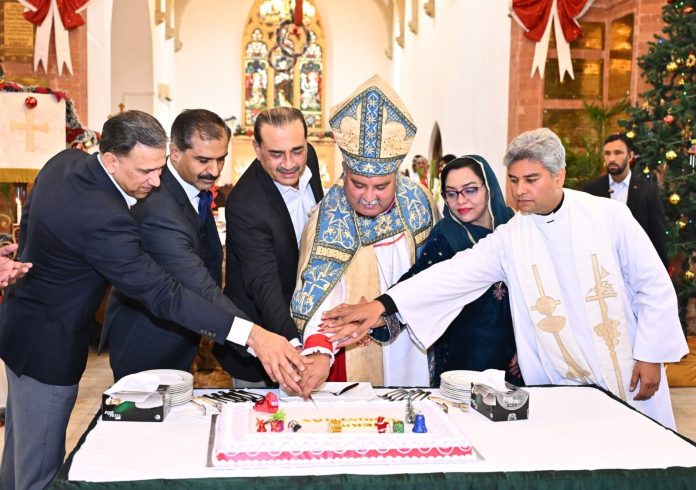
Field Marshal Asim Munir Celebrates Christmas at Church

RAWALPINDI – DEC 25 /DNA/: In a powerful demonstration of national unity and interfaith harmony, Field Marshal Syed Asim Munir, NI (M), HJ, Chief of Army Staff (COAS) & Chief of Defence Forces (CDF), joined the Christian community today at Christ Church, Rawalpindi, to celebrate Christmas.

The visit by the Field Marshal, who now leads the unified command of the Pakistan Armed Forces, was marked by warm interactions and a reaffirmation of the inclusive vision of Pakistan’s founding father.

Upholding the Quaid’s Vision

Addressing the congregation, Field Marshal Asim Munir paid a glowing tribute to Quaid-e-Azam Muhammad Ali Jinnah on his birth anniversary. He emphasized that the protection of minority rights is not merely a legal obligation but a “cornerstone of Pakistan’s ideology.”

The Field Marshal highlighted the Quaid’s enduring vision of equality, freedom, and religious tolerance, stating that the strength of the nation is rooted in its diversity and the shared constitutional values that bind all citizens together regardless of religion, ethnicity, or creed.

During his interaction with the community, the COAS & CDF lauded the “enduring and proud contributions” of Pakistani Christians toward national development. He specifically acknowledged the distinguished service of Christian officers and soldiers within the Pakistan Armed Forces, noting their bravery and dedication across generations in defending the motherland.

The Field Marshal reiterated the Armed Forces’ unwavering commitment to:Upholding the dignity and equal rights of all citizens as enshrined in the Constitution, Fostering interfaith harmony and mutual respect to defeat divisive forces, Ensuring the security of all communities across the country.

“Pakistan’s strength lies in its diversity and equal opportunities. We stand united as a resolute nation to safeguard our shared future,” the Field Marshal remarked.

Christian community leaders expressed their profound gratitude for the visit, noting that the presence of the Field Marshal on this joyous occasion strengthens the bonds of national unity. They acknowledged the pivotal role of the Pakistan Armed Forces in ensuring religious harmony and protecting the sovereignty of the state.

The ceremony concluded with special prayers for the peace, harmony, and prosperity of Pakistan.

PM Shehbaz reaffirms equal rights

 Saifullah Ansar

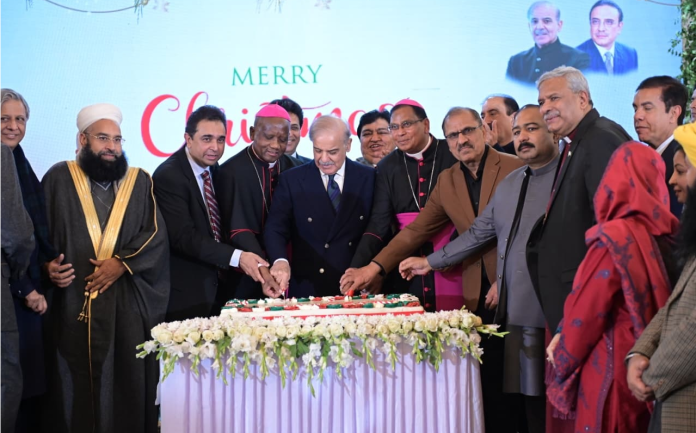
 ISLAMABAD, Prime Minister Muhammad Shehbaz Sharif on Thursday reaffirmed the government’s firm commitment to safeguarding the constitutional rights of minorities, declaring that Pakistan belongs equally to all its citizens irrespective of faith.

The prime minister was addressing a Christmas ceremony held here at the Prime Minister’s Office.

Speaking at the event, the prime minister highlighted the teachings of Jesus Christ (Hazrat Isa A.S.), describing him as a symbol of peace, compassion and service to humanity. He said the message of love, justice and tolerance preached by Jesus Christ was deeply relevant in the present age and aligned with the core principles of Islam and Pakistan’s founding vision .

Prime Minister Shehbaz Sharif paid rich tribute to the Christian community’s historic and ongoing contributions to Pakistan’s development, particularly in the fields of education, healthcare, defence and the justice system. He specifically acknowledged Justice A.R. Cornelius, former Chief Justice of Pakistan, for his exemplary role in strengthening the country’s judicial system; Air Commodore Cecil Chaudhry (Shaheed) for his valour and services in the defence of Pakistan; and Dr. Ruth Pfau for her extraordinary humanitarian work in healthcare, especially her lifelong fight against leprosy in the country.

The prime minister also recalled the sacrifice of Haroon William (Shaheed), noting that Christian citizens have laid down their lives for the defence of the country and stand shoulder to shoulder with their Muslim brethren in protecting Pakistan’s sovereignty.

The prime minister amid referring to the vision of Quaid-e-Azam Muhammad Ali Jinnah said the founder of Pakistan had clearly guaranteed full religious freedom and equal legal rights to all citizens, including the freedom to worship in churches, temples, gurdwaras and mosques without fear. He emphasized that these principles were enshrined in the Constitution and remained central to the state’s policies .

Prime Minister Shehbaz Sharif assured the Christian community that the government would not tolerate any form of injustice, discrimination or violence against minorities. “Whether Christian, Hindu or Sikh, no one will be allowed to take the law into their own hands,” he said, adding that the state would ensure protection of life, property and religious dignity for all Pakistanis.

He further stressed that Islam teaches respect for all religions and forbids hurting the sentiments of others, calling interfaith harmony and mutual respect essential for national unity and progress.

Extending warm greetings to Christian citizens on Christmas, the prime minister noted the special significance of December 25, which marks not only the birth of Jesus Christ but also the birthday of Quaid-e-Azam Muhammad Ali Jinnah. He prayed for peace, prosperity and harmony in the country and congratulated the Christian community on the festive occasion.

The ceremony was attended by Archbishop Dr. Joseph Arshad, bishops, clergy members, diplomats including the Ambassador of the Vatican, federal ministers, parliamentarians and other dignitaries.

Stay Connected

64FansLike
60FollowersFollow

Latest Reviews

Exchange Rates

USD - United States Dollar
EUR
1.14
GBP
1.34
AUD
0.70
CAD
0.71