Home Blog Page 329

Security forces kill five terrorists in Kohlu district operation

Security forces kill four terrorists in D.I.Khan

RAWALPINDI: /DNA/ – On 25 December 2025, security forces conducted an intelligence based operation in Kohlu District of Balochistan, on reported presence of terrorists belonging to Indian proxy, Fitna al Hindustan.

During the conduct of operation, own forces effectively engaged the terrorists’ location, and after an intense fire exchange, five Indian sponsored terrorists were sent to hell.

Weapons, ammunition and explosives were also recovered from the terrorists, who remained actively involved in numerous terrorist activities in the area.

Sanitization operations are being conducted to eliminate any other Indian sponsored terrorist found in the area as relentless Counter Terrorism campaign under vision “Azm e Istehkam” (as approved by Federal Apex Committee on National Action Plan) by Security Forces and Law Enforcement Agencies of Pakistan will continue at full pace to wipe out menace of foreign sponsored and supported terrorism from the country.

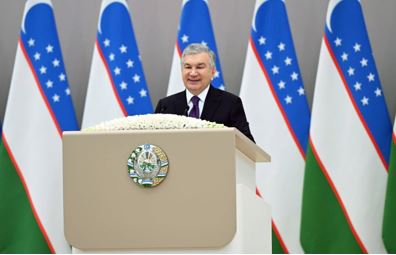
2026 to become fundamental in developing all spheres: President Shavkat Mirziyoyev

2026 to become fundamental in developing all spheres: President Shavkat Mirziyoyev

TASHKENT, DEC 26 /DNA/ – President Shavkat Mirziyoyev of Uzbekistan delivered his annual State of the Nation Address to the Oliy Majlis (Parliament) and the people on Friday, marking the culmination of what he termed a “significant path of development” over the past nine years.

In his opening remarks, the President highlighted a comprehensive transformation of the nation’s economic and social landscape under his administration’s reform agenda. He asserted that the national economy has achieved a “new quality,” characterized by expanded market relations, a strengthened rule of law, and enhanced social protection systems for citizens.

“The results of our reforms are felt in every mahalla (neighborhood), every family, and by every individual in their daily lives,” President Mirziyoyev stated, emphasizing the tangible impact of government policies at the grassroots level.

The address, a key constitutional event, traditionally outlines the government’s achievements from the past year and sets the legislative and policy agenda for the period ahead. While a full transcript of the detailed policy announcements is anticipated, the President’s introductory focus signaled a continuation of his foundational reform programs, often referred to as the “Uzbek Model,” which has prioritized economic liberalization, foreign investment, and modernization of state institutions since 2016.

Analysts expect the speech to detail further steps in ongoing initiatives aimed at improving the business climate, developing social infrastructure, and addressing regional development disparities. The President’s reference to reforms reaching every citizen underscores a central theme of his tenure: connecting national-level policy with measurable improvements in public welfare and livelihood.

The annual address is being closely monitored by international observers and investors as a key indicator of Central Asia’s most populous nation’s future direction in economic governance and social policy.

Regardless of how difficult the circumstances were, democratic reforms have been consistently continued. Thanks to the support of the people and enthusiasm of our youth, changes in people’s mindset and worldview, a more cohesive society, the initiative and dedicated work of entrepreneurs, workers, and farmers, as well as a friendly foreign policy based on mutually beneficial cooperation, significant achievements have been made in all spheres in 2025.

For the first time in the country’s history, gross domestic product exceeded $145 billion. It was noted that exports increased by 23 percent, reaching $33.4 billion. It was especially emphasized that the gold reserves exceeded $60 billion for the first time.

The volume of foreign investment attracted into the economy reached $43.1 billion, with the share of total investment in GDP at 31.9 percent. Leading international rating agencies raised the country’s sovereign rating from BB– to BB.

Due to fundamental changes in the energy sector, the electricity production was raised to 85 billion kilowatt-hours.

This year, clean drinking water reached the homes of 715,000 residents in 188 mahallas for the first time, and water supply was improved for another 2.3 million people.

This year, 5 million people have started to receive sustainable income, and the unemployment rate has decreased from 5.5% to 4.9%. About 1,5 million people in need have been lifted out of poverty, and for the first time, 1,435 mahallas became poverty-free areas.

168 thousand children from low-income families were admitted to state kindergartens on a preferential basis. Starting this year, an inclusive education system was implemented in 208 kindergartens for the first time.

The poverty rate in the country has decreased from 8.9% at the beginning of the year to 5.8%.

– When we started this work, one-third of our population lived below the poverty line. Thanks to the implementation of a completely new social protection system, providing over 100 types of services – such as loans, subsidies, and compensations – delivered through the “seven” in mahallas, more than 8,5 million people have risen out of poverty, and unemployment has been reduced by half.

As a result, this year we achieved the target set three years ago to halve poverty by the end of 2026, – stated the President.

It was noted that the talented youth contributes greatly to the development of New Uzbekistan through major successes in education, science, culture, arts, sport and other spheres.

In the past years, the country has increasingly become an international dialogue platform for discussing global issues. In particular, this year Uzbekistan hosted the 150th anniversary Assembly of the Inter-Parliamentary Union, session of the UNESCO General Conference, the Central Asia – European Union Summit and the International Climate Forum.

It was also noted, that at the meeting of the leaders of Uzbekistan, Tajikistan, and Kyrgyzstan held in March in Khujand, a historic agreement on the junction point of the three countries’ borders was signed for the first time in history, and a “Declaration of Eternal Friendship” was adopted.

At the recently held Consultative meeting of the Heads of State in Tashkent, an idea on the creation of a strategic format for the Central Asian Community to elevate integration processes to a new qualitative level, was proposed. The decision to admit Azerbaijan as a full member of the Central Asian format is of historic significance.

According to the President, this step will undoubtedly strengthen strategic connectivity and stability between Central Asia and the South Caucasus.

In October, an Agreement on Enhanced Partnership and Cooperation between Uzbekistan and the European Union was signed in Brussels. The Central Asia – U.S. Summit held in November contributed to elevating multilateral and long-term partnerships to a fundamentally new level. Last week, at the meeting of the leaders “Central Asia – Japan” in Tokyo, important agreements were reached in the fields of education, healthcare, digital technologies, infrastructure, and industry.

Earlier this week, in Saint Petersburg, a meeting was held with the heads of the Commonwealth of Independent States, which also outlined new directions for our cooperation.

– All of this is taking our international relations to a fundamentally new level. We will continue to build bridges of cooperation with countries near and far – East and West, North and South, – noted the President.

It was noted that the values of mahalla and good neighborliness are harmonious, making an invaluable contribution to the further enrichment of social capital.

This is evidenced by the fact that 90 percent of participants in social surveys consider themselves part of the mahalla community, and confirms the high sense of belonging to the fate of our homeland, shows that this institution is primarily a source of social cohesion.

– No matter how difficult the challenges we faced throughout history, we drew strength from unity. In hard times, our people, the mahalla, stood shoulder to shoulder and overcame difficulties. Families lived by helping one another; neighbors supported neighbors. We must always remain faithful to these unique values and raise our young generation in this spirit.

Of course, the presence of diverse opinions and viewpoints is natural. This is a primary requirement of democracy.

However, regardless of nationality, language, or faith, there is a great idea that unites our 38-million-strong nation. And that is the interests of the Motherland, the interests of our people.

The role and influence of the mahalla system in achieving this great goal are invaluable. Because when there is peace and harmony in the mahalla, our society will be peaceful and united. If the mahalla develops, the entire country will grow, – said the President.

Taking all this into consideration, the Head of State proposed to declare 2026 as the “Year of Mahalla Development and Social Prosperity” in our country.

The people gathered in the hall warmly supported this initiative.

The program of the new year will address such pressing issues as transforming more than 9 thousand mahallas in our country into centers of kindness, solidarity, justice, and education.

– We are entering a decisive stage in building the New Uzbekistan. Our work in this direction requires deep transformation in every sphere and sector.

Our goal is clear: in the coming years, to join the ranks of upper-middle-income countries.

From the Ferghana Valley to the Aral Sea region, from the Zarafshan Valley to Kashkadarya and Surkhandarya, from Tashkent to Jizzakh and Sirdarya – no matter which region of our country a citizen lives in, starting today, they should feel the results of reforms more tangibly in their daily lives.

Therefore, the upcoming 2026 will be a year of fundamental transformations in the development of public administration, the judicial and legal system, economic sectors, education, science, healthcare, culture, sports, and ecology – in all spheres, – mentioned the President.

The Head of State separately elaborated on the key priority areas for 2026.

The first priority – further improvement of mahalla infrastructure, giving them the appearance of the New Uzbekistan.

The work on comprehensive development of territories and their improvement will continue.

Starting next year, a comprehensive approach to mahalla development will be implemented. New reforms in urbanization and sustainable development of the cities will begin.

The policy of supporting entrepreneurship will continue: in 2026  the main tax rates will remain unchanged, over 10 trillion soums will be allocated to projects for the development of entrepreneurial infrastructure. To develop small and medium-sized businesses 140 trillion soum in resources will be provided, of this amount, 43 trillion soum will be directed to support women’s and youth entrepreneurship.

The second priority is to transition the economy to a technological and innovative development model.

It was noted that from now on, every dollar of investment must primarily serve to transferring advanced technologies, producing high value-added products with specific foreign markets, increasing the efficiency of energy, water, land, and other natural resources, training local specialists to work with new technologies and boosting labor productivity.

An industrial development program aimed at transitioning to a new technological level and expanding the value-added chain will be launched. In 2026, 782 new industrial and infrastructure projects will be launched with a total value of $52 billion. Next year alone, 228 new large-scale production facilities will be launched, amounting to $14 billion.

Economic growth is projected at 6.6%, with GDP reaching $167 billion.

Enterprises that produce high-tech, innovation-based products will be encouraged. Income earned by the enterprise’s specialists from research and development activities will be exempt from taxation.

Next year, in Tashkent, Bukhara, Fergana, and Tashkent regions, four data centers, two supercomputers, and artificial intelligence laboratories in 15 universities will be established. This will enable the implementation of more than 100 AI projects in key areas such as healthcare, transport, agriculture, geology, banking and finance, and public safety.

– Today, I want to share another important piece of news. For the first time in the history of independent Uzbekistan, we have begun work to launch a satellite into space and send the first Uzbek astronaut who is a citizen of our country, – stated the President.

The third priority area — stimulating demand in the domestic market.

Over the past nine years, a favorable business environment was created and the volume and assortment of goods and services was increased. Due to provision of no less than 1 billion dollars in affordable loans annually to low-income families, the inflation has been reduced to a “single-digit” level, the purchasing power of the population has doubled.

Based on the population’s needs, in 2026, 23 trillion soums will be allocated for housing mortgages, which generate the highest demand in the economy. To partially compensate for the down payment and interest payments when purchasing housing, a subsidy of 2,7 trillion soums will be provided. In addition, the amount of concessional mortgage credit per apartment will be increased by 15 percent.

To stimulate demand for services in 2026, 85 trillion soums in loans and 9 trillion soums in subsidies will be allocated to the sector. In particular, 7 trillion soums will be allocated from the budget for educational services.

An ambitious goal was set: to double the number of foreign tourists and increase the volume of tourism services to $20 billion over the next five years. In pursuing this goal, a special emphasis is placed on the development of tourism infrastructure.

The increased inflow of tourists requires a doubling of passenger transportation in aviation and on railways. Therefore, in 2026, the number of aircraft in the fleet will be increased to 120.

A five-year program for the development of domestic railway infrastructure will be adopted. To connect cities with high-speed trains, starting in 2026, construction of an additional 500 kilometers of railway will begin. A five-year program will be implemented on the improvement of highways’ quality and further enhancement of transit potential.

Fourth priority area – development of professions and the creation of a new labor market architecture.

Currently, under the influence of new technologies, digitalization, and artificial intelligence, the quantity, structure, and content of jobs are changing radically worldwide. Over the next five years, 30 percent of existing professions will be fully automated, and 50 percent will require the acquisition of new skills.

– Now, the labor market in our country must operate on a completely new architecture — as a unified mechanism integrating profession, qualifications, technology, and education, – said the President.

Starting in 2026, at least 100 technical colleges will be fully renovated and equipped to meet technological requirements and the needs of in-demand professions. The number of technical colleges implementing advanced educational programs from countries such as Germany, Switzerland, the United Kingdom, China, Korea and other countries will reach 100.

In 2026, Innovative Vocational Skills Colleges and “City of Professions” programs will be launched in 7 regions, and in 2027, in the remaining regions.

To develop vocational education in the medical system, training of nurses according to international standards of the British company Pearson has begun in one technical college in each region. Now, these technical colleges will implement educational programs from Germany, Switzerland, the USA, Japan and other countries.

On this basis, a nursing workforce will be formed that meets international standards and is proficient in foreign languages.

Fifth priority area – ensuring ecological balance, developing green energy, and the rational use of water resources.

A credit line of $100 million will be opened for large enterprises to install filters, treatment facilities, and emission monitoring stations for harmful substances in the atmosphere.

It was noted that traffic congestion in the cities not only complicates daily life but also causes serious environmental damage. Therefore, based on global experience, an environmental sticker system will be introduced according to the level of harmful emissions of vehicles.

Cars with high emission levels will have restricted access to the capital, regional centers, and major cities. To replace such vehicles with new ones or to install filters, the government will provide support measures.

Those who replace an old vehicle will receive partial compensation for auto loan interest. Drivers willing to install filters and reduce harmful emissions will be provided with a subsidy to cover part of the costs.

The development of public transport in Tashkent and major cities will be a priority task.

A five-year program will be carried out to increase the number of environmentally friendly vehicles. Auto loans will be provided at 12% for domestic electric vehicles and 16% for foreign electric vehicles.

To organize electric vehicle charging stations, entrepreneurs will receive concessional loans at 10%, and an opportunity to purchase land plots at auctions at half the market price. The difference in the cost of 1 kWh above 300 soums will be compensated from the state budget at the electric stations. Citizens providing taxi services using electric vehicles will also receive a number of benefits.

To prevent dust and sandstorms, in Surkhandarya, a green zone of 10 thousand hectares will be created, in Syrdarya – an 84-kilometer green wall will be built.

In Karakalpakstan, Khorezm, Bukhara, and Navoi, a total of 250 thousand hectares of trees and shrubs will be planted, including 115 thousand hectares on the dried Aral Sea bed. Each region will have botanical and dendrological gardens, as well as 20 shaded walking alleys.

In total, 1,9 trillion soums will be allocated to the environmental sector in 2026.

Additionally, 3,3 trillion soums will be allocated in 2026 for the activities related to the implementation of water-saving technologies.

Moreover, 1,300 km of major main canals will be concreted, allowing the saving of 500 million cubic meters of water per year. In addition, a separate program will be adopted to convert open drains and collectors into a closed system. Large-scale projects will also be launched to convert canals into closed systems.

Within the framework of a major program worth $160 million in Tashkent, a 150-kilometer closed drainage system will be constructed, and 197 kilometers of canals and collectors will be repaired, 63 kilometers of new canals will be built, creating a cool microclimate in the city.

Sixth priority area – continuing reforms in modern public administration and a fair judicial system.

First of all, starting in 2026, the “Electronic Government” platform will be completely updated.

Over one thousand of government services, more than 5 thousand functions and responsibilities, 240 databases and information systems, over 100 thousand responsibilities of civil servants in mahallas, districts, regions and republic will be integrated into a single digital platform.

– Most importantly: we will create an ecosystem for providing government services without human intervention, eliminating corruption and excessive bureaucracy. We will develop a system for delivering government services in a proactive and integrated manner, – said the President.

From now on, cases of direct government procurement of goods, works, and services will be determined only by law.

Within the framework of constitutional reforms, the positions of regional hokims and chairpersons of local kengash were separated. Now, this system will be implemented from 2026, in 208 districts and cities.

The President emphasized the role of civil society institutions in ensuring the effectiveness of reforms. Therefore, the policy of supporting them will be consistently continued in the future. Specifically, a five-year strategy for the development of civil society will be developed.

– I repeat: during the period of large-scale reforms in our country, we will never abandon the policy of openness. Ensuring freedom of speech and the press remains our priority, – announced the President.

The efforts to bring the judicial and legal system closer to the people will be continued.

It was emphasized that the role and participation of the society in the administration of justice will be expanded. The “jury of representatives” institution will be gradually implemented – a mechanism, which has shown positive results in countries with the English legal system.

The fight against drug-related crimes will be transformed into a national movement, a zero-tolerance environment will be created for this evil in society.

The task has been set to create an effective system for preventing violence against women and children, mobilizing all state bodies and the general public to put an end to such negative phenomena.

– Corruption is a grave threat that impedes state development, undermines the rule of law and justice, and weakens public trust. Allowing corruption is tantamount to betraying our reforms!

In the fight against this scourge, we declare a “state of emergency” on corruption in 2026, – stated the President.

In all government bodies, a deputy responsible for compliance and internal anti-corruption control will be appointed. Additionally, the role of a representative from the Accounts Chamber will be established.

Personal accountability for every soum of state funds and resources will be strengthened.

In the context of increased geopolitical and economic challenge, the work on strengthening equal and constructive relations with all countries and pursuing a balanced and open foreign policy, will be continued. Cooperation with prestigious international and regional organizations, economic institutions will be elevated to a new level.

– The significant results achieved and the new priorities require a revision of the “Uzbekistan – 2030” Strategy. This document, concerning the development of our country over the next five years, will be refined based on broad public discussion and the opinions of our citizens, – mentioned the President.

It was noted that next year the significant dates in the social and cultural life will be widely celebrated. In particular, the 35th anniversary of our Motherland’s independence will be celebrated as a major holiday. The necessity was noted to begin preparing for the momentous anniversaries of Amir Temur and Alisher Navoi.

– Today, history itself, life itself places a great responsibility upon us.

Our beloved Homeland is becoming a country where people live and work on new political, legal, social, and spiritual foundations, where people think independently, are free, and liberated.

If we remain united, acting as one people, one nation, we will undoubtedly achieve our grand goals! I believe in the incomparable strength and potential of Uzbekistan, in the will and determination of our dear youth! – said the President concluding his address.

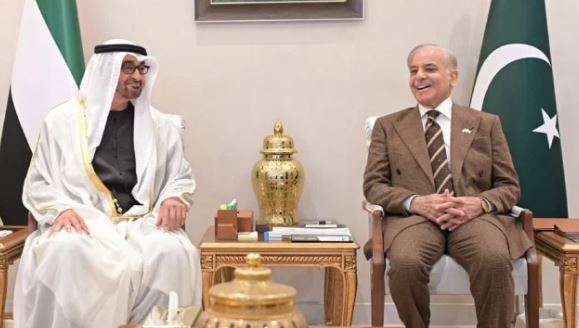
UAE president wraps up maiden Pakistan visit after ‘substantive talks’ with PM Shehbaz

UAE president wraps up maiden Pakistan visit after 'substantive talks' with PM Shehbaz

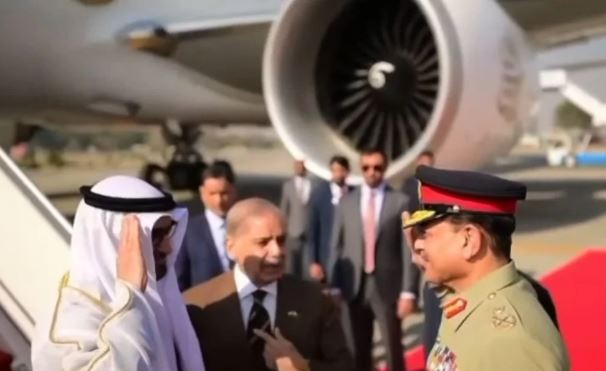
ISLAMABAD, DEC 26: United Arab Emirates (UAE) President and Ruler of Abu Dhabi Sheikh Mohamed bin Zayed Al Nahyan on Friday wrapped up his maiden one-day visit to Pakistan after holding “substantive talks” with Prime Minister Shehbaz Sharif.

The talks focused on the exchange of views on further strengthening bilateral ties between Pakistan and the UAE, read a statement issued by the Prime Minister’s Office.

The two leaders also reviewed the progress achieved in ongoing areas of cooperation and explored avenues to deepen engagement across a wide range of sectors.

The UAE president and PM Shehbaz underscored the importance of expanding collaboration in economic cooperation, investment, energy, infrastructure development, IT, technology, and people-to-people exchanges.

They also emphasised the importance of enhancing bilateral trade, and exchanged views on important regional and international developments.

President Al Nahyan and PM Shehbaz reaffirmed their shared commitment to continue close coordination on matters of mutual interest.

The two leaders expressed satisfaction with the trajectory of bilateral relations and reiterated their determination to continue working closely to advance the shared objective of peace, stability, and sustainable development.

The UAE president, accompanied by a high-level delegation, arrived in Islamabad earlier today on an official visit to Pakistan at the invitation of PM Shehbaz.

As the president’s aircraft entered Pakistani airspace, it was escorted by a formation of Pakistan Air Force (PAF) jets in a gesture of welcome and respect.

Upon his arrival at Nur Khan airbase, he was received by PM Shehbaz, Chief of Defence Forces Field Marshal Asim Munir, along with a number of ministers and senior officials.

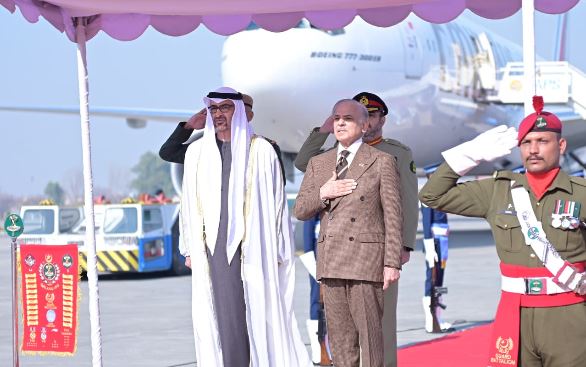
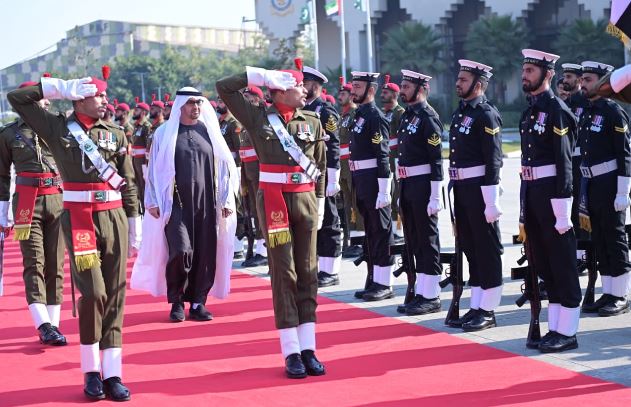
The national anthems of both countries were played, a 21-gun salute was fired, and an honour guard lined up to salute the UAE president.

Military and traditional bands delivered ceremonial performances, while groups of children waving the flags of both nations lined the route.

The UAE president was also presented with a guard of honour by a smartly turned-out contingent of Pakistan Armed Forces.

Children dressed in traditional attire welcomed President Al Nahyan, holding the national flags of Pakistan and the UAE, adding colour to the reception ceremony.

The UAE president’s delegation comprised his advisers, Sheikh Sultan bin Hamdan Al Nahyan, Sheikh Mohammed bin Hamad bin Tahnoun Al Nahyan, and UAE Ambassador to Pakistan Salem Mohammed Al Zaabi.

The UAE delegation also included several federal ministers and senior officials.

According to the Foreign Office, this was Al Nahyan’s first official visit to Pakistan as the UAE president. He had earlier visited Pakistan on a private trip in January this year.

The FO, in its earlier statement, stated that the visit would provide an important opportunity to further strengthen the longstanding brotherly relations between Pakistan and the United Arab Emirates.

The government had declared a public holiday in Islamabad in view of President Al Nahyan’s visit to Pakistan.

Following a notification issued by the Islamabad High Court (IHC) registrar, the Islamabad High Court and Islamabad district courts remain closed, along with the Senate Secretariat and the National Assembly Secretariat.

The registrar of the Federal Constitutional Court also announced a public holiday, canceling today’s cause list.

However, under a Cabinet Division notification, banks, essential services offices, including those of Capital Development Authority (CDA), police, IESCO, and Sui Northern Gas Pipelines Limited, remained operational.

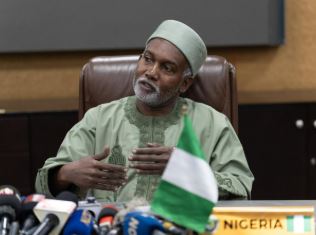
Nigeria signals more strikes likely in ‘joint’ US operations

Nigeria signals more strikes likely in 'joint' US operations

LAGOS, DEC 26: Nigeria on Friday signalled more strikes against jihadist groups were expected after a Christmas Day bombardment by US forces against militants in the north of the country, which it said was a joint operation with its military.

The west African country faces multiple interlinked security crises in its north, where jihadists have been waging an insurgency in the northeast since 2009 and armed “bandit” gangs raid villages and stage kidnappings in the northwest.

The US strikes come after Abuja and Washington were locked in a diplomatic dispute over what Trump characterised as the mass killing of Christians amid Nigeria’s myriad armed conflicts.

Nigeria’s military said in a statement that its forces, in conjunction with the United States “conducted precision strike operations against identified foreign ISIS-linked elements” in northwest Nigeria.

Washington’s framing of the violence as amounting to Christian “persecution” is rejected by the Nigerian government and independent analysts, but has nonetheless resulted in increased security coordination.

“It’s Nigeria that provided the intelligence,” the country’s foreign minister, Yusuf Tuggar, told broadcaster Channels TV, saying he was on the phone with US State Secretary Marco Rubio ahead of the bombardment.

Asked if there would be more strikes, Tuggar said: “It is an ongoing thing, and we are working with the US. We are working with other countries as well.”

                  – Targets unclear –

                  The Department of Defense’s US Africa Command, using an acronym for the Islamic State group, said “multiple ISIS terrorists” were killed in an attack in the northwestern state of Sokoto.

                  US defence officials later posted video of what appeared to be the nighttime launch of a missile from the deck of a battleship flying the US flag.

                  Residents in the far-flung villages of Sokoto state which borders junta-ruled Niger, said they were shocked by the blasts.

                  “We heard a loud explosion which shook the whole town and everyone was scared,” said Haruna Kallah, a Jabo resident, some 100 kilometres from the state capital Sokoto in Tambuwal district.

                  “We initially thought it was attack by Lakurawa (an armed group linked to ISIS in the Sahel),” he said. “But later learnt that it was a US drone attack which surprised us because this area has never been a Lakurawa enclave and we have never had any attacks in the last two years.”

                  Which of Nigeria’s myriad armed groups were targeted remains unclear.

                  Nigeria’s jihadist groups are mostly concentrated in the northeast, but have made inroads into the northwest.

                  Researchers have recently linked some members from an armed group known as Lakurawa — the main jihadist group located in Sokoto State — to Islamic State Sahel Province (ISSP), which is mostly active in neighbouring Niger and Mali.

                  Other analysts have disputed those links, though research on Lakurawa is complicated as the term has been used to describe various armed fighters in the northwest.

                  Those described as Lakurawa also reportedly have links to al-Qaeda affiliated group for the Support of Islam and Muslims (JNIM), a rival group to ISSP.

                  While Abuja has welcomed the strikes, “I think Trump would not have accepted a ‘No’ from Nigeria,” said Malik Samuel, an Abuja-based researcher for Good Governance Africa, an NGO.

                  Amid the diplomatic pressure, Nigerian authorities are keen to be seen as cooperating with the US, Samuel told AFP, even though “both the perpetrators and the victims in the northwest are overwhelmingly Muslim”.

                  Tuggar said that Nigerian President Bola Tinubu “gave the go-ahead” for the strikes.

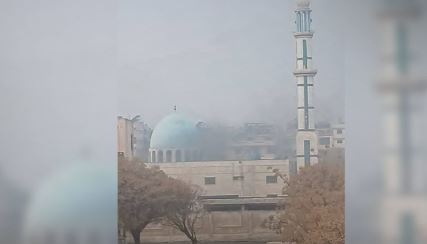
Deadly blast hits mosque in Alawite area of Syria’s Homs

Deadly blast hits mosque in Alawite area of Syria's Homs

DAMASCUS, DEC 26 – An explosion hit worshippers at a mosque in a predominantly Alawite area of Syria’s Homs on Friday, state media said, killing at least eight in the latest attack on the minority community.

The blast is the second in a place of worship since Islamist authorities took charge of the country a year ago, after a suicide bombing in a Damascus church killed 25 people in June.

State news agency SANA reported “an explosion inside the Imam Ali Bin Abi Talib Mosque in the Wadi al-Dahab neighbourhood” in Homs city.

Quoting a health ministry official, SANA gave a preliminary toll of at least eight dead and 18 wounded.

Syria’s interior ministry said in a statement that “a terrorist explosion” targeted the mosque “during Friday prayers”.

Homs was the scene of heavy sectarian violence during Syria’s civil war.

The ministry imposed a security cordon around the mosque, saying that authorities “have begun investigating and collecting evidence to pursue the perpetrators of this criminal act”.

SANA quoted a security source as saying “initial investigations indicate that the explosion… was caused by explosive devices planted inside the mosque”.

A resident of the area, requesting anonymity out of fear for his safety, told AFP people “heard a loud explosion, followed by chaos and panic in the neighbourhood”.

“No one dares to leave their house, and we are hearing ambulance sirens,” he added.

SANA published photos from inside the mosque, one of which showed a hole in a wall.

                  Black smoke covered part of the mosque, with carpets and books scattered nearby.

                  – Minority fears –

                  Homs city is home to a Sunni Muslim majority but also has several predominantly Alawite areas.

                  While most Syrians are Sunni, ousted ruler Bashar al-Assad belongs to the Alawite community, whose faith stems from Shiite Islam.

                  Since Assad’s fall in 2024, the Observatory and residents in Homs province have reported kidnappings and killings targeting members of the minority community.

                  Late last month, thousands of people demonstrated on the Alawite coast in protest at fresh attacks targeting the minority community in Homs and other regions.

                  Syria’s coastal areas saw the massacre of Alawite civilians in March, with authorities accusing armed Assad supporters of sparking the violence by attacking security forces.

                  A national commission of inquiry said at least 1,426 members of the minority community were killed at the time, while the Syrian Observatory for Human Rights monitor put the toll at more than 1,700.

                  The Observatory, witnesses and rights groups reported that security forces and allied groups committed massacres and “field executions” during the three-day violence.

                  Human rights groups and international organisations have said entire families were killed, including women, children and the elderly.

                  Despite many verbal assurances from Damascus to protect all Syrian components, the country’s minority communities remain largely weary of their future under the new Islamist authorities.

                  Sectarian clashes in southern Syria’s Druze-majority Sweida saw the killing of more than 2,000 people in July, including 789 Druze civilians who were “summarily executed by defence and interior ministry personnel”, according to the Observatory.

                  In June, a suicide bombing in a Damascus church killed 25 people.

Literary trust and fans offer fateha at Poet Parveen Shakir grave in Islamabad

Literary trust and fans offer fateha at Poet Parveen Shakir grave in Islamabad

Staff Reporter

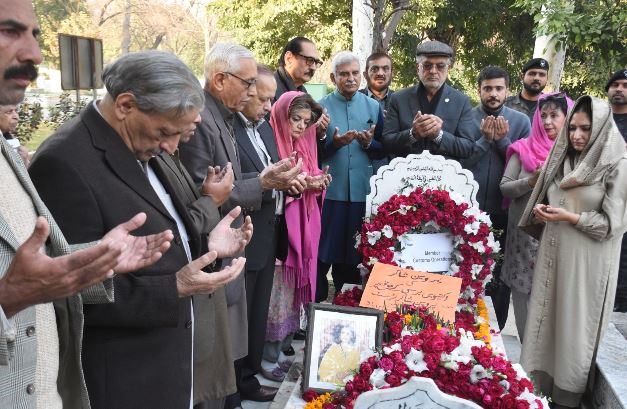
ISLAMABAD, DEC 26 /DNA/ – Poets, writers, former colleagues and members of the Parveen Shakir Trust (PST) under leadership of Chairperson of the trust Mrs Parveen Qadir Agha observed on Friday (Dec 26, 2025) 31st death anniversary of their dear colleague and Pakistan’s prominent poet Parveen Shakir who breathed her last on Dec 26, 1994 in a car accident.

They gathered at her grave to offer ‘Fateha’ and pay respects to the departed poet.A contingent of the Pakistan Customs led by Assistant Collector (AC) Shazra Saeed also joined the mourners and laid floral wreaths on her grave in the H-8 graveyard.

Members of the PST Riffat Haider, Dr Rubina Siddique, Salman Nabi, Muhammad Siddique, Majid Qureshi Anwar Jahangiri and a large number of her fans paid glowing tributes to Parveen Shakir on the occasion and shared their memories of the late poetess, her poetry and her personally.

Parveen Qadir Agha on the occasion briefed the media about the PST’s literary activities and Aks-e-Khushbu Award given annually under Parveen Shakir’s name to the young writers, poets and translators.

She said the PST would continue to relive Parveen Shakir’s memory from the trust’s platform through various events such as ‘mushaira’, seminars, literary dialogue and above all the annual ‘Aks-e-Khushbu’ Award for the best works of poetry and fiction, etc. One such event is being organized next year in February, said she.

Member PST

Salman Nabi said that PST was expanding its literary activities not only in Pakistan but also overseas. Last year Parveen Shakir Festival was celebrated in Canada by the PST Canada chapter. Soon the PST will also organize a literary festival in Malaysia, he said.

Ms Shazra Saeed AC Customs said it was an honour to lay a floral wreath on Parveen Shakir’s grave who was a represntative of women’s sensitivities. Her father Rana Saeed Akhtar who is also a poet recited Parveen Shakir’s poems on the occasion and called her a role model for the young generation, paticularly girls.

Parveen Shakir’s fans on the occasion pledged to continue to spread  Parveen Shakir’s message particularly among the youth.

Parveen Shakir’s poetry collections ‘Khushbu’ and others are among the best sellers even today.

Malaysia court finds ex-PM Najib Razak guilty of abuse of power in biggest 1MDB trial

Malaysia court finds ex-PM Najib Razak guilty of abuse of power in biggest 1MDB trial

Najib has been charged with four counts of corruption and 21 counts of money laundering

News Desk

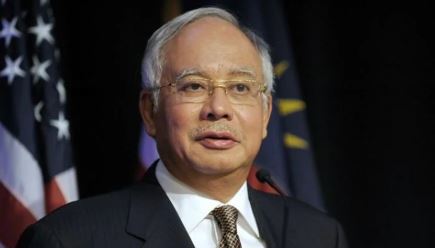
KUALA LUMPUR: Jailed former Malaysian prime minister Najib Razak was found guilty of abuse of power on Friday in the biggest trial yet in the multibillion-dollar 1MDB scandal, a ruling that could have significant political repercussions.

The judge had yet to deliver the full verdict and sentencing.

Malaysia and US investigators say at least $4.5 billion was stolen from 1Malaysia Development Berhad, a state fund Najib co-founded in 2009 while in office. More than $1 billion allegedly made its way into accounts linked to Najib, who has consistently denied wrongdoing.

Najib has been charged with four counts of corruption and 21 counts of money laundering for receiving illegal transfers of more than 2.3 billion ringgit ($569.45 million) from 1MDB. He had consistently denied wrongdoing.

“The contention by the accused that the charges against him were a witch hunt and politically motivated was debunked by the cold, hard and incontrovertible evidence against him that pointed towards the accused having abused his own powerful position in 1MDB, coupled with the extensive powers conferred upon him,” Judge Collin Lawrence Sequerah said in an ongoing reading of the verdict.

Supporters of former Malaysian PM Najib Razak hold banners featuring his portrait outside the Palace of Justice, in Putrajaya, Malaysia on December 26, 2025. — Reuters

Supporters of former Malaysian PM Najib Razak hold banners featuring his portrait outside the Palace of Justice, in Putrajaya, Malaysia on December 26, 2025. — Reuters

Najib could face maximum jail terms of between 15 and 20 years on each charge, as well as a fine of up to five times the value of the alleged misappropriations.

Najib, 72, has been in prison since August 2022, when Malaysia’s top court upheld a verdict convicting him of corruption for illegally receiving funds from a 1MDB unit. His 12-year jail sentence in that case was halved last year by a pardons board.

Link with fugitive financier

Najib last year apologised for mishandling the scandal while in office but had consistently denied wrongdoing, saying repeatedly that he was misled by 1MDB officials and the fugitive financier, Jho Low, about the source of the funds.

Judge Sequerah, in reading the verdict, had earlier said evidence had revealed Najib had an “unmistakable bond and connection” with Low, who acted as the then prime minister’s “proxy and intermediary” in 1MDB affairs.

Low, who has been charged in the United States for his central role in the case, denies all wrongdoing, and his whereabouts are unknown.

Najib has maintained he was misled by Low and other 1MDB officials into believing that funds deposited into his account were donations from the Saudi royal family.

KP CM Sohail Afridi reaches Lahore to partake in political activities

KP CM Sohail Afridi reaches Lahore to partake in political activities

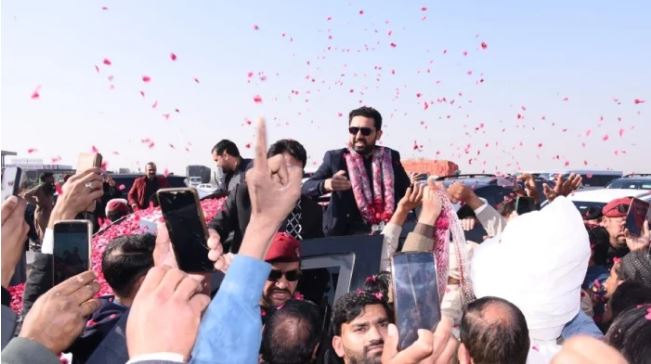
LAHORE, DEC 26: Khyber Pakhtunkhwa (KP) Chief Minister Sohail Afridi arrived in Lahore on Friday for a three-day visit, during which he is expected to hold a series of political meetings.

The KP chief minister, accompanied by a delegation, entered the city after crossing the Ravi Toll Plaza, marking his formal entry into the provincial capital.

He is scheduled to visit the Punjab Assembly and meet the party’s parliamentary members in the province.

Meanwhile, sources said that the Punjab Assembly secretariat has approved CM Afridi and his delegation’s entry into the provincial legislature, with the complete list of the delegation shared with assembly security.

According to sources, Afridi will be accompanied by provincial ministers, cabinet members, and parliamentarians during his visit to the Punjab Assembly.

The KP chief minister is also scheduled to meet opposition members inside the Punjab Assembly and address them during the visit.

CM Afridi is also expected to address lawyers at the Lahore High Court Bar on Saturday and visit various locations, including Liberty Chowk.

PTI sources said that CM Afridi may call on senior PTI leaders, including Chaudhry Pervez Elahi, Mian Mahmoodur Rashid, Hammad Azhar and Ejaz Chaudhry, and meet senior journalists and anchorpersons during his visit.

He is also expected to visit incarcerated PTI leaders in Kot Lakhpat jail.

In a statement, Punjab Assembly Deputy Speaker Zaheer Iqbal Channer said that the KP chief minister would be welcomed on his visit to the Punjab Assembly if he decides to do so.

The visit comes as the Pakistan Muslim League-Nawaz (PML-N) federal government and the opposition alliance have signalled readiness for talks to calm down the political environment.

The possibility of renewed negotiations between the government and the opposition arose on Wednesday as Prime Minister Shehbaz Sharif extended an offer for talks on the floor of the National Assembly.

In an address to his cabinet, the premier said that the PTI founder and his associates were also discussing the possibility of talks.

Later, leaders of the Tehreek-e-Tahafuz-e-Ayin-e-Pakistan (TTAP), a multi-party opposition alliance, said that they were ready to hold talks on a range of national issues.

The announcement was made after a meeting of the TTAP under the chairmanship of Mahmood Khan Achakzai.

PTI leader Asad Qaiser was in attendance alongside Allama Raja Nasir Abbas, BNP-M leader Sajid Tareen, and Khokhar.

Pakistan demarches UK over threats to Field Marshal at PTI protest in Bradford

Pakistan demarches UK over threats to Field Marshal at PTI protest in Bradford

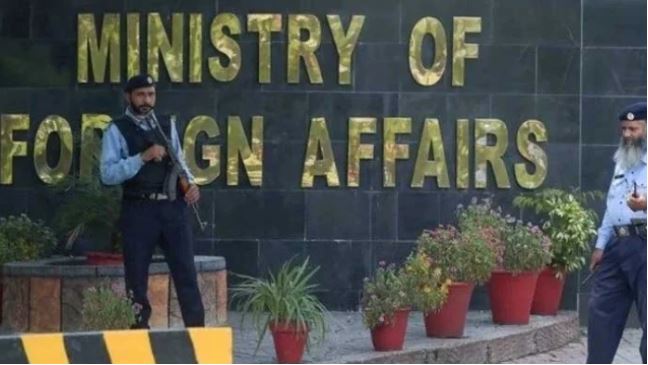
ISLAMABAD, DEC 26: The Foreign Office said on Friday it had issued a demarche to the United Kingdom’s envoy in Islamabad over threats made against Chief of Defence Forces (CDF) Field Marshal Asim Munir during a Pakistan Tehreek-e-Insaf (PTI) protest outside the Pakistani consulate in Bradford.

FO spokesperson Tahir Hussain Andrabi, confirming Geo News’ report, said UK Acting Head of Mission Matt Cannell was handed the demarche — a protest registered through diplomatic channels — over the former ruling party’s event abroad.

In a video uploaded by the “UKPTIOFFICIAL” account, a woman speaker — during the event held earlier this week — can be heard making a car bomb violence threat against Field Marshal Munir, similar to the plane blast that took the life of General Zia ul Haq nearly three decades ago.

According to sources, the political party’s official account was used to mobilise protesters in the United Kingdom. “During the protest, demonstrators used highly provocative and objectionable language against the CDF.”

They added that death threats were also issued against the Field Marshal, with protesters allegedly saying he would be killed in a car bomb attack.

The sources said the Pakistani government had taken serious notice of the threats issued from British soil and stressed that the UK should not allow its territory to be used to destabilise Pakistan.

Pakistan hopes, the sources said, that the British authorities will take strict action against such miscreants and hold them accountable under the law.

According to sources, the United Kingdom’s Deputy Head of Mission, Cannell, was summoned to the Ministry of Foreign Affairs at around 2pm as British High Commissioner Jane Marriott was not present in the country.

Hours before the demarche, the Pakistan government handed over the video and its transcript to the UK authorities — in Islamabad and London — expressing “grave concern regarding a serious and unprecedented misuse of British territory for activities that amount to incitement to terrorism, violence, and internal destabilisation of a sovereign state”.

The letter pointed out that the official social media account of PTI UK has circulated video material in which individuals, while physically present in the United Kingdom, are openly calling for the assassination of Field Marshal Munir.

“This content is neither rhetorical nor political. It constitutes explicit incitement to murder and the glorification of violence against the senior military leadership of a UN Member State.”

Equally alarming is that this messaging is deliberately amplified to audiences inside Pakistan, with the clear intent of provoking unrest, street violence, and confrontation with state institutions, the letter mentioned.

It added that PTI-linked platforms operating from the UK have repeatedly issued calls encouraging disorder, agitation, and violent mobilisation within Pakistan — effectively seeking to instigate internal violence from abroad while remaining beyond domestic accountability.

The letter states that the actions violated multiple international laws and that Pakistan has, over the years, raised concerns regarding the repeated use of UK territory by individuals and groups engaged in militancy, separatism, and violent agitation against Pakistan.

“While such matters have strained bilateral confidence in the past, the present incident represents a qualitative escalation: the open call for assassination combined with sustained incitement to violence and unrest inside Pakistan.”

“Freedom of expression does not include the freedom to incite murder or civil violence. Political activism does not extend to conspiracy or encouragement of bloodshed. Political asylum does not confer immunity to promote terrorism or destabilisation abroad.”

Pakistan rolls out red carpet for UAE President Mohamed bin Zayed Al Nahyan

Pakistan rolls out red carpet for UAE President Mohamed bin Zayed Al Nahyan

RAWALPINDI, DEC 26: United Arab Emirates (UAE) President and Ruler of Abu Dhabi Sheikh Mohamed bin Zayed Al Nahyan, accompanied by a high-level delegation, arrived in Islamabad on Friday on an official visit to Pakistan at the invitation of Prime Minister Shehbaz Sharif.

The UAE president was received by Prime Minister Shehbaz Sharif, Chief of Defence Forces Field Marshal Asim Munir along with a number of ministers and senior officials upon his arrival at Nur Khan airbase.

As the president’s aircraft entered Pakistani airspace, it was escorted by a formation of Pakistan Air Force (PAF) jets in a gesture of welcome and respect.

The national anthems of both countries were played, a 21-gun salute was fired, and an honour guard lined up to salute the UAE president.

Military and traditional bands delivered ceremonial performances, while groups of children waving the flags of both nations lined the route.

The UAE president was also presented with a guard of honour by a smartly turned-out contingent of Pakistan Armed Forces.

Children dressed in traditional attire welcomed President Al Nahyan, holding the national flags of Pakistan and the UAE, adding colour to the reception ceremony.

The UAE president is accompanied by a high-level delegation comprising his advisers, Sheikh Sultan bin Hamdan Al Nahyan, Sheikh Mohammed bin Hamad bin Tahnoun Al Nahyan, and UAE Ambassador to Pakistan Salem Mohammed Al Zaabi.

The UAE delegation also includes several federal ministers and senior officials.

According to the Foreign Office, this is Al Nahyan’s first official visit to Pakistan as the UAE president. He had earlier visited Pakistan on a private trip in January this year.

The FO said that during the visit, the UAE president will hold a meeting with PM Shehbaz, where the two leaders will review the entire spectrum of bilateral relations and exchange views on regional and international issues of mutual interest.

The visit, the FO added, will provide an important opportunity to further strengthen the longstanding brotherly relations between Pakistan and the United Arab Emirates.

Meanwhile, a public holiday has been declared in Islamabad in view of the President Al Nahyan’s visit to Pakistan.

According to a notification issued by the Islamabad High Court (IHC) registrar, the Islamabad High Court and Islamabad district courts will remain closed on December 26. The Senate Secretariat and the National Assembly Secretariat will also remain closed today.

The registrar of the Federal Constitutional Court has likewise announced a public holiday, canceling today’s cause list.

However, under a Cabinet Division notification, banks, essential services offices, including those of Capital Development Authority (CDA), police, IESCO, and Sui Northern Gas Pipelines Limited, will remain operational.

Stay Connected

64FansLike
60FollowersFollow

Latest Reviews

Exchange Rates

USD - United States Dollar
EUR
1.14
GBP
1.34
AUD
0.70
CAD
0.71