Home Blog Page 326

Chinese Communist Party expels top generals

Chinese Communist Party expels top generals

News Desk

BEIJING: The Chinese Communist Party has expelled nine top generals in one of its largest public crackdowns on the military in decades.

Nine men were suspected of serious financial crimes, a statement released by China’s defence ministry said. Most of them were three-star generals and part of the party’s decision-making Central Committee. They have also been expelled from the military.

While the statement cast the expulsion as part of an anti-corruption drive, analysts say it could also be seen as a political purge. It comes on the eve of the party’s plenum where the Central Committee will discuss the country’s economic development plan and vote in new members.

The nine officials are:

He Weidong – Vice-chairman of the Central Military Commission (CMC)

Miao Hua – director of the CMC’s political work department

He Hongjun – executive deputy director of the CMC’s political work department

Wang Xiubin – executive deputy director of the CMC’s joint operations command centre

Lin Xiangyang – Eastern Theatre commander

Qin Shutong – the Army’s political commissar

Yuan Huazhi – the Navy’s political commissar

Wang Houbin – Rocket Forces commander

Wang Chunning – Armed Police Force commander

Faiz Hameed files appeal against sentence

Faiz Hameed files appeal against sentence

Monitoring Desk

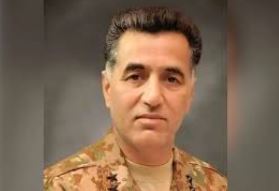
ISLAMABAD: Former chief of Inter-Services Intelligence (ISI) Faiz Hameed‘s lawyer confirmed on Monday that an appeal had been filed against the ex-spymaster’s sentencing by a military court.

“Yes, we have appealed his sentencing,” Hameed’s lawyer, Mian Ali Ashfaq, but did not share any details about the appeal.

Hameed was sentenced to 14 years rigorous imprisonment by a military court on December 11 after being convicted on four counts related to violating secrecy laws, engaging in political activities, misuse of authority and causing harm to others.

He had a 40-day window following his conviction and sentencing to appeal against the Field General Court Martial (FGCM) decision, according to Section 133B of the Pakistan Army Act.

The appeal is first reviewed by a Court of Appeals, led by a major general or higher, as designated by the army chief. The chief then holds the authority to confirm, revise, or overturn the sentence.

Historically, the military’s appellate process has stretched over several years.

Announcing Hameed’s conviction and sentencing on December 11, the military’s media wing had said in a statement that the process of FGCM was initiated against him on August 12, 2024 under provisions of the Pakistan Army Act, spanning over 15 months.

“After lengthy and laborious legal proceedings, the accused has been found guilty on all charges and sentenced to 14 years rigorous imprisonment,” Inter-Services Public Relations (ISPR) had said.

ISPR had further stated that the “involvement of convict (Hameed) in fomenting vested political agitation and instability in cohorts with political elements and in certain other matters is separately being dealt with”.

Hameed was referred to in the statement as “Mr Faiz Hameed, formerly a lieutenant general”, creating the impression he may have been stripped of his rank, although ISPR did not explicitly confirm this.

A source familiar with internal procedures told Dawn at the time any such withdrawal “is done through an administrative order” as per established rules, but declined to confirm whether it had occurred in this case.

A Border Held by Truce, Not Trust

A Border Held by Truce, Not Trust

Dr. Muhammad Akram Zaheer

The dust, it is said, never truly settles along the Durand Line. This 2,640-kilometre frontier, snaking through mountainous terrain dividing Pakistan and Afghanistan, is more than a geographical marker. It is a historical wound, a political fault line, and in recent years, an increasingly active battlefield. Despite fleeting ceasefires and third-party mediation, a brittle calm prevails, one perpetually undercut by deep-seated grievances and the tremors of larger geopolitical realignments. Local actors alone do not dictate the stability of this border; it is increasingly hostage to the retreating footsteps of distant powers and the hesitant diplomacy of those seeking to fill the void. The root of the contention is a colonial legacy. The Durand Line was established in 1893 as an agreement between Sir Mortimer Durand of British India and Amir Abdur Rahman of Afghanistan. For Kabul, the line was always a temporary demarcation of spheres of influence, not a permanent international border. Its ratification by successive Afghan governments remains a point of fierce national dispute. For Pakistan, inheritor of the British colonial administrative boundary, it is the legitimate international frontier, central to its sovereignty and national security paradigm, particularly regarding militancy.

This historical dissonance translates into direct, often deadly, confrontation. Clashes between Pakistani and Afghan Taliban border forces have become tragically routine. Torkham, a vital commercial crossing, frequently shuts down under a hail of mortar and machine-gun fire. Each incident follows a familiar pattern: a dispute over new border post construction, or the movement of militants, escalates into sustained exchanges. Ceasefires are brokered, only to fracture weeks or months later. These are not mere skirmishes; they represent a fundamental failure of shared understanding. Pakistan seeks to formalize and tighten control over a porous border it views as a conduit for security threats. Afghanistan’s de facto authorities, while also combating their own internal challenges, reject any move that lends legitimacy to a line they contest, seeing it as an affront to national identity and a potential precedent for the division of ethnic Pashtun populations.

Into this volatile mix steps the broader trend of strategic recalibration by external powers, most notably the United States. The long-predicted American pivot away from direct, large-scale military engagement in the broader region is no longer theoretical. The withdrawal from Afghanistan was its most dramatic manifestation, but the trend speaks to a wider re-evaluation of strategic priorities. This repositioning creates not a simple vacuum, but a complex and unsettling fluidity. The predictable, if fraught, order of the past two decades is gone. In its place is an arena where regional actors feel both the burden of greater responsibility and the temptation of increased agency. This shift profoundly affects the Durand Line equation. For Pakistan, the perceived reduction in American reliance on its logistical support alters a key influence point. Simultaneously, it amplifies Islamabad’s primary security anxiety: that an unstable Afghanistan will remain a sanctuary for groups hostile to the Pakistani state. Its border actions are, in part, driven by this acute sense of being alone with a perennial problem. For Afghanistan’s rulers, the departure of foreign forces is a core ideological victory, strengthening their sovereign claim. It emboldens their stance on issues like the border, which they frame as a liberation from externally imposed structures. Furthermore, the changing landscape encourages other regional powers—Iran, India, China, and Russia—to reassess their engagements, creating new, and sometimes competing, networks of influence that both Pakistan and Afghanistan may seek to exploit, further complicating bilateral resolution.

It is within this context of local intransigence and global shift that mediation efforts assume critical, yet fragile, importance. Recently, Qatar has emerged as a pivotal intermediary, hosting talks that have yielded temporary halts in fighting. Its role is telling of the new diplomatic geometry. Possessing channels to all sides, unburdened by colonial baggage, and wielding significant economic and diplomatic capital, Doha presents itself as an honest broker.

However, the fragility of this mediation was laid bare in the nuanced language of its own diplomacy. Following a round of talks, Qatari statements notably omitted any explicit reference to the “border,” instead calling for dialogue concerning “security issues” along the “Durand Line.” This was not an oversight but a calculated diplomatic sidestep. To mention the “border” would be to accept Pakistan’s position; to avoid the term entirely would alienate Islamabad. This delicate phrasing reveals the core impediment: mediators can only paper over the fundamental disagreement for so long. They can facilitate a ceasefire, but they cannot, from the outside, forge the political consensus required for a lasting settlement. The mediation is precarious because it must navigate the symptoms of violence without being permitted to address the disease of the border’s disputed status.

Turkey has similarly offered its good offices, but faces its own constraints, balancing its NATO commitments with its regional ambitions. The limitations of these external efforts underscore a harsh truth: no amount of shuttle diplomacy can substitute for direct, politically courageous engagement between Islamabad and Kabul. Mediators can provide the room, but the leaders must fill it with substance. The broader narrative, therefore, is one of dangerous interconnection. The clashes at Torkham or Chaman are not isolated events. They are local expressions of a world in strategic flux. The repositioning of Western powers alters the calculus of regional states, making old disputes more volatile and entwining them with new great-power competitions. A border skirmish can quickly draw in questions of Chinese investment security in Pakistan, Iranian concerns about Sunni militancy, or Russian outreach to the Afghan regime. The Durand Line becomes a microcosm of a multipolar, less-ordered region.

What, then, is the path forward? Lasting stability demands moving beyond the cyclical pattern of fire and talk. First, it requires diplomatic clarity couched in patience. Both sides must agree to formally and explicitly separate the issue of border security from the ultimate political status of the Durand Line. This is a painful but necessary compromise. Joint mechanisms to prevent cross-border militancy and manage crossings are urgently needed, even if the agreement establishing them is tactically silent on the long-term legal question. This is a practical, if uneasy, coexistence.

Second, regional cooperation must evolve from rhetoric to structured engagement. Neighboring states, each with a stake in stability, should form a contact group not to impose a solution, but to collectively incentivize dialogue and manage fallout. This includes encouraging economic connectivity; trade has a way of building its own logic for peaceful borders. The most critically, it demands internal political resilience. In both nations, the Durand Line issue is deeply emotive and tied to nationalist narratives. Leaders will need to build domestic understanding that a managed, peaceful frontier is not a surrender of principle, but a precondition for addressing the profound economic and security challenges their people face. The space for such diplomacy is narrow, but it is the only space where a lasting solution can grow.

The Durand Line will not be redrawn. Nor is its contested status likely to be resolved soon. The objective, then, must be to drain it of violence. This can only happen if both Pakistan and Afghanistan recognize that their standoff is now amplified by the wider tremors of a changing world. In an era of great-power retrenchment, the cost of perpetual conflict on the frontier grows higher, not lower. The quieting of this unquiet border begins with the acknowledgment that its tensions are no longer just bilateral; they are a bellwether for regional stability in an age of transition. The time for managing crises is past; the precarious work of managing the peace must begin.

The 18th Korean Ambassador’s National Junior & Cadet Kyorugi & Poomsae Taekwondo Championships Successfully Held in Rawalpindi

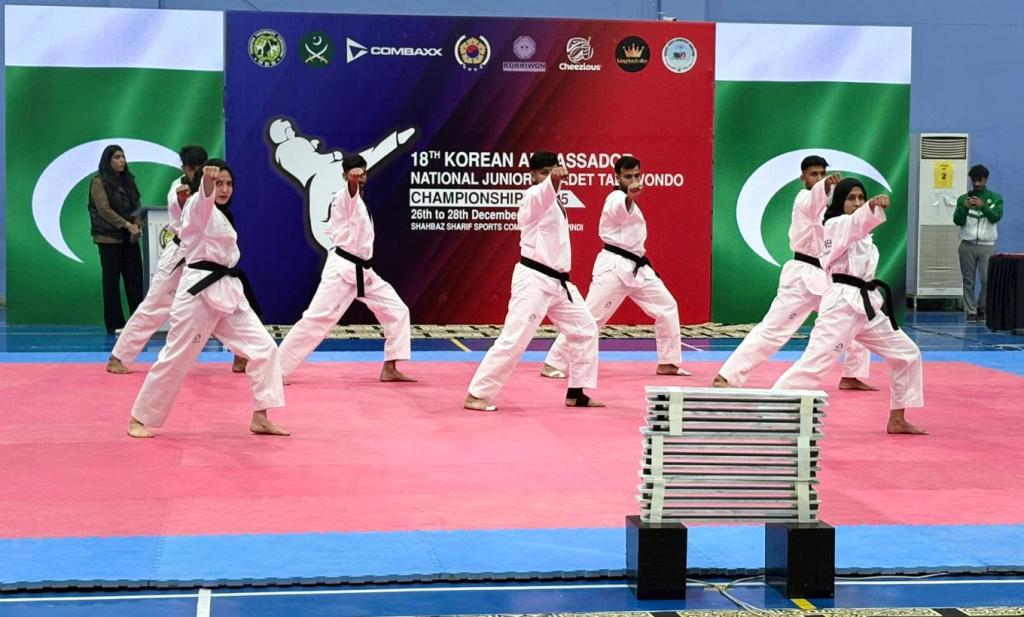
ISLAMABAD, DEC 29 /DNA/: The 18th Korean Ambassador’s National Junior & Cadet Kyorugi & Poomsae Taekwondo Championships (Male & Female) were successfully held from December 26 to 28 at the Shahbaz Sharif Sports Complex, Rawalpindi. The prestigious national event was co-hosted by the Pakistan Taekwondo Federation (PTF) and the Embassy of the Republic of Korea.

The championships were supported by Kukkiwon (World Taekwondo Headquarters), the Pakistan Army Sports Directorate, and the District Sports Department Rawalpindi, and were generously sponsored by Kingdom Valley and Cheezious.

A total of 530 taekwondo athletes from across the country registered to compete in either Kyorugi (sparring) or Poomsae (forms) categories. The competition featured two age divisions:

Cadet Division: Athletes born between January 1, 2012 and December 31, 2015

Junior Division: Athletes born between January 1, 2008 and December 31, 2011

Kyorugi is the Olympic-style sparring event of Taekwondo, where athletes compete head-to-head using controlled techniques under World Taekwondo rules. Poomsae, on the other hand, is a performance-based discipline that emphasizes precision, balance, power, and technique through a series of predetermined movements that represent defensive and offensive actions.

Kyorugi competitions were conducted using a single-elimination system, while Poomsae events followed a cut-off system. All Kyorugi matches for both Cadet and Junior divisions were held according to Olympic weight categories.

In Poomsae, competitions were organized into Individual and Mixed Pair categories. The required Poomsae were:

Individual Cadet: Taegeuk 1–8

Individual Junior & Mixed Pair Junior: Taegeuk 4–8, Keumgang, and Taebaek

All participating athletes held valid Kukkiwon Dan certificates, ensuring international technical standards. Teams represented major national institutions and regions, including Pakistan Army, Pakistan Air Force, Pakistan Railways, Pakistan Police, Higher Education Commission, Islamabad Capital Territory, Punjab, Sindh, Khyber Pakhtunkhwa, Balochistan, Gilgit-Baltistan, and Azad Jammu & Kashmir.

The Opening Ceremony was held 6:00 PM at the Shahbaz Sharif Sports Complex, Rawalpindi.

The ceremony was graced by distinguished guests, including:

H.E. Mr. Park Jaelark, chargé d’affaires of the Republic of Korea

Mrs. Saba Shamim, President, Pakistan Taekwondo Federation (Women Wing)

Lt. Col. Zeeshan Aslam, General Staff Officer, Pakistan Army Sports Directorate

Assistant Commissioner, Commissioner Rawalpindi Office

During the ceremony, H.E. Mr. Park Jaelark distributed Taekwondo equipment provided by Kukkiwon, the official World Taekwondo Headquarters, to representative athletes from each participating team. The Pakistan National Taekwondo Team also delivered an impressive demonstration performance, showcasing high-level skills and discipline.

In his address, H.E. Mr. Park Jaelark highlighted that Taekwondo is the national sport of the Republic of Korea and a discipline that teaches self-control, respect, discipline, and consideration for others. He emphasized that learning these values through Taekwondo would be a valuable asset for young athletes, helping them develop both a healthy mind and a strong body. He further expressed his appreciation to the Pakistan Taekwondo Federation, instructors, and officials for their dedication to promoting Taekwondo in Pakistan, and conveyed his hope for continued cooperation to further strengthen the friendship between Korea and Pakistan.

Mrs. Saba Shamim, President of the PTF Women Wing, reaffirmed that the Pakistan Taekwondo Federation remains firmly committed to providing a strong and inclusive platform for young athletes to showcase their talent and compete at the highest level. She stated that participation in this championship would be an invaluable experience for all athletes, fostering sportsmanship and the true spirit of Taekwondo. She also extended her sincere appreciation to the Embassy of the Republic of Korea for its continued and unwavering support in the development of Taekwondo in Pakistan, both through financial assistance and the generous provision of equipment, noting that this partnership has played a vital role in strengthening the sport at both grassroots and national levels.

AIOU announces Spring 2026 admissions schedule

AIOU announces Spring 2026 admissions schedule
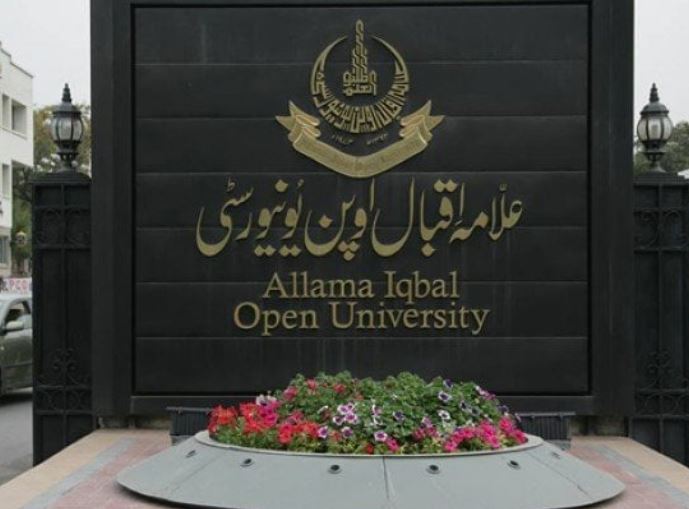
ISLAMABAD, Dec 28 (APP/DNA):Allama Iqbal Open University (AIOU) has announced that admissions for the Spring Semester 2026, covering all academic programmes from Matriculation to PhD level, will open simultaneously across the country from January 1, 2026.

This facility will be available in all four provinces, as well as Azad Jammu & Kashmir, Gilgit-Baltistan and the northern areas, said a press release issued here Sunday.

Various academic programs at different levels are also being offered for Pakistanis residing abroad and for international students.

According to the university administration, admission forms and prospectuses for all programs will be available online from January 1 on the official university website, enabling students to apply easily from home.

To ensure effective guidance and support for students, the Vice Chancellor Prof. Dr Nasir Mahmood has issued special instructions to the heads of the university’s 53 regional offices across the country. As per these instructions, Student Facilitation Centers will be established at all regional campuses prior to the start of admissions where students will receive complete guidance.

In addition, these centers will provide free computer and internet facilities to students so that they do not face any difficulties while applying online. The university administration stated that this initiative aims to further ease access to education and provide students with every possible facility.

Sindh Irrigation Minister inspects Sukkur Barrage renovation work

Sindh Irrigation Minister inspects Sukkur Barrage renovation work

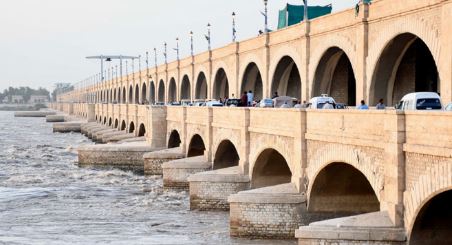
SUKKUR, Dec 28 (APP/DNA): Sindh Irrigation Minister Jam Khan Shoro, accompanied by Secretary Irrigation Zarif Khehro on Sunday inspected the ongoing gate replacement work at Sukkur Barrage. He was briefed by officials on the progress of the project.

Speaking to media, Shoro said 26 gates have been replaced under the Sindh Barrage Improvement Project, with 27 more to be replaced this year. He said it’s the first time in the barrage’s 100 year history that the entire structure is being thoroughly checked and repaired.

The project involves replacing all 55 gates of Sukkur Barrage and 55 gates of connected canals at a cost of Rs17 billion. Shoro said the middle 30 gates face maximum water pressure, with 70% of water flowing through them.

The barrage’s floor is also being inspected and repaired. A cofferdam has been built between gates 15-22, and silt removal work is underway with Rs4 billion allocated.

The Minister said desilting will be done Jan 6-20, and the British era barrage’s rock pocket gates were closed for the same reason. A century-old wall was discovered upstream, built to reduce water pressure.

He said climate change is real, affecting water flow, and Sindh govt is taking steps to address it. Sukkur Barrage irrigates 80% of Sindh’s agriculture, and the renovation will add at least 30 years to its life.

Project Director Pritam Das, Chief Engineer Akramullah Qureshi and other officials accompanied the minister.

China’s national legislature to convene annual session on March 5

China's national legislature to convene annual session on March 5

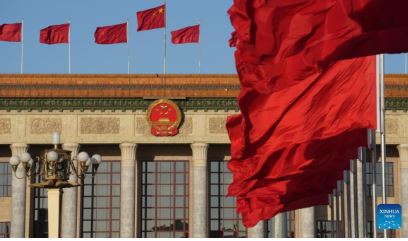
BEIJING, DEC 28: The 14th National People’s Congress (NPC) will open its fourth annual session in Beijing on March 5, 2026, according to a decision made by the NPC Standing Committee.

The decision was adopted at the end of an NPC Standing Committee session held from Monday to Saturday.

Agha to lead as Pakistan announce squad for Sri Lanka T20I series

Agha to lead as Pakistan announce squad for Sri Lanka T20I series

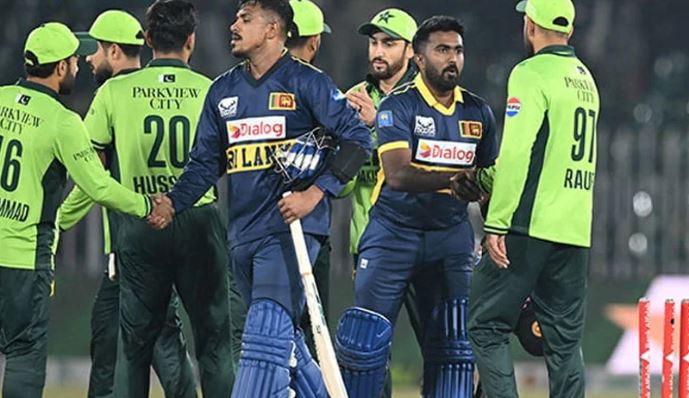
LAHORE: Pakistan on Sunday announced a 15-member squad for the upcoming T20 International series against Sri Lanka, with the team set to tour in early January 2026.

The three-match series will serve as an important platform ahead of the next T20I World Cup.

The Pakistan Cricket Board (PCB) has unveiled a 15-member squad for the T20 International series against Sri Lanka. The team will depart for Sri Lanka in phases on January 4 and 5, 2026.

Salman Ali Agha has been named captain for the tour, continuing his leadership role in the shortest format.

New faces and key returns

One of the major highlights of the squad is the inclusion of Khawaja Muhammad Nafee, who has earned his maiden call-up to Pakistan’s T20 side as a wicketkeeper-batsman.

Meanwhile, Shadab Khan has returned to the T20 squad following recovery from shoulder surgery, strengthening Pakistan’s all-round options.

Full Pakistan T20I squad

The 15-member squad for the Sri Lanka series includes:

Salman Ali Agha (Captain)

Abdul Samad

Abrar Ahmed

Faheem Ashraf

Fakhar Zaman

Khawaja Muhammad Nafee (WK)

Mohammad Nawaz

Mohammad Salman Mirza

Mohammad Wasim Jr

Naseem Shah

Sahibzada Farhan (WK)

Saim Ayub

Shadab Khan

Usman Khan (WK)

Usman Tariq

Match schedule and venue

Pakistan and Sri Lanka will contest three T20 International matches, all scheduled to be played in Dambulla.

1st T20I: January 7

2nd T20I: January 9

3rd T20I: January 11

Clouds-sun hide & seek at Ayubia as horse riders, cash in on snowfall buzz at Galiyat

Clouds-sun hide & seek at Ayubia as horse riders, cash in on snowfall buzz at Galiyat
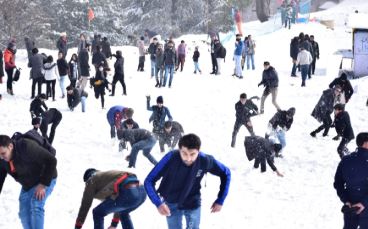
AYUBIA, Dec 28 (APP/DNA): A fresh snowfall forecast by the Met Office has transformed the forested hills of Nathiagali and Ayubia into a bustling winter playground, drawing tourists in droves and opening new earning opportunities for local horse riders and photographers.

As clouds roll low over the Hamaliya mountain range and sunlight breaks through snow-laden pines, the Galiyat region has slipped into a postcard perfect scene.

Visitors mostly arrived from plain districts of Khyber Pakhtunkhwa and Punjab have poured into Ayubia over the weekend, eager to enjoy snow games, savor trout fish, and capture fleeting winter moments amid nature’s grandeur.

For local horse riders, the winter season has brought both excitement and income especially influx of tourists during snowfall. Along colonial-era trails linking Ayubia to Nathiagali, horses clip-clop through powdery paths, offering tourists a slow, scenic journey through history and snow.

“We have never seen so many visitors at this time of year,” said Faraz Khan, a horse rider and tour guide in Ayubia. “The snowfall gives these rides in last week of December a magical feel. Tourists want to experience the forest, the silence, and the snow besides trout at Galiyat—all at once.”

Situated about five kilometers east of Nathiagali at an altitude of 8,000 feet, Ayubia witnessed intense tourist activity over the weekend. Hotels.from simple charpaye setups to high.end resorts.were packed, making accommodation scarce across Ayubia, Changagali, Khanspoor, Thandyani, Harnoi and Nathiagali.

Adventure seekers thronged the three-kilometer Ayubia chairlift, gliding over dense pine forests before landing near the picturesque Mukeshpuri area.

Others opted for the four kilometers horse ride along the historic Ayubia–Nathiagali trail, adding to the festive winter mood.

The snowfall has also proven to be a windfall for local photographers and camerman. With white valleys providing a dramatic contrast against dark pine forests, many have turned their craft into a seasonal business offering photo sessions for families, couples and groups keen to share snowy memories on social media.

“This winter has brought joy for us especially snowfall of December,” said Sajid Ali, a local photographer. “People want professional photos with horses and snowy backgrounds. We have been busy all week.”

Beyond leisure, Ayubia National Park continues to charm nature lovers and adventure hikers. The park hosts 203 bird species, including golden eagles, falcons, koklas and kaleej pheasants, along with 104 plant species such as the national tree deodar, and 35 wildlife species, including foxes and leopards.

The melodic calls of birds echo through valleys like Khanspoor, Dongagali, Changagali and Thandyani, enriching the visitor experience.

Popular hiking routes Dunga Gali–Ayubia, Miranjani, and Mukeshpuri Top remain a magnet for trekkers.

From heights of nearly 9,500 feet, adventurers are rewarded with sweeping views of Azad Kashmir, the Galiyat belt, Harnoi and the Jhelum River after passing through thick chirpine forests.

Meanwhile, the provincial government is also looking to strengthen tourism infrastructure in Upper KP keeping tourists rush in winter.

The spokesman for the Cultural and Tourism Authority, said the KP government has launched a host tourism project, offering interest-free loans of up to Rs3 million to residents of tourist areas for building or repairing rooms for visitor accommodation.

He added that plans are underway for the world’s longest and highest 14-kilometer cable car, linking Kumrat Valley in Upper Dir with Madaklasht Valley in Lower Chitral which is an ambitious project expected to attract millions of tourists upon completion.

For now, as winter tightens its grip on the Galiyat hills, Ayubia and Nathiagali are glowing with renewed energy. Amid falling snow and bustling trails, local horse riders and photographers are not just witnessing the season’s beauty but earns substantial revenue besides making visit of tourists memorable.

The Enemy Within — and the American Habit of Fixing It

Qamar Bashir

Qamar Bashir

War Secretary Pete Hegseth’s recent address to defense-industry leaders began not with warnings about China or Russia, but with a stark admission that the gravest threat to American military readiness comes from inside the Pentagon itself — not the people, he stressed, but the entrenched acquisition bureaucracy that governs them. He described this culture as one of centralized planning and rigid five-year cycles that choke innovation, punish initiative, and turn paperwork into a substitute for performance. For a moment it sounded as though he were describing the old Soviet system or the Chinese Communist Party — until he delivered the line that made the room fall silent: the adversary, he said, is the Pentagon’s process.

Hegseth’s critique echoed a warning first delivered a generation ago by Donald Rumsfeld, who argued that the Pentagon risked becoming so slow, so complex, and so resistant to change that it could no longer respond to the real world. Two and a half decades later, Hegseth believes the problem has not evaporated — it has deepened. Deadlines are missed. Costs escalate. Layers of oversight multiply. And somewhere between offices, committees, forms and reviews, wartime urgency is lost. Worse still, the defense industry adapts to this environment, finding profit in delay rather than delivery, and learning that risk-taking is punished while caution is rewarded.

Yet the real story here is not simply about dysfunction. It is about something profoundly American — the willingness to confront problems openly rather than hide them. Hegseth’s speech is not merely a complaint about slow systems. It is the latest expression of a structural truth about the United States: this country remains powerful not because it is flawless, but because it possesses built-in mechanisms of reform, criticism and self-correction. When processes fail, leaders say so. When systems slow, they are publicly challenged. When institutions fall behind reality, the political and administrative machinery eventually pushes them forward again.

That culture of internal inspection is loud, messy and often uncomfortable. Democrats reform institutions in one way, Republicans in another. They criticize each other, undo each other’s work, and reshape systems again. But the result, over time, is not paralysis. It is continuous institutional evolution. That is why the U.S. military still fields the most capable force in the world. That is why the defense-industrial base, despite its flaws, still produces unmatched innovation. And that is why American universities, laboratories, companies and alliances continue to set global standards.

Hegseth followed his words with action, signing directives to streamline acquisition, break bottlenecks inside each service branch, expand surge manufacturing capacity, and unify arms-transfer authorities so that U.S. weapons reach allies faster when approved. The message was clear: process must once again serve readiness, not the other way around. Capability must matter more than compliance. And the system must be restored to wartime speed, not remain trapped in peacetime ritual.

Your central observation sits at the heart of this development. The United States has something many other nations lack — the courage and institutional space to admit fault and correct course. Authoritarian states bury failure, silence critics and falsify results. America argues, audits, investigates, legislates and reforms. This is not weakness. It is the only strength that survives history. It is the reason the country remains at the top of science, technology, defense, education, finance, diplomacy and culture, despite the demands and contradictions of global leadership.

Yes, American weapons feature in conflicts around the world — and that reality sparks intense ethical, strategic and humanitarian debate. But unlike systems that suppress dissent, the United States allows these debates to unfold in Congress, the press, universities, think tanks and courts. Excesses are scrutinized, decisions questioned, policy direction contested. It is an open-loop feedback system — sometimes slow, sometimes painful, but always alive.

In that sense, Hegseth’s speech is not an admission of decline. It is a reminder that a nation remains strong only as long as it remains honest with itself. When the machine jams, it must be repaired. When culture hardens into ritual, it must be shaken. When systems fall behind events, they must be dragged forward — not once, but repeatedly, across generations. The United States has done this again and again. That is why it still leads.

If America’s greatest adversary sometimes lies within its own bureaucracy, then its greatest strength lies there too — in the constant habit of self-examination, internal checks and balances, and relentless renewal. Other powers deny failure. America fixes it. And as long as that instinct endures, the nation will remain — loudly, imperfectly, but decisively — at the top of the world.

Qamar Bashir

Press Secretary to the President (Rtd)

Former Press Minister, Embassy of Pakistan to France

Former Press Attaché to Malaysia

Former MD, SRBC | Macomb, Michigan, USA

Stay Connected

64FansLike
60FollowersFollow

Latest Reviews

Exchange Rates

USD - United States Dollar
EUR
1.14
GBP
1.34
AUD
0.70
CAD
0.71