Home Blog Page 323

Deputy Prime Minister / Foreign Minister to visit China

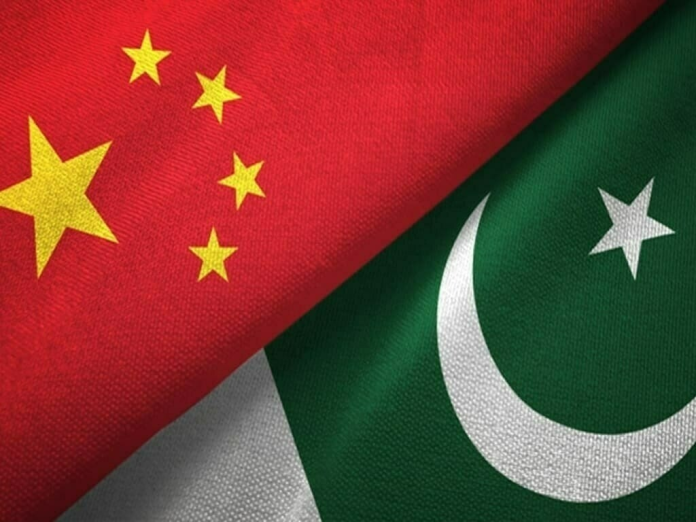
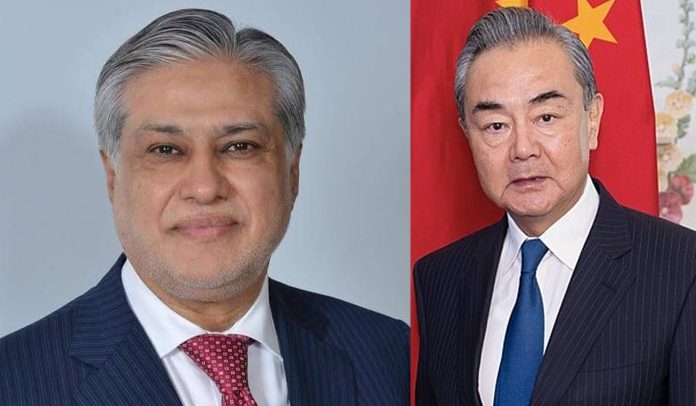
ISLAMABAD, DEC 31 /DNA/: At the invitation of Mr. Wang Yi, Member of the Politburo of the Communist Party of China, Director of the Office of the Central Commission for Foreign Affairs, and Minister for Foreign Affairs of China, Deputy Prime Minister and Foreign Minister Senator Mohammad Ishaq Dar will undertake an official visit to China to co-chair the 7th Round of the Pakistan–China Foreign Ministers’ Strategic Dialogue, scheduled to be held in Beijing on 4 January 2026.

The Foreign Ministers’ Strategic Dialogue represents the highest consultative mechanism between Pakistan and China. It provides a structured platform for both sides to review the entire spectrum of bilateral cooperation, as well as regional and international developments of mutual interest.

During the Dialogue, the two Foreign Ministers will announce a series of initiatives and commemorative activities to mark the 75th anniversary of the establishment of diplomatic relations between Pakistan and China in 2026. These activities will highlight the enduring friendship and multifaceted cooperation between the two countries.

The visit forms an important part of the regular high-level exchanges between Pakistan and China and reflects their shared determination to broaden and deepen the All-Weather Strategic Cooperative Partnership. It will also reaffirm their mutual commitment to regional peace, stability, and sustainable development.

PPP not consulted on potential govt-PTI talks, says KP governor

PPP not consulted on potential govt-PTI talks, says KP governor

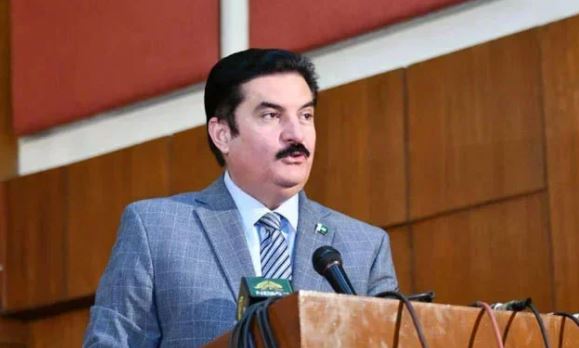
PESHAWAR, DEC 31: Khyber Pakhtunkhwa Governor Faisal Karim Kundi has said that the Pakistan Peoples Party (PPP) has not yet been consulted regarding any potential dialogue between the federal government and Pakistan Tehreek-e-Insaf (PTI).

Speaking to Geo News, Governor Kundi said that if such talks were underway, his party chief Bilawal Bhutto-Zardari would have issued a statement.

The governor made it clear that if talks take place in the future, the release of PTI’s founding chairman, Imran Khan, will not be on the agenda.

The remarks come amid the possibility of government-PTI talks, with Prime Minister Shehbaz Sharif open to dialogue, while PTI has neither fully accepted nor completely ruled out the discussions.

“PTI founder will serve his sentence and will not receive any NRO,” Kundi added.

The governor, however, expressed serious doubts about PTI’s credibility, saying that the party cannot be trusted.

“PTI cannot be trusted; it has sabotaged the dialogue process in the past as well,” he added. Referring to past events, the KP governor said that during the previous 16-month government, efforts were made to bring PTI to the dialogue table, but it resorted to “May 9 sort of incidents.”

He reiterated that political issues should be resolved through political dialogue.

Kundi said that PTI had “damaged Khyber Pakhtunkhwa for the sake of one individual,” urging the party to focus on governance in the province.

He said that on the one hand, PTI’s leadership talks about negotiations, but on the other hand, the party’s founder posts “provocative messages” about marching on Islamabad.

“Who actually holds decision-making authority within PTI? Even party members lack trust in each other.”

It is worth noting that dialogue talks are gaining momentum again, after Prime Minister Shehbaz Sharif stated that discussions with PTI will only be possible on “legitimate” demands, and any attempts at blackmail under the guise of dialogue will not be tolerated.

Addressing the federal cabinet meeting on December 23, the prime minister said that PTI founder and his associates were also discussing holding talks. He said that he had previously invited PTI leaders for dialogue and had also extended the invitation on the National Assembly floor.

“Discussions could only be held on legitimate demands. Blackmailing will not work under the guise of negotiations, said the prime minister.

Separately, PTI Chairman Barrister Gohar Ali Khan on December 27 responded to claims made by the Prime Minister’s Coordinator Ikhtiar Wali Khan and said that there has been no contact with PM Shehbaz — regarding dialogue — in the past 10 days, or even throughout the year.

Barrister Gohar said that the critical issue of the negotiation process should not be treated casually.

“There has been no contact with Prime Minister Shehbaz Sharif in the last 10 days or the entire year. Although I have always been in favour of dialogue, this authority belongs only to Mahmood Khan Achakzai and Allama Raja Nasir Abbas,” he added.

Bulgaria readies to adopt the euro, nearly 20 years after joining EU

Bulgaria readies to adopt the euro, nearly 20 years after joining EU

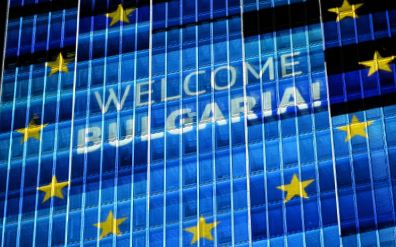
SOFIA, DEC 31: Bulgaria was preparing to switch to the euro on Wednesday night to become the 21st eurozone member, amid concerns the move could usher in higher prices and add to political instability rattling the Balkan country.

At midnight (2200 GMT Wednesday), Bulgaria will wave goodbye to both 2025 and its lev currency, which has been in use since the late 19th century.

While successive governments in the country of 6.4 million people have advocated joining the euro currency over hopes it will boost the economy of the EU’s poorest member, reinforce ties to the West and protect against Russia’s influence, some have been opposed to the switch.

Bulgaria, which joined the EU in 2007, faces unique challenges, including anti-corruption protests that recently swept a conservative-led government from office, leaving the country on the verge of its eighth election in five years. 

Outgoing Prime Minister Rossen Jeliazkov said on Tuesday that he nonetheless felt his cabinet had accomplished a milestone. 

“Bulgaria is ending the year with a gross domestic product of 113 billion euros (nearly $133 billion) and economic growth of more than three percent, which places us among the top five countries in the EU,” he said before a government meeting.

He added that inflation in the Black Sea country, which hovers around 3.6 percent, was “linked to increased purchasing power” and a less corrupt economy, and not in any way to the introduction of the euro.

                  – Cheers, fears and queues –

                  Some Bulgarians worry the introduction of the euro could lead to price increases.

                  Those fears were fuelled in part by a protest campaign that emerged this year to “keep the Bulgarian lev”, which tapped into a generally negative view of the single currency among much of the population.

                  According to the National Statistical Institute, food prices rose by five percent year-on-year in November, more than double the eurozone average.

                  “Unfortunately, prices no longer correspond to those in levs (…) 40 levs is not 20 but 30 euros for certain products,” pastry shop owner Turgut Ismail, 33, told AFP, saying that prices have already begun surging.

                  Some people, including business owners, have complained that it has been difficult to get their hands on euros, with shopkeepers saying they haven’t received the euro starter packages they ordered.

                  Banks have already warned of possible disruptions to card payments and ATM withdrawals on New Year’s Eve.

                  On Tuesday, people queued outside the Bulgarian National Bank and several currency exchange offices in the capital Sofia to obtain euros, an AFP journalist observed.

                  Elena Shemtova, 37, who owns a small gallery and jewellery shop in the city centre, said she is optimistic.

                  “We will experience difficulties at first, there will be problems with giving change, but within a month we will have gotten used to it,” she told AFP.

                  According to the latest Eurobarometer survey, 49 percent of Bulgarians are against the single currency.

                  As political instability has been rocking the country, any problems with euro adoption would be seized on by anti-EU politicians, said Boryana Dimitrova of the Alpha Research polling institute.

                  “There will be challenges, but we are counting on the tolerance and understanding of both citizens and businesses,” said Jeliazkov.

                  He stressed that introducing the euro will have “a positive long-term effect on the Bulgarian economy and on the environment in which the country is developing”.

                  The euro was first rolled out in 12 countries on January 1, 2002. Croatia was the last to join in January 2023.

                  Bulgaria’s accession will bring the number of Europeans using the euro to more than 350 million.

Xi, Putin exchange New Year greetings

Xi, Putin exchange New Year greetings

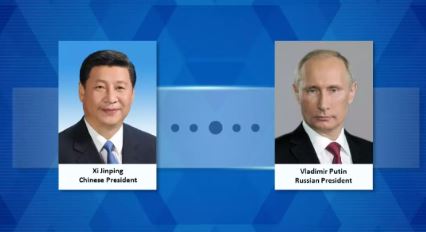
BEIJING, DEC 31 (DNA): Chinese President Xi Jinping on Wednesday exchanged New Year greetings with Russian President Vladimir Putin.

In his message, Xi extended his sincere congratulations and best wishes to Putin and the Russian people on behalf of the Chinese government and the Chinese people.

Noting that 2025 marks the 80th anniversary of the United Nations, Xi said China and Russia have solemnly commemorated the 80th anniversary of the victory in the Chinese People’s War of Resistance against Japanese Aggression, the Soviet Union’s Great Patriotic War and the World Anti-Fascist War, sending a powerful message that peace will prevail, justice will prevail, and the people will prevail.

Xi said the year 2025 also marks a concrete step in the China-Russia comprehensive strategic partnership of coordination for a new era, recalling that they met in Beijing and Moscow respectively this year, where they exchanged in-depth views on major issues of mutual concern.

He added that the reciprocal visa-free policies between the two countries have been implemented, construction of the energy corridor is progressing steadily, and cooperation in emerging sectors is flourishing.

China and Russia have also supported each other within the United Nations and other multilateral frameworks, contributing their insights and efforts to improve global governance, Xi said.

Noting that 2026 marks the 30th anniversary of the China-Russia strategic partnership of coordination and the 25th anniversary of the signing of the China-Russia Treaty of Good-Neighborliness and Friendly Cooperation, Xi said 2026-2027 will be designated as the China-Russia Years of Education.

The Chinese leader also expressed readiness to maintain close exchanges with Putin to jointly push for continuous new progress in bilateral ties in the new era. Putin conveyed heartfelt New Year greetings to Xi, wishing the Chinese people happiness and well-being.

Russia and China have actively expanded economic and trade cooperation, with major collaborative projects progressing steadily, Putin said, adding that the mutual visa exemption between the two countries has greatly facilitated personnel exchanges.

In the coming year, the two nations will jointly launch the Russia-China Years of Education, Putin said, expressing his readiness to continue maintaining close communication with Xi on bilateral relations and major international issues.

Also on Wednesday, Chinese Premier Li Qiang exchanged New Year greetings with Russian Prime Minister Mikhail Mishustin. Li said that under the strategic guidance of the two heads of state, the China-Russia comprehensive strategic partnership of coordination for a new era has further advanced and deepened, adding that China stands ready to work with Russia to fully implement the important consensus reached by the two heads of state and push for more results in practical cooperation.

Mishustin said that the two governments have created sound conditions for implementing promising cooperation projects, and he is convinced that the New Year will bring new opportunities for fully implementing the strategic plans of the two heads of state.

DPM&FM of Pakistan reiterates Pakistan’s adherence to one-China principle

ISLAMABAD, DEC 31 /DNA/: On December 29th, Ambassador Jiang Zaidong called on Deputy Prime Minister and Foreign Minister of Pakistan H.E. Muhammad Ishaq Dar.

The two sides had a comprehensive exchange of views on advancing China-Pakistan all-weather strategic cooperation, and reached wide consensus on implementation of the action plan to foster the China-Pakistan community with a shared future.

After Ambassador Jiang Zaidong briefed him on the current situation across the Taiwan Strait and the legitimate measures taken by China, DPM&FM said that Pakistan has always firmly adhered to the one-China principle, clearly recognized that the government of the People’s Republic of China is the sole legal government representing the whole of China, and that Taiwan is an inalienable part of China’s territory. Pakistan’s above-mentioned position is unwavering and consistent. As the ironclad friend and all-weather strategic cooperative partner of China, Pakistan will continue to firmly support China on all issues concerning China’s core interests.

Action Plan to Foster an Even Closer China-Pakistan Community with a Shared Future in the New Era between the Government of the People’s Republic of China and the Government of the Islamic Republic of Pakistan(2025-2029)

The Pakistani side reaffirms its unwavering commitment to the one-China principle. It is of the view that Taiwan is an inalienable part of the territory of the People’s Republic of China and the Taiwan question is at the core of China’s core interests. It firmly supports all efforts made by China to achieve national reunification, and resolutely opposes any form of “Taiwan independence.” Pakistan will firmly support China on issues related to Xinjiang, Xizang, Hong Kong and the South China Sea. The Chinese side reaffirms its unwavering support for Pakistan in defending sovereignty, independence, and territorial integrity, and its support for Pakistan’s efforts to safeguard national security, stability, development and prosperity.

Power Over Peace: The Trump–Netanyahu Equation

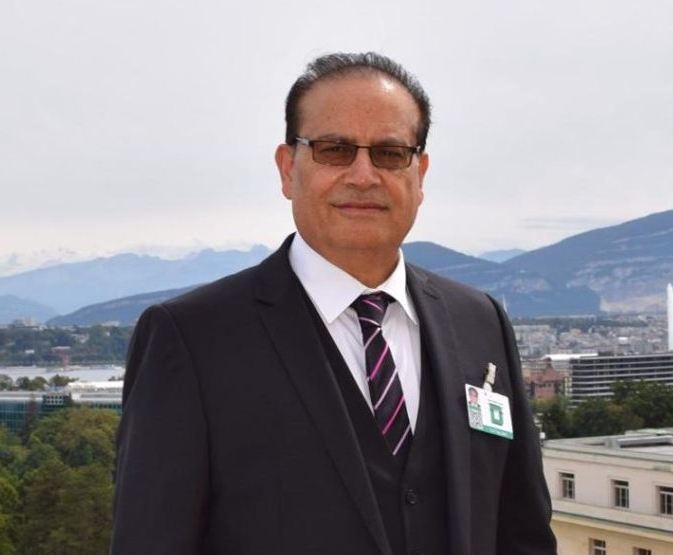
Qamar Bashir

Qamar Bashir

In the closing days of December 2025, a surge of diplomatic and political activity in the United States once again placed Israel at the center of global controversy. Israeli Prime Minister Benjamin Netanyahu, under severe legal and political pressure at home, traveled to Florida to meet U.S. President Donald Trump in an encounter that went far beyond routine diplomacy. What emerged was not merely a reaffirmation of alliance, but a troubling fusion of personal political survival with the fate of nations, carrying consequences that extend well beyond Gaza and into the broader Middle East.

Netanyahu arrived in the United States facing corruption charges, public discontent, and an increasingly fractured Israeli political landscape. President Trump’s public embrace of him as an indispensable “wartime prime minister” elevated Netanyahu’s domestic crisis into an international narrative. By suggesting—implicitly and at times explicitly—that Israel’s very existence is inseparable from Netanyahu’s leadership, Trump blurred a fundamental democratic boundary, placing individual political longevity above institutional accountability. His subsequent claim that he had urged Israel’s president to pardon Netanyahu, though promptly denied, reinforced the perception that legal norms were being subordinated to geopolitical convenience.

During their talks, Trump and Netanyahu once again proclaimed commitment to advancing a Gaza “peace plan,” yet the substance of that plan exposed familiar and deeply troubling rigidity. Trump reiterated that Hamas’s disarmament is a non-negotiable prerequisite for any second phase involving reconstruction or governance, a position Netanyahu echoed forcefully, declaring that no political future for Gaza is conceivable so long as Hamas retains weapons. This absolutist framing reduces peace to a military checklist and leaves little room for addressing the deeper political roots of the conflict or the legitimate aspirations of the Palestinian people.

What sharpened concerns further was Trump’s categorical dismissal of accusations that Israel is violating the ceasefire or sabotaging the very peace plan he claims was endorsed by dozens of nations. When pressed, Trump absolved Israel entirely, insisting it is “doing its part” and placing sole responsibility for violations on Hamas. More strikingly, when asked who would confront Hamas during the implementation of the peace plan, Trump explicitly excluded both Israel and the United States. Instead, he suggested that Muslim-majority countries contributing troops to a future international stabilization force would be responsible for neutralizing Hamas in Gaza and the West Bank.

This maneuver effectively shifts the unfinished business of the war onto Muslim armies, insulating both Israel and the United States from further direct confrontation. The irony is stark. After years of overwhelming Israeli military force, backed unconditionally by Washington, Hamas remains intact, operational, and central to negotiations that produced the ceasefire itself. Unable to dismantle Hamas militarily, the architects of the war now appear intent on outsourcing the risk, bloodshed, and political fallout to others.

The consequences of such a strategy could be profound. Hamas has already made clear that it will not disarm unless Israel fully complies with the ceasefire and pursues the peace plan objectively and without violations—conditions Israel has historically resisted. If Muslim forces are deployed under these circumstances, they risk being drawn into direct confrontation with Hamas, igniting backlash not only on the battlefield but within their own societies. What is presented as an international stabilization effort thus carries the seeds of a broader regional rupture, transforming a Palestinian struggle into an intra-Muslim conflict while those who failed to resolve it step aside.

Parallel to Gaza, Netanyahu used the Washington stage to revive and intensify a familiar and increasingly toxic narrative about Iran. Despite more than fifteen years of sanctions, covert operations, regional confrontations, and direct military attacks—including recent U.S. strikes on Iranian nuclear facilities that Trump openly defended as having “obliterated” Iran’s nuclear program—Netanyahu showed no sign of restraint. He once again warned that Iran remains on the brink of producing a nuclear bomb and is expanding missile capabilities that could allegedly reach the United States itself, framing Iran not only as a regional threat but as a direct danger to American security.

This rhetoric is strikingly familiar. Similar claims were made about Iraq, Libya, Syria, and other states, each time serving as justification for intervention, destabilization, or regime collapse. In each case, the aftermath brought prolonged chaos rather than security. Yet the pattern appears to be repeating. Netanyahu’s renewed alarmism suggests that another chapter is already being written, one aimed not merely at containment but at regime change in Iran.

Recent developments inside Iran add weight to these concerns. Widespread strikes and protests have erupted over sharp economic deterioration, with Iran’s currency reportedly losing around 40 percent of its value in the wake of the recent Israel-Iran confrontation. While Iran’s internal economic challenges are complex and longstanding, the timing underscores how economic pressure is increasingly being weaponized as a tool of coercion. The tightening grip of sanctions, financial isolation, and strategic pressure points to a coordinated effort by the United States and Israel to use economic collapse as a lever to provoke internal unrest and ultimately reshape Iran’s political order.

Globally, reaction to this convergence of military threats and economic warfare has been far from uniform. European governments and international institutions have called for de-escalation and renewed diplomacy, warning that perpetual coercion undermines global stability and the non-proliferation regime itself. Several Arab states, once cautiously open to normalization with Israel, are growing increasingly uneasy with policies that appear dismissive of humanitarian law and regional balance.

Within the United States, divisions are also sharpening. While Trump’s political base applauds his unyielding support for Israel, critics argue that unconditional backing and escalating threats weaken America’s credibility and entangle it in conflicts with no clear exit. The gap between Washington’s rhetoric and the broader international mood continues to widen.

The Trump–Netanyahu nexus thus represents more than a personal alliance; it reflects a strategic mindset that prioritizes force over diplomacy, personalities over institutions, and short-term political survival over long-term regional stability. By personalizing national destiny, outsourcing unresolved wars, and reviving discredited threat narratives, this approach risks deepening instability rather than resolving it.

If the Middle East is to escape its cycle of destruction, the international community—particularly the Muslim world and multilateral institutions—must resist being drawn into this trap. National interests cannot be subordinated to individual political preservation, nor can peace be built on coercion alone. Without a genuine commitment to accountability, political inclusion, and humanitarian justice, the region will remain hostage to alliances that promise security but consistently deliver ruin.

Qamar Bashir
Press Secretary to the President (Rtd)
Former Press Minister, Embassy of Pakistan to France
Former Press Attaché to Malaysia
Former MD, SRBC | Macomb, Michigan, USA

Naqvi, KP governor discuss security as centre vows full support against militancy

Naqvi, KP governor discuss security as centre vows full support against militancy

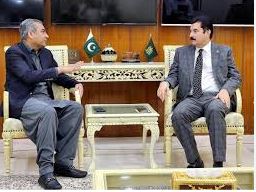
ISLAMABAD, Dec 30 (APP/DNA):Federal Interior Minister Mohsin Naqvi and Khyber Pakhtunkhwa Governor Faisal Karim Kundi held a detailed meeting on Tuesday to review the province’s security situation and ongoing counterterrorism operations.

Governor Kundi briefed the interior minister on the challenges facing KP, particularly in its border regions, where security forces are engaged in operations against militant networks. He stressed that federal-level cooperation was crucial for restoring peace in the province.

Interior Minister Naqvi assured the governor of the federal government’s complete support, declaring that establishing peace in Khyber Pakhtunkhwa remained a top national priority. He praised the sacrifices of KP’s people in the fight against terrorism and vowed that no leniency would be shown to militants or their facilitators.

Naqvi emphasized that joint efforts were underway to dismantle extremist elements, while Governor Kundi called for more coordinated and unified measures to counter the threat of terrorism.

Pakistan reiterates firm adherence to One-China Principle

Pakistan reiterates firm adherence to One-China Principle

DNA

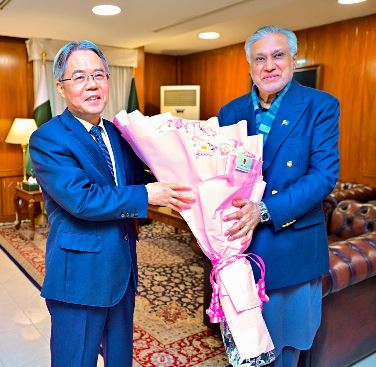
ISLAMABAD, DEC 30: Ambassador Jiang Zaidong called on Deputy Prime Minister and Foreign Minister of Pakistan Muhammad Ishaq Dar.

The two sides had a comprehensive exchange of views on advancing China-Pakistan all-weather strategic cooperation, and reached wide consensus on implementation of the action plan to foster the China-Pakistan community with a shared future.

After Ambassador Jiang Zaidong briefed him on the current situation across the Taiwan Strait and the legitimate measures taken by China, DPM&FM said that Pakistan has always firmly adhered to the one-China principle, clearly recognized that the government of the People’s Republic of China is the sole legal government representing the whole of China, and that Taiwan is an inalienable part of China’s territory.

Pakistan’s above-mentioned position is unwavering and consistent. As the ironclad friend and all-weather strategic cooperative partner of China, Pakistan will continue to firmly support China on all issues concerning China’s core interests.

KSrelief concludes second phase of livestock-based economic empowerment project in Pakistan

KSrelief concludes second phase of livestock-based economic empowerment project in Pakistan
ISLAMABAD, Dec 30 (APP/DNA):The King Salman Humanitarian Aid and Relief Centre (KSrelief) has successfully concluded the second phase of the “Economic Empowerment of Vulnerable Households in Pakistan through Livestock Provision Project.” 

Under this completed phase, 1,000 vulnerable households in the districts of Swat, Swabi, Haripur, and Mansehra were supported through the provision of comprehensive poultry livelihood packages.

Each beneficiary family received 25 poultry birds along with a complete poultry kit comprising 50 kg of feed, two sets of feeders, one drinker, an egg tray, and protective mesh.
In addition, a total of 40 structured training sessions on poultry management and income generation were conducted with technical support from the Livestock Department, equipping beneficiaries with essential skills to sustainably manage small-scale poultry enterprises.

The project was implemented by the Peace and Development Organization (PADO) in close coordination with the Relief, Rehabilitation and Settlement Department (RRSD), PDMA Khyber Pakhtunkhwa, and the local district administrations.
The initiative aimed to enhance economic resilience, improve household nutrition, and strengthen food security among vulnerable communities across the four targeted districts of Khyber Pakhtunkhwa.

With the successful completion of this phase, the project has contributed to promoting self-reliance, dignified income generation, and long-term livelihood sustainability, reaffirming KSrelief’s continued commitment to supporting vulnerable populations and fostering inclusive economic development across Pakistan.

UAE steps up citizen housing initiatives in 2025

UAE steps up citizen housing initiatives in 2025
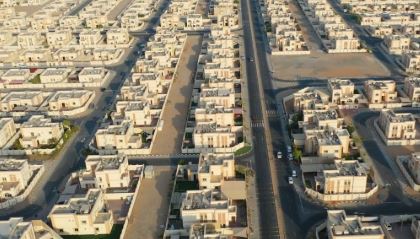
ABU DHABI, Dec 30:The United Arab Emirates (UAE) expanded its national housing programme in 2025 to support family stability, improve living standards and provide suitable housing across the country.

During the year, the Cabinet approved 3,567 housing decisions worth AED2.546 billion, with nearly AED478 million allocated in the final quarter. This federal support included a mix of residential financing, government grants for low-income families, as well as government housing and financing schemes in cooperation with national banks.

The Ministry of Energy and Infrastructure also launched a programme to secure funding for housing support decisions, prioritising senior citizens, through insurance coverage extending to age 95, covering cases of death or total permanent disability.

In Abu Dhabi, agreements were signed to develop 13 residential communities worth AED106 billion, delivering more than 40,000 homes and land plots by 2029.

To further assist homeowners, the emirate introduced new financial facilities, including a community support subsidy of AED250,000 to be automatically and retroactively deducted from housing loans of up to AED1.75 million, and extended repayment terms to 30 years. Total housing benefits issued by Abu Dhabi during the year reached AED15.384 billion, benefiting over 10,700 citizens.

Dubai also announced housing projects worth AED5.4 billion, including the construction of 3,004 new homes. An additional AED2 billion package was approved for 1,100 units across the areas of Wadi Al-Amardi, Al Aweer, Hatta, and Oud Al Muteena.

Dubai also launched an affordable housing initiative expected to deliver 17,000 units in its first phase for employees in key and strategic sectors.

In Sharjah, the Executive Council approved land grants for 3,500 beneficiaries, split evenly between residential and investment plots.

These combined federal and local efforts underscore the state’s strategic focus on integrating social stability with large-scale urban development.

Stay Connected

64FansLike
60FollowersFollow

Latest Reviews

Exchange Rates

USD - United States Dollar
EUR
1.14
GBP
1.34
AUD
0.70
CAD
0.71