Home Blog Page 32

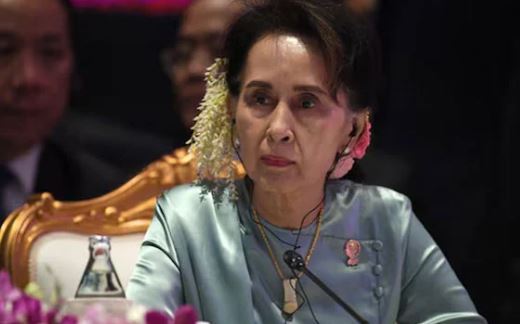
For all I know, she could be dead, says son of Myanmar’s Suu Kyi

For all I know, she could be dead, says son of Myanmar's Suu Kyi

With her health failing and an information vacuum around Myanmar’s detained former leader Aung San Suu Kyi, her son worries that he may not even know if she passed away.

Kim Aris told Reuters he has not heard from his 80-year-old mother in years, and has received only sporadic, secondhand details about her heart, bone and gum problems since a 2021 military coup that deposed her government.

And while he rejects attempts by Myanmar’s junta to hold elections later this month, dismissed by many foreign governments as a sham aimed at legitimising military rule, he says it could provide an opening to ease his mother’s plight.

“She’s got ongoing health issues. Nobody has seen her in over two years. She hasn’t been allowed contact with her legal team, never mind her family,” he said in an interview in Tokyo. “For all I know, she could be dead already.”

“I imagine (Myanmar junta leader) Min Aung Hlaing has his own agenda when it comes to my mother. If he does want to use her to try and appease the general population before or after the elections by either releasing her or moving her to house arrest, then at least that would be something,” he added.

A Myanmar junta spokesman did not respond to calls seeking comment.

Myanmar’s military has a history of releasing prisoners to mark holidays or important events.

Nobel Peace Laureate Suu Kyi was freed in 2010 days after an election, ending a previous long period of detention largely spent at her colonial-style family home on Yangon’s Inya Lake.

She went on to become Myanmar’s de-facto leader after elections in 2015, the first openly contested vote in a quarter century, though her international image was later tarnished by accusations of genocide committed against her country’s Muslim Rohingya minority.

‘Small window of opportunity’
Myanmar has been in turmoil since the 2021 coup, which triggered an armed rebellion that has captured swathes of territory across the country.

Kim Aris, the son of Aung San Suu Kyi, takes part in a protest rally organised by Myanmar people residing in Japan denouncing an upcoming election led by the military junta and demanding the immediate release of Myanmars detained former leader Aung San Suu Kyi and all political prisoners, outside Myanmars embassy in Tokyo, Japan, December 14, 2025. — Reuters
Kim Aris, the son of Aung San Suu Kyi, takes part in a protest rally organised by Myanmar people residing in Japan denouncing an upcoming election led by the military junta and demanding the immediate release of Myanmar’s detained former leader Aung San Suu Kyi and all political prisoners, outside Myanmar’s embassy in Tokyo, Japan, December 14, 2025. — Reuters
Suu Kyi is serving a 27-year sentence for offences including incitement, corruption and election fraud, all of which she denies.

Aris said he believes she is being held in the capital Naypyitaw, and in the last letter he received from his mother two years ago she complained about the extreme temperatures in her cell during the summer and winter months.

With conflicts erupting all over the world, Aris worries that people are forgetting about Myanmar.

He is trying to capitalise on the upcoming elections — the first since the coup which are set to be held in phases from December 28 — to get foreign governments like Japan to exert more pressure on the junta and call for his mother’s release.

“Because of the upcoming elections that the military are trying to stage, which we all know are completely unfair, and so far from being free that it would be laughable if it wasn’t so lamentable, I need to use this small window of opportunity,” he said.

“In the past, when my mother was held in higher regard by the international community, then it was much harder for people to ignore what’s happening in Burma. But since her position was undermined through the crisis in Rakhine, that’s no longer the case,” he added, using the country’s former name.

Aris, a British national who kept a low profile until a few years ago, maintains his mother was “not complicit” in what the United Nations called a genocidal campaign by the military against the Rohingya in Rakhine state in 2016-17.

While she was de-facto leader, Myanmar’s constitution limited Suu Kyi’s power over the military. She admitted that war crimes may have been committed at an international tribunal in The Hague in 2020 but denied genocide.

During his trip to Japan, Aris said he met with various Japanese politicians and government officials to press them to take a stronger stand against the junta and reject the elections.

Asked what his mother would think of his efforts, he said: “I think she’d be incredibly sad that I’ve had to do this. She’s always wanted me to not have to get involved. But I don’t really have a choice at the moment. I am her son after all. And if I’m not doing it, I can’t expect anybody else to do it.”

Off-field differences add to Pakistan hockey’s on-field misery

Sources within the federation revealed that Tahir Zaman was unhappy with the PHF’s decision to appoint Anjum Saeed as the team manager. The relationship between the head coach and the manager reportedly remained strained throughout the tour, with frequent disagreements particularly over team selection and operational matters

Ansar M Bhatti

ISLAMABAD: Pakistan’s poor performance in the FIH Pro League matches played in Argentina has once again exposed the deep-rooted problems plaguing the country’s hockey system. While the team failed to register a single victory, the outcome was largely expected given Pakistan’s low world ranking and limited exposure at the highest level of international hockey.

Ranked 14th in the world, Pakistan entered the Pro League not through direct qualification but after New Zealand declined participation. Against elite, well-prepared teams, Pakistan’s task was always going to be difficult. However, beyond technical gaps and lack of depth, internal issues within the Pakistan Hockey Federation (PHF) further compounded the team’s struggles and negatively affected player morale.

One of the major controversies during the tour was the premature return of head coach Tahir Zaman to Pakistan midway through the competition. His departure triggered unnecessary speculation and confusion within hockey circles. Officially, Tahir Zaman cited his daughter’s wedding, scheduled for December 20 and planned well in advance, as the reason for his return. However, insiders suggest that the situation was far more complex.

Sources within the federation revealed that Tahir Zaman was unhappy with the PHF’s decision to appoint Anjum Saeed as the team manager. The relationship between the head coach and the manager reportedly remained strained throughout the tour, with frequent disagreements particularly over team selection and operational matters. These repeated clashes eventually culminated in Tahir Zaman’s decision to leave the team, further destabilizing an already fragile setup.

Such internal grouping and lack of unity at the top have long been cited as key reasons behind Pakistan hockey’s consistent decline. Players, already under pressure due to tough opposition and limited resources, were further demoralized by off-field disputes. In modern international hockey, where preparation, planning, and cohesion are critical, such instability inevitably reflects in on-field performances.

From a purely technical standpoint, Pakistan struggled across departments during the Argentina fixtures, but the most alarming weakness was in goalkeeping. The goalkeeping unit was badly exposed, with no keeper demonstrating consistency or composure at a world-class level. In contemporary hockey, goalkeepers are the backbone of a team, often deciding matches through crucial saves. Weak goalkeeping not only results in goals conceded but also undermines the confidence of defenders and midfielders, affecting the overall team structure.

Pakistan now faces an urgent need to identify, groom, and invest in quality goalkeepers capable of competing at the international level. Without addressing this critical position, progress will remain limited regardless of improvements elsewhere.

Despite the dismal results, it would be unfair to label the players as incapable. The current squad is largely underdone compared to other Pro League teams, lacking regular high-intensity international exposure. Playing against the world’s best, even in defeat, provides invaluable experience something Pakistan hockey has been deprived of for years.

While Pakistan may continue to struggle in the remaining Pro League matches and may not secure victories, participation itself holds long-term value. Exposure to top-level competition can help players develop confidence, tactical awareness, and mental toughness. Such experiences, if supported by stability and proper planning, can eventually translate into improved performances.

However, exposure alone is not enough. Without resolving administrative conflicts, ensuring professional management, and establishing a unified vision, Pakistan hockey will continue to underperform. The Pro League campaign should serve as a wake-up call for the PHF: structural reform, merit-based decisions, and harmony between officials and coaches are as important as talent development.

Pakistan hockey’s revival will not come overnight. But acknowledging internal failures, investing in key positions like goalkeeping, and creating a stable, professional environment are essential first steps toward reclaiming lost glory.

From Gaza to Bondi Beach: How Israel’s War Fuels Global Rage

Qamar Bashir

Qamar Bashir
Press Secretary to the President (Rtd)
Former Press Minister, Embassy of Pakistan to France
Former Press Attaché to Malaysia
Former MD, SRBC | Macomb, Michigan, USA

On December 14, 2025, Australia was jolted out of its sense of safety. At Bondi Beach in Sydney, a space synonymous with openness, community, and peaceful coexistence, gunmen opened fire on members of the Jewish community gathered to celebrate Hanukkah. Eleven people were killed and many more injured. Families, children, and elders—people with no role in war, policy, or geopolitics—were turned into victims of terror.

The attack was immediately and rightly condemned by Australia and the world. There can be no ambiguity: the killing of civilians anywhere is criminal, immoral, and indefensible. No grievance, no ideology, no historical wound justifies such an act. The Jewish community in Australia, like Jewish communities everywhere, deserves safety, dignity, and protection.

Yet condemnation alone does not prevent recurrence. If the world wishes to stop such horrors from repeating, it must confront a harder truth: violence does not arise in isolation. It is shaped, amplified, and redirected by global political behavior—especially when power is exercised without accountability.

The Bondi Beach massacre occurred in a world already saturated with unresolved wars, mass civilian suffering, and a growing perception that international law is applied selectively. This perception—whether ignored or dismissed by those in power—has consequences. When pain is denied in one place, it does not disappear. It travels. It mutates. And it eventually erupts where the innocent live.

The Hamas attack of October 7, 2023, which killed Israeli civilians and took hostages, was universally condemned. That condemnation was justified. What followed, however, shattered moral balance. Israel’s military response in Gaza resulted in the deaths of tens of thousands of Palestinian civilians, the destruction of homes, hospitals, schools, and the deliberate deprivation of food, water, and medical aid. International legal institutions and humanitarian organizations warned that collective punishment and starvation had become tools of war.

This matters not to excuse terrorism or antisemitism—both are crimes—but to understand how unchecked state violence creates global insecurity. When a state presents itself as above scrutiny, when it dismisses civilian deaths as necessary or inevitable, it sends a message to the world that human life is conditional. That message does not stay confined to Gaza. It seeps into streets, minds, and communities across continents.

The Jewish community worldwide has increasingly been placed in an impossible position. Jews in Australia, Europe, or North America do not command armies, blockade borders, or authorize bombardments. Yet they increasingly find themselves vulnerable to backlash generated by actions taken by a government thousands of miles away. This conflation is unjust, dangerous, and morally wrong—but it is fueled by the refusal of powerful leaders to acknowledge the global consequences of their conduct.

This refusal was starkly illustrated in the aftermath of the Bondi Beach killings. Instead of engaging in self-reflection or acknowledging how Israel’s actions in Gaza have heightened global tensions and endangered Jewish communities abroad, Israeli Prime Minister Benjamin Netanyahu publicly criticized the Australian government, accusing it of failing to provide adequate security to the Jewish community.

In doing so, Netanyahu acted not as a statesman grappling with consequences, but as if he were a ruler passing judgment on sovereign nations—assigning blame outward while absolving himself entirely. There was no acknowledgment that the relentless violence in Gaza, the images of starving children, and the dismissal of international law have contributed to an environment in which rage is exported globally. There was no recognition that leadership carries responsibility not only for battlefield outcomes, but for the safety of one’s people everywhere.

By placing the burden solely on Australia’s security apparatus, Netanyahu effectively treated the Bondi Beach massacre as an isolated policing failure—rather than as a symptom of a wider moral and political breakdown. This posture is not only arrogant; it is dangerous. It ignores the simple reality that actions taken in the Middle East now reverberate instantly across the world.

A similar warning emerged just one day earlier, on December 13, 2025, in Palmyra, Syria. A lone suspected Islamic State gunman attacked a convoy of U.S. and Syrian partner forces during a key leader engagement. The assault killed two U.S. Army soldiers and a civilian interpreter, and wounded three others. Partner forces killed the attacker at the scene. President Donald Trump vowed serious retaliation.

That attack, like Bondi Beach, underscored the same truth: wars fought far from home do not remain distant. They return—sometimes as direct attacks, sometimes as unpredictable consequences. Soldiers, interpreters, and civilians pay the price for conflicts whose political roots remain unresolved.

This reality struck even closer to home in Washington, D.C., where a lone Afghan gunman killed one U.S. soldier and critically wounded another. His act was criminal and indefensible. But it was also a reminder that decades of war leave behind trauma and grievance that do not end with troop withdrawals. When conflicts are managed through force rather than resolution, the aftershocks linger in human lives.

Today, the same pattern threatens to repeat itself in the Western Hemisphere. Tensions between the United States and Venezuela, and increasingly involving Colombia, are escalating. Once again, familiar language is resurfacing—delegitimization, sanctions, pressure, and whispers of regime change. The narrative being constructed against Venezuela echoes the one once built against Iraq: moral urgency, existential threat, inevitability of action.

We know how that story ended. Iraq was destabilized. Libya collapsed. Syria fractured. The Middle East was turned upside down. Millions were displaced. Extremism flourished. And the consequences spilled into Europe, North America, and beyond.

Venezuela may be weaker than the United States militarily, but modern conflict teaches a clear lesson: retaliation does not strike power centers; it strikes soft targets. It does not reach presidents; it reaches soldiers, worshippers, commuters, and children. Innocent Americans—both civilians and service members—become exposed to the revenge of those whose loved ones were killed far away.

This is not justification. It is historical reality. Violence creates memory. Memory creates resentment. Resentment seeks release—often against those least responsible.

The tragedies at Bondi Beach, in Palmyra, in Washington, and the looming risks in Venezuela and Colombia all point to the same conclusion: when leaders refuse accountability, insecurity becomes global. No border, no ocean, no alliance can contain the consequences.

The only alternative is restraint, diplomacy, and genuine multilateral engagement. Institutions like the United Nations exist to prevent this chain reaction—to replace unilateral force with collective responsibility. They are imperfect, but bypassing them guarantees repetition of failure.

If humanity continues to normalize collective punishment, regime-change wars, and selective morality, the violence will keep returning—again and again—against people who never chose these conflicts. Peace is not a moral luxury. It is a strategic necessity.

Only by choosing introspection over arrogance, law over impunity, and dialogue over domination can the world hope to prevent the next Bondi Beach—and the next innocent life lost to a war they never owned.

Qamar Bashir
Press Secretary to the President (Rtd)
Former Press Minister, Embassy of Pakistan to France
Former Press Attaché to Malaysia
Former MD, SRBC | Macomb, Michigan, USA

RCCI Pindi Food Fest 4th Edition draws massive public interest

RCCI Pindi Food Fest 4th Edition draws massive public interest

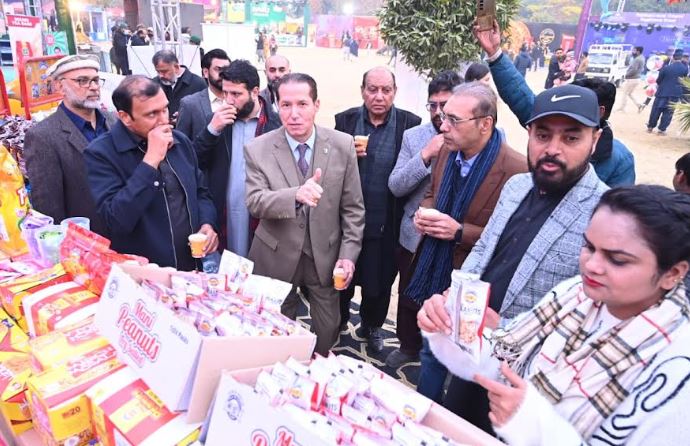
RAWALPINDI, DEC 14: /DNA/ – The Rawalpindi Chamber of Commerce and Industry (RCCI) organized the three-day Pindi Food Fest – 4th Edition at Ayub Park, which attracted a large number of families and food enthusiasts from Rawalpindi and Islamabad. The annual festival aims to celebrate Pakistan’s rich traditional and regional cuisines, introduce innovative food concepts, and provide valuable networking and branding opportunities for SMEs, startups, and women entrepreneurs, particularly in the food sector. 

Federal Minister for Railways Hanif Abbasi, Ambassador of Algeria Brahim Romani, Station Commander Rawalpindi Cantonment Brigadier Ali Anjum Syed, along with representatives of various trade associations and other distinguished guests, visited the festival and appreciated RCCI’s initiative. 

Speaking on the occasion, Federal Minister Hanif Abbasi lauded RCCI for its proactive role in addressing the issues of the business community while also promoting cultural, social, and recreational activities for the public. He congratulated RCCI President Usman Shaukat, his cabinet members, and the entire organizing team on the successful arrangement of the food festival. 

He said that RCCI deserves appreciation for organizing positive, constructive, and people-friendly activities such as the annual food festival. Such events, he added, play a vital role in projecting Pakistan’s soft image at national and international levels. He noted that the presence of foreign diplomats at the festival would help convey a positive impression of Pakistan abroad.

 The minister further emphasized that it is wrong to associate Pakistan solely with terrorism, adding that the world must also be introduced to the country’s culture, traditions, hospitality, and positive societal values.

 RCCI President Usman Shaukat, while highlighting the core objectives of the festival, emphasized the promotion of local culinary heritage and the empowerment of women-led food businesses.

“More than 100 food stalls are participating in the festival, showcasing a wide variety of flavors and cuisines. This initiative provides women entrepreneurs with a platform to launch and grow their brands while building meaningful connections within the industry,” he said.

 He added that the festival also serves as a source of inspiration for aspiring women entrepreneurs. “Our goal is to create opportunities and motivate women who have yet to begin their entrepreneurial journey,” he remarked. This year, over 15 stalls have been allocated exclusively for women, particularly those running home-based food ventures.

Pakistan stresses terrorism concerns at regional Afghanistan talks in Tehran

Pakistan stresses terrorism concerns at regional Afghanistan talks in Tehran

ISLAMABAD, DEC 14 /DNA/ – Pakistan participated in a crucial meeting of Special Representatives from Afghanistan’s Neighboring Countries and Russia, which commenced in Tehran, Iran, today. The high-level diplomatic gathering was convened to discuss the evolving situation in Afghanistan and its implications for regional stability and security.

The meeting was opened with a keynote address by the Foreign Minister of the Islamic Republic of Iran, His Excellency Mr. Abbas Araghchi.

Pakistan was represented at the forum by its Special Representative on Afghanistan, Ambassador Mohammad Sadiq. Pakistan’s Ambassador to Kabul, H.E. Obaid Ur Rehman Nizamani, also attended the proceedings, underscoring Islamabad’s sustained diplomatic engagement with Afghanistan.

In his intervention, Special Representative Mohammad Sadiq delivered a firm and clear message on Pakistan’s core security concerns. He stated that for any sustainable regional peace, Pakistan’s legitimate concerns regarding terrorism emanating from Afghan soil must be resolutely and effectively addressed. He emphasized that terrorist groups, particularly the Tehreek-e-Taliban Pakistan (TTP), continue to use Afghan territory as a safe haven to launch attacks against Pakistan, posing a direct threat to its national security.

Ambassador Sadiq reiterated that Pakistan remains committed to a peaceful, stable, and prosperous Afghanistan. He articulated Pakistan’s desire to work collaboratively with all regional partners to promote peace, development, and collective security in the region. He highlighted that instability in Afghanistan adversely impacts the entire neighborhood and stressed the importance of coordinated efforts to support the Afghan people through constructive engagement and humanitarian assistance.

The meeting in Tehran serves as a key platform for regional stakeholders to align their strategies and coordinate responses to the shared challenges posed by the situation in Afghanistan. Pakistan’s participation and strong stance reflect its proactive diplomacy aimed at safeguarding its national interests while advocating for a stable and connected region.

Woman gives birth inside self-driving taxi in US

Woman gives birth inside self-driving taxi in US

ISLAMABAD, DEC 14: A Waymo self-driving taxi became the site of an extraordinary event this week when a woman gave birth inside the vehicle en route to the University of California, San Francisco (UCSF) Medical Center.

The mother was traveling to the hospital Monday when she unexpectedly went into labor. According to a Waymo spokesperson, the company’s rider support team detected “unusual activity” inside the vehicle, contacted the passenger, and alerted 911.

Waymo, a subsidiary of Alphabet, declined to provide specifics on how the vehicle recognized the emergency. The company has previously noted that its vehicles are equipped with cameras and microphones both inside and outside to monitor conditions.

The robotaxi safely transported both mother and baby to the hospital ahead of emergency responders. Jess Berthold, a UCSF spokesperson, confirmed their arrival and said the mother was unavailable for comment. Following the incident, the vehicle was temporarily removed from service for cleaning.

While rare, this was not the first baby delivered in a Waymo vehicle. “We’re proud to be a trusted ride for moments big and small, serving riders from just seconds old to many years young,” the company said.

Waymo’s driverless taxis have become increasingly popular despite occasional controversies. The autonomous cars operate on freeways and city streets in San Francisco, Silicon Valley, Los Angeles, and Phoenix. The service has previously faced scrutiny for incidents including a U-turn in front of police and the accidental death of a local cat.

This latest event highlights the growing capabilities of autonomous vehicles to respond to unexpected situations, reinforcing their evolving role in daily life.

Security forces kill 13 Khawarij in KP operations

Security forces kill four terrorists in D.I.Khan

RAWALPINDI, DEC 14 /DNA/ – Thirteen khwarij belonging to Indian Proxy Fitna Al Khwarij were killed in two separate engagements in Khyber Pakhtunkhwa Province.

On reported presence of khwarij, an intelligence based operation was conducted by the Security Forces in Mohmand District. During the conduct of operation, own troops effectively engaged the khwarij location and after an intense fire exchange, seven khwarij were sent to hell.

In another Intelligence based operation conducted in Bannu District, six more khwarij were effectively neutralised by Security Forces.

Sanitization operations are being conducted to eliminate any other Indian sponsored kharji found in the area as relentless Counter Terrorism campaign under vision “Azm e Istehkam” (as approved by Federal Apex Committee on National Action Plan) by Security Forces and Law Enforcement Agencies of Pakistan will continue at full pace to wipe out menace of foreign sponsored and supported terrorism from the country.

CM Afridi asks PTI supporters to be ready

CM Afridi asks PTI supporters to be ready

Without naming anyone, the CM further stated: “Those supposed to protect us turn into out killers, and those raised to protect our mandate, stole it. Tell me then, what solution do we have?”

Shamim Shahid

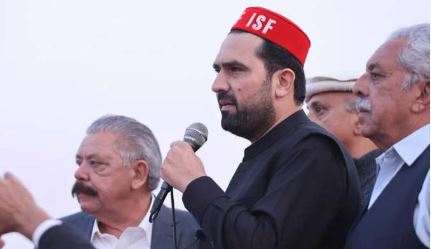
PESHAWAR: Khyber Pakhtunkhwa (KP) Chief Minister Muhammad Sohail Afridi asked PTI supporters on Sunday to “be ready” in case a call was made for a protest, adding that “we will together seize [our] Haqiqi Azadi (true freedom)” from the country’s current rulers.

Afridi’s intimation came during a PTI rally in Kohat, where he reminded the crowd that incarcerated PTI founder Imran Khan, had delivered the message from jail of “freedom or death”.

“So if we go this time around, we will either return in shrouds or after getting freedom,” he said, adding that Imran had given the responsibility of making decisions — be it about talks with the government or protests — to Pakhtunkhwa Milli Awami Party (PkMAP) Chairman Mehmood Khan Achakzai and Senator Allama Raja Nasir Abbas.*

The two leaders are part of the opposition alliance Tehreek-i-Tahafuz Ayeen-i-Pakistan (TTAP) along with the PTI, which has also nominated them as the opposition leaders in the National Assembly and Senate.

“For my part,” Afridi said, “I met them and assured them of any kind of support.”

He added, “So whenever a call comes from them, you have to be ready. And we will together seize Haqiqi Azadi from them (country’s current rulers).”

The CM claimed that “all institutions and the government want to eliminate the PTI”.

Even the judiciary did not heed PTI’s grievances, he said.

Without naming anyone, the CM further stated: “Those supposed to protect us turn into out killers, and those raised to protect our mandate, stole it. Tell me then, what solution do we have?”

He said Punjab CM Maryam Nawaz had been issuing advice to him lately but she should focus on her province instead.

“I will listen to them now?” he remarked, adding that “our leader is Imran, and we will listen to only him. There will be only Imran’s policy and rule here”.

He said Maryam should focus on her province, where, according to a recent survey, police had turned out to be the most corrupt department in the country.

CM Afridi also urged the people to report corruption cases to authorities and his government in KP would take action on the complaints. He also asked the divisional and district administrations to keep their doors open and listen to public issues.

Provincial Minister for Law, Parliamentary Affairs, and Human Rights Aftab Alam Afridi lamented that Imran’s family and CM Afridi were not allowed to meet the incarcerated party chief.

India beat Pakistan by 90 runs in rain-hit U19 Asia Cup clash

India beat Pakistan by 90 runs in rain-hit U19 Asia Cup clash

DUBAI, DEC 14: Pakistan’s batting faltered as they suffered a 90-run defeat against India in the high-octane ACC Men’s U19 Asia Cup 2025 clash at the ICC Academy on Sunday.

Chasing a modest 241-run target, Pakistan’s batting unit could muster 150 before being bowled out in 41.2 overs.

Middle-order batter Huzaifa Ahsan waged a lone battle for the Green Shirts with an anchoring half-century and remained their top-scorer with 70 off 83 deliveries, featuring nine fours and two sixes.

Pakistan got off to a cautious start to their pursuit, which saw them reach 21/0 in eight overs before Deepesh Devendran dismantled their top-order, dismissing Sameer Minhas (nine), Ali Hassan Baloch (zero) and Ahmed Hussain (four).

Opening batter Usman Khan, who held one end firmly during Devendran’s fiery spell, was eventually sent back by Kanishk Chouhan in the 14th over as Pakistan slipped to 30/4.

Ahsan then joined captain Farhan Yousaf (23) for a resilient 47-run partnership for the fifth wicket, which culminated with the latter’s dismissal in the 24th over as Vaibhav Suryavanshi gave India the much-needed breakthrough.

Following Yousaf’s dismissal, Ahsan put together one-sided partnerships with Hamza Zahoor (four), Abdul Subhan (six)and Mohammad Sayyam (two), until eventually falling victim to Chouhan in the 39th over.

Kishan Singh then inflicted the final blow on Pakistan’s pursuit by dismissing Ali Raza (six) and propelled India to a thumping victory.

For India, Devendran and Chouhan picked up three wickets each, followed by Kishan with two, while Khilan Patel and Suryavanshi made one scalp apiece.

In a match reduced to 49 overs per side due to rain, Pakistan captain Farhan Yousaf’s decision to field first proved beneficial as India, who registered 433/6 against the United Arab Emirates (UAE) in their campaign opener, could only manage 240 before being bowled out in 46.1 overs.

The Men in Blue got off to a shaky start to their innings as Sayyam got their last match hero, Vaibhav Suryavanshi (five), caught and bowled in the fourth over with 29 runs on the board.

Suryavanshi’s dismissal, however, did not bother India much as a blistering 49-run partnership between captain Ayush Mhatre and Aaron George kept them on top.

The quickfire partnership was eventually broken by Sayyam in the 10th over as he got rid of the India captain with a short-pitched delivery. Mhatre remained a notable run-getter with a brisk 38 off 25 deliveries, laced with four fours and three sixes.

Following his dismissal, India lost two more wickets at regular intervals as Niqab Shafiq dismissed Vihaan Malhotra (12) and Vedant Trivedi (seven) cheaply to bring the total down to 113/4 in 19.5 overs.

Holding one end firmly, George then put together a crucial 60-run partnership for the fifth wicket with wicketkeeper batter Abhigyan Kundu before both fell victim to Abdul Subhan in the 32nd over.

George remained the top-scorer for India with 85 off 88 deliveries, smashing 12 fours and a six, while Kundu made a 32-ball 22.

Kanishk Chouhan then took the reins of India’s batting expedition and held their innings together with a run-a-ball 46 until eventually falling victim to Ahmed Hussain in the 45th over.

His dismissal exposed India’s batting tail, which was effortlessly levelled by Ali Raza and Subhan.

For Pakistan, Sayyam and Subhan took three wickets each, followed by Niqab with two, while Ali and Ahmed chipped in with one scalp apiece.

Pakistan Navy successfully test-fires FM-90 (N) missile in Arabian Sea

Pakistan Navy successfully test-fires FM-90 (N) missile in Arabian Sea

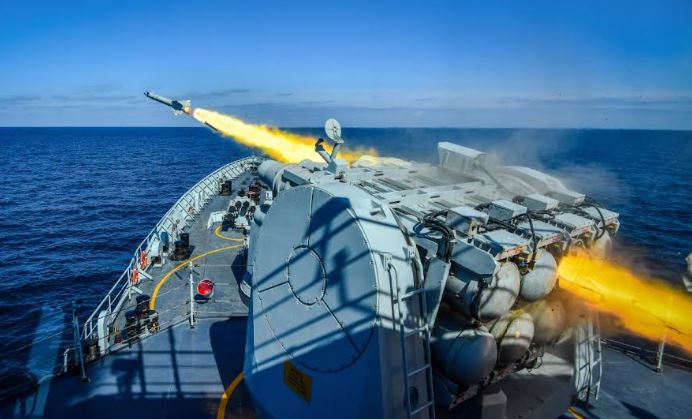
KARACHI, DEC 14 /DNA/ – Pakistan Navy reaffirmed its operational readiness and war fighting capability through a successful Live Weapon Firing (LWF) of FM-90(N) ER Surface-to-Air Missile in the North Arabian Sea.

During the firepower demonstration, Pakistan Navy ship successfully engaged highly manoeuvrable aerial targets, thereby reaffirming Pakistan Navy’s war fighting capability and combat potential. Commander Pakistan Fleet, Rear Admiral Abdul Munib, witnessed the LWF at sea onboard Pakistan Navy Fleet unit.

Commander Pakistan Fleet commended officers and men involved in the firing for their commitment and professionalism. He reiterated Pakistan Navy’s unwavering resolve to ensure the seaward defence of Pakistan and to safeguard national maritime interests under all circumstances.

Stay Connected

64FansLike
60FollowersFollow

Latest Reviews

Exchange Rates

USD - United States Dollar
EUR
1.17
GBP
1.35
AUD
0.67
CAD
0.73