Home Blog Page 32

Five rescued as passenger boat sinks in Indonesia

Five rescued as passenger boat sinks in Indonesia

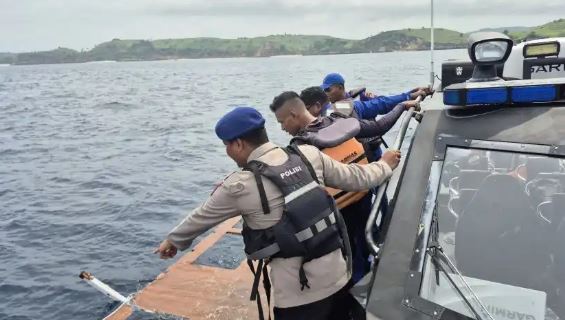
JAKARTA: Five survivors from a passenger boat that sank off eastern Indonesia, including a seven-year-old girl, have been rescued after floating at sea for three days, a rescue official said on Sunday.

The vessel, which was carrying more than 70 people, sank on Wednesday as it sailed near Selayar, a small island south of the larger Sulawesi.

Survivors told rescuers they had been part of a group of 25 people earlier reported as missing before becoming separated from the others by heavy winds.

“After the ship sank, each of them saved themselves using whatever equipment or makeshift flotation they could find,” local search-and-rescue official Muhammad Arif Anwar told.

“They rigged together jerry cans and pieces of cork tied up with rope, then climbed on top of them.”

The group was rescued on Saturday afternoon by local fishermen, who radioed officials for help, he said.

The survivors appeared tired and weak after floating for days without enough food or water, Arif said, but had been able to sustain themselves with packets of instant noodles and biscuits.

Five large ships, a reconnaissance aircraft and a helicopter are being used in ongoing search efforts for those still missing, he said.

Rescuers said the vessel listed only 50 people on board, but further verification found there were 78 on the ship.

It is common in Indonesia for the number of actual passengers on a boat to differ from the manifest. Accidents are a regular occurrence, due in part to lax safety standards and inclement weather.

Three Spanish tourists died when their boat sank off eastern Indonesia in January. A 10-year-old boy was listed as officially missing after authorities ended the search.

Facebook, Instagram affected in Pakistan

Facebook, Instagram affected in Pakistan

LONDON: Social media platforms Facebook and Instagram are experiencing outages, according to reports from real-time outage monitor Downdetector.

Both platforms are owned by tech giant Meta.

According to Downdetector.com, which tracks outages by collating status reports from a number of sources, Pakistani users have been reporting problems with Facebook since 12:26pm. Outage reports peaked at 191 reports at 1:29pm and are now beginning to decline to 174 at 1:44pm.

In the United States, the reports peaked at 4,587 (12:58pm) and have begun to decline, with 3,161 as of the last update at 1:28pm.

Instagram, meanwhile, has also seen a steep rise in outage reports from Pakistan in the last hour, beginning at 12:30pm and similarly peaking at 1:29pm with 173 reports. It then declined to 161 at 1:44pm.

In the US, 4,308 reports were recorded at 1:50pm, with the number continuing to rise.

Last month, Meta’s social networks were reported to be down for thousands of users, with the company spokesperson Andy Stone issuing a statement on the matter.

In March 2024, Meta suffered a highly unusual outage of all its social media platforms on Tues­day, with users of Face­book, Instagram and Threads being locked out of their accounts for several hours.

Trump vows retaliation against Iran

Trump says US military studying 'very strong options' for Iran

DNA

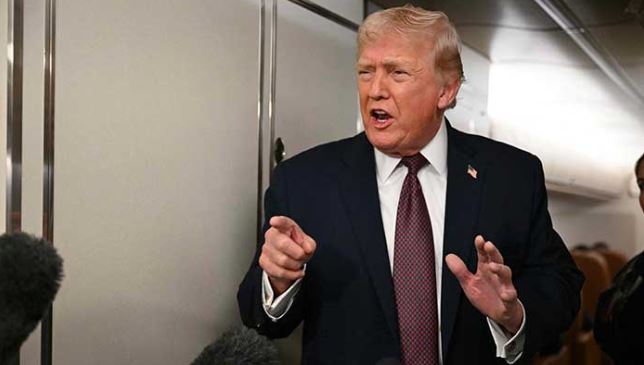
Washington: US President Donald Trump has declared that America will take “revenge” for the killing of two of its soldiers in Jordan, blaming Iran for the attack. Speaking to reporters, Trump said the United States would respond firmly to protect its forces and interests in the region.

The President emphasized that Iran would “never be allowed to have nuclear weapons,” reiterating Washington’s long-standing stance against Tehran’s nuclear ambitions. His remarks come amid heightened tensions following recent clashes in the Middle East, where US forces have faced increasing threats.

The deaths of the two soldiers have sparked outrage in Washington, with officials warning of possible military action. Trump’s statement signals a hardening of US policy, raising concerns of further escalation between the two countries.

Iran has yet to issue an official response to Trump’s comments, but regional observers warn that the situation could deteriorate rapidly if retaliatory measures are taken. The international community has urged restraint, fearing that a cycle of violence could destabilize the already volatile region.

Trump’s vow underscores the fragile state of US-Iran relations, with both sides locked in a confrontation that shows little sign of easing.

Student Mental Capability and the Future Challenge

Student Mental Capability and the Future Challenge

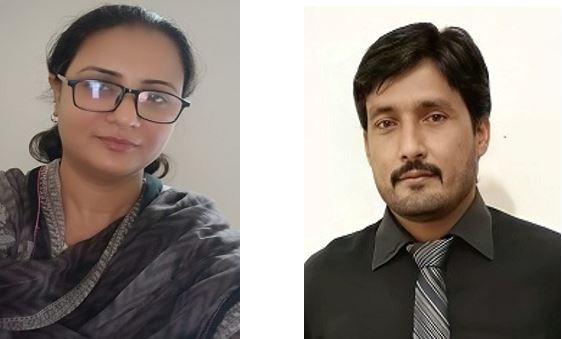
Authors: Nadia Thalho | Muh. Kaleem Mayo

Walk into any big lecture hall at a public university right now. You will see one tired teacher trying to handle over a hundred students. The board says Fahm-ul-Quran. Students are sitting there, some nodding just to look busy, but most are just staring at the clock waiting for the class to end. There is no real interest or excitement in the room. The reason is simple: half the room is made of computer science, medical, or engineering students. They look at this mandatory subject and see something that has absolutely nothing to do with their actual field or their career survival.

This is not a one-off thing. It happens every single day across universities in Pakistan. The Higher Education Commission recently made both Fahm-ul-Quran and Artificial Intelligence compulsory for everyone, no matter their degree. On paper, it sounds great to mix moral values with new technology. But when these policies leave the offices and enter a real classroom, the whole plan falls apart. It is the same old story we see in our country all the time: a huge gap between what policymakers dream up and the actual resources available on the ground.

This sudden loading of extra subjects hurts everyone from BS students to PhD researchers. A fresh BS student is already struggling. They just came out of college, they are trying to figure out the semester system, manage their credit hours, pass compulsory Islamic Studies, and deal with their core subjects. For them, just surviving the first year is a massive struggle.

Then look at MS, MPhil, and PhD scholars. Their pressure is on a completely different level. They have to collect data, run lab experiments, give seminars, and write a thesis that will be checked internationally. Shoving general compulsory courses into their final research years is a direct attack on their mental focus and capacity.

We have to ask the people making these rules: what are these extra courses actually giving to the students? Are they making them better human beings? Are they teaching them real, practical skills? The answer is no. These courses are not building innovation or deep thinking. They are just making students exhausted.

When a student knows a mandatory course has zero value for their actual career, they completely tune out. They stop trying to learn and just try to survive. They show up just to get attendance, treat the assignments like a boring chore to clear credit hours, and study just enough to pass and save their GPA. Instead of producing sharp minds who can help the country, the system is turning smart students into machines that just carry a heavy load of books. We are handing out degrees, but the actual quality of our graduates is dropping fast.

The real breakdown starts with how we teach things from the beginning. In Pakistan, a child usually finishes reading the Quran at age 9 or 10 at home or in a neighborhood madrassa. At that young age, the whole focus is only on correct pronunciation (Zer, Zabar) because mistakes change the meaning. Translation and actual understanding are never taught at that stage.

Now, expecting a student who never learned basic Arabic meanings as a child to suddenly understand deep philosophical concepts in a university classroom makes no sense. It is like teaching a child only the alphabet and then expecting them to write professional poetry when they grow up.

This lack of foundation becomes a disaster because of the state of our public universities. There is a massive shortage of teachers, leading to crowded classrooms with a 1:100 teacher-student ratio. In a room with a hundred students, the teacher is lucky if they can just manage the crowd and finish the lecture. There is no time for discussions, questions, or real character building. The exact same issue ruins the compulsory AI courses. Without working computer labs, hundreds of arts and social science students are forced into rooms just to memorize computer theories from a whiteboard.

The logical fix is to change the timeline completely. These foundational, moral, and language frameworks need to be taken out of universities entirely and moved down to schools, from Grade I-X. Educational psychology shows that childhood is the best time for the brain to pick up languages, build daily habits, and absorb ethical values. If you teach translation and basic literacy slowly over a ten-year school cycle, it becomes a natural part of who the child is, without causing academic stress.

A university is supposed to be a place for specialization, advanced research, and global competition. It is not a place to fix basic literacy gaps from childhood. If Pakistan wants an innovative workforce that can compete internationally, we have to unburden our youth. If a student enters university with their basic religious, civic, and digital foundations already cleared during their school years, they can finally give 100% of their energy to their actual majors.

The HEC needs to stop making these sudden, non-rational policies. If this keeps going, our universities will just keep producing a confused generation graduates who are neither experts in their professions nor ethically grounded citizens. It is time for a realistic, logical change in the curriculum that respects the different stages of education and protects our students.

Ashraf al-Makhluqat in Peril

Ashraf al-Makhluqat in Peril

by Muhammad Mohsin Iqbal

In the divine scheme of creation, Allah Almighty has conferred upon humanity the noble rank of Ashraf al-Makhluqat, the best and most honoured of all creatures. This distinction carries with it a sacred trust: to live with dignity, purity, and adherence to the divine will. Through the Holy Quran, the Creator has illuminated the path of righteous living, teaching manners that beautify existence and issuing clear warnings against those slippery slopes that lead to spiritual and worldly loss. Our beloved Prophet Muhammad, peace and blessings be upon him, exemplified this guidance in every moment of his blessed life. He translated the heavenly verses into daily practice, drawing sharp and unmistakable lines between the halal, which nourishes the soul, and the haram, which invites destruction. Yet, in these latter days, we have allowed forgetfulness to cloud our vision. The once-bright distinction between permissible and forbidden has faded in the hearts of many, leaving society vulnerable to afflictions that strike both body and spirit.

Recent disclosures by Federal Health Minister bring this painful reality into sharp focus. Pakistan now grapples with 84,000 registered cases of HIV, a sobering tally that reveals deep wounds within our social fabric. Of these, 61,000 patients are under treatment, while a distressing 23,000 remain untraced, drifting beyond the reach of medical aid. The minister’s comparative figures highlight the accelerating pace of the crisis. In 2020, 49 testing centres screened 37,944 individuals, identifying 6,910 positive cases. By 2025, the network had expanded to 97 centres, conducting 374,126 tests and confirming 14,182 new infections. Even the federal capital, Islamabad, reports 618 registered cases, comprising 208 local residents and 408 referred from surrounding regions including Rawalpindi, Khyber-Pakhtunkhwa, Gilgit-Baltistan, and Azad Kashmir. Such numbers cannot be dismissed as mere medical statistics; they stand as stark testimony to both moral drift and institutional shortcomings.

The minister has identified the reuse of syringes as a primary culprit behind past outbreaks and has announced plans to ban larger 10cc varieties to prevent their dangerous recycling. Unsafe injection practices, often born of carelessness or cost-cutting in healthcare settings, have become a silent vector of transmission. Healthcare safety, he wisely noted, transcends the boundaries of clinics and hospitals; it constitutes a matter of national security with the potential to inflict grave economic damage if neglected. These observations compel us to confront two intertwined realities. On one hand, there is clear medical negligence: inadequate sterilisation, insufficient training, and a failure to enforce basic protocols have allowed preventable suffering to multiply. On the other, and perhaps more profoundly, lies a moral degradation that weakens the inner defences of society. When the boundaries of modesty, chastity, and self-restraint erode, doors open to behaviours that invite disease. Promiscuity, the sharing of needles among those entangled in addiction, and a general indifference to divine prohibitions have all played their part in this sorrowful spread.

The modern age has compounded these troubles. While mobile phones and the internet have brought convenience, knowledge, and connectivity, their unchecked negative aspects have sown widespread misguidance, particularly among the impressionable youth. What was intended as a tool for progress has too often become a gateway to moral confusion. Easy access to indecent material, distorted values imported from distant cultures, and the subtle erosion of shame have fostered habits that stray far from the Prophetic example. Young minds, once guarded by the teachings of faith and the watchfulness of family, now navigate treacherous currents without sufficient anchorage. This digital tide has accelerated the forgetting of halal and haram, replacing patience and restraint with instant gratification and reckless curiosity.

The question before us is urgent: what are the deeper reasons, and how may this tide be turned? The causes lie partly in weakened religious observance, the breakdown of traditional family structures, and a societal emphasis on material success over spiritual health. Yet solutions remain within our grasp if we summon collective will. Medically, the authorities must move swiftly beyond announcements, ensuring single-use syringes become universal, expanding testing and treatment facilities, and enforcing strict hygiene standards across public and private healthcare. Awareness campaigns, conducted in the language of faith as well as science, should reach villages and cities alike, emphasising both prevention and compassion for those affected.

More importantly, we must revive the moral and spiritual defences that have protected our people for generations. Parents and elders bear the first responsibility to nurture piety and modesty in their children. Scholars and imams should continue to light the lamps of guidance, reminding the ummah of the Quran’s call to purity. Educational institutions must integrate ethical teachings with modern learning. The media, too, should reflect upon its influence and promote content that uplifts rather than degrades. Above all, every individual must examine his or her own conduct, seeking refuge in prayer, fasting, and remembrance of Allah from the whisperings that lead astray.

This is no distant duty but a shared obligation upon all of us—rulers and ruled, rich and poor, young and old. By returning sincerely to the distinction between halal and haram, by combining practical vigilance with spiritual renewal, we can, with the grace of Allah, arrest the spread of this disease and heal the deeper wounds of the heart. Let us not forget that Allah does not change the condition of a people until they first resolve to change themselves. In reclaiming our noble inheritance as the best of creation, we shall find not only protection from physical affliction but the restoration of dignity, peace, and divine favour for our beloved homeland and for generations yet to come. May the Almighty grant us the wisdom, courage, and sincerity to walk this path with steadfast hearts.

Pakistan’s Youth Dividend and the Future Economy

Pakistan's Youth Dividend and the Future Economy

T.M Awan

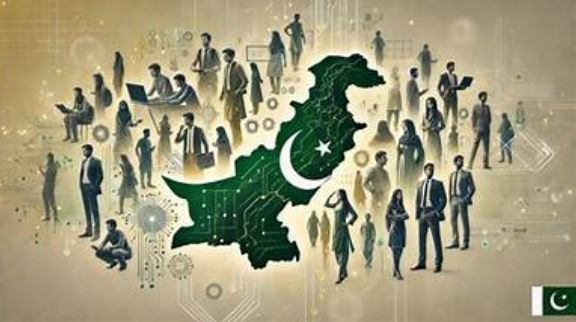
Pakistan’s greatest strategic asset is not found beneath the ground or along its borders. It is the energy, talent, and potential of its young people. With nearly 70 percent of the population under the age of 30, Pakistan possesses one of the largest youth populations in the world. The challenge is ensuring that this demographic advantage becomes a driver of economic growth rather than a missed opportunity.

Recognizing this reality, the federal budget for FY 2026-27 has placed considerable emphasis on youth development through allocations for education, skills training, entrepreneurship, digital innovation, and employment generation. Such investments reflect a growing understanding that sustainable economic progress depends on empowering the country’s younger generation.

Across the world, economic success is increasingly linked to human capital. The modern economy rewards skills, innovation, adaptability, and technological competence. Nations that have invested in their youth through education and workforce development have been able to accelerate growth, attract investment, and compete effectively in the global marketplace. Pakistan must pursue a similar path if it wishes to realize its economic potential.

One of the most significant aspects of the government’s youth agenda is the emphasis on skills development. Traditional educational qualifications alone are no longer sufficient to meet the demands of a rapidly changing labour market. Employers increasingly seek expertise in digital technologies, artificial intelligence, data analytics, and other emerging fields. Expanding technical and vocational training programmes can help bridge the gap between education and employment while preparing young Pakistanis for opportunities both at home and abroad.

Entrepreneurship represents another critical pillar of youth empowerment. In many developing economies, small and medium-sized enterprises serve as engines of job creation and innovation. Providing young entrepreneurs with access to financing, mentoring, and business development support can help transform promising ideas into productive enterprises. More importantly, entrepreneurship encourages a shift from job-seeking to job-creation, generating opportunities not only for business owners but also for others entering the workforce.

Agriculture, which remains a cornerstone of Pakistan’s economy, also offers significant opportunities for youth engagement. Modern farming techniques, agritech solutions, value-added production, and agribusiness ventures can attract young talent to a sector that is essential for food security and economic stability. Supporting youth-led agricultural enterprises can contribute to both rural development and national growth.

Digital transformation is equally important. Technology has become a powerful equalizer, enabling talented individuals to access opportunities regardless of geography. Digital platforms connecting young people with scholarships, internships, employment opportunities, and entrepreneurial resources can help reduce information barriers and promote merit-based access. Expanding digital inclusion will be critical for ensuring that opportunities reach youth across all regions of the country.

An encouraging feature of current youth initiatives is the focus on inclusion. Women, particularly in rural and underserved communities, often face barriers to education, employment, and entrepreneurship. Expanding access to economic opportunities for young women is not only a matter of social justice but also an economic imperative. Greater female participation in the workforce can contribute significantly to productivity, household incomes, and national development.

Youth development also extends beyond economics. Programmes focused on sports, volunteerism, leadership, and community engagement help foster responsible citizenship and social cohesion. Young people who are actively involved in constructive activities are better equipped to contribute positively to society and national development.

However, budgetary allocations alone cannot guarantee success. Effective implementation remains the key challenge. Pakistan continues to face issues of youth unemployment, underemployment, and skills mismatches. Addressing these concerns requires close coordination between government institutions, educational organizations, and the private sector. Training programmes must remain aligned with market needs, and policies should be regularly evaluated to ensure measurable outcomes.

The private sector’s role is particularly important. Sustainable employment opportunities ultimately emerge from economic growth and business expansion. Strong partnerships between industry and educational institutions can help ensure that graduates possess the skills employers actually require.

Pakistan’s demographic profile presents a rare opportunity. Few countries enjoy such a large and dynamic youth population. If properly educated, skilled, and empowered, today’s young Pakistanis can become tomorrow’s entrepreneurs, innovators, professionals, and leaders.

The true measure of success will not be the size of budget allocations but the opportunities created and the lives transformed. Investing in youth is ultimately an investment in Pakistan’s future prosperity. If managed wisely, the country’s demographic advantage can become one of its greatest strengths in the decades ahead.

(The writer is a Media, Strategic Communication and International Relations Professional. He posts on X: @TMAwanOfficial)

A Journey into Pakistan’s Pink Treasure

A Journey into Pakistan's Pink Treasure

Dr. Muhammad Akram Zaheer

On the morning of 10 July 2026, five friends set out on a journey that promised both recreation and discovery. Our small group Abdul Rehman Chishti, Khan Shahbaz Ahmad, Malik Sabir Hussain, Burhan Chishti and I had planned a visit to the Khewra Salt Mine, one of Pakistan’s most remarkable natural and historical landmarks. Located in the Salt Range of Punjab, the mine has long attracted visitors from across the country and abroad for its breathtaking underground landscape and centuries-old legacy. We began our journey shortly after sunrise. The cool morning breeze and the quiet roads made the drive pleasant, while conversations about the history of the mine and the places we hoped to see kept everyone in high spirits. As the sun climbed higher, the scenic landscape of the Potohar region unfolded before us. After several hours on the road, we finally reached Khewra, where the bustling entrance of the mine welcomed us with a lively atmosphere.

The area around the entrance was filled with tourists of all ages. Families, students, photographers and visitors from different parts of Pakistan were eagerly waiting to explore the underground marvel. The steady flow of visitors reflected the enduring popularity of the site, which remains one of the country’s leading tourist attractions. One of the most enjoyable features of the visit was the narrow-gauge train that carries visitors into the heart of the mine. The small train, originally designed for transporting salt, now serves as a convenient means of taking tourists deep inside the tunnels. As it slowly moved through the underground passage, excitement grew among the passengers. The cool air replaced the summer heat outside, while the walls of pink and white rock salt appeared on both sides, creating a striking first impression.

Stepping out of the train, we immediately noticed the refreshing atmosphere inside the mine. The temperature remained comfortably cool despite the intense heat outside. The air felt clean, naturally dry and remarkably pleasant, making it easy to walk through the extensive network of tunnels. Soft lighting illuminated the walls and ceilings, allowing the natural colours of the salt to sparkle gently. Shades of pink, white and reddish salt blended beautifully, creating an underground landscape unlike any other. Walking through the chambers, one could appreciate both the beauty of nature and the remarkable engineering that has sustained mining operations for centuries. The calm environment and the silence of the underground passages created a peaceful setting that encouraged visitors to pause and admire their surroundings. Many people believe that the salt-rich environment has therapeutic qualities, particularly for respiratory health, although for most visitors the fresh atmosphere alone makes the experience enjoyable.

Among the many attractions inside the mine, the beautifully constructed mosque carved from salt remains one of the most impressive. Built entirely from blocks of salt, the mosque reflects both architectural skill and spiritual significance. Its illuminated walls and delicate craftsmanship leave a lasting impression on visitors regardless of their background. Further inside, we came across small lakes formed by naturally occurring salt water. The still water reflected the surrounding lights, creating mirror-like images of the salt walls. The sight was both peaceful and captivating. Another popular attraction was the model of Minar-i-Pakistan, carefully crafted from pink salt. The detailed workmanship demonstrated the creativity of local artisans and highlighted the cultural significance attached to the mine.

The visit also offered an opportunity to learn about the history of Khewra. A pictorial display presented the story of the mine, tracing its origins from the time of Alexander the Great to its development during the Sikh and British periods and its continued importance after Pakistan’s independence. The historical photographs, maps and explanatory panels provided valuable insight into one of the world’s oldest working salt mines. Outside the main tunnels, numerous stalls and tuck shops served refreshments and local snacks, allowing visitors to relax after their underground tour. Souvenir shops displayed an impressive collection of products made from pink Himalayan salt. Decorative lamps, flower vases, candle holders, bowls, miniature monuments and other handcrafted items reflected the craftsmanship of local artisans. These products not only attracted tourists but also supported the livelihoods of many families associated with the local economy. Our group spent considerable time exploring the different sections of the mine, taking photographs and discussing the extraordinary combination of natural beauty, history and economic importance represented by Khewra. The visit reminded us that Pakistan possesses many destinations capable of attracting international attention when properly developed and promoted.

Despite its popularity, however, there remains significant potential to improve the visitor experience and strengthen tourism at Khewra Salt Mine. Better road infrastructure leading to the site would make travel more convenient, while modern visitor facilities and quality accommodation near the mine would encourage tourists to extend their stay. Interactive museums equipped with digital displays, multilingual guided tours and audio guides could provide visitors with a richer understanding of the mine’s geological and historical significance. Similarly, cultural festivals, educational programmes, light-and-sound presentations and carefully planned adventure activities could make the destination more attractive throughout the year. Stronger promotional campaigns at both national and international levels, supported by partnerships with travel agencies and online tourism platforms, would significantly enhance the visibility of the mine among global travelers.

There is also considerable scope for expanding the range of souvenirs and locally manufactured salt products available for purchase. Greater emphasis on wellness tourism, highlighting the mine’s unique environment, could attract visitors seeking health-oriented experiences. At the same time, maintaining high standards of cleanliness, safety, accessibility and environmental conservation would ensure that tourism growth remains sustainable. As evening approached, we began our return journey carrying not only bags filled with salt souvenirs but also memories of a truly remarkable experience. The visit offered far more than a sightseeing excursion. It provided an opportunity to appreciate Pakistan’s geological heritage, the dedication of generations of miners and the country’s untapped tourism potential.

Our day at the Khewra Salt Mine ended with a shared sense of satisfaction. The conversations on our drive home centred on the spectacular underground chambers, the remarkable craftsmanship displayed throughout the mine and the hospitality extended by the local community. For all five of us Abdul Rehman Chishti, Khan Shahbaz Ahmad, Malik Sabir Hussain, Burhan Chishti and myself the journey became a memorable reminder that some of Pakistan’s greatest treasures lie beneath its surface, waiting to be explored, appreciated and preserved for future generations.

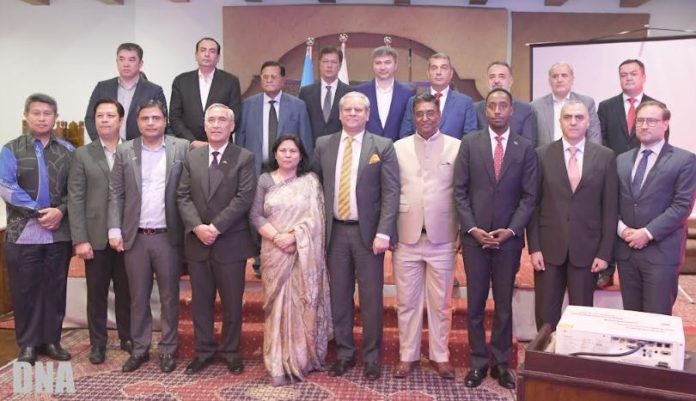
Farewell dinner honoring outgoing envoys of Azerbaijan, Kazakhstan

Farewell dinner honoring outgoing envoys of Azerbaijan, Kazakhstan

Saifullah Ansar/DNA

Islamabad: A distinguished farewell dinner was hosted by Zafar Bakhtawari, Secretary General of the United Business Group (UBG) and Chairman of D Watson Group, in honor of the outgoing ambassadors of Azerbaijan and Kazakhstan. The event brought together prominent figures from Pakistan’s business and diplomatic community, reflecting the deep ties between the nations.

The dinner was attended by UBG Patron S.M. Tanir, FPCCI President Atif Ikram, ambassadors, high commissioners, and leading members of the business community. Among the notable speakers was Ahsan Bakhtawari, President of the Azerbaijan-Pakistan Chamber of Commerce and Industry, who paid glowing tributes to the outgoing envoys. He acknowledged their invaluable contributions in strengthening bilateral relations and wished them success in their future endeavors.

In his address, Ambassador of Azerbaijan Khazar Farhadov expressed heartfelt gratitude to the Bakhtawari family for the warm farewell. He highlighted key achievements during his tenure, including the launch of direct flights between Azerbaijan and Pakistan, which he described as a milestone in enhancing connectivity. He also noted the growth in trade and economic activity, the exchange of high-level delegations, and the introduction of the ASAN visa scheme, which simplified travel through online applications. Farhadov emphasized that these initiatives had significantly boosted people-to-people and business-to-business ties.

Ambassador of Kazakhstan Yerzhan Kistafin, in his farewell remarks, underscored the importance his country places on relations with Pakistan. Reflecting on his five-year tenure, he mentioned the progress made through high-level talks and delegations. He recalled the brief launch of direct flights between the two countries, expressing hope that such a link would soon be re-established. Kistafin thanked the people of Pakistan for their hospitality and friendship, which he said had left a lasting impression.

Additional Foreign Secretary Hamid Asghar Khan also addressed the gathering, lauding the role of the outgoing ambassadors in advancing diplomatic and economic cooperation. He noted that their efforts had laid a strong foundation for future collaboration.

In his concluding remarks, Zafar Bakhtawari praised the ambassadors for their dedication and service, emphasizing their role in fostering closer ties between Pakistan and their respective countries. The evening ended with the presentation of souvenirs to the ambassadors, symbolizing appreciation and goodwill.

This farewell dinner not only celebrated the achievements of the outgoing envoys but also reaffirmed the commitment of Pakistan’s business and diplomatic community to strengthening regional partnerships and promoting mutual prosperity.

LOLC Microfinance Bank Pakistan Inaugurates new head office

DNA

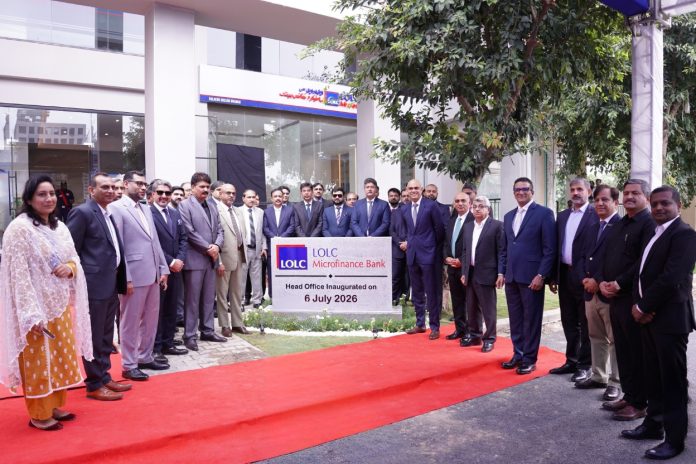
Islamabad, Pakistan| 13 July 2026: LOLC Microfinance Bank Pakistan marked a significant milestone in its growth journey with the relocation to its new Head Office premises in Gulberg Greens, Islamabad. The new facility was formally inaugurated, reaffirming the Bank’s long-term commitment to expanding financial inclusion and supporting Pakistan’s micro and small business sector.

The inauguration ceremony was graced by H.E. Admiral Fred Seneviratne (Retd.), High Commissioner of Sri Lanka to Pakistan, and Mr. Krishan Thilakaratne, Chairman of LOLC Microfinance Bank Pakistan, as the Chief Guests. The event brought together the Board of Directors, the management team of LOLC Microfinance Bank Pakistan, regional and field leadership from across the country, and Head Office employees to celebrate this landmark achievement.

The new Head Office reflects the Bank’s continued expansion and its ambition to strengthen its presence across Pakistan while delivering greater access to responsible financial services for individuals, micro-entrepreneurs, and small businesses.

Speaking on the occasion, Mr. Farooq Rashid, Chief Executive Officer of LOLC Microfinance Bank Pakistan, expressed his gratitude to the LOLC Group leadership and the Board of Directors for their unwavering support and guidance throughout the Bank’s growth journey.

“I sincerely thank Mr. Ishara Nanayakkara, Executive Chairman of the LOLC Group, Mr. Krishan Thilakaratne, Chairman of LOLC Microfinance Bank Pakistan, and our Board of Directors for their trust in our vision. Over the past year, we have witnessed exceptional progress driven by the dedication of our teams across the country. We remain committed to delivering our best and achieving many more milestones.”

Mr. Krishan Thilakaratne, Chairman of LOLC Microfinance Bank Pakistan, highlighted Pakistan’s strategic importance within the Group’s global vision and emphasized the transformative role of financial inclusion.

“Today’s achievement represents only a small part of what the LOLC Group envisions for Pakistan. Sri Lanka and Pakistan share a longstanding and valued relationship, and we are proud to strengthen that bond through sustainable investment. Having successfully transformed the microfinance model across 26 countries, the LOLC Group believes Pakistan offers tremendous opportunities to expand access to finance, particularly for micro-enterprises and SMEs. Financial inclusion remains one of the most effective tools for poverty alleviation, and we are committed to extending our reach to communities that need it most.”

Addressing the audience, H.E. Admiral Fred Seneviratne (Retd.), High Commissioner of Sri Lanka to Pakistan, congratulated the Bank on its remarkable progress and acknowledged the significance of the investment for both countries.

“The relationship between Sri Lanka and Pakistan continues to grow through meaningful partnerships such as this. LOLC Microfinance Bank Pakistan is making an important contribution by supporting entrepreneurs, strengthening the SME sector, and expanding financial access where it is needed the most. Institutions like these play a vital role in empowering communities and supporting sustainable economic growth.”

The ceremony celebrated not only the inauguration of a new corporate office but also the remarkable progress the Bank has made in recent years. The presence of senior management from the Group, regional leadership, field teams, and Head Office employees reflected the collective effort behind the Bank’s success and its shared vision for the future.

As LOLC Microfinance Bank Pakistan enters its next phase of growth, the new Head Office stands as a symbol of ambition, resilience, and the Bank’s commitment to empowering individuals, businesses, and communities through greater financial inclusion. Guided by the global expertise of the LOLC Group and driven by a clear purpose, the Bank remains focused on creating lasting economic opportunities and contributing to Pakistan’s continued development.

About LOLC Microfinance Bank Pakistan

LOLC Microfinance Bank Pakistan is a subsidiary of the LOLC Group, one of the world’s leading financial conglomerates with operations across 26 countries. The Bank is committed to promoting financial inclusion by providing innovative and accessible financial solutions to individuals, micro-enterprises, and small and medium-sized businesses across Pakistan, enabling sustainable economic growth and improving livelihoods.

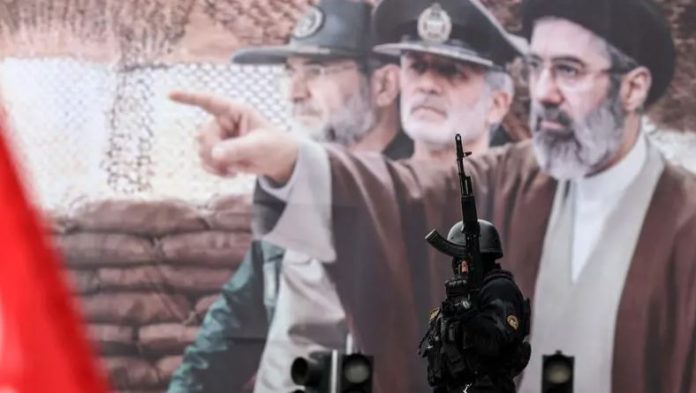
Mojtaba Khamenei says US breaches show Trump’s signature is ‘worthless’

Mojtaba Khamenei says US breaches show Trump’s signature is ‘worthless’

TEHRAN, JUL 18: Iran’s supreme leader Mojtaba Khamenei said in a written statement on Saturday that repeated US breaches of a memorandum of understanding signed by the presidents of Iran and the United States had shown that President Donald Trump’s signature was “utterly worthless and devoid of credibility.”

Washington and Tehran have exchanged strikes after a ceasefire agreement fell apart last week, raising fears of a return to all-out war.

Khamenei said the United States should know that the Iranian nation and the “resistance front” had “unforgettable lessons” for it.

Stay Connected

64FansLike
60FollowersFollow

Latest Reviews

Exchange Rates

USD - United States Dollar
EUR
1.15
GBP
1.34
AUD
0.70
CAD
0.71