Home Blog Page 3196

COMSTECH announces annual scholarships for Turkish scholars at ICCBS

ISLAMABAD, Sep 19 (DNA): COMSTECH has announced five annual scholarships for the Turkish graduate and post-graduate scholars in the field of chemical and biological sciences at the International Center for Chemical and Biological Sciences (ICCBS), University of Karachi, through The World Academy of Science (TWAS)/ COMSTECH fellowship programs.

These students will be placed in various sections of ICCBS based on their fields of interest for 6-12 months.

ICCBS will cover their bench fee, accommodation and research expenses, Coordinator General COMSTECH and Director ICCBS, Professor Dr. M. Iqbal Choudhary stated this while speaking during a meeting with Consul General, Turkish Consulate General in Karachi, Mr. Tolga Uçak.

In the meeting held at ICCBS, Karachi, the discussion a held on establishment of Pak-Turk Mirror Research Centers in the Field of Halal and Textile Product Development, said a message received here.

Prof. Dr. M. Iqbal Choudhary briefed the Consul General about the various projects and activities going on at the ICCBS as well as COMSTECH. It was indeed a very useful and pleasant meeting with lots of excellent ideas exchanged.

The Consul General of Turkey welcomed the proposals of collaboration and ensured the full support in both initiatives. He agreed to coordinate with Turkish universities and research institutions in this regard.

A detailed discussion on the status of various clinical trials on COVID-19 drugs and vaccines was also held.

India’s Strategic Confusion: Running with the hare and hunting with the hounds

Jawad Falak

India recently withdrew from Kavkaz 2020 multinational exercise to be held in Russia in the third week of September, citing logistics difficulties due to covid-19 pandemic as the reason for its withdrawal. However, in reality India has backed out of the multinational exercise while conflict between the two Asian nations simmers across LAC in Ladakh. Apparently this symbolic has been taken by the BJP government in order to show that it is “resisting” China on the world stage. In reality it shows that Indian Strategic Confusion is increasing day by day with its tendency of running with the hare and hunting with hounds.

The KavKaz 2020 also referred to as Causasus-2020 is a strategic command and staff exercise including combat, air defence, naval, special forces and support elements. Which will be held at Dongus training ranges in Russian Southern Military district. The invitation for participation has been extended to at least 18 countries including China, Iran, Pakistan, India and Turkey apart from other Central Asian Republic part of the SCO.

Withdrawal from the exercise puts India on a collision course with Russia which places great importance to such exercises as these highlight its strategic outreach and relevance across the world. By withdrawing from the exercise. India has played into US campaign to weaken Russian influence in the wake of the Ukraine crisis. In an attempt to mollify the Russians, Indian Navy on Sep 4-5 has conducted merely a “Non-contact, at sea only” passage exercise under the title ‘Indra 2020′ with Russian Navy Ships which were on transit to their home port Vladivostok from Hambantota, Sri Lanka.

Russia is not the only foreign power India is trying to woo but also the USA which has become Moscow’s greatest tormentor in the recent times. Ever since the continuous military setbacks at the hands of the Chinese in occupied Ladakh, India has been counting the socalled QUAD, a purported military alliance of Japan, Australia, US and India with the aim of containing China. This not only upsets Russia which views any American backed military endeavor as dangerous but also flies in the face of BRICS a group of nations including Brazil, Russia India, China and South Africa that seek to replace the current US Led unipolar world order which is sabotaged by Indian attempts to climb into US camp against China.

Russia and China are not the only countries who bear the brunt of Indian strategic confusion but the USA does as well. While India clamors for USA military assistance, it continues buying Russian military equipment like Su30s. Mig 29s and the S400 air defense system by the dozens. These purchases trigger the Countering America’s Adversaries Through Sanctions Act or CAATSA which could lead to sanctions on the Indian military and inevitably drive the USA and India apart. While initially it gave waivers to India in the past, now the US has signaled that it would not dole out anymore favors to the South Asian nation. The United States government has already hinted India to reconsider its military acquisition from Russia warning that such purchases could trigger sanctions under CAATSA.

It is not only big power relations that are stymied by Indian strategic confusion but also its regional relations. SAARC which was formulated with the aim of promoting cooperation among South Asian nations has been hamstrung due to Indian vendetta against Pakistan as well as bullying its other neighbors. Its own initiated regional programs like BIMSTEC have similarly been sabotaged by its grandiose claims and unreasonable demands from other nations.

India’s strategic confusion arises from its perception of itself as a great power and eternal civilization whose friendship is indispensable to the world. This delusion was bolstered by the exceptional treatment it received at the hands of the USA and USSR during the Cold War and later on US favors such as a nuclear deal despite non conformation of several parameters This strategic confusion has manifested itself in other domains as well such as the military capability which has been hampered by what scholars Stephen Cohen and Sunil Dasgupta have termed as “arming without aiming.

In the end, India’s prevalent strategic confusion is rapidly eroding its standing amongst the nations of the world The time of favors to India is rapidly coming to an end due to dynamic geopolitical changes and the redrawing of alliances which make the Indian government’s approach “to run with the hare and hunt with the hounds’ obsolete in the modern world. Pakistan can exploit this scenario in order to cement ties with countries like Russia and also fortify its position in the emerging world order.

Jawad Falak is and MPhil student at National Defence University, Islamabad and is a resident research associate at Maritime Study Forum.

From 1 October, entry and exit are allowed to Uzbekistan through air, railway and automobile checkpoints

Tashkent, SEPT 18  — For those entering Uzbekistan by air, the following rules are established:

Persons who have been in the “green countries” in the last 14 days are allowed to enter the territory of Uzbekistan without restrictions. These countries include China, Thailand, Malaysia, South Korea, Georgia, Hungary, Finland, Latvia, Austria and Japan.

Persons arriving from the “yellow countries” (Azerbaijan, Belarus, the United Arab Emirates and the EU countries (with the exception of Great Britain and Spain), as well as from the “red countries” (all other countries of the world) are allowed into the territory of Uzbekistan only if they have a negative PCR test, produced in the last 72 hours.

In the absence of such a test with a negative result, the passenger will not be checked in for the flight to Uzbekistan.

If a passenger arriving in Uzbekistan has not passed the test, or has symptoms of coronavirus, then he takes the test at the checkpoint at his own expense.

If the result is negative, he is sent to a hotel or home quarantine for 14 days.

If positive – to a quarantine center in Uzbekistan at his own expense or returns to the country of arrival at his own expense.

Persons entering the Republic of Uzbekistan through automobile and pedestrian checkpoints on the border with Kazakhstan, Turkmenistan, Tajikistan and Afghanistan are subject to the same conditions as for passengers from the “red countries”: a negative PCR test result and a 14-day quarantine in a hotel or at home. In the absence of a certificate, they take the test at their own expense at the checkpoint and are sent to quarantine.

There are no travel restrictions for citizens of Uzbekistan. Each country in the world independently decides whether to accept the citizens of Uzbekistan or not.

Hotel One Airport to open in the City of lights, Karachi

The purpose built 100-room contemporary hotel to feature dining outlets, event spaces right next to Jinnah International Airport, Karachi.

DNA

Karachi, SEPT 18 – To redefine the modern travel experience by opening a brand-new hotel near Jinnah International Airport in Karachi, Hashoo Group has collaborated with Ghani Builders & Developers (Pvt) Ltd.

Hashoo Group is the leading and largest chain of hotels in Pakistan, whereas Ghani Builders & Developers (Pvt) Ltd, one of the most trusted names in real estate development and construction.

For this, a Memorandum of Understanding (MoU) was signed between the two companies on Thursday, 17th September 2020. The MoU was signed by Mr. Haseeb A. Gardezi, Chief Operating Officer, Hashoo Group Hospitality Division, and Mr. Jawed Iqbal, Managing Director Ghani Builders & Developers (Pvt) Ltd.

At the MoU signing ceremony, Mr. Haseeb A. Gardezi said, “Hotel One is the fastest growing chain of select-service hotels in Pakistan which is contributing to the economy by providing jobs and by strengthening the tourism infrastructure by providing affordable accommodation. We are pleased to collaborate with Ghani Builders & Developers (Pvt) Ltd, for the opening of the upcoming Hotel One next to the Karachi airport. The hotel is sure to offer a comfortable travel experience, a convenient location for domestic and international travellers along with a wide range of facilities.”

He further said: ”Our investors have full confidence in Hotel One’s management model and we are also very focused delivering maximum returns to them which is why in the near future you will Insha Allah find Hotel One in every city of Pakistan.”

Mr. Jawed Iqbal, said, “This hotel will be strategically located next to Jinnah International Airport Karachi, with its prime location it will provide easy access as an economic and transit hub of the city, where guests will be able to save their commute time instead of travelling to the city to find a good quality hotel.” Mr. Jawed also thanked Hashoo Group for the collaboration between the two organisations and mentioned that the hotel will be ready by August 2022.

The upcoming Hotel One – Airport Karachi will attract both domestic and international guests, offering them quality accommodation and services in the proximity of the Karachi Airport, housing a variety of dining outlets, a Health Club, and banquet spaces, the hotel is designed to help guests feel energised, productive, and at home.

Catering to the business travellers, the hotel will offer them meeting rooms equipped with the latest technology, business services and a dedicated team to deliver seamless business experiences.

Chinese envoy says Pak played key role in intra-Afghan talks

Ambassador Yao Jing also supported Pakistan’s stand on the Kashmir issue and appreciated the way Pakistan government had highlighted the issue at all forums; says Pakistan is now a safe place to live and invest

Ansar M Bhatti

ISLAMABAD: The outgoing Ambassador of People’s Republic of China Yao Jing has recognized Pakistan’s role in regional peace and stability adding dialogue among various Afghan factions could be possible only with the help of Pakistan.

The Chinese ambassador made these remarks in a farewell reception he hosted for the media people. The Chinese ambassador delivered an emotional speech saying he was leaving Pakistan with a heavy heart.

Ambassador Yao Jing also supported Pakistan’s stand on the Kashmir issue and appreciated the way Pakistan government had highlighted the issue at all forums.

The ambassador said he served in Pakistan for almost three years and leaving next Thursday. He said he spent total 13 years in Pakistan in various capacities adding his total diplomatic career spanned over 15 years out which he spent 13 years in Pakistan.

He added, China and Pakistan relationship has been growing with the each passing day and hoped it will further be strengthened in the days to come. He appreciated efforts of the incumbent government of Prime Minister Imran Khan in preserving and strengthening bilateral relations.

Talking about CPEC the ambassador said CPEC will continue despite all ifs and buts. Initially CPEC had four areas first Gwadar, second infrastructure third power projects and fourth industrial development. However four more sectors have been added to the CPEC ambit that include agriculture, social sector, science and technology.

He said Orange line shall also be made operational in a few days while various power sector projects have either been completed are in the process of completion.

The ambassador said we do welcome positive criticism that seeks to help us further improve and streamline projects nevertheless there are some people who do criticism just for the sake of criticism.

“ We do reject such kind of criticism or remarks but not with words but with our actions, work and contributions to the economy “he added.

The ambassador said apart from CPEC there are other areas also where both China and Pakistan have been cooperating adding our relationship in fact continues since seven decades.

He said China always favours and supports regional connectivity because that is the only way to achieve various developmental goals.

The Chinese ambassador also lauded govt efforts in improving the security situation in Pakistan. He said Pakistan is now a safe place to live and invest.

He said he will miss Pakistan and great hospitality extended to him during his three years. He wished Pakistan and people of Pakistan success and prosperity. DNA

=========

Deteriorating state of governance, education sector detrimental to country’s future: IPS’ National Academic Council

DNA

ISLAMABAD, SEPT 18 – Senior academics and experts, including four vice chancellors of different universities from across Pakistan have termed unchecked governance deficit and institutional deterioration of education sector, especially higher education, in the country as two of the biggest domestic challenges, cautioning that failure in addressing these issues can prove extremely destructive for the nation.

These apprehensions were shared at the annual meeting of the National Academic Council (NAC) of Institute of Policy Studies (IPS), Islamabad. The session was chaired by Executive President IPS Khalid Rahman and addressed by Ambassador (r) Shamshad Ahmed Khan, Syed Abu Ahmad Akif, former federal secretary, Dr Anis Ahmad, vice chancellor, Riphah International University, Prof Dr Anwar-ul-Hassan Gilani, vice chancellor, University of Haripur, Dr Fateh Muhammad Burfat, vice chancellor, University of Sindh, Dr Syed Tahir Hijazi, vice chancellor, Muslim Youth University, Dr Syed M Junaid Zaidi, executive director, COMSATS University, Dr Adnan Sarwar Khan, former dean of social sciences, University of Peshawar, Dr Abdul Rauf Rafiqui, director, Abdul Samad Khan Achakzai Chair, University of Balochistan, Dr Noreen Saher, chairperson, Department of Anthropology, International Islamic University, Islamabad, Fasih Uddin, former chief economist of Pakistan, Mirza Hamid Hasan, former federal secretary, Air Cdr (r) Khalid Iqbal, and Amanullah Khan, former president, Rawalpindi Chamber of Commerce and Industry.

It’s worth mentioning here that IPS-NAC is a supervisory consultative body comprising renowned intellectuals, scholars, academicians and field experts from across Pakistan brought together on one platform to deliberate matters of national significance and in turn help steer the Institute’s research work with their guidance.

The speakers raised various governance-related issues prevailing in the country, maintaining that the government’s machinery depends heavily on bureaucracy and hence it was important for the latter to play their part positively. They also suggested revisiting the colonial structure of the bureaucracy and reforming it according to the contemporary best practices. They believed that the country’s situation cannot improve unless the bureaucracy begins to understand and play its role diligently.

Dr Burfat directed attention towards the deteriorating condition of government educational institutions, especially universities, due to lack of resources and political appointments creating overemployment over the years. Speaking about the importance of strengthening government institutions and allowing them to work as per their mandate without any interference, Dr Burfat revealed that political intervention in universities after the 18th constitutional amendment has increased manifold and was affecting their autonomy and academic standard considerably.

Contemplating the prevailing deficiencies in the country’s education system, Dr Gilani pointed out that a good education system should be aimed at instilling confidence and creativity in students and shaping their character. However, he said the current system was missing out on this critical part comprehensively.

Dr Saher also spoke on similar lines, stating that curriculum designing the world over revolved around three important features; information, skills and attitude building. In Pakistan, however, the focus was primarily on the informational aspect, ignoring the skills and attitude building part almost in its entirety. The result of this approach, according to her, was a lot well versed in information but lacking the skills as well as the attitude to excel professionally.

Fasih Uddin and Dr Zaidi laid a lot of stress on science and technological education, calling it the need of the hour, especially in the wake of challenges posed by the Fourth Industrial Revolution.

Dr Sarwar, on the other hand, was wary of over-dependence of students on technology which, according to him, could deteriorate their thinking and self-learning capacity, and hence he suggested adopting a balanced approach.

Hamid Hasan talked about critically reviewing the West-influenced mentality where every academic endeavor was evaluated as per the Western paradigm while every locally generated discourse or indigenously produced narrative was looked down as mediocre in nature.

Dr Anis called for forging a proactive instead of a reactive mindset when it comes to research and academic endeavors. He stressed that our beliefs and culture had their own set of positives and strengths, and hence one should encourage local scholarship that is pursuing any discourse with an indigenous approach.

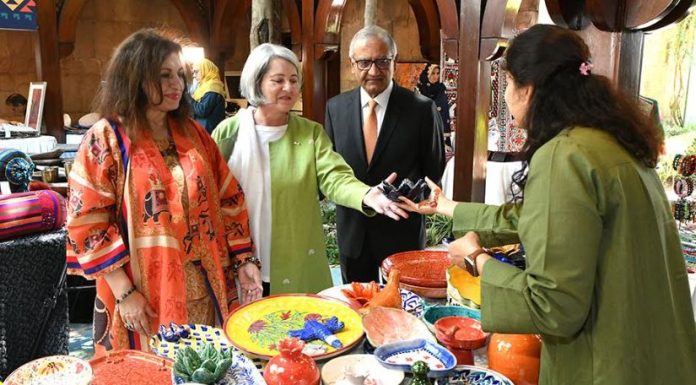
Army Chief hails outgoing Chinese envoy’s contributions for Pakistan

ISLAMABAD, SEP 18 (DNA) – Chief of Army Staff General Qamar Javed Bajwa hosted a farewell dinner in honour of the outgoing Chinese Ambassador to Pakistan Yao Jing, in Islamabad.

He thanked the Ambassador Yao Jing for his services and appreciated his contributions for fostering strong ties between Pakistan and China, support towards defence and security cooperation, handling of COVID-19 pandemic and stance on Kashmir.

During the interaction, matters of mutual interest, regional security and enhanced bilateral cooperation came under discussion.

The outgoing Chinese ambassador appreciated and acknowledged Pakistan’s positive role in the region and pledged to play his role for further improvement in diplomatic cooperation between the two countries. =DNA

========================

British Virgin Atlantic announced flight operations from Pakistan

DNA

ISLAMABAD, SEPT 18 – Virgin Atlantic is delighted to announce that flights from Pakistan to London Heathrow and Manchester are on sale now starting on 11th December 2020. 

Flying three new routes from Lahore to London Heathrow, Islamabad to London Heathrow, as well as from Islamabad to Manchester, subject to applicable regulatory approvals; these new services will operate on one of Virgin Atlantic’s newest, most fuel-efficient aircraft, the 787-9 boasting31 Upper Class suites,35 Premium and 192 Economy seats.

These new services will open up over 290,000 seats between Pakistan and the UK annually whilst also offering seamless, speedy connections and a consistent long-haul onboard experience for customers travelling from Pakistan to onwards destinations throughout North America, including New York JFK, Los Angeles, Washington, Boston and San Francisco via London Heathrow. Connections to European destinations will also be available through code share and interline partners.

Alex McEwan, Commercial Manager – Pakistan, Virgin Atlantic commented, ‘’ We are excited to open bookings for our first ever flights to Pakistan. This is a great opportunity to offer travellers from Pakistan even more choice when they travel to UK and connect to USA, experiencing our award-winning service on one of our newest aircraft –787 Dream liner. Pakistan is one of the largest foreign-born populations within the UK and our flights will offer the opportunity to visit and reunite with friends and relatives. Alongside our Lahore and Islamabad services to London, the Manchester to Islamabad service is very exciting as it is our first route in Asia from Manchester.’’

Virgin Atlantic will also offer a fast, efficient cargo service presenting new opportunities for companies looking to export and import goods such as fresh produce and textiles between prime markets in the UK and US, and Pakistan.

RCCI elects Nasir Mirza as unopposed President

RAWALPINDI, SEPT 18 (DNA) – Nasir Mirza elected unopposed as President of the Rawalpindi Chamber of Commerce and Industry (RCCI) for the year 2020-21.

The 3-member RCCI Election Commission consisting of Malik Zahoor, Fazlurahman Malik and Sheikh Hafeez Ahmad announced the winners in this regard in a meeting held here on Friday.

The announcement of newly elected Senior Vice President Usman Ashraf and Vice President Shahraiz A. Malik were also made. Newly elected office bearers will take charge on October 1, 2020.

According to Election Commission no nomination papers were received against the said three members for three seats i.e President, Senior Vice President and Vice President hence election commission declared the said candidates as winners.

President RCCI  Saboor Malik and Group Leaders Sohail Altaf, SM Naseem, former presidents Najam Rehan, Dr Hassan Saroosh, Jalil Malik, Raja Amer Iqbal Mian Humayun Parvez and representatives of trade associations felicitated the newly elected office bearers and hoped that new body will leave no stone unturned for the betterment of the business community.

RCCI President also expressed hope that the new team under the leadership of Nasir Mirza will continue the legacy of RCCI and outperform in safeguarding the interests of the business community. DNA

==============

Stay Connected

64FansLike
60FollowersFollow

Latest Reviews

Exchange Rates

USD - United States Dollar
EUR
1.17
GBP
1.36
AUD
0.72
CAD
0.74




