Home Blog Page 319

China-Pakistan achieves progress in Trade and Technology

China-Pakistan achieves progress in Trade and Technology

BEIJING, JAN 3 /DNA/ – A successful meeting focused on China-Pakistan bearing industry cooperation was held at the Pakistan Embassy in Beijing, facilitated by the China Association of Private Science and Technology Enterprises. 

The talks covered product exports, technology cooperation, and localized services, leading to several cooperation agreements. This marks a significant step in advancing high-end manufacturing collaboration under CPEC.

The meeting was led by Xia Jing, Vice President of the High-tech Industry Sub-association, along with key representatives from China’s bearing sector, and co-hosted by Khan Muhammad, Science and Technology Counselor at the Pakistan Embassy in China, Gwadar Pro reported.

Vice President Xia noted that the visit aimed to align with CPEC’s objectives and match China’s high-quality technological products with Pakistan’s market needs.

Counselor Khan Muhammad highlighted the vast potential of Pakistan’s bearing market, with growing demand driven by rapid industrialization and infrastructure upgrades, particularly in the automotive and logistics sectors. 

He pointed out that Pakistani imports of high-quality bearings is increased by 5% year-on-year, with Chinese bearings now holding about 30% of the market share.

Khan also discussed the favorable policies for Chinese investments, including tax exemptions and tariff waivers for equipment imports under the China-Pakistan Free Trade Agreement. 

He assured that Pakistan’s Investment Commission would provide one-stop services to ensure smooth project execution.

Chinese company representatives presented their bearings, which meet international ISO standards and, in some high-end products, even German DIN standards in terms of wear resistance and service life. 

They also showcased bearings designed for Pakistan’s tropical climate, with enhanced high-temperature and corrosion-resistant features, tailored to local needs.

Both sides engaged in practical discussions on how to integrate “product export + technology cooperation” into Pakistan’s local industry. Pakistan expressed interest in facilitating connections between Chinese companies and local automotive manufacturers and service providers.

Chinese companies responded positively, offering customized production solutions based on Pakistan’s needs and suggesting the establishment of bearing testing and maintenance centers in Pakistan to provide localized, full-service support, including product output, technical services, and after-sales.

The talks concluded with an initial agreement on bearing product exports. Xia Jing summarized the discussions as a promising start to bilateral cooperation, with the association committed to providing ongoing support in policy advice and compliance. 

Khan Muhammad emphasized that Pakistan would continue to create a stable, transparent, and efficient investment environment, aiming to strengthen China-Pakistan cooperation in high-end manufacturing and contribute to the high-quality development of the China-Pakistan Economic Corridor.
DPM Dar jets off to Beijing for 7th Pakistan-China Strategic Dialogue

DPM Dar jets off to Beijing for 7th Pakistan-China Strategic Dialogue

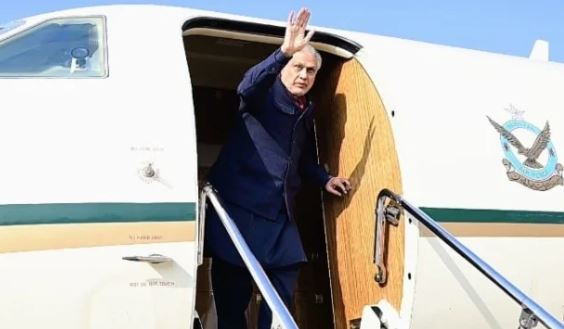
ISLAMABAD, JAN 3 – Deputy Prime Minister and Foreign Minister Senator Ishaq Dar on Saturday departed for Beijing to co-chair the 7th Pakistan–China Foreign Ministers’ Strategic Dialogue, scheduled for January 4, the Foreign Office said in a statement.

The FO said Dar is the first foreign dignitary to visit China in 2026, adding that the visit is taking place at the invitation of Chinese Foreign Minister Wang Yi.

According to the statement released earlier this week, the strategic dialogue is the highest consultative mechanism between Pakistan and China and provides a structured forum to review the full spectrum of bilateral cooperation, alongside regional and international issues of mutual interest.

The Foreign Office said the dialogue will also identify new areas of partnership and consider steps to further advance the All-Weather Strategic Cooperative Partnership between Pakistan and China.

It added that during the dialogue, the two foreign ministers are expected to announce a range of initiatives and commemorative activities to mark the 75th anniversary of the establishment of diplomatic relations between Pakistan and China, which will be observed in 2026.

The FO said the visit forms part of regular high-level exchanges and underscores the shared resolve to expand and deepen bilateral cooperation, while reaffirming the mutual commitment of both countries to regional peace, stability and sustainable development.

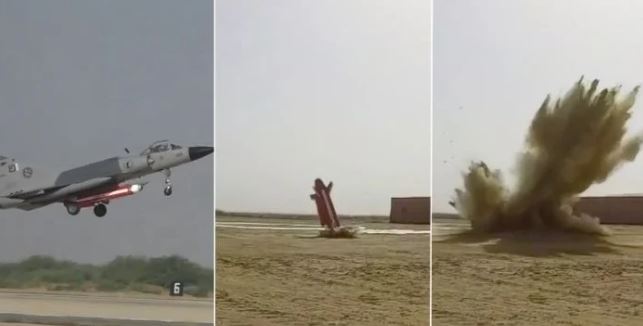
Low-flying cruise missile with 600km range tested successfully

Low-flying cruise missile with 600km range tested successfully

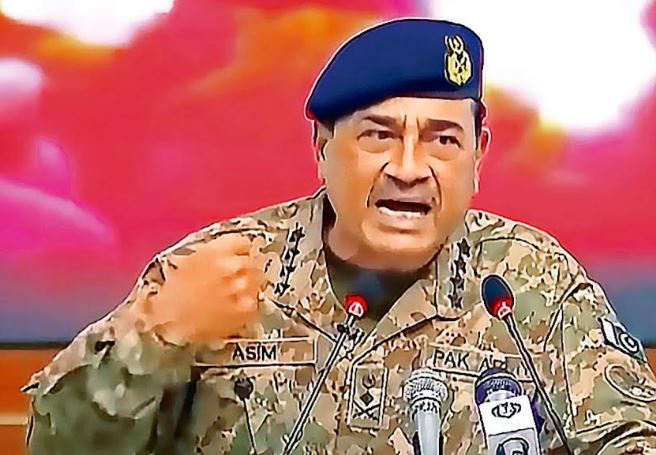
ISLAMABAD, JAN 3 /DNA/ – Pakistan Air Force has successfully conducted the flight test of the indigenously developed Taimoor Weapon System, marking another significant milestone in the advancement of national aerospace and defence capabilities. Taimoor Air-Launched Cruise Missile is capable of engaging enemy land and sea targets with high precision at a range of 600 kilometers, carrying a conventional warhead.

Equipped with state-of-the-art navigation and guidance system, Taimoor is designed to fly at very low altitudes, enabling it to effectively evade hostile air and missile defence systems. Its precision-strike capability significantly enhances the conventional deterrence and operational flexibility of Pakistan Air Force, further strengthening the country’s overall defence posture. The successful flight test underscores the technical maturity, innovation and self-reliance achieved by Pakistan’s defence industry. The launch was witnessed by senior officers of the Pakistan Armed Forces, along with distinguished scientists and engineers who played a pivotal role in the development of this advanced weapon system.

Air Chief Marshal Zaheer Ahmed Baber Sidhu, Chief of the Air Staff, Pakistan Air Force, heartily congratulated the scientists, engineers and the entire PAF team on this remarkable achievement. He lauded their professional excellence, dedication and unwavering commitment to strengthening Pakistan’s defence capabilities.

The Air Chief reaffirmed that such accomplishments are a testament to the nation’s resolve to achieve technological self-sufficiency and maintain a credible conventional deterrent in the evolving regional security environment.

The successful test of the Taimoor weapon system reflects Pakistan Air Force’s continued pursuit of operational readiness, technological superiority and national security objectives.

Time for a Decisive Stand on Kashmir

Time for a Decisive Stand on Kashmir

by Muhammad Mohsin Iqbal

Conflicts among human beings are as old as civilisation itself. Differences of belief, territory, power and perception have repeatedly pushed societies into confrontation. History records that such conflicts are addressed in three principal ways; through war and the imposition of force, through reconciliation by mutual consent, or through mediation and legal frameworks designed to secure a just settlement. Where none of these paths is decisively taken, disputes linger, harden with time, and pass from one generation to another.

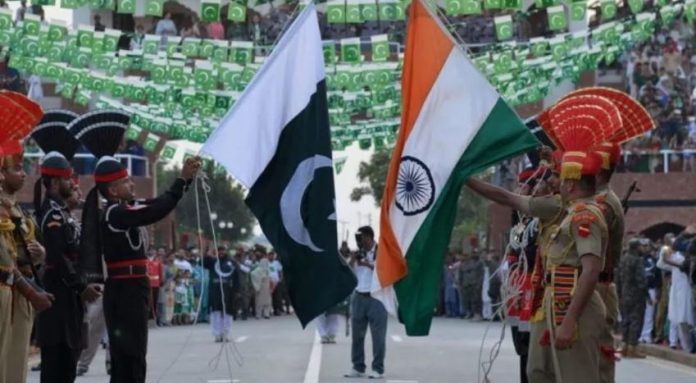
Since the middle of the twentieth century, the world has witnessed three of the longest unresolved international conflicts; the dispute between Pakistan and India over Jammu and Kashmir since 1947, the Arab-Israeli conflict since 1948, and the division of the Korean Peninsula since 1945. Among these, Kashmir remains one of the most enduring and morally troubling, as it involves a clear and documented international commitment that has remained unfulfilled for over seventy-five years.

On 5 January 1949, the United Nations Commission for India and Pakistan (UNCIP) adopted a resolution affirming a simple yet powerful democratic principle: the future of the State of Jammu and Kashmir would be decided through a free and impartial plebiscite under United Nations supervision, enabling the people themselves to choose whether to accede to Pakistan or India.

This resolution supplemented the earlier UNCIP resolution of 13 August 1948, which had laid down the ceasefire and demilitarisation framework following the first Indo-Pakistani war over Kashmir. Both governments accepted these principles, leading to a ceasefire effective from 1 January 1949. The resolutions outlined comprehensive safeguards to ensure fairness, including withdrawal and disposal of armed forces, appointment of an internationally respected Plebiscite Administrator, freedom of speech, press and assembly, release of political prisoners, protection of minorities, return of displaced persons, and the complete absence of coercion or intimidation. In essence, the United Nations placed the democratic will of the Kashmiri people at the centre of the settlement.

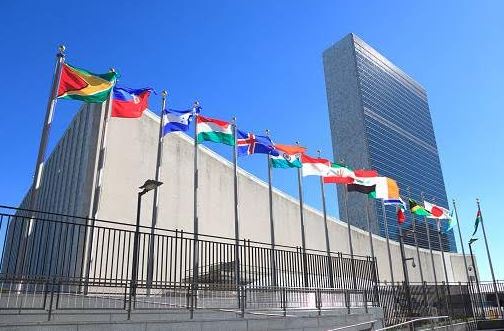
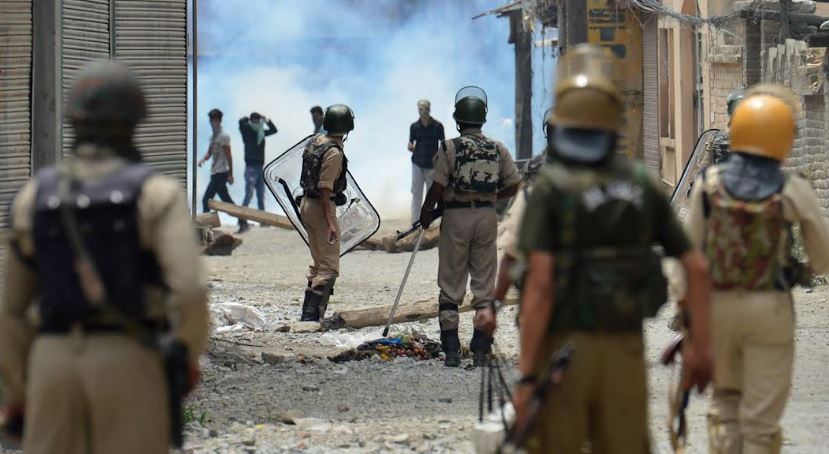
Yet the plebiscite was never held. Disputes over demilitarisation and sequencing, followed by sustained political resistance, gradually froze the process. As decades passed, realities on the ground were altered, but the core promise remained outstanding. Today, the Kashmir dispute continues to occupy a place on the agenda of the United Nations Security Council, a rare example of an acknowledged but unresolved international issue. Meanwhile, in Indian-administered Kashmir, generations have lived under heavy militarisation, restrictions on political expression, and, particularly after the revocation of special status in 2019, growing fears of demographic engineering.

Every year on 5 January, Kashmiris on both sides of the Line of Control, members of the diaspora, and supporters in Pakistan observe the day as the Right to Self-Determination Day. Rallies, seminars, peaceful protests and official statements recall the UNCIP resolution and urge the international community to honour its commitments. Pakistan lends formal support through government messages and events, while pro-self-determination groups highlight alleged human rights violations and the continued denial of political choice. This is undoubtedly a civilised and lawful mode of protest. Yet an unavoidable question persists; can a people be expected to commemorate an unfulfilled promise indefinitely, passing the burden of waiting from one generation to the next?

For nearly seventy-five years, this ritual has continued while the ground reality has steadily worsened. India maintains that Jammu and Kashmir is an integral part of its territory, that accession is final, and that the issue is bilateral in nature. The Pakistani and Kashmiri perspective, however, holds that the dispute is international, anchored in binding United Nations resolutions, and that the right to self-determination is inalienable and cannot be extinguished by time or unilateral actions.

In recent months, particularly after the events of 9 May 2025, Pakistan has undergone a profound transformation. At that critical juncture, the situation was such that Pakistan possessed the capacity to respond in any manner it deemed fit. Yet it chose restraint and upheld the values expected of a responsible state. Significantly, then United States President Donald Trump publicly confirmed that India had approached him in connection with a ceasefire. More recently, the Chinese Foreign Minister has also confirmed that India contacted China to play its role in facilitating the ceasefire. These acknowledgements carry weight, underscoring not only Pakistan’s measured conduct but also the shifting regional and international perception of responsibility and credibility.

Emerging from a period of internal strain, Pakistan today speaks with greater confidence and dignity on the world stage. Its voice is heard with renewed attention, and this change places a corresponding responsibility upon its leadership. The time has come to move beyond symbolic remembrance alone and to firmly convey to the international community that what has been happening in Kashmir for decades cannot be allowed to continue unchecked. The world must be reminded that solemn commitments were made, accepted by both parties, and endorsed unanimously by an international commission comprising respected global powers.

A decisive, principled and diplomatic stand on Kashmir is now imperative. It must be made clear that procedural delays and altered narratives cannot erase documented resolutions or silence the democratic aspirations of an entire people. Peace in South Asia will remain fragile so long as Kashmir remains unresolved. Justice delayed for seventy-five years is not merely justice denied; it is a continuing test of the moral credibility of the international order.

Dar, Saudi FM discuss regional tensions, call for de-escalation

Dar, Saudi FM discuss regional tensions, call for de-escalation

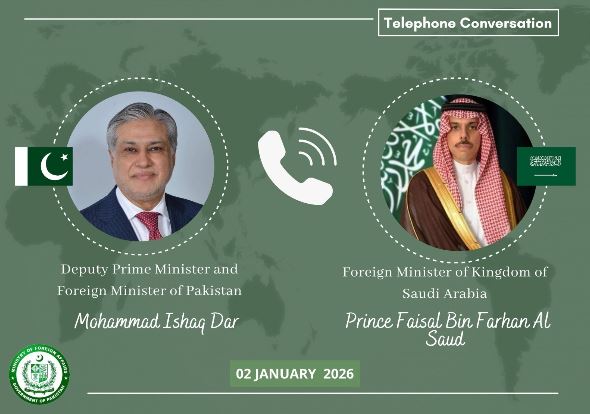
ISLAMABAD, JAN 2 /DNA/ – Deputy Prime Minister / Foreign Minister, Senator Mohammad Ishaq Dar @MIshaqDar50 spoke tonight to Saudi Foreign Minister HH Prince Faisal bin Farhan @FaisalbinFarhan.

Both leaders discussed the latest situation in the region.

DPM/FM stressed that all concerned in the region must avoid any escalatory move and advised to resolve the issues through dialogue and diplomacy for the sake of regional peace and stability.

Work on Lowari Tunnel–Chakdara Section upgradation nears completion

Work on Lowari Tunnel–Chakdara Section upgradation nears completion

ISLAMABAD, Jan 02 (APP/DNA):The National Highway Authority (NHA) has completed much of the work on the upgradation and maintenance of the Lowari Tunnel–Chakdara Section on N-45.

According to a document available with Wealth Pakistan, the NHA is executing periodic maintenance of the Lowari Tunnel at Chakdara on the National Highway (N-45).
The task of upgradation and maintenance is expected to be completed by early 2026. This section was in a dilapidated condition, inviting the attention of the NHA authorities.
The periodic maintenance work has been divided into two sections. Section one spans 140-155km, and section two 155-193km, involving a total cost of Rs1,440 million. As per the document, 38% work has been completed on the first section, and 78% on the second section so far.
This tunnel ensures an uninterrupted connectivity between Khyber Pakhtunkhwa and Chitral and serves as a vital route for commuters, trade, and tourism.
Over the years, heavy traffic flow, harsh weather conditions, and natural wear and tear have significantly damaged the road at various places, making timely intervention essential.
The ongoing maintenance includes pavement rehabilitation, asphalt wearing course, improvement of drainage systems, slope protection, and repair of damaged structures along the route.
“These measures aim to enhance road safety, reduce travel time, and ensure smooth movement of traffic, particularly during the peak travel seasons and adverse weather conditions,” a senior NHA official told Wealth Pakistan.
The NHA is closely monitoring the quality standards and timely completion. Regular inspections and coordination with contractors are being carried out to address any technical issues that may arise during the execution,” said an official privy to the project.
The improved road conditions will facilitate the transportation of agricultural produce, goods, and essential supplies to and from Chitral, besides promoting tourism by providing safer and more reliable access to the scenic valley.
The official said that the NHA is committed to maintaining the national highways and motorways across the country. He said that similar maintenance and upgradation projects were underway on other critical routes. Infrastructure development remains a priority for the NHA to support regional connectivity, economic growth, and public safety, he concluded.

Rawalpindi ATC grants Aleema final opportunity for cross examination

Rawalpindi ATC grants Aleema final opportunity for cross examination
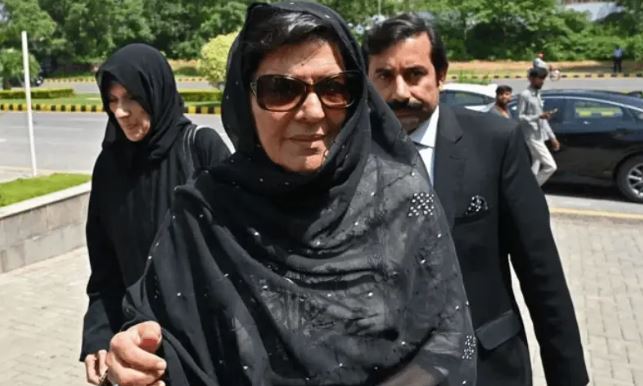
RAWALPINDI, Jan 02 (APP /DNA):The Anti-Terrorism Special Court (ATC), Rawalpindi  has given last chance to Aleema Khan for cross examination. 

Presided over by Judge Amjad Ali Shah, the hearing of case No. 3933 registered at Sadiqabad Police Station regarding November 26 protests, took place on Friday.

PTI founder’s sister, Aleema Khan was absent from today’s proceedings. However, an application for exemption from personal appearance was submitted on her behalf, which the court accepted.

During the court proceedings, the prosecution presented 8 witnesses. Cross-examination of witnesses by two accused was completed. Overall, cross-examination of the 8 prosecution witnesses has been concluded for three of the accused.

The court granted a final opportunity to the remaining seven accused including Aleema Khan to conduct cross-examination of the witnesses at the next hearing. The court warned that if cross-examination is not carried out on the next date, a State counsel will be assigned to represent them and complete the cross-examination on their behalf.

Additionally, bailable warrants were issued for three accused Sajid Ali Qureshi, Ali Raza, and Muhammad Hanif as none of them appeared in court today, nor was any counsel or representative present on their behalf, despite their previous exemption from appearance having been granted.

The case was adjourned to Monday, January 05 for further proceedings.

Pakistan, Azerbaijan to finalize $2 billion investment mechanism

Pakistan, Azerbaijan to finalize $2 billion investment mechanism

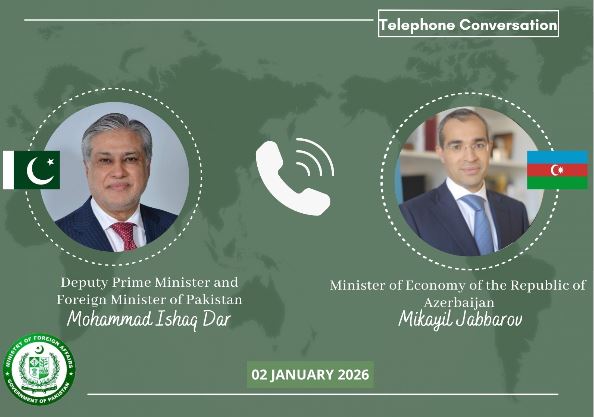
ISLAMABAD, JAN 2 /DNA/ – Deputy Prime Minister/ Foreign Minister Senator Mohammad Ishaq Dar @MIshaqDar50 held a telephonic conversation with H.E. Mikayil Jabbarov, Minister of Economy of Azerbaijan @MikayilJabbarov to discuss realization of Azerbaijani investment of US$ 2 Billion in Pakistan.

The two leaders expressed satisfaction on the state of bilateral relations and agreed to enhance them further.

DPM/FM underscored the importance of high-level engagements in strengthening Pakistan-Azerbaijan cooperation in areas of mutual interest.

It was agreed to finalize a mechanism in this regard allowing the Azerbaijani investments in the identified sectors of Pakistan’s economy.

Three Pakistan Navy Rear Admirals promoted to Vice Admiral rank

Three Pakistan Navy Rear Admirals promoted to Vice Admiral rank

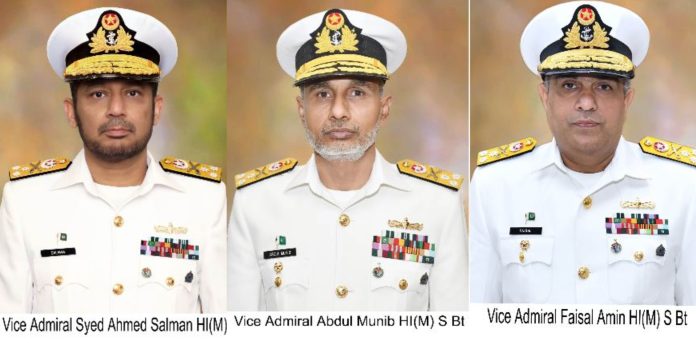
KARACHI, JAN 2 /DNA/ – Rear Admiral Abdul Munib, Rear Admiral Syed Ahmed Salman and Rear Admiral Faisal Amin of Pakistan Navy have been promoted to the rank of Vice Admiral.

Vice Admiral Abdul Munib was commissioned in Operations Branch of Pakistan Navy in 1992. The Flag Officer is a graduate of Pakistan Navy War College Lahore, National Defence University Islamabad and qualified Naval War College Command Course from USA. The Admiral has an illustrious naval career covering vast experience of various Command and Staff appointments including Commanding Officer of PNS ALAMGIR, PNS LARKANA, PNS AKRAM, PNS AATISH and Commander Surface Task Group-2, Commander 25th Destroyer Squadron and Commander Combined Task Force-151 at HQ US NAVCENT Bahrain. He has also served as Naval Secretary, DG Naval Intelligence, DG (C 4I) and Deputy Chief of the Naval Staff (Operations) at Naval Headquarters Islamabad. He is currently serving as Commander Pakistan Fleet. In recognition of his meritorious services, the Flag Officer has been awarded Hilal-i-Imtiaz (Military) and Sitara-i-Basalat.

Vice Admiral Syed Ahmed Salman was commissioned in Supply Branch of Pakistan Navy in 1991. The Flag Officer is a graduate of Pakistan Navy War College Lahore and National Defence University Islamabad. The Admiral has an illustrious service career with vast experience of Command and Staff appointments including Director Inventory Control Point and Director Procurement (Navy). He has also served as Secretary to Chief of the Naval Staff, Director Surface Stores and Assistant Chief of the Naval Staff (Supply) at Naval Headquarters Islamabad and as Attaché Defence Procurement, UK. He is currently serving as Deputy Chief of the Naval Staff (Supply) and Deputy Chief of the Naval Staff (Admin). In recognition of his meritorious services, the Flag Officer has been awarded Hilal-i-Imtiaz (Military).

Vice Admiral Faisal Amin was commissioned in Operations Branch of Pakistan Navy in 1992. The Flag Officer is a graduate of Royal College of Defence Studies UK, Army Command and Staff College Quetta and National Defence University Islamabad. The Admiral has an illustrious career with vast experience of various Command and Staff appointments including Commanding Officer PNS RAJSHAHI and PNS ALAMGIR, Commander 18th Destroyer Squadron and Commander Surface Task Group-1. He also served as Instructor at UAE Naval College Abu Dhabi. Moreover, he served as Director Naval Operations, Director Naval Development Plans (Platform), Principal Secretary to Chief of the Naval Staff, Assistant Chief of the Naval Staff (Operations), Naval Secretary at Naval Headquarters Islamabad and Additional Secretary-III at MoD Rawalpindi. He is currently serving as Commander Coast. The Flag Officer has been conferred with Hilal-i-Imtiaz (Military) and Sitara-i-Basalat in acknowledgment of his distinguished services.

PM Shehbaz approves 14-member caretaker cabinet for GB

GILGIT-BALTISTAN, JAN 2: Approval has been granted for a 14-member caretaker cabinet for Gilgit-Baltistan. According to details

GILGIT-BALTISTAN, JAN 2: Approval has been granted for a 14-member caretaker cabinet for Gilgit-Baltistan. According to details, Prime Minister Shehbaz Sharif, in his capacity as the Gilgit-Baltistan Council, approved the caretaker cabinet, and a formal notification has been issued.

The notification, the appointments were made in consultation with the caretaker the Gilgit-Baltistan chief minister. Members of the caretaker cabinet include Sajid Ali Baig, Engineer Altaf Hussain and Ghulam Abbas.

The cabinet will also include Colonel (retd) Abrar Ismail, Meher Dad, Sharafat Din, Molana Sarwar Shah, Raja Shehbaz Khan and Mumtaz Hussain.

The notification said that Dr Niaz Ali, Syed Adil Shah, Bahadur Ali, Syed Fatima and Abdul Hakeem have also been included in the caretaker cabinet of Gilgit-Baltistan.

Stay Connected

64FansLike
60FollowersFollow

Latest Reviews

Exchange Rates

USD - United States Dollar
EUR
1.14
GBP
1.34
AUD
0.70
CAD
0.71