Home Blog Page 3188

Pakistan legal system is obsolete, says Dr. Nudrat

I have worked on cases like Bayindir concerning an approximate claim of USD 800 million, Agility concerning an approximate claim of USD 650 million, and recently advised the government concerning Riko Dik dispute valuing approximately 6 billion dollars. In Riko Dik case the UN tribunal now has issues stay orders in favour of Pakistan.

EXCLUSIVE

Ansar M Bhatti

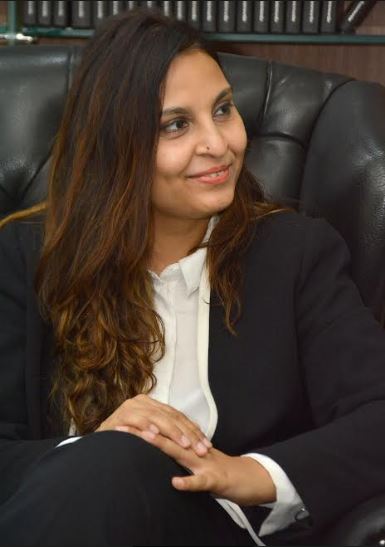
ISLAMABAD:  Dr. Nudrat E. Piracha has said the legal system left with Pakistan by the colonial masters has become obsolete. For instance, crucial laws like the Civil Procedure Code, 1908, Contract Act 1872 and Arbitration Act 1940 are three fundamental laws that exemplify failure of Pakistani laws to keep abreast of developments in the world.

There is a need to introduce private and court-annexed ADR through state of the art facilities and national and international neutrals whose integrity and competence are of the highest levels.

In addition, there is a need to revolutionize the court processes and judicial decision making to provide a system that can deliver. Various amendments have been made in the Civil Procedure Code in this regard which is a welcome initiative and a first step in this direction. There is a dire need for an ADR center that can provide ADR solutions for the needs of nationals and foreigners.

Dr. Nudrat expressed these views in an interview with Daily Islamabad POST, CENTRELINE magazine and DNA News Agency.

00

Dr. Nudrat E. Piracha is is the first woman in Pakistan to have qualified as an Doctor of Juridical Sciences (S.J.D), which is the highest degree in law awarded to people with exceptional academic and professional record. She is a Fulbright scholar, a Weinstein JAMS International Fellow for 2018, and the first lawyer from Pakistan to become a Fellow of the Chartered Institute of Arbitrators, UK (FCIArb

She further said her area of interest has been alternative dispute resolution (ADR), which is a mechanism whereby disputes are resolved through the intervention of an independent third party, through amicable means.

A society can survive with many failings but no society is sustainable without an effective justice system. The Pakistani justice system is broken and many laws underlying the processes have become obsolete. The rest of the world is centuries ahead in litigation system designs. To-date, according to a report published by the Pakistani law Commission in July this year, 2 million cases are pending in courts.

Nudrat said she intended to    use her experience and expertise to set up institutions that outlive its founders and are based on strong ethical values and merit. ‘I am in the process offormalizing a partnership with Septentrio Global Consulting and Samdani & Qureshi to provide, from under one roof, complete solutions to clients concerningtheir legal and financial advice and also to provide (through an affiliated center) ADR services for resolution and prevention of disputes to both government and private entities’.

In the past, I have dealt with commercial and investment arbitrations and have cross border issues and transactions. I have worked on cases like Bayindir concerning an approximate claim of USD 800 million, Agility concerning an approximate claim of USD 650 million, and recently advised the government concerning Riko Dik dispute valuing approximately 6 billion dollars. In Riko Dik case the UN tribunal now has issues stay orders in favour of Pakistan.

Pakistan in international cases has lost significant battles before international forums. The resistance against ADR has been witnessed during its development stages in other more developed countries as well. There is a dearth of expertise in the area in Pakistan and people are comfortable with what they know and understand. It is often thought that the users of the system are not sufficiently trained to effectively pursue international ADR. But there is a push towards ADR at the highest levels and ADR is the need of this time and age and cannot be avoided for too long. The stakeholders will have to appreciate its importance and mechanics in devising sustainable system designs.

Full interview shall be published in the October 2020 issue of CENTRELINE magazine.

Here is how Africa kicked out poliovirus

So far in 2020, the COVID-19 pandemic has claimed thousands of lives across Africa. The continent’s polio teams – the extensive network of healthcare workers, laboratory experts, data managers and community volunteers – were some of the first on the ground to support the response and help contain national outbreaks.

This is not the first time the polio programme has quickly pivoted to respond to a major or emerging public health event.

Since the 1990s, the polio programme has brought the largest influx of public health expertise and funding across all countries in Africa. Polio teams and infrastructure have not only fought polio, they’ve contributed significantly to Africa’s public health and outbreak response.

Demonstrating the importance of data for disease eradication

The polio programme has recognised the critical value of data in eradicating diseases and invested heavily in systems for data collection, management and usage. This includes gathering information on communities in need of vaccination, transport of laboratory samples, health worker movements and vaccine stocks. This data-driven approach is vital for other disease interventions, says Dr Ticha Muluh, Polio Surveillance Officer at the WHO Regional Office in Africa (WHO AFRO). “The polio programme used data to constantly redirect or innovate around activities. For any programme aiming for eradication of diseases, robust data should be key.”

Reaching every child with vaccines

Polio immunization activities have pushed the boundaries of what can be achieved through vaccination campaigns.

“Historically, routine vaccination was meant to achieve a certain level of population immunity to stop outbreaks but not enough for disease elimination,” says Dr Pascal Mkanda, Polio Eradication Coordinator for WHO AFRO. “But when countries saw how successful the polio programme was in using supplemental immunization activities for disease eradication, they started learning how to move beyond the reach of routine immunization systems towards the accelerated elimination of measles, yellow fever and others building on the experience of polio.”

In Nigeria and the Lake Chad region – regions that face particular challenges in routine immunization – the specialised approaches of the polio programme are used to reach remote island communities. In DRC, strategies to address a polio outbreak along the Congo River were adapted for routine immunization, while in Nigeria and South Sudan, negotiations with armed forces have enabled access to communities with routine immunization services, following the example of polio campaigns.

Today, almost 90% of WHO immunization staff in the African region are funded by the polio programme. Fragile states in particular are heavily dependent on polio infrastructure and funding for routine immunization and disease surveillance. With the expected decline in Africa’s polio funding, continued investment will be needed to protect this legacy to ensure universal access to immunization.

Strengthening disease surveillance and laboratory networks

The polio eradication effort has built a robust and sensitive epidemiological surveillance system in the African region, with a network of well-equipped laboratories and thousands of specially trained personnel – from virologists to local community health workers detecting suspected polio cases on the ground. Over the years, these systems have been used to detect other disease outbreaks and rapidly respond to contain their spread, particularly in areas with weaker health systems.

In the 1990s, as a result of weak public health surveillance across Africa, many countries in the region experienced multiple disease outbreaks, including cholera, measles and meningitis. The polio programme’s system for detecting and responding to cases of suspected polio was used to develop an Integrated Disease Surveillance and Response (IDSR) strategy that brought together surveillance, laboratory work and other data to coordinate responses to outbreaks across Africa.

The region-wide polio laboratory and field surveillance network has also served as a model for case-based surveillance, transportation of specimens and laboratory diagnoses. The region’s measles and rubella laboratory networks set up in the 2000s were based on the polio model, and are able to confirm diseases, sometimes within hours.

Building Africa’s health workforce

The polio programme has helped to fill one of the biggest gaps in Africa’s healthcare systems: a shortage of skilled health workers. The continent is home to 11% of the world’s population and carries 24% of the global burden of disease. Yet, it has only 3% of the world’s healthcare workers.

Thousands of healthcare workers and community members have been trained as part of polio surveillance and immunization campaigns. These staff have been pivotal in strengthening routine vaccination and in delivering new vaccines and other treatments during polio campaigns. For example, polio staff in Angola have distributed vitamin A tablets as well as treated mosquito nets. In Chad, polio teams have taken a central role in rolling out yellow fever and meningitis vaccines.

Beyond vaccination and treatment handouts, polio personnel have used their particular expertise in preparedness and disease surveillance in other major outbreaks over the last 20 years, including recurrent outbreaks of plague in Madagascar and the recent Ebola outbreaks in Nigeria and in DRC.

Reaching communities through social mobilisation, communication

The polio programme in Africa, as with elsewhere, has faced difficulties in gaining the trust of communities. In remote, marginalized or conflict-ridden communities, lack of awareness about health often comes with suspicion of government and NGO activities. In particular, the polio programme has faced vaccine refusal due to rumours and misinformation.

Early on, the polio programme largely relied on posters, radio and television advertising to announce vaccination days, which often failed to resonate in communities with low literacy or little access to media. The programme quickly developed better strategies and moved to targeted communication, known as ‘social mobilization.’ Thousands of volunteers, mostly women, were recruited from within communities to speak with caregivers about the importance of polio vaccination for their children. Their local knowledge helped increase communities’ acceptance of vaccines and helped polio programmes tailor their communication strategies.

India’s economy set to fall behind Pakistan, rest of South Asia as COVID-19 surges

NEW DELHI – India has failed to contain the spread of the COVID outbreak. The outbreak’s implications are going to be huge for the country with the economy bearing the brunt of the pandemic’s fallout.

As of now, COVID-19 cases in India have crossed 5 million and there is no evidence to suggest whether the surge has reached its peak yet. India has the second-highest number of COVID-19 cases globally, after the US.

A report has warned that India’s approach has been ineffective in dealing with the crisis, meaning the virus’s surge will see the country’s economy lagging behind the rest of South Asia.

“New cases per capita in these three economies are far lower than in India,” Shilan Shah, senior economist at Capital Economics in Singapore told the Print. “This has enabled a faster rebound in activity.”

The report further said that the pandemic’s impact on Bangladesh, Pakistan and Sri Lanka’s gross domestic product is not going to be stern as these countries have done well to contain the crisis. However, India is expected to “post a double-digit slump” as the country’s economy comes under huge pressure due to shutdowns.

On the other hand, Pakistan has fared well with the smart lockdown strategy. According to Our World in Data figures, Pakistan has made real progress in getting the virus under control. Islamabad’s approach to containing the virus has also been lauded by the World Health Organization and other organizations globally.

“Pakistan’s timely response to Covid-19 is the best in the region but it still needs to enhance testing of people and strictly observe physical distancing measures, wearing masks and washing hands, especially during the upcoming Eidul Azha,” Dr Palitha Mahipala, the WHO country chief said.

Patron-in-Chief of Pakistan Hindu Council meets FM Qureshi

DNA

ISLAMABAD, SEPT 22 – Ramesh Kumar, Member National Assembly of Pakistan and Patron-in-Chief of Pakistan Hindu Council called on Foreign Minister Makhdoom Shah Mahmood Qureshi today to discuss the “Jodhpur incident”. Eleven Pakistani Hindus, including children, were found dead under mysterious circumstances in village Lodta. Haridasot, district Jodhpur, in the Indian state of Rajasthan on 9 August 2019.

Dr. Kumar apprised the Foreign Minister about the anxiety in the Pakistani Hindu community over the incident. He shared that the daughter of the deceased head of the family, Shrimati Mukhi had filed an FIR in Sanghar on the incident, nominating RSS and BJP for involvement in the murder of her family members. He also informed the Foreign Minister that, as per Ms. Mukhi, her father, mother and other family members were murdered after they refused to spy on Pakistan and issue anti-Pakistan statements at the behest of Indian intelligence Agency RAW.

The Foreign Minister informed Dr. Kumar that Pakistan had taken up the issue forcefully with the Indian side through diplomatic channels both in Islamabad as well as in New Delhi. Immediately after the incident, the High Commission for Pakistan in New Delhi had asked the Government of India for provision of access to the surviving member of bereaved family, sharing of copies of the FIR and initial investigation report and facilitating the presence of the High Commission for Pakistan’s representatives during the post-mortem of the deceased persons.

The Foreign Minister assured Dr. Kumar that safety and security of all its nationals was the responsibility of the Government of Pakistan. He added that since the victims of “Jodhpur incident” were Pakistan nationals, it was incumbent upon the Government of Pakistan to be fully aware of the circumstances under which its nationals died in India.

Appreciating the efforts made by the Government of Pakistan in seeking justice for the victims of “Jodhpur incident”, Dr. Kumar informed that the Hindu community would take further necessary steps to register its strong protest against the highly condemnable incident and the continuing failure of the Indian Government to carry out a transparent and credible investigation to bring the perpetrators of the heinous crime to justice.

The Foreign Minister assured Dr. Kumar that Pakistan will continue urging the Government of India to provide the requisite information without further delay and carry out a comprehensive investigation into the matter and share its findings with the Government of Pakistan.

Mahira Khan has found a new fan in Hrithik Roshan

Actor Mahira Khan is adored by everyone. The starlet has many followers not just in Pakistan but across the border too. Bollywood star Hrithik Roshan it seems is also enamoured by her. The Bang Bang star recently followed her on Instagram. She already has 6.6 million people followers.

Khan made her Bollywood debut in the movie Raees alongside Shah Rukh Khan in 2017. Her work was appreciated by all but she couldn’t work in more Bollywood movies as the Indian government placed a ban on moviemakers from casting Pakistani actors following the tensions caused between the neighbouring countries after the Uri attack controversy.

FM Qureshi addresses High-Level meeting of 75th session of UN General Assembly

DNA

ISLAMABAD, SEPT 22 – Foreign Minister Shah Mahmood Qureshi addressed a high-level virtual meeting of the General Assembly,held at the UN Headquarters in New York yesterday (21 September 2020), to commemorate the 75th anniversary of the United Nations.

In his video statement, the Foreign Minister commended the United Nations for its numerous accomplishments over the years to advance the principles and purposes of the Charter. He acknowledged, in particular, the important role played by the organization in facilitating decolonization, addressing the threats of climate change and helping to promote a vision of inclusive and sustainable development through the adoption of the Sustainable Development Goals.

The Foreign Minister stressed that the ‘euphoria’ of the occasion should not ‘un-sight’ the international community from the expectations from the organization, in particular, to resolve longstanding disputes. The Foreign Minister called for the respect of the right to self-determination promised to the people of Jammu and Kashmir as well as Palestine by the United Nations. He reminded the world that the people of Indian Illegally Occupied Jammu and Kashmir (IIOJK) still await fulfillment of the commitments made to them by the United Nations.

The Foreign Minister cautioned against the growing inability of the international community to join ranks in collectively addressing common challenges including the COVID-19 pandemic, that has not only strengthened forces of unilateralism, fascism, xenophobia and Islamophobia, but has also given rise to fears that the multilateral order itself is under threat. The Foreign Minister urged the international community to defend the immutable principles of the Charter against those who undermine the UN principles or claim privileged status on the basis of ‘size’, ‘strength’ or a ‘misplaced sense of entitlement’.

The Foreign Minister recalled that Pakistan has been on the UN Security Council 7 times, headed ECOSOC 5 times, and has led the UN General Assembly and the G-77. “We are active participants in reform processes, including the reform of the Security Council”, the Foreign Minister added. Highlighting Pakistan’s important role in maintaining international peace and security, the Foreign Minister said that Pakistan has contributed over 200,000 troops to 47 Missions in 26 countries, losing 157 of our bravest in the process. He recalled that Pakistan also hosted the largest protracted refugee population.

Reaffirming Pakistan’s abiding commitment to multilateralism, the Foreign Minister said that Pakistan would continue to play a leading role in advancing the mutually reinforcing goals of peace and security, development and human rights.He reiterated Pakistan’s firm conviction that there is no alternative for “the UN, its values and its architecture.”

The High-Level meeting adopted a Political Declaration to commemorate the seventy-fifth anniversary of the United Nations.

UN’s response on Kashmir has been disappointing: Masood

ISLAMABAD, SEPT 22 (DNA) – Sardar Masood Khan, President Azad Jammu and Kashmir, has said that it is unfortunate that the United Nations during its General Assembly session has not put Kashmir on its agenda. Kashmir is burning and UN’s response has been immensely disappointing and despite holding three informal sessions at the Security Council, no declaration or presidential statement had been issued. This, he added, is a clear display of the UN’s dereliction from its core obligations of maintaining global peace, he said.

He said that with the support of friendly countries Pakistan can table resolutions in the Third, Fourth and Sixth Committees of the UNGA; highlighting in it Kashmiris right to self-determination, decolonization and the illegal dimensions of India’s actions, respectively.

The President, as the chief guest, made these comments while speaking to a Kashmir webinar hosted by the Jammu and Kashmir Self-Determination Movement International. The event was chaired by Debbie Abrahams MP All Parties Kashmir Parliamentary Group in the British Parliament.

Newly appointed High Commissioner for Pakistan in UK Moazzam Ahmad Khan along with Senator Mushahid Syed Chairman Senate Foreign Affairs Committee, Senator Sherry Rehman, Senator Seemi Ezdi, Deputy Leader of the House of Commons London Afzal Khan MP, Shadow Defence Minister Khalid Mahmood MP, Shadow Education Minister Tracy Brabin MP, Shadow Minister Barrister Yasmin Qureshi MP, Conservative MP Bury South Christian Wakeford, Former Member of the European Parliament and Patron Conservative Friends of Kashmir Anthea McIntyre, Mike Wood Conservative MP from Dudley, Sehrish Qamer MLA and Chairperson JKSDMI Azad Kashmir, Cllr Yasmine Dar Member National Executive Committee of the Labour Party UK, Ms Umbreen Turk, Zeeshan Arif Chairman Youth Wing JKSDMI-UK, Asif Jarral Chairman Jammu Kashmir Forum France and Ubaid Ul Rehman Qureshi President Youth Parliament of Pakistan has also participated in the Seminar.

President AJK in his initial remarks paid tribute to Raja Najabat Hussain, Chairman Jammu and Kashmir Self-Determination Movement International and the British All-Party Parliamentary Group on Kashmir for consistently focusing on the Jammu and Kashmir situation. He also thanked the Labour and Conservative Friends of Kashmir groups and the Lib-Dems MPs for their advocacy of the Jammu and Kashmir dispute.

The AJK President said that the situation in Indian Occupied Jammu and Kashmir (IOJK) is very dire and is deteriorating every day. He added that extrajudicial killing, custodial killings and arbitrary arrest are increasing exponentially and there are countless insistences of enforced disappearances, sexual molestations and violence against women. “Thousands of young men including children are hoarded into concentration camps where they are being tortured”, he said.

The Indian Government is carrying out genocide and ethnic cleansing in the occupied territory. This, he said has been mentioned by the US-based Genocide Watch. Not only this, India continues to carry out frequent ceasefire violations along the Line of Control, which is wreaking havoc on the innocent civilians living in AJK.

He also warned of the inexorable and rapid transfer of population taking place in IOJK. “Since April 2020, 1.7 million illegal domiciles have been granted to Hindu Indian citizens. India is, in fact, preparing for a fait accompli by taking these draconian measures, calling it ‘the final solution’. They are replicating the playbook of the Nazi’s and Israeli’s by creating new settlements”, he said.

After August 5, 2019, he said, the international media and global community had actively raised the issue of Kashmir and castigated India for its unilateral actions. Unfortunately, the attention has dwindled due to other global issues that stole the limelight, he said. Social Media is considerable active on Kashmir and we continue to get posts and footage of countless human right violations being committed in IOJK.

The President said that we need to create a critical mass and critical pitch for the Kashmir issue in order to make Kashmir a global movement. He said that space for communication and diplomacy has not shrunk and we should continue to use these avenues for highlighting the plight of the Kashmiris.

The UN human rights commission and other global organizations including parliamentary groups have criticized India’s reign of terror unleashed in the Occupied Territory. Recently 14 US congress members have written to President Donald Trump to declare India as a country of particular concern in regards to religious freedom.

Masood Khan urged exploring space for law-fare and consulting the international Law Commission for setting special tribunals on Kashmir. International Court of justice may also be asked to examine the illegal settlement and importation taking place in IOJK.to examine the illegal importation of Hindus into IOJK, he said.

The President said the unresolved Kashmir issue could become a nuclear flashpoint and the international community must take action to ensure global peace and security. He said that bilateral talks with India have yielded no concrete results. “This matter is a trilateral issue and the Kashmiris are an integral part of the dispute. No talks would be successful without the inclusion of Kashmiris”, maintained Masood Khan.

President Khan said that the Human Rights Council has yet to act on the advice of the High Commissioner for Human Rights for sending an impartial Commission of Inquiry to Jammu and Kashmir. He said that unlike India, both Pakistan and AJK would welcome the Commission to Azad Kashmir.

Raja Najabat informed that JKSDMI has initiated in UK a peace campaign and in November a similar campaign would also be started in Pakistan and Azad Kashmir. He said that in conjunction with other Kashmiri NGOs they would also continue to hold seminars for young parliamentarians and human right activists.

He said that Jammu Kashmir Forum France would also organize European Convention of Kashmiris and Parliamentarians from all over the world by the end of this year. DNA

==========

High-level meeting to mark 75th anniversary of United Nations held on the sidelines of 75th session of UN General Assembly

BAKU, SEPT 22 – A high-level meeting to mark the 75th anniversary of the United Nations has today been held on the sidelines of the 75th session of the United Nations General Assembly.

President of the Republic of Azerbaijan, Chairman of the Non-Aligned Movement Ilham Aliyev made a speech at the meeting in a video format.

Heads of state and government of 182 countries will make speeches at the meeting in a video format. President Ilham Aliyev was the sixth to speak. The fact that Azerbaijani President was the sixth speaker to have the floor among 182 countries around the world is undoubtedly a manifestation of the respect and trust shown to President Ilham Aliyev at the international level both as the President of Azerbaijan and the Chairman of the Non-Aligned Movement.

The head of state made a speech in two parts- as chairman of the Non-Aligned Movement and President of Azerbaijan.

Speech of the President of Azerbaijan Ilham Aliyev

Mr. President,

Mr. Secretary-General,

The Republic of Azerbaijan was elected as a chair of the Non-Aligned Movement in 2016 with a unanimous decision of all 120 countries. In October 2019 Azerbaijan assumed the chairmanship of the Non-Aligned Movement during the 18th Summit of the Heads of State and Government held in Baku.

I have the honor to make this statement on behalf of Member States of Non-Aligned Movement.

The Member States of Non-Aligned Movement highly appreciate the convening of this high-level meeting to commemorate the 75th anniversary of the signing of the UN Charter.

The United Nations, its Charter, and the international law remain indispensable tools and central in the preservation and maintenance of international peace and security and the strengthening of international cooperation. While acknowledging its limitations, the UN remains the central multilateral forum for addressing global issues and challenges presently being confronted by all States.

The NAM affirms that many new areas of concern and challenges have emerged, which require the renewal of commitment by the international community to uphold and defend the purposes and principles of the Charter of the United Nations and the principles of international law.

Armed conflicts, aggressive expansionist policies, terrorism, separatism, transnational organized crime and extremism coupled with human rights abuses, financial crises and environmental degradation continue to affect millions of people around the world.

The world today needs, more than ever, respect for international law and effective global institutions to ensure compliance with it. The role of the Non-Aligned Movement in this regard is of utmost significance. Throughout its history the Movement has played a fundamental role in strengthening international peace and security and persistently called for strict adherence to the norms and principles of international law.

The NAM attaches great importance to strengthening the role of the United Nations and stresses that efforts should be made to develop its full potential.

In its 75th anniversary we call for further strengthening and modernizing the United Nations, revitalizing the UN General Assembly and strengthening its authority as the most democratic, accountable, universal and representative body of the Organization, including in the area of international peace and security, and reforming the UN Security Council, in order to transform it into a more democratic, effective, efficient, transparent and representative body, and in line with contemporary geo-political realities.

The United Nations is the only global body with universal membership and is, therefore, well positioned to address global economic governance with the objective of reaching sustainable development. The role of the UN in global economic governance should thus be strengthened. For the United Nations to fulfill its role in global economic governance, the political will of all Member States to commit to the UN processes and to multilateralism and its underlying values is critical.

Ongoing COVID-19 pandemic has demonstrated once again the significance of multilateralism.

The Movement reiterated its strong concern at the growing resort to unilateralism and unilaterally imposed measures that undermine the UN Charter and international law, and further reiterated its commitment to promoting, preserving, revitalizing, reforming and strengthening multilateralism and the multilateral decision making process through the UN, by strictly adhering to its Charter and international law, with the aim of creating a just and equitable world order and global democratic governance.

This year is also remarkable for the NAM, since we celebrate the 65th anniversary of the adoption of Bandung Declaration which embraces the founding principles of the Movement.

Since their inception, the Bandung Principles have been navigating the countries that had expressed their adherence to them through the turbulences of the Cold War period. Following the end of Cold War, the absence of two confronting blocs has in no way diminished the relevance and validity of the Bandung Principles. Quite contrary, in light of more complex challenges to peace and development they have become more important than ever.

Both anniversaries will enable us to take stock of the progress made in achievement of the overarching goals enshrined at the UN Charter and Bandung Declaration, and reflect upon how we, the Member States of the United Nations, with shared vision and combined strength should respond to the multifaceted and emerging challenges that we continue to face.

Thank you.

XXX

Now I will make the statement in my national capacity.

Mr. President,

Mr. Secretary-General,

Azerbaijan became a member of the United Nations on 2 March 1992 after the restoration of its independence. Independence is the highest value and the reflection of hope and aspiration of the Azerbaijani people who always wanted to live in a free and independent state. During almost 30 years of its independence, Azerbaijan has achieved a tremendous progress in different spheres.

Under the UN Charter, all member states have accepted the obligation to refrain from the threat or use of force against the territorial integrity or political independence of any state. However, Armenia brutally violated its obligations and used military force against Azerbaijan. Armenia occupied Nagorno-Karabakh and seven other regions of Azerbaijan. Four UN Security Council resolutions adopted in 1993 demand immediate, complete, and unconditional withdrawal of the Armenian armed forces from Azerbaijan’s occupied territories. Unfortunately, Armenia continues to ignore these resolutions.

Armenia conducted ethnic cleansing against the Azerbaijani population in the occupied territories. More than one million Azerbaijanis became refugees and IDPs. Armenia committed Khojaly genocide. More than ten countries have recognized the Khojaly genocide. In blatant violation of the international law norms, Armenia implements a policy of illegal settlement on the occupied territories. Armenia destroyed historical and religious monuments that belong to the Azerbaijani people in the occupied territories.

Armenia deliberately targets civilian population and perpetrates provocations along the Line of Contact and Armenia-Azerbaijan border. The last such provocation was carried out this July, along the Armenia-Azerbaijan border. Our military servicemen and a civilian were killed due to the artillery bombardment of Azerbaijan’s Tovuz district, while extensive damage was inflicted to civilian infrastructure. Armenian sabotage group attempted to penetrate through the Line of Contact. The head of this group was detained by Azerbaijani military servicemen on 23 August 2020. He confessed that the group was planning to commit terror acts against Azerbaijani military servicemen and civilians.

The Prime Minister of Armenia deliberately undermines the format and substance of negotiation process under the mediation of the OSCE Minsk Group Co-chairs. His statement that “Karabakh is Armenia” is a serious blow to negotiations. He puts groundless conditions to the negotiation process. His unacceptable so-called seven conditions to Azerbaijan have been rejected by us. We have only one condition to achieve the peace. The armed forces of Armenia must withdraw from all occupied territories of Azerbaijan. The entire world recognizes Nagorno-Karabakh as integral part of Azerbaijan.

The Armenian Prime Minister announced the establishment of civilian militia consisting of tens of thousands of civilians who will be forced to undertake military actions against Azerbaijan. This clearly demonstrates new aggressive intention of the Armenian leadership. The Armenian defense minister threatens Azerbaijan with so-called “new war for new territories” statements.

The glorification of Nazism is the state policy in Armenia. Notorious Nazi general Garegin Nzhdeh has been turned into “national hero”. The policy of “Azerbaijanophobia” is prevailing in Armenia. Hatred against Azerbaijani people is instilled in the young generation. Recently, Armenia has adopted its aggressive and offensive military doctrine and National Security Strategy. The National Security Strategy contains racist, chauvinistic and “Azerbaijanophobic” ideas.

The aggressive rhetoric and provocations of Armenia show that Armenia is preparing for a new aggression against Azerbaijan. We call on the UN and international community to urge Armenia to refrain from another military aggression.

All responsibility lies on the military-political leadership of Armenia for instigating provocations and escalation of tension.

Armenia-Azerbaijan conflict must be resolved on the basis of Azerbaijan’s territorial integrity according to the UN Security Council Resolutions.

Azerbaijan has built fruitful cooperation with the United Nations. Our country was elected to a non-permanent seat of the Security Council in 2012-2013 with the support of 155 states. Furthermore, Azerbaijan currently holds the chairmanship of the Non-Alignment Movement with the unanimous support of 120 NAM countries.

Non-Aligned Movement’s online Summit in response to COVID-19, was held on our initiative in May 2020. During the Summit, I proposed, on behalf of the Non-Aligned Movement, to convene a Special Session of the UN General Assembly in response to COVID-19 at the level of the heads of state and government. More than 130 countries supported this initiative.

The 31st Special session of the UN General Assembly was convened on July 10, 2020. I believe the general debate of the Special Session at the level of heads of state and government will serve as a framework for a comprehensive evaluation of the pandemic’s impact on all affected spheres. It will also contribute to the efforts of eliminating its consequences.

Thanks to undertaken measures, the situation with COVID-19 has remained under control in Azerbaijan. The World Health Organization named Azerbaijan as exemplary country in the fight against the pandemic. We have made voluntary contributions to the World Health Organization in the amount of $10 million. During COVID pandemics Azerbaijan provided humanitarian and financial assistance to more than 30 countries.

Azerbaijan plays an important role in the promotion of dialogue of cultures. Azerbaijan is one of world’s recognized centers for multiculturalism. The “Baku Process” launched by Azerbaijan in 2008 aims to strengthen inter-cultural dialogue. The “Baku Process” brings together member states of the Organization of Islamic Cooperation and Council of Europe. The UN General Assembly’s resolutions have recognized the World Forum on Intercultural Dialogue held in Azerbaijan every two years as a “key global platform for promoting intercultural dialogue”.

The 7th Global Forum of the UN Alliance of Civilizations was held in Azerbaijan in 2016. Furthermore, Azerbaijan hosted the first ever European Games and the 4th Islamic Solidarity Games in 2015 and 2017 respectively. These sporting events have also made tangible contribution to intercultural dialogue.

Azerbaijan is a stable, modern, democratic country. Development of democracy and human rights protection are among top priorities of our government. All fundamental freedoms are fully provided, including freedom of expression, media freedom, freedom of assembly, religious freedoms, as well as development of civil society. We launched broad political dialogue initiative several months ago. All major political parties supported this initiative. The political dialogue which successfully started will help to strengthen our political system and serve the cause of sustainable development of Azerbaijan.

Azerbaijan’s economy has developed rapidly, and its GDP tripled in the last 17 years. As a country with significant progress in implementing the Sustainable Development Goals, Azerbaijan has been one of the few states to submit voluntary national reviews to the UN twice. Azerbaijan ranks 54th among 166 countries in the Sustainable Development Goals Index, according to the “Sustainable Development Report 2020”.

Mr. President,

In the course of current discussions, I am confident that we will provide open and strong support to the UN – a symbol of multiculturalism and international cooperation. Azerbaijan is prepared to work jointly with other countries to strengthen the UN further and boost its relevance and prestige in international relations.

Thank you for your attention.

President Alvi confers Hilal-e-Pakistan on outgoing Chinese envoy

DNA

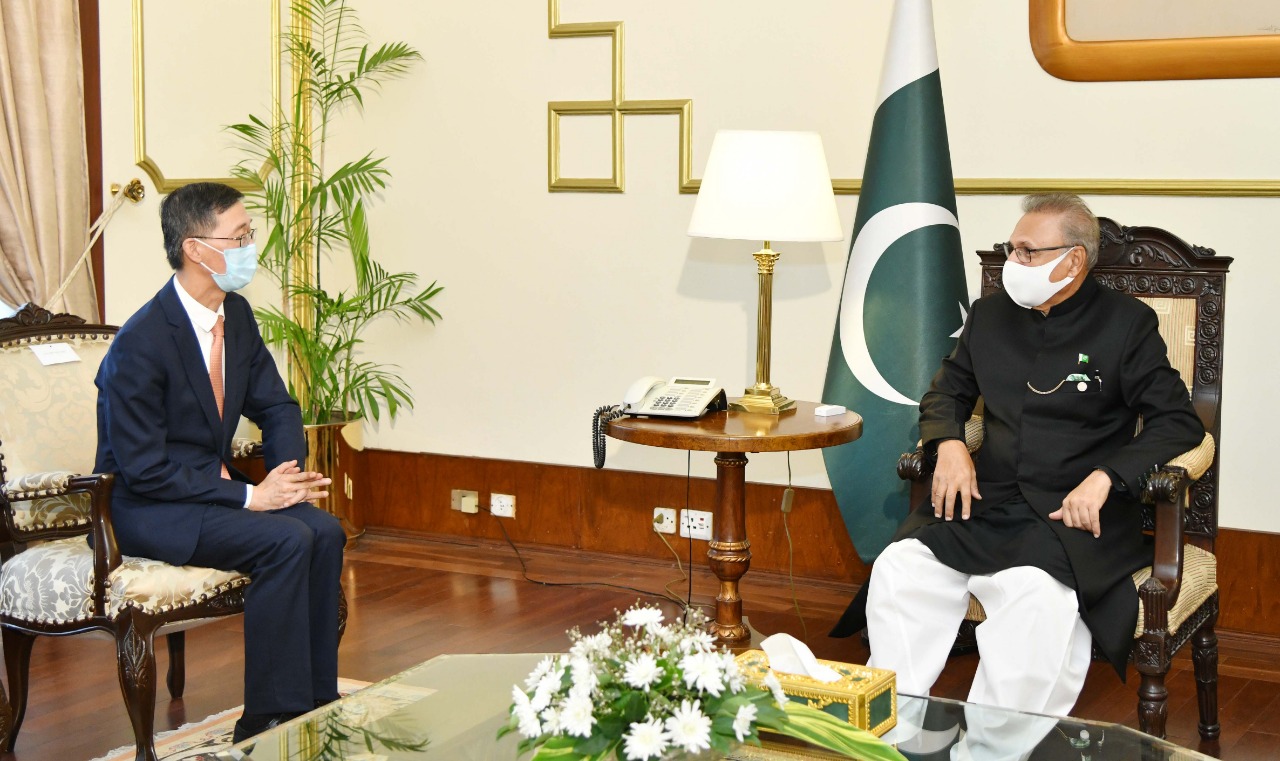
ISLAMABAD, SEPT 22 – In recognition of the services made by the outgoing Chinese Ambassador for improving Pakistan-China relations, President Dr. Arif Alvi conferred the Award of Hilal-e-Pakistan on Mr. Yao Jing at a special investiture ceremony, held at Aiwan-e-Sadr, today. The ceremony was attended by Chairman Senate, Mr. Sadiq Sanjrani, Speaker National Assembly, Mr. Asad Qaiser, Federal Ministers and senior officials of the Government of Pakistan.

Later, the Ambassador called on the President and discussed matters pertaining to bilateral relations between the two countries. While talking to the Ambassador, the President said that China was a close friend, which has always supported Pakistan on all issues of national interest.

Highlighting the economic and strategic significance of China Pakistan Economic Corridor (CPEC), the President stated that the Corridor would increase regional connectivity and countries of the region, particularly Afghanistan and Central Asian countries, would enormously benefit from it. He emphasized the need for further strengthening defense cooperation between the two all-weather friends.

WhatsApp Image 2020-09-22 at 3.09.59 PM

He added that Pakistan was looking forward to the visit of President Xi Jinping which would further boost bilateral cooperation in the areas of trade, economy and defense. The President appreciated the efforts made by the outgoing Ambassador for further promoting and solidifying bilateral relations. He said that many infrastructure and development projects were completed during the tenure of Mr. Yao Jing.

The Ambassador assured that China would continue its efforts to promote peace and connectivity in the region. He specially thanked the President for being the only Head of State to visit China during Covid-19 pandemic in March 2020.

HEC, Huawei Pakistan Launch ‘Seeds for the Future’ Program 2020

DNA

Islamabad, Sept 22 – Huawei Pakistan together with the Higher Education Commission of Pakistan has launched the Seeds for the Future program 2020, a 5-day long culture and ICT technologies learning program where 32 brilliant engineering students from Pakistan will attend the online training together with students from Kenya.

The program first launched in Pakistan in 2015. Since then, 55 students have benefitted from it. Each year the selection criteria is extremely thorough. This is the 5th time seeds for future is happening in Pakistan, 32 students have been nominated by the Higher Education Commission out of a total of1173 applicants. They are all undergraduate engineering students.

The initial period of the learning is about Chinese culture and Chinese language. They will also get technical training from Huawei and industry ICT experts who will share their expertise on a wide range of courses covering 5G, cloud computing,AI,strategic leadership, smart homes, IoTand cybersecurity.

Unlike previous years when whole batch of the nominated students could travel to China for the study trip, because of COVID-19, the program has been moved online. However, at the end of the week,2 of the top students will be selected and sent to China in 2021 for further study.

The Seeds for the Future program has been a successful addition to Huawei’s social-enterprise partnership goal in Pakistan since the first batch of Pakistani students traveled to China in 2015. The aim of the program, which has been active in over 126 countries & regions since its inception in Thailand, has been to nurture upcoming STEM talent from around the world. As a global ICT market leader, Huawei has taken it upon itself to promote local ICT industries as part of development in their operational regions.

The ICT industry is one of the fastest growing in Pakistan, and the world. The demand for qualified and market-ready professionals in the field is growing rapidly — it is becoming a need, in our burgeoning online-based globalized reality. Programs such as Seeds of the Future address this long-term possibility of deficiency with appropriate foresight.

Stay Connected

64FansLike
60FollowersFollow

Latest Reviews

Exchange Rates

USD - United States Dollar
EUR
1.17
GBP
1.36
AUD
0.72
CAD
0.74