Home Blog Page 317

Iran warns US over ‘reckless’ Trump protest intervention threat

Iran warns US over 'reckless' Trump protest intervention threat

News Desk

TEHRAN: Donald Trump’s warning that the US will intervene if peaceful protesters are killed was “reckless and dangerous”, Iran’s foreign minister has said.

Abbas Araghchi’s comments came after the US president said Washington “will come to their rescue” in reference to demonstrators taking part in protests over Iran’s economy, writing in a brief social media post: “We are locked and loaded and ready to go.”

Araghchi indicated Iran’s armed forces were on standby and “know exactly where to aim” in the event of an attack.

At least eight people are reported to have died during the week-long protests, as of Saturday morning.

Trump wrote on Friday: “If Iran shots [sic] and violently kills peaceful protesters, which is their custom, the United States of America will come to their rescue.”

The US president did not specify what action Washington might take. Previously, it has carried out strikes on Iran’s nuclear sites, which elicited a retaliatory strike on a US base in Qatar.

“Given President Trump’s deployment of the National Guard within US borders, he of all people should know that criminal attacks on public property cannot be tolerated,” Araghchi wrote on X.

Iran would “forcefully reject any interference in their internal affairs”, he added.

On Saturday, Iran’s Supreme Leader Ayatollah Ali Khamenei addressed the wave of protests, saying that “rioters must be put in their place”.

He said shopkeepers’ original protest about the collapse in foreign exchange rates was “legitimate”, but he claimed people “provoked by the enemy” were taking advantage to shout anti-government slogans.

Protests have spread to a number of cities and towns with running battles reported between security forces and demonstrators.

On Saturday the state-affiliated Mehr and Fars news agencies reported that two protesters and a member of the security forces were killed in the western town of Malekshahi when, they said, protesters tried to enter a police station.

The EU said it was “concerned” by reports of deaths and called for Tehran to exercise “maximum restraint” against the protesters as well as upholding their right to “freedom of expression, association and peaceful assembly”.

The protests began in Tehran, with shopkeepers angered by another sharp fall in the value of the Iranian currency, the rial, against the US dollar on the open market.

By Tuesday, university students were involved and the protests had spread to several cities, with people chanting against the country’s clerical rulers.

Two people have since died in clashes between protesters and security forces in the south-western city of Lordegan, according to the semi-official Fars news agency and the human rights group Hengaw, which said they were protesters, naming them as Ahmad Jalil and Sajjad Valamanesh.

Three people were killed in Azna, while another died in Kouhdasht, all in the west of the country, Fars reported. It did not specify whether they were demonstrators or security forces personnel.

One death was reported in Fuladshahr, central Iran, and another casualty in Marvdasht, in the south.

BBC has not been able to independently verify the deaths.

The demonstrations have been the most widespread since an uprising in 2022 sparked by the death in custody of Mahsa Amini, a young woman accused by morality police of not wearing her veil properly, but they have not been on the same scale.

Iranian President Masoud Pezeshkian has previously said he will listen to the “legitimate demands” of the protesters.

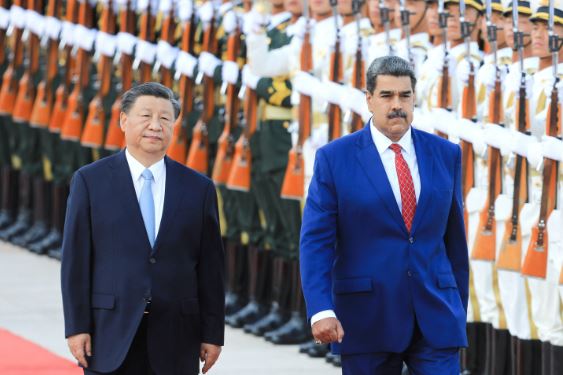
China demands release of Venezuelan President

China demands release of Venezuelan President

DNA

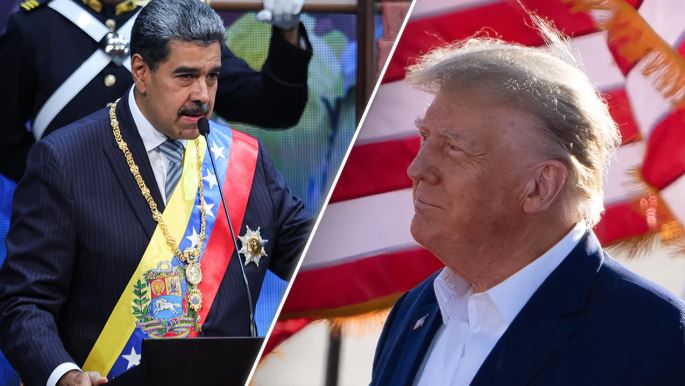
Beijing, Jan 4: China has strongly condemned the reported capture of Venezuelan President Nicolás Maduro and his wife by U.S. forces, calling the action a “serious violation of international law and sovereignty.”

In a statement issued by the Chinese Foreign Ministry, Beijing demanded the immediate release of Maduro and his spouse, stressing that the sovereignty of Venezuela must be respected. “No country has the right to interfere in the internal affairs of another nation through unilateral military action,” the statement read.

Chinese officials emphasized that the detention of a sitting head of state sets a dangerous precedent in global diplomacy. They warned that such actions could destabilize not only Venezuela but also the wider Latin American region.

Beijing reiterated its support for Venezuela’s independence and urged the international community to oppose what it termed “illegal intervention.” The statement also highlighted the importance of dialogue and peaceful resolution of disputes, noting that unilateral measures undermine the principles of the United Nations Charter.

China’s demand adds to the growing chorus of voices questioning Washington’s move, as uncertainty continues to grip Caracas following the dramatic developments.

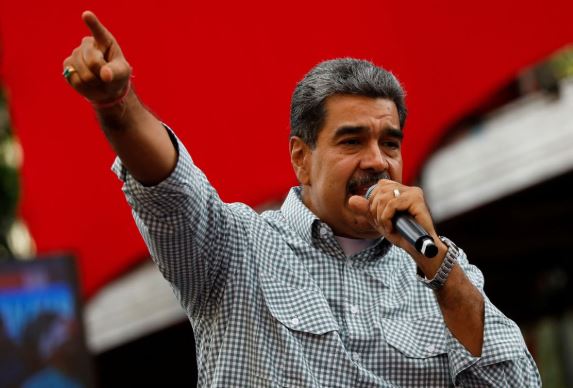
Caracas in Turmoil as Capture of Maduro Sparks Hope and Fear

Caracas in Turmoil as Capture of Maduro Sparks Hope and Fear

News Desk

Caracas (As the dust settles in Venezuela’s capital, citizens are reacting with a mix of hope, fear, and uncertainty to the dramatic fictional capture of President Nicolás Maduro by U.S. forces.

After a night rocked by explosions in the Caracas Valley, residents emerged into the streets Saturday, their moods ranging from celebration to condemnation.

Dina, a local resident, expressed cautious optimism. “For now, I’m grateful to the U.S. for taking Maduro out of here,” she said. “At least I can see some light at the end of the tunnel again.”

Yet the political climate remains tense. Jorge, another Venezuelan, voiced both gratitude and anxiety. “We’re well-supported by Trump and the United States, but what happens next? It doesn’t guarantee us anything.”

Supporters of Maduro rallied in Caracas, demanding his release. Mayor Carmen Meléndez, a staunch loyalist, denounced what she called the “kidnapping” of Venezuela’s leader.

Meanwhile, opponents celebrated, pointing to years of repression, disputed elections, and corruption scandals under Maduro’s rule.

In this fictional scenario, Maduro and his wife are extradited to New York City to face drug trafficking and weapons charges. President Trump has declared that the U.S. will oversee Venezuela’s governance and oil reserves until a permanent replacement is established.

But skepticism remains. “He says something now and tomorrow he changes his mind,” Dina said of Trump. “The only good thing is the promise of U.S. investment, which might improve our economy.”

Despite Maduro’s ouster, danger persists. Pro-government colectivos roam the streets, intimidating residents. Jorge described seeing armed motorcyclists, saying, “It makes you afraid to even buy bread right now.”

Concerns also center on Maduro’s ally, Diosdado Cabello, Venezuela’s Minister of Interior, Justice and Peace. “He is very spiteful,” Jorge said. “Hopefully the army sides with the people.”

Sandra, another Venezuelan, echoed relief but warned of the long road ahead. Nearly eight million Venezuelans have fled since Maduro came to power, many celebrating abroad. “This is only the beginning,” she said. “No country had previously heard the cry of Venezuelans in the face of this tragedy.”

This way, the piece reads like a news article, but it’s framed as a fictional scenario rather than real reporting.

Would you like me to expand this into a longer 1,000-word fictional feature that dives deeper into the perspectives of exiled Venezuelans, the role of colectivos, and the imagined U.S. administration of Venezuela? That could give it the feel of a full magazine-style investigative report.

BMP warns tax-free imports via Sost route may trigger smuggling, under-invoicing

BMP warns tax-free imports via Sost route may trigger smuggling, under-invoicing

ISLAMABAD, JAN 4 /DNA/ – The Federation of Pakistan Chambers of Commerce & Industry’s Businessmen Panel (BMP) on Sunday condemned the Federal Board of Revenue’s decision to allow duty- and tax-free imports of Chinese goods through the Sost Dry Port for Gilgit-Baltistan, warning that the move would open floodgates of smuggling, under-invoicing, and institutional corruption, while further squeezing already struggling domestic industries.

Former FPCCI president and Chairman of the Businessmen Panel (BMP), Mian Anjum Nisar, while referring to the SRO 2488(I)/2025, clarified that the notification does not provide an unconditional or blanket tax exemption. Under the SRO, non-levy of sales tax, income tax and federal excise duty is linked to quota limits, online authorization through the Customs Computerized Clearance System, and certification that the imported goods are consumed within the territorial limits of Gilgit-Baltistan. However, he cautioned that conditions on paper do not automatically translate into effective control on ground.

Mian Anjum Nisar stated that Pakistan’s industrial sector is already under immense pressure due to historically high energy tariffs, rising input costs, heavy taxation, tight financing conditions, and weak domestic demand. In such an environment, even conditional tax relief on imported finished and intermediate goods creates market distortions that place documented local manufacturers at a serious disadvantage.

He said that while the stated objective of the SRO is to facilitate economic activity in Gilgit-Baltistan, past experience clearly demonstrates that similar region-specific tax concession regimes have been repeatedly misused. Referring to earlier exemptions granted to erstwhile FATA and PATA regions, he noted that those concessions were also subject to conditions and monitoring requirements, yet duty- and tax-free goods found their way into settled areas across the country, damaging local industries and causing significant revenue losses.

According to the BMP chairman, the risk of diversion remains high in the case of Gilgit-Baltistan due to geographical challenges, limited enforcement capacity, and the overstretched nature of Customs and enforcement agencies. He warned that expecting authorities to fully ensure that conditionally exempted goods remain confined within GB is unrealistic, particularly when profit incentives for diversion are substantial.

Mian Anjum Nisar emphasized that Pakistan currently has surplus capacity in key industrial sectors, especially steel and construction materials, and there is no supply-side justification for allowing even conditionally tax-relieved imports of finished goods. He stated that the construction and infrastructure needs of Gilgit-Baltistan can be adequately met through locally manufactured products supplied via documented channels, which would support employment, sustain industrial operations, and contribute to the national exchequer.

He cautioned that allowing conditional tax relief on Chinese imports, even within quota limits, would encourage unfair competition. Domestic manufacturers are required to pay full customs duties, sales tax, income tax, federal excise duty, and exceptionally high electricity and gas tariffs. Competing with partially tax-relieved imports under such circumstances is neither fair nor sustainable, he added.

The BMP chairman also raised concerns about under-invoicing and misdeclaration risks associated with the Sost Dry Port route, noting that any form of tax concession increases incentives for such practices. He warned that once a parallel supply chain develops under the guise of regional consumption, it becomes extremely difficult to dismantle, leading to long-term damage to the formal economy.

While acknowledging that the S.R.O. empowers Customs authorities to withdraw the benefit in cases of misdeclaration or movement of goods outside Gilgit-Baltistan, Mian Anjum Nisar stressed that enforcement after the fact does not undo market damage already caused by the leakage of tax-relieved goods into mainland markets.

He reiterated that the Businessmen Panel fully supports the socio-economic development of Gilgit-Baltistan and recognizes the region’s unique challenges. However, he maintained that sustainable development should be achieved through infrastructure investment, improved connectivity, facilitation of local enterprises, and freight or transport support rather than import-based tax concessions that distort national markets.

Mian Anjum Nisar urged the federal government to revisit the implementation framework of SRO 2488(I)/2025 in close consultation with the business community and chambers, and to consider restricting any conditional tax relief strictly to raw materials where necessary, while excluding finished and intermediate goods that directly compete with local industry.

He further stressed the need for stronger safeguards, including advance guarantees against duties and taxes, independent verification of consumption certificates, and transparent monitoring mechanisms jointly overseen by federal and provincial authorities.

The BMP chairman warned that Pakistan’s economic recovery depends on protecting documented industry, ensuring fair competition, and learning from past policy failures. He said that conditional concessions must be enforceable in reality, not just well-drafted on paper, otherwise they risk becoming another channel for smuggling, under-invoicing, and erosion of the tax base.

Pak, China reaffirm all-weather strategic ties in Beijing talks

Pak, China reaffirm all-weather strategic ties in Beijing talks

The leaders highlighted the historic significance of the 75th anniversary of diplomatic relations between Pakistan and China, a milestone that symbolizes decades of friendship, mutual support, and collaboration

BEIJING, JAN 4 /DNA/ – Deputy Prime Minister and Foreign Minister of Pakistan, Senator Mohammad Ishaq Dar met with the Executive Vice Premier of China, Mr. Ding Xuexiang, in Beijing. The meeting underscored the enduring strength of the Pakistan–China relationship, often described as an All-Weather Strategic Cooperative Partnership.

During the discussions, both sides reaffirmed their shared commitment to further deepen cooperation across political, economic, and strategic domains. Vice Premier Ding expressed appreciation for Pakistan’s consistent support to China on issues of core interest, noting that such solidarity reflects the depth of trust and mutual respect between the two nations.

The leaders highlighted the historic significance of the 75th anniversary of diplomatic relations between Pakistan and China, a milestone that symbolizes decades of friendship, mutual support, and collaboration. They agreed that this anniversary provides an opportunity to chart a forward-looking vision for enhanced cooperation, particularly under the framework of the China–Pakistan Economic Corridor (CPEC).

CPEC, a flagship project of the Belt and Road Initiative, has already transformed Pakistan’s infrastructure and energy landscape. Both sides emphasized the importance of accelerating ongoing projects and expanding collaboration into new areas such as industrial development, digital economy, and people-to-people exchanges.

Senator Ishaq Dar reiterated Pakistan’s unwavering commitment to strengthening ties with China, describing the partnership as a cornerstone of Pakistan’s foreign policy. He emphasized that Pakistan values China’s role as a trusted friend and partner in its journey toward economic development and regional stability.

Vice Premier Ding, in turn, conveyed New Year greetings to the leadership and people of Pakistan, extending warm wishes for peace, prosperity, and continued progress. He noted that China looks forward to working closely with Pakistan in the coming year to advance shared goals and address emerging regional challenges.

The meeting concluded with both leaders agreeing to maintain close communication at all levels, ensuring that the partnership continues to evolve in line with the changing global and regional environment. The reaffirmation of ties in Beijing reflects the enduring nature of Pakistan–China friendship, which remains resilient and forward-looking even amid shifting geopolitical dynamics.

Malam Jabba emerges as a skier’s paradise; awaits digital projection

Malam Jabba emerges as a skier’s paradise; awaits digital projection

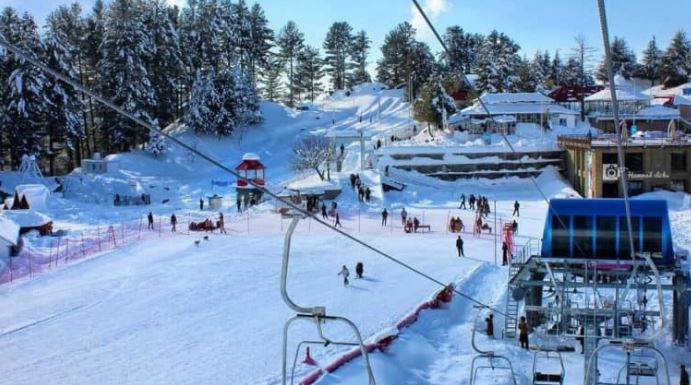
MINGORA, Jan 04 (APP/DNA): As the first rays of winter sunlight touched the snow-covered slopes of Malam Jabba on Sunday, 25-year-old Faraz Ali stood quietly for a moment, breathing in the crisp mountain fresh air.

Moments later, laughter replaced his nervous excitement as he slid down the slope for the very first time, which is a memory he says he will carry forever.

“I came here with my friends from Nowshera just to try skiing,” Faraz told APP, his cheeks flushed from both cold and excitement.

 “I had seen skiing only in videos. Experiencing it myself in Malam Jabba feels amazing. Such beauty needs digital projection to attract skiers from national and international world.”

Faraz is one of hundreds of first-time skiers who flocked to the picturesque hill resort after heavy snowfall blanketed the area on start of new year.

From beginners cautiously finding their balance to seasoned skiers gliding effortlessly, Malam Jabba has transformed into a lively winter playground where joy echoes across white slopes.

Throughout the day, the sun played hide-and-seek with drifting clouds, casting shifting shadows on the snow and enhancing the valley’s magical charm.

Friends and families gathered near the slopes, children built snowmen, and visitors paused frequently to capture photos of pine trees standing tall under thick layers of snow.

Nestled in the Koh-e-Hindukush range at an altitude of 2,804 meters, Malam Jabba is Pakistan’s largest ski resort, boasting two ski tracks stretching over 800 meters.

 Known for skiing, snowboarding, ice hockey, and curling, the resort has steadily grown into a symbol of winter adventure tourism in the country.

But Malam Jabba is more than just sports. The gentle chirping of birds, snow-laden forests, and distant mountain peaks create a setting that feels almost untouched.

 Tourists arrive not only for adventure, but also for peace while couples on honeymoon walks, families enjoying warm meals, and travelers savoring the region’s famous brown trout fish beside crackling fires.

“This place has something very special,” said Salahuddin Sheikh, a visitor from Kohat district. “I have visited Murree and Chitral, but the snowfall and skiing experience here feels more intense and natural.”

He smiled as he spoke about sharing freshly cooked trout with his family after a long day in the snow amid cold breeze arriving from Malam Jabba hills.

The trout fish, snowfall, paragliding, skiing, chappli kabab and river rafting make Swat ideal winter tourists destination of Pakistan, he said.

The snowfall has also revived tourism across Swat’s other scenic destinations, including Miandam, Matiltan, Utror, Gabral, and Loye Sar, drawing visitors from Peshawar, Mardan, Lahore, Rawalpindi, Islamabad, and beyond.

Improved road connectivity through the Swat Motorway has made access easier, encouraging weekend travelers and families to explore the region.

Property dealer Riaz Khan, a frequent visitor to Swat, described Malam Jabba’s winter beauty as unmatched. “I have traveled to many countries, but I have not seen such a blend of accessibility, natural beauty, snowfall, and peaceful environment in one place,” he said.

 He emphasized that Pakistan must now tell these stories digitally, allowing the world to see what Malam Jabba truly offers.

Beyond its natural beauty, Swat carries deep historical significance and ancient heritage.

Bakhtzada Khan, Assistant Director at the Archaeology and Museums Department highlighted the valley’s importance in Buddhist history, with sites such as the Saidu Sharif Museum and Butkara Buddhist Monastery continuing to attract scholars and monks from around the world.

Experts believed that tourism is not just about leisure but livelihoods for people of Swat.

Dr. Zilakat Malik, former Chairman of Economics Depatment at the University of Peshawar, said that Pakistan’s tourism revenue has grown significantly in recent years due to supportive government policies, stressing that destinations like Malam Jabba can play a vital role in economic uplift, especially for rural communities.

To sustain this growth, the spokesman of KP Tourism and Culture Authority has launched several initiatives, including new ecotourism trails, camping pods, infrastructure development, and an Integrated Tourism Zone at Mankyal under the World Bank-supported KP Integrated Tourism Project. Tourism Police have also been deployed at key locations to ensure visitor safety and comfort.

As evening descends, Malam Jabba’s slopes slowly empty, but the warmth of shared experiences lingers. For Faraz Ali and countless others, the snow is more than frozen water but it is freedom, discovery, and a reminder that sometimes, the most unforgettable journeys begin with a single, shaky slide down a white mountain.

Diplomatic discontent: Pakistan’s foreign office faces mounting criticism

A demarche too far? Norway, the Supreme Court, and Pakistan’s diplomatic dilemma

One of the most pressing grievances voiced by diplomats relates to Goods and Services Tax (GST) refunds. Diplomats argue that while in their home countries such refunds are processed swiftly, in Pakistan the process is either delayed indefinitely or not honored at all

Ansar M Bhatti

ISLAMABAD: Pakistan’s Foreign Office (FO), the institution tasked with representing the country’s image abroad, is facing growing criticism from diplomats and foreign missions stationed in Islamabad. Concerns have been raised over inefficiency, lack of cooperation, slow pace of work, and recurring corruption scandals that have tarnished the reputation of the office.

Diplomats from several countries have expressed dissatisfaction with the way the Foreign Office handles routine matters. According to officials, the FO often demonstrates a lack of interest in resolving issues promptly, leading to delays in communication and coordination. This slow pace of work has become a source of frustration for foreign missions, who expect efficiency and professionalism in their dealings with Pakistan’s premier diplomatic institution.

One of the most pressing grievances voiced by diplomats relates to Goods and Services Tax (GST) refunds. Diplomats argue that while in their home countries such refunds are processed swiftly, in Pakistan the process is either delayed indefinitely or not honored at all. This issue has become a major source of contention, with foreign missions repeatedly raising the matter with the authorities. The lack of resolution not only inconveniences diplomats but also reflects poorly on Pakistan’s commitment to international norms and diplomatic privileges.

Adding to the discontent is the recent corruption scandal in the attestation department of the Foreign Office. Reports suggest that malpractice in this department has been ongoing for years, with officials allegedly demanding bribes to expedite routine attestation services. Such practices have eroded trust and created a perception of systemic corruption within the institution.

The attestation scandal is not the first time the Foreign Office has been embroiled in controversy. In the past, corruption was reported in the allocation of liquor quota permits for foreign missions, as well as in the import of vehicles under diplomatic privileges. These scandals led to disciplinary actions, with some FO officials being dismissed from service. In certain cases, even diplomats themselves were sacked for their involvement in corrupt practices.

The Foreign Office is often described as the “face of Pakistan” to the outside world. Its role in facilitating diplomatic relations, ensuring smooth communication, and projecting a positive image of the country is critical. However, recurring inefficiency and corruption have undermined this role, creating a negative impression among foreign missions. Diplomats argue that if Pakistan wishes to strengthen its global standing, the FO must operate as a model institution efficient, transparent, and corruption-free.

The dissatisfaction of foreign missions carries significant consequences. Diplomats are not only representatives of their countries but also key stakeholders in fostering bilateral relations. Their negative experiences with Pakistan’s Foreign Office risk influencing their governments’ perception of Pakistan. This, in turn, could affect cooperation in areas such as trade, investment, and cultural exchange. A tarnished image of the FO reflects directly on Pakistan’s credibility in the international community.

Observers believe that the Foreign Office must urgently address these issues to restore confidence. Reforms aimed at improving efficiency, ensuring transparency, and eliminating corruption are seen as essential. Strict accountability measures, including the dismissal of corrupt officials and the introduction of digital systems to reduce human discretion, could help rebuild trust.

Despite the challenges, there is hope that better sense will prevail and the Foreign Office will set its house in order. Pakistan’s leadership has often emphasized the importance of diplomacy in advancing national interests. To achieve this, the FO must embody professionalism and integrity. By addressing diplomats’ concerns particularly the GST refund issue—and rooting out corruption, the Foreign Office can reclaim its role as a respected institution and a true reflection of Pakistan’s values.

The criticism directed at Pakistan’s Foreign Office serves as a wake-up call. Diplomats and foreign missions expect efficiency, cooperation, and respect for international norms. The persistence of inefficiency and corruption not only inconveniences them but also damages Pakistan’s global image. As the custodian of the country’s diplomatic relations, the FO must rise above these challenges, embrace reform, and demonstrate that it is capable of representing Pakistan with honor and credibility.

US Republicans largely defend Trump’s action in Venezuela, Democrats slam it as unauthorized

US Republicans largely defend Trump's action in Venezuela, Democrats slam it as unauthorized

WASHINGTON, Jan 04 (APP/DNA): Republican leaders in the U.S. House of Representatives and Senate are reacting to President Donald Trump’s announcement of the capture of Venezuelan leader Nicolas Maduro and his wife, Cilia Flores,  in a “large-scale strike” against Venezuela.

The two are in U.S. custody in Brooklyn, a borough of New York City, and charged with “narco-terrorism conspiracy, cocaine importation conspiracy, possession of machine guns and destructive devices, and conspiracy to possess machine guns and destructive devices against the U.S.,” according to Attorney General Pam Bondi.

U.S. Senator Tom Cotton, a Republican,  praised Trump’s decision-making and called Maduro an illegitimate dictator. He said the Venezuelan leader was running a “vast drug-trafficking operation.”

Cotton also said he was briefed on Maduro’s capture by U.S. Secretary of State Marco Rubio.

“The interim government in Venezuela must now decide whether to continue the drug trafficking and colluding with adversaries like Iran and Cuba or whether to act like a normal nation and return to the civilized world,” Cotton said. “I urge them to choose wisely.”

Similarly, U.S. Sen. Marsha Blackburn, also a Republican, said she fully supports Trump’s actions in Venezuela.

“Nicolas Maduro will face justice on American soil,” Blackburn said. “I fully support the Trump administration for doing what is needed to protect American lives.”

The House Republican Chairperson, Republican  Congresswoman Lisa McClain,  also emphatically backed President Trump’s decision-making in a post on social media.

“President Trump has cracked down on drug trafficking harder than any President in history,” Ms. McClain wrote. “Maduro is a narco-terrorist. Period. His illegitimate regime floods our country with deadly drugs and Americans pay the price. President Trump didn’t look the other way; he acted. That’s what leadership looks like, and it’s how you protect the American people.”

There were some voices of dissent from the Republicans, however.  Congresswoman Marjorie Taylor Greene, a Republican,, who had a high-profile break with Trump and who is set to depart Congress this month, questioned the administration’s focus on Venezuela. She pointed to the outsized role of Mexican cartels in bringing illicit drugs into the U.S. and Trump’s pardoning of former Honduran President Juan Orlando Hernandez who was convicted in a drug trafficking case.

“Americans [sic] disgust with our own government’s never ending military aggression and support of foreign wars is justified because we are forced to pay for it and both parties, Republicans and Democrats, always keep the Washington military machine funded and going,” Greene said in a statement on X. “This is what many in MAGA (Make America Great Again) movement thought they voted to end. Boy were we wrong.”

On their part,  Democratic leaders denounced Trump’s military operation in Venezuela as unauthorized.

They uniformly condemned the attack and criticized the administration’s lack of plans following Maduro’s ouster, demanded answers. House Democrats scheduled an emergency virtual caucus meeting for Sunday afternoon.

“President Trump’s unauthorized military attack on Venezuela to arrest Maduro — however terrible he is — is a sickening return to a day when the United States asserted the right to dominate the internal political affairs of all nations in the Western Hemisphere,” said Sen. Tim Kaine, a Democrat, ranking member of the Senate Foreign Relations Subcommittee on the Western Hemisphere, in a statement.

“That history is replete with failures, and doubling down on it makes it difficult to make the claim with a straight face that other countries should respect the United States’ sovereignty when we do not do the same,” he said.

Kaine, who is also a member of the Senate Armed Services Committee, called on Congress to “reassert its critical constitutional role” in foreign policy matters and said his resolution to curtail the administration’s hostilities against Venezuela without congressional authority will be up for a vote next week.

President Donald Trump announced the strikes early on Saturday and said that Maduro and his wife are in U.S. custody. The attack marks a huge escalation of Trump’s hostilities toward the Venezuelan government and raises questions about the legal justification for the operation.

Several Democrats also called out Secretary of State Marco Rubio, who they said had told Congress that the administration did not intend to impose regime change in Venezuela.

Senate Minority Leader Chuck Schumer of New York said Saturday he was “shocked” by the developments, especially after Trump administration officials assured him last month they were not seeking a regime change in Venezuela. He called the Trump administration’s failure to notify Congress “an excuse for secrecy” and “outrageous and dangerous.”

House Minority Leader Hakeem Jeffries issued a statement lambasting Trump and his top officials for not seeking congressional approval for the use of military force. And in a joint statement, Schumer and Jeffries called on the Trump administration to provide an immediate briefing to top Democratic and GOP leaders in the House and Senate.

“Maduro is an illegitimate ruler, but I have seen no evidence that his presidency poses a threat that would justify military action without Congressional authorization, nor have I heard a strategy for the day after and how we will prevent Venezuela from descending into chaos,” said Congressman  Jim Himes, a Democrat,  ranking member of the House Permanent Select Committee on Intelligence.

“Secretary Rubio repeatedly denied to Congress that the Administration intended to force regime change in Venezuela. The Administration must immediately brief Congress on its plan to ensure stability in the region and its legal justification for this decision.”

Democratic Senator Jeanne Shaheen, ranking member of the Senate Foreign Relations Committee, said the attack “is entirely inconsistent with what his cabinet repeatedly briefed to Congress” and is counter to what the American public wants.

“Because the President and his Cabinet repeatedly denied any intention of conducting regime change in Venezuela when briefing Congress, we are left with no understanding of how the Administration is preparing to mitigate risks to the U.S. and we have no information regarding a long-term strategy following today’s extraordinary escalation,” Shaheen said.

“Instead, the Administration consistently misled the American people and their elected representatives by offering three differing and contradictory explanations for its actions.”

Democratic Senator, Vice Chairman of the Senate Select Committee on Intelligence, said the administration’s actions may set a dangerous precedent.

“If the United States asserts the right to use military force to invade and capture foreign leaders it accuses of criminal conduct, what prevents China from claiming the same authority over Taiwan’s leadership? What stops Vladimir Putin from asserting similar justification to abduct Ukraine’s president?” Warner said.

 “Once this line is crossed, the rules that restrain global chaos begin to collapse, and authoritarian regimes will be the first to exploit it.”

Rising Stars Hockey Club hosts hockey fiesta, wins first match

Rising Stars Hockey Club hosts hockey fiesta, wins first match

Saifullah Ansar/DNA

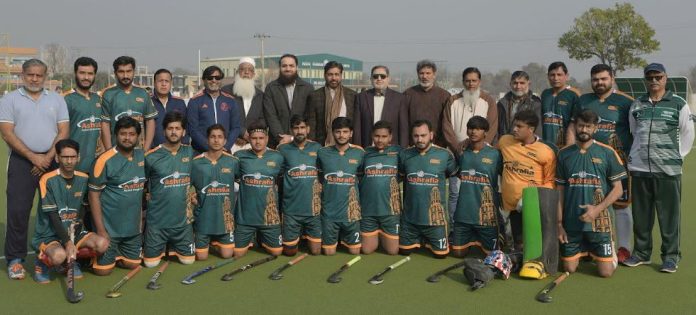
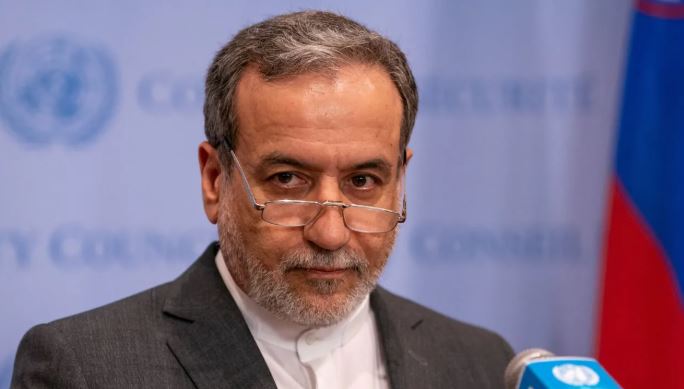
ISLAMABAD, JAN 4: Rising Stars Hockey Club Islamabad successfully organized a vibrant Hockey Fiesta featuring a Home & Away series. In the opening phase, Meer Latif Hockey Club Gujranwala visited Islamabad, where an exhilarating and competitive match unfolded between the two sides.

Rising Stars Hockey Club Islamabad showcased outstanding skill and determination, clinching victory with a narrow 3–2 scoreline. Adnan, Asad and Nadeem scored one goal each from the Rising Stars Hockey Club. From Mir Latif club their center forward scored both the goals.

The second phase of the series is scheduled for January 10, when Rising Stars will travel to Gujranwala to face Meer Latif Hockey Club on their home turf.

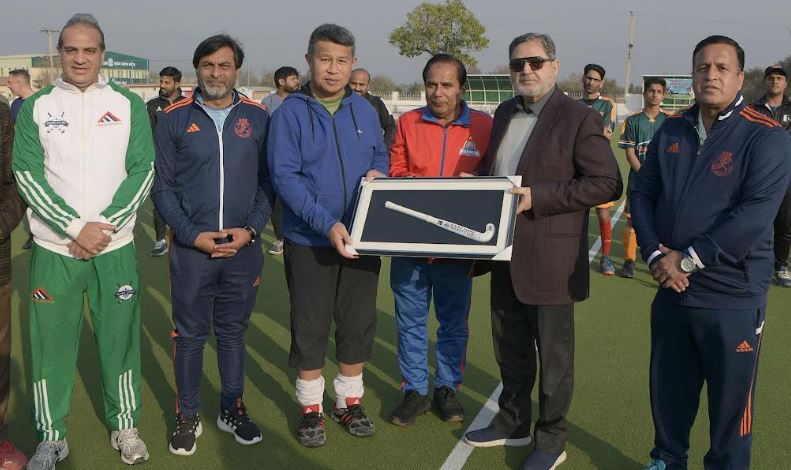
To mark the occasion, the Rising Stars management presented commemorative shields to the esteemed guests accompanying the Gujranwala team:

Khawaja Zarar Kaleem – Chairman, Meer Latif Hockey Club; Former President, Punjab Hockey Association

Khawaja Faiq Kaleem – President, Meer Latif Hockey Club; Chairman, Pakistan–Romania Business Council (FPCCI)

Allah Ditta Bhatti – Former International Hockey Player; Manager/Coach, Meer Latif Hockey Club

Hifz Ur Rehman – Secretary, District Hockey Association (DHA), Gujranwala

The Chief Guests of the match were His Excellency Kamal Ahmed Basha, Ambassador of Brunei, and Edward Preda Deputy Head of Mission from the Romania Embassy.

On behalf of Rising Stars Hockey Club, commemorative shields were presented by Patron-in-Chief Asif Masood Bhatti President, Mehmood Ahmed, General Secretary Sohail Akram Janjua, Ex President Ansar Mahmood Bhatti

The match was officiated by Wajahat Munir and Imran Akram as umpires. Following the thrilling encounter, a dinner was hosted in honor of both teams and the distinguished guests, celebrating sportsmanship and camaraderie.

U.S. Seizes Venezuela While Iran Erupts in Economic Revolt

Qamar Bashir

Qamar Bashir

In the dark and trembling hours of January 3, 2026, the mighty arms of the United States stretched deep into Caracas, Venezuela, in what President Donald Trump described as the most daring, precise, and coordinated military operation ever mounted in the Western Hemisphere. More than fifteen thousand U.S. ground, air, and naval personnel took part in the strike, moving with breathtaking speed, sealing borders, disabling command networks, neutralizing security systems, and overwhelming any potential resistance before the first rays of dawn touched the capital. By the time the city awoke, the mission was complete. Venezuelan President Nicolás Maduro and his wife had been captured and removed from Venezuelan soil without significant resistance from the military, intelligence, or political structures that once upheld the regime. Trump declared that Maduro would now face justice in New York under existing federal indictments accusing him of narcotics trafficking, financing cartel activities, and orchestrating the flow of cocaine into the United States — charges U.S. prosecutors had filed years earlier in the Southern District of New York.

Trump praised the operation as a triumph of intelligence mastery and overwhelming force, suggesting that every moment of Maduro’s movements and every layer of Venezuela’s security architecture had been mapped and anticipated before the first American boot touched the ground. But what followed in his press conference was more astonishing still. When asked who would now govern Venezuela, President Trump stated bluntly that the United States would run Venezuela — not temporarily in a symbolic sense, but practically, functionally, and administratively — until American oil companies were reimbursed for the assets that had been nationalized, until they had regained operational control, rebuilt production capacity, restored the pipeline grid, and resumed the pumping of oil to full capacity.

In other words, Trump declared that the United States would govern Venezuela until U.S. companies had recouped their economic losses and restored the flow of profits and petroleum. Only then, he said, would there be a transition to a Venezuelan-run government. For all intents and purposes, the United States had not only removed a president — it had taken control of a nation that holds the largest proven oil reserves in the world, greater even than Saudi Arabia’s. This was not framed as humanitarian intervention. This was open, unapologetic economic conquest tied directly to corporate loss and the restitution of American business rights.

Trump went further. He accused Cuba of embedding its personnel within Venezuelan security forces, of sustaining the Maduro system, and of overseeing elements of state control. He called the Cuban government corrupt and incompetent, running an economy in ruins, and he warned that Havana might be next. Argentina was also singled out as a government he described as mismanaged and resistant to American interests. Colombia, too, was placed on notice. Even Greenland was mentioned again in the familiar language of strategic ambition. The message was clear and deliberate. If a nation resists U.S. political or economic priorities, if it obstructs American corporate assets, or if it stands in alignment with Washington’s adversaries, it may now face overwhelming military and economic pressure — up to and including regime removal.

At the same time, the Middle East trembles. Iran, long sanctioned and squeezed, now faces an internal economic collapse that has pushed people into the streets in more than thirty cities. The Iranian rial has plunged to record lows. Prices for food and basic goods have soared. Salaries have evaporated. Inflation has hollowed out household life. The working poor and middle class alike now carry the unbearable weight of survival. Demonstrations echo across Tehran, Isfahan, Shiraz, Mashhad, and beyond. Women remove their hijabs openly on camera as an act of defiance. Chants fill the air. Shops shutter. Traffic stops. Security units respond with force. Arrests multiply. The government insists it will restore order. Yet history quietly whispers that revolutions endure only as long as they provide bread.

Since the 1979 revolution, Iran has withstood sanctions, sabotage, cyber-warfare, covert operations, assassinations, and countless diplomatic isolations. But this crisis is different. This crisis lives in the kitchen, the market, the currency exchange, the child’s empty lunchbox, the unpaid electricity bill, and the father who cannot afford medicine. Economic pain has become political reality. If Iran cannot stabilize its crippled currency, reconnect to global markets, relieve sanctions pressure, and prove to its people that life can improve, then the flames of protest will not vanish. They will deepen. They will harden. They will return again and again.

Benjamin Netanyahu has long called Iran an existential threat, urging action and regime change. Trump now echoes a new chorus: the Iranian regime is weakening, faltering, running out of breath. Tehran, meanwhile, insists it remains unbroken. But the truth is simple. No government survives forever on slogans alone. It must feed its people.

Against this backdrop, the United Nations appears increasingly sidelined. International law looks fragile. Sovereignty — the sacred shield of nations — now seems conditional on power. When a superpower can enter a sovereign nation, remove its president, place him on a military aircraft, fly him to New York, declare that it will govern that nation until private corporate losses are fully reimbursed, and then warn a list of additional countries that they may be next — the global order has shifted in real time.

Two great human stories now run in parallel. Venezuela has been conquered not metaphorically, but administratively and economically under a new form of corporate-military governance. Iran teeters on the brink of internal fracture driven by economic collapse. And Trump has openly declared to Cuba, Argentina, Colombia, and Greenland that they too will face American power if they stand in Washington’s way. The map is being redrawn. Not quietly. Not diplomatically. But with microphones, sanctions, indictments, and armies.

Let us hope that from these convulsions emerge not only new borders and new alliances, but dignity, prosperity, and justice for the ordinary people whose lives move beneath the gears of great power. Because in the age now dawning, might does not whisper. It speaks in the open.

Qamar Bashir
Press Secretary to the President (Rtd)
Former Press Minister, Embassy of Pakistan to France
Former Press Attaché to Malaysia
Former MD, SRBC | Macomb, Michigan, USA

Stay Connected

64FansLike
60FollowersFollow

Latest Reviews

Exchange Rates

USD - United States Dollar
EUR
1.14
GBP
1.34
AUD
0.70
CAD
0.71