Home Blog Page 316

Trump insists ‘we need Greenland’

COPENHAGEN, JAN 5: President Donald Trump doubled down Sunday on his claim that Greenland should become part of the United States, despite calls by Denmark’s prime minister to stop “threatening” the territory.

Washington’s military intervention in Venezuela has reignited fears for Greenland, which Trump has repeatedly said he wants to annex, given its strategic location in the Arctic.

While aboard Air Force One en route to Washington, Trump reiterated the goal.

“We need Greenland from the standpoint of national security, and Denmark is not going to be able to do it,” he said.

   Over the weekend, Katie Miller, the wife of Trump’s most influential aide, posted an image of the flag of Greenland in the colours of the US flag, captioning it “SOON”.

Denmark and the European Union have responded with ire to Trump’s Greenland agenda.

“I have to say this very clearly to the United States: it is absolutely absurd to say that the United States should take control of Greenland,” Danish Prime Minister Mette Frederiksen said in a statement on Sunday.

                  She called on Washington to stop “threatening its historical ally”.

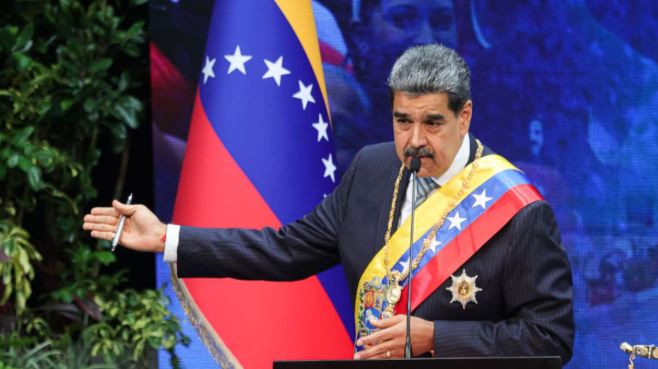
                  European leaders were rattled by Trump sending his military to attack Caracas and grab Venezuelan president Nicolas Maduro, who is now being detained in New York.

                  Trump has said the United States will now “run” Venezuela indefinitely and tap its huge oil reserves.

                  He says Greenland, which is rich in critical minerals vital for the tech industry, is needed for US national security.

                  Asked in a telephone interview with The Atlantic about the implications of the Venezuela military operation for Greenland, Trump said that it was up to others to decide, according to the magazine Sunday.

                  “They are going to have to view it themselves. I really don’t know,” Trump was quoted as saying.

                  He added: “But we do need Greenland, absolutely. We need it for defense.”

                  Greenland’s Prime Minister Jens-Frederik Nielsen called Miller’s flag post “disrespectful”.

                  “Relations between nations and peoples are built on mutual respect and international law — not on symbolic gestures that disregard our status and our rights,” he wrote on X.

                  But he also said that “there is neither reason for panic nor for concern. Our country is not for sale, and our future is not decided by social media posts”.

                  – Allies? –

                  Stephen Miller is widely seen as the architect of much of Trump’s policies, guiding the president on his hardline immigration policies and domestic agenda.

                  Denmark’s ambassador to the United States, Jesper Moeller Soerensen, offered a pointed “friendly reminder” in response to Katie Miller’s post that his country — a NATO member — has “significantly boosted its Arctic security efforts” and worked together with Washington on that.

                  “We are close allies and should continue to work together as such,” Soerensen wrote.

                  Katie Miller was deputy press secretary under Trump at the Department of Homeland Security during his first term.

                  She later worked as communications director for then-vice president Mike Pence and also acted as his press secretary.
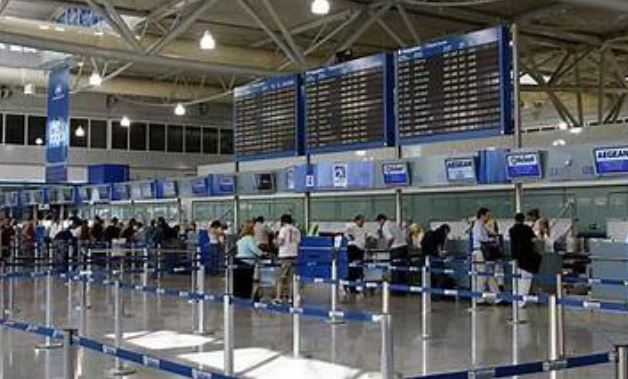
FIA opens desks nationwide to assist international travelers

FIA opens desks nationwide to assist international travelers

ISLAMABAD, Jan 04 (APP/DNA): Federal Investigation Agency (FIA) has established Pre-Departure Facilitation Desks at all its zones across the country to assist international travelers with immigration procedures, clearance and travel-related queries.

An FIA official told APP on Sunday that the initiative has been launched to help passengers avoid last-minute difficulties at airports by obtaining necessary guidance and clarification before traveling abroad.

The official said the facilitation desks will provide information regarding travel documentation, visa requirements and immigration clearance, enabling travelers to resolve issues in advance and ensure a smooth and hassle-free departure.

He added that the desks have been set up to strengthen public service delivery and address travelers’ concerns in a timely and professional manner, particularly for those facing confusion or uncertainty related to immigration rules.

The official said that passengers are encouraged to approach the facilitation desks prior to travel to avoid inconvenience, delays or off-loading at airports.

For lodging complaints or seeking further assistance, citizens have been advised to contact the FIA through its official email [email protected] or call the FIA Helpline 051-111-345-786 or 1991.

Venezuelans in Florida rejoice over Maduro’s fall, fret over future

Venezuelans in Florida rejoice over Maduro's fall, fret over future

Doral, United States, Jan 4: Venezuelans who loathed President Nicolas Maduro and for years dreamed of his ouster hugged, sang and cried with joy Saturday over his seizure in a stunning nighttime US military raid.

                  Now these Venezuelans — forced to flee their country due to financial hardship or political persecution — are hoping for a better future for Venezuela after years of political and economic crisis.

                  Before dawn, Venezuelans started gathering outside El Arepazo, a popular restaurant in Doral, a Miami-area city where more than 40 percent of the population hails from Venezuela.

                  “We woke up with the news that someone finally had done justice, and this fills us with happiness,” said Douglas Zarzalejo, a 55-year-old Venezuelan who has lived in Florida for 11 years.

                  “Our country’s recovery has begun,” he added.

CDA Chairman lauds emergency service for making Islamabad safer

CDA Chairman lauds emergency service for making Islamabad safer

ISLAMABAD, Jan 04 (APP/DNA): The Islamabad Capital Emergency Service, working under the directives of CDA Chairman Muhammad Ali Randhawa, responded to 16,190 emergency calls in 2025, ensuring the protection of citizens’ lives and property throughout the year.

According to the annual performance data released by Dr. Abdur Rahman, Director General of Capital Emergency Service, the department maintained a high level of operational readiness to provide timely intervention across various emergency categories throughout the federal capital.

The annual report reveals that medical emergency services faced the highest volume of calls, accounting for 11,081 of the total incidents. This significant workload included responding to 5,511 road traffic accidents (RTC), providing general medical assistance in 5,181 cases, and attending to 300 incidents related to falls and slips.
These figures underscore the critical role the service plays in the city’s daily healthcare and safety infrastructure.

In the field of fire safety and rescue, the department managed 3,914 fire-related calls and numerous specialized rescue operations. Firefighters successfully controlled 634 forest and green area fires, 396 building fires, 180 incidents caused by short circuits, 93 vehicle fires, and 278 garbage fires. Furthermore, the service deployed fire tenders for VVIP movements on 2,333 occasions and conducted diverse rescue operations, including 350 animal rescues, 147 dewatering tasks during flooding, and 42 water rescue missions.

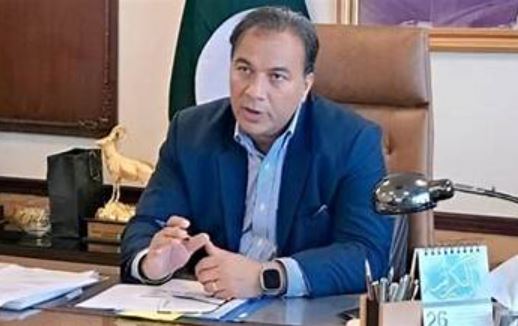
Chairman CDA Muhammad Ali Randhawa commended the institution’s performance, reaffirming that making Islamabad a safe city remains a top priority through the continuous modernization of emergency services. DG Dr. Abdur Rahman further pledged that in the coming year, the department would focus on further reducing response times and equipping the emergency personnel with state-of-the-art technology and equipment to enhance their life-saving capabilities.

Pakistan, China launch logo to mark 75 years of diplomatic ties

Pakistan, China launch logo to mark 75 years of diplomatic ties

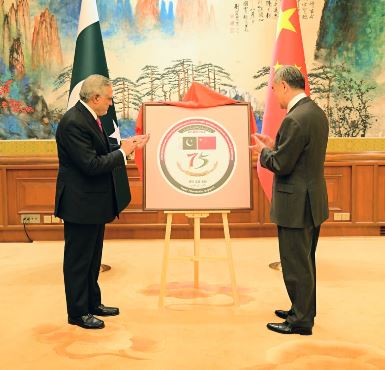
ISLAMABAD, JAN 4 /DNA/ – Deputy Prime Minister and Foreign Minister Senator Mohammad Ishaq Dar and Chinese State Councilor and Foreign Minister Wang Yi jointly unveiled the official logo commemorating the 75th anniversary of Pakistan-China diplomatic relations.

The unveiling ceremony, held formally inaugurated a year-long series of celebrations to honor the historic milestone between the two “iron-clad” brothers. The logo symbolizes the enduring and multi-faceted partnership between the two nations.

Speaking on the occasion, DPM Dar reaffirmed Pakistan’s unwavering commitment to the All-Weather Strategic Cooperative Partnership with China. He highlighted that the 75th anniversary is a moment to celebrate a unique friendship that has withstood the test of time and grown stronger with each passing decade.

Foreign Minister Wang Yi echoed these sentiments, stating that the China-Pakistan relationship serves as a model of state-to-state interactions. He emphasized the depth of bilateral cooperation spanning from the landmark China-Pakistan Economic Corridor (CPEC) to defense and cultural exchanges.

The two leaders expressed their mutual resolve to celebrate this platinum jubilee in a “befitting and memorable manner,” with planned events encompassing high-level exchanges, cultural festivals, trade exhibitions, and people-to-people interactions throughout the year.

The logo’s unveiling marks the beginning of festivities that aim to not only reflect on the remarkable journey of the past 75 years but also to chart a future course for an even deeper and more robust bilateral relationship.

Punjab accelerates pace of key business finance scheme

Punjab accelerates pace of key business finance scheme

LAHORE, Jan 04 (APP/DNA): A third meeting of the Project Steering Committee of the Chief Minister Punjab Easy Business Finance Scheme was held at the Peace House.

Provincial Minister for Industries and Commerce Shafay Hussain presided over the meeting.

The progress of the second phase of the Chief Minister Easy Business Finance Scheme was reviewed in the meeting. Necessary steps were approved to further accelerate the pace of this scheme, which is of key importance in the promotion of business activities. Business people associated with the SME sector and chambers of commerce and industry will be fully informed about the scheme.Punjab accelerates pace of key business finance scheme

AIOU Sindh chapter convocation held in Karachi

AIOU to launch BS, M.Phil programs on Seerat -un –Nabi
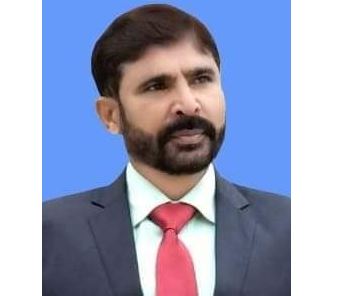
ISLAMABAD, Jan 04 (APP/DNA):The Convocation of Allama Iqbal Open University (AIOU) Sindh Chapter was held at Bahria Auditorium Karsaz in Karachi on Sunday. Chief Minister of Sindh, Syed Murad Ali Shah was the chief guest of the ceremony, while the Vice Chancellor, Prof. Dr Nasir Mahmood hosted the event.

The convocation was attended by all four deans of the university, faculty members, principal officers, heads of AIOU regional offices across Sindh, representatives of various educational institutions and prominent social figures, said a press release here on Sunday.

Addressing the ceremony, Chief Minister Syed Murad Ali Shah said that former Prime Minister Benazir Bhutto’s academic association with AIOU was clear evidence of the institution’s greatness and prestige.

He stated that Shaheed Benazir Bhutto had been a student of this university which is a source of pride not only for the university but for the entire nation.

He further said that Shaheed Zulfikar Ali Bhutto envisioned establishing an educational institution that could deliver education to the common citizen. At that time, Allama Iqbal Open University was among the world’s early open universities and today distance education has become a global reality, he added.

On this occasion, Vice Chancellor Prof. Dr Nasir Mahmood in his address said that Allama Iqbal Open University is providing quality and reliable educational services in Sindh.

He informed that the number of the University’s students in Sindh has now exceeded 120,000 which was clear evidence of public trust.

He expressed his commitment to further expanding the university’s network in Karachi and other parts of Sindh and to establishing new model study centers so that students in remote areas may also have access to quality educational facilities.

At the end of the convocation, degrees were awarded to successful male and female students, while participants highly appreciated the splendid organization of the ceremony and the excellent arrangements.

GCC and the Global Technology Contest

GCC and the Global Technology Contest

Dr. Muhammad Akram Zaheer

A recent report released by the Middle East Institute has drawn attention to a strategic shift that is unfolding quietly but steadily across the Arabian Gulf. Authored by Mohammed Soliman, a senior fellow at the Institute, the study argues that the Gulf Cooperation Council (GCC) is no longer a peripheral player in advanced technologies. Instead, it is emerging as a central arena in the intensifying technological competition between the United States and China. At the heart of this argument lies the concept of a collective “GCC AI Stack”: a coordinated framework through which Gulf States can pool resources, infrastructure, regulation and talent to shape their technological future. For years, Washington, Beijing and a handful of East Asian and European capitals, dominated discussions about advanced computing and digital innovation. The Gulf’s role was often reduced to that of an energy supplier or a consumer of imported technologies. This perception is now outdated. With substantial financial reserves, ambitious national visions and a growing appetite for strategic autonomy, Gulf States are positioning themselves as builders rather than buyers of next-generation technological systems.

The report highlights that the GCC’s importance is not simply a function of wealth. It stems from a convergence of factors: access to energy at scale, political will to invest in long-term infrastructure and a geographic position that connects Asia, Europe and Africa. Together, these factors make the Gulf uniquely suited to host large-scale computing facilities and data infrastructure that underpin modern technological development. From a geopolitical perspective, this shift carries significant implications. The rivalry between the United States and China is no longer confined to trade tariffs or military deployments. It has expanded into standards-setting, supply chains and control over the tools that will shape future economies. In this contest, computing capacity and digital ecosystems matter as much as aircraft carriers once did. The GCC’s evolving technology landscape, therefore, becomes a strategic variable rather than a neutral backdrop.

One of the report’s central arguments is that Gulf States can act as a force multiplier for American technological capacity. This does not imply subordination or dependency. Rather, it suggests a partnership model in which Gulf investments complement American innovation. The United States retains a lead in research, advanced chips and foundational technologies, but it faces constraints in scaling infrastructure rapidly at home due to regulatory, environmental and political hurdles. The Gulf, by contrast, can move faster in building large facilities and deploying capital, provided there is strategic alignment. This alignment, however, cannot be taken for granted. Gulf States maintain diversified foreign relations and have cultivated economic ties with China over the past two decades. Beijing has been an active partner in infrastructure development, telecommunications and digital services across the Middle East. The report does not frame this as a zero-sum dilemma for the Gulf. Instead, it argues that without a clear and attractive policy pathway from Washington, Gulf capitals will continue to hedge, seeking benefits from both sides.

What distinguishes the MEI report is its emphasis on collective action within the GCC. Individual Gulf states have already launched ambitious national initiatives, from Saudi Arabia’s technology-driven Vision 2030 to the United Arab Emirates’ push to become a regional innovation hub. While these efforts are impressive, the report contends that fragmentation limits their strategic impact. A shared framework—covering infrastructure standards, data governance, investment rules and workforce development would allow the GCC to punch above its collective weight. Such coordination would also reduce duplication and unhealthy competition among Gulf neighbors. Instead of racing to outbid one another for the same projects, states could specialize within a shared ecosystem. One country might focus on large-scale infrastructure, another on regulatory innovation and a third on talent development. The combined effect would be greater than the sum of its parts.

For the United States, the message is equally clear. Engagement with the Gulf on advanced technologies cannot be an afterthought or confined to security dialogues. It requires a coherent policy that treats Gulf partners as stakeholders in a shared technological future. This includes providing clarity on export controls, encouraging joint ventures and investing in people-to-people links such as education and research exchanges. Without such steps, Washington risks ceding influence by default rather than design. At the same time, the report underscores that Gulf States are not merely seeking external validation. Their interest in developing advanced technological capabilities is rooted in domestic imperatives. Economic diversification, job creation for a young population and the need to manage increasingly complex societies all demand more sophisticated tools. Technology is seen not as a luxury but as a necessity for governance and growth in a post-hydrocarbon era.

Critically, the report does not ignore the risks. Rapid technological development raises questions about regulation, data protection and social impact. A collective GCC approach could help address these concerns by establishing shared norms and safeguards. It could also provide a platform for dialogue with external partners, ensuring that cooperation is grounded in mutual trust rather than transactional convenience. The broader implication of the MEI study is that the global technology landscape is becoming more multipolar. Power is diffusing not only among states but also across regions that can offer scale, stability and strategic alignment. The Gulf’s rise in this domain reflects a broader trend in which economic and technological agency is no longer monopolized by traditional centers.

Bangladesh ‘will not play’ T20 World Cup matches in India

Bangladesh 'will not play' T20 World Cup matches in India

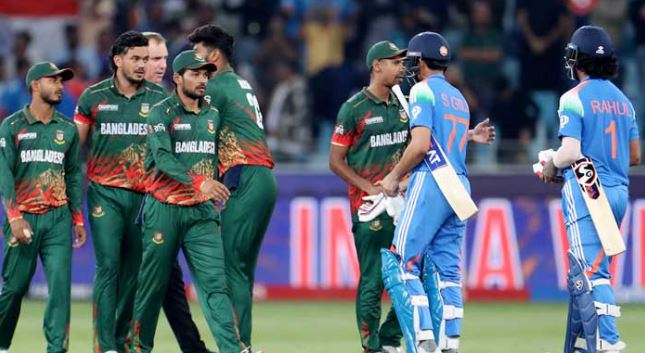
DHAKA: Bangladesh will not play their T20 World Cup matches in India after Mustafizur Rahman was released by his Indian Premier League team amid growing tensions between the countries, Bangladesh’s sports adviser Asif Nazrul said on Sunday.

“Bangladesh will not go to India to play the World Cup. The Bangladesh Cricket Board has taken this decision today,” Nazrul, who is an adviser to the Ministry of Sports, said in a statement.

“We welcome this decision taken in the context of the extreme communal policy of India’s cricket board,” he added.

The government adviser, as quoted by state-run BSS news agency, further warned that “we will not accept any insult to Bangladeshi cricket, cricketers and Bangladesh under any circumstances. The days of slavery are over”.

The development comes after Bangladesh fast bowler Mustafizur Rahman was on Saturday released by the Kolkata Knight Riders after the IPL team were “advised” by the Board of Control for Cricket in India (BCCI) to do so, following tensions between the neighbouring nations.

“The board said that where a Bangladesh cricketer can’t play in India despite being contracted, the entire Bangladesh cricket team can’t feel safe to go to the World Cup,” Nazrul had said.

“I have also instructed the board to request Bangladesh World Cup games to be held in Sri Lanka.”

Nazrul said he had ordered the Bangladesh Cricket Board (BCB) to write to the International Cricket Council (ICC).

“The board should inform that, where a Bangladeshi cricketer cannot play in India despite being contracted, the entire Bangladeshi cricket team cannot feel safe going to play in the World Cup,” he wrote.’

“I have also instructed the board to request that Bangladesh’s World Cup matches should be held in Sri Lanka.”

Dignity, security ‘top priority’
The T20 World Cup begins on February 7, co-hosted by India and Sri Lanka. Bangladesh are scheduled to play their four group matches in India.

Pakistan will play all their matches in Sri Lanka, part of a deal that allows both India and Pakistan to play at neutral venues in multi-nation tournaments.

Political relations between India and Bangladesh soured after a mass uprising in Dhaka in 2024 toppled then-prime minister Sheikh Hasina, a close ally of New Delhi.

India’s foreign ministry last month condemned what it called “unremitting hostility against minorities” in Bangladesh.

Bangladesh’s interim leader, Nobel Peace Prize winner Muhammad Yunus, has accused India of exaggerating the scale of the violence.

BCB president Aminul Islam Bulbul said the board were considering their options.

“The dignity and security of our cricketers are our top priorities, and we will take a decision at the appropriate time, keeping these in mind,” he told reporters late Saturday.

Mustafizur, who has previously played in the IPL for other teams, was snapped up at auction in December by Kolkata for more than $1 million.

But BCCI secretary Devajit Saikia said that “considering recent developments” Kolkata had been “advised to release” the 30-year-old.

The 2026 IPL season begins on March 26.

Nazrul said he would also ask that the IPL be blocked by Bangladeshi broadcasters.

“I have requested the Information and Broadcasting Adviser to stop the broadcasting of the IPL tournament in Bangladesh,” he said.

Kolkata, majority-owned by Bollywood superstar Shah Rukh Khan, subsequently said that Mustafizur’s “release has been carried out following due process and consultations”.

The cricket row comes only days after tensions between the nations had appeared to have eased.

India’s Foreign Minister Subrahmanyam Jaishankar visited Bangladesh last week, the most senior visit by an Indian official since the overthrow of Hasina.

On Friday, the BCB announced that India would go to Bangladesh for six white-ball matches in September.

Bangladesh will hold its first elections since the uprising on February 12.

T20 World Cup squad
Meanwhile, the BCB has announced it squad for the T20 World Cup with fast bowlers Mustafizur Rahman and Taskin Ahmed leading the bowling attack at the event next month, while batter Jaker Ali was axed

Taskin, who has taken 106 wickets in 86 T20Is, returns to the team after missing their 2-1 series win over Ireland in December while he was competing in the Abu Dhabi T10 league.

Mustafizur and Taskin will spearhead a pace department which also includes Tanzim Hasan, Shoriful Islam and Mohammad Saifuddin, with Rishad Hossain, Nasum Ahmed and Mahedi Hasan the spinners in the squad.

Litton Das will captain the team and will be tasked with putting runs on the board alongside Tanzid Hasan and Saif Hassan.

Jaker misses out after a poor 2025 in which he managed just 378 runs in 26 T20Is.

15-member lineup: Litton Das (captain), Tanzid Hasan, Parvez Hossain Emon, Saif Hassan, Tawhid Hridoy, Shamim Hossain, Quazi Nurul Hasan Sohan, Shak Mahedi Hasan, Rishad Hossain, Nasum Ahmed, Mustafizur Rahman, Tanzim Hasan Sakib, Taskin Ahmed, Shaif Uddin, Shoriful Islam

Stay Connected

64FansLike
60FollowersFollow

Latest Reviews

Exchange Rates

USD - United States Dollar
EUR
1.14
GBP
1.34
AUD
0.70
CAD
0.71