Home Blog Page 315

Experts decry India’s post-2019 demographic changes in occupied Kashmir

Experts decry India's post-2019 demographic changes in occupied Kashmir

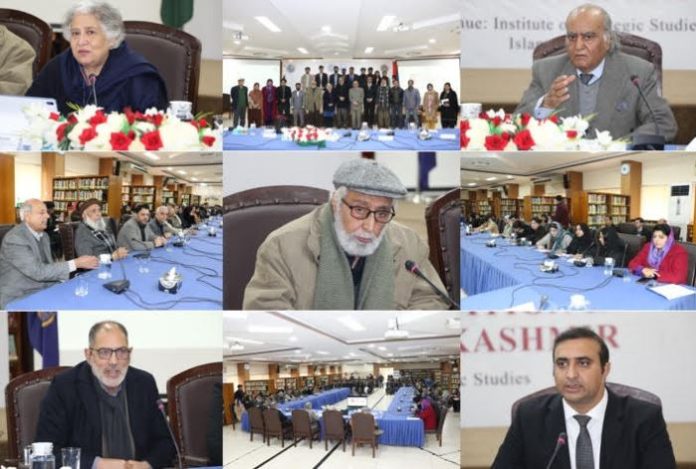
ISLAMABAD, JAN 5 /DNA/ – To commemorate and highlight the importance of United Nations Commission for India and Pakistan (UNCIP) resolution of 5th January 1949, the India Study Centre at the Institute of Strategic Studies, Islamabad (ISSI) organised a round table event titled “5 January: The Call for Self-Determination in Jammu and Kashmir” in collaboration with Kashmir Institute of International Relations (KIIR) and All Parties Hurriyet Conference (APHC).

Speaking at the occasion, Chairman Board of Governance, ISSI, Ambassador Khalid Mahmood said that the 5 January 1949 resolution established the principle that the fate of Jammu and Kashmir would be decided by the people of Jammu and Kashmir through a free and impartial plebiscite under the auspices of the United Nations (UN). India used to claim that Jammu and Kashmir is a bilateral issue, and lately, it has started saying that it is an internal issue, as it is an integral part of India.

This position is not acceptable for Pakistan, Kashmiris and the international community, who believe that Jammu and Kashmir is not a territorial issue but a matter of the right of self-determination of the people. He highlighted that it was India itself that took the matter to the UN. The UN prescribed the solution which India accepted but later on backtracked. India sometimes says this issue should be settled bilaterally and sometimes says it has already been settled. Pakistan believes that apart from bilateralism, under the UN Charter there are several other peaceful methods of resolving the dispute, like mediation, conciliation, arbitration and judicial settlement.

The Jammu and Kashmir dispute is still on the UN agenda, and the presence of UNMOGIP clearly indicates that the issue is still alive and needs resolution. The nuclear dimension, a threat to the peace and stability of the region and the ongoing massive human rights violations of Kashmiris under India occupation, all warrant early resolution of this dispute.     

In his introductory remarks, the Director of the India Study Centre, Dr Khurram Abbas, said that on this date in 1949, the UNCIP acknowledged the right of self-determination of the Kashmiri people. However, after almost 78 years, the people of Jammu and Kashmir are still waiting to exercise their right of self-determination. He said that the relevance of this resolution increased manifold post August 5, 2019. 

Mr Altaf Hussain Wani, Chairman of the Kashmir Institute of International Relations, Islamabad, said there are a number of UN resolutions on Kashmir, but the UNCIP resolution of 5 January 1949 gave a roadmap towards a solution of the Jammu and Kashmir dispute. India knew from the outset that it would forcefully occupy this princely state with a Muslim majority.  It thought that it would go to the UN, saying that the Maharaja had already signed an accession with India and would get Pakistan declared an aggressor. However, the maharaja had already relinquished his authority and fled the region. The UN subsequently decided that the people of Jammu and Kashmir should decide its future. The UN maintained the same position after India tried to mislead the UN by conducting Constituent Assembly elections in the region under its occupation and arguing the elections reflected the will of the people to remain with India. He encouraged the younger generation to understand the Jammu and Kashmir dispute in its true perspective and be future diplomats for the Kashmir cause.

Mr Farooq Rehmani, senior leader and former convener of the All Parties Hurriyet Conference, said that India never wanted to implement UN resolutions and therefore, it complicated the procedure by raising one objection or another. The ceasefire was only intended to bring peace in the region, but India used it to divide Azad Jammu and Kashmir from the Indian Occupied Jammu and Kashmir. He informed that the 1990s era saw one of the worst phases of human rights abuses in the Indian Occupied Jammu and Kashmir. It was the time when unmarked graves were discovered across the occupied region. Post August 2019, India is actively pursuing its agenda of demographic change. Thousands of Domicile Certificates have been distributed among non-Kashmiri Indians, while the Kashmiri leadership is languishing in jails. He stressed that the people of Jammu and Kashmir do not demand restoration of Articles 370 or 35A, rather, they demand the fulfilment of their almost 80-year-old promise of the right of self-determination.

Ambassador Riffat Masood, Pakistan’s Representative to the OIC-Independent Permanent Human Rights Commission (IPHRC), opined that the right of self-determination was an important component of the freedom movement of India and Pakistan from British Raj. It is ironic that after its independence, India was not willing to give the same right to the people of Jammu and Kashmir. Several global examples exist, such as Kosovo, South Sudan, and East Timor, where people have successfully exercised their right to self-determination. Unfortunately, despite being one of the oldest disputes on the UN agenda, the people of Jammu and Kashmir are still waiting to exercise this inalienable right. Today, the people of Jammu and Kashmir are engaged in a struggle for their survival. She highlighted the plight of Kashmiri women, particularly the half-widows. She suggested that Pakistan must mobilise public opinion both within the country and across the globe. She also stressed that the UN Secretary General must appoint a special envoy for the Jammu and Kashmir dispute. She also suggested that Pakistan should explore the possibility of taking Indian Prime Minister Narendra Modi to the International Criminal Court (ICC) for grave human rights violations in IIOJK.

Members of the think tank community, intellectuals, and a large number of students attended the event. While concluding the event, Ambassador Khalid Mahmood saluted the resilience of the Kashmiri people who refuse to give up on the just and principled demand of their right of self-determination.  He reiterated Pakistan’s unflinching political, moral and diplomatic support to the Kashmir cause.

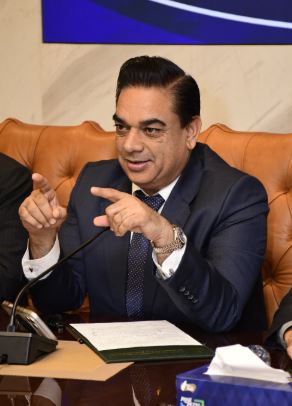
Chess Federation Officials Suspended Over Financial Irregularities

Chess Federation Officials Suspended Over Financial Irregularities

By our correspondent

ISLAMABAD: The Pakistan Sports Board (PSB) Adjudicator has taken decisive action in the ongoing administrative and financial dispute within the Chess Federation of Pakistan (CFP), suspending three senior officials after hearing all parties and examining the record.

According to the written order, PSB-appointed Adjudicator Shakil Durrani directed the immediate suspension of CFP President Hanif Qureshi, Finance Secretary Raja Gauhar Iqbal, and General Secretary Omar Khan, holding them administratively responsible for the federation’s financial affairs.

The adjudicator ordered that the officials will remain suspended until the Auditor General of Pakistan (AGP) completes a comprehensive inquiry and issues final directions based on its findings. The decision followed detailed hearings and scrutiny of documents submitted by both sides in a dispute that has remained pending since 2023.

The order further stated that all bank and deposit accounts of the Chess Federation of Pakistan will remain frozen until a final decision is taken after completion of the audit. The AGP inquiry will determine whether any financial or administrative rules were violated and whether financial mismanagement occurred.

To ensure that chess activities in the country are not disrupted, the adjudicator directed the PSB to nominate an impartial CFP office bearer or a PSB official, on a case-to-case basis, to authorize the release of essential funds strictly for the federation’s core operational needs.

Additionally, the adjudicator ordered the withdrawal of services of an individual appointed against an unsanctioned position, terming the appointment irregular.

Value addition, innovation key for global market entry: ICCI head

Value addition, innovation key for global market entry: ICCI head

ISLAMABAD, JAN 5 /DNA/ – President Islamabad Chamber of Commerce and Industry (ICCI), Sardar Tahir Mehmood, has underscored that a strong research and innovation ecosystem is indispensable for enhancing market-needed quality production, improving competitiveness, and enabling Pakistani exporters to sustainably integrate into global value chains.

He expressed these views while talking to a group of young entrepreneurs who called on him at the ICCI. The ICCI President said that in today’s knowledge-driven global economy, businesses that invest in research, product development, innovation, and technology adoption are better positioned to meet evolving international standards and consumer preferences.

Sardar Tahir Mehmood emphasized that Pakistani exporters must move beyond traditional practices and focus on value addition, compliance, branding, and innovation-led production to capture new markets. “Research-based decision-making and innovation are no longer optional; they are essential for producing goods that meet international quality benchmarks and changing market demands,” he remarked.

He highlighted the need for stronger linkages between industry, academia, and research institutions to ensure that innovation is aligned with real market needs. He also called for greater involvement of young entrepreneurs in applied research, start-ups, and commercialization of innovative ideas to drive export-oriented growth.

The ICCI President reaffirmed that the Chamber is committed to promoting an enabling environment for innovation by organizing capacity-building programs, industry-academia dialogues, and policy advocacy aimed at strengthening Pakistan’s export base. He assured the young entrepreneurs that ICCI would continue to support initiatives that foster entrepreneurship, research culture, and competitiveness in the business community.

The visiting entrepreneurs appreciated ICCI’s proactive role and expressed keen interest in collaborating with the Chamber to develop innovation-driven business models that can contribute to Pakistan’s economic growth and export diversification.

PCB announces first qualified bidder ahead of historic PSL 11 auction

PCB announces first qualified bidder ahead of historic PSL 11 auction

ISLAMABAD: The Pakistan Cricket Board (PCB) has announced its first qualified bidder as the Pakistan Super League (PSL) prepares for its 11th edition, which will see the addition of two new franchises.

The auction is scheduled for January 8 at the Jinnah Convention Centre in Islamabad, with the tournament set to run from March 26 to May 3.

In a social media post, the PSL confirmed a renowned company as Bidder #1 out of 10. The post read: “And we’re off! Inverex Solar Energy confirmed as Qualified Bidder #1️⃣ in the HBL PSL Teams Auction.”

The PSL is expanding from six to eight teams as the PCB completes technical evaluations of proposals submitted by interested groups.

Among the confirmed bidders is the Tareen Group, led by businessman Ali Khan Tareen, who previously owned the Multan Sultans.

Tareen acquired the franchise in 2018 and turned it into one of the PSL’s most consistent performers, winning the title in 2021 and reaching multiple finals.

However, relations between Tareen and the PCB deteriorated over renewal terms and governance issues.

He was the only owner not offered a 10-year extension, and the dispute escalated after the PCB issued a legal notice citing alleged contract breaches.

Tareen announced his exit in late 2025, which became effective at the end of the year, making him eligible to bid for one of the new franchises.

Other bidders include Karachi-based VGO TEL, led by CEO Naveed Gaba, and OZ Group, chaired by Hamza Majeed, which has formally joined the race.

Majeed has previously emphasised his commitment to sports investment, making OZ Group a strong contender.

Successful bidders will later have the opportunity to select a home city from the PCB-approved list, which includes Faisalabad, Rawalpindi, Hyderabad, Sialkot, Muzaffarabad and Gilgit.

Major terror plot averted in Karachi

Major terror plot averted in Karachi

DIG Azfar Mahesar says more than thirty large drums, five cylinders in Raees Goth raid; three BLA-linked terrorists arrested

Nazir Siyal

KARACHI: A major terror plot has been averted as the law enforcement agencies recovered over two tonnes of explosives in an operation in Karachi’s Raees Goth, Counter Terrorism Department (CTD) Deputy Inspector General Ghulam Azfar Mahesar said on Monday.

“One truck, more than thirty large drums, five cylinders have been seized,” said the CTD officer while briefing the media alongside CTD AIG Zulfiqar Larik.

Providing details of the operation, DIG Mahesar noted that more than 2,000 kilogrammes of explosives have been recovered and three terrorists have been arrested.

Noting that the explosives had been defused, the police officer said that the suspects had planned a major terrorist attack in Karachi.

On the identity of the terrorists, the DIG said that they are associated with Balochistan Liberation Army (BLA) commander Bashir.

Pointing out that commercial-grade explosives were also recovered, he said that the explosives were being transported via various routes and consolidated at the location concerned.

Apprising of those behind the terror plot, DIG Mahesar said that the planning was carried out abroad.

The action comes against the backdrop of ongoing nationwide counterterrorist efforts in the country, which has witnessed an increase in terror incidents since the Afghan Taliban’s takeover of Kabul.

The country, however, has experienced an almost 17% drop in terrorist attacks in December 2025 and a 9% decline in November, according to a Centre for Research and Security Studies (CRSS) annual security report.

Pakistan had closed the Torkham and Chaman borders with Afghanistan on October 12 after the Afghan Taliban, in association with their affiliated militants, attacked multiple Pakistan Armed Forces posts along the border.

However, the report highlights that the 2025 witnessed a 34% surge in overall violence making it the most violent year for the country in a decade where it has “suffered a sustained escalation in violence for five consecutive years since 2021, coinciding with the Taliban’s return to power in Afghanistan; with almost 38% in 2021, over 15% in 2022, 56% in 2023, nearly 67% in 2024, and 34% in 2025”.

Khyber Pakhtunkhwa, which has faced the brunt of terrorist attacks and accounted for over 96% of all fatalities and almost 93% of violent incidents recorded during the entire 2025.

Meanwhile, Sindh reported 51 incidents causing 56 fatalities and 40 injuries; 1.73% of the total.

With about 2,060 deaths as a result of at least 392 security operations, the outlaws accounted for over 60% of the fatalities recorded in 2025 — surpassing the combined fatal losses among the civilians and security officials.

Trump renews push to annex Greenland after Venezuela strike

Trump renews push to annex Greenland after Venezuela strike

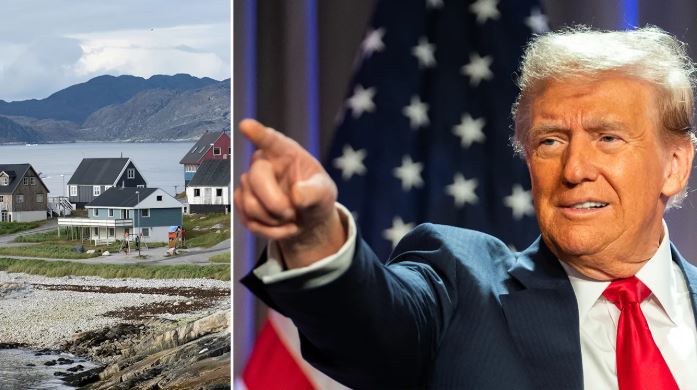
WASHINGTON, Jan 05 (APP/DNA): US President Donald Trump has renewed his push to acquire Greenland, citing national security needs, a move that has been met with protests from Denmark and Greenland’s leaders.

Speaking to reporters aboard Air Force One on Sunday, President Trump said Greenland is “so strategic” and claimed that it is currently surrounded by Russian and Chinese ships.

His comments came a day after the U.S. military captured  Venezuelan President Nicolas Maduro in a in  US military operation and brought him to New York to stand a trial on  drug-trafficking and narco-terrorism charges.

“We need Greenland, from the standpoint of national security, and Denmark is not going to be able to do it,” Trump said when asked about any potential US action against Greenland.

Trump also argued that US control over Greenland would serve broader Western interests, adding the European Union “needs us to have it” from a security standpoint.

Mineral-rich Greenland is a self-governing territory of Denmark, which is part of NATO. It has a population of about 57,000. Denmark has previously rejected proposals suggesting any transfer of sovereignty.

On Sunday, Danish Prime Minister Mette Frederiksen called on the United States to stop “threatening” its historical ally and described the idea as “absolutely absurd”.

In her statement, posted on the Danish government website, Ms. Frederiksen said she was addressing the US “very directly”.

She said Denmark – “and thus Greenland” – was a Nato member and covered by the alliance’s security guarantee. Denmark already had a defence agreement with the US that gave it access to Greenland, she said, and Denmark had upped its investment in security in the Arctic region.

“I would therefore strongly urge the United States to stop the threats against a historically close ally and against another country and another people who have very clearly said that they are not for sale,” she said.

Maktab launch signals national resolve for digital transformation

Maktab launch signals national resolve for digital transformation

Highlighting the strategic importance of higher education, Ahsan Iqbal said that in the 21st century, the real strength of nations lay in strong institutions and a well-trained human resource base

Saifullah Ansar

ISLAMABAD, Jan 5 (DNA): Federal Minister for Planning, Development and Special Initiatives Professor Ahsan Iqbal on Monday said the launch of Maktab, an integrated digital platform introduced under the Higher Education Commission (HEC), was a clear message of Pakistan’s national resolve to transform higher education through digital governance, transparency and performance-based systems.

Addressing the online launching ceremony of Maktab, the minister said Pakistan’s universities were moving away from cumbersome paper-based processes towards modern, efficient and data-driven performance management systems.

“From now on, decisions in higher education institutions will not be based on assumptions but on data, evidence and measurable outcomes,” he remarked.

Highlighting the strategic importance of higher education, Ahsan Iqbal said that in the 21st century, the real strength of nations lay in strong institutions and a well-trained human resource base.

“World-class universities are not built merely through impressive buildings; they are shaped by transparent governance, effective management and accountability,” he added.

The minister said that nations do not progress accidentally. “Development is the result of planning, discipline, continuity and sustained reforms,” he said, stressing that knowledge, technology and innovation formed the backbone of Pakistan’s economic resilience and future competitiveness.

Referring to the government’s long-term development roadmap, he said innovation and competitiveness played a central role across all five pillars of the Uraan Pakistan vision.

“Human resource development was declared a national priority as early as Vision 2010, laying the foundation for reforms in higher education,” he recalled.

Under successive national visions, the minister said, concrete steps were taken to strengthen research and talent development. He said the landmark 10,000 PhD programme had been launched to produce globally competitive scholars, while Vision 2025 focused on establishing modern research and innovation centres across the country.

“Now, under Uraan Pakistan, universities, research and the economy are being integrated into a single ecosystem to drive sustainable growth,” he said, adding that Pakistan’s top 10 premium universities would be prepared to compete at the global level.

He informed the participants that a dedicated committee had been formed to identify premium universities and propose comprehensive reform measures.

“The committee will submit its recommendations within one month, which will serve as the basis for transforming selected institutions into globally competitive centres of excellence,” he said.

The minister further said that a seven-point University Quality Framework was being implemented to enhance academic standards, governance and research output. Under this framework, public funding for higher education would be linked to performance, outcomes and measurable impact rather than routine allocations.

“Competition and merit will now be the guiding principles in our universities,” he said, adding that the era of complacency and inefficiency was coming to an end.

China, Pakistan agree to build upgraded version of CPEC 2.0

China, Pakistan agree to build upgraded version of CPEC 2.0

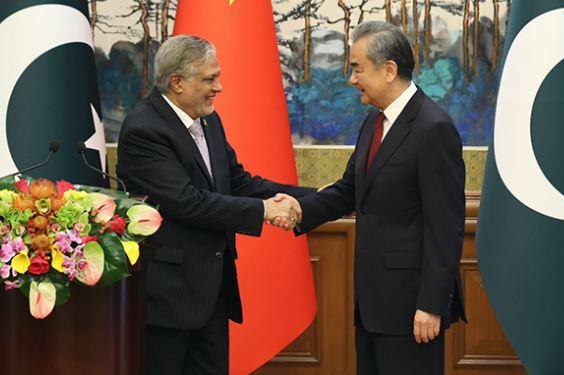
ISLAMABAD, Jan 5 (APP/DNA):Pakistan and China on Monday agreed to further align their development plans and priorities, and build an upgraded version 2.0 of the China-Pakistan Economic Corridor (CPEC)- a pioneering project of Belt and Road Initiative.

The two sides agreed to focus on the three key sectors of industry, agriculture and mining, promote the building and operation of the Gwadar Port, ensure the smooth passage of the Karakoram Highway, and enhance Pakistan’s capacity for sustainable development.

According to a joint press communiqué of the Seventh Round of China-Pakistan Foreign Ministers’ Strategic Dialogue, the two sides will deepen cooperation in areas such as trade and investment, information technology, science and technology, cybersecurity, technical and vocational training and education, and people-to-people and cultural exchanges.

The two sides will also take the year-round opening of the Khunjerab Pass as an opportunity to deepen two-way trade and people-to-people exchanges. They also welcomed third-party participation in CPEC cooperation that conforms with the modalities set by China and Pakistan.

The two sides also agreed to further strengthen cooperation in the financial and banking sectors, including extending mutual support at regional and international multilateral financial forums. Pakistan appreciated China for providing support for its fiscal and financial sectors.

At the invitation of Wang Yi, Member of the Political Bureau of the Central Committee of the Communist Party of China (CPC) and Foreign Minister of China, Mohammad Ishaq Dar, Deputy Prime Minister and Foreign Minister of Pakistan, visited China from January 3 to January 5, 2026. On January 4, 2026,  Wang Yi and Mohammad Ishaq Dar co-chaired the Seventh Round of China-Pakistan Foreign Ministers’ Strategic Dialogue in Beijing.

During the dialogue, Pakistan and China agreed to enhance strategic communication, deepen strategic mutual trust, jointly safeguard their common interests, promote the economic and social development of the two countries, and safeguard and advance peace, development and prosperity of the region and beyond.

The two sides announced the launch of commemorative activities in 2026 celebrating the 75th anniversary of the establishment of diplomatic relations between China and Pakistan, which will serve as an opportunity to consolidate China-Pakistan friendship and expand new areas of cooperation.

Pakistan spoke highly of China’s development achievements in the new era under the leadership of President Xi Jinping, and congratulated China on the successful conclusion of the 14th Five-Year Plan and the upcoming 15th Five-Year Plan.

Pakistan firmly supported every effort of China to achieve national reunification, and opposes any form of “Taiwan independence” and any attempt to create “two Chinas” or “one China, one Taiwan.”

Pakistan also firmly supported China on issues concerning Xinjiang, Xizang, Hong Kong and the South China Sea. China reiterated its steadfast support for Pakistan in safeguarding its sovereignty, independence and territorial integrity. While China supported Pakistan in firmly combating terrorism and playing a bigger role in international and regional affairs.

Likewise, China commended the comprehensive measures taken by Pakistan to combat terrorism and protect the safety of Chinese personnel, projects and institutions in Pakistan.

China fully recognized the significant contributions and huge sacrifices that Pakistan made in combating terrorism over the years. The two sides reiterated their commitment to combating terrorism in all its forms and manifestations with zero tolerance, and agreed to further deepen all-round cooperation on counter-terrorism and security, and make concerted efforts to ensure that the China-Pakistan Belt and Road cooperation advance in a secure and smooth manner.

The two sides expressed satisfaction at their expanding space cooperation and for the expected early entrance of Pakistani astronauts into the China Space Station. They agreed to explore space in a peaceful and mutually beneficial manner for greater economic and social development and prosperity.

Furthermore, the two sides expressed support for the postwar international order underpinned by international legal documents such as the Cairo Declaration and the Potsdam Proclamation and other principles of international law for the maintenance of world peace and security, and protect historical truth and international justice.

The two sides emphasized the importance of a South Asian regional order underpinned by the U.N. Charter, international law, and the basic norms governing international relations, reiterated opposition to any unilateral actions, and reaffirmed the significance of maintaining peace and stability in South Asia and the necessity of resolving all outstanding disputes through dialogue and consultation. The Pakistani side briefed the Chinese side on its position on and latest developments of the situation in Jammu and Kashmir. China reiterated that the Jammu and Kashmir dispute is left over from history, and should be properly and peacefully resolved in accordance with the U.N. Charter, relevant U.N. Security Council resolutions and bilateral agreements.

The two sides expressed readiness to conduct trans-boundary water resources cooperation under the principle of equality and mutual benefit, and emphasized the imperative of fulfilling international legal obligations. The significance of the maintenance of international and regional security and stability was reiterated.

The two sides expressed readiness to continue leveraging the China-Afghanistan-Pakistan Trilateral Foreign Ministers’ Dialogue and the China-Bangladesh-Pakistan cooperation mechanism to deliver new outcomes.

The two sides reaffirmed their readiness to further enhance cooperation under the frameworks of the Global Development Initiative, the Global Security Initiative, the Global Civilization Initiative and the Global Governance Initiative, make the global governance system more just and equitable, and join hands to build a community with a shared future for humanity.

Pakistan highly commended China’s efforts to safeguard developing countries’ right to sustainable development. The two sides expressed satisfaction over their cooperation within multilateral mechanisms such as the U.N. and the Shanghai Cooperation Organization (SCO), and agreed to deepen coordination and collaboration to safeguard the common interests of developing countries and international fairness and justice.

The two sides agreed to keep in close communication and coordination on the Afghan issue, work with the international community to encourage the Afghan government to build an inclusive political framework, adopt moderate policies, focus on development, pursue good-neighborliness, and play a constructive role in helping Afghanistan achieve stable development and integrate into the international community.

The two sides called for an unconditional, comprehensive and permanent ceasefire in Gaza, and reaffirmed their support for the Palestinian people’s right to self-determination and for the implementation of the two-state solution with the establishment of an independent state of Palestine. The two sides also expressed their concern at the situation in the occupied West Bank, and urged the need for urgently addressing it. The two sides expressed willingness to work with the international community to make unremitting efforts for peace and stability in the Middle East.

The two sides reiterated that China and Pakistan will further promote their ironclad ties, deepen mutually beneficial cooperation, and continue to strengthen their strategic cooperation to break new ground and set new goals in their All-weather Strategic Cooperative Partnership.

Doctor urges 8-10 glasses of water daily despite cold

Doctor urges 8-10 glasses of water daily despite cold

RAWALPINDI, Jan 05 (APP/DNA): As temperature drops in the peak winter season resulting people generally reduce water intake and remain indoors with heaters, a nephrologist has warned about the dangers of winter dehydration, which can lead to urinary infections, kidney pain, and other kidney related issues.

Dr. Adnan Khan, a specialist in kidney health, emphasized that everyone being properly hydrated is vital during the colder months to prevent these common yet avoidable issues.

In an exclusive interaction with APP here on Monday, Dr. Adnan highlighted how winter habits often lead to kidney problems.

“People either stop drinking water altogether or limit it to just two or three glasses a day, usually only with meals,” he said.
This low intake, he said, directly contributes to a rise in kidney-related complaints during the season.
“Normally, this leads to urinary tract infections (UTI), inflammation in the bladder or urinary passage, kidney pain or even the formation of kidney stones. The number of such patients increases significantly in winter”, he added.

The rise in complaints is directly linked to behavioral changes in cold weather, where individuals consume less fluid overall. To combat this, he recommended maintaining a daily water intake of at least 8 to 10 glasses, even in winter. He rejected a common myth that tea or coffee can fully replace water.

“To some extent, they help, but they cannot substitute for plain water entirely”, he explained.
By ensuring adequate hydration, he highlighted that people could avoid infections, stone formation, and recurrent kidney pain.

The ultimate action after the issues is experienced, is to report to the physician. “Ideally, consult a nephrologist or urologist nearby,” he said.

Dr. Adnan also advised initial pain relieing remedies including injections or medications. He further stressed the importance of follow-up care. “Once the symptoms settle and you feel relief, it is essential to see a specialist to check for any underlying kidney damage, stones, or other issues”, he said.

The doctor also addressed the role of indoor heating in dehydration risks. With doors and windows often closed, running heaters can dry out the air, leading to increased water loss through breathing. “Heaters reduce the humidity in the room, causing what we call insensible losses, more water evaporates from the body via respiration,” Dr. Khan explained.
This can heighten dehydration, further straining the kidneys. He advised for a small opening/ provision in the rooms or offices for ventilation.

” Running heaters etc it in a completely closed room is not good for overall health”, he added.

It is important to note that kidney disorders, often linked to lifestyle factors like hydration, affect millions of people globally.
Dr. Adnan, who practices in the twin cities of Rawalpindi and Islamabad notes a considerable uprising in the cases during winter due to cultural habits of fluid intakes.

China, ROK urged to strengthen economic ties

China, ROK urged to strengthen economic ties

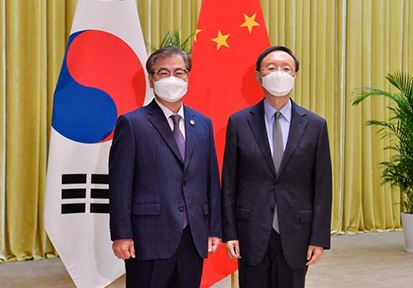
BEIJING, Jan 5: Chinese Vice Premier He Lifeng on Monday emphasized that China and the Republic of Korea (ROK) should strengthen economic ties and forge new prospects for win-win cooperation.

He, also a member of the Political Bureau of the Communist Party of China Central Committee, made the remarks while jointly attending a China-ROK business forum in Beijing with ROK President Lee Jae Myung.

He said that under the strategic guidance of the important consensus reached between the two heads of state, China and the ROK should actively promote the improvement and upgrading of economic and trade cooperation, continually opening up new prospects for win-win cooperation.

China will unswervingly expand high-level opening-up and welcomes enterprises from all countries, including those from the ROK, to invest and do business in China and share in the opportunities of its development, noted He.

Lee said that in recent years, cooperation between the ROK and China has deepened across various fields, noting that the ROK is willing to strengthen mutually beneficial cooperation with China and bring more benefits to the peoples of both countries.

The forum was jointly organized by the China Council for the Promotion of International Trade, and the Korea Chamber of Commerce and Industry. Approximately 400 representatives from the governments and business communities of both countries participated in the event.

Stay Connected

64FansLike
60FollowersFollow

Latest Reviews

Exchange Rates

USD - United States Dollar
EUR
1.14
GBP
1.34
AUD
0.70
CAD
0.71