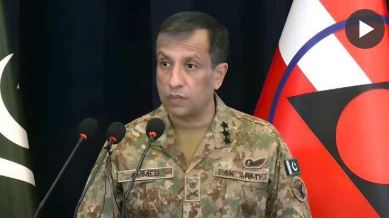
RAWALPINDI, JAN 6: Reviewing the security situation across the country, particularly over the previous year, Inter-Services Public Relations (ISPR) Director-General Lieutenant General Ahmed Sharif Chaudhry has said that Khyber Pakhtunkhwa (KP) is the worst-affected province by terrorism due to a “political-criminal-terror nexus”.
Addressing a press conference to brief the media on the current security situation and other key matters on Tuesday, Lt Gen Chaudhry said that nearly 71% of terrorist incidents occurred in Khyber Pakhtunkhwa.
“The primary reason for this is a politically conducive environment and the flourishing political-criminal-terror-nexus which is flourishing there,” he said.
In his opening remarks, the military’s spokesperson said that the purpose of the media briefing was to give a comprehensive overview of counter-terrorism measures taken in the past year.
Providing details of counterterrorism efforts in 2025, the ISPR chief said that law enforcement agencies carried out 75,175 intelligence-based operations (IBOs) across the country.
Giving a breakdown, he said 14,658 IBOs were conducted in Khyber Pakhtunkhwa, 58,778 in Balochistan, while 1,739 operations took place in the rest of the country.
Lt Gen Chaudhry said that 5,397 terrorism incidents were reported nationwide during the last year. Of these, 3,811 incidents, he said, occurred in Khyber Pakhtunkhwa, 1,557 in Balochistan, and 29 incidents were reported in other parts of the country.
He said that 2,597 terrorists were killed during counterterror operations last year.
“Afghanistan has become the centre of terrorist operations in the region,” he said while explaining the factors behind terrorism.
Reiterating the resolve to curb the menace of terrorism, he said: “We have to win the war against terrorism at all costs”.
“We have to win this war with strength.”
Addressing the hostilities with Afghanistan, the ISPR chief said that the Afghan Taliban regime had attacked Pakistani border posts, following which, “whatever was needed was done, and a hard message was given”.
“In the last three months, we have closed the borders. There are many signs here for those who see and understand.”
Noting that Islamabad targeted terrorists at the Afghan border in October 2025, and “dozens of Afghan posts were eliminated within hours”.
“We targeted the TTP, not TTA,” said Lt Gen Chaudhry.
Recalling the Doha agreement, the 2020 US-Taliban peace deal, he recalled that the Afghan Taliban had assured that terrorism would be eradicated from the Afghan soil.
However, he lamented, the neighbouring country remains a stronghold of Fitna al-Khawarij and Fitna al-Hindustan.
All terrorist organisations are based in Afghanistan, and are being nurtured there, he said.
While providing details of 10 major terror attacks across the country, he said that civilians and soft targets had been deliberately targeted, and Afghan militants were involved in all attacks.
“We have evidence of the presence of all terrorists… where they are and where they operate,” he said.
During the press briefing, video confessions of arrested terrorists were also played.
Lt Gen Chaudhry said 21 civilians were martyred in the Jaffar Express attack, adding that the incident would never fade from the memory of Pakistanis.
He further stated that a civilian bus was also targeted in Noshki, while an attack on the Frontier Corps headquarters in Quetta resulted in the martyrdom of eight civilians.
“The attack on the FC headquarters in Quetta was carried out by Afghans,” the ISPR DG said, adding that a similar attack had taken place on the FC headquarters in Peshawar in November.
Referring to an attempted attack on Cadet College Wana in November, the ISPR DG said Afghan terrorists had tried to replicate the 2014 APS Peshawar attack.
“This is a war of the nation, a war of every single child,” he said, rejecting a narrative portraying the fight against terrorism as solely the military’s responsibility.
“A narrative is built, suggesting this is the army’s war. This is not true,” Lt Gen Chaudhry added.
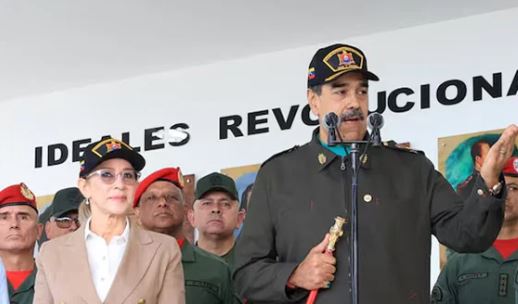
WASHINGTON: A classified CIA assessment presented to US President Donald Trump concluded senior Maduro loyalists, including Vice President Delcy Rodriguez, were best positioned to maintain stability if the Venezuelan leader lost power, two sources briefed on the matter said on Monday.
The sources, speaking on condition of anonymity, confirmed an exclusive report by the Wall Street Journal.
Trump was briefed on the report and it was shared with a small group of his senior national security team, the sources said.
The assessment was one reason why Trump decided to back Nicolas Maduro’s vice president, Delcy Rodriguez, instead of opposition leader María Corina Machado, the sources said.
The White House declined to confirm the report.
“President Trump is routinely briefed on domestic political dynamics all over the world. The president and his national security team are making realistic decisions to finally ensure Venezuela aligns with the interests of the United States, and becomes a better country for the Venezuelan people,” White House press secretary Karoline Leavitt said in response to a query.
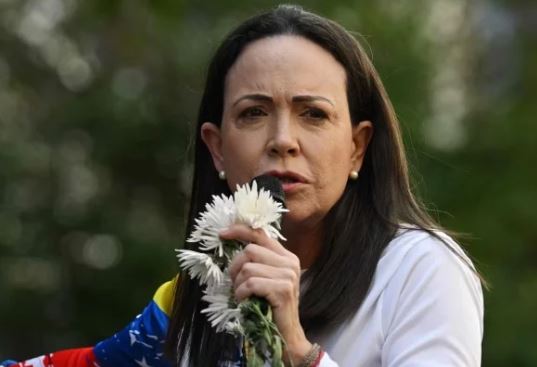
Venezuelan opposition leader Maria Corina Machado said Monday she plans to return home “as soon as possible,” and slammed the interim president in Caracas.
In her first public comments since a social media post over the weekend, when the US military forcibly removed president Nicolas Maduro from power, the Nobel Peace Prize winner vowed to return to her country.
“I’m planning to go back to Venezuela as soon as possible,” Machado told broadcaster Sean Hannity on Fox News, speaking from an undisclosed location.
Machado openly rejected the country’s interim president Delcy Rodriguez, saying she “is one of the main architects of torture, persecution, corruption, narcotrafficking.”
Rodriguez, who has signalled her willingness to cooperate with Washington, was Venezuela’s vice president under Maduro.
Machado said Rodriguez is “rejected” by the Venezuelan people, and voters were on the opposition’s side.
“In free and fair elections, we will win by over 90% of the votes, I have no doubt about it,” Machado said.
Machado also vowed to “turn Venezuela into the energy hub of the Americas” and “dismantle all these criminal structures” that have harmed her countrymen, promising to “bring millions of Venezuelans that have been forced to flee our country back hom.
WASHINGTON: Venezuelan opposition leader Maria Corina Machado said Monday she plans to return home “as soon as possible,” and slammed the interim president in Caracas.
In her first public comments since a social media post over the weekend, when the US military forcibly removed president Nicolas Maduro from power, the Nobel Peace Prize winner vowed to return to her country.
“I’m planning to go back to Venezuela as soon as possible,” Machado told broadcaster Sean Hannity on Fox News, speaking from an undisclosed location.
Machado openly rejected the country’s interim president Delcy Rodriguez, saying she “is one of the main architects of torture, persecution, corruption, narcotrafficking.”
Rodriguez, who has signalled her willingness to cooperate with Washington, was Venezuela’s vice president under Maduro.
Machado said Rodriguez is “rejected” by the Venezuelan people, and voters were on the opposition’s side.
“In free and fair elections, we will win by over 90% of the votes, I have no doubt about it,” Machado said.
Machado also vowed to “turn Venezuela into the energy hub of the Americas” and “dismantle all these criminal structures” that have harmed her countrymen, promising to “bring millions of Venezuelans that have been forced to flee our country back home.”
To the disappointment of Venezuela’s opposition, Trump has given short shrift to the idea of 58-year-old opposition leader and Nobel Peace Prize winner Machado taking over, saying she lacked support.
Machado was banned from standing in the 2024 election but has said her ally Edmundo Gonzalez, 76, who the opposition and some international observers say overwhelmingly won that vote, has a democratic mandate to take the presidency.
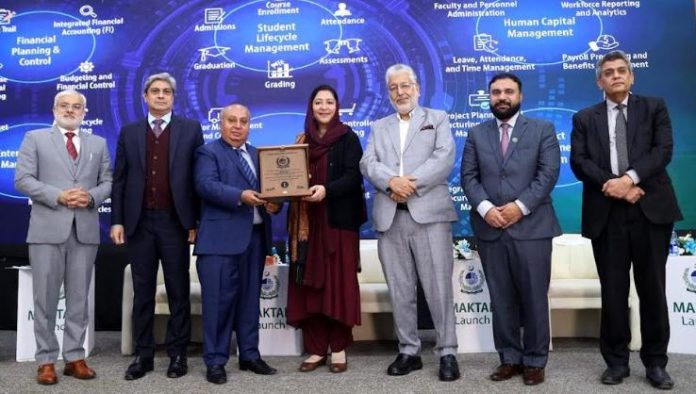
ISLAMABAD, JAN 6 /DNA/ – The Higher Education Commission (HEC), Pakistan has launched an integrated automation suite, MAKTAB, to transform universities by uplifting their core academic, administrative and financial functions.
MAKTAB is an integrated suite comprising SAP–Enterprise Resource Planning (ERP), Student Lifecycle Management System (SLcM), and Blackboard’s Learning Management System (LMS), deployed across 25 public sector universities under the World Bank–funded Higher Education Development in Pakistan (HEDP) project. The HEC has undertaken this flagship digital transformation programme to modernise and standardise academic and administrative operations of Higher Education Institutions (HEIs). This initiative marks a pivotal transition from fragmented and manual processes to a unified, technology-driven governance ecosystem that enhances efficiency, transparency, and real-time decision-making.
In the first phase, 25 HEIs have successfully been onboarded on SAP-based ERP and customised SLcM solutions that digitize their core functions. Simultaneously, Blackboard LMS has been deployed to enable high-quality online, blended, and hybrid learning with robust analytics and instructional support tools. Collectively, these systems constitute the foundation of Pakistan’s Higher Education Management Information System (HEMIS), a national platform aimed at improving governance, strengthening accountability, and supporting evidence-based policy making.
Federal Minister for Planning, Development and Special Initiatives, Mr. Ahsan Iqbal Chaudhary, graced the launch ceremony virtually. Minister of State for Federal Education and Professional Training, Ms. Wajiha Qamar; Chairman HEC, Mr. Nadeem Mahbub; Executive Director HEC Dr. Zia Ul Haq; former Chairman HEC, Dr. Mukhtar Ahmed; Vice Chancellors of participating universities, development partners, and other distinguished stakeholders attended the ceremony held to celebrate onboarding of universities and acknowledging the collaborative institutional efforts.
Addressing the audience, Mr. Ahsan Iqbal congratulated the Higher Education Commission and the partner universities on the successful integration of MAKTAB, describing it as a transformative step for Pakistan’s higher education sector. He noted that this achievement goes beyond the launch of a digital system and reflects a clear national resolve to institutionalize excellence and long-term reform. Emphasizing that robust institutions and a highly skilled human capital base are the true hallmarks of excellence in the 21st century, the Minister remarked that innovation, technology, and competitiveness serve as the core drivers of sustainable national progress. He further underlined that clarity of priorities, seriousness of intent, and consistency of effort are essential to translating vision into measurable outcomes. Recalling the achievements realized under Vision 2025, the Minister reaffirmed the Government’s steadfast commitment to advancing the strategic pillars of Uraan Pakistan and steering the country towards innovation-driven and inclusive growth.
“Let’s think deeply, act decisively, and act collectively” for development of the higher education system of Pakistan, the Minister stressed.
Ms. Wajiha Qamar, Minister of State for Federal Education and Professional Training, described the launch of MAKTAB as a long-cherished milestone and expressed optimism that the initiative would significantly advance digitization, transparency, and quality across the higher education sector. She underscored the importance of embedding MAKTAB within the Public Sector Development Programme (PSDP) to enable its expansion across the entire sector. Emphasizing the need to keep pace with rapidly evolving global dynamics, she conveyed her confidence that initiatives such as MAKTAB will play a vital role in steering higher education toward sustainable development.
Highlighting HEC’s strategic vision for strengthening the higher education ecosystem, Chairman HEC Mr. Nadeem Mahbub expressed his sincere appreciation to all stakeholders and development partners for their continued support. He commended the HEDP and HEC teams for their dedication, professionalism, and resilience in translating the MAKTAB concept into a fully operational national platform. Stressing the importance of sustained and effective utilization, he urged universities to continuously enhance system adoption, reiterating HEC’s commitment to building a stronger, smarter, and more accountable higher education system for Pakistan.
Executive Director HEC Prof. Dr. Zia ul Haq acknowledged the collective efforts of HEC, development partners, and universities in the successful deployment of MAKTAB. He expressed confidence that the platform would significantly streamline and strengthen critical administrative, academic, and financial processes within universities. While recognizing the implementation challenges inherent in such a large-scale reform, he emphasized that continued collaboration and institutional ownership would be key to sustaining and scaling the initiative.
Syed Naveed Hussain Shah, Project Coordinator HEDP, presented an overview of MAKTAB’s key features and deployment progress, while representatives from the participating universities shared their experiences and perspectives on the system’s impact at the institutional level.
Under MAKTAB, a comprehensive SAP-based Enterprise Resource Planning (ERP) solution has been deployed as the integrated digital backbone for managing core academic, administrative, and financial functions across participating universities and HEC. Built on SAP’s enterprise-grade platform, the ERP system digitises and standardises critical financial operations including budgeting, accounting, payments, receivables, and statutory financial reporting. It also streamlines Supply Chain Management and procurement, covering planning, tendering, purchase orders, invoicing, and vendor management, while Enterprise Asset Management (EAM) enables systematic tracking, maintenance, and lifecycle management of physical assets such as buildings, equipment, and vehicles. Collectively, these modules introduce uniform processes, real-time data visibility, audit trails, and management dashboards, significantly strengthening financial discipline, operational efficiency, and institutional governance.
The Human Capital Management (HCM) and payroll modules manage the complete employee lifecycle, encompassing recruitment, service records, payroll processing, benefits administration, and leave management. By integrating HR and payroll processes into a single system, MAKTAB enhances transparency, ensures timely and accurate remuneration, and provides decision-makers with reliable workforce data to support planning and accountability.
Complementing the ERP, the Student Lifecycle Management (SLcM) solution offers an end-to-end academic management framework that digitises the entire student journey within a university. From online admissions, merit list generation, enrollment, and course registration to semester planning, attendance, assessments, examinations, grading, and result declaration, SLcM ensures standardized, transparent, and merit-based academic processes while reducing manual interventions and administrative delays.
In addition, the deployment of Blackboard Learning Management System (LMS) provides a centralized digital platform for teaching and learning. The LMS enables faculty to deliver course content, manage assessments, and engage students through online classes, assignments, quizzes, and discussion forums. Seamlessly integrated with SAP SLcM, Blackboard supports blended and online learning, enhances academic continuity, and improves access to learning resources, thereby strengthening instructional effectiveness and student engagement across the higher education sector.
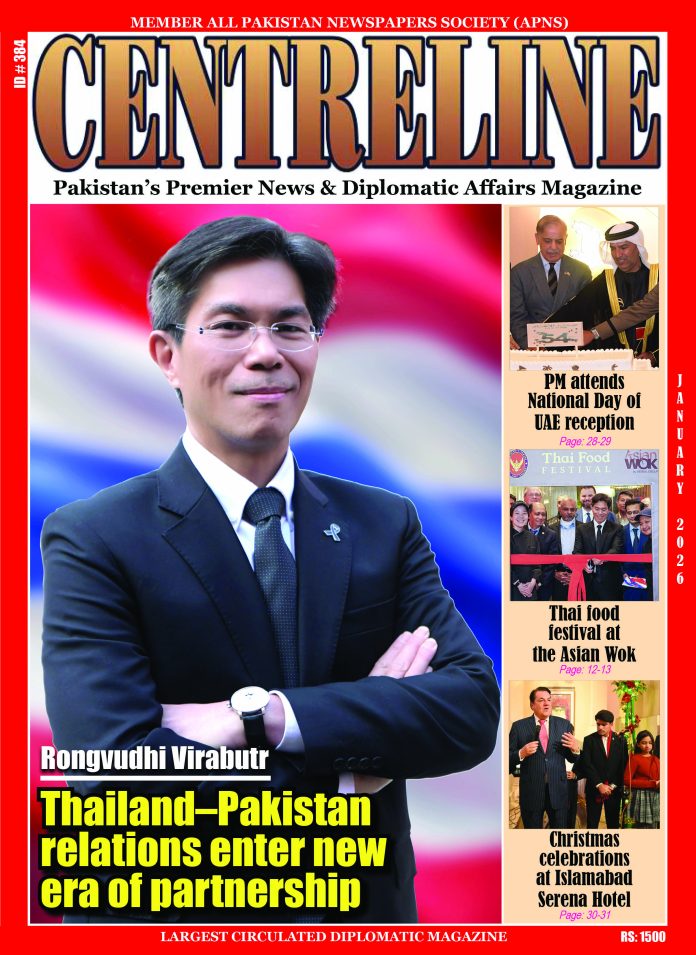
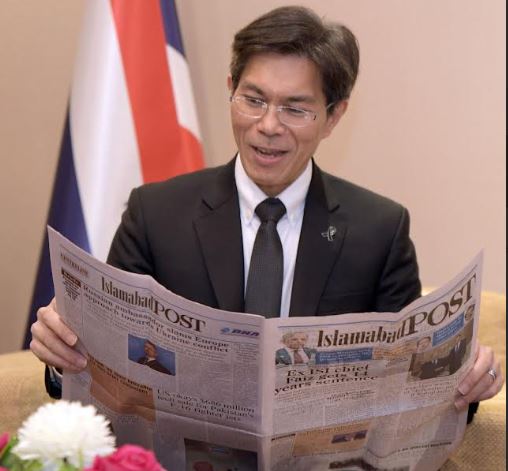
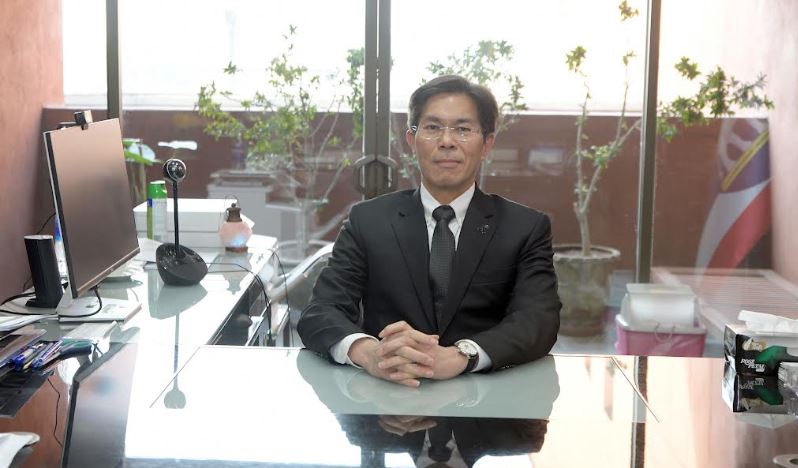
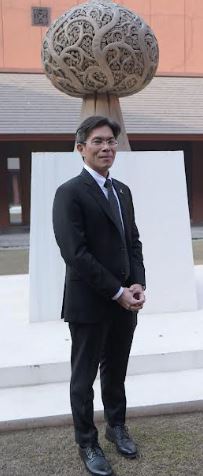
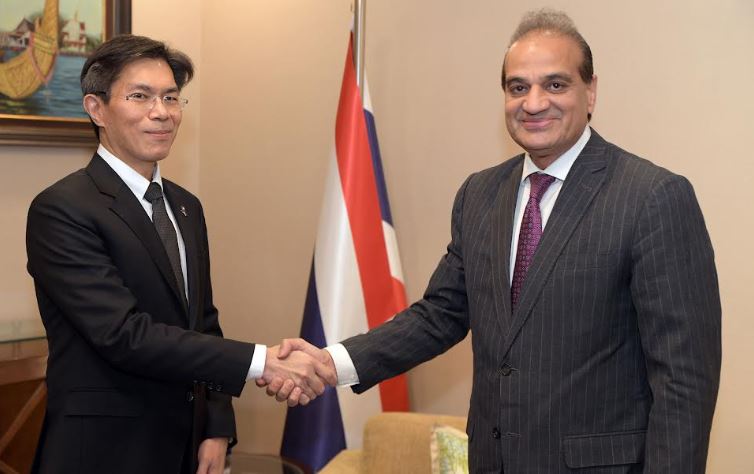
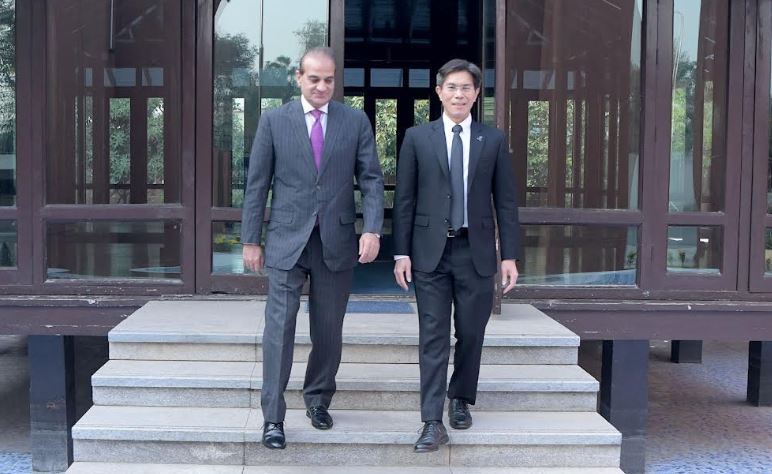
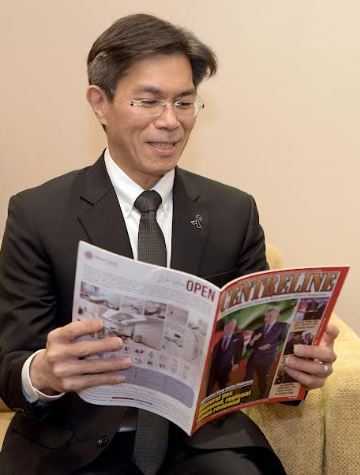
H.E. The Ambassador of Thailand to Pakistan Rongvudhi Virabutr gave an exclusive interview to Daily Islamabad POST, Centreline and Diplomatic News Agency. Here is the detailed interview of the ambassador.
Ansar Mahmood Bhatti
———————————
Q1: Your Excellency, how would you describe your overall diplomatic experience in Pakistan so far?
Having just reached my one-year anniversary here on December 1, 2025, I can say without reservation that Pakistan is truly a “Land of Friendliness and Opportunity.” Despite the distance, that initial feeling of being far from home vanished instantly. I discovered that Thailand and Pakistan share a profound cultural DNA—from the warmth and generosity of the people to our deep, ancient histories. The Pakistani spirit has embraced me, making me feel “at home” from very beginning.
My mission here, however, does not permit me to simply enjoy the hospitality, warmth, and generosity extended to me without giving back in meaningful ways. I see Pakistan as a nation of immense, untapped potential—a strategic hub with a resilient and dynamic people. With this vision, I am fully committed to advancing Thailand–Pakistani relations and unlocking the shared strengths of our two countries to the fullest.
Our ties must go beyond traditional friendship. They should evolve into a sustainable partnership for development—one in which we move forward together, hand in hand, bringing smiles of happiness to the faces of our Pakistani brothers and sisters. We are consciously pivoting from friendship to a “Prosperity Partnership.” My focus is clear: to deliver tangible, results-driven achievements that our citizens can truly see and feel, creating a new breakthrough in our bilateral relationship for generations to come.
Q2: In your assessment, what are the most promising areas of cooperation today?
I see two core dimensions driving breakthrough progress: Government-to-Government (G2G) economic dynamism and People-to-People (P2P) connectivity.
On the G2G front, trade and investment are decisive. Despite global fluctuations, two-way trade rebounded to USD 1.6 billion last year, but our goal is to double this volume through “Win-Win Trade”—combining Pakistan’s textiles and IT strengths with Thailand’s automotive and food processing expertise. A particular game-changer is the Halal industry. As one of the world’s leading Halal food producers—the “Kitchen of the World”—Thailand is ready to collaborate with Pakistan’s vast Muslim market. Advancing mutual recognition of Halal certification can unlock billions in food and cosmetics trade, creating a universal language of trust and quality. New investment collaborations in these high-value sectors are both feasible and imperative, with further potential in defense and beyond.
On the P2P side, tourism is the most powerful connector. At present, our two nations know each other but are not yet close; we contact but are not fully connected. Tourism helps bridge this gap, but we must go further—toward genuine familiarity and trust that positions us as the first destination for each other. The Royal Thai Embassy is committed to expanding tourism and cultural initiatives—through food, music, and art—so that our cooperation is not only economic but also deeply people to people contact.
Q3: How do you see the progress toward the Pakistan–Thailand Free Trade Agreement (FTA)?
The Pakistan–Thailand FTA is not just a technical document; it is a Strategic Gateway to a new era of economic prosperity for Pakistan. I view the FTA as having decisive importance, and I am resolutely committed to pushing it to completion swiftly. We must change the perception that the FTA creates a disadvantage, transforming it into the understanding that it is the “Key to Global Competitiveness” for Pakistan, specifically by reducing the cost of imported raw materials, thus boosting the efficiency of domestic production.
Crucially, this FTA will act as a “Talent Multiplier,” particularly in the digital and services sectors. By including provisions for the mobility of digital professionals, we will leverage Pakistan’s strength as a leading global freelancer hub, creating up to $20 billion in added economic value. We are coordinating with all key sectors—from Ministries to think tanks—to build unwavering confidence. The final conclusion of the FTA will send the clearest and most powerful signal to global investors: “Pakistan is ready for a New Era of Prosperity.”
Q4: What steps can both sides take to boost tourism and connectivity?
“Connectivity is the New Key in Diplomacy”—this is the principle I firmly uphold, as people-to-people relations built “from heart to heart” are inherently more durable than state-level interactions. We have set clear, decisive targets: doubling the number of Pakistani tourists to Thailand to 100,000 per year and expanding tourists from Thailand who are interested in Buddhism places in Pakistan to the Gandhara region to 10,000 per year. This is about building a strong “Network of Trust.”
The priority is to breaking logistical barriers. With current flight frequency and capacity hit the maximum, we held a virtual meeting in February 2026 and are pushing for formal negotiations next year to secure a decisive increase in air frequency and capacity, which will bring more flights and more accessible ticket prices. Furthermore, we are trying our utmost effort to find the easiest way that Pakistani tourists, in the near future, be able to enjoy visiting Thailand with easiest way of access; the e-visa system that we apply now is one of the mechanism that we use. Concurrently, we are designing perfect Halal Tourism programs in Thai provinces like Krabi and Ayutthaya, and promoting Thailand as a Global Medical Hub for Pakistani patients. Tourism, through this decisive action, becomes a genuine “Bridge of Trust.”
Q5: How is the Thai private sector viewing Pakistan as an investment destination?
Thai investors are practical: they commit where policy is clear, not just where potential is high. The Royal Thai Embassy’s decisive approach is to work with the Pakistani government to dramatically improve the Ease of Doing Business (EODB) ranking, which serves as the “compass” for global investors.
The FTA’s conclusion is also the ultimate trigger point, providing the legal certainty and investment protection needed. Beyond that, we are creating new S-curve avenues: exploring joint R&D in the defense industry, expanding the Halal food processing sector, and infrastructure projects. Strategically, Thai companies view Pakistan as a vital Strategic Gateway to Central Asia and the wider Middle East, positioning our partnership as a regional economic accelerator.
Q6: Are there plans for more cultural festivals, food events, or tourism exhibitions in Pakistan?
As I mentioned earlier, our two nations know each other but are not yet close; we contact but are not fully connected. The Royal Thai Embassy must continue working tirelessly to close this gap through cultural exchange—whether via food, music, art, or other creative avenues.
We began this journey with Thai Food Week in Islamabad, 8–14 December 2025, where authentic Thai chefs trained local Pakistani culinary chefs. Pakistani chefs were introduced to authentic Thai cooking techniques and had the opportunity to prepare traditional Thai dishes. These dishes have now been incorporated into the permanent menus of participating restaurants, ensuring that the “flavor of friendship” continues long after the festival itself. This initiative, organized in collaboration with the Monal Group, was never intended as a one-off event, but rather as a sustainable culinary bridge between our peoples.
Looking ahead, the ultimate breakthrough will be the historic Gandhara Civilization Exhibition in Thailand in 2027. Both governments have agreed to bring Buddhist artifacts from Pakistan’s Gandhara heritage to Thailand, allowing Thai audiences to appreciate the cultural treasures preserved so carefully by our Pakistani friends. Showcasing Pakistan’s ancient Buddhist legacy in Bangkok will serve as a powerful cultural magnet, drawing immense interest and investment toward the development of Pakistan’s heritage sites.
This is decisive cultural diplomacy—using our glorious past to inspire and directly drive a prosperous future.
Q7: How can both countries further enhance people-to-people contacts?
The Royal Thai Embassy is deeply committed to bringing our two nations closer and truly connected. To achieve this, we are determined to deploy every available tool—promoting tourism, fostering cultural exchange through food, music, and art, and encouraging direct interaction between our peoples.
As mentioned earlier, initiatives such as the Thai Food Festival in December 2025 and the upcoming Gandhara Civilization Exhibition in Thailand in 2027 are important milestones. They showcase how culinary and cultural diplomacy can build lasting bridges of understanding.
Beyond these events, we are also advancing direct people-to-people engagement. In collaboration with UN Women, we launched programs to upskill women entrepreneurs in Swabi and Sialkot, focusing on two vital sectors: Beauty and Livelihood and Regenerative Agriculture. We provided professional training in the beauty industry to enable women to work from home, while also helping transform backyard gardens into reliable sources of income. To enrich this effort, we invited experts such as Miss Jennifer Innes Taylor-Jane, a Thai organic farm owner, to share practical regenerative practices.
We firmly believe that the most powerful way to empower women is through income generation—when women earn, they gain confidence. As we say, “From small seeds, great forests grow.” This pilot project has already enabled Thai and Pakistani women farmers to interact directly, exchange knowledge, and establish future channels of cooperation. Together, they are developing new agricultural approaches that can help Pakistani women generate sustainable income from their farms.
These are the kinds of pioneering steps the Royal Thai Embassy sees as vital to deepening people-to-people ties between Thailand and Pakistan, ensuring that our relationship grows not only in trade and diplomacy but also in the everyday lives of our citizens.
Q8: As the current Chairman of the ASEAN Islamabad Committee, what are your key focus areas during your chairmanship?
My chairmanship is guided by 3 priorities strategy, refined into a clear motto: “Visibility, Tangibility, and Bring into Reality.” ASEAN today is a $3.6 trillion economic powerhouse with over 600 million people, while Pakistan has a population of more than 250 million. If our two regions can integrate their economies seamlessly, there is no doubt that a tangible and formidable economic force will emerge. That is why we are determined to shift from ceremony to substance.
Our priority is to ensure that ASEAN and Pakistan’s economies are connected without barriers. This can be achieved through multiple mechanisms: expanding Pakistan’s FTAs with individual ASEAN member states and expanding to have more FTA with each ASEAN member, and promoting initiatives such as an ASEAN Trade Fair to facilitate direct business deals. As ACI Chair, Thailand has already raised these issues with key stakeholders, including the Federal Ministers of Trade and Federal Miniter of Investment and major Chambers of Commerce and Industry across Pakistan.
Another critical area is the promotion of paperless trading systems. ASEAN already operates the ASEAN Single Window for paperless trade facilitation. If Pakistan develops its own paperless system and connects it with ASEAN, imports and exports between our regions will become faster, more efficient, and more transparent—significantly boosting trade.
Finally, we are working to enhance visibility and engagement at every level. ASEAN Ambassadors and High Commissioners in Islamabad have already conducted joint calls with three Federal Ministers, including Trade, Investment, and Foreign Affairs. We have also initiated economic dialogues with chambers such as FPCCI, Gujranwala, and Sialkot, with more to follow.
All these efforts reinforce our vision: Visibility, Tangibility, and Bring into Reality. This is how ASEAN and Pakistan can transform potential into progress.
Q9: How do you evaluate Pakistan’s engagement with ASEAN as a sectoral dialogue partner and do you think Pakistan has the potential to become a full dialogue partner of ASEAN in the future?
Pakistan’s potential to become a Full Dialogue Partner is absolutely certain, but it requires a decisive commitment to move from Potential to Performance. We recognize Pakistan’s desire to upgrade, and this is entirely possible if it expands its current 30+ annual activities to cover all three ASEAN pillars comprehensively. We must shift its status from merely “participating” to being a “Value-Adding Partner.”
At present, Pakistan participates in around thirty ASEAN-related activities each year. This is a respectable start, but to truly demonstrate comprehensive engagement, the number must grow—closer to one hundred activities annually—covering the full spectrum of ASEAN cooperation. As Chair of the ASEAN Committee in Islamabad, Thailand has taken on the role of facilitator, helping Pakistan link its unique strengths to ASEAN’s priorities and convert them into meaningful joint initiatives.
Two areas stand out as natural bridges. The first is disaster management. Pakistan’s National Disaster Management Authority has proven capacity in responding to crises, while ASEAN’s AHA Centre and DELSA system provide regional coordination and logistics. By connecting these mechanisms, both sides can build a seamless framework for humanitarian assistance, ensuring faster and more effective disaster response.
The second is peacekeeping. Pakistan’s Center for International Peace and Stability at NUST is recognized by the United Nations as a regional hub for peacekeeping training. ASEAN countries such as Indonesia and Thailand already contribute peacekeeping forces worldwide. Linking CIPS with ASEAN member states through training and knowledge exchange would not only strengthen regional security but also highlight Pakistan’s global role in peace and stability.
In this way, Pakistan’s engagement with ASEAN is evolving from symbolic gestures to substantive cooperation. The path to becoming a Full Dialogue Partner is clear: expand the scale and scope of activities, leverage Pakistan’s strengths in disaster management and peacekeeping, and demonstrate commitment across all three ASEAN pillars. If these steps are taken, Pakistan will not only elevate its status within ASEAN but also help shape a partnership that transforms shared potential into shared progress.
Q10: What message would you like to convey to the readers of Islamabad Post, Centreline Magazine, and DNA News Agency?
Thailand and Pakistan stand at the threshold of transformation—moving from a friendly neighbor to a partnership for development. Over the past year, I have seen that we share not only warm hospitality but also a profound cultural DNA and an unshakable aspiration for prosperity. Yet friendship alone is not enough; we must act in ways that deliver results you can see, touch, and feel.
We are building a Prosperity Partnership with concrete goals: doubling our trade by unlocking billions through the Halal industry, advancing an FTA to slash costs and pave the way for new avenue of cooperation such as defense industry, digital and IT opportunities, and connecting our peoples through tourism, culture, and food—from Thai cuisine now permanently on Pakistani menus to the historic 2027 Gandhara Civilization Exhibition in Bangkok.
Beyond economics, we are empowering women entrepreneurs in Swabi and Sialkot, linking farmers through regenerative agriculture, and creating direct people-to-people exchanges. As Chair of ASEAN Committee in Islamabad, we are working to integrate Pakistan more deeply with ASEAN’s $3.6 trillion economy and 600 million people, expanding cooperation from disaster management to peacekeeping, and laying the groundwork for Pakistan’s eventual elevation to Full Dialogue Partner.
My message is simple: the future we want will not happen unless we are not working hard today together. There are many avenues along this journey but all avenues have the same direction which is bringing real happiness smiles to the faces of our Pakistani friends. We are not only a nation of friendship but we are also your development partner. We promise that in the future when our children will look back they would say “That was the moment everything changed.”
To every Pakistani reading this: you have a true friend in Thailand, and together, we will achieve extraordinary things.
The Baku Initiative Group (BIG) has accused successive Indian governments of orchestrating or enabling massacres of Sikhs both within India and abroad, citing historic atrocities and recent international incidents such as the killing of Sikh leaders in Canada.
The Baku Initiative Group recently released a detailed report alleging that thousands of Sikhs were killed in state-led or state-enabled massacres across India. The most infamous episode occurred in November 1984, following the assassination of Prime Minister Indira Gandhi. According to BIG, more than 10,000 Sikhs were killed nationwide, with 3,000 deaths reported in Delhi alone. These killings were marked by mob violence, arson, and targeted attacks against Sikh homes and businesses, leaving deep scars on the community.
BIG argues that these massacres were not isolated incidents but part of a broader pattern of persecution. The successive Indian governments have failed to deliver justice, with many perpetrators shielded by political patronage. This lack of accountability has entrenched mistrust between the Sikh community and the Indian state.
Sikh persecution is not confined to India. Sikh activists and leaders abroad have also faced threats and violence. In Canada, the killing of Sikh separatist leader Ripudaman Singh Malik in 2022 drew international attention. Canadian authorities linked the murder to networks allegedly tied to India, sparking outrage among the Sikh diaspora.
The situation escalated further in 2024 when Canada accused Indian diplomats of involvement in the assassination of another Sikh activist. In response, Canada expelled six Indian diplomats and recalled its own representatives, effectively severing diplomatic ties for a period. Advocacy groups in Canada have since warned that more than a dozen Sikh activists live under active assassination threats, pointing to India as the source.
The Sikh diaspora, one of the largest outside India, has long been vocal about issues of human rights and self-determination. However, wherever Sikhs raise their voices, they face intimidation and persecution. In countries like the UK, Australia, and the US, Sikh activists have reported surveillance, harassment, and threats allegedly linked to Indian intelligence networks.
This transnational repression is part of a coordinated effort to silence Sikh demands for justice and autonomy. They highlight that Sikh leaders advocating for Khalistan or broader rights often become targets of violence, whether through direct attacks or covert operations.
The alleged involvement of Indian officials in overseas killings has strained India’s relations with several Western countries. Canada’s decision to recall diplomats and suspend intelligence-sharing with India marked one of the most serious diplomatic rifts in recent years. Advocacy groups have urged governments to reconsider their ties with India until assurances are made that Sikh activists abroad will be protected.
The Baku Initiative Group insists that the international community must hold India accountable for both historic massacres and ongoing persecution. They argue that silence or inaction emboldens further repression and undermines global human rights standards.
Summing up, Sikhs have faced massacres in India, and their leaders abroad continue to be targeted. From the 1984 killings in Delhi to the recent assassinations in Canada, the narrative is one of systemic violence and suppression.
The issue is not merely about past atrocities but about the continuing vulnerability of Sikhs worldwide. Until justice is delivered and accountability enforced, the cycle of persecution is likely to persist.
NEW YORK: Toppled Venezuelan President Nicolas Maduro pleaded not guilty on Monday to charges of narco-terrorism after President Donald Trump’s stunning capture of him rattled world leaders and left officials in Caracas scrambling to respond.
Maduro, 63, pleaded not guilty in New York federal court to four criminal counts that include narco-terrorism, cocaine importation conspiracy and possession of machine guns and destructive devices.
Maduro is accused of overseeing a cocaine-trafficking network that partnered with violent groups including Mexico’s Sinaloa and Zetas cartels, Colombian FARC rebels and Venezuela’s Tren de Aragua gang.
Maduro has long denied the allegations, saying they were a mask for imperialist designs on Venezuela’s rich oil reserves.
While world leaders and US politicians grappled with the extraordinary seizure of a head of state, an emergency order in Venezuela, published in full on Monday, orders police to search and capture anyone who supported Saturday’s US attack.
Also on Monday, the UN Security Council debated its legality and implications. Russia, China and leftist allies of Venezuela condemned the raid.
UN Chief Antonio Guterres raised concerns about instability in Venezuela and the legality of Trump’s strike, the most dramatic US intervention in Latin America since the 1989 Panama invasion. US Special Forces swooped into Caracas by helicopter on Saturday, shattered his security cordon and dragged him from the threshold of a safe room.
Maduro, wife appear in New York Court
On Monday morning, Maduro – his hands zip-tied – and his wife Cilia Flores were escorted by armed guards in tactical gear from a Brooklyn detention center to a helicopter bound for court.
Prosecutors say Maduro has been involved in drug trafficking from the time he began serving in Venezuela’s National Assembly in 2000 to his tenure as foreign minister and subsequent 2013 election as the late president Hugo Chavez’s successor.
Federal prosecutors in New York first indicted him in 2020 as part of a long-running narcotics trafficking case against current and former Venezuelan officials and Colombian guerrillas. An updated indictment made public on Saturday added some new details and co-defendants, including Cilia Flores.
The US has considered Maduro an illegitimate dictator since he declared victory in a 2018 election marred by allegations of massive irregularities.
Experts in international law have questioned the legality of the raid, with some condemning Trump’s actions as a repudiation of a rules-based international order.
Trump asserts oil aspirations
In Caracas, senior officials from Maduro’s 13-year-old government remain in charge of the South American oil producer of 30 million people, first spitting defiance then pivoting to possible cooperation with the Trump administration.
US oil companies’ shares jumped on Monday, fueled by the prospect of access to Venezuela’s vast oil reserves.
Trump has made no secret of wanting to share in Venezuela’s oil riches.
American oil companies will return to Venezuela and rebuild the sector’s infrastructure, Trump told reporters on Air Force One on Sunday.
“We’re taking back what they stole,” Trump said. “We’re in charge.”
Venezuela has the world’s largest reserves – about 303 billion barrels – but the sector has long been in decline from mismanagement, under-investment and US sanctions, averaging 1.1 million bpd output last year, a third of its 1970s heyday.
Acting Venezuelan president urges cooperation
After first denouncing Maduro’s capture as a colonial oil-grab and “kidnapping,” Venezuela’s acting president, Delcy Rodriguez, softened her stance on Sunday, saying it was a priority to have respectful relations with Washington.
“We invite the US government to work together on an agenda of cooperation,” Rodriguez said. “President Donald Trump, our peoples and our region deserve peace and dialogue, not war.”
Trump has threatened another strike if Venezuela does not cooperate with opening its oil industry and stopping drugs. Trump also threatened Colombia and Mexico on Sunday and said Cuba’s communist government “looks like it’s ready to fall”.
Just how the US would work with a post-Maduro government, full of sworn ideological enemies, is unclear. Trump appears to have sidelined for now the Venezuelan opposition, where many anti-Maduro activists had assumed this would be their moment.
Rodriguez, daughter of a leftist guerrilla who has been praised as a “tigress” by Maduro, is also known as a pragmatist with good connections in the private sector and a belief in economic orthodoxy.
Global consternation
Washington’s allies, most of whom did not recognize Maduro as president due to vote-rigging allegations, have been more muted, stressing the need for dialogue and adherence to law.
Trump’s raid has created a political storm in the US, with opposition Democrats saying they were misled. Secretary of State Marco Rubio was due to brief top lawmakers later on Monday.
While a handful of conservative figures have criticized the Venezuela operation as a betrayal of Trump’s “America First” pledge to avoid foreign entanglements, most supporters have largely praised it as a swift, painless win.
Inside Venezuela, Maduro opponents have kept celebrations on hold as his allies remain in power and there is no sign of the military turning against them, even though many suspect some insiders helped in Saturday’s operation.
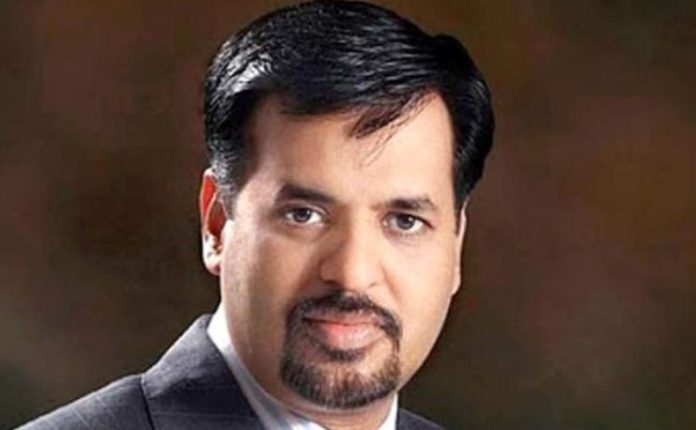
ISLAMABAD, Jan 05 (APP/DNA): Federal Minister for Health Syed Mustafa Kamal held an important meeting on Monday with Pakistan Ambassador to Russia, Faisal Niaz Tirmizi, focusing on strengthening Pak-Russia cooperation in the health sector.
During the meeting, both sides held detailed discussions on potential partnerships in medical technology, vaccine production, pharmaceutical trade and medical education.
The two dignitaries emphasised the need to help improve public health systems and promote joint initiatives at the international level.
Key areas discussed also included technical cooperation with Russian health institutions, exchange of expertise and training opportunities for Pakistani health professionals.
The meeting was termed a positive and significant step, opening new avenues for collaboration in the health sector and laying the groundwork for deeper Pakistan–Russia engagement in healthcare.
ISLAMABAD, Jan 05 (APP/DNA): The Supreme Court (SC) on Monday accepted the appeals against the decision of the Lahore High Court (LHC) related to the powers of the sessions judges.
According to the details, the Supreme Court has quashed the Lahore High Court’s order to transfer the case to the Sessions Judge, while restoring the decision of the Sessions Judge, Kasur, regarding the transfer of the case. The case was heard by a three-member bench headed by Justice Jamal Mandokhel.
Justice Jamal Mandokhel inquired whether the Sessions Judge can transfer the case? To which the plaintiff’s lawyer said that under Section 526, the Sessions Judge has the power to transfer the case before framing the charge.
The plaintiff’s lawyer said that under Section 528, the Sessions Judge can transfer the case even before pronouncing the decision. We only have some objections to the Sessions Judge’s decision.
The plaintiff’s lawyer said that the case has been transferred to another magistrate 25-30 kilometers away. The entire road is broken. The opinion of both parties should have been taken before transferring the case.
The Kasur Sessions Judge had transferred the case on the request of the accused. The plaintiff approached the High Court against the Sessions Judge’s order.
The High Court had overturned the Sessions Judge’s order and ordered the case to be sent back.
RAWALPINDI, Senior Superintendent of Police SSP Operations Rawalpindi, Malik Tariq Mehboob, Monday directed police officials to intensify action against Afghan nationals and other foreign residents found involved in illegal activities, stressing strict enforcement of the law to maintain peace and order in the district.
He issued these directives while chairing a meeting at the Police Lines Headquarters to review the performance of police station staff. The meeting was attended by muharrars and DFSCs from police stations across Rawalpindi district.
During the meeting, the SSP Operations emphasized that addressing the problems of citizens visiting police stations is the top priority, warning that any negligence in public service will be unacceptable.
He directed police to accelerate operations against proclaimed offenders, their facilitators and habitual criminals, and ordered zero tolerance in the registration of tenants to prevent crime.
The SSP also instructed officers to maintain strict surveillance on individuals acquitted in narcotics cases and to closely monitor their activities. To curb kite flying, he ordered the formation of special teams at police stations and strict action against violators.
Muharrars were directed to ensure timely deployment of officers and personnel assigned to special duties at their respective duty points. The SSP further instructed police to verify individuals staying in hotels, plazas and inns within police station limits through the E-Police Post application.
He also stressed ensuring effective patrolling in accordance with SOPs to strengthen law enforcement and improve public safety across Rawalpindi district, according to a spokesperson for Rawalpindi Police.