Home Blog Page 3129

ICCI demands representation in CDA Board

ISLAMABAD, OCT 23 (DNA) – Sardar Yasir Ilyas Khan, President, Islamabad Chamber of Commerce and Industry (ICCI) said that almost 90 percent affairs of business community in Islamabad were related to the CDA and emphasized that the government should include sitting President of ICCI in CDA Board to protect the genuine interests of private sector during the policy making process of the civic body and help resolve key issues of the business community.

He urged that CDA should set up a One Window Operation in true spirit in order to facilitate the business community and the citizens of Islamabad in their CDA related day-to-day issues. He said that the business community has to visit various departments of CDA for various services and redress of issues, which consumes a lot of their precious time.

However, the availability of one window facility would save them from many troubles as they would get all the required services of CDA from one counter. He said this while addressing a delegation of CDA Officers Association that visited ICCI led by its Secretary General Namat Ullah Masood, Riaz Khan Chairman, Mian Muhammad Chief Patron, Abdur Rahim Secretary Admin and Bilal Khan Office Secretary were in the delegation.

Sardar Yasir Ilyas Khan said that CDA’s approval process of commercial buildings plans was quite lengthy as investors have to wait for months and even for years for approval of buildings plans and stressed that CDA should speed up this process for faster approval of commercial buildings plans that would give boost to investment in the federal capital.

He said that after applying for completion certificates of buildings, the business community has to wait for a long time and emphasized that CDA should streamline this process to avoid unnecessary delay in the issuance of completion certificates of commercial buildings.

Ms. Fatma Azim Senior Vice President and Abdul Rehman Khan Vice President ICCI said that the civic body has made manifold increase in the property tax and water & allied charges, which have enhanced the cost of doing business in Islamabad and stressed that CDA should rationalize these taxes to facilitate the growth of business activities.

They further said that instead of demolishing the commercial buildings for encroachments, CDA should consider regularizing them on receipt of certain charges as demolishing of constructed buildings entailed huge losses to the investors.

Speaking at the occasion, Namat Ullah Masood Secretary General and Riaz Khan Chairman, CDA Officers Association assured their cooperation for resolving the key issues of the business community.

They said that ICCI and CDA Officers Association have common objectives to promote the interests of their members, therefore, close collaboration between the both sides would help in achieving common goals.

Abdul Rehman Khan Vice President ICCI, Ejaz Abbasi former President ICCI, Khalid Chaudhry, Saif ur Rehman Khan, Zarif Khan, Mian Ramzan and others also spoke at the occasion and stressed for close working relationship between ICCI and CDA Officers Association for the better development of the city including markets and industrial areas in order to spur the growth of business activities.=DNA

======================

Around 751 Pakistani nationals benefit from Malaysian technical programme

the MTCP was first initiated at the First Commonwealth Heads of Government meeting in Sydney in February 1978. Subsequently it was established in 1980 as a manifestation of Malaysia’s commitment to South-South cooperation: High Commissioner Ikram Ibrahim 

Ansar M Bhatti

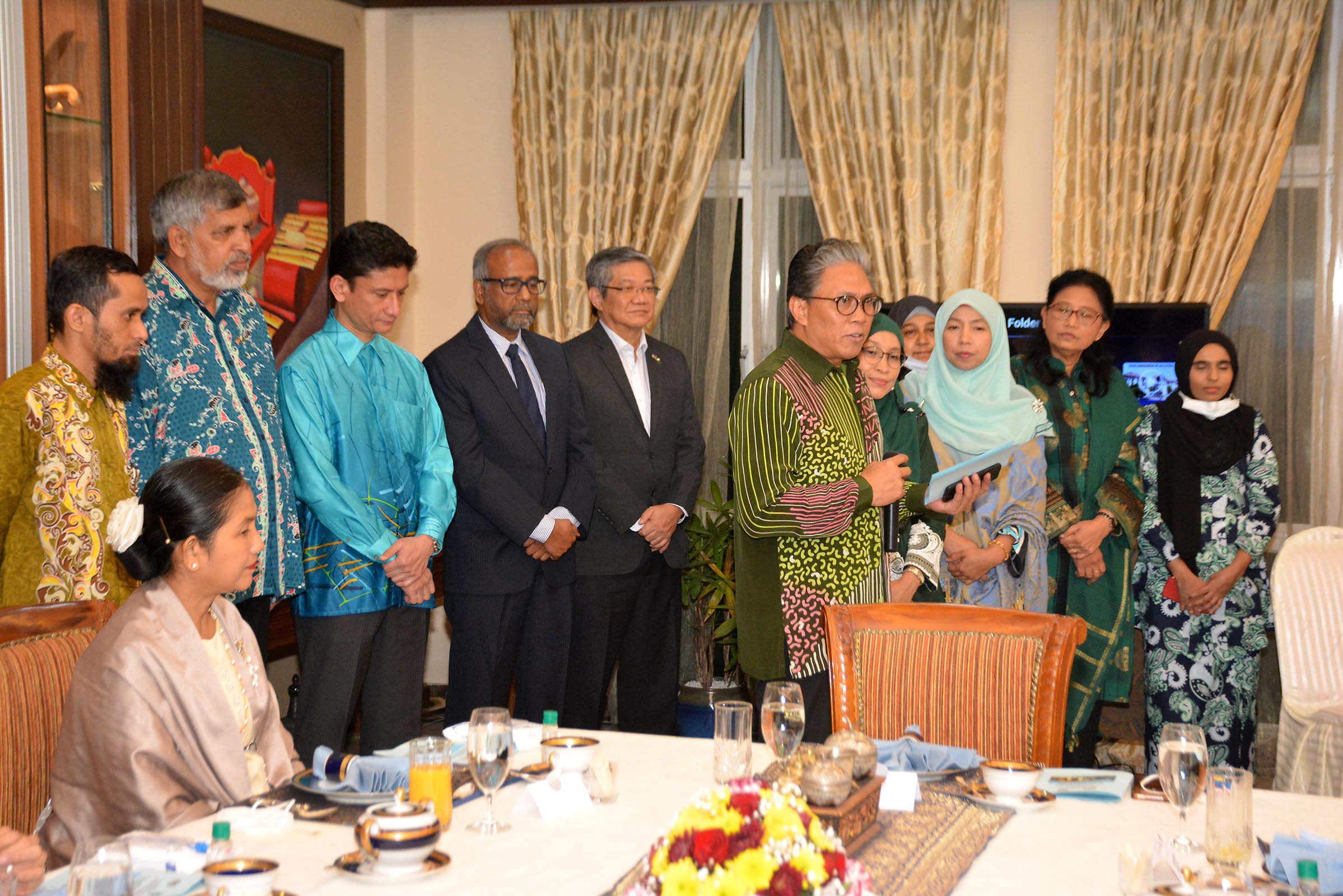
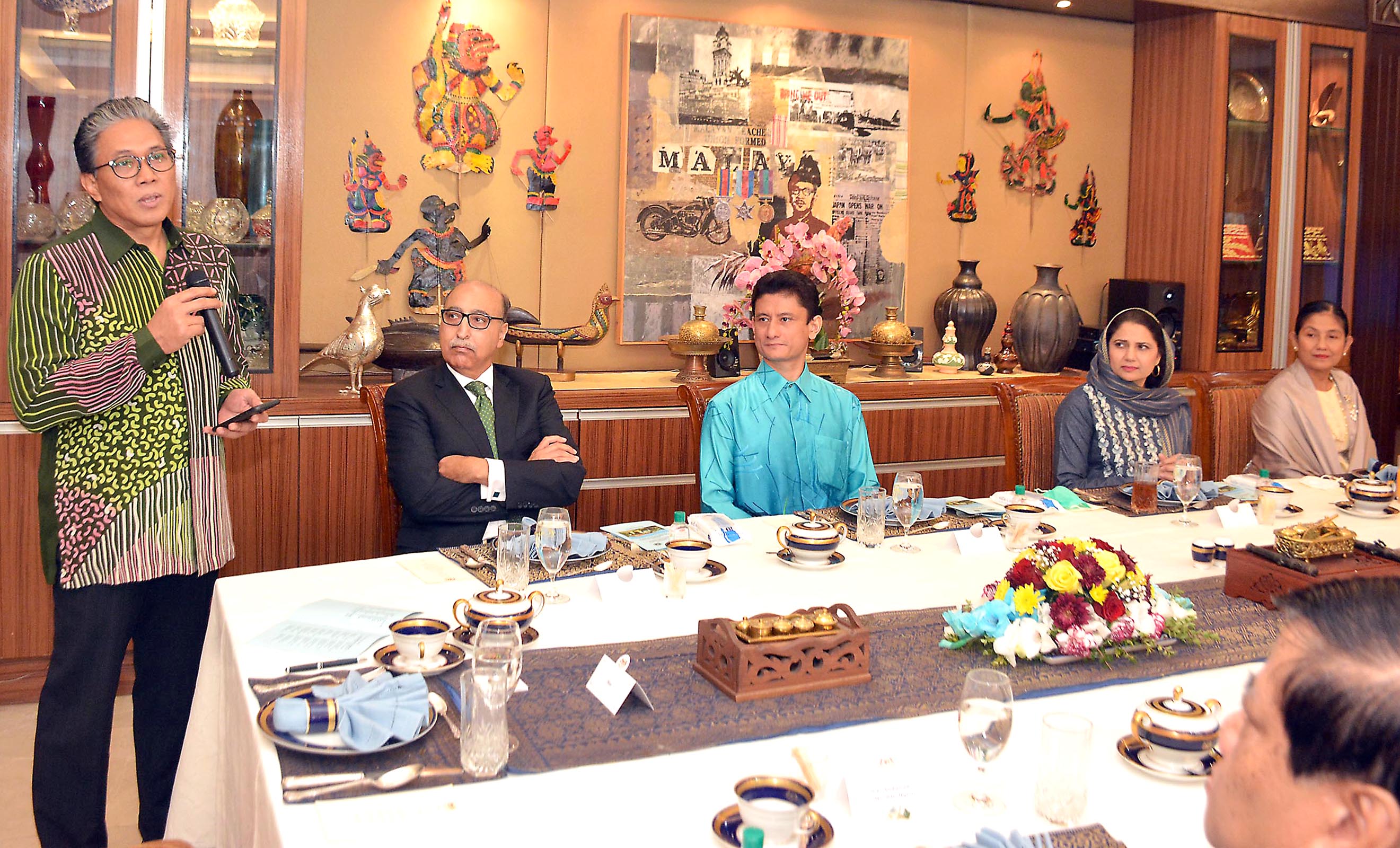
ISLAMABAD: High Commissioner of Malaysia Ikram Muhammad Ibrahim has said a  total of 751 Pakistani nationals have received training under Malaysian Technical Cooperation Programme (MTCP) adding over 34,000 officials from 144 countries have attended the MTCP so far.

The high commissioner announced this on the occasion of dinner he hosted for the alumni of MTCP at the Malaysia Home. A large number of alumni, members of the civil society and media attended the dinner.

3 COL

The high commissioner further said both Malaysia and Pakistan enjoy excellent relations. He said due to COVID 19 the MTCP could take place this year however he hoped the program shall resume from next year.

High Commissioner Ikram Ibrahim added, the MTCP was first initiated at the First Commonwealth Heads of Government meeting in Sydney in February 1978. Subsequently it was established in 1980 as a manifestation of Malaysia’s commitment to South-South cooperation.

In line with the spirit of South-South cooperation, Malaysia through MTCP has been sharing its development experiences and expertise with other developing countries.

He said, the MTCP is remised on the principle that the development of a country is dependent on the quality of its human capital and resources. The human capital development t and capacity building programmes under the MCTCP reflect Malaysia’s established commitment towards promoting technical regional and sub regional cooperation, as well as nurturing collective self reliance among the developing countries.

03 COL

The high commissioner went on the say, the MTCP encompasses eleven key broad areas, namely professional services, public administration and management, economy and trade, science, technology and ICT, INDUSTRIAL, FINANCE, diplomacy, health services, humanitarian, academic, education and social development.

While dilating upon the objectives of the MTCP the high commissioner said the objectives include sharing development experience with other developing countries, to strengthen bilateral relations between Malaysia and other developing countries, to encourage and promote South-South cooperation and to encourage and promote technical cooperation among the developing countries.

Throwing light on MTCP cooperation framework the high commissioner said provision of long term fellowship and scholarship for post graduate and undergraduate courses at Malaysian public universities, provision of short term specialized training for participants at various training institutions and government agencies in Malaysian and study visits and practical attachment at participating government agencies in Malaysia.

Ambassador Abdul Basit spoke on behalf of the alumni and thanked the ambassador for hosting them at his residence. Ambassador Basit said he was deeply touched with the way Malaysia had made development in various fields, when he visited this wonderful country.

It may be mentioned here that for 30 years the MTCP was under the purview of the economic planning unit of the PM department of Malaysia. Since 2010 MFA Malaysia has been the custodian agency of the programme with the aim of providing the synergy and support it requires in line with Malaysia’s foreign policy.

As the focal point, MFA Malaysia is responsible to formulate policies, fund, coordinate, monitor and evaluate the MTCP. These entail prioritizing the developing countries of strategic interests, focusing on Malaysia’s areas of expertise, offering demand-driven courses, cultivating potential participants who would later serve as friends of Malaysia fostering public private partnership and collaborating with new development partners beyond the MTCP’s traditional partners.

Armenian forces continue to target civilian Azerbaijani population

BAKU (DNA) -Since September 27, 2020 the armed forces of Armeniahave been indiscriminately targeting the civilian population, private houses and civilian infrastructure in Azerbaijan.By doing so, Armenia grossly violates its obligations under international humanitarian law, including the 1949 Geneva Conventions and its Additional Protocols as well asdisregards the humanitarian ceasefire declared on October 10 and 18.

On October 22 morning time, Armenia launched six operational-tactical ballistic missiles from its territory (Gafan and Jermukh regions) deliberately targeting residential areas and civilian infrastructure in Azerbaijan. 3 out of 6 missiles were fired at theSiyazan region at about 07.00 am, 2 missiles at the Gabala region, and 1 missile at the Kurdamir region at about 09.00am.

Siyazan, Kurdemir and Gabala regions of Azerbaijan are located far away from the zone of military operations. After targeting cities of Ganja and Mingachevir earlier, this is yet another attempt by Armenia to perpetrate new heinous crimes against peaceful population of Azerbaijan. By launching the attacks, Armenia attempts to expand the geography of the conflict zone that only serve to aggravate and escalate the situation.

As a result, resident of Hajally village of theGabalaregion– Murad Amirbeyov(2003) received various injuries. Five houses in the village were severely damaged. According to Azerbaijan National Agency for Mine Action’s (ANAMA) special teams inspecting the operation site in theGabala region it was determined that the missiles launched were “8K-14” ballistic (SCUD-type).

Also, Armenia targeted Oghuz-Gabala-Baku water pipeline, which supplies drinking water to the Absheron Peninsula and is of special strategic importance for Azerbaijan. Fortunately, Azerbaijan Air Defense Forces neutralized the missile and its parts consequently, fell in the 250 meters perimeter from the pipeline.

As of 21stof October, totally 63civilians, including 8 children and 18 women were killed, 293civilians (including 32 children and 69 women) have been hospitalized with serious injuries.2072 private houses, 90 apartment buildings and 388 civilian infrastructures were damaged and became unserviceable as a result of Armenia’s indiscriminate armed attacks.

Situation in Kyrgyzstan stabilised: ambassador

Ambassador of the Kyrgyz Republic noted that today Kyrgyzstan is a dynamically developing country with a diversified economy, where foreign investors are widely represented, including from Pakistan

A.M.Bhatti/DNA

ISLAMABAD: Ambassador of Kyrgyzstan Erik Beishembiev has informed the media about the current internal political situation in the Kyrgyz Republic, noting that the situation in the country has stabilized, the legitimacy of the state power of the Kyrgyz Republic has been created and its executive bodies continue to operate in their regular mode.

It was noted about the formation of a new composition of the government and the entrustment of the powers of the Acting President of the Kyrgyz Republic to the Prime Minister of the Kyrgyz Republic Sadyr Zhaparov.

Ambassador Erik made these remarks during a press briefing on Friday.

Ambassador Erik Beishembiev stressed that the procedure for the transfer of power in the country passed peacefully in accordance with the norms of the Constitution of the Kyrgyz Republic, and that the Kyrgyz Republic remains fully committed to all its international obligations and strict implementation of all previously signed bilateral and multilateral treaties and agreements.

In addition, the Ambassador of the Kyrgyz Republic noted that today Kyrgyzstan is a dynamically developing country with a diversified economy, where foreign investors are widely represented, including from Pakistan, as well as a number of positive initiatives of the new government in protecting foreign investments. Ambassador Erik Beishembiev emphasized the continuity of country in the development of mutually beneficial trade and economic cooperation with its foreign partners.

To a question, the ambassador said both Kyrgyzstan and Pakistan enjoy excellent relations adding there were a number of areas where both countries could cooperation.

He said there was a huge scope of cultural cooperation between the two countries. He said trade and economic relations can also be given new dimensions as a land route was available for transpiration of goods from Pakistan and vice versa.

The ambassador said they were also trying to have direct air links and negotiations between the two sides were under way.

The ambassador also talked about a number of projects such as CASA 1000 which were under execution and after completion shall greatly contribute to further strengthening of bilateral relations.

Shibli Faraz says Nawaz will be in Pakistan’s jail by January 15

ISLAMABAD : Federal Minister for Information and Broadcasting Shibli Faraz has on Friday said former prime minister Nawaz Sharif will be in Pakistan’s jail by January 15.

Addressing a press conference in Islamabad, Shibli Faraz said efforts are underway to bring back Nawaz Sharif from London so that he faces his cases and answers for his assets. He said the government will not only punish the corrupt elements but will also recover the looted national wealth.The minister said the video footage of the arrest of Captain (retired) Safdar in Karachi showed that he was taken into custody by police in a respectable manner, which exposed the contradictory statements of Sindh government and Maryam Safdar.

Commenting on the achievements of the incumbent government, he said exports are on the rise; remittances are at a record high level, and construction industry is fast flourishing.

Shibli Faraz maintained that the record increase in remittances shows trust in the PTI government.

He said the rulers who ruled the country for decades have been rejected by people. He said their politics has ended and their next abode is in jail for plundering the national wealth.

FPCCI calls for long-term debt relief to deal with post-corona economic crunch

Mian Anjum Nisar backs PM call to write off debts of vulnerable countries  

ISLAMABAD : The apex chamber of Pakistan has welcomed the extension of debt suspension initiative for developing countries by the G20, calling for long-term loans’ relief or their permanent termination to deal with the post-corona economic crunch. 

FPCCI President Mian Anjum Nisar said though the global economy has begun a gradual recovery with the reopening of businesses, the recovery has not been smooth, as many of the poor countries are still spending more on debt payments than on life-saving public services. 

He also supported Prime Minister Imran Khan’s call to the international community to write off the debts of vulnerable countries, including Pakistan, as the coronavirus has shattered the economies of developing nations. 

The world community should think of some kind of a debt write-off for countries like Pakistan, as its major chunk of income is being spent on debt servicing, making it very vulnerable, he said.  

He said that the central bank’s foreign exchange reserves have declined stridently by over one billion dollars during last one month mainly owing to external debt servicing. 

“FPCCI welcomes the PM call for an outright cancellation of debt payments, who while addressing the UN session last month had stated that the poor countries suffered the most from coronavirus, therefore, these countries must be given debt relief by G20.” 

He said that Prime Minister Imran Khan was the first to highlight the issue as he called for a debt-write off. “We fully support the government which has already reached out to bilateral creditors to see if it can get some relief, as the country pays a large chunk of its tax money to foreign creditors.” 

Last year, Pakistan paid $11.6 billion to lenders, which is almost as much as its central bank has in its reserves at the moment, he added.  

“It is very welcome that both Pakistan along with other countries have collectively called for a moratorium on interest payments, as most of their debt consist of loans, which are borrowed to pay off previous loans, trapping them in a vicious debt cycle.” 

The FPCCI President said that country’s reserves had been declining since Sept 2020 due to scheduled foreign debt payments. Although, during the last few weeks, the central bank also received some inflows from multilateral and bilateral agencies, however, those inflows were less than the outflows, because of which the foreign exchange reserves posted a sharp decline. 

Quoting the SBP statistics, he said that the central bank’s foreign exchange reserves have declined below $12 billion due to continued external debt payment, as its reserves were standing at $11.79 billion on Oct 9, 2020 against $12.82 billion on Sept 11, 2020, showing a fall of over $1 billion in a single month. 

During the week ended Sept 18, SBP’s reserves were down by $ 119 million to $ 12.70 billion also due to debt repayments. Reserves held by SBP further declined by $ 342 million to $ 12.36 billion week ended Sept 25, 2020. This decline was also attributed to the external debt payments by the government, amounting to $311 million. During the last week ended Oct 9, SBP made external debt repayment of $ 507 million, decreasing SBP reserves by $ 356 million to $ 11.79 billion.  

He asked the world community to think of full debt write-off for countries like Pakistan that will help them to cope with the post- coronavirus sufferings. 

He observed that Pakistan lacks fiscal space and a proper health system. Therefore, the most appropriate response that G20 countries can give, at the moment, is abandoning the loan instead of a temporary relief, he said. 

“There is no benefit of G20 countries’ announcement of interim debt relief on principal and interest payments, as the suspension period for debt relief will remain only for few months and all debt service falling due in this period will be packaged into a new loan on which the repayments will again start after a short period, to be paid over three years.” 

He asked them to extend grants to Pakistan instead of loans.  

He said that the debt servicing would eat up more than two-fifth of country’s total budget, as it is the top category in expenditures in FY21,- over 41 percent of the federal budget’s total outlay.

Canadian MP, academics call for just solution of Kashmir issue

It is time for all parties in the international community to sit together and find a peaceful solution that preserves and protects the rights of the innocent Kashmiri people as shown by UNSC resolutions one of which Canada co-sponsored 

TORONTO (DNA) -Canadian MP Iqra Khalid has joined a stellar line-up of academics, authors and activists in Canada to call for an end to Indian atrocities in the held Kashmir by urging the international community and the Canadian government to work for “a peaceful solution that preserves and protects the rights of the innocent Kashmiri people as shown by UNSC resolutions”.

Addressing the webinar arranged by the Canadian Foreign Policy Institute (CFPI) and 25 civil society organisations on the subject of “Canada’s Silence on India’s Colonization of Kashmir”, Iqra Khalid who was elected in the House of Commons of Canada in the 2015 federal election, expressed her deep concern for “the ongoing conditions of the Kashmiri who continue to face curfews with limited access to food supplies and communication”.

She said the Canadian government is deeply concerned with escalation and detentions and our Minister for Global Affairs met with Kashmiri Canadians to directly hear about their first-hand experiences and the plight of their families and loved ones stuck in the deplorable situation”.

Iqra Khalid said she had spoken many times already and she would continue to speak about the wellbeing of the people of Kashmir. “It is time for all parties in the international community to sit together and find a peaceful solution that preserves and protects the rights of the innocent Kashmiri people as shown by UNSC resolutions one of which Canada co-sponsored,” she said.

The webinar was also addressed by an elite panel of academics, authors and civil society activists including noted attorney, author and entrepreneur Imraan Mir who has researched and written on various topics related to Kashmir and is a co-founder of the Kashmir Law and Justice Project. Haley Duschinski, an Associate Professor of Anthropology and Director and Graduate Director of the Center for Law, Justice and Culture at Ohio University, also addressed the webinar. Other participants included Malavika Kasturi, Associate Professor of South Asian History at the University of Toronto, Siddiq Wahid, a former Scholar-in-Residence at the Centre for Public Affairs and Critical Theory at Shiv Nadar University, and Azeezah Kanji, legal academic and writer who received her Juris Doctor from University of Toronto’s Faculty of Law, and Masters of Law in Islamic Law at the School of Oriental and African Studies, University of London.

The speakers spoke on a host of issues impinging on what they called strange and unfortunate silence of the Canadian government on India’s colonization of Kashmir. The event offered an overview of the long-standing conflict in the light of international law; human rights situation and issues of impunity; Hindu nationalism project and the colonization of Kashmir; geopolitical perspectives in light of China’s involvement; and accountability and India foreign policy.

Kazakhstan marks 750 years since the formation of the Golden Horde state

NUR SULTAN (DNA) -This year, Kazakhstan marks 750 years since the formation of the Golden Horde state. Initiated in 2019 by Head of state Kassym-Jomart Tokayev, the idea of celebrating the 750th anniversary of the Golden Horde became a logical continuation of the idea of the First President of the Republic of Kazakhstan – Elbassy Nursultan Nazarbayev.

The topic of objective and scientific coverage of the role of Ulug Ulus (Ulus of Juchi, Golden Horde) was repeatedly touched upon in the works of Elbassy, for example, in such fundamental monographs as “Flow of History”, “Kazakhstan’s way”, as well as in the article “Seven Facets of the Great Steppe”. On August 24, 2014, N. Nazarbayev in his interview in Ulytau actually marked the line of the historical succession of Kazakhs from the Golden Horde. On December 22, 2014, the First President of Kazakhstan once again voiced the thesis that the Golden Horde is the historical predecessor of the Kazakh khanate. On September 11, 2015, in Astana, at a solemn meeting dedicated to the 550th anniversary of the formation of the Kazakh khanate, this thesis was restated.

“The Kazakh khanate is the legitimate heir of the states of Saks, Huns, Usun, as well as the Great Turkic Khaganate, Desht-I-Kipchak and the Golden Horde,” Elbassy said.

On February 18, this year, the Press Service of the First President of Kazakhstan – Elbassy published his words about the history of the Kazakh people on his Instagram page: “My contemporaries, subsequent generations in their time counted history only from the period of the October Revolution. For us, there was no other history of the Kazakhs, but now we must study it in depth. Our ancestors are Huns, and the Great Turkic Khaganate is even closer in time. Our land has always been the center of those states. The next is the Golden Horde. If you summarize all this, our history dates back two thousand years. Having passed through such a huge period of time, we managed to preserve our language, religion, and identity. And we should educate our young people in this spirit.”

The history of the formation of the Golden Horde dates back to 1269, when the so-called Talas Kurultai was held on the territory of the current Zhambyl region, where a decision was made to divide the Mongol Empire. As a result, the Ulus of Juchi (Golden Horde) gained full independence. In the valley of the Talas river, somewhere at the borders of modern Kazakhstan and Kyrgyzstan, the rulers of the Juchi, Chagatai and Ugedei uluses – namely, Mengu Timur, Borak and Haidu – recognized each other as sovereign rulers, forming an alliance against the great Khan Kublai in case he did not recognize their independence.

The Golden Horde was a multi-ethnic and multi-confessional Eurasian state that was widely known for its policy of tolerance towards various ethnic groups and religions. While gentiles and heretics were burned at the stake of the Inquisition in Europe, Muslims, Christians, Buddhists, and Jews lived in the Great Steppe. The Golden Horde rulers, raising large cities and ensuring the smooth and safe functioning of trade routes, created conditions for a dialogue between the civilizations of the West and the East, the exchange of goods, knowledge, and ideas, and accelerated global development.

All historians who studied the history of the Middle Ages noted that the Kazakhs perceive themselves as part of the Golden Horde world. According to a number of leading experts, the ethnogenesis of the Kazakh people mainly took place during the Golden Horde period, and at the time of the collapse of the Horde, only the modern name “kazak” was lacking, which appeared later, due to a number of political circumstances. However, even then there was almost a single nomadic people of Desht-I-Kipchak, from which modern Kazakhs, Nogais and Karakalpaks are directly descended – three ethnos that are extremely close to each other. Volga and Crimean Tatars and Bashkirs also rightfully consider themselves the heirs of the Golden Horde.

Chokan Valikhanov once wrote: “According to their traditions, the Kirghiz (pre-revolutionary name of the Kazakhs by the Russian Imperial administration) consider themselves descendants of the Tatars of the Golden Horde.” Of course, Chokan Valikhanov’s term “Tatars” is also used in its pre-revolutionary, expansive meaning.

The last of the existing heirs of the Juchi Ulus was the Kazakh khanate, whose 550th anniversary we celebrated in 2015. And Zhanibek and Kerey, the founders of the Kazakh khanate, as well as all subsequent rulers, up to the last Khan – Kenesary, belonged to the Urusid branch of the Chingisids dynasty. Their ancestor Urus Khan – one of the Golden Horde rulers of the XIV century, which some Kazakh historians identify with the legendary Alasha Khan.

The main layer of Kazakh folklore, largely shared with the folklore of the Kazan and Crimean Tatars, Bashkirs, Nogais and Karakalpaks, also dates back to the Golden Horde era. First of all, we remember the images of emir Edige and Asan Kaigy – adviser of Az Zhanibek, the great Horde ruler, who was called “the good tsar Zhanibek” in Russian chronicles. The first actual Kazakh historian, as you know was Kadyrgali Zhalairi. His book “Zhamigat-tavarikh” is the first Kazakh historical work, this book shows the direct connection between the Kazakh khanate and the Golden Horde, gives an internal view of its history. The influence of the Golden Horde on the spiritual culture of Kazakhstan was clearly reflected – it was from the Horde, from the Berke and Uzbek khans that we inherited our traditional Hanafi madhhab of Sunnism, with its rational approach and tolerance. On the territory of Kazakhstan, there is a huge number of written sources and cultural monuments associated with the Golden Horde. For example, historians are well aware that Kazakhstan is a kind of “champion” in Central Asia in terms of the number of epigraphic monuments (tombstone inscriptions) of the Golden Horde epoch. We should also mention the mausoleum of Zhoshy Khan (Juchi) in Ulytau. In addition, in the Atyrau region there is a settlement of Sarayshyk – one of the capitals of the Golden Horde, where a number of khans of the Golden Horde (Sartak, Berke, Toktakiya, Dzhanibek, according to some information, and Mengu Timur), Kazakh Khan Kasym, Nogai princes Ismail and Uraz were buried. In fact, Sarayshyk was the first stationary capital of the Kazakh khanate at the beginning of the XVI century. The name of the national currency of Kazakhstan – “tenge “comes from the name of the Golden Horde currency “dang”. By the way, the Russian “money” also comes from it.

Unfortunately, during the Stalinist period, in 1944, the Soviet Union officially banned the study of the Golden Horde. At the same time, the Golden Horde historical and heroic epic “Edige”, common to Kazakhs, Nogais, Karakalpaks, Tatars and Bashkirs, was declared reactionary and banned. A number of prominent historians were persecuted during this period. Subsequently, the Horde theme remained under complete ban until the 80’s, when it was in Kazakhstan revived by Veniamin Yudin. Also in the 80’s, Ilyas Esenberlin’s trilogy “Altyn Orda” was published – the only literary work in the history of Soviet Kazakhstan about this glorious page of national history.

The first breakthrough in the study of the Golden Horde period occurred in 2004 thanks to the state program “Mádenı mura”. Within its framework, medieval sources were introduced into the scientific circulation, cultural monuments were restored, and works of domestic and foreign scientists were published. In recent decades, a number of scientists have worked in Kazakhstan in this direction: A. Muminov, M. Abuseitova, Zh. Tulibayeva, A. Kadyrbaev, A. Kushkumbaev, R. Temirgaliev, Zh. Sabitov. These experts have done a lot to research and popularize the heritage of the Golden Horde.

In 2019, the Turkic Academy published a number of scientific works devoted to the history and cultural heritage of the Golden Horde: the 5-volume work of Rashid ad-din “Zhamik-at-tauarikh” translated into Kazakh; “Historical and Comparative Dictionary of the Turkic Languages of the XIV century” by E. Najip, compiled on the basis of the language of the Golden Horde monument of literature “Khusrau and Shirin”; “The Secret Legend of the Mongols”, translated into Kazakh; collection of scientific articles “The Golden Horde: history, statehood, cultural heritage”. In May, the Academy jointly with UNESCO held in Paris the international forum “the Great Steppe: cultural heritage and role in world history”, inspired by the ideas of the program article of the First President of the Republic of Kazakhstan Nursultan Nazarbayev “Seven Facets of the Great Steppe”. A number of sections were devoted to the cultural heritage of the Golden Horde.

The well-known domestic historians and political scientists agree that the appeal to the Golden Horde heritage will contribute to the further integration of Kazakhstan’s ethnic groups into a single civil nation, consolidated around the state-forming Kazakh people, and is a valuable strategic resource for modern Kazakhstan.

Coronavirus claims 13 more lives in Pakistan

ISLAMABAD : Pakistan reported 13 more coronavirus-related deaths during the past 24 hours, taking the death toll from the disease to 6,715.

According to the National Command and Operation Centre (NCOC), 736 fresh infections emerged during this period, lifting the national tally of cases to 326,216.

There are a total of 9,855 active cases of the coronavirus as 309,646 patients have recuperated from the disease.Thus far, Sindh has reported 142,917 cases, followed by Punjab that reported 102,253 cases while Khyber Pakhtunkhwa reported 38,886, Balochistan 15,767, Islamabad 18,578, Gilgit Baltistan 4,127 and Azad Jammu and Kashmir 3,688.

As many as 586 patients under treatment in hospitals across the country are said to be in critical condition.

On Wednesday, Special Assistant to Prime Minister (SAPM) on Health Dr Faisal Sultan had noted that COVID-19 pandemic is rearing its ugly head in Pakistan again and said the government is anticipating to get a clearer picture on the situation within next two weeks.

He said the virus claimed 19 deaths across the country just yesterday and warned if precautionary measures are not strictly observed, the country could face health threats.

Good times ahead for public with enhanced ecnomic stability: Shibli says

ISLAMABAD, Oct 23 : Minister for Information and Broadcasting Senator Shibli Faraz Friday expressed satisfaction over the economic team’s performance under the hard working leadership of Prime Minister Imran Khan and assured that inflation of essential commodities in the country will be controlled soon.

In an interview with a private news channel, he admitted that there was price hike in the country but the overall ecnomic condition was far better than other countries after Covid-19 situation and Prime Minister Imran Khan was making hectic efforts to strengthen the economy and taking effective steps to control inflation in the country.

He mentioned that his government had taken some hard decisions due to coronavirus pandemic that damaged the economy of many countries around the world.

The minister said owing to various initiatives of the government, the country was achieving economic stability adding that the prime minister was committed to the accountability of all the corrupt elements.

The conspiracy hatched by the opposition parties against institutions had badly exposed, adding the opposition first tried to politicize the issue of coronavirus and then launched a PDM drama to criticize state institutions.

The people were siding with the institutions and had rejected the nefarious narrative of the opposition, he

added.

He said that the corrupt elements were targeting Prime Minister Imran Khan who was upright and honest with the nation.

He assured that the good times were ahead and said that the opposition was bound to fail as their politics was now over and they were badly exposed in front of public.

While condemning the “drama” staged at the Quaid-i-Azam’s mausoleum by Safdar Awan, he regretted and asked the PML-N leaders for an apology.

He further criticized PML-N leaders and said the party’s thugs only want to create chaos and uncertainty in the country for saving their leader’s looted wealth, adding, the opposition should shun negative politics as it was weakening the national unity.

Replying to another question, Shibli Faraz said holding investigation about the Karachi incident was the responsibility of the provincial government and PM Imran Khan had no concern with this issue.

Talking about the Supreme Court’s order to make a decision within a month about establishing 120 accountability courts throughout the country, he replied that around 20 special courts would be functional soon as the work was already started and he also hoped that all delaying and pending accountability cases would be finished soon with speedy justice.

Minister for Information added that the government would not make any compromise on the accountability of the corrupt.

It was not afraid of the opposition’s threatening movement.

He said it was for the first time in the country’s history that powerful people were being held accountable and there was no doubt that public support was with policies of Imran Khan’s government.

Stay Connected

64FansLike
60FollowersFollow

Latest Reviews

Exchange Rates

USD - United States Dollar
EUR
1.17
GBP
1.35
AUD
0.72
CAD
0.73