Home Blog Page 312

Sri Lanka posts record foreign tourist arrivals in 2025

Sri Lanka posts record foreign tourist arrivals in 2025
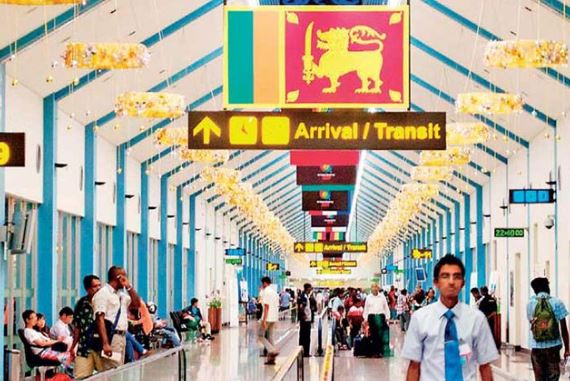
Baku, Jan 6: Sri Lanka recorded its highest number of foreign tourist arrivals in 2025, with tourism earnings reaching new annual records despite disruptions caused by Cyclone Ditwah, Xinhua reported citing the country's foreign minister at a Monday media briefing.

Minister of Foreign Affairs, Foreign Employment and Tourism Vijitha Herath said Sri Lanka received more than 2.36 million foreign tourists during the year, the highest number recorded in a single calendar year.

Tourism revenue totaled 3.2 billion U.S. dollars in 2025, confirming the sector’s position as the country’s second-largest source of foreign exchange, the minister added.

Tourist inflows remained strong despite the impact of Cyclone Ditwah, which struck the island at the end of November. The minister said tourism arrivals continued following the disaster due to policy support measures and promotional activity.

Sri Lanka has set a minimum target of 3 million foreign tourist arrivals in 2026, representing an increase of about 27 percent from 2025 levels. Authorities expect tourism growth to contribute to economic recovery efforts as overall growth projections for 2026 were revised downward to 2.9 percent by the International Monetary Fund following the cyclone.

Pakistan, China launch joint oceanographic cruise in Arabian Sea

Pakistan, China launch joint oceanographic cruise in Arabian Sea

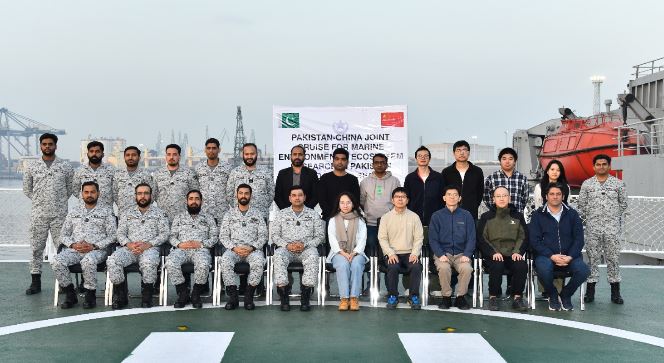
KARACHI, JAN 6: /DNA/ – Pakistan Navy, through National Hydrographic Office (NHO), is facilitating a Pakistan–China Joint Oceanographic Cruise being conducted by National Institute of Oceanography (NIO) in collaboration with China’s Second Institute of Oceanography (SIO).

Pakistan Navy’s survey vessel, PNS BEHR MASAH, has been deployed in support of this scientific mission, underscoring Pakistan Navy’s commitment to promote maritime awareness and facilitate marine scientific research in Pakistan.

The Joint Oceanographic Cruise represents a significant scientific collaboration between Pakistan and China, aimed at enhanced understanding of the marine environment in Pakistani waters. The research outcomes are expected to increase awareness of coastal and offshore marine dynamics, enabling better assessment of environmental patterns and supporting informed maritime planning and policymaking.

This Pakistan–China Joint Oceanographic Cruise exemplifies a continued cooperative partnership between the two countries and contributes to a broader regional understanding of oceanographic conditions in the North Arabian Sea.

T20 World Cup 2026: Pakistan-origin players face Indian visa delays

T20 World Cup 2026: Pakistan-origin players face Indian visa delays

NEW DELHI, JAN6: Players holding Pakistani passports, or of Pakistani origin, are facing delays in obtaining Indian visas ahead of the ICC T20 World Cup 2026.

Sources divulged on Tuesday, several teams are affected by visa issues in the lead-up to the tournament. Five teams are reported to be impacted before the T20 World Cup, sources said.

Teams from the United Arab Emirates, Oman, Italy, Canada and the United States are facing visa-related difficulties, according to sources.

Players with Pakistani passports, or with links to Pakistan, are encountering delays in the issuance of Indian visas, sources added. Team boards have contacted the International Cricket Council, but uncertainty remains despite ICC involvement,

In the past, there have also been instances where players did not receive Indian visas, or received them after significant delays.

Free digital healthcare project launched for Islamabad’s rural communities

Free digital healthcare project launched for Islamabad's rural communities

ISLAMABAD, Jan 6 (APP/DNA): CEO of Sehat Kahani, Dr. Sara Saeed Khurram on Tuesday welcomed the first in history launch of a ‘Telemedicine project’ in Gokina, a village of Islamabad, calling it a milestone initiative to strengthen basic health services in Islamabad’s rural areas.


While speaking with a local news channel, Dr. Sara Saeed Khurram explained that under the healthcare digital project, rural communities in Islamabad will now have access to free, quality medical care, adding, the initiative, launched under the vision of Health Minister Syed Mustafa Kamal, is designed to improve basic healthcare delivery through telemedicine and digital platforms.


She added that the project currently has six centers in Islamabad and four in Karachi, which are expected to expand further.
The model system connects patients with qualified doctors, provides free medicines and ensures that serious cases or those requiring surgery are referred to hospitals in Islamabad and Rawalpindi with ambulance support, she added.


Dr. Sara emphasized that this system will reduce patient congestion in hospitals while making healthcare more accessible and timely for rural populations.


She described it as a “silent revolution” in Pakistan’s healthcare sector and expressed hope that it will soon cover more areas across the country.


Dr. Sara highlighted that the project will make healthcare more accessible for rural communities while reducing patient load in hospitals.


She expressed hope that this initiative will expand further, benefiting more areas across Islamabad, Karachi, and beyond, marking a major step toward transforming Pakistan’s healthcare landscape.

Legally valid Kashmir cause places greater responsibility on youth

Legally valid Kashmir cause places greater responsibility on youth

ISLAMABAD, JAN 6 /DNA/ – The Kashmir issue remains a legally valid and internationally recognized struggle for the right to self-determination, grounded in binding UN Security Council resolutions. However, geopolitical power asymmetries have obstructed its resolution, thereby placing renewed responsibility on Pakistan’s youth to carry forward the cause while remaining guided by the principles of Pakistan’s ideology.

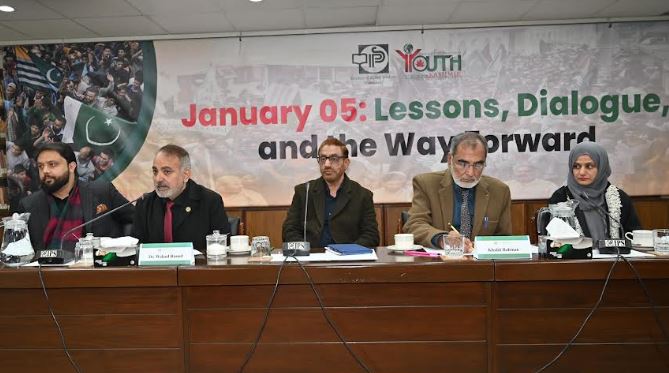
This was discussed during a seminar at the Institute of Policy Studies (IPS), held in collaboration with the Youth Forum for Kashmir (YFK). The event, titled “January 05: Lessons, Dialogue, and the Way Forward,” focused on the unresolved Jammu and Kashmir problem and its enduring legal, political, and moral dimensions. The event brought together diplomats, scholars, and university students, fostering intergenerational discussion on the issue.

The speakers included Ambassador (r) Sardar Masood Khan, former president of AJK; Khalid Rahman, chairman IPS; Farzana Yaqoob, secretary IPS Working Group on Kashmir; Dr Waleed Rasool, executive director Institute of Dialogue, Development and Diplomatic Studies; Umair Parvez from National Defence University; and Zaman Bajwa, executive director YFK.

While interacting with students, Ambassador (r) Masood Khan observed that Generation Z, owing to its high exposure to social media, is uniquely empowered by unprecedented access to information and platforms for expression. This, in turn, places upon this generation the responsibility of highlighting the Kashmir cause at multiple levels.

He suggested that the youth should regard themselves as the architects of the nation and, in this context, revisit the Kashmir issue while anchoring their ambitions within the ideological foundations of Pakistan. Noting that successive generations have made sacrifices in pursuit of a just resolution of the Kashmir issue, Masood Khan emphasized that this responsibility has now passed to Pakistan’s youth. He further reiterated that Pakistanis and Kashmiris constitute a single entity, bound together by a shared ideology of brotherhood. The events of May 2025 have further reinforced this collective resolve.

Dr Waleed Rasool noted that January 5, 1949, marks a pivotal moment in Kashmir’s history, when the UN Security Council explicitly recognized the right of the people of Jammu and Kashmir to determine their political future through a free and impartial plebiscite. He emphasized that the UNSC resolutions were not externally imposed but emerged after India itself approached the UN, thereby acknowledging that the question of Kashmir’s final status remained unresolved. Despite the passage of seven decades, the UN-mandated framework for self-determination remains unimplemented, largely due to the interests of major powers and prevailing power asymmetries within the international system. However, the failure to implement these resolutions does not diminish the legal validity of the issue; rather, it exposes the selective application of international law.

Umair Parvez argued that resolving the Kashmir issue is imperative because it concerns the Kashmiri people’s fundamental right to self-determination, a right affirmed by multiple UN resolutions. He observed that while inspiration may be drawn from peaceful self-determination movements, such as those in Ireland and Scotland, the reality of Indian colonial control in Kashmir means that resistance cannot be delegitimized. In this context, the concept of reputational security becomes relevant, as persistent rights violations in Kashmir undermine India’s international standing and, in turn, reinforce the legitimacy of the Kashmiri cause.

In his concluding remarks, Khalid Rahman highlighted the changing dynamics of the international system, noting that adversaries who fail to persuade their target populations often resort to spreading confusion and chaos to exert control over the masses. He further emphasized that the struggle for achieving any objective requires patience and a long-term, pragmatic vision on the part of stakeholders. At the same time, he stressed the importance of clarity of purpose and diversity in the means employed to achieve it. 

Textile exporters warn competitiveness is slipping

Textile exporters warn competitiveness is slipping

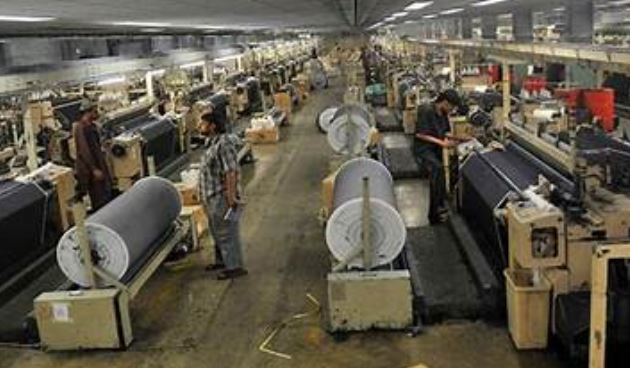
ISLAMABAD, JAN 6: Pakistan’s value-added textile industry, a cornerstone of the national economy and one of the largest sources of employment and foreign exchange, is facing mounting pressure as manufacturers warn that competitiveness is slipping at a dangerous pace. Industry leaders say a combination of soaring energy costs, delayed refunds and unpredictable policy shifts is undermining exporters’ ability to compete globally, triggering factory slowdowns, workforce reductions and the gradual loss of international buyers.

Manufacturers across the value-added textile chain report that rising production costs are no longer an abstract concern but a daily operational challenge. Energy tariffs, in particular, have become a decisive factor, with sharp and unpredictable fluctuations making it difficult for exporters to plan production cycles or quote reliable prices to overseas clients.

Exporters say international buyers operate on tight margins and place a premium on cost certainty and delivery reliability. Even minor pricing disadvantages, they warn, can lead to lost orders in highly competitive markets. As a result, factories with confirmed orders and installed capacity are struggling to maintain viability, despite continued global demand.

Reflecting these broader concerns, the Pakistan Hosiery Manufacturers Association (PHMA) has warned that the textile export engine is nearing a critical tipping point and requires immediate, coordinated intervention. PHMA Zonal Chairman Abdul Hameed said the challenges confronting exporters are being felt directly on factory floors, with many units operating under severe financial strain.

He noted that hosiery exporters, despite having capacity and orders in hand, are being squeezed by soaring energy costs, delayed tax refunds and frequent policy changes. According to him, Pakistan is being priced out of global markets where buyers demand both competitive rates and consistent delivery schedules. If the current trajectory continues, he cautioned, the country risks surrendering hard-earned market share to regional rivals with more predictable cost structures.

Former PHMA Chairman Shehzad Azam Khan described the decline in textile exports as a warning sign for the wider economy rather than a sector-specific grievance. He said value-added textiles are among the few industries capable of generating large-scale employment and foreign exchange simultaneously, making them critical to economic stability.

Any sustained contraction in exports, he argued, directly affects foreign exchange reserves, exchange rate stability and inflation, with consequences that extend well beyond the textile sector. He criticised what he described as a reliance on short-term fixes and ad hoc measures, saying these have failed to address the underlying issue of competitiveness.

According to Shehzad Azam Khan, exporters cannot plan long-term investments, upgrade technology or retain international buyers in an environment marked by uncertainty. While competing countries have aligned their industrial, energy and trade policies around export growth, Pakistan continues to treat exporters as a convenient revenue buffer during periods of fiscal stress.

Industry representatives say frequent changes in duties, the withdrawal of incentives and delays in tax adjustments have eroded confidence among international brands. Many global buyers, they note, now prioritise policy stability as much as pricing, preferring sourcing destinations where frameworks remain consistent for years rather than changing within months.

Shehzad Azam Khan warned that Pakistan’s stop-start policy approach has weakened its credibility at a time when buyers are seeking long-term partnerships. He said that uncertainty not only discourages new orders but also makes existing buyers hesitant to commit to future seasons.

Former PHMA Zonal Chairman Naseer Butt highlighted the liquidity crisis gripping the hosiery segment, particularly small and medium-sized manufacturers. He said blocked refunds and rising financing costs have severely restricted working capital, forcing many units to operate below capacity or temporarily shut down.

Such disruptions, he warned, have a cascading impact across the textile value chain, affecting yarn suppliers, processors, transporters and thousands of workers whose livelihoods depend on steady production. He stressed that the export slowdown is not driven by weak demand, noting that global buyers continue to seek diversified sourcing options.

According to Naseer Butt, Pakistan is losing out because its cost structure has become increasingly unpredictable. Sharp swings in energy tariffs, combined with uneven tax treatment across the value chain, make it difficult for exporters to quote competitive prices or commit to long-term contracts.

They have called for regionally competitive and predictable energy pricing, streamlined and automated refund mechanisms, and a stable policy framework that allows manufacturers to plan investments with confidence. Without such reforms, exporters caution, Pakistan risks falling further behind at a time when global opportunities remain available but increasingly contested.

NGC energizes 220kV grid station for Sheikhupura Special Economic Zone

NGC energizes 220kV grid station for Sheikhupura Special Economic Zone

LAHORE, JAN 6 /DNA/ – The National Grid Company of Pakistan (NGC) has successfully energized the 220kV Quaid-e-Azam Business Park Grid Station, Sheikhupura, marking another milestone in expansion of Pakistan’s power transmission network.

The strategically important project has been developed to meet the electricity requirements of large-scale industrial consumers operating within the Business Park Sheikhupura Special Economic Zone (SEZ). Completed at a cost exceeding Rs. 4 billion and financed by the Government of Pakistan under Cash Deposit Loan (CDL) Facility, the project aims to ensure reliable power supply for uninterrupted industrial operations, business growth and economic development.

Managing Director NGC, Engr. Altaf Hussain Malik, congratulated the project team on successful energization and appreciated their professionalism and technical expertise. He stated that power infrastructure developed for Special Economic Zones plays a vital role in attracting investment and generating employment, and that the Business Park Grid Station has been designed to support long-term industrial expansion and inclusive socio-economic growth.

The newly energized grid station has a transformation capacity of 500 MVA at 220/132kV level, supported by approximately 4 kilometers of 220kV transmission lines, interconnecting with the regional grid. This configuration enhances system stability, improves voltage profiles and provides the resilience required to cater to heavy industrial loads and future demand. The project is the first grid station commissioned specifically for a Special Economic Zone and will also reduce operational pressure on existing grid stations in Sheikhupura, Kala Shah Kaku, Bandala (Faisalabad) and nearby industrial zones.

By improving power supply and reducing technical losses, the project is expected to enhance supply reliability for industrial consumers, resulting in reduced downtime, improved productivity and better cost efficiency.

The availability of reliable power infrastructure is also expected to encourage new investment, accelerate industrial expansion, support job creation and strengthen supply chains, contributing to broader economic and socio-economic development.

The project was executed under the leadership of Engr. Rashid A. Bhutto, Deputy Managing Director (Asset Development & Management) and Engr. Muhammad Shahid Nazir, General Manager (Project Delivery) North, with the project team comprising Engr. Asghar Mujtaba Khan, Chief Engineer (Project Delivery) North; Engr. Muhammad Usman Warraich, Project Director; Engr. Ahmad Umar Dewan, Executive Engineer (Project Delivery) North; along with Sub-Divisional Engineers Mr. Rana Muhammad Zahid Hafeez and Mr. Sadaqat Ali, supported by their respective technical teams.

It is pertinent to note that National Grid Company had energized the 500kV Lahore North Grid Station last month, marking a major reinforcement of the high-voltage transmission system in Punjab. These back-to-back infrastructure additions underscore NGC’s sustained momentum in strengthening the national grid, enhancing system resilience, and ensuring reliable power supply to support industrial growth and regional demand.

PTF delivers landmark achievements in 2025

PTF delivers landmark achievements in 2025

By our correspondent

ISLAMABAD: The Pakistan Tennis Federation (PTF) marked 2025 as a historic year, delivering notable international success, strengthening domestic structures, and significantly expanding grassroots development across the country.

Pakistan clinched major international team-event medals during the year, highlighted by gold at the Davis Cup Juniors U16 in Malaysia, gold at the ATF South Asian U12 Championships in Sri Lanka. Pakistan also made a remarkable debut at the ITF Masters 45+ World Championships in Turkey, winning two gold and one bronze medal, while the Wheelchair Tennis Team earned a bronze medal at the ITF World Team Cup Qualifiers in Colombo.

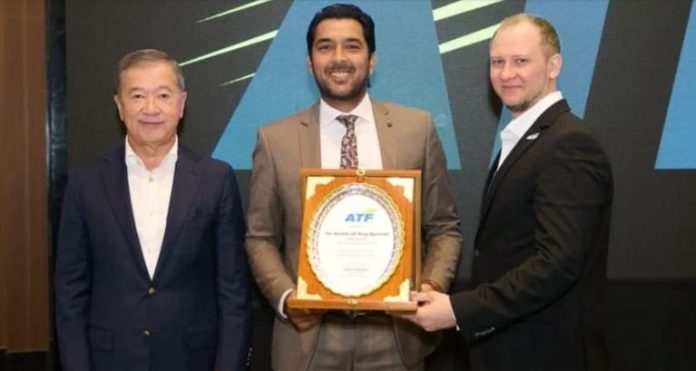
In recognition of its rapid progress, the Asian Tennis Federation (ATF) honored PTF as the fastest-progressing tennis federation in Asia, with the award presented to PTF President Aisam-ul-Haq Qureshi at the ATF Annual General Meeting in Almaty. Player development remained a top priority as secured 21 international wild cards for Pakistani players, and successfully hosted the first-ever ATP Challenger tournament in Islamabad, featuring top foreign professionals alongside local talent. Pakistan Tennis Federation prioritized player development by distributing Rs 35 million in prize money during last year.

At the junior level, Pakistan’s rising stars captured 20 ITF junior titles, led by Mikaeel Ali Baig’s outstanding performances, while Soha Ali’s appearance in an ITF junior doubles final marked a significant breakthrough for women’s tennis in Pakistan. To strengthen infrastructure and long-term growth, PTF also constructed two new multi-purpose mini tennis and padel courts at its premises, aimed at introducing young children to the sport and broadening the participation base.

At the National Tennis Centre (NTC), Islamabad, year-round free-of-cost training programs were conducted for elite players across all categories — Men, Women, and Juniors (U12 to U18) — under the supervision of the country’s top coaches. Additionally, PTF invited foreign coach Robert Davis and fitness trainer Lalovic for a one-month high-performance national training camp in Islamabad, providing players from all age groups with valuable exposure to international training standards.

Pakistan, Bangladesh air chiefs discuss potential JF-17 aircraft procurement: ISPR

Pakistan, Bangladesh air chiefs discuss potential JF-17 aircraft procurement: ISPR

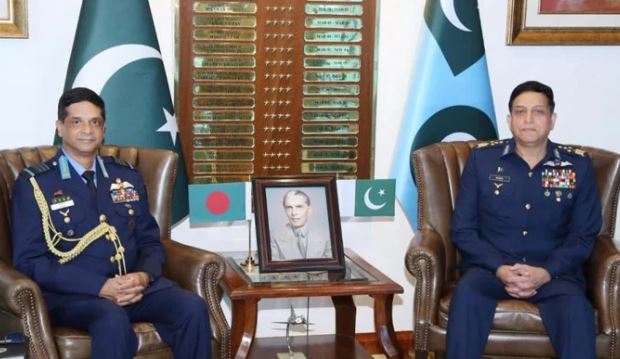
ISLAMABAD, JAN 6: Bangladesh Air Force Air Chief Marshal Hasan Mahmood Khan called on Pakistan Air Force (PAF) Air Chief Marshal Zaheer Ahmed Babar Sidhu in Islamabad, the Inter-Services Public Relations (ISPR) said in a statement on Tuesday.

According to the military’s media wing, Pakistan and Bangladesh’s air force chiefs have held detailed discussions on the potential procurement of JF-17 Thunder fighter jets.

“Detailed discussions were also held on the potential procurement of JF-17 Thunder aircraft,” it said.

The visiting air chief was accorded a guard of honour, according to the ISPR.

“The meeting also focused on strengthening operational cooperation and institutional synergy, with emphasis on training, capacity building, and collaboration in aerospace advancements,” the ISPR statement read.

The ISPR said that ACM Sidhu briefed his Bangladeshi counterpart on PAF’s recent advancements and reaffirmed Pakistan’s commitment to supporting the Bangladesh Air Force through a comprehensive training framework from basic to advanced flying and specialised courses across PAF institutions.

“He also assured fast-tracked delivery of Super Mushshak trainer aircraft, along with a complete training and long-term support ecosystem,” the ISPR statement read.

“The Bangladeshi air chief praised PAF’s combat record and expressed interest in benefiting from its operational expertise, seeking assistance in maintenance support for Bangladesh Air Force’s ageing fleet and integration of air defence radar systems to enhance air surveillance,” the press release read.

The delegation, according to the military’s media wing, also visited key PAF facilities, including the National ISR & Integrated Air Operations Centre, PAF Cyber Command, and the National Aerospace Science & Technology Park.

“The visit underscored the strong historical ties between Pakistan and Bangladesh and reflected a shared resolve to deepen defence cooperation and build a long-term strategic partnership,” the statement concluded.

Veteran Shahzad Iqbal appointed as OGRA Member (Gas)

Veteran Shahzad Iqbal appointed as OGRA Member (Gas)

Islamabad, JAN 6 /DNA/ – The Federal Government has appointed Mr. Shahzad Iqbal as Member (Gas) of the Oil and Gas Regulatory Authority (OGRA).

Mr. Iqbal brings 35 years of extensive regulatory and sectoral experience to the Authority, with a distinguished career in Pakistan’s oil and gas sector. Prior to this appointment, he served in senior leadership roles within OGRA’s where he handled complex regulatory matters relating to gas transmission and distribution, tariff determinations, Unaccounted-for-Gas (UFG), consumer protection, and coordination with gas utilities and other stakeholders.

His appointment is expected to further strengthen OGRA’s regulatory oversight of the gas sector, particularly at a time when the industry faces challenges related to supply management, infrastructure efficiency, pricing transparency, and consumer confidence.

OGRA remains committed to ensuring transparent, fair, and effective regulation of Pakistan’s oil and gas sector in the public interest, and looks forward to Mr. Iqbal’s contribution in advancing these objectives.

Stay Connected

64FansLike
60FollowersFollow

Latest Reviews

Exchange Rates

USD - United States Dollar
EUR
1.14
GBP
1.34
AUD
0.70
CAD
0.71