Home Blog Page 310

Balochistan CTD says militants using BYC platform to induct young people into their networks

Balochistan CTD says militants using BYC platform to induct young people into their networks

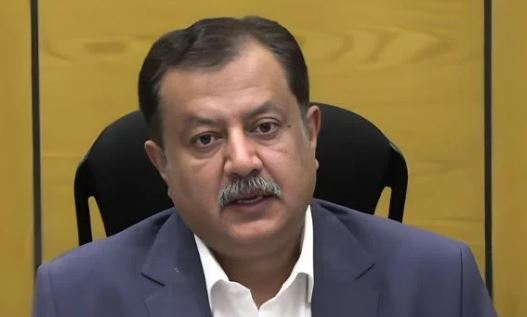
Balochistan Counter-Terrorism Department (CTD) Deputy Inspector General Aitzaz Goraya said on Thursday that militants were using the platform of the Balochistan Yakjehti Committee (BYC) to induct young people into their networks.

He disclosed the arrest of a Turbat-based suspect and additional detentions of teenagers in a joint press conference with Additional Chief Secretary (Home) Muhammad Hamza Shafqaat.

“One thing that has surfaced prominently is the role of the BYC. Every man or child who is facilitating or [is involved in] what they call a sharing network or intelligence network […] they are somehow linked to the BYC,” Goraya said, adding that the CTD had arrested Sajid Ahmad alias Shahwaiz, a resident of Turbat, during an operation in Panjgur.

Goraya said the CTD, police and other law-enforcement agencies carried out the operation and recovered a large cache of weapons and explosives from Sajid’s vehicle, including a rocket-propelled grenade, five rockets, two M-16 rifles with 23 magazines and 800 rounds, 20 hand grenades with 22 fuses, 30 C4 explosive slabs, remote controls, 13 UBGL rounds, a compass, helmets and 30 feet of detonating cord.

He said Sajid was travelling from Panjgur towards Turbat when he was apprehended.

He said the suspect had received a Master’s degree in Sociology from the International Islamic University in Islamabad, then worked on contract at Zubaida Jalal Government College for three years, before teaching at the University of Turbat.

Goraya said Sajid had been involved with BLF and BLA and had “remained with BYC and was in constant communication with its leadership”.

Goraya said investigators recovered material through mobile and forensic analysis, including what he described as a list of locations in Turbat such as the CTD complex, routes leading to Turbat Airport, and an under-construction high court building.

“Besides Sajid, we have also arrested three others against whom we are registering FIRs,” Goraya said.

He identified one of them as 18-year-old Sarfaraz, a resident of Kharan, who he said was tasked with conducting a reconnaissance of police and their polio duties and was first made to join BYC and involved in its protests and roadblocks.

Goraya said the person who inducted Sarfaraz into BYC was Jahanzaib alias Mehrbaan, aged 20, who is also in custody.

According to Goraya, Jahanzaib was involved in reconnaissance and transportation, and on one occasion delivered Rs600,000 in extortion money from Quetta, while on another delivered Rs1,000,000 along with medicines.

He said Jahanzaib later inducted 18-year-old Bezan into BYC, after which, Goraya claimed, Bezan joined the BLA. Goraya also said Bezan’s brother, Shafqat Yar, was killed in firing when the Levies force was attacked in Khad Kocha.

Goraya alleged Jahanzaib had been involved in BYC roadblocks in Nushki and Kharan and said he “participated in the BYC’s so-called missing persons protests” and organised who to bring and what to post on social media. “All these are those people and children who were subverted, and their minds were used to take them to the other side and assigned these small tasks,” he said.

Referring to militant outfit “Fitna al-Hindustan”, Goraya said they first use the BYC platform and then move matters forward by using children, adding that there was a “proper network being run that depends on young children, as they are not thoroughly checked when going to schools and colleges”.

The state has designated Balochistan-based terrorists groups as Fitna-al-Hindustan to highlight India’s role in terrorism and destabilisation across Pakistan.

FPCCI credits economic stability to security, praises military leadership

FPCCI credits economic stability to security, praises military leadership

KARACHI, JAN 8 /DNA/ – Atif Ikram Sheikh, President FPCCI, has said that the recent economic stability and the marked improvement in the macroeconomic indicators has been enabled by the improved external and internal security environment – and, made possible by Chief of Defence Forces (CDF), Field Marshal Asim Munir, through his strategic vision and leadership.

Mr. Atif Ikram Sheikh commended the formation of the unified CDF command structure as a pivotal step in strengthening national defense. He noted that the cohesive strategy of the armed forces has made the country’s defense impregnable.

In this regard, FPCCI Chief expressed unwavering support from the business community that the entire business community stands like a solid wall behind the armed forces. He reiterated that the traders and industrialists of Pakistan are ready to offer any sacrifice – financial or physical – alongside the soldiers to safeguard the motherland’s sovereignty.

Mr. Atif Ikram Sheikh, honoring the martyrs (Shuhada), maintained that the peace and stability we enjoy today are the direct result of the blood spilled by our valiant soldiers. The nation can never repay the debt of their sacrifices. He specifically acknowledged the resilience of the families of the martyrs and the bravery displayed by troops in recent operations; such as Operation Bunyan-un-Marsoos; that successfully thwarted external aggression.

Mr. Sheikh highlighted the critical role of the armed forces in stabilizing the economy, particularly through initiatives like the Special Investment Facilitation Council (SIFC). He noted that economic prosperity is inextricably linked to national security and praised the military leadership for their efforts to create a secure environment for foreign and domestic investment.

Mr. Atif Ikram Sheikh’s message to Pakistan’s adversaries concluding his statement, he warned anti-state elements and external aggressors that the Pakistani nation and its business community are united with their brave forces – and, any attempt to harm the country would be met with a befitting and decisive response.

PIA to resume Lahore–London flights after six years

PIA to resume Lahore–London flights after six years

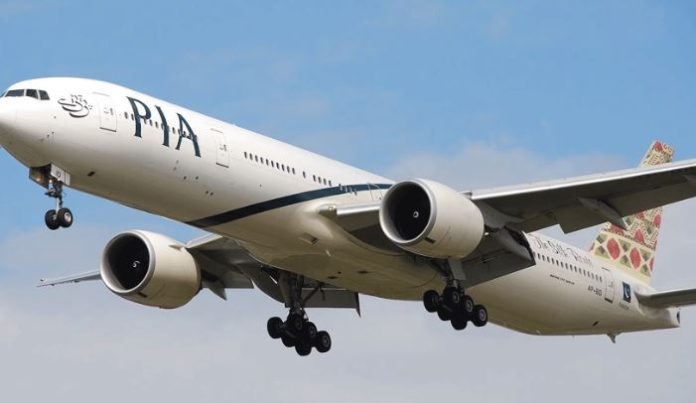
ISLAMABAD, JAN 8: Pakistan International Airlines (PIA) has announced the resumption of direct flight operations from Lahore to London, marking a major step in restoring its international network after a six-year suspension.

According to a PIA spokesperson, the first flight from Lahore to London will operate on March 30. The inaugural service will be flight PK-757, departing from Lahore for the UK capital. The resumption comes after a six-year gap.

Flights to land at Heathrow Terminal 4

PIA confirmed that all Lahore–London flights will land at Terminal 4 of Heathrow Airport. The spokesperson said London has historically been among the initial and most important international routes in PIA’s network.

The airline views the revival of this route as a key part of rebuilding trust and connectivity with overseas Pakistanis.

Weekly UK flights to increase to seven

With the launch of Lahore–London operations, the total number of Pakistan International Airlines flights to the UK will increase to seven per week. Before the ban, PIA was operating up to 10 weekly flights from Pakistan to London.

The spokesperson added that the number of flights to London will be increased gradually, keeping passenger demand and operational capacity in view. 

PIA has already announced the start of three weekly flights from Islamabad to London. These flights will commence from March 29, one day before the launch of the Lahore route.

Together, the Islamabad and Lahore operations will significantly expand PIA’s UK presence.

Boost for passengers, overseas Pakistanis

The restoration of Lahore–London flights is expected to provide much-needed convenience to travelers, particularly overseas Pakistanis from central Punjab. PIA officials say the move reflects the airline’s phased return to key international destinations.

The airline reiterated its commitment to further expanding its long-haul network as operations stabilize.

Fazlur Rehman warns against attempts to control madrasas

Fazlur Rehman warns against attempts to control madrasas

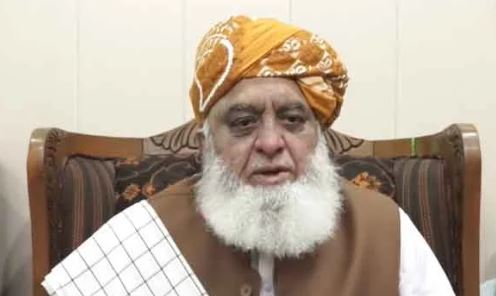
ISLAMABAD, JAN 8: JUI-F chief Maulana Fazlur Rehman has warned against attempts to take over religious madrasas and criticized the privatization of Pakistan International Airlines (PIA), asserting that faith cannot be controlled by worldly powers.

Speaking at a turban-tying ceremony at Madrasa Taalim-ul-Quran in Raja Bazar, Rehman said, “America may currently hold the rule of the world in its hands, but it does not have the power of faith.”

He emphasized that if religious institutions and students are tested, they will become a test for those who try to challenge them.

Defense of madrasas

The JUI-F leader highlighted the role of madrasas in protecting Quranic and Hadith sciences. He recalled that Allama Shabbir Usmani was labeled illiterate by the British, stressing that similar attitudes persist today, where religious knowledge is often undervalued.

Rehman underlined that scholars across schools of thought are united in defending madrasas. He said, “We believe in dialogue and will abide by the law made through consultation, but no kind of cheating will be tolerated.”

Addressing the madrasa students, Rehman added that if they had focused more on working than raising slogans, they could have won the most seats in Punjab, highlighting the importance of dedication alongside faith-based learning.

Army remains steadfast in safeguarding sovereignty, internal stability: CDF

Army remains steadfast in safeguarding sovereignty, internal stability: CDF

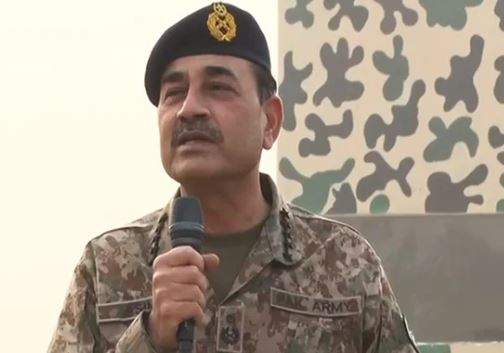
RAWALPINDI, JAN 8: Chief of Defence Forces (CDF) Field Marshal Asim Munir has reiterated the army’s resolve to safeguard the country’s sovereignty, territorial integrity and internal stability, the Inter-Services Public Relations (ISPR) said in a statement on Thursday.

The statement came as the army chief visited Lahore Garrison to witness a specialised field training exercise showcasing the latest technologies and was given a comprehensive briefing on the formation’s operational preparedness, training standards and key initiatives to enhance combat efficiency.

Stressing on fostering a culture of excellence, discipline, and selfless national service, CDF Munir emphasised on innovation, adaptability to match the dynamic future battlefield, the military’s media wing said.

Field Marshal, the military’s media wing added, inspected sports and recreational facilities being provided to troops, highlighting their importance in maintaining physical fitness, morale, and overall well-being.

Furthermore, the CDF also visited a High Care Centre at CMH Lahore, lauding the efforts of the medical staff and administration in establishing a fully equipped, state-of-the-art healthcare facility.

Addressing the officers, Field Marshal Munir highlighted the Pakistan Army’s zero-tolerance policy towards any threat to national security, reaffirming the institution’s unwavering resolve to confront multifaceted challenges with focus, professionalism and determination.

The Elegance We Are Forgetting

The Elegance We Are Forgetting

by Muhammad Mohsin Iqbal

Great nations take pride in their civilization, history, and language, and they never detach these elements from their personal existence or collective identity. These attributes are not merely cultural ornaments; they are the spiritual foundations upon which a nation’s character rests. Around the world, especially in diplomatic circles, English has undoubtedly become a convenient medium of communication. It allows people of different regions to converse on equal footing. Yet, even within such environments, there are leaders, officials, and dignitaries who, despite having full command over English, choose to speak in their national languages. They do so without hesitation, without embarrassment, and often with visible dignity. Their confidence springs from a deep respect for their own heritage.

Unfortunately, our condition stands in stark contrast. We live in a society where Urdu is effortlessly understood and comfortably spoken, yet many among us take pride not in fluency of thought but in fluency of English. A strange standard of superiority has taken root—where speaking English is seen as a marker of intellect and status, while speaking Urdu is sometimes treated as a sign of deficiency. In gatherings, in workplaces, and particularly in elite social circles, one notices that even those who think naturally in Urdu consciously switch to English to appear distinguished. This behavior has given rise to an awkward hybrid known popularly as “Gulabi Urdu,” in which English words are sprinkled unnecessarily, as if plain Urdu were inadequate for dignified expression.

During my years in journalism, I was fortunate to work with teachers and senior colleagues who helped purify my language and refine my expression. Their guidance became a treasure that still accompanies me in every sentence I write. I vividly recall an early lesson from my Chief Editor Mujeeb-ur-Rehman Shami, who once reviewed a piece of mine containing the word “Mizbah Khanna” (Slaughterhouse). He looked at it attentively and said, “You have added ‘Khana’ unnecessarily. The word is complete even without it.” It was a small correction, yet its impact was lasting. It taught me that precision in language is not achieved through excess but through clarity. That one moment remains etched in my memory.

On another occasion, I witnessed a gentle but profound lesson from most respected teacher Irfan Siddiqui. Someone at an event used the term “Body language” while speaking in Urdu. Mr. Siddiqui smiled and said that he could not understand why we insert English terms when perfectly expressive Urdu equivalents exist. A journalist present asked him what Urdu word could be used instead. With his characteristic grace, he replied, “You may use the term “Bad’an Boli” for that.” From that day onward, I began employing “Bad’an Boli” whenever needed, and it felt as though I had reconnected with a forgotten part of the language.

There were many others in my journalistic journey—Qudratullah Chaudhry, Abdullah Tariq Suhail, Athar Masud, Tauseef Ahmed Khan, Tahir Majeed, Naveed Chaudhry, Imran Mir, Naeem Iqbal, Chaudhry Khadim Hussain, Esar Rana, Naeem Mustafa, Najam Wali Khan, Zahid Rafique, Akhtar Hayat, Allama Saeed Azhar, and several more—whose companionship enriched my Urdu. They corrected my expressions, refined my usage, and strengthened my connection with the language. Over ten years, I learned from them not only words but attitudes, not only grammar but respect for the elegance and depth of Urdu.

Today, however, the culture of learning and teaching is gradually fading. Senior writers and journalists who nurtured newcomers with patience and affection are diminishing in number. The new generation, equipped with screens, shortcuts, and the influence of globalized media, tends to rely more on English expressions even while thinking in Urdu. The assault of foreign words is slowly diluting the originality of our language. The erosion is subtle but real, and if not addressed, it may eventually alter the very character of our linguistic identity.

Yet all is not lost. Languages survive not through force but through love, usage, and conscious preservation. Urdu has within it a beauty, rhythm, and expressive power that needs no foreign ornament to stand tall. It is a language that carries centuries of poetry, scholarship, and cultural elegance. It is a language that binds our collective memory. But for it to endure in its true essence, we must revive the habits of careful expression, of learning from elders, and of resisting unnecessary linguistic invasions.

We must not be apologetic when speaking Urdu. We must let it flow with the same confidence with which other nations speak their own languages. The world respects those who respect themselves. When we carry Urdu with dignity, it enhances our stature rather than limiting it. Let us remember that languages are not mere tools of communication—they are vessels of identity. If we allow Urdu to weaken, we weaken a part of ourselves.

The responsibility lies with each of us to nurture the language that has nurtured us. Let us speak it with pride, write it with care, and guard it from being overshadowed by borrowed expressions. Preservation begins with small choices—choosing Urdu where it belongs, refining its purity, and valuing the legacy carried in every word. In protecting our language, we are not protecting a relic; we are protecting a living spirit that shapes our national soul.

Pakistan-China friendship exhibition cements cultural ties

Pakistan-China friendship exhibition cements cultural ties

Representing the Embassy of the People’s Republic of China, Mr. Wang Shengjie, Head of the Political Press Section, praised the exhibition and recognized the contributions of the participating artists

By Saifullah Ansar/DNA

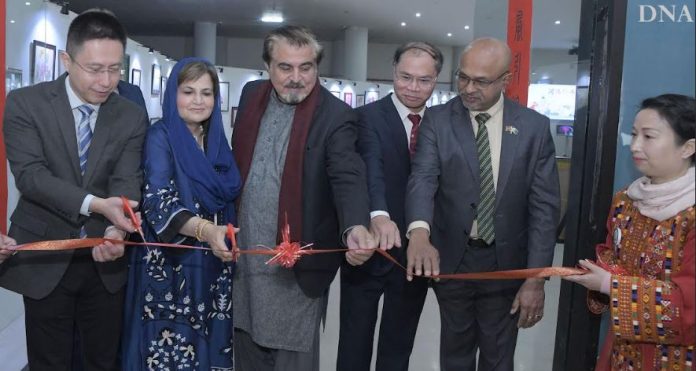
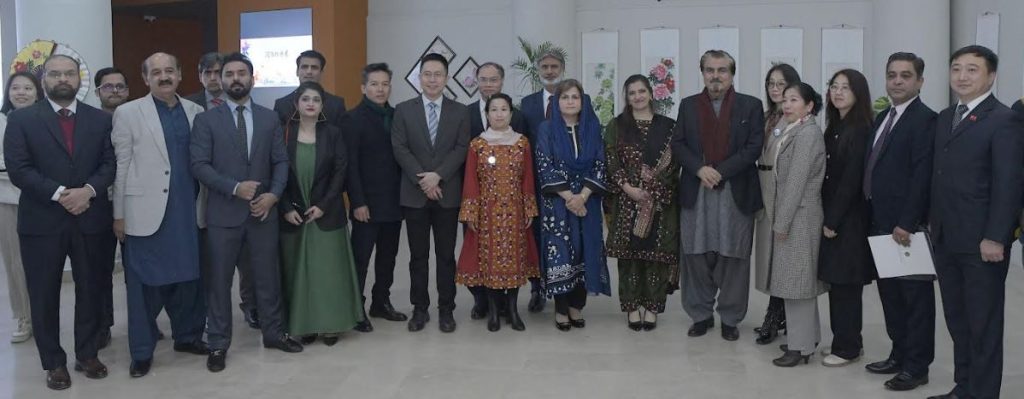
Islamabad – Parliamentary Secretary for the Ministry of Culture, Farah Naz Akbar, has reaffirmed Pakistan’s commitment to deepening relations with China, emphasizing that cultural cooperation remains a cornerstone of bilateral ties. She made these remarks while inaugurating the Pakistan-China Friendship Calligraphy and Paintings Exhibition, a vibrant showcase of artistic collaboration between the two nations.

The exhibition, jointly curated by Dr. Shaista Haider and Ms. Wang Chunpin, brought together a diverse collection of calligraphy and paintings that celebrated the shared heritage and artistic traditions of Pakistan and China.

Speaking at the ceremony, Farah Naz Akbar highlighted the enduring nature of the Pakistan-China friendship, describing it as “durable, trusted, and mutually beneficial.” She noted that cultural relations between the two countries are strengthening day by day, and initiatives such as this exhibition serve to further cement the bond.

“Such platforms not only highlight the creativity of our artists but also reflect the depth of our friendship with China,” she said. “Cultural exchanges are vital in building bridges of understanding and trust between nations, and Pakistan attaches great importance to its relations with China.”

Representing the Embassy of the People’s Republic of China, Mr. Wang Shengjie, Head of the Political Press Section, praised the exhibition and recognized the contributions of the participating artists.

He reiterated China’s keen interest in enhancing bilateral relations with Pakistan, stressing that cultural cooperation is a meaningful step in that direction. “The embassy greatly values the works of these artists,” he remarked. “Such initiatives enrich our cultural dialogue and will further enhance cooperation between our two countries.”

Renowned Pakistani artist Jamal Shah also addressed the gathering, commending the exhibition as a testament to the creative synergy between Pakistani and Chinese artists. He underscored the role of art in fostering mutual respect and understanding, noting that cultural diplomacy often succeeds where political dialogue may face challenges.

The event drew a distinguished audience, including the ambassadors of Sri Lanka and Vietnam, as well as Usman Shah, CEO of the Niphtyspere Institute. Their presence underscored the regional significance of cultural diplomacy and the growing recognition of art as a vehicle for international cooperation.

The exhibition featured a wide range of works, from traditional Chinese brush paintings to contemporary Pakistani calligraphy, symbolizing the harmony between ancient traditions and modern expressions. Visitors were captivated by the intricate details and thematic depth of the pieces, which reflected themes of friendship, peace, and shared aspirations.

Organizers expressed hope that the exhibition would pave the way for more collaborative projects in the future, including artist exchanges, joint workshops, and cultural festivals. Dr. Shaista Haider and Ms. Wang Chunpin, the curators, emphasized that the exhibition was not merely an artistic endeavor but a celebration of the enduring bond between Pakistan and China.

As the event concluded, participants echoed the sentiment that cultural diplomacy remains a powerful tool in strengthening bilateral ties. The Pakistan-China Friendship Calligraphy and Paintings Exhibition stood as a vivid reminder that art transcends borders, and that the friendship between the two nations continues to flourish through creativity, trust, and mutual respect.

Artist presents medallion portrait of Jinnah to high commission in Canada

Artist presents medallion portrait of Jinnah to high commission in Canada

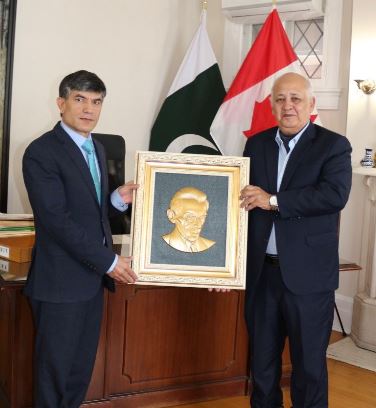
ISLAMABAD, JAN 8 /DNA/ – Khalil Najmi is internationally recognized for his distinctive medallion portrait art. He shared insights on his artistic journey and the growing international appreciation of medallion portrait art as a medium for preserving history, celebrating identity and fostering dialogue among cultures. Mr. Najmi presented a masterpiece portrait of the father of the Nation, Quaid-e-Azam Muhammad Ali Jinnah to the High Commission.  

During the meeting, the High Commissioner underscored the importance of art as a powerful instrument of cultural diplomacy. He appreciated Mr. Najmi’s immense contribution in promoting Pakistan’s artistic heritage through medallion portraiture, a unique form that blends classical technique with contemporary expression.

The discussion highlighted promoting  people-to-people exchanges and projecting Pakistan’s soft image through visual art. He highlighted that artists play a vital role in building bridges among societies. He said that cultural exhibitions, artist exchanges and collaboration with counterpart institutions abroad are key pillars of Pakistan’s public diplomacy initiatives.

Farhan powers Pakistan to win over Sri Lanka

Pakistan chase down 129-run target in 16.4 overs, with six wickets in hand

Sports Desk

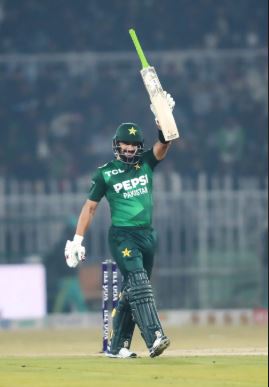
COLOMBO: Opener Sahibzada Farhan scored a half-century as Pakistan registered a comfortable win over Sri Lanka in the first game of the three-match T20I series at the Rangiri Dambulla International Stadium on Wednesday.

Earlier, Salman Mirza and Abrar Ahmed took three wickets each as Pakistan bowled out Sri Lanka for 128 in the first game.

Pakistan captain Salman Ali Agha’s decision to field first bore fruit as his team’s bowling unit skittled the home side to 128 in 19.2 overs.

Sri Lanka got off to a shaky start to their innings as they lost both their openers, Kamil Mishara (zero) and Pathum Nissanka, inside the batting powerplay with just 15 runs on the board.

Wicketkeeper batter Kusal Mendis (14) and returning Dhananjaya de Silva (10) attempted to stabilise the innings by putting together 22 runs for the third wicket before both perished in quick succession, bringing the total down to 38/4 in 6.5 overs.

Following the back-to-back dismissals, Janith Liyanage walked out to bat at No.6 and took the reins of Sri Lanka’s batting expedition with a gutsy knock.

The batting all-rounder was involved in two crucial partnerships with Charith Asalanka and Wanindu Hasaranga, both 18, until eventually falling victim to Abrar Ahmed in the 18th over.

He remained the top-scorer for the home side with a valiant 40 off 31 deliveries, laced with two fours and a six.

Salman further added to Sri Lanka’s woes in the penultimate over, dismissing their captain Dasun Shanaka (12) and tailender Dushmantha Chameera (zero) and put Pakistan in a commanding position.

Mohammad Wasim Jr inflicted the final blow to Sri Lanka on the second delivery of the final over by getting No.10 Maheesh Theekshana caught behind.

Abrar and Salman jointly led Pakistan’s bowling charge with three wickets each, followed by Shadab Khan and Wasim Jr bagged two each.

Playing XI

Pakistan: Saim Ayub, Sahibzada Farhan, Salman Ali Agha (c), Fakhar Zaman, Usman Khan (wk), Shadab Khan, Mohammad Nawaz, Faheem Ashraf, Mohammad Wasim Jr, Salman Mirza and Abrar Ahmed.

Sri Lanka: Pathum Nissanka, Kamil Mishara, Kusal Mendis (wk), Dhananjaya de Silva, Charith Asalanka, Dasun Shanaka (c), Janith Liyanage, Wanindu Hasaranga, Dushmantha Chameera, Maheesh Theekshana and Nuwan Thushara.

Ex-PTI leaders moot urges govt to enter dialogue

Acting as “bridge” between rivals, National Dialogue Committee proposes president, PM, Nawaz lead govt’s side in talks

Saifullah Ansar

ISLAMABAD: A national conference convened by the National Dialogue Committee (NDC) has urged the government’s top leadership to step forward and engage directly in a structured political dialogue with the opposition in an effort to ease political tensions and stabilise the country’s democratic and economic landscape.

The call came during a representative national gathering convened by the NDC in Islamabad on Wednesday, attended by leaders of major political parties, intellectuals, journalists, lawyers and other stakeholders associated with Pakistan’s political and democratic system.

The National Dialogue Committee was recently formed by former Pakistan Tehreek-e-Insaf (PTI) leaders, including Fawad Chaudhry, former Sindh governor Imran Ismail and Mahmood Moulvi.

Unlike earlier attempts focused on PTI founder Imran Khan’s incarceration in the Adiala jail, the group’s immediate emphasis is on Kot Lakhpat Jail, where several senior PTI leaders, including Shah Mahmood Qureshi, Mian Mahmoodur Rashid, Ejaz Chaudhry, Umar Cheema and Dr Yasmin Rashid are currently imprisoned.

In a joint declaration issued after today’s meeting, the committee expressed serious concern over political instability, economic hardships faced by the public, restrictions on political activity and the media, and the persistent threat of terrorism.

Participants stressed the need for national unity, political reconciliation and confidence-building measures, while appreciating the NDC’s role as a bridge between the government and the opposition.

The committee called for the formation of separate negotiation committees by the government and the opposition to formally initiate talks.

It proposed that President Asif Ali Zardari, PML-N President Nawaz Sharif and Prime Minister Shehbaz Sharif represent the government side, while the NDC would, in consultation with senior opposition leaders currently in jail, announce the names of the opposition’s negotiation committee.

The declaration also emphasised that restrictions on political activities should be lifted, the immediate appointment of leaders of the opposition in both the National Assembly and Senate, and political freedoms ensured within the constitutional framework.

It also demanded the release of women political workers, including Bushra Bibi and Yasmin Rashid, withdrawal of cases against political activists, an end to media censorship and removal of curbs on television anchors.

The declaration urged both the government and opposition to refrain from using the armed forces for political purposes or engaging in negative propaganda against state institutions.

The meeting paid tribute to the sacrifices of Pakistan’s armed forces, police, Rangers and other security personnel in the fight against terrorism, offering prayers for the martyrs and patience for their families. It reaffirmed national unity in safeguarding Pakistan’s sovereignty, defence, security and the dignity of state institutions.

The participants agreed to continue engagement and dialogue at the national level, reiterating that the National Dialogue Committee would persist in playing its role in the broader public and national interest.

Addressing the national conference, former prime minister Shahid Khaqan Abbasi said everyone shared responsibility for Pakistan’s deteriorating conditions, adding that he knew of no individual or institution free from blame.

He said national problems were reflected in the state of the economy, which suffered when media freedom and the rule of law were undermined. He warned that a country mired in chaos could not function, noting that hybrid governments had existed for six decades and that the issue was not the release of any single individual.

Abbasi said overseas Pakistanis sent $38 billion in remittances last year, highlighting the need to understand national realities. He stressed that politicians, the military, judges and business leaders must sit together to resolve issues, adding that despite claims of patriotism, the elite had effectively captured the state.

Stay Connected

64FansLike
60FollowersFollow

Latest Reviews

Exchange Rates

USD - United States Dollar
EUR
1.14
GBP
1.34
AUD
0.70
CAD
0.71