Home Blog Page 31

Soldier martyred, seven terrorists killed in DI Khan IBO: ISPR

Soldier martyred, seven terrorists killed in DI Khan IBO: ISPR

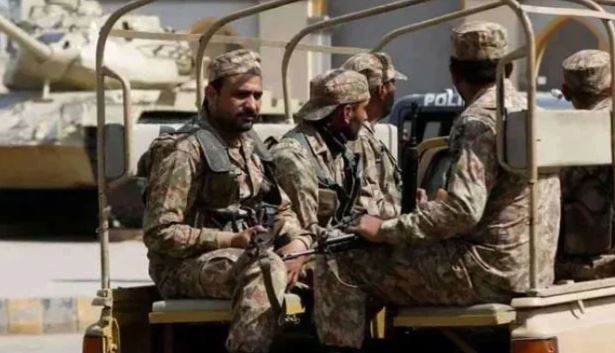
ISLAMABAD, DEC 15 – A Pakistan Army soldier was martyred and seven terrorists belonging to Indian proxy, Fitna al Khwarij, were killed during an intelligence-based operation in Dera Ismail Khan district, Khyber Pakhtunkhwa, the Inter-Services Public Relations (ISPR) said on Monday.

According to a press release from the military’s media wing, security forces conducted the IBO in the Kulachi area of DI Khan on the reported presence of militants.

“During the conduct of operation, own troops effectively engaged the khwarij location, and after an intense exchange of fire, seven khwarij were sent to hell,” read the statement.

During the intense exchange of fire, Naik Yasir Khan, 34, having fought gallantly, paid the ultimate sacrifice and embraced shahadat, it added.

Weapons and ammunition were also recovered from the slain terrorists. The ISPR said that the militants were involved in numerous terrorist activities in the area.

Sanitisation operation is being conducted to eliminate any other Indian-sponsored terrorists found in the area, it added.

The ISPR vowed that the relentless counter terrorism campaign under the vision “Azm-e-Istehkam” by security forces and law enforcement agencies will continue at full pace to wipe out the menace of foreign-sponsored and supported terrorism from the country.

Terrorist attacks have seen a sharp increase in Pakistan, particularly in the bordering provinces of KP and Balochistan, since the Afghan Taliban regime grabbed power in Afghanistan in 2021.

Pakistan has repeatedly called on the Afghan Taliban regime to prevent its soil from being used by terrorists against Pakistan, and the issue recently resulted in heightened tensions featuring cross-border attacks by the Afghan side, resulting in retaliation from Pakistani forces as well.

Recently, a meeting of Afghanistan’s scholars at Kabul University emphasised that the country’s soil must not be used to threaten or harm any other nation.

Islamabad welcomed the resolution as a “positive development”; however, it regretted that such commitments had been made in the past but were not honoured by the Afghan Taliban regime.

Foreign Office spokesperson Tahir Hussain Andrabi, during his weekly briefing on December 11, reiterated Islamabad’s demand for written assurances from Kabul that Afghan territory will not be allowed to be used by terrorist groups to launch attacks inside Pakistan.

Thailand to go to the polls on February 8

Thailand to go to the polls on February 8

Bangkok, Dec 15 (AFP/APP): Thailand’s next general election will take place on February 8, the election commission said Monday, and parties must nominate their candidates for prime minister before the end of this year.

                  “Today the Election Commission has drafted election details and proposed to the Commissioner who agreed that Sunday, February 8, 2026 will be the election day,” the commission said in a statement.

                  Advance voting will take place on February 1.

                  Prime Minister Anutin Charnvirakul, of the conservative Bhumjaithai party, assumed office in September after his predecessor was removed over an ethics violation.

                  He dissolved parliament on Friday, paving the way for the national poll — which under Thai law must be held between 45 to 60 days after the dissolution.

                  The move comes as a conflict stemming from a decades-long border dispute between Thailand and Cambodia reignited this month, with ongoing military clashes killing at least 31 people and displacing around 800,000.

                  Anutin, a cannabis-championing conservative, took power with coalition backing conditional on dissolving parliament, becoming the kingdom’s third leader in two years.

Clean energy shift requires system reform in Pakistan: Analysts

Clean energy shift requires system reform in Pakistan: Analysts

ISLAMABAD, DEC 15 /DNA/ – Pakistan’s energy transition demands coordinated planning, improved forecasting, investment in grid readiness, and targeted climate finance. Without addressing structural barriers such as capacity payments and outdated tariff frameworks, the country will struggle to translate its renewable momentum into a sustainable and resilient energy system.

Experts emphasized this at a high-level roundtable while noting that sustainable progress will depend on coherent policy direction, utility-scale renewable integration, stronger distribution networks, and climate finance mechanisms that support both mitigation and adaptation priorities.

They were speaking at a forum titled “Pakistan’s Energy Transition: Current Standing, Challenges and the Road Ahead” held at the Institute of Policy Studies (IPS), Islamabad. The session brought together leading voices from government, climate finance, academia, distribution companies, and the renewable energy sector. Key speakers included Dr. Sardar Mohazzam, former managing director National Energy Efficiency and Conservation Authority (NEECA), Mekaeel Malik, CEO Climate Finance Pakistan, Faisal Sharif, director environment and sustainability Private Power and Infrastructure Board (PPIB), and Dr. Syed Ali Abbas Kazmi, HOD Electrical Department NUST, who were joined by Khalid Rahman, chairman IPS.

The discussion segment featured a panel of experts, including Hasnat Khan, vice-chairman Pakistan Solar Association (PSA), Arqam Ilyas, manager planning and forecasting LESCO, Tanvir Ahmed, energy officer and country focal person UNHCR, Asim Ejaz, chief engineer IESCO, Dr. Nadia Shahzad, professor USPCAS-E NUST, Muhammad Yousif, assistant professor, Abdullah Qureshi, former deputy director tariff NEPRA, Dr. Faisal Nadeem, associate professor UET Taxila, and Mustafa Anwar, assistant professor NUST.

Sardar Mohazzam highlighted that renewables, including hydropower, constitute a major portion of Pakistan’s current energy mix, but long-term sustainability remains unclear. He stressed the need to plan for hydrogen fuels, new energy vehicles, and most critically, the growing burden of capacity payments that continues to obstruct meaningful progress toward a renewable future.

Regarding the climate finance landscape of Pakistan, Mekaeel Malik noted that 69% of finance comes from international public sources and 31% is private, where over 70% of these flows support mitigation, mainly renewable energy, while adaptation remains underfunded.

Faisal Sharif outlined that the key question of energy transition in Pakistan is how to do so in a way that is economically feasible, socially equitable, and environmentally sustainable.

In this regard, Mustafa Anwar underlined the rising interest in hydrogen fuel but cautioned that costs remain high, limiting near-term uptake despite pilot initiatives.

Discussing solar adoption trends, Hasnat Khan noted that Pakistan has imported 46 GW of solar equipment, of which 35 GW has been installed, mainly behind-the-meter, with only 7-9% under net metering. He noted that the government missed a critical opportunity by not deploying utility-scale solar earlier and is making the same mistake by not adopting batteries.

Building on this point, Dr. Nadia Shahzad emphasized that DISCOs should leverage the battery market. She outlined that the story of solar uptake is both a success and a warning case. She also highlighted the importance of domestic manufacturing, especially laminations, to reduce import dependence.

From the DISCO perspective, Arqam Ilyas stated that the solar revolution and emerging EV trends are placing immediate pressure on Pakistan’s grid, which was designed passively and not for bidirectional flows. He warned that if government action remains slow, consumers may increasingly move toward batteries and become entirely off-grid.

Emphasizing this point, Muhammad Yousif argued that NEPRA’s outdated tariff structure has inflated electricity prices.

Highlighting socio-economic realities, Tanvir Ahmed stressed that energy transition narratives overlook the challenges faced by low-income households struggling with high tariffs, poor service quality, and load shedding, which push them toward solar adoption out of necessity rather than environmental intent.

Lastly, deliberating on planning challenges, Dr. Faisal Nadeem noted that Pakistan’s forecasting has remained flawed for years, making it impossible to accurately determine renewable capacity requirements or optimal deployment locations.

In his concluding remarks, Khalid Rahman acknowledged the depth of the challenges highlighted. However, he emphasized that focusing on opportunities would guide Pakistan toward a more sustainable, equitable, and resilient energy future.

When Silence Becomes Safe

When Silence Becomes Safe

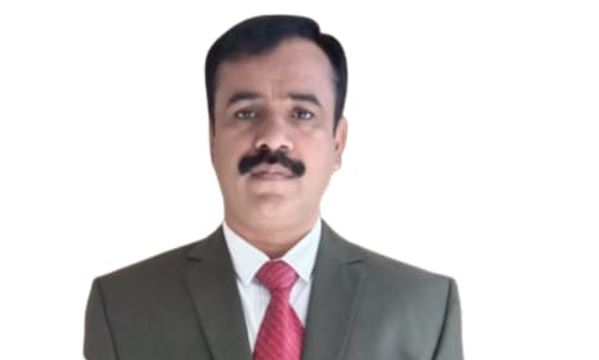
Muhammad Asif   

In every era of human history, the struggle for free expression has been tied to the struggle for dignity, identity, and power, yet perhaps at no point has this struggle been as complex and quietly dangerous as it is today. The modern world, adorned with the language of rights, democracy, and digital empowerment, ironically finds itself witnessing an unprecedented war on free speech one that is subtle, multilayered, and often disguised as protection, national interest, social harmony, or public morality. This war does not always involve jails, guns, or dictators; instead, it unfolds through cancel culture, digital manipulation, selective outrage, online mobs, sophisticated surveillance systems, and legal loopholes that redefine dissent as disloyalty. In such an environment, silence becomes safer than speaking, conformity becomes easier than questioning, and survival becomes more important than truth. At the heart of this global shift lies a troubling realization: in many societies, people are not silenced by force, but by fear. Fear of losing jobs, fear of being misquoted, fear of misinterpretation, fear of digital character assassination, fear of legal repercussions, and even fear of social isolation. Where once oppressive regimes required physical force to silence their people, today societies produce silence voluntarily, shaped by invisible pressures and internalized censorship.

Technology once believed to be the greatest liberator of speech has paradoxically become a powerful tool for suppression. Social media platforms that promised democracy of voices have instead become battlefields of manipulation where algorithms amplify hatred, governments monitor dissent, corporations gather private data, and mobs enforce ideological purity. In many cases, a single post can cost someone their reputation, livelihood, or safety. When public opinion weaponizes outrage, free speech becomes a privilege of the brave and a danger for the ordinary.

Democracies, too, are not immune. Laws framed to curb “misinformation,” “hate speech,” or “security threats” are increasingly used to target activists, journalists, and critics. The line between legitimate regulation and political censorship has blurred dangerously. Governments often claim to protect citizens from harmful content while subtly filtering anything that exposes corruption, misgovernance, or abuse of power. As the digital public square becomes more regulated than the physical one, speaking freely is no longer a right exercised without calculation; it is a risk measured carefully.

Beyond governments and media platforms, society itself has become a silent enforcer. Social polarization has created echo chambers where dissent is treated as betrayal. People increasingly surround themselves with like-minded voices, and any deviation from group opinion invites hostility. The fear of being misunderstood or attacked has pushed many thoughtful individuals into silence not because they lack opinions, but because they no longer see the value or safety in expressing them. Intellectual humility has been replaced by ideological absolutism; dialogue has been replaced by digital shouting matches. As a result, even well-intentioned debates collapse under the weight of aggression, sarcasm, and intolerance. When every disagreement is interpreted as a personal attack or political offense, honest conversation dies.

 The danger of this silent world is profound. When people stop speaking, societies stop thinking. Innovation, justice, and reform all depend on the ability to question, criticize, and imagine alternatives. Silence allows falsehood to flourish, corruption to deepen, and oppression to normalize itself. History shows that no great progress scientific, political, or moral has ever emerged from societies where people were afraid to speak. The suppression of free speech ultimately leads to intellectual stagnation and dysfunctional governance. A society that fears words eventually fears truth, and a society that fears truth becomes easy to manipulate.

Yet, despite the bleakness, the war on free speech is not irreversible. Courage remains the strongest antidote. Around the world, journalists risk their lives to report truth; activists challenge unjust laws; writers and thinkers use metaphors, satire, and art to say what cannot be said directly; ordinary citizens raise their voices despite threats and pressure. The resilience of human conscience is greater than any system of censorship. But courage alone cannot bear the burden. Societies must relearn the value of listening, debating, and disagreeing respectfully. Governments must recognize that suppressing speech, even under noble pretexts, ultimately weakens nations by depriving them of critical thought. Educational systems must teach students not what to think, but how to think. Media platforms must prioritize transparency and fairness over algorithmic manipulation and profit. Above all, people must reclaim the forgotten truth that freedom of speech is not merely the right to speak it is also the responsibility to protect the right of others to speak, even when we disagree with them.

 The war on free speech will not end with a single law, revolution, or technological invention. It will end when societies realize that silence is not safety but surrender. It will end when people understand that speaking the truth may be risky, but abandoning truth is fatal. In the end, the cost of silence is far greater than the cost of speech. The moment we choose silence because it feels safer is the moment we begin losing not only our voice but also our humanity.

Muhammad Asif   

( [email protected] )

NUML, Russian Embassy Advance Strategic Partnership in Language Education & Cultural Cooperation

NUML, Russian Embassy Advance Strategic Partnership in Language Education & Cultural Cooperation

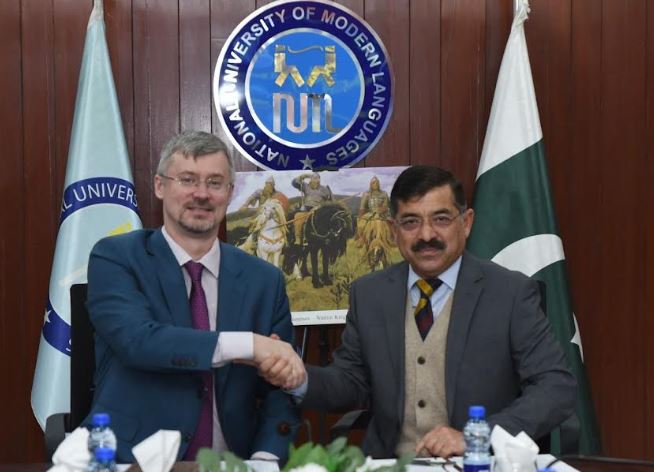
ISLAMABAD, DEC 15 /DNA/ – Russian Ambassador Albert Khorev visited the National University of Modern Languages (NUML) today and called on Rector NUML, Maj Gen (R) Shahid Mahmood Kayani, HI (M). The meeting marked a significant step toward strengthening long-term and short-term collaboration in Russian language education, academic exchange, and cultural promotion.

During the discussion, both sides explored an ambitious long-term vision to introduce the Russian language from early schooling up to Class XII. Under this initiative, qualified Russian teachers, supported by the Russian Federation, would teach in Pakistan to build strong linguistic foundations and deepen cultural understanding among students.

In the short term, the focus remained on enhancing Russian language education for students of Classes XI and XII. This initiative aims to prepare Pakistani students for higher education opportunities in Russia, including scholarships, academic placements, and smooth admission pathways.

The Rector emphasized NUML’s strong commitment to promoting the Russian language and culture, noting that with its extensive student body and specialized expertise in foreign languages, NUML is fully equipped to expand Russian language teaching, provided that qualified Russian instructors are made available. He added that students could complete undergraduate studies in Pakistan and later pursue advanced degrees in Russia, ensuring a secure and well-guided academic transition.

Following the meeting, both sides signed an Act of Acceptance of books and printed materials. This gesture reaffirmed the enduring partnership between the Russian Embassy and NUML, reflecting a shared commitment to cultural dialogue and academic cooperation between the Russian Federation and the Islamic Republic of Pakistan. Under the agreement, the Embassy formally transferred, and NUML accepted, a collection of books and printed resources.

Pakistan to host key ECO-CCI meetings in Karachi next January

Pakistan to host key ECO-CCI meetings in Karachi next January

KARACHI, DEC 15 /DNA/ – Atif Ikram Sheikh, President FPCCI; President ECO-CCI and VP CACCI, has apprised that The Federation of Pakistan Chambers of Commerce & Industry (FPCCI) has announced that it will host the 30th Executive Committee Meeting and the 20th General Assembly Meeting of the ECO Chamber of Commerce & Industry (ECO-CCI) on 22 January 2026 at the FPCCI Head Office in Karachi on the sidelines of 2nd Sustainable Tourism Forum (STF) to be jointly organized by FPCCI and Islamic Chamber of Commerce, Industry and Development (ICCD) during January 21-22.

Mr. Atif Ikram Sheikh stated that these ECO-CCI events carry immense strategic importance for the region – as they will help strengthen economic cooperation; expand intra-ECO trade; promote investments; foster business linkages and revitalize the institutional role of ECO-CCI as a key platform for vis-à-vis regional economic integration.

FPCCI Chief further disclosed that invitations have already been extended to all ECO Member Chambers – and, FPCCI expects participation from Presidents, senior officials, B2B delegations and sectorial experts from multiple ECO countries.

Mr. Atif Ikram Sheikh added that the Sustainable Tourism Forum will also provide a significant platform to highlight the tourism potential of ECO countries; enhance regional cooperation in aviation and hospitality sectors; promote investment opportunities in tourism sector of Pakistan and encourage collaborative initiatives for sustainable and responsible tourism development across the region.

FPCCI maintained that hosting these events in Karachi will further strengthen Pakistan’s leadership role in regional economic diplomacy; expand B2B connectivity and reinforce the country’s commitment to deeper economic and trade partnerships within the ECO framework.

Romanian Embassy to host Christmas Carols Concert in Islamabad

Romanian Embassy to host Christmas Carols Concert in Islamabad

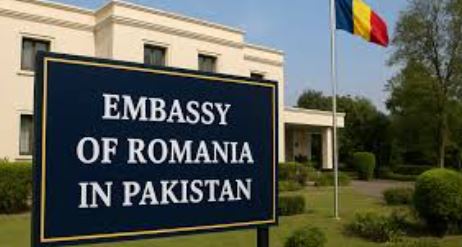
ISLAMABAD, DEC 15 /DNA/ – The Embassy of Romania has announced a special Christmas carols concert to celebrate the festive season, inviting guests and their spouses to an evening of music and celebration in the spirit of Christmas.

The concert will feature renowned Romanian soprano Georgiana Costea-Glugă, accompanied by pianist Sheeza Maqsood, who will present a festive programme of traditional Christmas carols. The event will be held at St. Thomas Church, Islamabad, and will showcase a selection of cherished Christmas melodies from Romania and around the world.

Guests will enjoy a rich and diverse repertoire, including popular Romanian carols such as “Moș Crăciun cu plete dalbe” and “O, ce veste minunată”, alongside internationally loved classics like “Silent Night”. The performance aims to create a warm and uplifting atmosphere, reflecting the true spirit of the holiday season and promoting cultural harmony.

The Embassy has emphasized that the invitation is strictly personal and valid only for invited guests and their spouses. For security reasons, entry will be granted exclusively to those who have received an official invitation and have confirmed their attendance in advance. Guests are required to RSVP by December 15.

The Embassy of Romania expressed its pleasure in hosting this special cultural event and looks forward to welcoming guests to an evening of music, celebration, and festive joy.

36 Gold, 29 Silver Medals Awarded at BU Convocation

36 Gold, 29 Silver Medals Awarded at BU Convocation

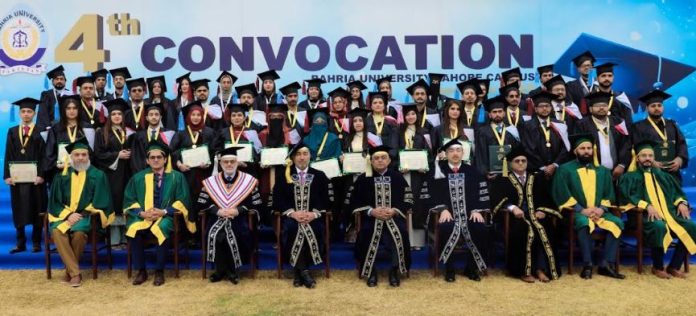
LAHORE, DEC 15 /DNA/ – Bahria University Lahore Campus held its 4th Convocation. Chief of the Naval Staff and Pro-Chancellor of Bahria University, Admiral Naveed Ashraf graced the occasion as Chief Guest and conferred degrees upon graduates.

Addressing the ceremony, Admiral Naveed Ashraf praised Bahria University’s dedication to academic excellence, innovation and character-building. He commended the graduates for their hard work, discipline and perseverance and congratulated their families.

A total of 564 graduates from the Departments of Computer Science, Management Sciences and Professional Psychology were awarded PhD, MS and BS degrees. In recognition of exceptional academic achievement, 36 gold medals and 29 silver medals were presented to high-performing students.

The ceremony was attended by graduating students, their proud families, senior officials, faculty members and distinguished guests from academia.

Winter health tips for children

Winter health tips for children

With the onset of winter, children’s health becomes a major concern for parents. The sudden drop in temperature, cold winds, and rapidly changing weather after summer often lead to colds, coughs, fever, and respiratory problems in children.

Young children, in particular, whose immune systems are still developing, are especially vulnerable to seasonal illnesses.

Health experts say that the most effective way to prevent winter illnesses is timely precautions and small adjustments in daily routines. By following a few basic measures, parents can keep their children safe from most seasonal ailments.

Warm clothing:

It is essential to keep a child’s head, chest, and feet covered during winter, as a significant amount of body heat is lost through the head. Woolen caps, socks, and light yet warm clothing are ideal choices. However, overly heavy clothing can make a child uncomfortable, causing sweating and potentially harming their health.

Avoid cold water and low-quality foods:

Bathing children with cold water or letting them wash their hands and face with it in winter can cause illnesses. Similarly, low-quality candies and chocolates can irritate the throat and chest. It is better to give children lukewarm water and simple homemade meals.

Pneumonia: A serious concern:

Doctors warn that pneumonia can be a dangerous illness in children. Rapid breathing, chest pulling inward, fever, and extreme weakness are its key symptoms. In such cases, it is crucial to seek professional medical help immediately instead of relying on home remedies. Vaccination against pneumonia is also highly important.

Fever care:
Giving antibiotics to a child with fever without medical advice can be harmful. During fever, dress children in light clothing, check their temperature regularly, and include nourishing foods like broth or soup in their diet. Consult a doctor if the fever persists.

Home remedies for colds, flu, and coughs:
Mild winter illnesses like colds and sore throat can often be managed with traditional remedies:

Ginger and honey tea
Warm milk with dates or dried apricots
Tea made with dry ginger and jaggery
Fresh carrot or seasonal fruit juice
These remedies help boost immunity and relieve mild symptoms.

Massage and sunlight:
A gentle massage with mustard or olive oil followed by a few minutes in the sun can provide warmth to the body and help prevent colds.

Digestive health:
Experts note a strong link between respiratory illnesses and constipation. Maintaining proper digestion is essential. Light use of raisins, dried figs, or psyllium (ispaghol) can be beneficial.

Caring for children during winter may be challenging but is far from impossible. With proper attention, warm clothing, nutritious food, and time-tested home remedies, parents can protect their children from seasonal illnesses. Remember, prevention is always better than cure.

IMF assured of Rs5 carbon levy on petrol, diesel

IMF assured of Rs5 carbon levy on petrol, diesel

ISLAMABAD, DEC 15 – Pakistan has formally assured the International Monetary Fund (IMF) that it will implement a comprehensive 13-point reform agenda under climate financing, linking development spending, energy use, and disaster preparedness to climate resilience.

According to official documents, Pakistan has committed to implementing a 13-point reform framework under the IMF’s $1.3 billion Resilience and Sustainability Facility (RSF) program. The reforms set clear targets to be achieved by 2027, focusing on climate resilience, energy efficiency, and financial stability.

The Ministry of Finance has confirmed that these measures will apply across the federation and provinces.

Disaster risk financing to be strengthened
Pakistan has assured the IMF that it will strengthen disaster risk financing mechanisms to better deal with natural disasters. Improved financial planning will be introduced at both federal and provincial levels to manage climate-related emergencies.

The goal is to reduce fiscal shocks caused by floods, droughts, and other climate-driven disasters.

Under the new framework, climate impact assessment will be mandatory for all major development projects. Any project costing more than Rs7.5 billion will require a formal climate impact review before approval.

This condition will apply to all future development initiatives to ensure climate resilience is built into public spending.

Climate costs in infrastructure projects
According to the document, at least 30% of total expenditure in infrastructure projects will be allocated to climate-related measures. This includes adaptation, mitigation, and resilience-building components.

The move aims to ensure infrastructure can withstand climate shocks while reducing long-term environmental risks.

The Finance Ministry has confirmed that a climate budgeting system will be implemented at both federal and provincial levels. A climate budget report will be issued every year to track spending and progress.

This system is designed to improve transparency and accountability in climate-related financial planning.

Carbon levy on fuel included in reforms
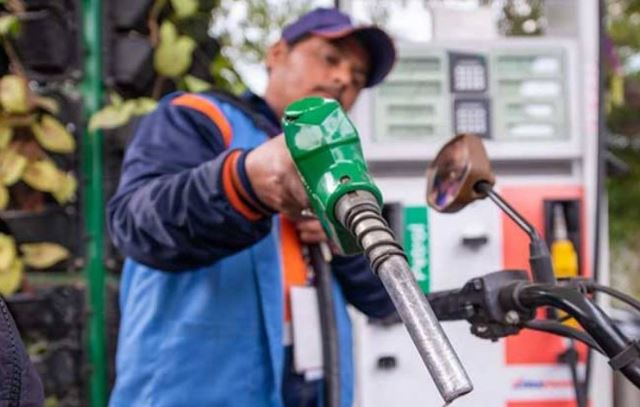
As part of the IMF conditions, Pakistan has agreed to impose an additional carbon levy of Rs5 per liter on petrol and diesel. The measure is intended to discourage fossil fuel use and generate revenue for climate initiatives.

The levy forms a key component of Pakistan’s climate financing strategy.

To promote clean transport, the government will provide subsidies for electric vehicles, according to the Ministry of Finance. Under the plan, 30% of new vehicles will be electric by 2030.

In addition, 50% of motorcycles are targeted to shift to electric by 2030, significantly reducing emissions from the transport sector.

Electricity subsidies to be restricted
Pakistan has assured the IMF that electricity subsidies will be limited to deserving consumers only. A decision has been taken to end electricity subsidies for wealthy consumers.

The government has also committed to reducing line losses and electricity theft, which continue to strain the power sector.

Energy labeling will be made mandatory for refrigerators, fans, LED lights, motors, and air conditioners. The sale of energy-efficient appliances will be actively promoted by June 2027, according to the Ministry of Finance.

These measures aim to lower energy consumption and reduce pressure on the national grid.

Water pricing, irrigation reforms planned
The government plans to collect service charges for effective water use in Sindh, Khyber Pakhtunkhwa, and Balochistan. Revenue from irrigation systems in provinces will be increased under the reform plan.

A new system for adjusting water rates will be introduced in Sindh and Punjab, improving sustainability and financial recovery in the water sector.

Under the agreement, a review of climate-related financial risks will be made mandatory for banks. Pakistan will also introduce green finance instruments and a green taxonomy to guide sustainable investments.

These steps aim to align the financial sector with climate resilience goals.

Stay Connected

64FansLike
60FollowersFollow

Latest Reviews

Exchange Rates

USD - United States Dollar
EUR
1.17
GBP
1.35
AUD
0.67
CAD
0.73