Home Blog Page 31

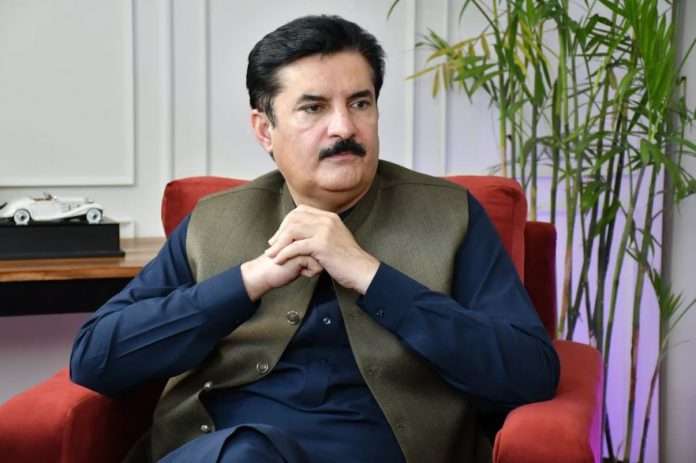
Governor Kundi reaffirms Pakistan’s unwavering support for Kashmiris

Governor Kundi reaffirms Pakistan’s unwavering support for Kashmiris

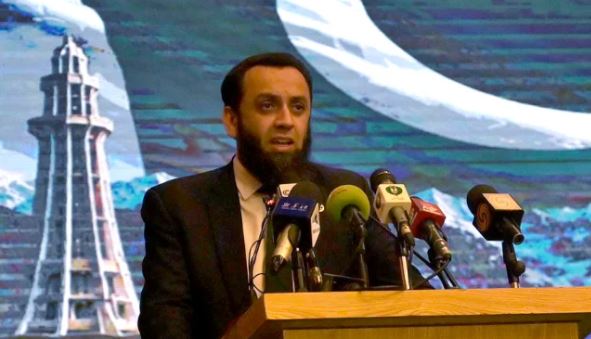
PESHAWAR, Jul 19: Governor Khyber Pakhtunkhwa Faisal Karim Kundi on Sunday reaffirmed Pakistan’s continued diplomatic, political and moral support for the people of Indian Illegally Occupied Jammu and Kashmir (IIOJK), saying their right to self-determination must be realized in accordance with the United Nations Security Council (UNSC) resolutions.

In a special message on the occasion of Accession to Pakistan Day (July 19), the Governor said July 19, 1947, was a historic and decisive day in the history of the subcontinent when the people of Kashmir adopted the historic resolution in favour of accession to Pakistan, expressing their commitment to Pakistan and their right to self-determination.

He said Accession to Pakistan Day reflected the enduring bond between the people of Kashmir and Pakistan, adding that Kashmir was Pakistan’s “jugular vein” and the Kashmiris’ struggle for self-determination was a recognized right under the UNSC resolutions.

Governor Kundi said a just and lasting solution to the Kashmir dispute was possible only in accordance with the UNSC resolutions and the aspirations of the Kashmiri people, which would also contribute to lasting peace and stability in South Asia.

He said Pakistan would continue extending diplomatic, political and moral support to the Kashmiri people at every level and would keep urging the international community to take notice of the serious human rights violations in Indian Illegally Occupied Jammu and Kashmir and play its role in ensuring the Kashmiris’ right to self-determination.

Paying tribute to the sacrifices, resilience and unwavering commitment of the Kashmiri people for freedom, the Governor said Pakistan would always stand shoulder to shoulder with its Kashmiri brothers and sisters in their just struggle.

Expressing confidence, Kundi said the day would come when the people of Kashmir would freely decide their future in line with the UNSC resolutions.

He said Accession to Pakistan Day renewed the nation’s pledge that Pakistan would never leave the Kashmiri people alone and would continue highlighting their just cause at national and international forums.

No airport evacuation ordered, Jordan says amid US alert

No airport evacuation ordered, Jordan says amid US alert

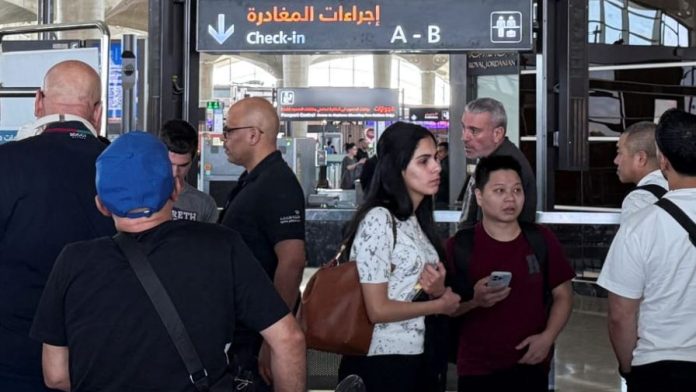
AQABAD, JUL 19: Jordanian authorities have not issued any decision to evacuate the airport or seaport in Aqaba on Sunday, the government’s spokesperson told Reuters, after the US embassy in Amman said they had been evacuated due to a credible threat.

“No potential threats have been recorded by the relevant Jordanian authorities in the past few hours,” government spokesperson Mohammad Al-Momani told Reuters in a written statement. “The airport and port are operating normally.”

Planes that belong to the Royal Jordanian Airlines and other companies are parked at the Queen Alia International Airport in Amman, Jordan February 23, 2020.
The US embassy had said earlier the airport and seaport were evacuated due to a “specific and credible threat,” without providing further details.

US embassy warns Americans from traveling to Jordan’s airport amid tensions with Iran
It advised Americans to refrain from traveling to either location and to continue to follow all security directives issued by Jordanian authorities.

The US military said on Saturday that two of its personnel were killed in Jordan and another was missing after an Iranian attack.

Over the last week, Jordan has repeatedly said that it has intercepted Iranian missiles flying over its territory.

Chairman Bilawal addresses election rally in Kotli, AJK

Chairman Bilawal addresses election rally in Kotli, AJK

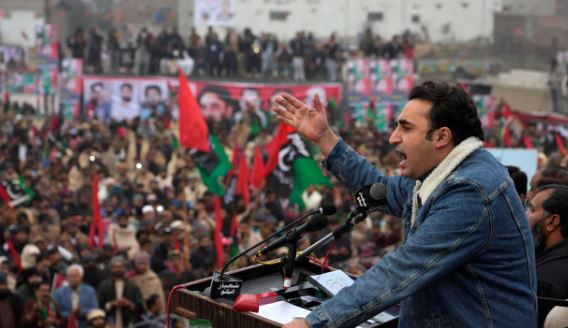
Sikandar Hayat Stadium, Kotli, JUL 19: /DNA/ – Chairman Pakistan Peoples Party Bilawal Bhutto Zardari, addressing a massive election rally in Kotli, Azad Jammu and Kashmir, said that Kotli feels like home to him. The PPP candidates contesting the elections are not merely party workers, but members of the PPP family. Chairman Bilawal said that today, Chaudhary Yasin’s fourth generation addressed the rally, adding that he still remembered Chaudhary Yasin standing by the party during their years in exile. He described Chaudhary Yasin as a symbol of loyalty in Kotli, saying that the bond between the PPP and the people of Kotli had been forged over generations and would endure for generations to come.

Chairman PPP said that the PPP remains the most popular political force in the election. So many aspirants wished to contest on the PPP ticket that the party had more deserving candidates than available seats. He said the leadership had to choose between rewarding long-standing loyalists and accommodating new entrants. “When the party was considering candidates, I instructed the leadership to prioritise our loyal workers,” Chairman Bilawal said. Recalling the selection process for LA-13, he said it was not a difficult decision to choose between a new entrant and the son of Matloob Inqalabi. Matloob Inqalabi had dedicated his life to the PPP, and today his son is carrying forward that legacy on the party’s ticket. Chairman Bilawal said that he has fulfilled his responsibility by awarding the ticket, and it is now the responsibility of the people to ensure his victory.

Recalling the previous elections, Chairman PPP said that the PPP had contested under far more challenging circumstances, when PML-N governed Kashmir and PTI was in power in the centre. Despite those obstacles, the people of Kashmir placed their trust in the PPP. Today, the circumstances are different. The PPP has been governing Kashmir for the past six months, while PML-N is in the federal government. Therefore, the challenges are no longer the same.

Addressing the rally, Chairman Bilawal declared that he wanted every seat in Kotli. He said the rivals knew Javed Badhanvi was heading towards victory and retaliated by registering an FIR against him. They want to portray the people of Kashmir as terrorists, but they will never succeed in intimidating PPP workers, he said. They have forgotten that this is the party whose leader embraced the gallows rather than bow before dictatorship. The people of LA-9 will elect Jawed Badhanvi with a resounding mandate, he added, warning that those responsible for harassing PPP workers would be held accountable.

Addressing the jiyalas of LA-8, Chairman Bilawal expressed confidence that Malik Zafar would emerge victorious, while Chaudhary Akhlaq too must secure a landslide mandate from LA-11. He said the remaining two seats rested with Chaudhary Yasin, who had previously won both under extraordinarily difficult circumstances, even while his son was arrested. Those who once sought to imprison them are now facing imprisonment themselves, he said. This time, he said, Chaudhary Yasin must emerge victorious with an even larger majority.

Chairman Bilawal said that the manifesto he has brought before the people has already been endorsed by the people of Gilgit-Baltistan. He said that he has now come to Kashmir with the same three fundamental principles, the right to rule, the right to ownership, and the right to employment. He said the struggle for Kashmir’s right to rule had been helmed internationally by Quaid-e-Awam Shaheed Zulfikar Ali Bhutto, carried forward by Shaheed Mohtarma Benazir Bhutto, and later by himself as Pakistan’s youngest ever foreign minister on a global level and even on Indian soil. Chairman Bilawal said the third generation of the PPP stands ready to continue Shaheed Mohtarma Benazir Bhutto’s mission, following her pledge that “we will spill blood where the sweat of Kashmiris has spilled.”

Chairman PPP said that Quaid-e-Awam had always maintained that only the people of Kashmir could determine Kashmir’s future. He said the younger generation seeks change and demands greater constitutional and political rights. Shaheed Mohtarma Benazir Bhutto secured Observer Status for AJK in the OIC, he noted, expressing that his vision is to secure a similar status for Kashmir within Pakistan itself. He said the PPP seeks observer representation for Kashmir in key national institutions, including the CCI, NFC and the National Assembly. Chairman Bilawal said that he envisions a day when representatives of Kashmir would sit alongside the MNA from Larkano. Chairman Bilawal added that in future elections Chaudhary Yasin could contest as an interim MNA, enabling Kashmir’s own representatives to directly raise the voice of the Kashmiri people in Parliament.

Chairman PPP said that Kashmir’s mountains, rivers, and natural resources belong to the people of Kashmir. Just as the PPP has pledged to protect the resources of GB, it would make the same commitment to the people of Kashmir. He said that whenever employment has been created in Pakistan, it has been under the PPP. Quaid-e-Awam Shaheed Zulfikar Ali Bhutto created opportunities for Pakistanis not only at home but also across Europe and the Gulf. Even today, Pakistan’s economy benefits from remittances sent by overseas Pakistanis whose opportunities were created during his tenure. He said that Shaheed Mohtarma Benazir Bhutto also became synonymous with employment generation, so much so that the slogan, “Benazir Aaye Gi, Rozgaar Laaye Gi,” became part of everyday political discourse.

Chairman Bilawal said that every Pakistani is deeply concerned about the prevailing situation in Kashmir. He said he personally understands the pain of loss, having lost Quaid-e-Awam Shaheed Zulfikar Ali Bhutto, both his maternal uncles, and his mother. That is why, he said, he empathises equally with the families of martyred soldiers and police officers, as well as with the families of young people who have not returned from the protests. Human life, he stressed, is above any legislative dispute. Just as the PPP believes Sindh should decide for Karachi and Balochistan should decide for itself, it believes that only Kashmir can decide its own future.

Chairman Bilawal said that when he visited Muzaffarabad, the Action Committee wrote to him, and he responded the very next day. He said he also presented the same proposal to PM Shehbaz Sharif. The proposal calls for the establishment of a Truth and Reconciliation Commission to independently investigate the matter and present its findings. Until then, the protestors would suspend their activities while the State would halt its actions. Such an arrangement, he said, would create space for dialogue and progress. However, neither the protestors nor the PM’s representative have responded. If they do not agree to this proposal, they should present an alternative, he said, stressing that Kashmir has remained shut for days. Addressing the protestors directly, Chairman Bilawal said that ordinary Kashmiris are paying the price for a dispute with the State. He urged the federal government to immediately restore internet services, saying that collective punishment of innocent citizens and damage to their livelihoods was unacceptable.

Chairman PPP said that the people of Kashmir are courageous, loyal, and patriotic, and that all their grievances deserve to be addressed. Referring to the upcoming election on 27 July, he said it is now for the people to decide whether they wish to be represented by the PPP or by those who do not even consider Rawalakot and Mirpur to be part of Kashmir. He noted that the federal government has still not clarified whether the remarks made by its representative from Sialkot reflect official policy. If any minister believes that certain parts of Kashmir can simply be discarded, or that the seats of Kashmir are in their “pocket”, they should remember that the future of Kashmir rests only with the Kashmiri people.

On polling day, Chairman PPP said that the rain of arrows would hunt down the lion, and history would remember every corner of Kashmir echoing with the slogan of the Pakistan Peoples Party.

Iran missile towards Jordan’s Aqaba intercepted

Iran missile towards Jordan’s Aqaba intercepted

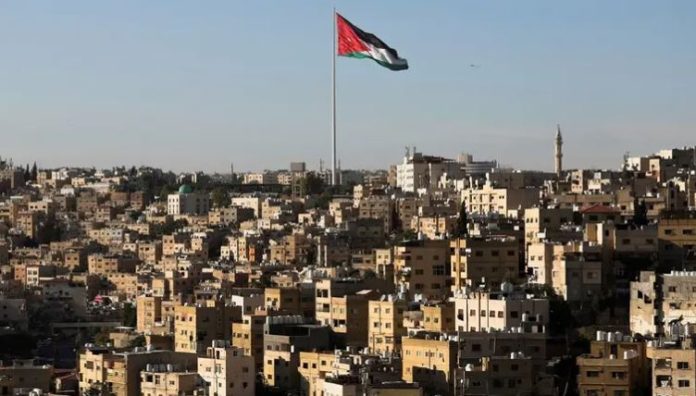
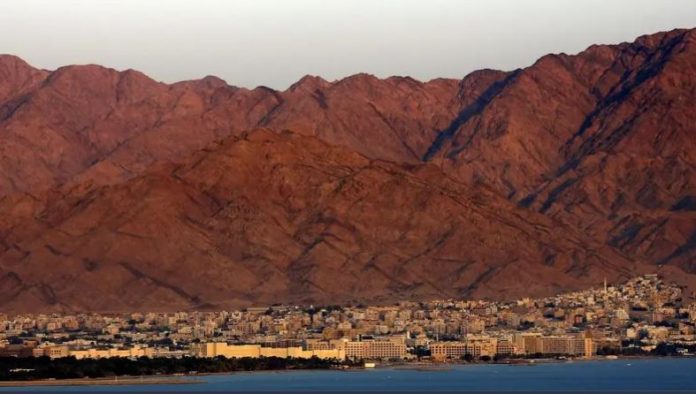
AQABA, JUL 19: Israeli and Jordanian forces intercepted an Iranian missile aimed at the Jordanian city of Aqaba on Sunday, the Israeli military said, after Amman denied the city’s airport and seaport were evacuated over a threat.

When asked by AFP about reports of explosions near the Israeli city of Eilat, an Israeli military spokeswoman said both Israeli and Jordanian forces had intercepted a projectile.

Minutes before the interception, the Israeli military said it had detected missiles launched from Iran towards Aqaba and warned of the possibility of “spillover” into Israeli territory.

The Jordanian military meanwhile said it had downed “three Iranian missiles that targeted the kingdom’s territory,” while a fourth fell in a deserted area, without specifying where.

Air raid sirens were also activated in the Jordanian capital, Amman, and other parts of the kingdom.

However, the Jordanian government had earlier denied reports that authorities ordered the evacuation of Aqaba’s airport and seaport, after the US embassy said they had been evacuated over a “credible threat.”

Jordanian government spokesman Mohammad al-Momani told AFP that “authorities have not issued any decisions to evacuate Aqaba Airport or the seaport, and both are operating normally,” adding that no “potential threats” had been detected.

His comments came after the US embassy in Amman said Jordanian authorities had evacuated the airport and the seaport in Aqaba, citing an unspecified threat.

Al-Momani rejected the claim, saying “the relevant Jordanian authorities did not monitor any possible threats over the past hours.”

The US embassy statement came after the US military announced that two service members were killed in Jordan and one went missing following a barrage of Iranian strikes on Friday.

It marked the first fatalities among its forces since fighting with Iran resumed this month.

Jordan has repeatedly announced that it has countered Iranian attacks in recent days.

Canadian Foreign Minister set to arrive in Pakistan Jul 20

Canadian Foreign Minister set to arrive in Pakistan Jul 20

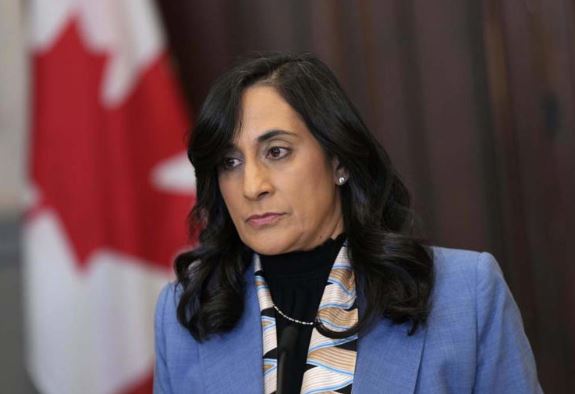
ISLAMABAD, JUL 19 /DNA/ – The Canadian Minister of Foreign Affairs, Anita Anand, is set to arrive in Pakistan on 20 July 2026 for her first official visit to the country since taking office.

The visit is taking place at the invitation of Pakistan’s Deputy Prime Minister and Foreign Minister, Senator Mohammad Ishaq Dar. During her stay in Islamabad, Minister Anand will hold bilateral talks with Foreign Minister Dar, with discussions expected to cover the full scope of Pakistan-Canada relations.

The two sides will focus on enhancing cooperation in trade and investment, education, and people-to-people exchanges, while also exchanging views on regional and global developments of mutual interest.

In addition to the delegation-level talks, Minister Anand will call on Pakistan’s top leadership. The visit highlights the cordial bilateral relations between Pakistan and Canada, which are rooted in close people-to-people ties and further strengthened by the vibrant Pakistani diaspora in Canada.

Both countries share a commitment to expanding mutual cooperation, and this visit is seen as an important step in that direction. The official engagement will take place on 20 July 2026 in Islamabad.

Magnitude-4 earthquake jolts Quetta, Ziarat and surrounding areas

Magnitude-4 earthquake jolts Quetta, Ziarat and surrounding areas

QUETTA: A 4-magnitude earthquake jolted Quetta, Ziarat and surrounding areas of Balochistan on Saturday, the National Seismic Monitoring Centre (NSMC) said.

The NSMC, operating under the Pakistan Meteorological Department (PMD), said the earthquake’s epicentre was located 37 kilometres northeast of Quetta.

The quake measured magnitude 4 and occurred at a depth of 15 kilometres, the seismological centre added.

No casualties or damage were reported immediately after the earthquake.

Last month, a 5.4-magnitude earthquake shook large parts of Khyber Pakhtunkhwa, Islamabad, Rawalpindi and Punjab.

The seismological centre had said the quake originated in Afghanistan’s Hindu Kush mountain range at a depth of 215 kilometres.

The tremors were felt across several districts of Khyber Pakhtunkhwa, including Peshawar, Swat, Buner, Hangu, Shangla, Kohat, Mohmand, Charsadda, Swabi, Mansehra and Abbottabad, as well as parts of Punjab, Islamabad and Rawalpindi. No casualties were reported.

Pakistan is prone to earthquakes due to its location along the boundary of the Indian and Eurasian tectonic plates, where seismic activity is frequent. The country has experienced multiple devastating quakes in recent decades.

Man held for aerial firing near Minister Attaullah Tarar’s vehicle

Man held for aerial firing near Minister Attaullah Tarar's vehicle

LAHORE: Police have arrested a young man accused of aerial firing near Information Minister Attaullah Tarar’s vehicle in Lahore’s Defence area after tracking him down using Safe City surveillance and modern technology.

According to police, the suspect overtook the minister’s vehicle and fired five shots into the air before fleeing.

He was later arrested along with the weapon allegedly used in the incident, while his vehicle was also taken into custody. Police said the incident occurred in Defence-A on Friday night.

Speaking about the incident, Tarar said he was travelling with his family when a car passed his vehicle from the left and the young man fired five shots. He said they followed the vehicle and alerted police at a checkpoint.

The information minister clarified that the suspect did not target him directly and had only resorted to aerial firing. He added that police were taking legal action over the incident.

The incident comes two days after Azad Jammu and Kashmir Deputy Inspector General (DIG) Raja Akmal said that authorities received reports of firing on the convoy of former AJK prime minister Sardar Tanveer Ilyas.

In a statement on Friday, the police officer said that further investigations were underway and action would be taken against those responsible for the firing.

Ilyas’ spokesperson said in a Facebook post that the firing took place in the Tain-Dhalkot area, where Ilyas’ guard, Muhammad Asif, was killed, while several others travelling in the convoy sustained injuries.

This incident came ahead of the July 27 elections for the region’s 53-member Legislative Assembly.

Pak, Egypt mull naval cooperation

Pak, Egypt mull naval cooperation

DNA

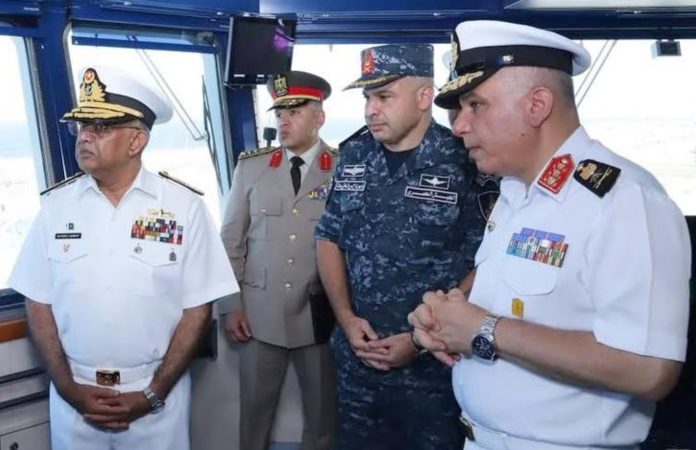
CAIRO – JUL 19: Vice Admiral Mahmoud Adel Fawzy, Commander of the Egyptian Naval Forces, met with Admiral Naveed Ashraf, Chief of the Naval Staff of Pakistan, and his accompanying delegation during an official visit to the Egyptian Naval Forces Command in Alexandria.

The two commanders held talks on a range of issues of mutual interest, focusing on military cooperation and the exchange of expertise between the naval forces of the two countries.

Fawzy underscored the importance of strengthening coordination to enhance the operational capabilities of the Egyptian and Pakistani navies and advance their shared interests.

For his part, Ashraf highlighted the longstanding partnership and close cooperation between the naval forces of Egypt and Pakistan.

The two commanders also toured the Alexandria Shipyard, where the Pakistani delegation was briefed on the shipyard’s capabilities and expertise in the construction of naval vessels.

The visit included inspections of several newly commissioned Egyptian naval vessels to review their operational capabilities and advanced weapons systems. The delegation also visited the Naval Academy, where they were briefed on the institution’s education and training programs, which are based on modern military training standards.

The visit comes as Pakistan has been expanding defense cooperation with several regional countries. Reuters reported on Friday that Pakistan is in talks with Kuwait to broaden defense ties.

Timing is everything: decoding JUI chief’s political ignition

Timing is everything: decoding JUI chief’s political ignition

Opinion

Ansar Mahmood Bhatti

In Pakistani politics, nothing happens in isolation, and religious parties rarely step into the fray without a calculated reason or unseen backing. The recent activation of Jamiat Ulema-e-Islam (JUI-F) chief Maulana Fazl-ur-Rehman, particularly his controversial remarks against the Establishment in Kasur in mid-July 2026 that triggered widespread backlash and counter-campaigns, cannot be viewed as a spontaneous outburst.

 Parallel to this, veteran lawyer Ali Ahmed Kurd has been positioned to lead a fresh nationwide lawyers’ movement against the 26th and 27th Constitutional Amendments. On the surface, these developments appear disjointed—one a religious leader’s fiery speech on security and martyrdom, the other a legal fraternity’s push for judicial independence and proper judge transfers.

Yet, a closer examination reveals deeper currents at play. Maulana Fazl-ur-Rehman has not acted alone or without motive; his timing suggests a confluence of internal power dynamics, political calculations, and personal desperation. Religious parties in Pakistan, especially JUI-F, have historically punched above their electoral weight through strategic alliances and street power. They seldom ignite protests or controversies without sensing an opportunity or receiving signals from influential quarters. Maulana Fazl-ur-Rehman’s sudden focus on issues touching the establishment by questioning why soldiers’ sacrifices receive disproportionate attention while framing them within salaried service has predictably drawn accusations of insensitivity.

Supporters have countered with hashtags defending him as a voice against alleged institutional overreach. This is no coincidence. Three interconnected reasons explain his activation precisely now. First, there appears to be an internal power struggle among the powers that be. Pakistan’s political landscape has always been shaped by competing factions within the broader establishment. When one faction seeks to check another or recalibrate influence ahead of key decisions, proxies whether political parties or pressure groups are often activated.

 Maulana’s remarks and the ensuing polarisation serve as a convenient flashpoint. By drawing attention to security narratives and institutional roles, he indirectly amplifies fault lines that certain elements may wish to exploit. History shows such moments of engineered tension often precede shifts in the balance of power.

Second, the political motivation is clear: to forestall any constitutional amendments that could curtail the powers of the elected political government. The lawyers’ movement, now gaining momentum under Ali Ahmed Kurd’s leadership, is officially framed around the supremacy of the Constitution, rule of law, and resistance to amendments perceived as tilting the balance away from parliamentary supremacy.

In reality, behind-the-scenes calculations suggest a broader effort to block changes that might further empower non-political institutions at the expense of the civilian government. Maulana Fazl-ur-Rehman, with his experience in coalition politics, understands that once such amendments are entrenched, reversing them becomes nearly impossible.

By igniting debate and mobilising religious and street support, he aims to create a climate where further legislative moves in that direction become politically costly.

Third, and perhaps most compelling, is Maulana Fazl-ur-Rehman’s personal and political cornering. For years, JUI-F enjoyed leverage through participation in governments or strategic alliances. This is reportedly the first extended period he has found himself largely outside the corridors of power. Desperate to reclaim relevance and a share in the political pie, he knows that direct confrontation with the civilian government yields limited results.

Targeting the establishment, however, is a proven tactic only the establishment holds the keys to concessions, alliances, or even engineered political comebacks in Pakistan’s hybrid system. By positioning himself as a critic of institutional dominance while defending constitutionalism, he seeks to extract maximum political mileage. Cornered leaders often become the most vocal; history is replete with examples where out-of-power politicians suddenly rediscover their “principled” voice. The lawyers’ movement adds another layer to this unfolding drama. On the face of it, the campaign led by the 78-year-old Ali Ahmed Kurd demands an independent judiciary, transparent transfer and posting of judges, and opposition to the recent constitutional amendments. This echoes the historic 2007-2009 Lawyers’ Movement that ultimately forced General Pervez Musharraf to resign. Analysts at the time widely believed that while lawyers provided the public face and moral momentum, certain sections within the establishment itself had grown weary of Musharraf and quietly facilitated his exit.

 The current movement, though presented as purely legalistic, may carry similar undertones. Behind the rhetoric of rule of law lie motives that could serve larger political realignments. If the lawyers’ agitation gains street traction especially with planned gatherings in Khyber Pakhtunkhwa and even overseas it could create the kind of pressure that forces concessions or accelerates political instability.

Pakistan’s political history demonstrates that no government enjoys a natural lifespan beyond two to three years without facing serious turbulence. The current administration under Prime Minister Shehbaz Sharif, now in its third year since the 2024 elections, is already confronting mounting criticism. Detractors argue that despite some macroeconomic stabilisation through IMF programmes, the government has fallen short on the economic front persistent structural weaknesses, high debt burdens, and sluggish growth continue to haunt ordinary citizens.

 On the international front, diplomatic manoeuvring has yielded mixed results amid regional complexities. Meaningful reforms in taxation, energy, governance, and public sector enterprises remain largely on paper, while allegations of corruption and elite capture persist. These failures provide fertile ground for opposition forces to mobilise. In the coming months, the government is likely to face intensified challenges. A combination of economic discontent, judicial activism, and religious-political agitation could test its resilience. Whether these developments are organic expressions of public frustration or carefully orchestrated signals remains debatable. What is certain is that Maulana Fazl-ur-Rehman’s ignition and the lawyers’ renewed activism are not random. They reflect the classic Pakistani pattern where power struggles, constitutional battles, and personal ambitions intersect at opportune moments.

As the political temperature rises, one thing remains constant: in Pakistan, the real game is often played behind the visible actors. The coming weeks will reveal whether these moves lead to meaningful course correction or simply another cycle of instability.

Airport and seaport in Jordan evacuated due to ‘credible threat,’ US embassy says

Airport and seaport in Jordan evacuated due to ‘credible threat,’ US embassy says

AQABA, JUL 19: The international airport and seaport in Aqaba in southern Jordan were evacuated because of a “specific and credible threat,” the US embassy said on X on Sunday.

For all the latest headlines, follow our Google News channel online or via the app.

“We strongly advise all Americans to refrain (from) traveling to either the airport or seaport. Continue to follow all Jordanian authorities’ security directives,” the embassy said, without providing further details.

Jordanian authorities have not yet released a statement on the matter and the Jordanian information minister did not respond immediately to a request for comment.

Stay Connected

64FansLike
60FollowersFollow

Latest Reviews

Exchange Rates

USD - United States Dollar
EUR
1.15
GBP
1.35
AUD
0.70
CAD
0.71