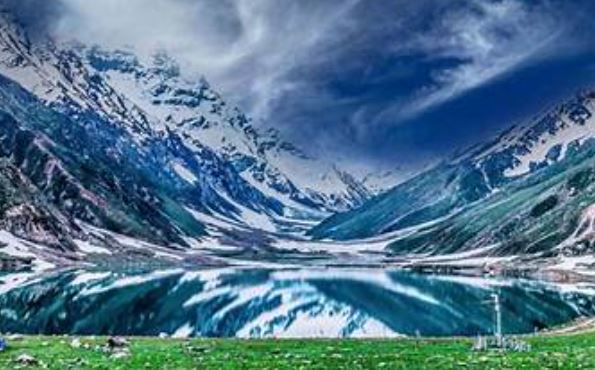
ISLAMABAD, Jan 10 (APP/DNA): With the ongoing winter season and intermittent snow spells, Swat’s Saifullah Lake and Neelum Valley in Azad Kashmir are emerging as major tourist attractions, where snow-covered mountains, lush forests and serene waters offer a perfect winter getaway.
A recent report aired by a leading news channel highlighted the growing influx of tourists to these regions, showcasing the breathtaking landscapes and snow-clad peaks.
Students visiting Saifullah Lake commented, “It is amazing to take a break from studies and enjoy the calm waters and snowy mountains. It is so refreshing.”
A group of youngsters in Neelum Valley said, “Exploring the snow-covered hills and dense forests with friends is pure adventure; every view is Instagram-worthy.”
Meanwhile, an elderly family group shared, “Traveling here together has been wonderful; the serene valleys and gentle streams make it a peaceful and memorable experience for all generations.”
Local authorities have also stepped up efforts to ensure visitor safety and preserve the natural beauty of these areas, including road maintenance, waste management and emergency services.
The combination of pristine landscapes, serene waters and snow-covered peaks makes Saifullah Lake and Neelum Valley a must-visit destination for winter travelers seeking adventure, relaxation and family enjoyment.
The ongoing snow spells have transformed the landscapes of Saifullah Lake and Neelum Valley into a winter wonderland, covering the trees, hills and valleys in a pristine blanket of white, reports further elaborated.
The snow-laden branches create stunning scenery, reflecting sunlight and giving the forests a magical, almost surreal appearance. Tourists have been marveling at this breathtaking beauty, capturing photographs of the glistening trees and serene surroundings, report added.
With the winter season in full swing, this has become the peak time for visitors, as travelers from across the country flock to experience the snow-covered mountains, lush forests and tranquil waters in all their winter glory, said a local resident while commenting.
Officials from the local tourism department highlighted the importance of preserving these natural sites while accommodating visitors.
Snow-covered mountains transform Saifullah Lake & Neelum Valley into tourist hotspots: report
Syrian army says swept Aleppo district after clashes with Kurdish fighters
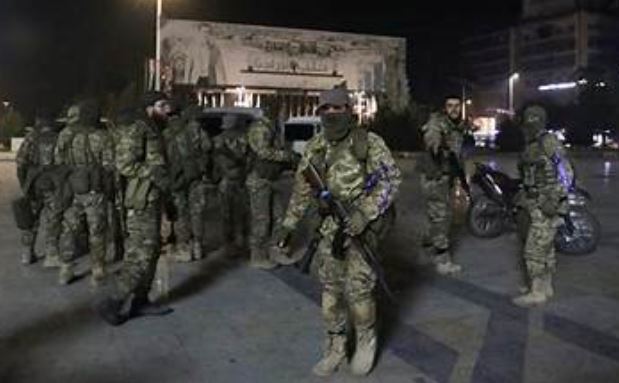
Aleppo, Jan 10: Syria’s army said it had completed a “security sweep” on Saturday of a neighbourhood in Aleppo where it clashed with Kurdish forces, though shelling could still be heard following calls for fighters to surrender themselves and their weapons.
Government forces began striking the Sheikh Maqsud district overnight after the Kurdish fighters defied a deadline to withdraw during a temporary ceasefire.
In the morning, the army announced the “completion of a full security sweep of the Sheikh Maqsud neighbourhood”, while urging residents to stay in their homes due to the continued presence of Kurdish forces.
AFP correspondents in Aleppo said shelling in the area continued even after the announcement.
A military source previously told the official SANA news agency that “a number of SDF members” — a reference to the Kurdish-led Syrian Democratic Forces — had been arrested during the operation.
In a statement posted by the Ministry of Defence, Syria’s army said “the only remaining option for the armed elements in the Sheikh Maqsud area of Aleppo is to surrender themselves and their weapons immediately”.
The violence in Syria’s second city erupted after efforts to integrate the Kurds’ de facto autonomous administration and military into the country’s new government stalled.
Since the start of the fighting on Tuesday, at least 21 civilians have been killed, according to figures from both sides, and tens of thousands have fled Aleppo.
The clashes, some of the most intense since Syria’s new Islamist authorities took power, present yet another challenge as the country struggles to reunify after ousting longtime ruler Bashar al-Assad in December 2024.
Both sides blamed the other for starting the violence in Aleppo.
Early Friday, Syrian authorities announced a window for the Kurdish fighters to leave, but they refused to “surrender” and vowed to defend their districts.
In response, Syria’s army warned it would renew strikes on military targets in Sheikh Maqsud and urged civilians to get out ahead of the district’s takeover by security forces.
An AFP correspondent saw residents laden with belongings fleeing before the two-hour humanitarian corridor closed.
– ‘Fierce’ resistance –
Kurdish forces reported coming under artillery and drone attacks, and claimed in a post on social media to be mounting a “fierce and ongoing resistance”.
The army said three soldiers had been killed by Kurdish fighters, while state television accused them of launching drones at residential areas of Aleppo.
A flight suspension at Aleppo airport was extended until late Saturday.
The SDF controls swathes of Syria’s oil-rich north and northeast, and was key to the defeat of the Islamic State group in 2019.
But Turkey — a close ally of Syria’s new leaders — views its main component as an extension of the Kurdistan Workers’ Party (PKK), which agreed last year to end its four-decade armed struggle against Ankara.
Elham Ahmad, a senior official in the Kurdish administration in Syria’s northeast, accused Syrian authorities of “choosing the path of war” by attacking Kurdish districts and of “seeking to put an end to the agreements that have been reached”.
“We are committed to them and we are seeking to implement them,” she told AFP.
FO issues travel advisory for Pakistani nationals regarding Iran
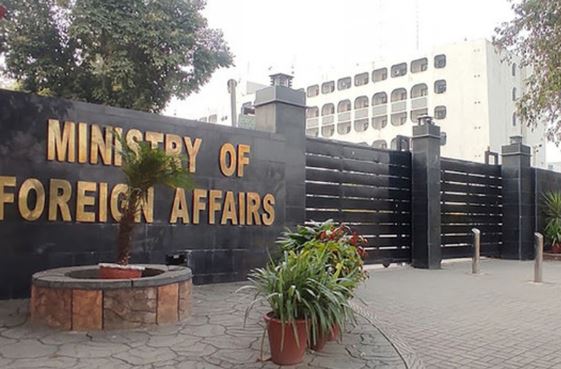
ISLAMABAD, Jan 10 (APP/DNA): For the safety and security, Pakistani nationals were advised to avoid all unnecessary travel to the Islamic Republic of Iran until conditions improve, the Foreign Office (FO) Spokesperson said in a press statement on Saturday. Pakistani nationals currently residing in Iran were urged to exercise extreme caution, remain vigilant, minimize non-essential travel, and stay in regular contact with the Pakistani Missions using the contact details provided below:
Embassy of Pakistan in Iran
Tehran
+98-21-66-9413-88/89/90/91 (landline)
+98-21-66-9448-88/90 (landline)
+98 910 764 8298 (mobile)
Zahidan:
+98 54 33 22 3389 (landline)
+989046145412 (mobile)
Mashhad:
+98 910 762 5302
+98 937 180 7175
FPCCI highlights potential in IT, agro-exports at consultative meet
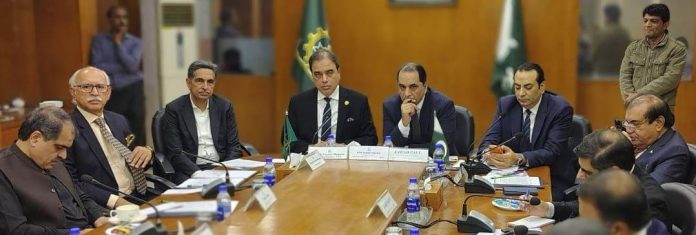
KARACHI, JAN 10 /DNA/ – Atif Ikram Sheikh, President of the Federation of Pakistan Chambers of Commerce and Industry (FPCCI), today hosted a high-level “Consultative Session with Stakeholders on Export Performance” at Federation House, Karachi, aimed at formulating strategies to boost Pakistan’s exports and strengthen the national economy.
The session was chaired by the Federal Secretary for Commerce, Mr. Jawad Paul, and attended by key government officials including Mr. Saif Anjum, Secretary Industries & Production, senior TDAP officials, and stakholder trade bodies.
In his welcome address, Mr. Atif Ikram Sheikh, President FPCCI, emphasized that export enhancement lies at the very heart of Pakistan’s economic stability and growth. He appreciated the Ministry of Commerce’s leadership in engaging with the private sector to address on-the-ground realities.
Mr. Atif Ikram Sheikh elaborated that FPCCI firmly believes that sustainable export growth can only be achieved through close coordination between policymakers and the business community. He highlighted that while Pakistan’s exporters are resilient and innovative, they currently face multiple challenges, including the high cost of doing business, energy constraints, access to finance, market diversification, and compliance with international standards.
FPCCI Chief also pointed out immense opportunities in value-added manufacturing, services exports, IT, and agro-based industries. He expressed confidence that the session would lead to strategies that strengthen foreign exchange reserves, create employment, and place Pakistan on a sustainable growth trajectory.
Mr. Saquib Fayyaz Magoon, SVP FPCCI, informed that the consultative session featured comprehensive representation from major private sector stakeholders; including, Textiles: Representatives from APTMA, APTPMA, PRGMEA, and TMA; Fruits and Vegetables: Representatives of the Pakistan Fruits & Vegetables Association (PFVA); * Travel and Tourism: Pakistan Association of Tour Operators (PATO) and Travel Agents Association of Pakistan (TAAP); and Transport and Logistics: Representatives of the Pakistan International Freight Forwarders Association (PIFFA).
The session concluded with remarks by the Chair, Mr. Jawad Paul, following detailed sector-wise discussions and recommendations – who agreed with the issues like the lack of regionally-comparative cost of energy and need for facilitative taxation measures to the exporters.
Mr. Saif Anjum, Secretary Industries & Production, highlighted that a vast export processing zone is being established and operationalized on the lands of Pakistan Steel Mills for expansion and facilitation of export-oriented industries – and, trade and industry should fully capitalize on the opportunities.
Navy live-fires LY-80N missile in major Arabian Sea exercise
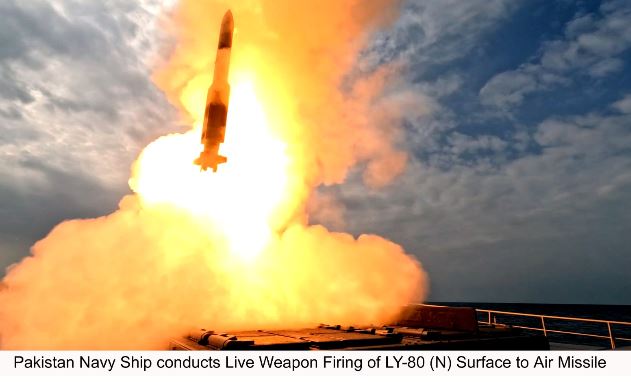
KARACHI, JAN 10 /DNA/ – Pakistan Navy demonstrated its operational readiness and combat preparedness through a comprehensive exercise in the North Arabian Sea, showcasing both conventional and unmanned capabilities, as per dictates of evolving naval warfare. The exercise included the successful live firing of LY-80(N) Surface to Air Missile (SAM) from Vertical Launching System at extended range, validating the long-range capabilities of Pakistan Navy’s modern air defence systems. LY-80(N) SAM successfully engaged and neutralized an aerial target, demonstrating Pakistan Navy’s robust air defence capabilities.

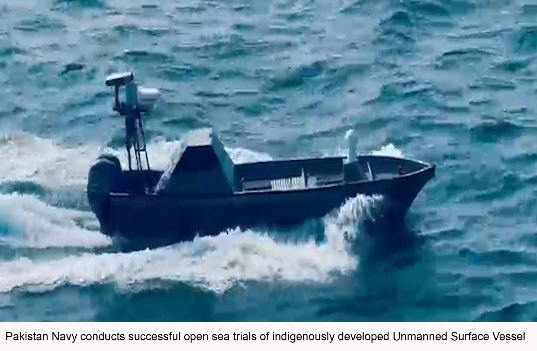
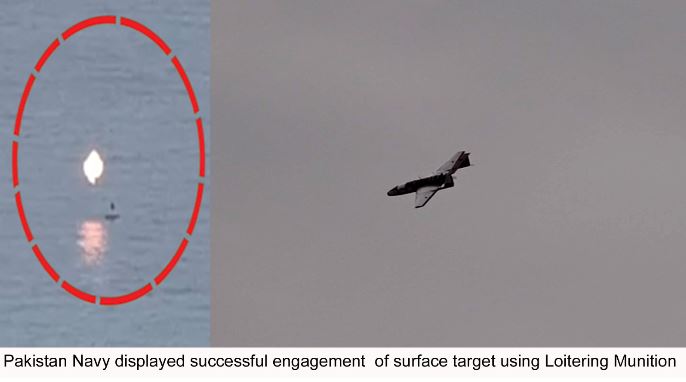
The exercise also featured the successful engagement of surface targets using Loitering Munition (LM), demonstrating Pakistan Navy’s precision strike capabilities. Loitering Munition (LM) successfully engaged and destroyed surface targets, showcasing its effectiveness in modern naval warfare. Successful open-sea trials of Unmanned Surface Vessel (USV) were also conducted, marking a significant leap in autonomous naval technology. The trials validated the platform’s ability to combine high-speed performance with mission-critical durability. Key capabilities demonstrated include extreme maneuverability, precision navigation and weather resilience. USV offers a low-risk, high-impact solution with the stealth of a tactical interceptor.
Commander Pakistan Fleet, Vice Admiral Abdul Munib, witnessed the exercise, which showcased Pakistan Navy’s ability to employ advanced systems.
Chief of the Naval Staff, Admiral Naveed Ashraf, commended officers and men of Pakistan Navy for their professionalism and operational competence. He reaffirmed Pakistan Navy’s resolve to ensure seaward defence of Pakistan and safeguard national maritime interests under all circumstances.
Punjab extends school winter holidays

LAHORE, JAN 10: In a major move aimed at safeguarding students’ health, the Punjab government has extended the winter holidays of educational institutions by one week following an overwhelming public response in favour of the move.
Punjab Education Minister Rana Sikandar Hayat announced that all educational institutions across the province will now reopen on January 19. He said the decision was taken after consulting the public through a survey conducted on his official social media page.
According to the education minister, the decision reflects public will, as a significant majority supported extending the holidays. He said about 87% of respondents voted in favour of reopening schools on January 19, while only 13% preferred reopening on January 12.
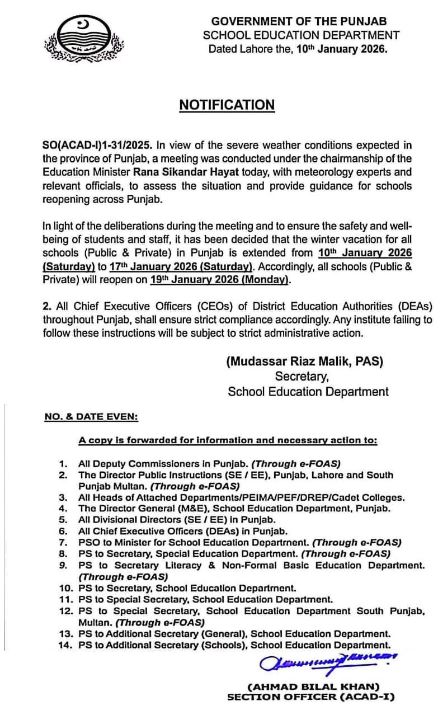
Later, taking to his X account, the minister shared that decision had been taken in view of “the prolonged winter spell & extremely low temperature next week”, on the advice of the PDMA.
Poll results shared
Rana Sikandar Hayat disclosed that a total of 154,178 votes were cast in favour of January 19 in the online poll. Meanwhile, 24,829 people voted for reopening educational institutions on January 12.
Also Read: Major update on winter holidays in Punjab – Minister clarifies
The education minister said the extension was approved keeping in view the severity of the ongoing weather conditions. He stressed that students’ health and well-being remained the top priority of the Punjab government.
Instructions issued for implementation
Rana Sikandar directed all chief executive officers (CEOs) of education departments to ensure strict implementation of the decision in their respective districts. He said uniform enforcement across Punjab is essential to avoid confusion among parents, teachers and students.
Calling it a “health-focused decision,” the minister said public consultation helped shape a policy that directly benefits students. He reiterated that the Punjab government will continue to take decisions that prioritise education quality alongside student safety.
Just a day ago, the minister had dismissed viral reports claiming an extension of school and college holidays. He confirmed that all educational institutions in the province will reopen on January 12 as planned.
Business community is backbone of economy: Chairman NAB
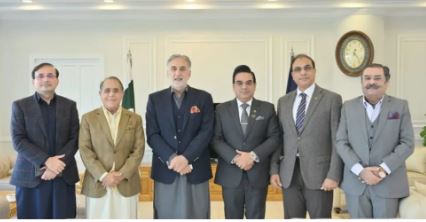
ISLAMABAD, JAN 10: /DNA/ – Chairman National Accountability Bureau (NAB) Lieutenant General (Retd) Nazir Ahmed has emphasized that the business community is the real engine of the country’s economy and assured that resolution of issues faced by traders and industrialists remains a high priority for the Bureau. He stated that NAB is fully committed to fostering a purely business-friendly environment that enables enterprises to grow and contribute effectively to national economic development.
He expressed these views while talking to President Islamabad Chamber of Commerce and Industry (ICCI) Sardar Tahir Mehmood, who along with Chairman ICCI Founder Group Sheikh Tariq Sadiq, Senior Vice President Tahir Ayub, and former Vice President Saif ur Rehman, paid a courtesy call on him at NAB Headquarters.
The Chairman NAB said that the Bureau is actively engaged in public awareness campaigns and close interaction with relevant institutions to promote a culture of accountability, transparency, and integrity across society. He underlined that NAB is pursuing a broader and forward-looking approach, placing equal emphasis on prevention, awareness, and the cultivation of strong ethical values, alongside enforcement.
Accepting the invitation of ICCI President, the Chairman NAB also pledged to visit the Islamabad Chamber of Commerce and Industry at the earliest to interact with the business community through a dedicated seminar, aimed at building mutual trust and understanding.
Speaking on the occasion, ICCI President Sardar Tahir Mehmood appreciated the Chairman NAB’s initiatives to promote transparent and fair accountability. He said that the Chairman’s visit to ICCI would motivate the business community, enhance confidence, and encourage entrepreneurs to play a proactive role in the economic prosperity of Islamabad and the country as a whole.
Chairman ICCI Founder Group Sheikh Tariq Sadiq and Senior Vice President Tahir Ayub also lauded the Chairman NAB for his commitment, professionalism, and dedication to strengthening accountability while supporting genuine business activity, terming it vital for sustainable economic growth and national progress.
Pakistan Navy conducts major combat drill in Arabian Sea
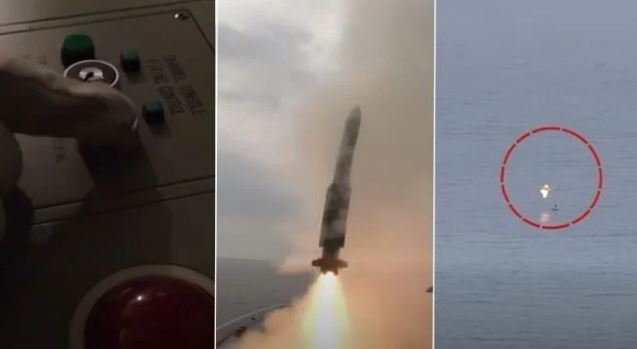
RAWALPINDI, JAN 10 /DNA/ – Pakistan Navy demonstrated its operational readiness and combat preparedness through a comprehensive exercise in the North Arabian Sea, showcasing both conventional and unmanned capabilities, as per dictates of evolving naval warfare. The exercise included the successful live firing of LY-80(N) Surface to Air Missile (SAM) from Vertical Launching System at extended range, validating the long-range capabilities of Pakistan Navy’s modern air defence systems. LY-80(N) SAM successfully engaged and neutralized an aerial target, demonstrating Pakistan Navy’s robust air defence capabilities.
The exercise also featured the successful engagement of surface targets using Loitering Munition (LM), demonstrating Pakistan Navy’s precision strike capabilities. Loitering Munition (LM) successfully engaged and destroyed surface targets, showcasing its effectiveness in modern naval warfare. Successful open-sea trials of Unmanned Surface Vessel (USV) were also conducted, marking a significant leap in autonomous naval technology. The trials validated the platform’s ability to combine high-speed performance with mission-critical durability. Key capabilities demonstrated include extreme maneuverability, precision navigation and weather resilience. USV offers a low-risk, high-impact solution with the stealth of a tactical interceptor.
Commander Pakistan Fleet witnessed the exercise, which showcased Pakistan Navy’s ability to employ advanced systems.
Admiral Naveed Ashraf, NI, NI (M), T Bt, Chief of the Naval Staff, commended officers and men of Pakistan Navy for their professionalism and operational competence. He reaffirmed Pakistan Navy’s resolve to ensure seaward defence of Pakistan and safeguard national maritime interests under all circumstances.
RAWALPINDI, JAN 10 /DNA/ – Pakistan Navy demonstrated its operational readiness and combat preparedness through a comprehensive exercise in the North Arabian Sea, showcasing both conventional and unmanned capabilities, as per dictates of evolving naval warfare. The exercise included the successful live firing of LY-80(N) Surface to Air Missile (SAM) from Vertical Launching System at extended range, validating the long-range capabilities of Pakistan Navy’s modern air defence systems. LY-80(N) SAM successfully engaged and neutralized an aerial target, demonstrating Pakistan Navy’s robust air defence capabilities.
The exercise also featured the successful engagement of surface targets using Loitering Munition (LM), demonstrating Pakistan Navy’s precision strike capabilities. Loitering Munition (LM) successfully engaged and destroyed surface targets, showcasing its effectiveness in modern naval warfare. Successful open-sea trials of Unmanned Surface Vessel (USV) were also conducted, marking a significant leap in autonomous naval technology. The trials validated the platform’s ability to combine high-speed performance with mission-critical durability. Key capabilities demonstrated include extreme maneuverability, precision navigation and weather resilience. USV offers a low-risk, high-impact solution with the stealth of a tactical interceptor.
Commander Pakistan Fleet witnessed the exercise, which showcased Pakistan Navy’s ability to employ advanced systems.
Admiral Naveed Ashraf, NI, NI (M), T Bt, Chief of the Naval Staff, commended officers and men of Pakistan Navy for their professionalism and operational competence. He reaffirmed Pakistan Navy’s resolve to ensure seaward defence of Pakistan and safeguard national maritime interests under all circumstances.
Saudi Ambassador to Pakistan Called on Federal Minister Dr. Musadik Malik
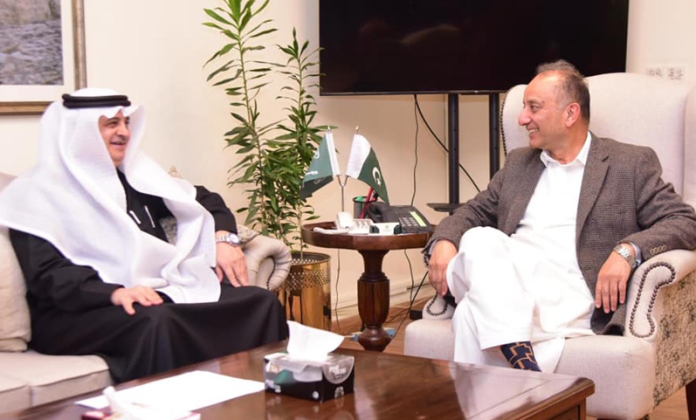
ISLAMABAD: JAN 9 /DNA/: His Excellency Nawaf bin Saeed Ahmad Al-Malkiy, Ambassador of the Kingdom of Saudi Arabia to Pakistan, called on the Federal Minister for Climate Change and Environmental Coordination, Dr. Musadik Malik, in Islamabad today. During the meeting, both sides held comprehensive discussions on avenues for enhanced mutual and strategic cooperation.
The Federal Minister highlighted Pakistan’s priorities in climate resilience and sustainable development, and emphasized the importance of international partnerships in addressing global environmental challenges. He appreciated Saudi Arabia’s continued support and engagement with Pakistan across multiple sectors.
The Saudi Ambassador reaffirmed the Kingdom’s commitment to further strengthening bilateral cooperation. Both sides reiterated the deep-rooted, brotherly relations between Pakistan and Saudi Arabia and expressed confidence that the longstanding partnership would continue to grow.
Trump’s War on the World Order: Burying the United Nations and NATO
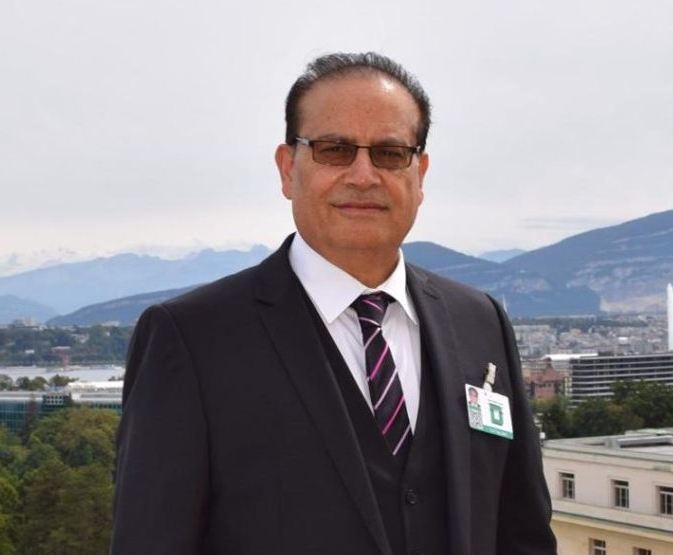
Qamar Bashir
In his first term, Donald Trump unsettled the international system but did not fully dismantle it. Bureaucratic inertia, judicial limits, and allied resistance acted as brakes. In his second term, those restraints have largely disappeared. What is unfolding now is not simply an assertive foreign policy, but a systematic effort to dismantle the post–World War II international order—an order built around the United Nations, collective security, multilateral problem-solving, and the idea that power must be tempered by rules.
That intent became unmistakable on January 7, 2026, when President Trump signed a Presidential Memorandum directing the United States to withdraw from 66 international organizations deemed no longer aligned with American interests. The order instructed all executive departments and agencies to cease participation in and funding for 35 non-UN bodies and 31 UN entities. This sweeping decision followed a government-wide review of every international organization, treaty, and convention in which the United States holds membership or provides financial support. The stated rationale was blunt: these institutions were judged to operate against U.S. national interests, sovereignty, economic prosperity, or security, or to function so inefficiently that American taxpayer dollars were “better allocated elsewhere.”
The administration framed the move as an act of reclamation—“restoring American sovereignty.” Officials argued that many of the targeted organizations promote what they describe as globalist governance, radical climate policies, and ideological agendas incompatible with U.S. priorities. Billions of dollars, they contended, had been spent on bodies that routinely criticize U.S. policy, dilute American influence through one-nation-one-vote structures, or fail to deliver measurable results. Withdrawal, in this view, was not isolationism but efficiency: cutting costs, ending constraints, and redirecting resources toward “America First” objectives.
This memorandum did not emerge in isolation. Immediately upon returning to office, President Trump renewed the U.S. withdrawal from the World Health Organization and the Paris Climate Agreement. On his first day, he also notified the Organization for Economic Co-operation and Development that its Global Tax Deal would have “no force or effect” in the United States, while ordering an investigation into whether foreign tax regimes unfairly target American companies. Weeks later, he signed an executive order withdrawing from the UN Human Rights Council and permanently prohibiting U.S. funding for the UN Relief and Works Agency for the Near East. The January 7 memorandum consolidated these actions into a single doctrine: disengage, defund, and dismantle multilateral constraints.
That institutional retreat has been paired with a dramatic expansion of hard power. The U.S. defense budget for 2026 stands at approximately US$901 billion, already the largest in the world by a wide margin. President Trump has now proposed raising military spending to US$1.5 trillion in 2027, citing “troubled and dangerous times.” This figure would exceed the combined defense spending of the next several major powers. By comparison, the entire European continent—including all NATO members except the United States—collectively spends roughly US$300–350 billion annually, lacks unified command, and depends heavily on U.S. strategic enablers. The gap underscores a shift from deterrence to dominance.
That dominance was displayed on January 3, 2026, when U.S. forces carried out a sudden military operation in Venezuela, capturing President Nicolás Maduro and transferring him to the United States to face federal drug-trafficking charges. U.S. naval and air assets surged in the Caribbean, while Venezuelan oil exports were effectively sealed off under intensified enforcement. Regardless of legal justifications, the geopolitical meaning was stark: a sitting head of state was removed by force. The precedent shattered long-standing norms of sovereignty and reinforced the administration’s belief that power, not process, is the ultimate arbiter.
From the Caribbean, the strategic focus turns northward—to the Arctic and Greenland. Greenland has moved to the center of U.S. attention because climate change is rapidly transforming the region. As Arctic ice melts, new sea routes are emerging that could shorten Asia–Europe shipping distances by up to 40 percent. Analysts estimate that a fully viable trans-Arctic corridor could eventually carry trade worth hundreds of billions of dollars annually, reducing reliance on chokepoints like the Suez Canal and reshaping global commerce.
Greenland also holds significant mineral potential. The island contains deposits of rare earth elements, zinc, iron ore, uranium, neodymium, dysprosium, cerium, gallium and other critical minerals essential for advanced electronics, defense systems, and energy technologies. The strategic value lies in future access combined with geography. Greenland sits astride the North Atlantic and Arctic approaches, offering proximity to Russia’s northern flank and growing Chinese polar interests.
Demographically and politically, Greenland is small but democratic. Its population of roughly 56,000, overwhelmingly Inuit, governs itself through an elected parliament under a system of extensive autonomy within the Kingdom of Denmark. What Greenland lacks is military capability. That asymmetry fuels the dangerous assumption that control could be asserted without resistance—a notion that sends shockwaves through Europe.
For European allies, particularly Denmark, this is a profound betrayal. Denmark was among NATO’s most committed contributors in Afghanistan, suffering one of the highest per-capita casualty rates. For decades, Europe accepted reduced military autonomy in exchange for American protection. Now, the prospect that territorial threat could originate from the alliance’s dominant power has forced a strategic reckoning. Only France and the United Kingdom retain full-spectrum capabilities, including nuclear deterrence. The rest are scrambling to rebuild defenses hollowed out by dependence.
This strikes at the heart of NATO. An alliance cannot survive when its strongest member behaves as a territorial revisionist. If the United States were to assert control over Greenland, NATO would not collapse under external attack; it would die of internal contradiction. In such a scenario, the strategic logic underpinning the war between Ukraine and Russia would also change. A hollowed-out NATO would no longer represent a coherent expansion threat to Russia, eroding the rationale that has sustained confrontation with Ukraine.
What emerges is a world in accelerated realignment. Europe is reconsidering dependence, Latin America braces for renewed interventionism, and Asia prepares for maritime and economic confrontation. With the United Nations weakened and multilateral forums abandoned, disputes that once might have been mediated now drift toward unilateral force.
These are perilous times. The January 7 withdrawal from 66 international organizations marks not a tactical adjustment, but a strategic severing from the architecture that once stabilized global politics. Power is being centralized, institutions dismantled, and restraint discarded. History suggests that such moments rarely end quietly. The choice before the world is stark: rebuild collective order—or prepare for an era in which power alone decides, and the world order is not merely weakened, but buried.
Qamar Bashir
Press Secretary to the President (Rtd)
Former Press Minister, Embassy of Pakistan to France
Former Press Attaché to Malaysia
Former MD, SRBC | Macomb, Michigan, USA
Trump’s War on the World Order: Burying the United Nations, NATO, and Multilateralism