
Home Blog Page 3080

Digital technology vital to promote education: AJK president

DNA

MUZAFFARABAD, Nov 14 – The Azad Jammu and Kashmir (AJK) President Sardar Masood Khan has said that the dream of development and prosperity of the liberated territory cannot materialize until and unless the education system in the state is restructured in accordance with modern technology.

“It is essential to making education being imparted to the new generation job market-oriented and the curriculum compatible to the emerging trends in the world,” the president said while addressing a function held here on Saturday to unveil a gigantic education program under the auspices of international education technology company “Coded Minds”.

He said that the use of digital technology has become inevitable to bring about a revolution in the education sector, while technologies like artificial intelligence, internet of things, robotics, blockchain and cloud computing are now in the hands of the youth.

The President, however, stressed the use of these new technologies for the promotion of education and other positive purposes. He maintained that the concept of public-private partnership is very charming, but it is easy to implement it.

Various surveys related to education reveal that Azad Kashmir with 88 per cent score is far ahead of remaining areas of Pakistan in terms of enrolment, registration, gender equality and learning but our educational infrastructure is weak and fragile, he added.

While appreciating the efforts of founder president of Coded Minds Omar Farooqui, the AJK president said that introduction of education technology in 14 countries by a son of Kashmir Omar Farooq and Amina Khaishgi is a matter of great pride for us, and now they want to work for the promotion of education in Azad Kashmir, and we would extend forthright cooperation to them in this regard.

Speaking on the occasion, founding President of Coded Minds and Chief Operating Officer of the company for South Asia Chapter Amina Khaishgi said that in order to turn Azad Kashmir into a valley of learning and knowledge, her company has decided to launch a program to impart education in accordance with the requirements of the 21st century with the support of modern technology.

We would introduce a system under which the students will not depend much on books and classroom lectures and they would rapidly learn through project-based activities, she said adding that 100 per cent literacy and re-enrolment of 24,000 schoolchildren in Azad Kashmir is the goal that we would achieve in next couple of years.

On this, the occasion, Vice-Chancellor AJK University, Prof Dr Kalim Abbasi said that socio-economic development is not possible without education. At present more than 6,000 educational institutions besides a university or a sub-campus of the university in all district are functioning in Azad Kashmir. However, he said that imparting training to 40,000 teachers is a big challenge for us which can be met with cooperation and assistance of the organizations like Coded Minds..

Prime brings together Aijaz Aslam and Zoya Nasir in New Short Film ‘Chambeli’

DNA

Islamabad –  With 2020 approaching its end, and the Coronavirus pandemic still on the rise, See Prime – the digital platform has kept the viewers entertained with the release of new content. Coming back with another thrilling short-film for its viewers that shows how this time might have taken a toll on all aspects of life – the platform has released a new short feature with Aijaz Aslam and Zoya Nasir in the lead.

The short film titled ‘Chambeli’ is an amalgamation of mystery, suspense, drama, and deceit. It depicts the life of a couple who in order to escape the boredom of COVID lockdown decide to go to a guest house for a weekend getaway. What follows is an exhilarating and horror filled stay at the ‘haunted’ guest house where the couple turns on each other to scare the partner with the story.

Penned by ShahidDoger, the short film has been co-produced by Mahib Bukhari and Ali Hussain. The short-film is directed by AwaisSulaiman and stars Aijaz Aslam and Zoya Nasir in the lead and Zohreh Amir and Tanvir Abbas in pivotal roles.

Talking about the latest release, the Executive Producer Seemeen Naveed said, “As the COVID pandemic struck everyone especially couples – we decided to show a story that will be quite relatable. Aijaz and Zoya have done a tremendous job in playing their characters with so much precision. “

Keeping the viewers preferences for content consumption, See Prime is streaming back to back original content and this latest release ‘Chambeli’ has been released on 13th November on See Prime’s YouTube Channel.

Afghanistan urged to look beyond settled issue of Durand Line to boost relations

DNA

ISLAMABAD, NOV 14 – The Afghan narrative on the Durand Line was crafted to lay claim on Pakistan’s Pashtun belt despite the fact that the treaty was willingly signed by Amir of Afghanistan Abdur Rahman Khan in 1893 and the border was duly demarcated under the supervision of Afghan and British officials.

Hence, the Durand Line is a settled matter and both Pakistan and Afghanistan need to look beyond the border issue to strengthen their mercurial bilateral relations.This was stated by experts of Pak-Afghan affairs at a roundtable conference titled ‘Pak-Afghan Relations and the Durand Line Issue’ organized by Institute of Policy Studies (IPS), Islamabad.The keynote speakers included well-known author Juma Khan Sufi, researcher and historian Dr Lutfur Rahman and Ambassador (r) Ayaz Wazir.

The roundtable was chaired by Khalid Rahman, Executive President IPS, and moderated by Brigadier (r) Said Nazir Mohmand.The speakers were of the view that the Afghan narrative on the Durand Line was built on a myth while Pakistan’s narrative was based on verifiable evidence and history of British India.Juma Khan Sufi debunked the claim of Afghan nationalists that Amir Abdur Rahman was under duress when he inked the treaty with British India.

The author questioned the authenticity of ‘Pata Khazana’, supposedly the oldest Pashto poetry book that was “discovered” in 1944, and believed the “discovery” of the book was meant to substantiate the ‘Pashtunistan’ narrative crafted by Abdul Haye Habibi and Gul Mohmand, Afghan literary figures, to fan Pashtun nationalism across the Pak-Afghan border. This helped Kabul to enjoy leverage in the former FATA and NWFP regions.He stated that the Durand Line issue was created to justify meddling in the internal matters of Pakistan by subsequent Afghan governments. The speaker believed the Peshawar valley, and not Kabul, has been the epicenter of Pashtun culture and history.

Dr Lutfur Rahman was of the view that the mutually signed Durand Line treaty is for perpetuity and had already established the border between Afghanistan and British India. Thus, it cannot be terminated unilaterally according to international laws. He opined that Amir Habibullah, who succeeded Amir Abdur Rahman, also endorsed in 1905 the treaty which demarcated the “sphere of influence” of the British Raj at that time.With the help of copies of the original maps that he claimed are rare to find in Pakistan, the historian underlined the fact that the whole Pak-Afghan border, excluding a 22-mile area, was demarcated by boundary commissions formed after the treaty was signed.Ayaz Wazir underscored the need for having amicable bilateral relations with Afghanistan as Pakistan has aided the Afghans time and again.

He deplored the volatile nature of Pak-Afghan relations and hoped both countries would take measures that could bridge the gulf of mistrust.Said Nazir said the time has come for Pakistan to distance itself from the yoke of Indo-Pak hyphenation and consider itself a part of Central Asia. He added that the ‘Pashtunistan’ slogan is outdated and must not be taken seriously.Concluding the session, Khalid Rahman stressed the importance of genuine and unbiased research in the ongoing war of narratives. He said countries need to look at history for a better understanding of issues and healthier future relations.In the end, the updated fourth edition of Juma Khan Sufi’s Faraib-e-Na-Tamaam, published by IPS Press, was presented to the key participants.

Girl child needs more focused parenthood for healthy social growth

ISLAMABAD, NOV 14 (DNA) – Devcom-Pakistan Executive Director Munir Ahmed said the parents in our society have proved to be very rigid towards their daughters. All the teachings of our religion and the awareness campaigns could not bring the change we required to prioritize the social, mental and physical growth of our daughters

Islamabad – The experts speaking at a webinar urged the parents to focus more on mental, social and physical healthy growth of their girls. Prioritizing girls in the family-life would make them equally mature, nurtured and responsible citizens. Physical protection is the major challenge facing the minor and teenage girls to avoid physical and sexual abuse.

Talking about the social taboos, they said the early marriages deprive the girls of their education, healthy physical and social growth. The teen mothers are more prone to weaker health, pregnancy complications and maternal deaths.

The webinar on the role of healthy and educated girls for a prosperous society was organized by the Development Communications Network (Devcom-Pakistan) and DTN on Saturday. The panelist included chairperson National Commission on the Rights of Children (NCRC) Afshan Tehseen Bajwa, Devcom-Pakistan Executive Director Munir Ahmed, former parliamentarian from Khyber Pakhtunkhwa Miraj Humayun, consultant with an Asian Development Bank (ADB) project Muniza Tarar, and educationist and social activist Meeran Malik.

The NCRC chairperson Afshan Tehseen Bajwa said girls are the children of a lesser god in our society despite our religion has given much more rights to them. We need to change our social behaviours towards our daughters. They need to have equal opportunities of education, health, food and nutrition and social protection.

Once it would be fully functional, she said the NCRC would play a pivotal role to ensure their physical protection of their rights according to the religion, national and international commitments. Despite no funds and facilities, we are still putting our efforts to highlight the crimes against children especially girls and consistently follow-up the cases of rape, physical abuse and other sort of victimization.

Devcom-Pakistan Executive Director Munir Ahmed said the parents in our society have proved to be very rigid towards their daughters. All the teachings of our religion and the awareness campaigns could not bring the change we required to prioritize the social, mental and physical growth of our daughters. Pakistan Demographic and Health Survey (2017-18) has revealed that 37 per cent of the girls were married by the age of 18 while 8 per cent got married when they were 15 years old. Around 70 percent of the girls lacked adequate nutrition. The pregnancy complications and maternal deaths were far less in the girls married at the age of 25-29.

Munir Ahmed said more girl-child focused parenthood and public funding would help improve the health and wellbeing indicators of the SDG-3, and quality education (SDG-4) and gender equality (SDG-5) and decent work and economic growth (SDG-8). Girls’ education is crosscutting to all the SDGs. Educating the girl child helps in the improvement of a good life, improved health as they bring an awareness of the importance of hygiene and health. Through education, they can lead a healthy lifestyle. The women that are educated can care for their children better.

Former parliamentarian from Khyber Pakhtunkhwa Miraj Humayun said the situation in KP was much embarrassing as the girls’ education, health and social growths deteriorated over the years. Population and poverty index both are rising in the province unchecked. Parents do not have sufficient resources to feed and educate their children despite knowing the benefits.

Consultant with an Asian Development Bank (ADB) project Muniza Tarar said all the researches show that Pakistan is a patriarchal society where men are the primary authority figures and women are subordinate. Gender is one of the organizing principles of Pakistani society where women lack social value and status because of negation of their roles as producers and providers in all social roles.

The educationist and social activist Meeran Malik said girls are more prone to health and social challenges in the rural areas where most of the population lives. The families have less resources and even meagre resources for their children. Girls come after the boys when it is to educate them and provide health and social protection. =DNA

=================

Arshad, Waqas help Kings restrict Sultans to 141

After scoring 20 off the last over, Multan Sultans have managed to set 142-run target for Karachi Kings. Huge wicket for Karachi Kings as set Ravi Bopara departs after scoring valuable 40 runs.

Multan Sultans: 111-7 (17.3 overs)

Wicket number six for Karachi as dangerous Shahid Afridi departs after scoring 12 off 12 balls.

Multan Sultans 101-6 (16.3 overs)


UPDATE: After 15 overs, Multan have managed to score 91 for the loss of five wickets.

How much do you think they will be able to score?

Establishment division decides slashing working staff after spike in COVID-19

ISLAMABAD, Nov 14 (DNA): Amid the second wave of coronavirus pandemic, the Establishment Division has decided for slashing its working staff up to 50 per cent and issued orders to half of the employees to work from home.

The division issued directives to the 50 per cent employees of its

subordinate offices for continuing work from home during the second wave

of COVID-19 and ordered the workforce to strictly follow the social

distancing steps by avoiding handshaking and hugging.

The usage of paper documents was banned and only electronic files will

be used for documentation purpose. In the case of using paper documents,

it will be sanitised first.

All sessions of the offices will be conducted through video link and

disinfectant spray will be conducted twice a day including all rooms and

furniture. Moreover, the division imposed a ban on the arrival of

visitors in its offices.

Earlier in the day, the statistics of the National Command and Operation

Centre (NCOC) has shown that 2,165 new cases of COVID-19 and 17 more

deaths were recorded across the country during the last 24 hours.

The tally of deaths reached up to 7,109 in Pakistan, whereas, the number

of active cases of COVID-19 reached up to 24,938.

On November 11, the National Command and Operation Centre (NCOC) had

discussed and recommended a ban on big public gatherings in the country

in view of soaring rate of COVID-19 positive cases in the second wave of

the disease.

A review meeting of the NCOC, chaired by federal minister Asad Umar, had

discussed spike in novel coronavirus positive cases and recommended ban

on large public gatherings in the country as a precautionary measure.

The NCOC session had also recommended tightening of precautionary

measures in the high risk areas. DNA

========

Karachi on top as Multan lose three in PSL 2020 qualifier

Dear o Dear. What have you done Zeeshan? Very careless shot from the youngster as Multan lost four wickets inside the first seven overs.

Multan Sultans 40-4 (6.3 overs)


WICKET: Another run out. What is happening here? Another big wicket for Karachi as dangerous Rilee Rossouw went back to the pavilion after scoring just five.

Multan Sultans 36-3 (5.4 overs)


WICKET: A very lucky break for the Kings as Sultans lost their captain Shan Masood who went back to the pavilion after scoring three off two balls.

Multan Sultans 23-2 (3.2 overs)


WICKET: Waqas Maqsood bags a big one as Lyth walks back to the pavilion after scoring nine off seven balls.

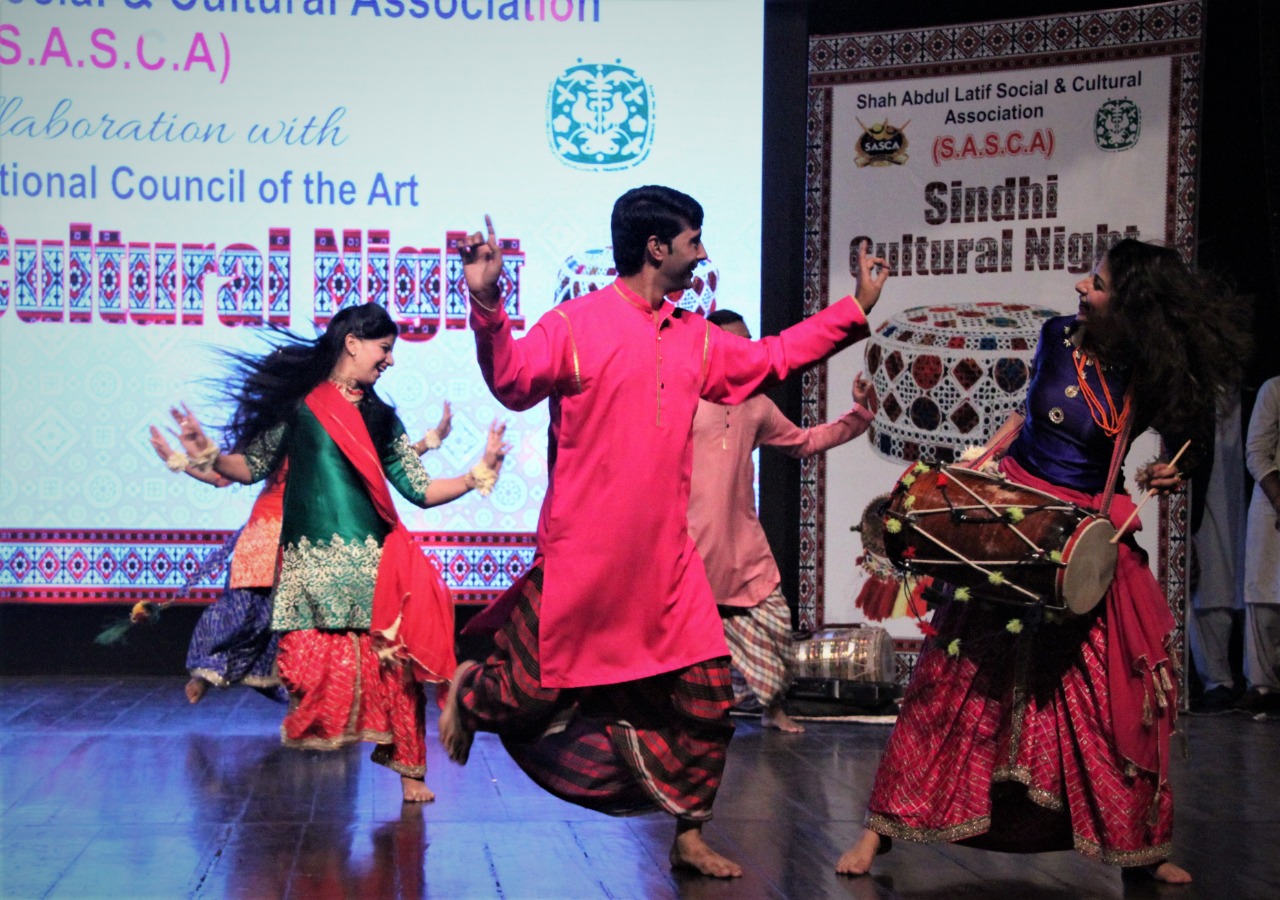
Sindhi cultural night at PNCA

ISLAMABAD, NOV 14 (DNA) – Sindh is a region of rich cultural heritage. It is land of Sufis and saints who have immense influence on local folk traditions and culture.

This was evident from the performance given by sindhi artists at PNCA’s auditorium. Clad in bright and colourful dresses which illuminated the stage, these artists presented their best. Renowned sindhi vocalists Taj Mastani, Tufail Khan Sangrani, Alan Faqir jr. Sada Bhar “Master Wali” Allah Dinu, Akbar Khamiso Khan.

Entertained the audience with famous sufi music, songs and tunes of the region. National Performing Arts Group of PNCA also give its performance by presenting Bhanghra, Sindhi Jhoomar, Dhamaal etc.

9b01fad3-0f3e-4d8f-80e5-daea2ad22e59

MNA Ali Gohar Baloch, Senator Usman Kakar, Nuzhat Pathan and Ghazala Saifi give award to the Sindhi artists.

Dr. Fouzia Saeed, Director General PNCA in her message thanked Shah Abdul Latif Social and Cultural Association for collaborating with PNCA, which resulted in this exquisite musical evening. She assured support and full cooperation for the wellbeing of the artists.=DNA

=================

Rising circular debt a threat for govt move of power tariff cut for SMEs

DNA

KARACHI – The Federation of Pakistan Chambers of Commerce and Industry (FPCCI) has said that the growing circular debt in the power sector is a continued threat for the government’s recent move of cut in power tariff for SMEs.

FPCCI President Mian Anjum Nisar, in a written statement issued here today, appreciated the Economic Coordination Committee (ECC) of the Cabinet to form a committee of all stakeholders to prepare a proposal on modalities for clearing the circular debt of around Rs1.6 trillion circular debt, saying it is a right step in the right direction. He said that the issue of circular debt will continue to haunt the Prime Minister Imran Khan’s resolve of reducing cost of doing business, elimination of peak-hour charges from industrial power tariff and discount on consumption of additional units for B1, B2 B3 connections.

The power sector circular debt issue may be considered holistically and a solution may be worked out to resolve the issue without escalating electricity cost, as its size has doubled during last two years in spite of that the government raised power tariff multiple times in the past on the plea of containing its rising trend, he added.

Past trend of increasing tariff to control circular debt has totally failed, he argued and called for taking drastic measures and adopting holistic approach in tackling the problems in the sector to address power consumers’ vulnerability.

Referring to the audit report of the Ministry of Energy, he said that circular debt size was Rs1,415 billion in 2018, which was jumped to Rs2,150 billion in June 2019-20 while it skyrocketed by another Rs116 billion in the first quarter of 2020-21 to astounding amount of around Rs2,266 billion.

He called for power sector reforms, considering the matter of overbilling, technical losses, transmission issues, proposal on decentralization of the sector, promotion of off grid solutions, incentives for renewable energy solutions and capacity payments to the independent power producers. He added that if the government failed to take immediate measures the power sector is likely to choke up due to heavy outstanding dues.

Mian Anjum Nisar said that the overall power sector reforms can be included closing down of inefficient IPPs, re-negotiations with the IPPs, bringing reforms in govt-owned power producing plants, improving efficiency and reducing costs of Wapda plants, besides converting the agriculture tube wells in Balochistan to solar in collaboration with the provincial government to reduce the cost.

“We have to resolve the circular debt issue by revamping the entire power sector, including tariff setting, efficiencies of power generating units, supply chain network and payment recoveries. If this is not done, the future of energy sector would remain at stake,” he warned.

He said that the power sector problem is a multifaceted problem and the government must avoid increasing the cost further, especially for the industry.

According to reports, as much as Rs243 billion was added to the circular debt in first half of FY 2020 while an increase of Rs294 billion was seen in second half of that fiscal year. In the same way, around Rs288 billion increased in first half of FY 2018-19 whereas, the second half of same financial year also witnessed a rise of Rs198 billion.

The FPCCI President warned of any move to levy circular debt tax or increase in power tariff to pay off this debt. He said that the business community has been calling for much needed reforms in the power sector to control pilferage, line losses and to stop corrupt practices. He said that the government had pledged to revamp the power sector and continued to raise electricity prices to eliminate subsidies but failed to implement reforms to make the power sector efficient. He said that the circular debt issue could have been resolved today, if the government had eliminated production, transmission and distribution losses; checked electricity theft and recovered the outstanding electricity dues.

He appreciated the recent decision of cut in power tariff for Small and medium-sized enterprises (SMEs); elimination of peak-hour charges from industrial electricity tariffs; 50% discount on consumption of additional units for B1, B2 B3 connections and 25% discount on additional consumptions for industrial connections for 3 years.

He said that it will boost productivity, lower costs, encourage manufacturing, enhance exports and generate employment. “We express confidence in government policies and assure to continue to work with it for the prosperity and economic development of the nation,” he added.

Wheat, sugar imports failed to dent prices: Shahid Rasheed

DNA

ISLAMABAD – Former President ICCI Shahid Rasheed Butt on Saturday said wheat and sugar imports have failed to reduce prices in the market which indicates the influence of mafia.

The reasons behind the price spiral are said to be smuggling, hoarding, inaction by authorities, the influence of cartel and profiteering by whole sellers and retailers, he said.

Shahid Rasheed Butt said that authorities are expressing weakness while price control mechanism has become dysfunctional which is adding to the onslaught of mafia on helpless masses.

He said that former central and provincial governments used to hold weekly price monitoring meetings to avoid shortage and keep prices in check but the present government is not very interested in it while different experiments have worsened the situation.

The business leader said that delay in announcement of support price, delay in imports, unnecessary haste in the export of wheat and sugar, inaction against mafia and an unholy alliance of some bureaucrats with mafia has also worsened the situation.

He said that prices of sugar and flour jumps in the market as soon as the top government functionaries announce their objective to reduce prices, therefore, the government should stop interfering in the market if it has no intention to control it.

The government has been unable to check price of sugar and wheat since it came to power and its decisions have strengthened the food cartels while the situation is not the same in the other countries, he asked.

Stay Connected

64FansLike
60FollowersFollow

Latest Reviews

Exchange Rates

USD - United States Dollar
EUR
1.17
GBP
1.35
AUD
0.72
CAD
0.73




