Home Blog Page 308

PM expresses grief over Islamabad cylinder accident, orders probe

PM expresses grief over Islamabad cylinder accident, orders probe

LAHORE, Jan 11 (APP/DNA): Prime Minister Muhammad Shehbaz Sharif has expressed deep sorrow over the loss of precious lives in a cylinder accident in Islamabad and prayed for the speedy recovery of the injured.

The Prime Minister on Sunday directed the Federal Minister for Health, Secretary Health, and the administration of Pakistan Institute of Medical Sciences (PIMS) to remain on high alert and ensure that all possible medical assistance was provided to the injured. He further instructed that the best medical facilities be ensured for the injured until their complete recovery.

Taking notice of the incident, the Prime Minister directed the Secretary Interior to conduct a thorough investigation and submit a detailed report to determine the causes of the accident and fix responsibility.

The Prime Minister prayed for the forgiveness of the deceased and expressed heartfelt condolences and sympathy with the bereaved families. He also instructed the Islamabad administration to launch an awareness campaign to educate citizens about safety precautions in the use of gas cylinders to prevent such incidents in the future.

Sudanese engineers get advanced training in Computer Designing

Sudanese engineers get advanced training in Computer Designing

ISLAMABAD, Jan 11 (APP/DNA): The Certificate Distribution Ceremony in connection with specialized technical training programs for Sudanese engineers will be held on January 13 (Tuesday) at the National University of Technology (NUTECH).

The ceremony will be attended by Prof. Dr. Muhammad Iqbal Choudhary, Coordinator General OIC-COMSTECH, as the chief dignitary, along with Lt. Gen. Moazzam Ejaz, HI(M), Retd., Rector NUTECH, and Salih Mohamed Ahmed Mohamed Siddig, Ambassador of the Republic of Sudan to Pakistan.

Senior officials, academicians, and representatives of partner institutions are also expected to attend.

Under this initiative, around 20 engineers from Sudan participated in a specialized CAD/CAM/CNC Operations and Machine Building Course hosted at NUTECH. Sponsored and coordinated by COMSTECH, the program aimed to strengthen technical skills, enhance engineering competencies, and promote South-South cooperation among OIC member states through industry-relevant, hands-on training and knowledge exchange.

The training provided extensive practical exposure to modern manufacturing technologies, including computer-aided design (CAD), computer-aided manufacturing (CAM), CNC machine operations, and machine building techniques. Participants received hands-on experience with advanced industrial equipment such as CNC wood routers, drilling and tapping machines, welding equipment, aluminium cutting machines, tool grinders, and shaper machines, under the guidance of NUTECH’s faculty and technical experts.

In addition to academic and technical training, the Prime Institute of Health Sciences collaborated in the program by facilitating the stay, welfare, and related support arrangements for the Sudanese engineers in Islamabad, ensuring a comfortable and conducive environment throughout the training period.

As part of the program’s diplomatic and institutional engagement, Prof Dr Muhammad Iqbal Choudhary also hosted a reception in honour of the Sudanese engineers during their stay, highlighting the importance of human resource development, capacity building, and technology transfer as core objectives of COMSTECH’s cooperation framework.

This initiative forms part of COMSTECH’s broader efforts to promote international technical cooperation and professional training among OIC countries, providing participants with exposure to modern technologies and collaborative learning environments.

The certificate distribution ceremony will formally recognize the achievements of the participating engineers and further strengthen academic, technical, and diplomatic ties between Pakistan and Sudan.

Gas cylinder blast in Islamabad’s G-7/2 leaves five dead; DIG Tariq supervises rescue operation

Gas cylinder blast in Islamabad’s G-7/2 leaves five dead; DIG Tariq supervises rescue operation
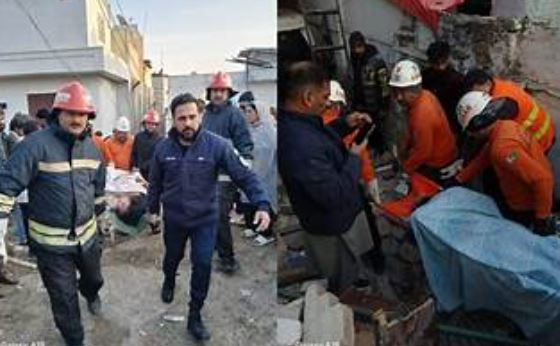
ISLAMABAD, Jan 11: A powerful gas cylinder explosion inside a double-storey house in Sector G-7/2 left five people dead, several injured and multiple nearby houses damaged on Sunday. triggering a major rescue operation by Islamabad Police and emergency teams.

A police spokesperson told APP that initial information suggested wedding preparations were underway inside the house when the cylinder blast occurred, causing the roof to collapse and trapping several people under the debris.

He said police and rescue teams evacuated 15 individuals from the affected houses, while four injured persons were immediately shifted to Polyclinic Hospital for medical treatment. The blast also affected several adjacent homes due to the intensity of the explosion.

The spokesperson added that the area has been completely cordoned off, and DIG Islamabad Muhammad Jawad Tariq is personally present at the site, directly supervising the search-and-rescue efforts. Senior police officers, firefighters and other rescue units are also working together to ensure swift operations.

He said that emergency crews are clearing debris, checking for any additional trapped individuals and assessing structural risks. The cause of the blast is being further investigated, though initial reports point to a gas leakage inside the house.

The DIG Islamabad urged citizens to cooperate with police and rescue personnel and assured that all necessary steps are being taken to assist affected families and secure the area.

PIAF urges govt to strengthen remittance framework amid strong inflows

PIAF urges govt to strengthen remittance framework amid strong inflows

LAHORE, JAN 11: The Pakistan Industrial and Traders Associations Front (PIAF) has welcomed the strong growth in workers’ remittances during the first half of fiscal year 2026, describing it as a vital support for the national economy at a time of weak exports and ongoing external challenges. However, PIAF leadership has urged the government to take further policy measures to sustain and enhance remittance inflows through formal channels.

According to the State Bank of Pakistan (SBP), remittances sent by overseas Pakistanis increased by 11 percent year-on-year to $19.7 billion during 1HFY26. December inflows were particularly robust, rising 17 percent year-on-year to $3.6 billion, reflecting improved confidence in official banking channels, a stable exchange rate, and continued government incentive schemes.

PIAF Chairman Faheemur Rehman Saigol termed the performance “highly encouraging” and said the latest figures underline the resilience and commitment of overseas Pakistanis to support the country’s economy.

“PIAF strongly appreciates the contribution of overseas Pakistanis whose remittances are playing a key role in stabilising Pakistan’s external account,” Saigol said. “At a time when exports are facing pressure, remittances have once again emerged as the most dependable source of foreign exchange. The government must further strengthen the remittance ecosystem to maintain this positive momentum.”

He stressed that the narrowing gap between the interbank and informal exchange rates has helped divert inflows from hundi and hawala networks, but added that additional steps are needed to ensure long-term sustainability. These include reducing transaction costs, improving banking outreach in remote areas, and expanding digital and mobile-based remittance platforms.

Senior Vice Chairman PIAF Nasrullah Mughal highlighted the strong link between overseas employment and remittance growth. Referring to official data showing that more than 762,000 Pakistanis proceeded abroad for employment in 2025—mainly to Gulf countries—he said labour export policy must be treated as a strategic economic priority.

“Higher manpower exports directly translate into higher remittances,” Mughal said. “The government should focus on skill development, vocational training and certification so Pakistani workers can secure better-paying jobs abroad. Skilled labour not only earns more but sends more remittances through official channels.”

Mughal also called for stronger diplomatic engagement with host countries to protect workers’ rights and ensure continuity of employment opportunities, particularly in Saudi Arabia and other Gulf states.

Vice Chairman PIAF Tahir Manzoor Chaudhary cautioned that while rising remittances provide much-needed relief, overreliance on them could delay structural reforms if not managed prudently.

“Remittances are cushioning the economy, but they should not become a substitute for exports and industrial growth,” Chaudhary said. “The government must utilise remittance-driven liquidity to support productive sectors such as manufacturing, SMEs and export-oriented industries.”

He suggested launching diaspora-focused investment instruments, including foreign currency bonds, real estate projects and SME investment funds, to convert remittance inflows into long-term economic capital. Chaudhary also recommended tax incentives and simplified procedures for overseas Pakistanis willing to invest in Pakistan.

The PIAF leadership welcomed the SBP’s recent liquidity injections through open market operations and noted that relative exchange rate stability has played a positive role in encouraging remittances through legal channels.

Looking ahead, PIAF expressed cautious optimism regarding the full-year FY26 remittance target of $41 billion, which would mark one of the highest annual inflows in Pakistan’s history.

“Remittances should be treated as a strategic pillar of economic policy,” Saigol said. “With consistent reforms, transparency and investor-friendly policies, Pakistan can further enhance remittance inflows while gradually reducing its dependence on them through export diversification and industrial revival.”

PCB ‘expresses’ interest in hosting Bangladesh matches in T20 World Cup

PCB 'expresses' interest in hosting Bangladesh matches in T20 World Cup

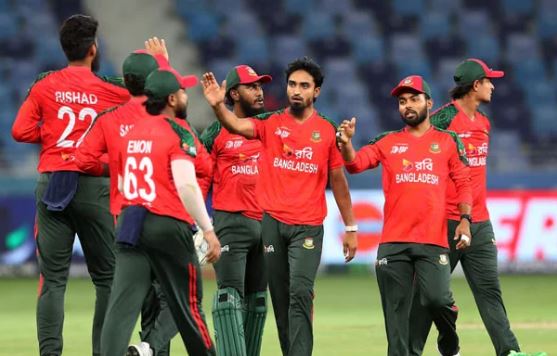
LAHORE: The Pakistan Cricket Board (PCB) has expressed interest in hosting Bangladesh’s matches in the ICC T20 World Cup 2026 after the Bangladesh Cricket Board (BCB) announced that the Liton Das-led side would not travel to India due to security concerns.

According to PCB sources, Pakistan’s “ready and fully equipped” venues could be offered as an alternative if Sri Lankan venues are unavailable.

The sources added that Pakistan has successfully hosted major international events in recent years, including the ICC Champions Trophy 2025 and the ICC Women’s Qualifiers 2025.

The PCB is showing interest amid strained relations between the BCB and the Board of Control for Cricket in India (BCCI), following the removal of fast bowler Mustafizur Rahman from the Indian Premier League (IPL) franchise Kolkata Knight Riders.

The decision coincided with worsening diplomatic relations between Bangladesh and India, although no official reason was provided by the IPL or the BCCI for Rahman’s exclusion.

According to PCB sources, Pakistan could easily accommodate Bangladesh’s T20 World Cup 2025 fixtures, adding that all designated venues in the country are prepared to host matches.

Under the current schedule, Bangladesh are set to play their first three group-stage matches in Kolkata, with their final group match slated for Mumbai. However, the venues became contentious after Rahman’s removal from the KKR squad.

Following the development, the Bangladesh government banned the broadcast of the IPL in the country, while the BCB formally informed the International Cricket Council (ICC) of its decision not to play T20 World Cup matches in India.

The ICC is expected to take the final decision on whether Bangladesh’s matches will be shifted to an alternative host nation.

A Tale of Two Protests: The United States and Iran

Qamar Bashir

Qamar Bashir

Across two very different geographies, two very different political systems, and two very different societies, demonstrations are unfolding that strangely mirror each other in spirit while diverging sharply in treatment and global reaction. One is taking place inside the United States, across nearly a thousand cities, towns, and metropolitan centers. The other is unfolding in Iran, a country long accustomed to protests, sanctions, and foreign pressure. Together, they tell a single, uncomfortable story about power, sovereignty, and the selective morality of intervention.

In the United States, protests erupted following a series of aggressive Immigration and Customs Enforcement actions that, according to eyewitness accounts and local officials, have crossed legal and ethical boundaries. These actions were ostensibly aimed at undocumented immigrants, yet in practice they have ensnared legal residents and U.S. citizens alike. The tipping point came after a fatal incident in Minnesota, where an ICE operation ended with the shooting death of a white American woman during a traffic confrontation in snowy conditions.

According to preliminary accounts circulated by local media, ICE agents, masked and operating in unmarked vehicles, attempted to redirect traffic during an enforcement operation. The woman, unable to comply immediately due to icy road conditions, requested time to maneuver safely. She was ordered out of her vehicle, refused out of fear and confusion, and as she attempted to reposition her car, she was shot twice and killed. The incident ignited national outrage not only because of the death itself, but because it crystallized a fear long voiced by minority communities: that federal power is now being exercised without restraint, identification, or judicial oversight.

The reaction was swift and unprecedented. Demonstrations spread from Minnesota to Chicago, Los Angeles, New York, and Washington, D.C., with tens of thousands marching toward federal buildings and, in the capital, toward the White House itself. In New York, protesters gathered near Trump Tower, chanting against what they called “state violence against citizens.” One tearful demonstrator, when asked why he was crying, said he had never imagined living to see a day when the federal government would openly kill its own people and face no immediate accountability.

State and city governments responded with alarm. Governors and mayors in Illinois, California, and New York openly challenged the federal deployment of ICE and National Guard units, pledging to use legal and administrative means to block further operations. Legal scholars noted that ICE actions appeared to violate long-established requirements for warrants, identification, and probable cause. The image of masked agents operating without visible authority evoked comparisons to authoritarian regimes the United States has historically condemned.

Yet this domestic unrest is not occurring in isolation. The same assertive, coercive posture has been projected outward. The world watched in disbelief as the United States escalated its confrontation with Venezuela, culminating in what many international observers described as the effective seizure of a sovereign state’s leadership and economic arteries. By detaining President Nicolás Maduro and asserting control over Venezuelan oil exports, Washington did not merely target an individual but placed an entire nation under de facto custody.

Senior U.S. officials publicly stated that Venezuela’s oil sector would be reorganized under American oversight, with proceeds used to compensate U.S. companies nationalized during earlier Venezuelan reforms. More than six oil tankers were reportedly intercepted or frozen, and oil valued in the billions of dollars was declared subject to U.S. strategic use. Even Chinese and Russian-linked vessels were halted, a move that signaled how far Washington was willing to stretch maritime and economic power.

Strikingly, China and Russia limited their response to measured warnings. Analysts noted that both powers may see strategic advantage in allowing Washington to normalize such behavior, thereby creating precedents they could later invoke in Taiwan or Ukraine. What appears as silence, in this reading, is calculated patience.

A similar logic underpins Washington’s renewed rhetoric about Greenland, an autonomous territory within the Kingdom of Denmark. Statements suggesting U.S. acquisition of the island, justified by security and resource concerns, shocked European capitals. Europe now faces a sobering realization: reliance on American security guarantees does not shield allies from coercion. In fact, it may invite it.

This realization has led to a quiet but significant shift in European thinking. Long-standing assumptions about the permanence of U.S. protection are eroding. As an old diplomatic aphorism goes, being an enemy of the United States is dangerous, but being its friend can be even more so.

Against this global backdrop, Iran presents the third and most instructive case. Protests inside Iran have intensified following economic hardship exacerbated by sanctions and the sharp devaluation of the national currency after the recent twelve-day conflict involving Iran, Israel, and the United States. The war shattered long-held perceptions of Israeli invulnerability and exposed the extent to which regional defense architectures are designed to preserve Israeli security at all costs.

Iranian protests are not new. In 1953, mass unrest, fueled and guided by British and American intelligence, led to the overthrow of Prime Minister Mohammad Mossadegh and the installation of Shah Mohammad Reza Pahlavi. In 1979, another wave of popular mobilization toppled the Shah himself, ushering in the Islamic Republic under Ayatollah Khomeini. Since then, Iran has endured decades of sanctions that have hollowed out its economy while entrenching powerful elites.

Today’s protests are driven by familiar grievances: inflation, unemployment, social restrictions, and fatigue from perpetual isolation. Yet the international response could not be more different from that toward U.S. demonstrations. When Americans protest federal violence, no foreign power threatens intervention. No missiles are readied, no sanctions imposed, no leaders warn that force will be used to “protect demonstrators.”

In Iran’s case, however, senior U.S. officials openly warned that any crackdown would invite retaliation. History suggests that such “retaliation” rarely harms ruling elites and almost always devastates ordinary citizens. Bombs do not discriminate between policymakers and shopkeepers. Sanctions do not skip children.

The moral inconsistency is stark. If sovereignty is inviolable in the United States, it must be inviolable everywhere. If regime change must be organic and driven by citizens in Washington or Minnesota, the same principle must apply in Tehran. Iranians, like Americans, have proven repeatedly that when they truly want change, they can achieve it themselves.

The lesson emerging from these parallel demonstrations is painfully clear. Interference in the internal political, social, and cultural dynamics of sovereign states produces not stability but chaos. It fuels violence, poverty, displacement, and mass migration. It creates cycles of despair that spill across borders and generations.

Peace will not come from dismantling international institutions or bending them to the will of the powerful. It will come from strengthening international law, respecting sovereignty, and allowing peoples, everywhere, to determine their own futures. Until that lesson is learned, the streets of Minnesota and Tehran will continue to echo each other, separated by continents but bound by the same unanswered question: who guards the people when power runs unchecked?

Qamar Bashir
Press Secretary to the President (Rtd)
Former Press Minister, Embassy of Pakistan to France
Former Press Attaché to Malaysia
Former MD, SRBC | Macomb, Michigan

Agriculture dept for off-season strategy to control pink bollworm

Agriculture dept for off-season strategy to control pink bollworm

MULTAN, JAN 10 (APP/DNA): The Punjab Agriculture Department has issued an off-season management strategy to control pink bollworm, a damaging cotton pest that affects both yield and fibre quality.

A spokesperson for the department said cotton is a vital crop for the country, and nearly 70 percent of its total production comes from Punjab. Pink bollworm is considered one of the most harmful pests of cotton, and its attack not only reduces production but also severely affects quality.

The spokesperson said that off-season management of pink bollworm is of great importance because the pest does not have any alternate host plant. By adopting proper off-season measures, its breeding cycle can be broken and the next cotton crop can be protected from serious attack. Farmers have been advised that if they intend to keep cotton sticks for fuel, they should make small bundles and store them with the stubble ends facing downward so that sunlight exposure helps destroy remaining pupae before the next crop is sown.

It was further stated that cotton waste present in ginning factories and larval forms hidden in twin seeds must be destroyed. Farmers should also turn over heaps or bundles of cotton sticks so that pupae present in the trash beneath are eliminated. Stored cotton seed should be fumigated with aluminum phosphide (phosphine) tablets at the rate of 30 tablets per 1,000 cubic feet to kill larvae and pupae present in twin seeds.

The spokesperson added that strict implementation of these off-season measures can significantly reduce pink bollworm infestation in the upcoming cotton crop and help improve both yield and quality.

Tarar mourns demise of former President NPC Shakeel Anjum’s spouse

Tarar mourns demise of former President NPC Shakeel Anjum’s spouse

ISLAMABAD, Jan 10 (APP/DNA): Federal Minister for Information and Broadcasting Attaullah Tarar on Saturday expressed profound grief over the passing of the wife of former National Press Club (NPC) President Shakeel Anjum.

In his condolence message, the minister extended heartfelt sympathies to the bereaved family and prayed for the departed soul.

He described the demise as an irreparable loss and affirmed his solidarity with Shakeel Anjum and his family in this hour of sorrow.

Tarar prayed that Allah grant the deceased a high place in His mercy and bless the family with patience and fortitude to bear the loss.

New Chancery building of Consulate General of Pakistan inaugurated in Jeddah

New Chancery building of Consulate General of Pakistan inaugurated in Jeddah

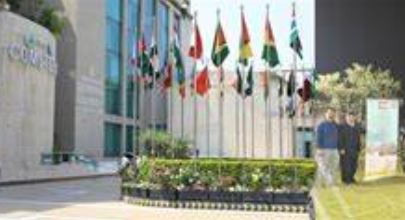
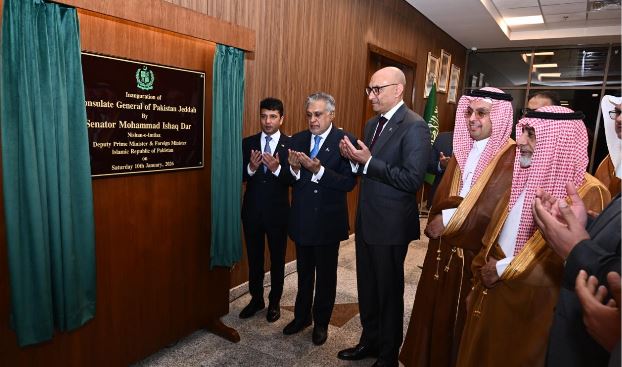
JEDDAH, JAN 10 /DNA/ – The Deputy Prime Minister and Foreign Minister of Pakistan, Senator Mohammad Ishaq Dar today inaugurated the new chancery building in a small and graceful ceremony attended by Ambassador of Pakistan in Saudi Arabia Mr. Ahmad Farooq, Saudi dignitaries, Consul General of Pakistan in Jeddah Syed Mustafa Rabbani, prominent Pakistani citizens and officials of the Pakistan Consulate, Jeddah.

During the inauguration ceremony, the Pakistani flag was raised on the premises of new chancery building followed by tree plantation in the Chancery lawn, ribbon cutting, unveiling the plaque and offering prayers for the Pakistan and Saudi Arabia. A brief video report highlighting the features of the project was displayed.

In his remarks, the Deputy Prime Minister lauded the efforts of Consulate General of Pakistan, Jeddah and the support provided by the authorities of Saudi Arabia for making the project, a reality. He emphasized that the government is committed to facilitate overseas Pakistanis through provision of effective consular services.

After viewing the building and facilities, the DPM expressed satisfaction on the completion of the project and authorized the transfer of operations and Consular services to the new chancery building at the earliest.
Western Region Saudi Arabia is home to about 1.8 million Pakistanis and the new chancery building and its facilities will go a long way to facilitate services for the community.

AFCON hosts Morocco into last four with win over Cameroon

AFCON hosts Morocco into last four with win over Cameroon

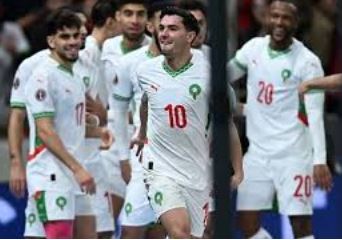
BAKU, JAN 10: Hosts Morocco booked their place in the semi-finals of the 2025 Africa Cup of Nations (AFCON) with a dominant display against Cameroon in Rabat, BBC reported.

A goal in each half, scored by Brahim Diaz and Ismael Saibari, was enough to see off their opponents, who rarely threatened.

Diaz tucked home from close range in the 26th minute after Ayoub El Kaabi’s flick on from a corner, using his thigh to nudge the ball into the net for his fifth goal of the tournament.

Saibari’s goal also came from a set piece, firing home a low left-footed drive after picking up a loose ball from a free-kick.

Having now matched their historic run to the semi-finals in Qatar, Regragui’s side are two wins away from claiming the country’s first continental crown since 1976.

Morocco are now unbeaten in 25 matches – a run stretching back to their last-16 exit at the 2023 edition of the finals – and are into the last four at an AFCON for the first time since 2004, when they went on to lose against Tunisia in the final.

The Atlas Lions will have a huge home advantage again when they return to this stadium on Wednesday to play the winners of Saturday’s quarter-final between Algeria and Nigeria.

Stay Connected

64FansLike
60FollowersFollow

Latest Reviews

Exchange Rates

USD - United States Dollar
EUR
1.14
GBP
1.34
AUD
0.70
CAD
0.71