Home Blog Page 307

Myanmar votes in second phase of junta-run election

Myanmar votes in second phase of junta-run election

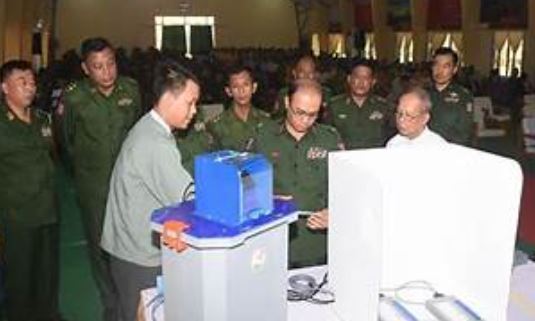
Kawhmu, Myanmar, Jan 11: Myanmar’s junta held the second phase of elections on Sunday that democracy watchdogs warn will let the military prolong its rule, opening polling in the constituency of deposed democratic leader Aung San Suu Kyi.

                  The armed forces have ruled Myanmar for most of its post-independence history, snatching back power in a 2021 coup after a decade-long democratic thaw, nullifying the previous poll, detaining Suu Kyi and plunging the country into civil war.

                  With Suu Kyi sidelined and her massively popular party dissolved, democracy advocates say the vote has been rigged by a crackdown on dissent and a ballot stacked with military allies.

                  Polls opened on Sunday morning in dozens of constituencies, including Suu Kyi’s former seat of Kawhmu south of commercial hub Yangon.

                  Farmer Than Than Sint acknowledged Myanmar’s “many problems” but told AFP she voted in pursuit of peace.

                  “We know it will not come right away. But we need to go step-by-step for our future generations,” the 54-year-old said after voting.

                  The junta has pledged the three-phase election will return power to the people after it ends on January 25.

                  The Union Solidarity and Development Party (USDP), described by many analysts as the military’s prime proxy, won nearly 90 percent of lower house seats in the first phase late last month.

                  “I think the results lie only in the mouth of the military,” a 50-year-old resident of Yangon, where voting also took place, told AFP.

                  “This election has absolutely nothing to do with escaping this suffering,” said the resident, who spoke on condition of anonymity for security reasons.

                  – ‘Engineered’ polls –

                  The first phase had a turnout of around 50 percent, far below the roughly 70 percent of the 2020 election when most voters backed Suu Kyi’s party.

                  A truck blasted loudspeaker messages along the main road in Kawhmu, urging voters to come out.

                  Kyaw Than, a 72-year-old farmer, said it was better to vote. “It would be weird to sit by and do nothing,” he said.

                  There is no polling in large enclaves carved out by rebel factions, who the military accused of staging drone, rocket and bomb attacks during the first phase of voting that killed five people.

                  Analysts say the junta is attempting to launder its image, aiming to improve diplomatic relations, increase foreign investment and sap momentum from rebels.

                  “The junta engineered the polls to ensure victory for its proxy, entrench military domination in Myanmar, and manufacture a facade of legitimacy while violence and repression continue unabated,” UN rights expert Tom Andrews said in a statement on Thursday.

                  The military justified its coup by alleging that Suu Kyi’s National League for Democracy (NLD) won a landslide over pro-military parties in 2020 through massive voter fraud.

                  Election monitors say those claims were unfounded.

                  Parties that won 90 percent of seats in 2020 — including the NLD — have been dissolved, according to the Asian Network for Free Elections.

                  Regardless of the vote, a quarter of parliamentary seats will be reserved for the armed forces under a constitution drafted during a previous period of military rule.

                  – Limited electorate –

                  More than 330 people are being pursued under junta-enacted laws, including clauses that punish protest or criticism of the poll with up to 10 years in prison.

                  There are more than 22,000 political prisoners in junta jails, according to the Assistance Association for Political Prisoners advocacy group.

                  Security forces put down pro-democracy protests since the coup but activists formed ragtag guerrilla units, often fighting alongside ethnic minority armies long opposed to central rule.

                  Voting has been cancelled in dozens of constituencies, many of them battlegrounds or regions where rebels run parallel administrations beyond the junta’s reach.

                  The military waged offensives, which witnesses said included air strikes targeting civilian sites, in an attempt to claw back ground before the voting.

                  There is no official toll for Myanmar’s civil war but monitoring group ACLED, which tallies media reports of violence, estimates that 90,000 people have been killed on all sides.
Mendis, Shanaka power Sri Lanka to 160 in rain-hit third T20I

Mendis, Shanaka power Sri Lanka to 160 in rain-hit third T20I

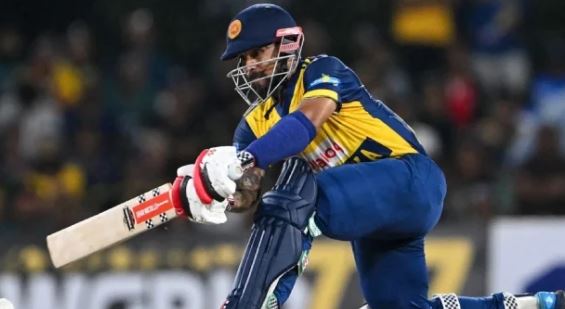
Dasun Shanaka and Kusal Mendis struck brisk innings as Sri Lanka posted 160 in 12 overs against Pakistan in the rain-hit third and final T20I at the Rangiri Dambulla International Cricket Stadium on Sunday.

Earlier, Pakistan won the toss and opted to bowl first in the match, reduced to 12 overs per side after rain delayed the game by around two hours.

The Green Shirts lead the three-match series 1-0 after winning the first game, while the second was abandoned without a single ball bowled due to persistent rain at the same venue.

Pakistan made two changes to their lineup for the final game, with Fakhar Zaman and Salman Mirza resting. Debutant Khawaja Nafay and pacer Naseem Shah have been included in the playing XI.

Playing XI
Pakistan: Saim Ayub, Sahibzada Farhan, Salman Ali Agha (c), Usman Khan, Khawaja Nafay, Shadab Khan, Mohammad Nawaz, Faheem Ashraf, Mohammad Wasim, Naseem Shah and Abrar Ahmed.

Sri Lanka: Pathum Nissanka, Kamil Mishara, Kusal Mendis, Dhananjaya de Silva, Charith Asalanka, Dasum Shanaka (c) Janith Liyanage, Wanindu Hasaranga, Eshan Malinga, Maheesh Theekshana and Maheesh Pathirana.

SECP’s reforms boost company registrations, enhance business transparency

SECP’s reforms boost company registrations, enhance business transparency

ISLAMABAD, JAN 11 (APP/DNA): The digital and administrative reforms introduced by the Securities and Exchange Commission of Pakistan (SECP) have led to a significant increase in company registrations while improving transparency and ease of doing business across the country, the commission said here.

In a statement issued here Sunday, the SECP said that 35,087 new companies were registered during fiscal year 2024–25, compared to 27,542 companies registered in the previous year. During the current fiscal year, from July to December 2025, a total of 21,542 companies were registered.

It said, the reforms had simplified the process of starting a business, reduced compliance-related costs and strengthened investor confidence. As a result, company registrations increased by 51 percent compared to 2020.

According to the statement, 99.9 percent of company registrations were completed entirely through the online system, reflecting the success of the digitalization drive. The core focus of the reforms, the SECP said, is the complete digitalization of the company registration process through its eZfile system.

The SECP said that the eZfile system is integrated with various institutions, including the Federal Board of Revenue (FBR), Employees’ Old-Age Benefits Institution (EOBI) and provincial departments.

Following integration with the government’s One Window system, the registration certificate is issued automatically, eliminating the need for visits to multiple offices and resulting in significant savings in time and cost.

The Commission said that its reform initiatives had also received international recognition. It noted that Pakistan was ranked sixth among 50 countries on the business start-up indicator in the World Bank’s Business Ready 2024 report, while an IFC survey ranked the SECP first among 65 federal regulatory authorities for government-to-business digital services and IT preparedness.

The statement further said that to strengthen transparency and corporate governance, companies had been required to ensure financial reporting and detailed disclosures in accordance with International Financial Reporting Standards. It added that the anti-money laundering and counter-terrorist financing framework had been strengthened, a Corporate Ultimate Beneficial Owner Registry established, and a risk-based supervisory system aligned with FATF standards introduced.

The statement said that on the occasion of the launch of national regulatory reforms, Prime Minister Muhammad Shehbaz Sharif declared the SECP a “Reforms Champion” and appreciated the Commission’s role in improving the business environment.

The Commission reaffirmed that it would continue the reform process through a modern, technology-based regulatory system to promote ease of doing business, transparency and sustainable economic growth.

Police detain PTI workers after clashes ahead of Bagh-e-Jinnah power show

Police detain PTI workers after clashes ahead of Bagh-e-Jinnah power show

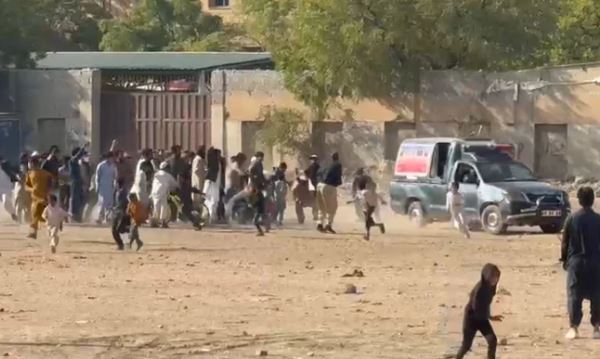
KARACHI: Police detained multiple Pakistan Tehreek-e-Insaf (PTI) workers at Karachi’s Numaish Chowrangi on Sunday after clashes erupted near Bagh-e-Jinnah ahead of the party’s public gathering.

The police officials said that more than 30 workers were taken into custody after the clashes, during which protesters allegedly beat up a policeman.

According to the police, the detained PTI workers were shifted into a prisoners’ van following their arrest at the intersection. Footage circulating on the internet shows protesters stopping a police vehicle and pelting it with stones near Bagh-e-Jinnah.

Police resorted to shelling to disperse PTI workers who had gathered in the area, while separate disturbances were also reported at the VIP gate of Mazar-e-Quaid, where scuffles broke out between protesters and law enforcement.

Police officials said that further action would be taken against those identified in the stone-pelting incidents.

The PTI is scheduled to hold a power show at Bagh-e-Jinnah this evening after obtaining a non-objection certificate (NOC) from the Sindh government.

Khyber Pakhtunkhwa Chief Minister Sohail Afridi had announced the “historic” public gathering during his ongoing three-day visit to Sindh.

In a statement on Saturday, Sindh Information Minister Sharjeel Inam Memon said the NOC for the gathering had been issued with specific conditions, stressing that the organisers would bear full responsibility for maintaining law and order during the event.

He said speeches against the country and state institutions would not be allowed, while the use of provocative language, objectionable material or sectarian remarks was strictly prohibited.

At the time, the KP CM was on a visit to Hyderabad and scheduled to return to Karachi, where he had landed on January 9 to kickstart his three-day visit.

While CM Afridi’s first two days in the province passed smoothly, he alleged earlier today that the provincial government blocked roads and created obstacles during his return journey from Hyderabad to Karachi.

“We were deliberately pushed onto deserted roads on our way back from Hyderabad to Karachi,” CM Afridi said in a video statement, adding that he has reached the port city and that “a rally will [surely] be held”.

Meanwhile, a PTI spokesperson stated that CM Afridi has departed for the public gathering, accompanied by senior party leaders.

According to the spokesperson, PTI Secretary General Salman Akram Raja and PTI Sindh president Haleem Adil Sheikh are also part of the delegation, along with other party leaders.

The spokesperson said the rally would proceed through different routes of Karachi before culminating at the Bagh-e-Jinnah ground.

Minister warns ‘strict action’ over violations
Sindh Home Minister Zia-ul-Hassan Lanjar warned that any gathering outside the designated place would prompt strict action.

“The Sindh government would take strict action if there was any gathering outside the ground or on any city road,” he said.

The provincial government had said that the district administration reserved the right to cancel the permission given to the PTI at any point due to security concerns.

Separately, Sindh Local Government Minister Nasir Hussain Shah offered the PTI to provide them with chairs and containers to facilitate its public gathering.

“If PTI is short of people, we can send them too,” he added.

Meanwhile, Sindh Culture Minister Zulfiqar Ali stated that the former ruling party “started the drama” after realising they did not have sufficient workers. “PTI wants the Sindh government to provide people for their public gathering.”

Trump delivers oil warning, suggesting Cuba should strike deal with US

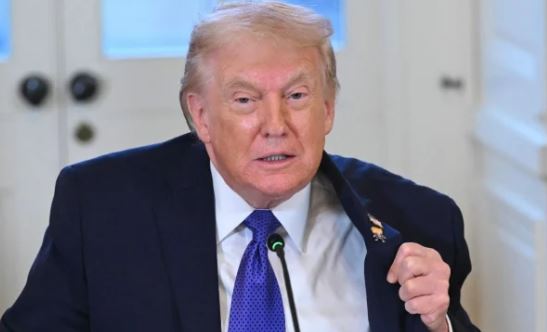
WASHINGTON, JAN 11: US President Donald Trump on Sunday suggested Cuba should strike a deal with Washington, warning that the island nation would no longer receive oil or money from Venezuela.

Venezuela is Cuba’s biggest oil supplier, but since the capture of Venezuelan President Nicolas Maduro by US forces, Trump has successfully pressed interim President Delcy Rodriguez to send Venezuelan oil to the United States.

“THERE WILL BE NO MORE OIL OR MONEY GOING TO CUBA — ZERO! I strongly suggest they make a deal, BEFORE IT IS TOO LATE,” Trump wrote on his social media platform Truth Social on Sunday.

“Cuba lived, for many years, on large amounts of OIL and MONEY from Venezuela,” Trump said.

US intelligence has painted a grim picture of Cuba’s economic and political situation, but its assessments offer no clear support for Trump’s prediction that the island is “ready to fall,” Reuters reported on Saturday, citing three people familiar with the confidential assessments.

The CIA’s view is that key sectors of the Cuban economy, such as agriculture and tourism, are severely strained by frequent blackouts, trade sanctions and other problems.

The potential loss of oil imports and other support from Venezuela, for decades a key ally, could make governing more difficult for the administration that has ruled Cuba since Fidel Castro led a revolution in 1959.

For Cuba, the loss of Venezuelan oil is devastating. Between January and November of last year, Venezuela sent an average of 27,000 barrels per day (bpd) to the island, covering roughly 50% of Cuba’s oil deficit, according to shipping data and documents from Venezuelan state oil company PDVSA.

Separately, Trump reposted a social media message suggesting that US Secretary of State Marco Rubio, born to Cuban immigrant parents, would become the next leader of Cuba.

Trump republished a Truth Social message from user Cliff Smith, posted on January 8, that read “Marco Rubio will be president of Cuba,” accompanied by a crying laughing emoji.

Trump’s comment on the repost was “Sounds good to me!”

The largely unknown user, whose bio refers to him as a “conservative Californian” has less than 500 followers.

Trump’s repost comes a week after US forces seized Venezuela’s authoritarian leader Nicolas Maduro in a nighttime operation in Caracas that killed dozens of Venezuelan and Cuban security forces.

US says carried out large scale strikes against IS

US says carried out large scale strikes against IS

News Desk

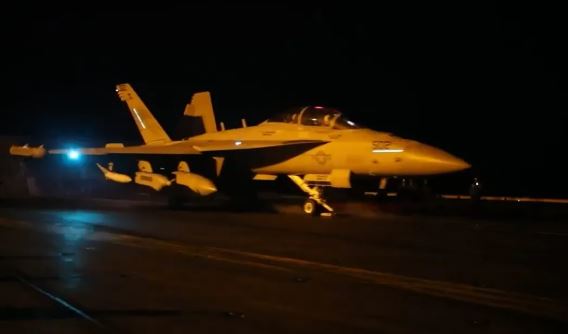
WASHINGTON: US and allied forces carried out “large-scale” strikes against the Islamic State (IS) terrorist group in Syria on Saturday, the US military said, the latest response to an attack last month that killed three Americans.

US Central Command (Centcom), which oversees American military forces in the region, said multiple strikes “targeted ISIS throughout Syria,” using an acronym for the terrorist group.

Centcom’s post on X did not give specifics on where they took place.

Grainy aerial video accompanying the post showed several separate explosions, apparently in rural areas.

The strikes were part of Operation Hawkeye Strike, which was launched “in direct response to the deadly ISIS attack on US and Syrian forces in Palmyra,” Centcom said.

Two US soldiers and a US civilian interpreter were killed on December 13 after a lone gunman — whom Washington described as an IS militant — ambushed them in Palmyra.

Syria’s interior ministry later said the gunman was a member of the security forces who had been set to be fired for extremism.

“We will never forget, and never relent,” US Defence Secretary Pete Hegseth said on Saturday in a post on X, replying to the Centcom statement.

The United States and Jordan carried out a round of strikes last month in response to the Palmyra attack, with Centcom saying at the time that “more than 70 targets” had been hit.

The Syrian Observatory for Human Rights, a war monitor, later reported those strikes killed at least five IS members, including a cell leader.

On January 3, Britain and France announced joint strikes targeting an underground facility they said IS had likely used to store weapons.

The US personnel targeted in Palmyra were supporting Operation Inherent Resolve, the international effort to combat IS, which seized swaths of Syrian and Iraqi territory in 2014.

The IS members were ultimately defeated by local ground forces backed by international air strikes and other support, but the IS still has a presence in Syria, especially in the country’s vast desert.

US President Donald Trump has long been sceptical of Washington’s presence in Syria, ordering the withdrawal of troops during his first term but ultimately leaving American forces in the country.

The Pentagon announced in April that the United States would halve the number of US personnel in Syria in the following months, while US envoy for Syria Tom Barrack said in June that Washington would eventually reduce its bases in the country to one.

Drug Abuse: A Deepening Threat to Society

Drug Abuse: A Deepening Threat to Society

Dr. Muhammad Rizwan Bhatti

Indeed, drug misuse has grown to be a deeply ingrained societal catastrophe that is steadily undermining Pakistan’s socioeconomic structure and posing one of the biggest challenges of our time. Nearly 6.7 million Pakistanis abuse controlled drugs, with cannabis continuing to be the most commonly used substance and heroin addiction impacting hundreds of thousands of people across the country’s demographic spectrum, according to the most recent official estimates and United Nations statistics. Consequently, cannabis, opioids cocaine, and an expanding variety of synthetic narcotics not only endanger personal health but also threaten public safety and national stability.

Moreover, June 26 is designated as the International Day Against Drug Abuse and Illicit Trafficking by the United Nations Office on Drugs and Crime (UNODC), serving as a vital moment to unite all facets of society against the scourge of drugs. Significantly, the theme for 2026 emphasizes the need for community-led prevention, strengthening treatment programs and eliminating stigma and prejudice, thereby reiterating that long-term solutions demand both empathy and collective action. As such, this day continues to be an important platform for awareness-raising, advocacy and sustained community engagement.

Furthermore, substance abuse, clinically recognized as addiction, refers to the obsessive and frequently uncontrolled use of “narcotics,” substances that alter mood or relieve pain but eventually cause severe physical and psychological harm. While hard drugs such as heroin, methamphetamine, ecstasy and ICE have especially devastating consequences, even so-called “soft drugs” like marijuana, sedatives and certain prescription medications can gradually lead to serious health complications. Alarmingly, Pakistan’s youth, who make up a sizable 64% portion of the population, remain particularly vulnerable; a complex mix of peer pressure, family discord, academic stress, unemployment and social uncertainty often pushes young people toward these destructive coping strategies.

Geographically speaking, due to its strategic location within the Golden Crescent, Pakistan, alongside Afghanistan and Iran, bears a unique burden as both a transit and consumption zone for opiates, particularly heroin and opium cultivated in Afghanistan. Historically, the Golden Crescent has surpassed the Southeast Asian Golden Triangle (Burma, Thailand, and Laos) in global narcotics production, and, as a result, a significant share of Afghan opiates destined for international markets continues to pass through Pakistan’s land and maritime routes.

Against this backdrop, Pakistan’s law-enforcement framework has visibly expanded its operational reach to confront this multifaceted challenge. Notably, Regional Police Officer (RPO) Faisalabad, Sohail Akhtar Sukhera, has promoted multi-modal and multi-sectoral strategies to curb crime and dismantle drug networks at the grassroots level. Under his leadership, sustained intelligence-based operations and targeted raids have been conducted across Faisalabad and adjoining districts, leading to the detention of thousands of individuals involved in criminal activity, including professional drug peddlers, habitual offenders and addicts occupying public spaces. In one recent operation alone, over 2,800 individuals were apprehended from marketplaces, transit hubs and educational institutions, with hundreds subsequently booked for criminal involvement.

In addition, RPO Sohail Akhtar Sukhera has devised an activity-based intervention module aimed at fostering confidence, resilience and decision-making skills among students, enabling them to withstand peer pressure and refrain from indulging in negative behaviours such as drug and substance abuse. Simultaneously, he has actively engaged community stakeholders including business leaders, educators and civil society actors to develop cooperative crime-prevention frameworks that strengthen information sharing, enhance neighbourhood safety and reinforce the principle that public security is a shared responsibility. Enhancing internal accountability within the police force and enforcing a zero-tolerance policy toward elements that undermine peace and order have also remained central to his operational directives.

While speaking to parents, students and community members, RPO Faisalabad Sohail Akhtar Sukhera, cautioned that drug misuse among Pakistani young is no more a minor issue but rather a reflection of more serious social flaws. He pointed out that drugs become an easy way out when young brains are overburdened by academic pressure, peer pressure takes the role of mentorship and families avoid having important talks. Sohail Sukhera contends that placing the blame solely on people misses the mark and that homes, educational institutions and the government must all take collaborative responsibility for the situation. He warned that substance misuse will continue to erode the social and moral underpinnings of the next generation in the absence of early intervention, honest communication and support networks that rebuild resilience and purpose.

Legally, the Control of Narcotic Substances Act (CNSA) of 1997 provides the foundation for prosecuting drug traffickers, prescribing life imprisonment or even the death penalty for trafficking substantial quantities of prohibited narcotics. Nevertheless, long prison sentences alone are insufficient to curb demand; rather, comprehensive prevention strategies, expanded rehabilitation services and the de-stigmatization of treatment seekers are urgently required.

Beyond health consequences, the drug trade carries profound social and economic repercussions. Illicit drugs erode community trust, fuel crime, foster corruption and divert vast sums of money into informal economies, thereby undermining legitimate growth. At the same time, addiction places immense pressure on families and healthcare systems, particularly in areas where social support structures and medical infrastructure remain weak or non-existent.

Recognizing addiction as a medical and social issue rather than merely a criminal offense, the Anti-Narcotics Force (ANF) has established model treatment and rehabilitation facilities across Pakistan. However, the sheer magnitude of the problem necessitates hundreds more such institutions, especially in regions grappling with youth unemployment and social dislocation. Only through comprehensive, accessible and sustained treatment pathways can individuals break the cycle of dependency and reintegrate into society as productive citizens.

Therefore, on World Drug Day 2026, Pakistan must reaffirm its commitment to building resilient communities, enhancing educational and employment opportunities for youth and strengthening inter-agency coordination to dismantle both domestic and transnational drug networks. Police, ANF, customs authorities, paramilitary forces and community partners must act in unison to make drug abuse and illicit trafficking both less profitable and less pervasive.

Ultimately, combating the drug menace demands unwavering political will, social cohesion and sustained collective effort that places human dignity, prevention and rehabilitation at its core. Through shared resolve and coordinated action, the devastation caused by addiction can be reduced, bringing society closer to the promise of safety, opportunity and well-being for all its members.

Dr. Muhammad Rizwan Bhatti holds a PhD in Political Science and writes regularly on terrorism, counterterrorism, countering violent extremism, and policing affairs. He can be reached at [email protected].

President Pezeshkian appeals for national unity, vows to tackle corruption and foreign interference

President Pezeshkian appeals for national unity, vows to tackle corruption and foreign interference

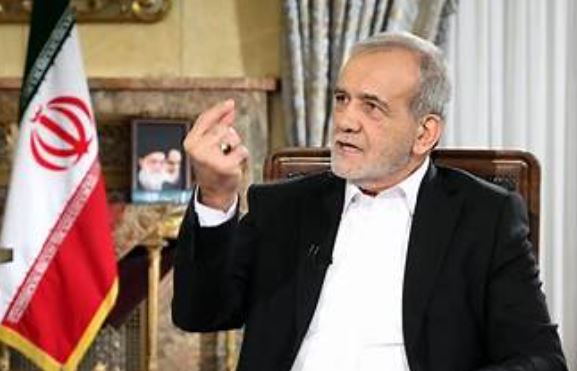
TEHRAN, JAN 11: /DNA/ – In a direct address to the Iranian people, President Masoud Pezeshkian outlined his government’s priorities, calling for national solidarity while sharply criticizing foreign powers accused of destabilizing the country.

The President emphasized his administration’s focus on solving the nation’s problems and alleviating public concerns. “We are trying to solve problems and alleviate people’s concerns,” he stated, promising to make every effort to bring tangible improvements to citizens’ lives.

A central theme of the speech was a strong warning against foreign interference. President Pezeshkian asserted that his government “will not allow any foreigners to sow seeds of discord among the nation.” He explicitly called on Iranians from all walks of life to join hands with the government to counter what he described as “foreign-backed riots.”

Drawing a clear line between legitimate public grievance and violence, the President urged citizens to separate themselves from the path of rioters and “armed terrorists.” He made a moral appeal for peace, stating, “No fellow citizen should create chaos, no human being should kill another person.”

On the domestic front, President Pezeshkian confirmed that his government is actively “fighting the roots of corruption in the country,” positioning this effort as a key component of solving the nation’s issues and restoring public trust.

His foreign policy criticism was pointed, particularly targeting the United States. “The US president should be ashamed of what he is doing in Venezuela, Gaza, elsewhere,” he declared, aligning Iran’s stance with global criticisms of American foreign policy.

Concluding with a call for collective action, President Pezeshkian asked “all Iranian people to join hands to solve problems of the nation,” framing national unity as the essential shield against both internal discord and external pressure.

The address appears to be a concerted effort by the new administration to consolidate domestic support, address economic and social grievances, and firmly reject external influence amid ongoing regional and international tensions.

Deputy PM/Foreign Minister Ishaq Dar performs Umrah

Deputy PM/Foreign Minister Ishaq Dar performs Umrah

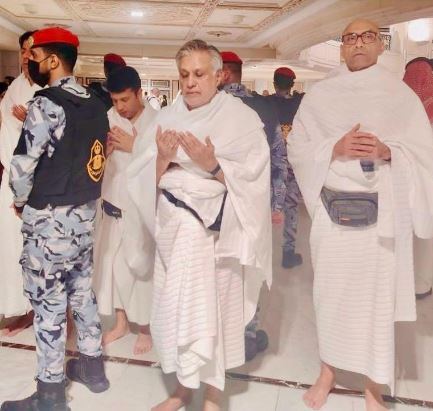
JEDDAH, JAN 11 /DNA/ – Deputy Prime Minister and Foreign Minister Senator Mohammad Ishaq Dar performed Umrah in Makkah Mukaramma today, following his participation in the Extraordinary Meeting of the Council of Foreign Ministers (CFM) of the Organization of Islamic Cooperation (OIC) in Jeddah.

During the sacred pilgrimage, Senator Dar offered special prayers for the progress, stability, and prosperity of Pakistan and its people. He also prayed for the peace and unity of the entire Muslim Ummah, seeking their collective wellbeing.

The spiritual visit underscores the personal and national significance of Islamic solidarity, coming immediately after high-level diplomatic consultations at the OIC forum focused on addressing pressing challenges facing the Muslim world.

The Deputy Prime Minister is expected to return to Pakistan following the completion of his official and religious engagements in the Kingdom of Saudi Arabia.

Pakistan Navy flotilla visits Oman during overseas deployment

Pakistan Navy flotilla visits Oman during overseas deployment

ISLAMABAD, JAN 11 /DNA/ – Pakistan Navy Flotilla comprising of PNS RAH NAWARD (Sail Ship), PNS MADADGAR and Pakistan Maritime Security Agency (PMSA) ship PMSS KASHMIR visited Port Sultan Qaboos, Muscat, Oman.  Upon arrival at the port, the ships were warmly welcomed by Omani authorities.

During the visit, Mission Commander, Commodore Amir Iqbal, along with the Commanding Officers held meetings with naval leadership of Oman. Mission Commander called on Acting Commander of Royal Navy of Oman (RNO), DG Ops and Plans, Commander Maritime Security Centre, Commander Said Bin Sultan Naval Base and Commandant Sultan Qaboos Naval Academy. During these interactions, matters of mutual interest, Navy-to-Navy engagements, and cooperation in maritime security were discussed. RNO Officers and Midshipmen also visited onboard ships and discussed topics of mutual maritime interest with PN officers. Pakistan Navy Ships were opened for visitors; wherein, large number of Pakistani community and students from Pakistan School, Muscat visited onboard.

Following the port call, PN and PMSA ships conducted a Passage Exercise with Royal Oman Navy ship KHASAB. The exercise at sea aimed to enhance interoperability between the two navies and promote shared learning through bilateral conduct of naval exercises.

Pakistan and Oman are maritime neighbours and frequent visits of dignitaries, port calls by ships and joint exercises are a regular feature. The visit of PN and PMSA ships will further strengthen bilateral relations between the two navies.

Stay Connected

64FansLike
60FollowersFollow

Latest Reviews

Exchange Rates

USD - United States Dollar
EUR
1.14
GBP
1.34
AUD
0.70
CAD
0.71