Home Blog Page 306

Thailand-Pakistan ties move from friendship to action

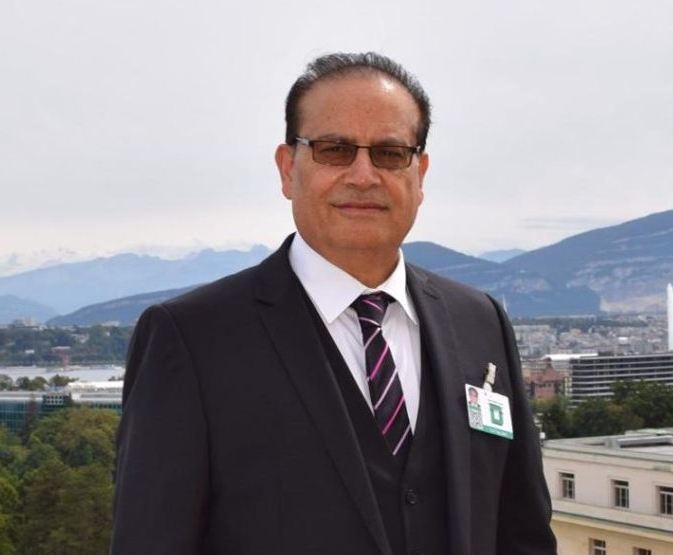
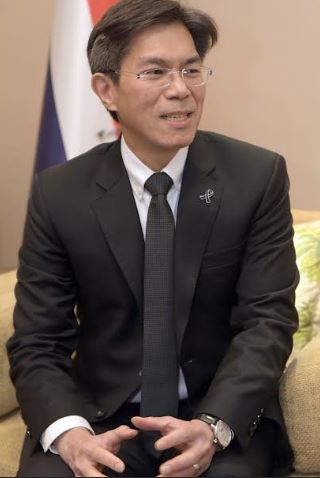
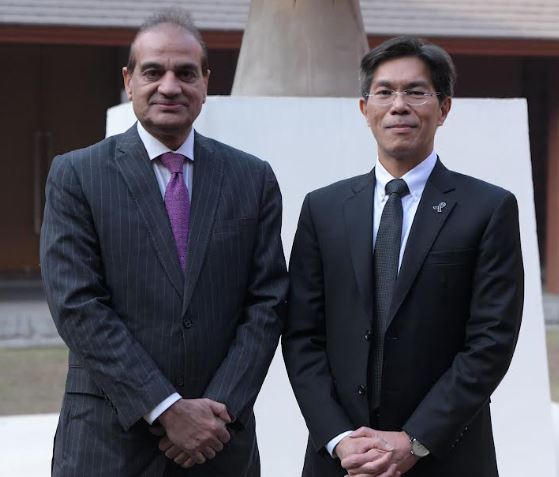
ISLAMABAD: H.E. Rongvudhi Virabutr, Ambassador of Thailand to Pakistan has shared his vision for deepening bilateral ties

Exclusive Interview: H.E. Rongvudhi Virabutr, Ambassador of Thailand to Pakistan. The first part of the interview was published on January 7, 2026.

EXCLUSIVE

Ansar M Bhatti

ISLAMABAD: H.E. Rongvudhi Virabutr, Ambassador of Thailand to Pakistan has shared his vision for deepening bilateral ties through cultural diplomacy, people-to-people connections, and economic integration.

The Ambassador began by reflecting on the current state of cultural relations: “The two nations already know each other, but we are not yet truly close.
Thailand-Pakistan ties move from friendship to action

The Embassy of Thailand is committed to working tirelessly to close this gap through sustained cultural exchange. Cultural diplomacy remains the foundation of a deeper and more meaningful friendship.

” Highlighting a successful recent initiative, he spoke about Thai Food Week in Islamabad: “This was a key effort to bring our flavors closer to the hearts of Pakistanis. We brought authentic Thai chefs who trained local Pakistani chefs in genuine Thai cooking techniques.

The Pakistani chefs then prepared traditional Thai dishes, which have now been permanently added to the menus of participating restaurants. Organized in close collaboration with the Monal Group, the event was deliberately designed as a sustainable culinary bridge — ensuring the ‘flavor of friendship’ continues long after the festival concludes.”Looking to the future, Ambassador Virabutr announced a major upcoming cultural milestone:

“In 2027, we will host the historic Gandhara Civilization Exhibition in Thailand. Both governments have agreed to showcase precious Buddhist artifacts from Pakistan’s rich Gandhara heritage in Bangkok.

 This exhibition will allow Thai audiences to directly appreciate Pakistan’s ancient cultural treasures and will act as a powerful cultural magnet, attracting greater interest and investment toward Pakistan’s invaluable heritage sites.”On the broader goal of strengthening people-to-people contacts, the Ambassador emphasized: “This is a top priority for the Embassy.

We are deploying every available tool — promoting tourism, fostering cultural exchange, and encouraging direct human interaction. The Thai Food Festival and the upcoming Gandhara Exhibition are important milestones, but we are going further. Through collaboration with UN Women, we have launched programs to upskill women entrepreneurs in Swabi and Sialkot in Beauty and Livelihood as well as Regenerative Agriculture. Training in the beauty sector enables women to work from home, while backyard gardens are being transformed into reliable sources of income.

Experts like Miss Jennifer Innes Taylor-Jane, a Thai organic farm owner, have generously shared regenerative farming practices. We firmly believe that empowering women through income generation builds confidence, independence, and lasting change.”He elaborated on the early outcomes of this pilot project: “The initiative has already enabled Thai and Pakistani women farmers to interact directly, exchange knowledge, and open channels for future cooperation. Together, they are developing innovative agricultural approaches that will help Pakistani women generate sustainable income over the long term.”

As Chairman of the ASEAN Islamabad Committee, Ambassador Virabutr outlined his guiding strategy: “My approach is built on three clear priorities — Visibility, Tangibility, and Bring into Reality. Today, ASEAN is a $3.6 trillion economic powerhouse with over 600 million people, while Pakistan has a population exceeding 250 million. Seamlessly integrating our economies would create a formidable combined force.

We are focused on removing barriers by expanding Pakistan’s Free Trade Agreements with individual ASEAN member states, promoting initiatives such as an ASEAN Trade Fair, and advancing paperless trading systems. ASEAN already operates the successful ASEAN Single Window; if Pakistan develops and connects its own system, imports and exports will become faster, more efficient, and fully transparent.

Visibility is also being enhanced through regular joint calls with federal ministers and ongoing economic dialogues with chambers of commerce.”Addressing Pakistan’s engagement with ASEAN, he stated: “Pakistan’s potential to become a Full Dialogue Partner is certain, but it requires strong commitment to move from potential to performance.

At present, Pakistan participates in around thirty ASEAN-related activities each year. To demonstrate truly comprehensive engagement, this number should grow closer to one hundred, covering all three ASEAN pillars — political-security, economic, and socio-cultural.

Thailand, as Chair of the ASEAN Committee in Islamabad, is actively facilitating this journey. Two areas stand out as particularly promising: disaster management and peacekeeping. Pakistan’s National Disaster Management Authority has proven capacity and expertise; linking it with ASEAN’s AHA Centre and DELSA system would create a seamless regional humanitarian framework. Similarly, Pakistan’s Center for International Peace and Stability (CIPS) at NUST is already a UN-recognized hub for peacekeeping training — connecting it with ASEAN member states would strengthen regional security cooperation and highlight Pakistan’s valuable global contributions.”In his concluding message to readers, Ambassador Virabutr offered an inspiring vision: “Thailand and Pakistan stand at the threshold of transformation — moving from friendly neighbors to true partners in development. Over the past year, I have seen our shared warm hospitality, profound cultural DNA, and common aspiration for prosperity.

Yet friendship alone is not enough; we need concrete action to deliver results that people can see, touch, and feel. Our Prosperity Partnership aims to double bilateral trade, unlock billions through the Halal industry, advance the FTA process, and connect our peoples through tourism, culture, and food — from Thai cuisine now permanently featured on Pakistani restaurant menus to the historic 2027 Gandhara Civilization Exhibition in Bangkok.

Beyond economics, we are empowering women entrepreneurs, linking farmers through regenerative agriculture, and advancing deeper ASEAN integration. Together, we can build a brighter, more prosperous future for both our nations.”


Motorway travellers advised to follow official updates amid dense fog

Motorway travellers advised to follow official updates amid dense fog

ISLAMABAD, JAN 12 (APP/DNA): Travellers on the motorway on Monday urged to stay updated through official advisories and plan their journeys carefully, as dense fog has reduced visibility and authorities continue to assess road conditions before reopening affected stretches.

The Motorway spokesperson, with various media channels, issued a special message urging motorists to avoid unnecessary travel due to dense fog.

He emphasized that visibility on the roads is severely reduced and traveling under such conditions can be extremely dangerous.

He further advised that if driving becomes unavoidable, motorists should use fog lights, maintain safe distances from other vehicles, and drive at reduced speeds to prevent accidents.

Authorities continue to monitor the situation and provide regular updates to ensure public safety.

          He further said several key motorway sections across Punjab were closed as dense fog swept the region, with authorities urging motorists to exercise caution and follow official updates.

              Motorway has advised motorists to use fog lights while driving and maintain a safe distance from other vehicles to avoid accidents in low-visibility conditions, adding, drivers are also urged to reduce their speed and stay alert on the roads until visibility improves.

        He stressed that unnecessary travel should be avoided during the fog, and motorists should follow official advisories and updates to ensure their safety.

            Emergency services are on high alert to respond promptly to any incidents on the affected motorway sections.

Who got what: Fresh Toshakhana records emerge

ISLAMABAD, JAN 12: More Toshakhana records have surfaced, with the Cabinet Division issuing details for the October–December 2025 quarter that list President Asif Ali Zardari, Prime Minister Shehbaz Sharif, PPP Chairman Bilawal Bhutto Zardari, Deputy Prime Minister Ishaq Dar and Interior Minister Mohsin Naqvi among recipients of valuable gifts.

All listed personalities deposited the gifts in Toshakhana, according to the record.

The recipients for the quarter also include the First Lady, IT Minister Shaza Fatima, Power Minister Awais Leghari, Minister for Economic Affairs Ahad Cheema, Speaker of the National Assembly Ayaz Sadiq and Information Minister Attaullah Tarar, it added.

Similarly, Special Assistant Tariq Fatemi, President’s Military Secretary, President’s Spokesperson Murtaza Solangi, Auditor General of Pakistan, Minister of State for Railways and Finance, Musarrat Zaidi, DG Minerals Dr Nawaz Ahmed Virk, Secretary Economic Affairs, Secretary IT, President’s ADC and others also received gifts.

According to the Cabinet Division data, gifts received during October-December quarter included models of Roza-e-Rasool, Khana Kaaba and Makkah Mukarramah, paintings, perfumes, shields, carpets, tea sets, swords, daggers, vases, watches, decorative pieces, Saudi coffee, books, royal caps, souvenirs, table clocks, a Metro Bus model, coffee pots, shirts, musical instruments, blankets, scarves, ties and other items.

As per Cabinet Division documents, all recipients deposited their gifts in Toshakhana during October-December 2025. The Cabinet Division is in the process of assessing the value of received gifts and related procedures are ongoing. The Cabinet Division’s list does not include names of gift-givers, whereas the list for last half of previous financial year (January-June 2025) did include names of foreign and local personalities who gave the gifts.

The Shehbaz government had gradually made public Toshakhana record from 2002 to September 2025, while record from 1997 to 2001 has also already been released.

Details of gifts received:
President Asif Ali Zardari: A wooden box; a pair of floral porcelain bowls; two ties; a pair of bowls; oud wood incense; perfume pack; mug; vase; decorative plate; two cups; helmet; frame; watch; wristwatch; perfume pack; wool scarf; model of Nimrud; decorative piece; book; a box containing a robe, boat, prayer beads, etc.

First Lady: Rolex watch; Kashmiri shawl; perfume pack.

Prime Minister Shehbaz Sharif: Three mufflers; silver vase; tea set; Metro Bus model; two shields; four decorative pieces; one cup; one book; egg device; one portrait; two shirts; blanket; model of Makkah Mukarramah; a box containing silver bowl, spoon, plate, etc.; a box containing attar; a box containing perfumes.

(Models of Khana Kaaba, vase, clock, crystal vase, horse model, sword, carpet and table clock have been displayed at Prime Minister’s House.)

Deputy Prime Minister Ishaq Dar: Russian traditional frame; Moscow landmark; two coffee sets; Kyrgyz traditional kumis mixing set with two bowls; Egyptian statue; Bahraini perfume; carriage clock.

Speaker Ayaz Sadiq: Souvenir snow leopard.

IT Minister Shaza Fatima Khawaja: Model of Selvy Palace; cones; two multi-colour scarves; white pearl.

Energy Minister Awais Leghari: Book.

Minister of state for finance and railways: Attar (perfume).

Chief of protocol: Perfume and oud incense; silver shield; mat.

Secretary IT: Souvenir.

Information Minister Attaullah Tarar: Perfume with oud incense; scarf.

Interior Minister Mohsin Naqvi: Perfume with oud incense. Special Assistant Tariq Fatemi: Perfume with oud incense.

Bilawal Bhutto Zardari: Shawl; Rolex watch; perfume pack; Loro Piana fabric.

President’s military secretary: Rolex watch.

President’s spokesperson Murtaza Solangi: Rolex watch.

Auditor general: Framed shield; necktie; crystal shield; cup; coin.

Secretary Hameer Karim: Vase.

Minister for Economic Affairs Ahad Cheema: A Glass and cup set as a gift.

Iran says ready for war and dialogue as Trump weighs response to crackdown

Iran says ready for war and dialogue as Trump weighs response to crackdown

TEHRAN, JAN 12: The situation in Iran is “under total control” after violence linked to protests spiked over the weekend, the country’s Foreign Minister Abbas Araqchi said on Monday via English translation.

“We are ready for war but also for dialogue,” Iranian Foreign Minister Abbas Araqchi said on Monday in a briefing to foreign ambassadors in Tehran via English translation.

He added that Trump’s warning against Tehran of action should protests turn bloody had motivated “terrorists” to target protesters and security forces in order to invite foreign intervention.

FM Araqchi’s response came after Trump said that he was considering potential military action against Iran, amid mounting mass anti-government protests in the country.

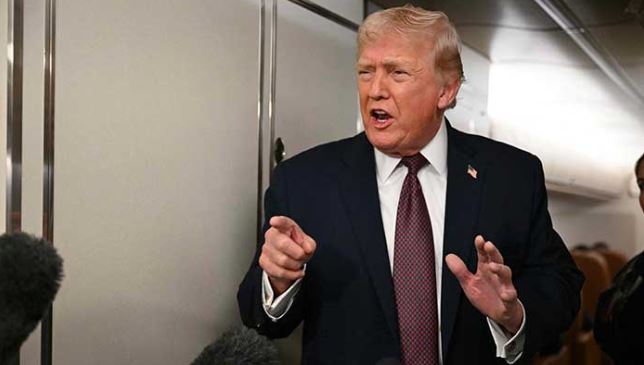
“They’re starting to, it looks like,” Trump said, when asked by reporters aboard Air Force One if Iran had crossed his previously stated red line of protesters being killed.

“We’re looking at it very seriously. The military is looking at it, and we’re looking at some very strong options. We’ll make a determination,” he said.

He also said that Iran’s leadership had called seeking “to negotiate” after his threats of military action.

“The leaders of Iran called” yesterday, Trump said, adding that “a meeting is being set up… They want to negotiate.”

However, Trump added that “we may have to act before a meeting.”

Meanwhile, China said on Monday it hopes the Iranian government and people would be able to overcome the current difficulties the country faces and maintain stability, referring to deadly protests taking place in the oil-rich Middle Eastern nation.

China opposes the use of force or the threat of it in international relations matters, a Chinese foreign ministry spokesperson said when responding to a media question about US President Donald Trump’s threat to intervene with military on behalf of the protesters.

“We have always opposed interference in other countries’ internal affairs and consistently advocated that the sovereignty and security of all nations should be fully protected by international law,” spokesperson Mao Ning said at a regular news briefing.

Trump to meet senior advisers
Trump was to meet with senior advisers on Tuesday to discuss options for Iran, a US official told Reuters on Sunday.

The Wall Street Journal had reported that options included military strikes, using secret cyber weapons, widening sanctions and providing online help to anti-government sources.

Earlier, Iranian Parliament Speaker Mohammad Baqer Qalibaf warned Washington against “a miscalculation.”

“Let us be clear: in the case of an attack on Iran, the occupied territories (Israel) as well as all US bases and ships will be our legitimate target,” said Qalibaf, a former commander in Iran’s elite Revolutionary Guards.

Iranian president calls for ‘national resistance march’

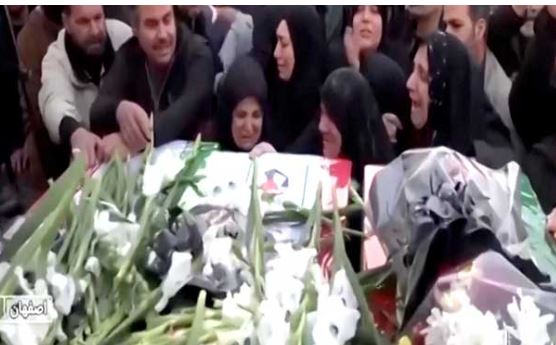
The Iranian government declared three days of national mourning for “martyrs” including members of the security forces killed in two weeks of protests, state television reported on Sunday.

The government described the fight against what it has termed “riots” as an “Iranian national resistance battle against America and the Zionist regime”, using the clerical leadership’s term for Israel, which the Islamic Republic does not recognise.

President Masoud Pezeshkian urged people to take part in a “national resistance march” of nationwide rallies on Monday to denounce the violence, which the government said was committed by “urban terrorist criminals”, state television reported.

Protests have swelled in recent days despite an internet blackout that has lasted more than 72 hours, according to monitor Netblocks. Activists have warned that the shutdown is limiting the flow of information and that the actual toll risks being far higher.

Meanwhile, unrest in Iran has killed more than 500 people, a rights group said on Sunday.

According to its latest figures, from activists inside and outside Iran, the US-based rights group HRANA said it had verified the deaths of 490 protesters and 48 security personnel, with more than 10,600 people arrested in two weeks of unrest.

PCB closes in on T20 World Cup 2026 squad as probables shortlisted

PCB closes in on T20 World Cup 2026 squad as probables shortlisted

LAHORE: Final consultations on Pakistan’s squad for the International Cricket Council (ICC) Men’s T20 World Cup 2026 and the upcoming home T20I series against Australia are expected later this week.

Sources said white-ball head coach Mike Hesson is set to arrive in Lahore after Pakistan’s tour of Sri Lanka concludes.

Once the consultation process is completed, the squad will be announced with the approval of Pakistan Cricket Board (PCB) Chairman Mohsin Naqvi.

The PCB has already submitted a preliminary list of players to the ICC for the T20 World Cup 2026, which will be co-hosted by India and Sri Lanka.

However, it is understood that the PCB can make changes to the submitted list without ICC approval until January 31.

Members of the national T20I squad are returning home today after completing the series in Sri Lanka.

Head coach Mike Hesson and captain Salman Ali Agha are expected to hold final discussions with the selectors before the squad is finalised.

Sources say the probable players include captain Salman Ali Agha, Sahibzada Farhan, Saim Ayub, Fakhar Zaman, Shadab Khan, Babar Azam, Faheem Ashraf, Mohammad Nawaz, Usman Khan and Abrar Ahmed.

Other players under consideration are Shaheen Shah Afridi, Naseem Shah, Haris Rauf, Salman Mirza and Khawaja Nafay, while Abdul Samad, Mohammad Wasim Jr and Usman Tariq are likely to be named among the reserve players.

Meanwhile, the PCB has forwarded a proposed schedule for Australia’s T20 International tour of Pakistan to Cricket Australia. According to sources, two draft itineraries have been shared for a three-match T20I series.

The proposed plans suggest that the Australian team could arrive in Pakistan either on January 26 or 27, with departure scheduled for February 2 or 3.

The series is tentatively structured to include two back-to-back matches, followed by a one-day break before the third and final T20I.

It is understood that fixtures have been proposed for January 29 and 31, while the third and final match is expected to be played on February 1.

Pakistan, the 2009 champions, will begin their T20 World Cup 2026 campaign against the Netherlands on February 7 in Colombo.

They will face the USA on February 10, followed by clashes against arch-rivals India on February 15 and Namibia on February 18 in their final group-stage match.

It is pertinent to note that Pakistan will play all of their matches in Sri Lanka, starting with four Group A fixtures in Colombo, while Super Eight matches are scheduled to be held in Colombo and Kandy.

“Trump’s March Toward Imperialism?”

Qamar Bashir

Qamar Bashir

Has the United States crossed an invisible threshold—moving from the imperfect discipline of democracy toward the raw logic of imperial power? This question now dominates global debate as policies under Donald Trump continue to unsettle alliances, fracture long-standing norms, and force even America’s closest partners to rethink assumptions that once seemed immutable. What is unfolding is not a series of isolated decisions but a coherent shift in worldview—one that increasingly privileges domination over consent and coercion over cooperation.

At the heart of this transformation lies a philosophy that treats democratic restraint as weakness. Trump’s oft-reported admiration for leaders who rule without resistance—where courts, parliaments, media, and civil institutions do not question authority but obey it—signals impatience with democratic friction. In this vision, speed replaces deliberation, command replaces consensus, and power is measured not by legitimacy but by the capacity to impose outcomes. Democracy becomes inefficient; obedience becomes desirable.

This shift has coincided with a sobering realization in Washington that American dominance is no longer uncontested. Economically, China has narrowed the gap. Diplomatically, the Global South increasingly resists Western pressure. Even allies now challenge U.S. preferences in international forums. Faced with this erosion of influence, the Trump administration has pivoted away from persuasion toward compulsion. The result is a growing perception that the United States is drifting from democratic leadership toward imperial behavior, intoxicated by the belief that kinetic and financial power ultimately outweigh economic interdependence, moral authority, or international law.

Classical political theory defines imperialism not simply as conquest but as a system of expansion through military force, economic extraction, political subordination, and institutional domination. Empires do not merely invade territories; they restructure economies, redirect wealth flows, and hollow out sovereignty. They justify these actions through security narratives or promises of prosperity while concentrating decision-making in a distant center of power. By this definition, imperialism can be territorial, financial, or kinetic—and often all three simultaneously.

For decades, the United States claimed to be an exception. It presented itself as the architect and steward of a rules-based order anchored in institutions like the United Nations and NATO, where formal equality constrained raw power. Under Trump, these constraints have been recast as liabilities. Institutions that limit U.S. freedom of action are dismissed as hostile or irrelevant. Funding is withdrawn, commitments abandoned, and multilateralism treated as an obstacle rather than a principle.

This imperial turn has manifested first through kinetic pressure. Military strikes in Syria, operations in Somalia, actions in Nigeria, and open threats against South Africa—including rhetoric about sanctions and even force under the pretext of protecting white-owned businesses—signal a willingness to punish states that defy U.S. narratives or strategic preferences. These actions reinforce a message long associated with empire: compliance brings tolerance, resistance brings punishment.

Yet imperialism today does not rely on military force alone. Equally powerful is what might be called financial imperialism, and it has become a defining feature of Trump’s second term. Soon after returning to office, the administration imposed sweeping tariffs on countries across the globe—friends and foes alike. Trade agreements, alliances, and shared security commitments offered no exemption. The logic was blunt: access to the vast consumer market of the United States would be weaponized as leverage.

These tariffs function as a form of economic strangulation. Countries dependent on U.S. consumers are forced to renegotiate trade on American terms, align politically with Washington’s preferences, or face severe economic pain. Unlike traditional sanctions, which are often justified through international mechanisms, these measures are unilateral and indiscriminate. They transform consumer demand into a geopolitical weapon, compelling submission not through tanks but through markets. This is economic imperialism in its modern form—control exercised through trade dependency rather than formal occupation.

The effect is cumulative. Kinetic pressure establishes fear, while financial pressure ensures compliance. Together, they recreate the imperial model in a contemporary guise. This pattern is evident in Eastern Europe. During the previous administration, vast sums were transferred to Ukraine under the banner of defending sovereignty. Under Trump, that relationship has been reframed. Assistance has become transactional, aid transformed into debt. Ukraine is now pressed to repay support through access to rare-earth minerals, effectively exchanging natural wealth for protection. This is not alliance; it is tribute enforced by dependency.

Nowhere is this logic clearer than in Venezuela. American oil companies have operated there since the 1940s, extracting enormous wealth while the population remained impoverished. When Venezuela reasserted control over its resources, those companies were expelled. Under Trump, they are invited back. Closed-door meetings with energy executives have reportedly encouraged the repossession of assets, renewed extraction, and export of profits—once again enriching corporations and the imperial center while leaving Venezuelan society poorer. The state loses control; the empire gains wealth. This is classical imperial extraction dressed in modern corporate language.

Territorial ambition has also resurfaced openly. Trump’s statements regarding Greenland, suggesting it would be taken with or without consent, shattered a taboo long thought buried. The justifications—strategic minerals, military positioning, and Arctic shipping routes shortened by climate change—mirror the calculations of nineteenth-century empires. Sovereignty becomes negotiable; consent optional. Utility, not law, determines ownership.

Pressure on Iran, often aligned with the strategic objectives of Israel, follows the same imperial script. Sanctions designed to choke the economy, constant threats of military action, and open discussion of regime change all signal an intent to subordinate an entire nation to external will. Security is the stated rationale; domination is the method.

What makes this moment uniquely troubling is that imperial practices are no longer confined to foreign policy. At home, the expansion of federal power increasingly resembles internal occupation. National Guard units and immigration agencies have been deployed across states without consent, overriding governors and local authorities. Historically, empires consolidate control by placing boots on the ground; political authority follows physical presence. Financial leverage reinforces this control. Federal funding for universities, healthcare systems, social programs, and research institutions is conditioned on political obedience—whether suppressing protests, aligning with official narratives, or endorsing favored foreign policies.

Executive authority has expanded at extraordinary speed. Trump’s prolific use of executive orders has narrowed legislative debate and constrained judicial oversight. Institutions designed to check power—courts, media, academia, welfare agencies—are not abolished but subordinated. Their survival becomes conditional. This is how empires govern: not by destroying institutions, but by bending them.

The global consequences are profound. Once a major power normalizes kinetic, financial, and economic imperialism, imitation becomes inevitable. Europe will feel pressure to secure resources. Russia will justify expansion. India and other regional powers will follow suit. Smaller states, particularly those rich in minerals or strategically located, will exist in perpetual fear—not of chaos, but of orderly extraction sanctioned by power.

The world before January 2025 and the world after January 2026 no longer feel the same. The United States, once a flawed champion of democratic norms, increasingly resembles an empire rediscovering old instincts. History offers a warning that should not be ignored. Imperialism does not stabilize the international system; it militarizes it. It replaces cooperation with fear, law with force, and legitimacy with coercion. And in the end, it corrodes the democracy at its core, leaving behind power without consent and authority without trust.

Qamar Bashir
Press Secretary to the President (Rtd)
Former Press Minister, Embassy of Pakistan to France
Former Press Attaché to Malaysia
Former MD, SRBC | Macomb, Michigan,

President Zardari embarks on official state visit to Bahrain

President Zardari embarks on official state visit to Bahrain

Saifullah Ansar

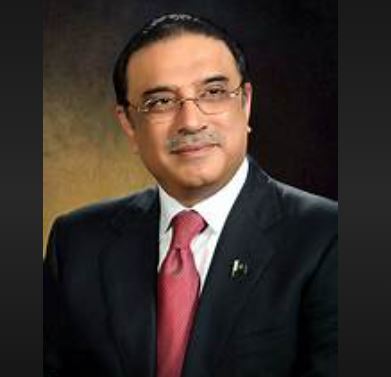
ISLAMABAD, JAN 12 /DNA/ – President Asif Ali Zardari’s Official Visit to the Kingdom of Bahrain (13-16 January 2026)Islamabad, January 12, 2026 – The President of the Islamic Republic of Pakistan, H.E. Mr. Asif Ali Zardari, will embark on an official state visit to the Kingdom of Bahrain from 13 to 16 January 2026, accompanied by a high-level delegation.

This visit comes at a time of strengthening bilateral ties, building on recent high-level engagements, including Prime Minister Muhammad Shehbaz Sharif’s successful visit to Bahrain and productive meetings between President Zardari and the Bahraini Ambassador in Islamabad in December 2025.During the visit, President Zardari will hold important meetings with His Majesty King Hamad bin Isa Al Khalifa, the King of Bahrain, and His Royal Highness Prince Salman bin Hamad Al Khalifa, the Crown Prince and Prime Minister.

The discussions will cover a wide range of bilateral, regional, and international issues of mutual interest, with a strong emphasis on deepening fraternal relations rooted in shared values, religious and cultural bonds.The primary objectives of the visit include reinforcing Pakistan’s longstanding cooperation with the brotherly Gulf nation and exploring new avenues for collaboration in key areas such as:Trade and economic partnership 

Pakistan greatly values its close and brotherly relationship with Bahrain, and this visit is expected to further translate these ties into tangible economic benefits, investment opportunities, and enhanced strategic coordination.

Trump says US military studying ‘very strong options’ for Iran

Trump says US military studying 'very strong options' for Iran

WASHINGTON, JAN 12: US President Donald Trump said on Sunday he was considering potential military action against Iran, amid mounting reports of deadly crackdowns against the country’s mass anti-government protests.

“They’re starting to, it looks like,” Trump said, when asked by reporters aboard Air Force One if Iran had crossed his previously stated red line of protesters being killed.

“We’re looking at it very seriously. The military is looking at it, and we’re looking at some very strong options. We’ll make a determination,” he said.

He also said that Iran’s leadership had called seeking “to negotiate” after his threats of military action amid mass anti-government protests in the Islamic republic.

“The leaders of Iran called” yesterday, Trump said, adding that “a meeting is being set up… They want to negotiate.”

However, Trump added that “we may have to act before a meeting.”

Trump to meet senior advisers

Trump was to meet with senior advisers on Tuesday to discuss options for Iran, a US official told Reuters on Sunday.

The Wall Street Journal had reported that options included military strikes, using secret cyber weapons, widening sanctions and providing online help to anti-government sources.

Earlier, Iranian Parliament Speaker Mohammad Baqer Qalibaf warned Washington against “a miscalculation.”

“Let us be clear: in the case of an attack on Iran, the occupied territories (Israel) as well as all US bases and ships will be our legitimate target,” said Qalibaf, a former commander in Iran’s elite Revolutionary Guards.

Iranian president calls for ‘national resistance march’

The Iranian government declared three days of national mourning for “martyrs” including members of the security forces killed in two weeks of protests, state television reported on Sunday.

The government described the fight against what it has termed “riots” as an “Iranian national resistance battle against America and the Zionist regime”, using the clerical leadership’s term for Israel, which the Islamic republic does not recognise.

President Masoud Pezeshkian urged people to take part in a “national resistance march” of nationwide rallies on Monday to denounce the violence, which the government said was committed by “urban terrorist criminals”, state television reported.

The protests, initially sparked by anger over the rising cost of living, have evolved into a movement against the theocratic system in place in Iran since the 1979 revolution. They have already lasted two weeks.

The protests have become one of the biggest challenges to the rule of supreme leader Ayatollah Ali Khamenei, 86, coming in the wake of Israel’s 12-day war against the Islamic republic in June, which was backed by the United States.

Protests have swelled in recent days despite an internet blackout that has lasted more than 72 hours, according to monitor Netblocks. Activists have warned that the shutdown is limiting the flow of information and that the actual toll risks being far higher.

At Karachi rally, KP CM vows to expand PTI street movement nationwide

At Karachi rally, KP CM vows to expand PTI street movement nationwide

KARACHI: Khyber Pakhtunkhwa Chief Minister Sohail Afridi on Sunday pledged for a street movement to spread the Pakistan Tehreek-e-Insaf (PTI) founder Imran Khan’s message across the country.

Addressing the PTI rally at Numaish Chowrangi, CM Afridi accused the Sindh government of placing obstacles in the party’s power show planned at Bagh-e-Jinnah and likened the administrative restrictions his party faced in Punjab.

The PTI was scheduled to hold a power show at Bagh-e-Jinnah today after obtaining a non-objection certificate (NOC) from the Sindh government.

However, the former ruling party went ahead with a rally outside Mazar-e-Quaid citing a delay in receiving permission, accusing the provincial authorities of placing obstacles in its way.

CM Afridi said the Sindh government had also failed to treat PTI fairly, adding that despite hurdles, the public removed all barriers and made the Karachi rally successful.

He announced that the next phase of the movement would be launched in Khyber Pakhtunkhwa and that a nationwide street movement would be used to spread the PTI founder’s message across the country.

Thanking the people of Karachi, he said public participation had proved the nation still stood with the PTI founder, warning those who believed his politics had ended to “come and see for themselves”.

Afridi alleged that self-proclaimed champions of democracy had been exposed as undemocratic, accusing the Sindh government of disrespecting Sindhi cultural symbols such as the ajrak and Sindhi cap.

He further claimed that the Pakistan Peoples Party (PPP) had jointly altered the constitutional framework and that a form of dictatorship had been established in Sindh.

Afridi said the public was ready to head towards D-Chowk and was awaiting a call from the PTI founder.

The KP chief minister stressed that his party would not allow anyone to strip the people of their rights or keep the nation’s leader imprisoned without justification.

The KP chief executive departed from Numaish Chowrangi after delivering a brief address, following which the PTI workers dispersed from the area.

Prior to the KP CM’s arrival at the venue, the event was marred by clashes between the party workers and the police, leading to arrests of more than 30 PTI activists.

Police resorted to shelling to disperse PTI workers who had gathered in the area, while separate disturbances were also reported at the VIP gate of Mazar-e-Quaid, where scuffles broke out between the party activists and the law enforcers.

Police officials said that further action would be taken against those identified in the stone-pelting incidents.

At that time, the KP CM was on a visit to Hyderabad and scheduled to return to Karachi, where he had landed on January 9 to kickstart his three-day visit.

While CM Afridi’s first two days in the province passed smoothly, he alleged earlier today that the provincial government blocked roads and created obstacles during his return journey from Hyderabad to Karachi.

“We were deliberately pushed onto deserted roads on our way back from Hyderabad to Karachi,” CM Afridi said in a video statement, adding that he has reached the port city and that “a rally will [surely] be held”.

PTI Secretary General Salman Akram Raja and PTI Sindh president Haleem Adil Sheikh were also part of the delegation, along with other party leaders.

Nasir Shah rejects allegations
Sindh Local Government Minister Nasser Shah said that the provincial authorities had extended full cooperation and hospitality to the visiting KP chief minister, rejecting allegations of mistreatment during the recent PTI rally.

Speaking on Geo News programme Naya Pakistan, Shah said the guest had been properly received and taken care of, adding that permission for holding rallies at Bagh-e-Jinnah was obtained from the federal government, as per established procedure.

He said that had the president advised against the reception, it would not have taken place.

He noted that the KP chief minister had publicly criticised the president, while the PTI had been advised to hold its gathering inside the designated ground but chose to remain on the roads instead.

He said the KP CM was provided full protocol and was brought through the safest possible route, with Sindh Police accompanying him throughout.

Referring to an incident that occurred a day earlier, the Sindh minister said an inquiry would be conducted. He added that the KP chief minister’s schedule was pre-planned and known to all concerned.

Rejecting claims of political pressure, Shah said that if there had been any such pressure, Sindh Minister Saeed Ghani would not have welcomed CM Afridi. He further said that the Pakistan Muslim League-Nawaz (PML-N) had raised no complaints with the Sindh government.

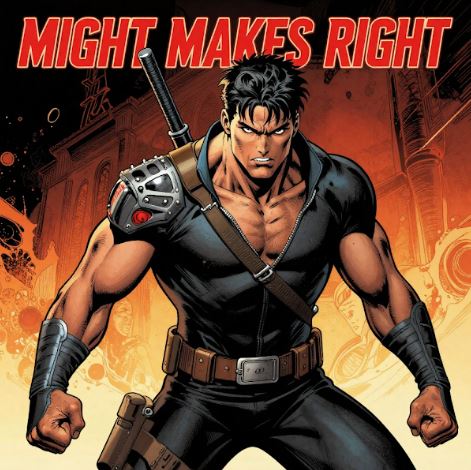
Might Makes Right

Might Makes Right

by Muhammad Mohsin Iqbal

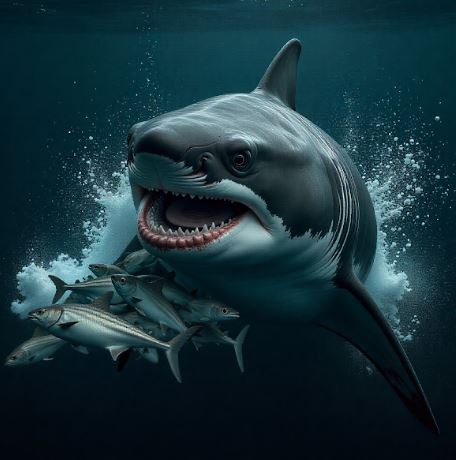
From the very dawn of creation, the universe has moved according to a divine equilibrium. Allah Almighty brought into existence innumerable creatures, assigning each its sphere and sustenance. On land, human beings were endowed with intellect, conscience, and moral responsibility; in the oceans, an astonishing diversity of life was created, numbering in the hundreds of thousands of known species, with many more still undiscovered. Among these aquatic beings, the Whale Shark (Rhincodon Typus) stands as the largest fish, gliding through the seas and sustaining itself by filtering vast volumes of water to consume plankton and tiny fish. In the underwater world, the larger feeding upon the smaller is part of a natural order, governed by instinct rather than arrogance or domination.

Human society, however, was never meant to mirror this crude biological struggle. Nations were not created to swallow one another merely because they possess greater strength. Whether large or small, wealthy or poor, every country has its own historical identity, territorial integrity, and moral right to exist with dignity within its geographical boundaries. Yet history tells a sobering story. For centuries, powerful empires invaded weaker lands, plundered resources, redrew borders, and justified their aggression as destiny or necessity. The consequences were ruinous wars, shattered civilizations, and unending human suffering.

The unprecedented devastation of the First World War forced humanity to confront the cost of unchecked power. Millions perished, economies collapsed, and entire regions were destabilized. In response, the League of Nations was established in 1920 as the first serious attempt to replace force with collective security and dialogue. Its declared aims were lofty; preventing war, resolving disputes peacefully, promoting disarmament, and fostering cooperation among nations. Yet beneath its noble language lay structural weaknesses. Major powers remained absent or indifferent, enforcement mechanisms were feeble, and decision-making required unanimity. When confronted with aggression in Manchuria, Ethiopia and Europe, the League stood helpless, ultimately collapsing under the weight of its own contradictions.

After the Second World War, even more catastrophic than the first, the United Nations (UN) emerged in 1945 with renewed promises. This new organization sought to correct earlier failures by including major powers and granting binding authority to the Security Council. Its Charter pledged to save succeeding generations from the scourge of war, to uphold International Law, and to protect the sovereignty of states. For many newly decolonized nations, the UN symbolized hope that the age of imperial domination had ended and that justice would no longer be subordinate to power.

Yet recent events have once again exposed the fragility of these ideals. The arrest of the Venezuelan President and his wife by the United States, coupled with claims of control over Venezuela’s internal affairs and oil reserves, has raised profound questions about the relevance of international law. The open declaration by the US President that he does not recognize international law in this context has shocked even seasoned observers. Political analysts widely believe that Venezuela’s decision to sell oil to Russia and China—bypassing the dollar and opting for national currencies—triggered deep anxiety in Washington, as it threatened the economic dominance upon which American power largely rests.

Although Russia and China formally condemned these actions, the global response remained restrained, reinforcing the perception that international law is applied selectively. Some commentators argue that an unspoken arrangement among major powers is taking shape; China asserting itself over Taiwan, Russia consolidating its hold over Ukraine, and the United States extending its reach over Venezuela. If this logic prevails, the world will no longer be governed by law, morality, or collective responsibility, but by raw power—the rule of the strongest baton.

The repercussions of such conduct extend far beyond Venezuela. Even America’s traditional allies now observe these developments with unease, questioning whether sovereignty is respected only when it aligns with dominant interests. Elsewhere, similar patterns are discernible. In Iran, repeated waves of unrest are widely viewed by independent critics as externally encouraged, reflecting a belief that regime change becomes inevitable wherever powerful actors feel discomforted. Such interventions deepen global mistrust and further erode confidence in international institutions.

Nearly a century ago, Allama Muhammad Iqbal captured this reality with piercing insight.

من ازیں بیش ندانم کہ کفن دزدے چند۔

بہر تقسیم قبور انجمنے ساختہ اند۔

Reflecting on the League of Nations, he wrote that an “association” had been formed by shroud thieves to divide the graves among themselves. In his moral imagination, these institutions were not guardians of peace but refined instruments for legitimizing the division of defeated nations and fallen empires. His harsh imagery likened the powerful to those who steal burial shrouds from the dead—the lowest form of thief—exposing the moral bankruptcy hidden beneath polite diplomacy.

Nature, even in its apparent cruelty, maintains balance. The whale shark consumes immense quantities of microscopic life, yet the oceans survive because harmony is preserved. Human civilization, blessed with reason, ethics, and law, has far less excuse for predatory behavior. If international institutions continue to serve only the interests of the powerful, their legitimacy will collapse entirely. Without justice, peace becomes a hollow slogan; without law, the world risks descending into a chaos more destructive than any natural struggle for survival.

Stay Connected

64FansLike
60FollowersFollow

Latest Reviews

Exchange Rates

USD - United States Dollar
EUR
1.14
GBP
1.34
AUD
0.70
CAD
0.71