Home Blog Page 3056

Saleem Mandviwalla urges trade associations to make collective efforts for dealing with issues

DNA

KARACHI: Deputy Chairman Senate of Pakistan Saleem Mandviwalla, while speaking at a webinar organized by Karachi Chamber of Commerce & Industry (KCCI) on Wednesday to develop national consensus on core economic agenda, stated that inconsistency and changes in policies have always been a problem as these changes either implemented through federal budget or otherwise throughout the year create a challenging environment for the business community. Therefore, all the Chambers and trade associations and FPCCI must unite and make collective efforts to effectively deal with issues being faced by the entire business and industrial community.

The webinar was also attended by Member National Assembly Ahsan Iqbal Chaudhry, Vice Chairman Businessmen Group Anjum Nisar, President KCCI M. Shariq Vohra, Senior Vice President Saqib Goodluck, Vice President Shamsul Islam Khan and others.

Saleem Mandviwalla advised all the Chambers to encourage their members to bring cases of harassment by NAB to Chamber’s notice and the same should subsequently be forwarded to Deputy Chairman Senate’s office so that these could be taken up with National Accountability Bureau (NAB) in order to get them resolved.

He stated that he has received hundreds of applications from all over the country from businessmen who have been victimized by NAB. “These businessmen were victimized as they carried out businesses with people currently being investigated by NAB”, he said, adding that businessmen should not be scared of the government authorities and come forward to highlight NAB’s harassment.

Speaking on the occasion, MNA Ahsan Iqbal underscored that it was the private sector that holds the key to progress of any nation as the days when the national investment used to lead are gone. Economies are increasingly dependent on Foreign Direct Investment and private investment. Unfortunately, Pakistan has not been able to harness the potential of foreign direct investment and private sector investment. The economy would never flourish when private sector remains shy to invest in the economy, he added.

He said, “We are now living in an extraordinary time, a time for paradigm shift. The whole model of business is undergoing fundamental changes and the models for industrial revolution developed some 300 years ago are becoming irrelevant as today the knowledge economy holds key to wealth creation.”

Hence, there is a need to explore new ways, compatible sources for wealth development and enhance capacity, Ahsan Iqbal said, adding that time has come that all the key stakeholders of Pakistan including the politicians, judges, military, bureaucracy, media and the private sector have to sit down together to develop a 10-year long national charter or a code of conduct on economy, democratic governance, justice, social issues, foreign policy and national security. “These are the fundamental areas in which we need consensus. Key to national economic development lies not in setting out policies, it lies in creating an enabling environment and it lies in developing confidence amongst the drivers of the economy who the investors.”

He pointed out that a country like Vietnam maintains US$9 billion FDI and Myanmar attracts US$4 to US$5 billion FDI per annum while Pakistan with a population of 210 million people was barely attracting US$1 billion. “Given our population and market size, we should be attracting US$20 to US$25 billion FDI per annum which will only come if our private sector is investing. If our private sector is not investing, FDI will also not come”, he added. “Economic stability can only be achieved through political stability hence we must learn from our mistakes and start speaking the truth also. We must understand that without stable politics there cannot be a robust economy”, he opined.

Vice Chairman BMG Anjum Nisar, in his remarks, stated that it was a matter of grave concern that even after more than 70 years of existence, Pakistan’s exports were hovering around US$24 billion whereas the FDI was around US$1.5 billion which actually is a shame for a country like Pakistan. “Hence, it was very essential to come up with Charter of Economy which must address the basic issues and we must also look at other models around the world to see what strategies were pursued by many countries to improve their exports, FDIs and other economic indicators. Secondly, the political parties have right to protest but we have to deal with political uncertainty in order to pull the country out of economic crises.”

Earlier, while welcoming the webinar participants, President KCCI M. Shariq Vohra stated that the Karachi Chamber has initiated a series of webinar to develop national consensus on core economic agenda as it was very crucial to put the political differences aside and establish long term goals under a Charter of Economy for a period of 20 years in order to ensure economic and industrial stability all over the country.

Finance Minister Haheez Shaikh chairs ECC meeting

DNA

ISLAMABAD, DEC 16 – Federal Minister for Finance and Revenue Dr. Abdul Hafeez Sheikh chaired the meeting of the Economic Coordination Committee (ECC) today. Minister for Interior Sheikh Rashid Ahmed, Minister for Industries and Production Hammad Azhar, Minister for Economic Affairs Khusro Bakhtiar, Adviser to the Prime Minister on Commerce Abdul Razak Dawood, Adviser to the PM on Institutional Reforms and Austerity Ishrat Hussain, SAPM on Revenue Dr. Waqar Masood, SAPM on Petroleum Nadeem Babar, Federal Minister for Maritime Affairs Ali Haider Zaidi, SAPM on Poverty Alleviation and Social Safety Dr. Sania Nishtar, SAPM on Energy Tabish Gauhar, Federal Minister for Privatization Muhammad Mian Soomro and Federal Minister for Energy Omar Ayub Khan participated in the meeting. Governor State Bank of Pakistan Dr. Reza Baqir joined the meeting through video link.

ECC approved Mobile Device Manufacturing and Electric Vehicles Policy (02-03 wheelers and HCVs {Heavy Commercial Vehicles}) presented by the Ministry of Industries and Production. After due deliberation, the forum approved removal of withholding tax of 4% on manufacturing to retailers of locally manufactured phones to incentivize the sector. Moreover, removal of Sales Tax on locally manufactured phones was also approved in principle and modalities would be worked out in consultation with the Finance Division.

ECC approved the following technical supplementary grants:

  1. a)219.300 million for the operationalization of the newly established Isolation Hospital and Infections Treatment Centre, Islamabad.
  2. b)305.462 million to payoff Pakistan’s annual contribution to World Health Organization (WHO).
  3. c)106.775 million to the ICT Administration for various projects
  4. d)706.82 million for FATA, temporary displaced persons, Emergency Recovery Project, NADRA.
  5. e)278.091 million for Annual Contribution of Pakistan to UNFA, PPD & IPPF-FPAP for FY-2018-19, 2019-20 & 2020-21.
  6. f)53.10 million for procurement of medical equipment, machinery and medicines to combat COVID-19.

The Finance Secretary briefed the forum about rationalization of subsidies (phase-I). A detailed presentation was given by SAPM on Revenue focusing on Electricity, Food and National Savings during the first phase. The Chair appreciated the detailed plan for rationalization of subsidies, its various components and directed to present a comprehensive summary with concrete proposals suggesting a way forward before ECC.

Priority Berthing for wheat and sugar imports was also discussed during the meeting. Minister for Maritime Affairs updated the forum about latest position of wheat vessels and operations of Karachi Port Trust (KPT) and Port Qasim Authority (PQA) accordingly. The Chair directed that the Logistic Committee of the ECC would be chaired by the Minister for Maritime Affairs to workout SOPs ensuring all stakeholders including private sector are onboard with reference to priority berthing.

Ministry of National Food Security and Research presented a summary for provision of additional quantities of wheat to the Government of AJ&K and Utility Stores Corporation. The Chair directed to provide first load of the additional quantities to both AJ&K and USC on priority as an interim arrangement to ensure smooth supply of wheat across the country. The detailed proposal would be discussed in the next ECC meeting.

ECC approved the new re-lending policy 2020 presented by Economic Affairs Division. The new re-lending policy will reflect the changes in the borrowing cost of the government, take into account variation in the exchange rate and pass on actual rates to the borrower for transparency. Other terms and stipulations, including with respect to recovery of commitment fee as in the policy in vogue, will continue to apply.

The ECC also accorded approval for issuance of offshore Pakistan Rupee (PKR) linked Bonds to the International Finance Corporation (IFC). This will help in availability of financing to priority sectors, promote private sector investments and bring foreign exchange liquidity in domestic foreign exchange market in the post-COVID-19 scenario.

The Karachi Transformation Plan was postponed to the next ECC meeting.

The artesian at Work

By: AB Khan

The denizens of this tensile town   for years have   been   served with a range of worn-out Italian cuisine variations on the same handful of dishes in the likes of   overcooked pastas, thick crusted pizzas, under- cooked  Ravioli’s and cream filled Italian desserts offered from  identikit menus  where the guests can also spot Chicken Karahi,   Chowmein and Cheese nans.

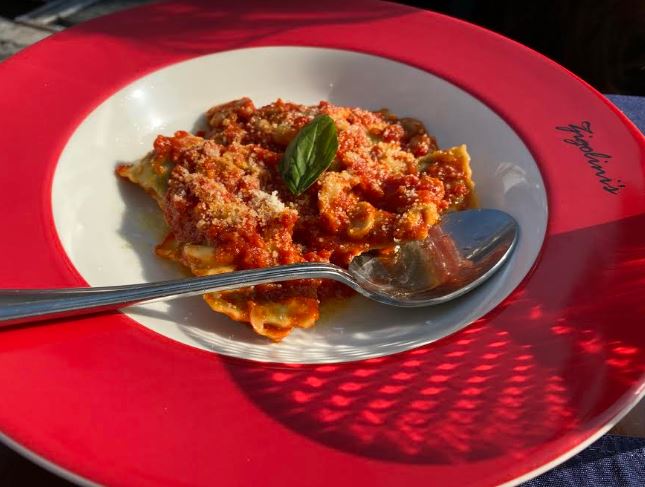
Zigolani, the Italian restaurant at Marriott hotel, Islamaabad is cut above the rest when it comes to bona fide Italian cuisine. The eatery’s legitimacy has further been baptized with the arrival of its new Italian chef Paolo Collavii.

52

Traveling around the world for last forty years, the new Executive Chef at Zigolani has arrived in Islamabad  and brings with him a  rich experience from the world of gastronomy as well as Italian culinary heritage and traditions. From Morocco to Greece, Kuwait to Singapore, Turkey to South Korea , Chef Collavii have been around,  being part of the many pre-openings  of bistros,  cafes and restaurants in five star hotels, running kitchens  in small  as well as many metropolitan cities  . However the first job of his career was as a trainee Chef at a cruise ship kitchen where he worked behind the burners for 5 years while in his teens.

51

The menu at Zigolini   offers a wide range of small starters, perfect for sharing, including a melt –in-the savories,  moving on to the    more solid affair with a selection from the main course in the likes of fish, lamb, beef and sea food  dishes, either accompanied by Pasta’ and  Ravioli’s or stand alone . However the flagship item at any Italian restaurant is “Pizza” and the Wooden –oven, handmade pizza prepared by the chef, is not only a treat for the taste buds but for the eyes as well. Garlic, mozzarella cheese and a few herbs of one’s liking is what one can find at any Italian restaurant in Italy and now in Islamabad.

53

In a drive to make Zigolani, a paragon of purism, the new chef wants to offer an Italian menu that is veritable and powerfully evocative of each of the   regions landscape picked up from across the length and breadth of Italy so that the culinary regionalism burns fiercely and is quintessential. The Risotto from the north, the ripe tomatoes from the south regions and the seafood treasure trove from the Arctic and Mediterranean seas

Due to the SOP’s issued by the Government of Pakistan and the administration of Islamabad, Marriott hotel has creatively laid down dining tables in the big spacious driveway in open air to facilitate their regular visitors. The guest once seated can order from the menu’s laid down on the tables from  their Chinese restaurant, Dynasty, Royal Elephant, the Thai eatery, Dumpukht, the Pakistani restaurant and Zigolani.

54

As my temptation was to try the new chef’s menu, the choice was obvious. The food began  to arrive in a steady stream. Served as per the order close to the typical Italian culinary tradition, well structured antipasti arrived at the table with the cheese and charcuterie board which went with the saying that “you eat with your eyes”.  It was clear that an experienced hand is at work, it really did make a case in point.

Simple and delicious, the main course was accompanied by seafood, chicken, eggplant and beef dishes married to Pastas, Raviolis and risottos. Tagliata di manzo was the beef dish and is one of Italy’s most popular meat savories.  It’s a boneless piece of grilled beef, served in slices. Tagliare, means “to cut”. To make the beef Tagilita, all you need is high quality cut of beef and some herbs, balsamic vinegar reduction and rustic potatoes bursting out of their skins as explained by the chef. It is one of the most popular ways to serve it is alongside peppery arugula salad, with thinly shaved Parmigianino Reggiano and a drizzle of extra virgin olive oil and balsamic vinegar, the chef further elaborated  as I started to do justice to the dish.  The beef texture was indeed strident and the   aromatic taste of olive oil and balsamic vinegar doing a tango with green herbs, just took it to the next level.

Peeking up from a deep puddle of soup was what chef introduced as Zuppa de pesce allo zafferano. “Usually it is served in a soup bowl, but I prefer a deep dish to make more space for the soup. The broth is made from the fish whereas red snapper, squids and prawns was a party of three making their presence felt.  I also used Saffron because in Pakistan, the quality is very good and it’s not expensive as well”. He informed. On the side there were two pieces of crusty bread brushed with dry garlic rubbed before being roasted.  The soup was simply mouth watering. The amalgamation of three seafood delicacies, swimming with vinegar and olive oil, It was a master class in brothery and it   will slap you awake with the tinge and acidity.

The mastery   of traditional way of cooking food depends upon how deep one has gone  into the culture and tradition of its roots and with  arrival of every dish, its texture, taste and above all, the presentation , it leaves no doubt in one’s mind that   chef Paolo Collavii  knows what food, culture and tradition is all about . He knows and loves the Roman repertoire and wants to give it, the love it deserves.

It was worth sticking around for dessert as the chef has already warned to keep some room.  In comes the Tiramisu on white platter, dusted with cocoa powder. It was hands down a mouth burst, served with its silkiness. Texturally, aligned, pregnant with mascarpone cheese, releasing its ballast of sweet syrup as you spoon it, was a star turn.

Swathes of globe may not get vaccine until 2022: study

At least a fifth of the world’s population may not have access to a Covid-19 vaccine until 2022, according to a study published on Wednesday, with wealthier nations reserving more than half of next year’s potential doses.

With hopes that vaccines can bring an end to a pandemic that has killed some 1.6 million people, countries including the United States, Britain and the United Arab Emirates have already begun rolling out immunisation programmes.

Eager to increase their chances of having access to at least one of the dozens of vaccines in development, many nations have snapped up allocations of several different drugs.

Wealthy nations — accounting for just 14 per cent of the global population — have pre-ordered just over half of the vaccine doses expected to be produced by the 13 leading developers next year, researchers from the Johns Hopkins Bloomberg School of Public Health found.

There are fears that poorer nations will be left behind.

Even if the drug makers all produce effective, safe vaccines and meet their maximum global manufacturing targets, the study said “at least a fifth of the world’s population would not have access to vaccines until 2022”.

The research, published in the BMJ medical journal, looked at publicly available data and found that as of mid-November, reservations totalled 7.48 billion doses — equivalent to 3.76 billion immunisation courses, because most vaccines require two jabs.

That is out of a total maximum projected manufacturing capacity of 5.96 billion courses by the end of 2021.

Pooled purchasing scheme

The study estimated that up to 40pc of the vaccine courses from the leading manufacturers might be available for low and middle-income countries, but said this would depend on how rich countries share what they have bought.

The authors, who cautioned that public information was incomplete, called for “greater transparency and accountability” over support for equitable global access.

They suggested the implications could go well beyond health.

“To varying degrees, trade with and travel to countries might face continued disruption until access to effective preventive or treatment measures, such as Covid-19 vaccines, becomes more widely available,” the report said.

Many countries have joined a pooled purchasing mechanism COVAX — coordinated by the World Health Organisation, the Coalition for Epidemic Preparedness Innovations and vaccines alliance Gavi — aiming to ensure that people across the world have access to a Covid-19 vaccine, regardless of wealth.

The initiative is hoping to have two billion doses available by the end of 2021. But neither the United States nor Russia have so far joined the programme.

‘Devastating crisis’

Jason Schwartz, at the Yale School of Public Health, said US participation in coordination efforts would be “invaluable” in helping ensure people across the world have access to vaccines “that will ultimately help bring an end to this devastating global health crisis”.

In a BMJ editorial, Schwartz said the requirement for two doses and the very low temperatures needed to store some of the vaccines added to the challenges for many countries.

“The operational challenges of the global Covid-19 vaccination programme will be at least as difficult as the scientific challenges associated with rapidly developing safe and effective vaccines,” he said.

The Johns Hopkins authors said prices for immunisations ranged from $6 per course to as high as $74. They found that if all the vaccines work as hoped, many richer nations would have already reserved at least one immunisation per person.

Researchers said that Canada had ordered the equivalent of four doses per person, the United States has reserved just enough for one vaccine course per person, while countries like Indonesia have reserved less than one vaccine course for every two people.

CDA asked to address issues of Melody Market

ISLAMABAD, DEC 16 (DNA) –  Sardar Yasir Ilyas Khan, President, Islamabad Chamber of Commerce and Industry said that the Main Civic Centre, G-6 Markaz (Melody Market) Islamabad was an important commercial centre of the federal capital, but was facing many problems due to the lack of development works, therefore, he urged that CDA should focus on better development of G-6 Markaz, Melody Market by addressing its key issues to facilitate the traders in promoting trade activities.

He said this while addressing a delegation of Traders Welfare Association (TWA), Main Civic Centre, G-6 Markaz, Islamabad that called on him led by President Syed Syed Adil Anis. Zahid Butt Senior Vice President, Bilal Khan Secretary General, Raja Kanwar Finance Secretary, Naeem Khan Press Secretary and others were in the delegation.

Abdul Rehman Khan Vice President ICCI, Mian Akram Farid Chairman Founder Group, Khalid Chaudhry, Muhammad Hussain and others were also present at the occasion.

Sardar Yasir Ilyas Khan said that the road from Melody Chowk to Aabpara Chowk was closed from both sides due to the security arrangements for NAB office, but closure of the road was creating a lot of problems for the traders and the commuters.

He said that the Supreme Court in a decision had ordered for removal of all such barriers and emphasized that CDA should remove barriers to clear the said road to streamline the traffic flow. He assured that ICCI would cooperate with TWA, G-6 Markaz for resolving the key issues of its members.

Abdul Rehman Khan Vice President ICCI and Mian Akram Farid Chairman Founder Group said that infrastructure for the fruits & vegetable market was ready in Melody Market and CDA should make it functional through advertisement. They further said that CDA should arrange the cutting of trees and plantation of flowers trees in the melody market for its beautification.

Speaking at the occasion, Syed Adil Anis President and Bilal Khan Secretary General, Traders Welfare Association, G-6 Markaz, Islamabad said that many streetlights in the Melody Market were out of order since long and emphasized that CDA should restore them without further delay.

They said that the roads and footpaths in G-6 Markaz needed proper repair and maintenance and CDA should accelerate efforts for carpeting of roads and repair of footpaths. They said that a filtration plant was needed in Melody Market for clean drinking water and CDA should arrange its installation.=DNA

==============

Pakistan, US inaugurate 155 district disease monitoring units

ISLAMABAD, DEC 16 (DNA) –  Government officials from Pakistan and the United States today inaugurated 155 District Disease Monitoring Units to enable local health officials to track the spread of infectious diseases, such as COVID-19, more effectively throughout Pakistan.

The Monitoring Units, which are designated spaces within existing district health offices, have been equipped with modern audio-visual equipment and internet connectivity to strengthen real-time coordination on disease monitoring between the district and provincial levels.

The United States Mission to Pakistan, through the Agency for International Development (USAID), also supported the training of rapid response teams working in the Monitoring Units on how to conduct contact tracing for COVID-19 cases. These teams were also trained to use data to identify potential COVID-19 hotspots within the districts.

“Being able to rapidly monitor, detect, and respond to public health threats such as COVID-19 is critically important.  It inspired our partnership with the Government of Pakistan to establish these District Disease Monitoring and Response Units and build the capacity of nearly 3,000 healthcare workers to rapidly respond to public health threats in Pakistan,” said USAID Mission Director Julie Koenen. “We thank the Government of Pakistan for our continued collaboration as we meet the challenge of linking these units to Provincial, Regional, and Federal structures, thereby providing critical resources to stop the spread of COVID-19 and other infectious diseases.”

The Special Assistant to the Prime Minister on Health, Dr. Faisal Sultan, expressed his gratitude to the United States Government and acknowledged that this support will go a long way towards institutionalizing an integrated disease surveillance system in Pakistan.=DNA

=====================

Seminar on “Route to International Certifications for Pharmaceutical Companies” begins

DNA

KARACHI, DEC 16 –  UK government’s Department for International Trade hosted a virtual seminar in collaboration with Pakistan Pharmaceuticals Manufacturers’ Association (PPMA) and Woodley BioReg Limited UK on “Route to International Certifications for Pharmaceutical Companies”.

The event, chaired by the Deputy High Commissioner Karachi and Trade Director, Pakistan Mike Nithavrianakis brought together local pharmaceutical companies interested in getting their manufacturing facilities compliant to global manufacturing standards and a UK based consultancy firm on Medicines and Healthcare products Regulatory Agency (MHRA) and Good Manufacturing Practices (GMP).The list of those attending were: Mr Tauqeer Ul Haq (Central Chairman PPMA, Mr Ash Ramzan (Principal Consultant, Woodley BioReg Limited), Ms Mahwash Khan (Chairperson PPMA South Zone) and Rehan Shahid (Senior Trade Manager).

Deputy High Commissioner and Trade Director Mike Nithavrianakis highlighted how the UK’s expertise can be utilised to help local pharmaceutical companies achieve international certifications and expand their export markets.Deputy High Commissioner and Trade Director Mike Nithavrianakis said, “The pharmaceutical industry is among the fastest-growing sectors in Pakistan and has recorded double-digit growth rates in the last four years.

However, the export potential of this industry remains under-utilised and this can be addressed by getting local manufacturing facilities certified to international standards. Our aim is to provide detailed guidance on the process of international certification and an overview of the UK’s quality standards and regulatory requirements for Pharmaceuticals, Nutraceuticals and Medical Devices. We are excited about the potential for the UK and Pakistan to work ever more closely in this sector.”

BAT progresses COVID-19 candidate vaccine into Phase-I human clinical trials

ISLAMABAD, DEC 16 /DNA/ – British American Tobacco’s US Bio-tech arm, Kentucky BioProcessing  (KBP) today announced plans to commence a Phase I first-time-in-human study of its COVID-19 vaccine candidate following approval of its Investigational New Drug application by the U.S. Food and Drug Administration (FDA). Enrolment for the study is expected to begin shortly. The COVID-19 vaccine candidate (KBP-COVID-19; NCT04473690) will become one of a number of potential vaccines to have progressed beyond pre-clinical testing. The study is designed to enroll a total of 180 healthy volunteers who will be divided into two age cohorts, age 18-49 and age 50-70.

Each group will then be subdivided into low and high dose treatment groups (N~45) and randomised 2:1 to receive either the low dose (15 μg KBP-COVID-19 vaccine + 0.5 mg adjuvant) or placebo, or high dose (45 μg KBP-COVID-19 vaccine + 0.5 mg adjuvant) or placebo. Results from the study are expected mid-2021 and, if positive, would allow for continued progress into a Phase 2 study, subject to regulatory approval.

The candidate vaccine has been developed using KBP’s innovative fast-growing plant-based technology. This unique approach has a number of possible advantages, including the rapid production of the vaccine’s active ingredients in around 6-weeks, compared to several months using conventional methods. The candidate vaccine also has the potential to be stable at room temperature, which could be a significant advantage for healthcare systems and public health networks worldwide. If successful, the speed of production of the active ingredients has the potential to reduce the time between identifying new viruses and strains, and vaccine development and deployment to those who need it.

KBP is conducting and recently completed enrolment for a Phase I clinical study of its quadrivalent (four-strain) influenza vaccine candidate (KBP-V001; NCT04439695), which uses the same nicotiana benthamiana plant-based technology platform.

Dr David O’Reilly, BAT’s Director of Scientific Research said that moving into human trials with both our COVID-19 and seasonal flu vaccine candidates is a significant milestone and reflects our considerable efforts to accelerate the development of our emerging biologicals portfolio. It is our unique plant-based vaccine technology, which acts as a fast, efficient host for the production of antigens for a variety of diseases, that has enabled us to make this progress and respond to the urgent global need for safe and effective treatments and vaccines. “This is part of our ongoing commitment to innovation and science, which are fundamental to our business. As a company committed to building A Better Tomorrow, we are proud to play our part in the global fight against this virus and  hopefully  we can contribute to the solution.” With both vaccines reaching these important milestones, the science around tobacco plant-based vaccine development and the unique platform continue to gain momentum.

AIOU uploads assignments marks of overseas students

DNA

ISLAMABAD, DEC 16 –  Allama Iqbal Open University (AIOU) has finalized evaluation process of course assignments of overseas students enrolled in spring 2020 semester and their final result will soon be declared. According to Examinations Department, AIOU has completed the process of assignments’ assessment and uploaded marks of the students settled in Saudi Arabia, UAE, Kuweit, Qattar, Oman and Bahrain for matriculation and intermediate programs on the university website ([email protected]).

The Examinations Department has further informed that final results of these programs would be announced soon. It is pertinent to mention here that AIOU has been imparting quality education to the overseas Pakistanis settled in the Middle East, Europe and America through distance education.

Upon the special directives of the Vice Chancellor, AIOU, Prof Dr Zia Ul-Qayyum, university has expedited the process of offering courses in collaboration with institutions of Europe, Canada and USA. In this regard, an MoU with a Canadian organization ‘NextGenU’ has been signed recently to offer six certificate level courses jointly. According to the agreement, AIOU will offer these courses in spring 2021 semester.

Fourth steering committee meeting convened to advance Rule of Law roadmap in Balochistan

DNA

QUETTA , DEC 16 – The Steering Committee on the Rule of Law (RoL) Roadmap Balochistan convened its fourth stock take meeting on 16 December 2020 in Quetta. The session concluded with a firm commitment made by Mr. Ziaullah Langove, Minister Home & Tribal Affairs, GoB towards advancing the criminal justice sector reforms envisioned under the Rule of Law roadmap in Balochistan.

Balochistan has achieved significant milestones under the RoL Roadmap Project since its inception to date. This project is being implemented by UNODC and supported by the British High Commission. Balochistan has succeeded to establish a fully functional governance mechanism that drives evidence-based and cross institutional RoL Reform which was possible due to the commitment and dedication of the government of Balochistan and all stakeholders to make this reform meaningful and sustainable.

The progress made under the roadmap was applauded by all the stakeholders despite the unprecedented challenges of COVID-19. The participants took stock of the achievements, lessons and exchanged views on next prospects for cooperation. Mr. Hafiz Abdul Basit, Additional Chief Secretary, Home & Tribal Affairs, GoB appraised the SC members of another major milestone, which is the final approval of the PC-1 by the Government, committing the amount PKR 500 million for the RoL reform in the province under the Roadmap.  He further thanked all those who have been working relentlessly to get this approval. 

Speaking on the occasion, Mr. Jeremy Milsom, Representative, UNODC Pakistan emphasized that through the coordination efforts with the Government of Balochistan, considerable progress under the Rule of Law reforms has been achieved. However, the time is now to continue pushing forward and move the needle on implementing a robust set of reforms to align the criminal justice institutions to reinforce human rights and address underlying challenges of gender-based violence through promoting the rule of law and democracy in Balochistan.

Key findings from the assessment survey on citizens’ perception regarding the performance of criminal justice institutions and the baseline study in Balochistan were presented. While the findings of the survey and baseline provide a benchmark to use a demand-driven approach through citizens’ perspectives to enhance legitimacy, fairness, efficiency and transparency of the criminal justice sector towards ensuring safety and security of the citizens, the baseline also provides a yardstick for criminal justice institutions to measure their performance and progress against RoL provincial set targets.

The Delivery Unit apprised the forum further on the progress made to date, particularly on the digital platforms through a demonstration of the website which is continuously being updated to project the dynamic nature of the criminal justice reforms led by the RoL roadmap. The digital interface of the roadmap is powered by a dashboard that provides a convergence platform through evidence-led data analytics to inform both policy and practice of  criminal justice institutions.

The Roadmap project is recognized as a groundbreaking and innovative approach to drive evidence-based policy and reform through a robust governance structure and regular stock takes.

The organizers of the steering committee meeting thanked all stakeholders for their participation and acknowledged UNODC’s efforts and the British High Commission for their continued and generous support.

Stay Connected

64FansLike
60FollowersFollow

Latest Reviews

Exchange Rates

USD - United States Dollar
EUR
1.17
GBP
1.35
AUD
0.72
CAD
0.73