Home Blog Page 3047

‘Remarkable turnaround despite Covid’: Current account sees surplus for fifth consecutive month

ISLAMABAD – Pakistan’s current account recorded a surplus for the fifth consecutive month in November at $447 million as compared to a deficit of $326m during the same time last year, data released by the State Bank of Pakistan (SBP) showed on Tuesday.

“In contrast to the previous five years, the current account has been in surplus throughout FY21 due to an improved trade balance and a sustained increase in remittances,” the central bank said on Twitter.

“In November 2020, both exports and imports picked up, reflecting a recovery in external demand and domestic economic activity,” the SBP said.

On a cumulative basis, the total current account surplus during the July-November period rose to a record $1.64 billion against a deficit of $1.745bn during the same period last year.

Remittances during the five months under review jumped 27 per cent to $11.77bn after Covid-led travel restrictions increased flows through legal channels.

“This turnaround in the current account, together with an improvement in financial inflows, raised SBP’s foreign exchange reserves by around $1bn in November 2020. At $13.1bn, they are now at their highest level in 3 years,” the state bank said.

Commenting on the development, Prime Minister Imran Khan said that “despite Covid-19, Pakistan’s economy has witnessed a remarkable turnaround”.

Meanwhile, Wajid Rizvi from Fortune Securities said: “Pakistan’s external side has continued to firmly batten down the hatches during the pandemic by posting a current account surplus for a fifth straight month in FY21.

“The most noteworthy characteristic is that the surplus increased despite a rise of $338m (up 22pc month-on-month) in the trade gap. Trade gap is expected to expand further primarily from an increase in food, textile, machinery and auto imports,” he said.

However, the current fiscal year-to-date performance has created an adequate foreign exchange reserves buffer to cushion any subsequent rise in the trade gap, he added.

Joe Biden receives COVID-19 vaccine live on TV

NEWARK : US President-elect Joe Biden received a Covid-19 vaccine live on television Monday in a campaign to boost Americans’ confidence in the jabs — and in marked contrast to President Donald Trump’s mixed messaging.

The 78-year-old incoming president got the Pfizer vaccine at the Christiana Hospital in Newark, Delaware. His wife Jill received the shot earlier, the presidential transition team said.Biden told Americans “there s nothing to worry about” when they get vaccinated and that in the meantime they should keep wearing masks and “listen to the experts.”

He and the future first lady were the latest high-profile political figures publicly joining the first wave of vaccinations aimed at stopping a pandemic that has killed almost 318,000 Americans.

Vice President-elect Kamala Harris and her husband will be vaccinated next week.

Meanwhile, the serving vice president, Mike Pence, and his wife got vaccinations last week. Trump, however, has yet to take part in the drive.

The Republican leader — who has become consumed by pushing conspiracy theories that his election loss to Biden was the result of mass fraud — cites the natural immunity he is believed to enjoy after recovering from a bout of coronavirus.

Surgeon general Jerome Adams reinforced that argument at the weekend that, saying that due to the antibodies the president received from his infection, “that is actually one scenario where we tell people maybe you should hold off on getting the vaccine.”

However, he has done little, even in terms of issuing statements, to support the campaign to overcome Americans vaccine skepticism.

His wife, Melania Trump, who likewise contracted Covid-19, has also been largely absent from the issue.

The inconsistent messaging is part of a pattern with Trump, who throughout the pandemic has veered from declaring himself a wartime leader to scoffing at scientists and insisting that the disease will go away without major changes in Americans daily lives.

Indian farmers’ protests and our media

Farooq Alay

One is appalled to see that the media in Pakistan is not giving sufficient coverage to the now a bigger event in the history of South Asian region, i.e. the unprecedented protests of the Indian farmers against the three new laws which blatantly favour the interests of the big in agriculture sector. Had it been in Pakistan, the Indian media would have come out differently rather proactively; probably they all work in unison when it comes to working against Pakistan. There can be quoted many instances, which lead us to believe that either our journalism is poised to local politics or they deliberately ignore the event occurring on the wider scale. One had observed that when the Indian media team, the number was in hundreds, came to Pakistan, during the former Prime Minister Vajpayee’s visit and his talks with Pakistan’s President, Pervez Musharraf, the Indian media spoke in chorus as if they had been well briefed by their ‘government’. But on the contrary, our media persons had answers to Indian media interviewers that were heterogeneous and not in complete harmony with the Pakistan’s national interest.

If one may invite the readers to browse on internet about the plight of protesting farmers of India, you will hardly see anything informative on Google, but the reports of Indian media, largely printing press and not even the electronic or social media. Is it because of the Indian control over the Google and Microsoft or is it because we in Pakistan are not giving much importance to an event worthy of reporting – what to talk of exploiting? The same is not available with reference to any Pakistani outlets but yes with reference to foreign wire news service. International media, like the New York Times, Washington Post, Guardian, BBC, CNN and other outlets are seen giving much of the due coverage to the event.

Likewise, the international media in the United States, United Kingdom, European Union, Canada and Australia is giving wide coverage to the Indian peasantry who has largely won the support of people abroad and solidarity from across India, taking it to a historically new dimension. The issue warrants merit as a norm of journalism and reporting because the protests have entered the third week; the farmers have gathered in the outskirts of Delhi. Looking at the facts, it seems amazing that the farmers’ plight seems not only genuine but also politically motivated. Being a huge country, India’s farming sector is vast too, but troubled either. It provides a livelihood to nearly 70 percent of the country’s 1.3 billion people and accounts for around 15 percent of the $2.7 trillion economy.

The “Green Revolution” of the 1970s turned India from a country facing regular food shortages into one with a surplus and a major exporter. But for the past few decades, farm incomes have remained largely stagnant and the sector is in sore need of investment and modernization. Currently, more than 85 percent of Indian farmers have less than two hectares (five acres) of land. Fewer than one in a hundred farmers own over 10 hectares, according to a 2015-2016 Indian Agriculture Ministry’s survey.

India hands out an estimated $32 billion in subsidies to farmers annually, according to the Indian Finance Ministry. Water shortages, floods and increasingly erratic weather caused by climate change, as well as debt, have taken a heavy toll on the farmers, especially belonging to Indian Punjab. According to a Punjab government report in 2017, the northern state will use up all its groundwater resources by 2039. More than 300,000 farmers have killed themselves since the 1990s. Nearly 10,300 did so in 2019, according to the latest official figures. Farmers and their workers are also abandoning agriculture in droves — 2,000 of them every day according to the last census in 2011.

Markets were set up in the 1950s to stop the exploitation of farmers and pay a minimum support price (MSP) for certain produce but now the Indian government under extremist Narendra Modi has left the poor farmers at the mercy of seasoned business houses such as the Ambanis, the Tatas, the Birlas and the Rahejas as well as the RPG Group and the Future Group. Reportedly, 28 farmers have died while protesting for their rights, but the Indian media and government are busy in picturing them as terrorists, anti-nationalists, Naxalites, leftists and proxies of Khalistan. The Modi-led BJP government doesn’t even have guts to make new farm bills as per Constitution of India. Who cares about constitutional rights? They say that the India government is shame on the name of democracy! That’s why, the saner elements across India including the retired bureaucrats, teachers, educationists, youths, scientists and workers in both organized and unorganized sectors, and even sportspersons and security forces are learning and understanding the farmers’ issues and have expressed solidarity with the agitating farmers. This protest has united India against the Nazi BJP government.

The BJP government has used brutal might of the state apparatus; in Haryana to prevent larger mobilization of peasants from reaching Delhi; but even that is proving to be insufficient against the surge. Indeed, there is large mobilization of peasants from across India – Haryana, Rajasthan, Uttar Pradesh, Uttarakhand and parts of Maharashtra and Madhya Pradesh. The Indian Sikhs mostly consisting of 400 to 600 people, in nearly 50 different cities of the United States, the United Kingdom, Canada and Australia are protesting with their families. Whereas the Indian government calls it their internal affair.

Worried by the use of disproportionate force against many elderly protesters, the Indian farmers have reached out to the United Nations to ask New Delhi to protect the farmers’ right to peaceful protests and exert pressure on them to accept their genuine demands thereby saving them from extinction. As the army of resolute farmers keeps up its blockade of New Delhi, Modi is facing the trickiest challenge to his authority and the so called reforms agenda.

Modi made big promises to farmers vowing to double their incomes by 2022. In September, the Indian parliament passed three laws that enabled the farmers to sell to any buyer they chose, rather than to commission agents at state-controlled markets. These markets were set up in the 1950s to stop the exploitation of farmers. “The laws will harm the farmers and in turn destroy our livelihood”, said Sukhwinder Singh, a farmer who cycled 400km to the protests. The system has led to farmers sometimes growing crops unsuited to the local climate, such as thirsty rice in Punjab, and can be fertile ground for corruption. “Land, cattle and farmers will be enslaved by the rich. Modi wants to finish us”, he added. As an escape route, his government is dubbing the Sikhs as “hooligans, anti-nationals or separatists”.

(The writer is a freelance columnist based in Islamabad)

Japanese contribution towards risk reduction

DNA

ISLAMABAD:  Pakistan is prone to natural disasters such as floods and landslides caused by heavy torrential rains, tropical cyclones, earthquakes and so on. Quite notably, every year Pakistan experiences heavy damages due to floods triggered by heavy monsoon rains during the monsoon season. Therefore, the Japanese government has been assisting Pakistan proactively, in the enhancement of weather surveillance capacity through Japan International Cooperation Agency (JICA) since the 1980`s,in order to mitigate the damage by flood.

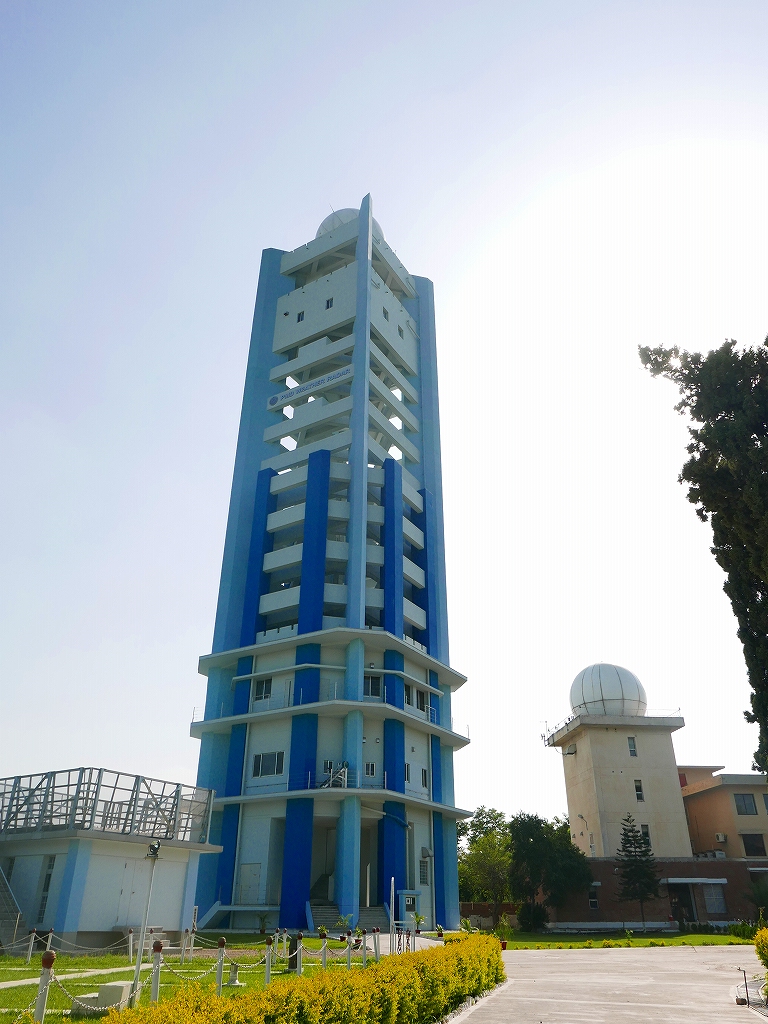
Weather surveillance radars in Islamabad and in Karachi have already been put in place and a few other sare planned to be constructed in Multan and in Sukkur, in cooperation with Japan. These radars will cover almost the whole of Pakistan.

In addition, in 2019 the Japanese government through JICA has assisted in establishing the “Specialized Medium Range Weather Forecasting Center” in order to enhance not only the weather surveillance capacity, but also weather forecasting capability for Pakistan.

An officer from the Pakistan Meteorological Department (PMD), mentioned that the “Capacity of weather forecasting has been enhanced by various Japanese assistance. We can now get exact positioning information of clouds through high-resolution images as compared to previous weather surveillance system. We can also provide advance weather information to local communities, identify heavy rain areas, and issue early warning to local residents living downstream of rivers which are expected to be flooded. Similarly, advance weather information can also be provided to the Islamabad international airport.”

Islamabad_rader(old and new)

A Japanese engineer also said, “I am glad that the weather surveillance radars with the same state-of -the art technologies as those of Japan are utilized in Pakistan.”

(The White building located on the right side is old weather surveillance radar,also previously assisted by Japan)

During the monsoon seasonal floods  in 2020,the “Specialized Medium Range Weather Forecasting Center” coupled with PMD`s effortsenabled local residents to safely evacuate through the timely issuance of early flood warning, disseminated to local residents and related stakeholders.

Meanwhile, a recently occurring new phenomenon called the “urban flooding” which has devastated urban centers is being experienced in and around Karachi City. In this regard, the Japanese government through JICA continues to support Pakistan to mitigate the risks and damages from these expected natural disasters.

Australia supports inspiring street art

DNA

KARACHI: The Australian High Commission in Pakistan and I AM KARACHI today opened a series of public art murals across the streets of Karachi, painted by Australian artist Gabrielle Brinsmead and Pakistani artist Phool Ji.

The project aims to foster cultural connections between Australia and Pakistan and transform the public spaces in the city with inspiring art and positive messages.

Speaking at the opening ceremony on behalf of the Australian High Commissioner, Australia’s Honorary Consul in Karachi Barrister Jahanzeb Awan shared that the themes of the art murals – women’s empowerment and the environment – are key part of Australia’s work in Pakistan.

“Art plays a major role in society, and it can be an effective and inspiring way to reach people with important messages. We hope these artworks will help to promote gender equality and women’s empowerment and make us think about what we can do to help to protect our wildlife and habitats, as well as being a positive contribution to the city of Karachi,” Barrister Awan said.

Australian painter and artist, Gabrielle Brinsmead shared that the climate of Karachi is similar to the climate of Northern New South Wales in Australia, where she grew up.

“I spent the last few months studying the intricacies of the flowers and leaves of bougainvillea, hibiscus and frangipane flowers, that are abound in New South Wales as well as in Karachi. The more I look at, copy, sketch and paint them, the more wonderful they seem. I have combined shapes and colours of these flowers in the murals to draw attention to the richness and generosity of these plants, which grow and flower so effortlessly here,” Ms Brinsmead said while talking about her artwork.

Executive Director of I AM KARACHI, Ms Ambareen Kazim Thompson said, “It is important to remember that only through tolerance and acceptance do cities and people grow strong and united. This project is a symbol of peace and harmony and a message of hope and positivity.”

Organizer of CSA Expo to promote Pakistani products

KUNMING (China), Dec. 22 : The organizer of China-South Asia Expo(CSA Expo) has planned to hold various special events for each country in specific months.

“Taking Pakistan as an example, they plan to hold Pakistan Week, Pakistani Specialty Food Festival, Pakistani Commodity Promotion Conference, etc.

According to Gwadar Pro, the organizer also plans to arrange domestic and international tour exhibitions, not only to promote Pakistani products throughout China but also to promote Pakistani products to other countries, said Cao Kejian, deputy general manager of ECSAE Trading Co ., Ltd.

The company is currently looking for an organization that can be responsible for the operation of the Pakistan National Image Pavilion.

“We have contacted Pakistan’s Consulate General in Chengdu and many Pakistani companies. Because of the epidemic, the construction of the Pakistan National Image Pavilion is relatively slow.” Cao Kejian said addding there are two kinds of organizations that can operate the National Image Pavilion

He told the Gwadar Pro that their goal is to increase imports from South and Southeast Asian countries to China. In the national image pavilions of 18 countries, high-quality products, enterprises, investment projects and tourism resources introduced to the China-South Asia Expo(CSA Expo) will be presented there throughout the year.

About seeking the support to this effect, he sais one is the consulate general of the country, such as the consulate general of Vietnam. The other is the Chamber of Commerce authorized by the consulate general or government department of the country.

“Authorizations from the Consulate General, Ministry of Commerce, Ministry of Trade, and Ministry of Tourism are all acceptable.”he said.

This year’s CSA Expo ended last week, while the National Image Pavilions are still in continuous operation. “We hope to extend the 7-day exhibition into a 365-day trade platform, and promote the valuable trade resources on our platform.”

We can provide a platform for mutual exchanges among the 18 South Asia and Southeast Asia countries.”

“The national image pavilion is a center of commodity display, and we also have an online cross border platform called Nanbomall.com,which is available to customers throughout the world.” Cao Kejian said.

“Admission to the national image pavilion is free. All the decoration costs are on our expense.”Cao Kejian said that the company also cooperates with Kunming customs, Industry and Commerce Bureau and supervision department.

“They can jointly provide support for more convenient customs clearance and logistics. Besides, enterprises in the national image pavilion can also enjoy equally preferential policies for enterprises in the Yunnan Free Trade Zone.”

Illegal appointments case: Court defers indictment of Shaukat Aziz

ISLAMABAD : An accountability court on Tuesday deferred the indictment of former prime minister Shaukat Aziz in a case related to illegal appointments until January 19.

The indictment was deferred as the co-accused Basharat Hasan did not show up before the court citing suffering from coronavirus.Later, the court adjourned the hearing of the case until January 19 for the indictment. It is pertinent to mention here that Shaukat Aziz had not been appearing before the court for long in a corruption reference filed against him by the National Accountability Bureau (NAB) and was declared a proclaimed offender.

The case against Aziz      

NAB had filed a reference against Shaukat Aziz, who served as Pakistan’s prime minister from 2004 to 2007 – over misuse of powers during his tenure as prime minister.

NAB contends that he had illegally appointed Mr Basharat Hasan Bashir as a consultant for the Alternative Energy Development Board (AEDB) on Management Position-II (MP-II) pay scale.

The accountability watchdog maintains that the appointment of Bashir violated MP scale policy guidelines and the board’s regulations.Basharat Hasan Bashir was appointed on January 1st, 2006 without open competition, NAB says.

After expiry of his consultancy contract in May 2008, Basharat Hasan Bashir illegally held the said post for almost five years without any extension, notification or regular appointment and kept on enjoying salary and all perks and privileges illegally in connivance with the management of AEDB.

Chinese Military Aviation Technology Has Full Capacity To Meet The Challenges Of Modern Warfare.

DNA 


22 December, 2020:    Air Chief Marshal Mujhahid Anwar Khan, Chief of the Air Staff, Pakistan Air Force has said that Chinese Military Aviation Technology is at par with contemporary requirements and has full capacity to meet the challenges of modern warfare. 


He was expressing his views after flying an air superiority sortie in a Hi-Tech Chinese fighter aircraft during ongoing exercise Shaheen IX.  Lauding the professionalism of PLAAF pilots, the Air Chief said that the outstanding air combat skills of PLAAF pilots are reflective of robust and modern combat training program of PLAAF. 


Expressing his satisfaction over the conduct of the exercise, the Air Chief said that it was heartening to see the two Air Forces inter-operating across a wide spectrum of airpower employment options. 


He also said that in modern times competition in the air domain centers not only around mastery of technology, but also on its artful application in both strategy and tactics. 


He added that Shaheen series of exercises will go a long way in enhancing the professional skills and operational preparedness of both the Air Forces in addition to developing mutual understanding of each other’s combat skills and promoting inter-operability. 


It is pertinent to mention that the joint Air Exercise Shaheen IX that commenced on 09 Dec, 2020 has now entered its last phase.

Coronavirus claims 82 more lives in Pakistan; 1704 infections reported

ISLAMABAD : The statistics of National Command and Operation Centre (NCOC) has shown that the coronavirus pandemic claims 82 more lives, whereas, 1,704 new infections were reported during the last 24 hours.

In the past 24 hours, 82 more people succumbed to the disease, taking the death toll to 9,474. 1,852 patients have recovered from the virus during the last 24 hours and 2,398 patients are in critical condition.

The total count of active cases is 40,261 and the positivity rate is recorded up to 4.9 per cent.
According to the National Command and Operation Centre (NCOC), with fresh inclusion of the infections in the country the national tally of cases now currently stands at 460,672.

A total of 34,594 tests were conducted across the country during this period. Overall 410,937 people have recovered from the deadly disease so far while 6,370,707 samples have been tested thus far.

Earlier on Monday, Pakistan had declared a temporary suspension on all incoming flights from the United Kingdom for at least a week on the premise of new COVID strain detection in England which is ‘more transmissible than other previously known strains’.

“Direct or indirect travel from the UK would be temporarily suspended, starting 11:59 PM on 22nd of December 2020,” the press release on the new development read.

According to the notification, all travelers who are in or have been in the UK over the past 10 days will not be allowed entry into Pakistan.

However, the press statement read that passengers in transit in the UK, who do not leave airside during the transit will be allowed entry in the country.

According to the press release, preliminary analysis of new COVID strain suggests that this particular mutation is approximately 70 per cent more transmissible. “However, so far, there is no evidence to suggest that the infection caused by this strain is any more severe.”

Stay Connected

64FansLike
60FollowersFollow

Latest Reviews

Exchange Rates

USD - United States Dollar
EUR
1.17
GBP
1.35
AUD
0.72
CAD
0.73