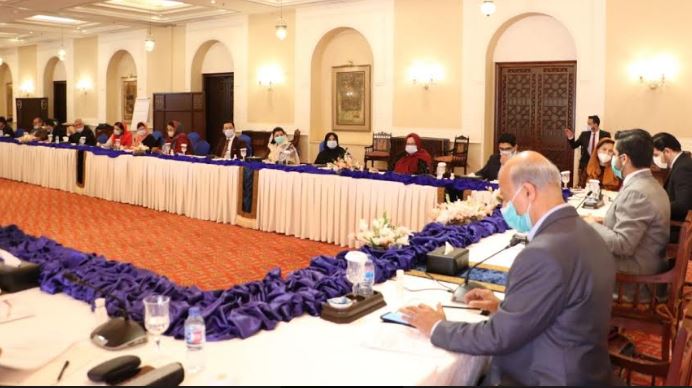
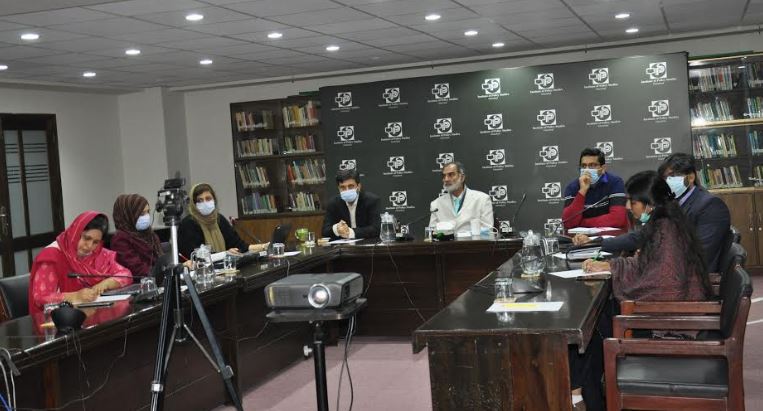
ISLAMABAD, DEC 22 (DNA) – Chairman Capital Development Authority (CDA), Aamir Ali Ahmed directed the officers and officials to assure all the facilities to the citizens while ensuring them the provision of required funds here on Tuesday. He expressed this while presiding over a session to review the performance of all the directorates of CDA in Islamabad. All the Directorates briefed the chairman regarding its performance during the session.
Speaking at the occasion, Chairman CDA said that the authority should give its best to facilitate the masses of the city so that its efforts could be hailed by people. If any directorate ever faces any issue then it should inform in this regard so that its issues could be resolved promptly.
Similarly, if any department lacks funds then it should inform at once so that fund could be provided to it promptly. There will be no compromise on provision of facilities to the masses of Islamabad, he added.
Directorate of Sanitation, Street Lights, Environment, Water Supply, Road Maintenance, STP, City Sewerage, MPO briefed the Chairman at the occasion.
ISLAMABAD – Chairman Kashmir Committee, Shehryar Khan Afridi on Tuesday urged the Kashmiri bloggers, Vloggers and social media activists to utilize all their potentials and expose the evil Indian designs to help make the world realize what’s happening in Modi’s concentration camps in Kashmir. “Only then the World will know that we exist and we are as humans like everyone else,” said Shehryar Afridi while addressing the Kashmiri social media and youth activists from Azad Jammu and Kashmir here at National Assembly.
Shehryar Afridi urged the youth to stay prepared when the time comes to liberate Kashmir from fascist Modi’s grip, youth will be Pakistan’s first line of defence.
He said that Pakistan has fought the biggest war on land against terrorism and won it. “We have surprised the world with our talent and motivation to fight all the ills including terrorism, drugs and evil agents of the enemy,” he stated. He said there is no comparison to the patience of half widows, pallet gun victims and prisoners of conscience.
He said the Kashmiri freedom fighters like Masarat Alam Bhat, Asia Andrabi and Syed Shabbir Ahmed Shah are facing hardships in jails just to get Kashmir free from Indian colonial regime. All Kashmiri freedom fighters jailed by India deserved justice and it will be granted soon.
ISLAMABAD, DEC 22 – Pakistan’s fastest growing oil marketing company, GO Pakistan continues to increase its footprint and is proud to announce the inauguration of its latest retail outlet near University of Engineering and Technology (UET), G.T. Road, Lahore.
The retail outlet was inaugurated by Chief Guest, Prof. Dr. Syed Mansoor Sarwar Vice-Chancellor, UET. Present at the event were also, Prof. Shaker and Mr. M. Atif – Registrar,UET, Mr. Shaukat Mahmood Ghumman, General Manager – Corporate Coordination GO, Mr. Zeeshan Tayyeb- Chief Operating Officer GO & Mr. Ammar Ali Tallat – Chief Strategy & Business Development Officer GO.
Highlighting the company’s strong commitment to the people, Zeeshan Tayyeb, said: “Being the fastest growing OMC with an expanding presence of over 700 retail sites network, GO is taking immense strides to fulfill the energy needs of the nation in every urban city as well as distant areas of the country.” He further said, “The company’s announcement is part of their ambitious business growth strategy that will enable them to cater to their customers round-the-clock, in all seasons and in every situation.”
GO, since its inception, remains a headstrong company with an unwavering commitment to quality and quantity of not only its products but also its services. GO continues to go above and beyond to serve all its customers’ fuelling needs.
ISLAMABAD, DEC 22 (DNA) – There is certainly a positive trajectory with regards to Pakistan-Afghanistan bilateral relations. In the last few months both sides have achieved significant progress, though there is a lot still to be done. For the first time, the parliaments on both sides are playing a very active role in addressing issues of mutual interest.
Complex issues accumulating over years would take some time for resolution. This was said by Ambassador Muhammad Sadiq, Prime Minister’s Special Representative for Afghanistan. He was speaking to the 7th Pakistan Afghanistan Joint Committee (PAJC) meeting, spearheaded by Center for Research and Security Studies (CRSS) and Organization for Economic Studies and Peace (OESP).
Trade is and should always be the connecting link between the two nations. It also promotes people to people contacts, along with a lot of economic opportunities for the people, particularly the ones residing in border areas.
We are also looking into investing into each other countries, which reinforces our push for increased trade, paving way for shared stakes and mutual interests. This in turn would materialize into durable peace and sustainable development in the region, stated Sadiq.
He further stated that Islamabad’s seriousness in mending trust deficit and starting a new chapter in the bilateral relationship with Kabul reflects in the number of steps the Government of Pakistan have initiated within last six months.
These include: introduction of liberal and friendly visa regime for Afghanistan, making it easy for Afghans to do business and open bank accounts inside Pakistan, decision to open 12 border markets with Afghanistan, and pipeline projects like tele-medical centers in Afghanistan and railway link between the countries. Sadiq assured that the progress on bilateral front would pick pace in coming months.
Later in the afternoon, PAJC members called on Dr. Moeed Yusuf, SAPM on National Security and Strategic Policy Planning. He was of the view that Track II process, instead running parallel to Track I, should in fact complement Track I and assist it by providing the government with targeted policy proposals.
He thanked the efforts of CRSS in this regard. He then apprised the Afghan participants that today’s Pakistan is a new Pakistan; a lot has changed over last two decades. We have a new security paradigm now with economic security at its core.
Dr. Yusuf further urged the delegates that to move forward, both sides have to let go of the past. He also mentioned that our region has been misused by global powers for so long. We need to get segregated from these dirty games. On Pakistan’s role in Afghan peace process, He stated that Islamabad, supports Afghan led and Afghan owned peace process. Whatever governance set-up that may emerge post intra-Afghan dialogues, it will have Islamabad’s support. Now the ball is in the court of Afghans and they should take the steering wheel from now on, he added.
PAJC members expressed hope over the recent positive developments between Pakistan and Afghanistan. Afghan delegates appreciated Islamabad’s encouraging moves over the past few months. They also asked Pakistan to play more assertive role in Afghan peace process, in particular ensuring it to be inclusive, not margining youth and women.
There was a unanimous consensus that trade should be the key to boost the bilateral relations in coming months. Pakistani delegates highlighted the need for positive narratives from media, especially the Afghan media. They also stressed on more exchanges between the youth and artists of the both nations, to promote soft diplomacy.
Afghan delegation included Shinkai Karokhail, Gul Ahmad Kamin, Fatima Kohistani, Gulalai Mohammadi, Farzana Kochai, Members of Parliament; Palwasha Hassan, Women Right Activist; Momina Yari, Social Activist and Former Commissioner; Mozammil Shinwari, Former Deputy Minister; Khan Jan Alokozai, Former Governor; Waris Hasrat, Senior Journalist; Aziz Ullah Amin, Political Analyst; Mari Akrami, Human Rights Activist, Mirwais Wardak Political Analyst/ Researcher and Naqeeb Ullah Safi, Executive Director PAJCCI.
While the Pakistani side was represented by Mehnaz Akber Aziz, Member National Assembly; Dr. Shoiab Suddle, Former IG Police; Lt. Gen. (retd) Asif Yasin Malik, Former Defense Secretary; Seema Ilahi Baloch, Mian Sanaullah, Tasnim Aslam, Qazi Humayun, Asif Durrani and Ayaz Wazir, former Ambassadors; Haroon Sharif, former Minister of State and former Chairman Board of Investment (BOI) Pakistan; Nasim Zehra, Tahir Khan, Rehman Azhar and Hasan Khan, Senior Journalists; Ammara Durrani, Public Policy and Human Security Expert; Ahmed Siddiqi, Pak-Afghan Research Fellow and Policy Expert.=DNA
ISLAMABAD, DEC 22 – Global Al-Farabi Forum concluded in the evening of December 22, a two-day event organized jointly by COMSTECH and the government of Kazakhstan.
Dr. Galimkair Mutanov, Rector, Al-Farabi Kazakh National University delivered special lecture in the concluding session of the forum. He said that the most important task for the humanity in this world is to recognize the creator who made him conscious. He informed that the Islamic civilization was formed on the basis of mind. Wisdom and science are reflected in the Islam, he mentioned. Unfortunately, the golden age of Muslim scientific glory is not appreciated today, he lamented.
He said that the reason of the decline in the Islamic society is the separation from the Islam. Islamic countries have lost education and science and extremism is increasing. He suggested that we should pay special attention to the Golden age of Muslim thought and define the issues rises in the Mulsim philosophy in relation to religion and science. He concluded his talk by mentioning the contribution of Al-Farabi and his teachings.
After his lecture one-hour long panel discussion session was held. Dr. Ehsan Masood, from UK, Dr. Nomanul Haq, Dr. Ghazna Khalid and Dr. M. Iqbal Choudhary were the experts of the discussion session to answer and discuss the questions of the scholars from the audience and Dr. Khurshid Hasanain moderated this session.
Number of factors that are responsible for the current decline of science, technology, philosophy and economy in the Muslim world were discussed. Questions related to science and religions, lack of interest of the leaders in the science and technology, history of Muslims, were raised by the audience and discussed in detail.
This forum was attended by more than 100 participants in-person and virtually, and 15 national and international experts gave talks. The session was concluded with the vote of thanks by Prof. Dr. M. Iqbal Choudhary, Coordinator General COMSTECH. Dr. Iqbal said that this kind of event actually makes us to think and any thing that make you think is most important. He assured that such forum on Pakistani world-renowned philosopher Sir Dr. Allama Mohammad Iqbal will be organized in central Asia.
Finally, shields and certificates were distributed among the speakers and participants of the event.
RAWALPINDI – Indian troops unprovoked ceasefire violation in Hotspring and Jandrot Sectors along LOC deliberately targeting civil population with Mortars and heavy weapons.
A 50 years old woman embraced shahadat while 3 citizens including a 4 year minor Nayab got injured. The injured evacuated to nearby medical facility for necessary treatment.
ISLAMABAD – A solid and broad consensus among key stakeholders for curbing coal-based power generation in Pakistan and diverting 60 per cent of the total energy mix to renewable energy by 2030 was stressed by energy experts at a consultative meeting held at the Institute of Policy Studies (IPS).
The session, which was held to discuss IPS study on Barriers surrounding Distributed Generation was chaired by Executive President IPS Khalid Rahman, moderated by former Secretary, Ministry of Water and Power Mirza Hamid Hasan, and addressed by Asad Mehmood from National Energy Efficiency Conservation Authority (NEECA), Aftab Ahmad Awan from Planning Commission of Pakistan, Neshmiya A. Khan, Hamza Butt and Maryam Arshad from World Wildlife Fund (WWF), Zeeshan Ashfaq from World Wind Energy Association Pakistan (WWEA), Mushtaq Gaadi from Quaid-i-Azam University, and Dr Azhar Lashari and Haneea Isaad from Rural Development Policy Institute (RDPI). The briefings were delivered by IPS energy team including Naila Saleh, Hamza Naeem and Sara from IPS.
Terming solar prosumage as an irresistible and most promising solution to simultaneously advance renewable energy uptake vis-à-vis address the chronic bottlenecks plaguing the national power sector, the speakers discussed at length how several barriers including regulatory bumps at inter-connection phase, low trust in technology, difficulties in accessing finance, and inertia at the level of distribution companies (DISCOs)—were collectively restricting solar PV growth in the country. Overall great emphasis was made on the alignment of distributed generation growth in IGCEP, significant stakeholder consultations and support, and consolidated changes for overcoming the identified challenges.
It was also discussed that the environmental impact assessment of coal power generation in the country was not easily accessible—making it quite difficult to ascertain the effect of the waste of these plants on subsoil fertility and biodiversity. The speakers said that those coal projects already initiated under the aegis of China-Pakistan Economic Corridor should however should be completed while realistic implementation action plan should be designed for the future against the background of PM decision made on not considering new coal-fired power plants.
Germany on Tuesday extended a ban on arrivals from Britain, Northern Ireland and South Africa until January 6 after a new more infectious coronavirus strain appeared in the countries.
“The transport ban covers passenger traffic by train, bus, ship and flights directly from these countries,” the health ministry said in a statement.
“The order covers the period from December 22, 2020 until January 6, 2021.”
It added that people who have valid residency permits for Germany could return from January 1.
The ministry said that travellers who arrived from the affected countries or who spent time there in the last 10 days would be required to be tested for the coronavirus.
“Existing quarantine rules for arrivals from risk areas continue to apply,” it added.
Health Minister Jens Spahn said that “as long as it is possible”, Germany aimed to prevent “potentially dangerous virus mutations from spreading in continental Europe”.
“The entry ban from Britain, Northern Ireland and South Africa is a precautionary measure until we know more about the reported coronavirus mutations” in those countries, he said.
A string of nations around the continent on Sunday began suspending travel links with Britain to prevent the spread of the new strain of the coronavirus.
EU ambassadors were to meet Tuesday to try to thrash out a unified approach and work out how to eventually lift the border restrictions with Britain — including by imposing a requirement for tests on all arrivals.
The world is amid challenges ranging from regional conflicts, terrorism, and social disruptions to economic downturns, unequal development, and climate change. These global challenges call for a global solution with cooperation among states. Obsolete and dysfunctional principles of interaction between people are replaced by modern trends and patterns. Which offers a rationale coherence for upgrading and revising the world’s narratives and policies to keep up with the time.
Likewise, the global structural reforms have paved the way for the states to indulge in multilateral integration in various aspects. In this context, to collaborate in multi-dimensional ways, the role of youth under the idea of community with a shared future is pertinent to highlight in present times. As this idea has become a strong narrative in transforming and integrating the globe in more domains, the youth can play a significant role in projecting this very idea to create harmony among countries. The primary contours of the idea underpin tolerance, fair relations, mutual respect, equality, and dialectical balance. Under this concept, the students and young entrepreneurs can have an ample number of opportunities to get international exposure, scholarships, participation in cultural exchange programs, and portray a better image of their country internationally.The world is a global village now, and the interaction among people is now in more diverse ways than ever before. Through the internet, social media, and various other online platforms, the people to people contact hasincreased. The online educational and intellectual programs have made the way easy for the youth to collaborate and participate in different productive activities worldwide. Moreover, the vision of a shared future has also allowed intellectuals, academia, research centers, universities, and youngsters to get together under one platform and constructively integrate which would have a profound impact in establishinginterconnectivity patterns. In this aspect, the paper aims to highlight the role of youth in unifying nations through their innovative ideas and skills. Also, this study gives the prospects for the students to diversify their patterns of education, constructive role, and opportunities under this very narrative of community with a shared future.
Role of a Community: Unleashing the Potential of Youth
The future of humanity relies on the young generation. The countriesthatdo not facilitate their young generation are likely to go grindinghalt in the process of social development. When the young generation tends to get associated with communal activities, they develop strong abilities or skills neededfor statesmanship. Their participationin the decision-making process is the key element in shaping a brighter future. In recent times, researchers, policymakers, diplomates,and governmentsare agreed on the view that interaction and participation of youth is a major element for robust communityadvancement. Youth engagement towards a constructive mechanism of cooperation is defined as “meaning full participation and sustained involvement of a young person in an activity, with a focus outside of him or herself “.Furthermore, in public youth engagements, the research is amid two theories that reflect the pillars of meaningful interaction of youth in the global arena. a) positive youth development theory, and b) attachment theory.
First, the youth development theory attempts to explain the foundation of creating an effective and resilient community where the youth have interaction and positive engagement with the adults’ support. In times of difficulty faced by the youth, the community will have the capacity to support youth. As the community is based on an inclusive and comprehensive vision, its role is substantial to discuss here. In this regard, the idea of a community with a shared future will give a new boost to the existing youth communities and councils. It will allow youngsters to overcome the adversities and adopt those vision which would nourish their career and lifestyle.Second, the attachment theory revolves around the concept ofthe long-term meaning full relationships. In the past, the theory has been used in the field ofpsychology to describe the bond between the mother and the infant. This can be seen in the prism of youth and the community as well. The role of community and persistent attachment of a young person with it envisaged the same relation that is tonourish youth abilities andprovide them opportunities to enhance their potential. Having a strong view of the community with a shared future and the part of student councils would allow them to think in an outrightly new direction and also contribute tothe sustainabledevelopment of the society. When youth are allowed to freely participate, it curtails the orthodox problems of behavior. Despite feeling dis-engaged, hopeless, and undervalue, young studentseffectively participate in the process of soil advancement. According to research, student and youth who are associated with the community activities and tasks are less likely to use alcohol or drugs,drop out of college, and to get involved in any sort of anti-social or criminal activities. They hold optimistic and practical demeanors and a healthy mindset.
Shared Future: Role of Students and youth
Empowering youth, allowing them to participate, and providing them with beneficial opportunities in the community always resultsin a boon for social advancement. When the youth is engaged in multiple inclusive activities, itallowsthem to get exposure and have a focused direction to sustain. At an early stage with the assistance of the community, when studentsrealize that they can influencethe decision-making process, they eventually rise above all and come up with innovative and bright ideas. This learning and interactive process leads them to develop entrepreneurship and leadership skills.
The vision of a community with a shared future allows students to participate orinteract from different platforms and take advantage of internshipprograms. It would allow the states to collaborate and share innovative ideas through intellectual forums. The global theme aims to eradicate prejudices and build communication grounds. It will create a coherent association among the countries and their people. Through this, a robust and standard apparatus of win-win cooperation among nations and youth can be achieved in the future. There are some prospects for the students that would help them to establish ways to unify the nation across borders:
Youth Activities under the Vision of a Shared Future:
Hybrid conferences and sessions for soft skill development
Interactive webinar to sparkle intellectualcuriosity among students and youth
Joint academic research projects on common areas of interest
Joint cultural exchange programs to create harmony
Constructive ideas sharing sessions
Database to access the desired study material
Community’s tasks groups to accomplish mutual objectives
All the evolving modern political values and transformed trends i.e., Belt and Road initiative (BRI) which offers a plethora of opportunities for sustainable development across and within countries vision, the idea of a community with shared future and dialogue among civilizations have allowed countries to shed the orthodox ways of interaction and move towards a new trend of greater cooperation, collaboration, and interaction. The young generation could become the pioneer to commence the collaborative activity in an emerging new pattern. This implies huge responsibility forresearchinstitutes, universities, intellectuals, and think tanks to establish such constructive ways of interactions among the youth. In this regard, China and Pakistan have been doing remarkable efforts. A renowned Chinese university i.e.,Communication University of China (CUC)has taken the initiative of creating a network of research centers for a community with a shared future. The research centers are created in collaboration with Pakistan, Tanzania, Ethiopia, Germany, Malaysia, and South Korea.One of the research centers i.e., Pakistan Research Center jointly established by the CUC delivers for this purpose. It has initiated prominent projects including an online internship program, conferences, round table discussions, etc. Also, bringing together individuals and youngsters from different backgrounds and teaching about commonalities.
Each year, several scholarships and cultural exchange programs arebeing offered between Pakistan and China. In present times, the ratio of students has increased significantly. Both countries are hospitable and assisting each other in almost every domain.The educational and academic domain is vital for the students, trainers, and teachers. The aim of organizing such cultural events and scholarship programs is to make the youth and people to understand the rich culture and promote people-to-people contact. In this aspect, the research centers established in other countries allow this integrated network to offer more youth scholarship programs and enhance people to people connectivity. The international interaction would allow youth to come up with innovative ideas, eliminate prejudices, and bring people together to promote peace and harmony.
By Ms. Palwasha Nawaz, is Deputy Director,
Pakistan Research Center for a Community with Shared Future, Communication University of China (Beijing), China
ISLAMABAD – As 2020 comes to an end, Easypaisa is spreading joy amongst its users with a chance to win amazing prizes through Easypaisa Appbash which is currently live on the digital payment platform’s social media pages. In addition to enjoying simple, safe and convenient payments through Easypaisa QR, users can now enter a lucky draw for a chance to win iPhone 11, Redmi 9 smartphone, iPad, AirPods, a brand new LED TV or a motorcycle among numerous other prizes in weekly giveaways.
Entering the lucky draw is simple and easy. All you have to do is open your Easypaisa App, select the QR code option and scan the QR code available on Easypaisa’s Facebook page to enter the lucky draw. This competition is also open for Easypaisa customers not currently using the Easypaisa App. Non smartphone Easypaisa users can enter the lucky draw by dialing *786*4*5# to make a payment worth Rs. 5 at 60631. At the end of the campaign, Rs. 5 will be refunded to those who do not win.
With two draws already having been held, now is your chance to enter the third one and win exciting prizes.
Easypaisa is Pakistan’s leading digital payments platform that offers a diverse range of digital financial services to make everyday transactions simple for users across the country.