Home Blog Page 303

Turning Deterrence into Dividends

Turning Deterrence into Dividends

by Muhammad Mohsin Iqbal

Field Marshal General Syed Asim Munir’s stewardship of Pakistan’s armed forces has coincided with a period of rare convergence between military credibility, diplomatic momentum, and emerging economic possibilities. The brief but consequential India–Pakistan conflict of May 7–10, 2025 stands as the pivotal moment that redefined Pakistan’s posture in a volatile region and repositioned its leadership on the global stage. India’s missile strikes, launched under the codename Operation Sindoor in the wake of so-called terrorist incident in Kashmir, were widely interpreted as an attempt to impose a new coercive normal upon Pakistan. Instead, the response it provoked altered strategic calculations across capitals.
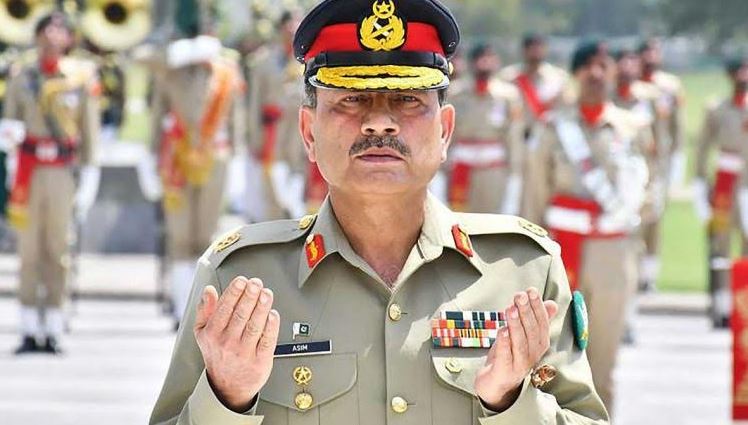
Turning Deterrence into Dividends

From the outset, General Munir adopted a posture that combined clarity with restraint. His public warning that any aggression would meet a “swift and intense” response was not rhetorical flourish but a calibrated signal of resolve. At the same time, he repeatedly emphasised that Pakistan sought deterrence, not escalation, reminding the world that recklessness between two nuclear-armed states carried incalculable risks. Under his command, Pakistan’s armed forces executed precise counterstrikes, downed multiple Indian aircraft, and demonstrated operational superiority without crossing thresholds that might have triggered full-scale war. This balance between force and restraint restored deterrence while allowing diplomatic channels to reassert themselves.

International reaction was unusually forthcoming. The crisis was widely seen as having been defused through disciplined command rather than chance. Then U.S. President publicly credited General Munir for preventing nuclear escalation, an acknowledgment that carried symbolic weight given Washington’s long-standing emphasis on crisis stability in South Asia. Such praise strengthened Pakistan’s global standing and enhanced the domestic legitimacy of its military leadership, reinforcing the perception of Pakistan as a responsible nuclear power capable of managing conflict under extreme pressure.

The months that followed marked a notable evolution in General Munir’s role. He emerged as a central figure in what many observers described as Pakistan’s geopolitical re-entry after years of diplomatic drift. High-level engagement with the United States resumed, ties with Saudi Arabia deepened—symbolised by the award of the King Abdulaziz Medal—and defence diplomacy expanded across the Middle East, Central Asia, Africa, and Southeast Asia. Joint military exercises, counterterrorism cooperation, and economic discussions increasingly ran in parallel, reflecting a recognition that security and economics are now inseparable in global statecraft.

This context frames the most consequential question facing Pakistan today; can enhanced military credibility and diplomatic outreach help loosen the country’s long-standing dependence on foreign debt and the International Monetary Fund? Pakistan’s external debt now exceeds $100 billion, hovering around 70 per cent of GDP, with an IMF Extended Fund Facility of approximately $7–8 billion extending into the latter half of the decade. While reform projections suggest a gradual easing of pressure, structural vulnerabilities remain deeply entrenched.

Against this backdrop, defence exports have emerged as a strategic instrument rather than a peripheral activity. General Munir’s support for leveraging Pakistan’s indigenous defence industry reflects a broader understanding that military capability can generate economic dividends. The performance of Pakistani weapons systems during the May 2025 crisis functioned as an unintended but powerful demonstration to potential buyers. Cost-effective, combat-tested, and supported by flexible financing arrangements, these systems suddenly commanded renewed attention.

The JF-17 Thunder fighter jet has become the centrepiece of this strategy. Azerbaijan’s $4.6 billion agreement for forty JF-17 Block III aircraft stands as Pakistan’s most significant defence export success to date. Indonesia is in advanced negotiations for dozens of jets and drones, a deal that could generate several billion dollars while anchoring long-term defence cooperation in Southeast Asia. Sudan is nearing an agreement initially valued at $1.5 billion, with expansion potential exceeding $4 billion, encompassing aircraft, drones, weapons, training, and logistics. Saudi Arabia has explored either a direct $4 billion procurement or the conversion of roughly $2 billion in loans into aircraft purchases. Iraq and Bangladesh have also expressed interest, reinforcing the breadth of Pakistan’s defence diplomacy.

If even a portion of these agreements materialises, the financial inflows could reach into the tens of billions of dollars. Such earnings would bolster foreign exchange reserves, ease balance-of-payments stress, and support debt servicing, thereby reducing reliance on emergency IMF interventions. Defence Minister Khawaja Asif’s assertion that sustained arms exports could help Pakistan avoid future bailouts may be optimistic, yet it reflects a growing recognition that traditional export models alone are insufficient.

Economists caution, however, that defence exports cannot by themselves resolve Pakistan’s economic challenges. Arms sales must be embedded within broader fiscal discipline, export diversification, and institutional reform. Non-defence exports have shown only modest growth, underscoring the need for parallel progress across the wider economy.

Still, opportunities rarely present themselves so clearly. Field Marshal Munir’s leadership during crisis, followed by diplomatic consolidation and economic outreach, has opened strategic space that Pakistan has long lacked. If this moment is matched by coherent economic policy and sustained reform, the gains achieved through strength and restraint may yet translate into greater financial autonomy and a more secure national future.
ISPR DG stresses unity on matters of national security

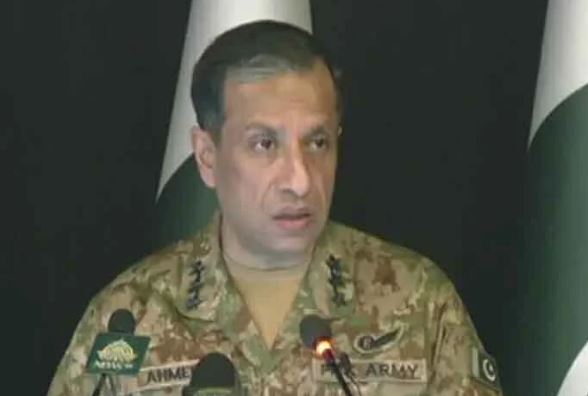
ISPR DG stresses unity on matters of national security

RAWALPINDI, JAN 13: Director General Inter-Services Public Relations (ISPR) Lieutenant General Ahmed Sharif Choudhry emphasized the need for unity and consensus on the national security narrative during a meeting with members of the National Peace Message Committee (NPAC).

The meeting included a comprehensive discussion on internal security in the context of groups such as Fitna al-Khawarij, TTP, and TTA, and reaffirmed principled positions on Kashmir and Gaza. Participants described the session as unusually productive and expressed optimism for new paths of trust and practical cooperation.

The ISPR DG stated that supporting the oppressed is Pakistan’s moral responsibility.

NPAC members expressed unwavering solidarity with the Pakistan Armed Forces and assured full cooperation in promoting the national narrative. They condemned terrorism in all forms and agreed on a zero-tolerance policy against hatred and sectarianism. A decision was made to spread the message of social harmony nationwide.

During the meeting, NPAC proposed increasing awareness and guidance sessions in mosques, madrassas, and universities to promote the state’s narrative. DG ISPR highlighted that public awareness and a truth-based narrative are decisive tools against the enemy’s psychological warfare.

Workshop trains Islamabad health workers for public health emergencies

Workshop trains Islamabad health workers for public health emergencies

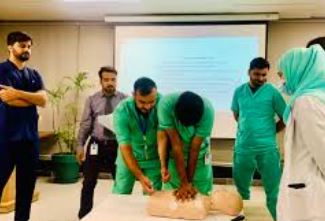
ISLAMABAD, JAN 13 /DNA/ – The two-day workshop is being organized by the Health Services Academy (HSA), Ministry of National Health Services, Regulations and Coordination, in collaboration with the Pakistan One Health Alliance (POHA). The training has brought together district managers and frontline health workers from across Islamabad to strengthen local preparedness for public health emergencies. Day 1 is being held today, while Day 2 will conclude tomorrow.

This government-supported initiative focuses on developing a skilled One Health workforce by integrating human, animal, and environmental health sectors within the Islamabad Capital Territory. Sessions cover key areas including epidemic intelligence, early warning systems, disease surveillance, outbreak investigation, and coordinated response planning, with particular focus on zoonotic diseases, antimicrobial resistance, and emerging health threats.

As part of the Training of Trainers approach, the workshop aims to prepare master trainers who will further disseminate knowledge and skills at district and provincial levels. POHA is supporting the initiative through technical input, field intelligence expertise, and promotion of intersectoral coordination at the community level.

Officials from the Health Services Academy emphasized the importance of strengthening workforce readiness and coordination to improve health security at the local and national levels. Representatives from POHA highlighted that building field-level capacity is essential for timely detection and response to public health threats.

Participants termed the sessions practical and relevant, noting that the training would help improve preparedness and response capacities at the district level.

Denmark, Greenland officials to meet Vance, Rubio on Wednesday

Denmark, Greenland officials to meet Vance, Rubio on Wednesday

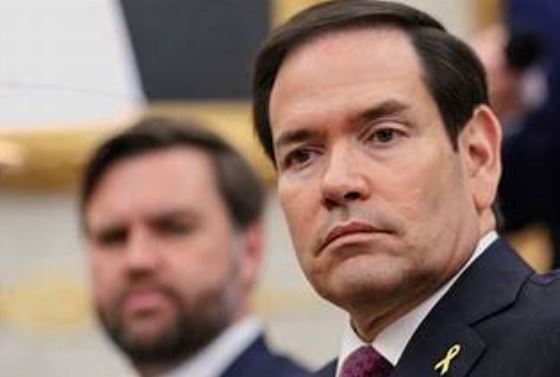
Copenhagen, Jan 13: Denmark’s foreign minister said Tuesday that he and his Greenlandic counterpart would meet with US Vice President JD Vance and Secretary of State Marco Rubio at the White House on Wednesday.

                  US President Donald Trump has been talking up the idea of buying or annexing the Arctic territory for years, and further stoked tensions on Sunday by saying that the United States would take the territory “one way or the other”.

                  Danish Foreign Minister Lars Lokke Rasmussen told reporters in Copenhagen that he and his Greenlandic counterpart Vivian Motzfeldt had requested a meeting with Rubio, and Vance had asked to “take part in that meeting and will host it.”

                  “Our reason for requesting the meeting has been to move the entire discussion… into a meeting room, where you can look each other in the eye and talk through these issues,” Lokke said following a foreign policy meeting in Denmark’s parliament.

                  Meanwhile Danish Defence Minister Troels Lund Poulsen said he would be meeting with NATO’s Secretary General Mark Rutte on Monday to discuss Arctic security, also together with Motzfeldt.

                  Rutte said Monday that the alliance was working on “the next steps” to bolster Arctic security.

                  Diplomats at NATO say some alliance members have floated the idea of launching a new mission in the region, though no concrete proposals are yet on the table.

Does gut health shape how we age?

Does gut health shape how we age?

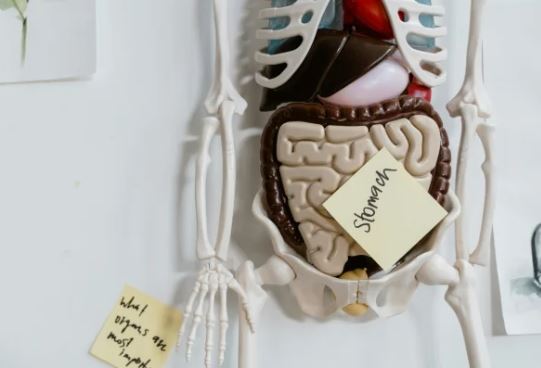
From probiotic yoghurts to kombucha, gut health has become a booming industry, often fuelled by bold claims and shaky science. Yet behind the marketing, doctors are increasingly convinced that the trillions of microbes living in our digestive system, known as the gut microbiome, may influence far more than digestion.

A growing body of research suggests it could also play a role in how well we age BBC reported.

At St Mary’s Hospital in London, colorectal surgeon and microbiome researcher Professor James Kinross studies patients’ stool samples to map the bacteria living inside them. He believes these microbes are “deeply ingrained” in overall health and may affect frailty, recovery from illness and even longevity.

Not everyone agrees on how strong the evidence is, but few dispute that the gut is emerging as a key area of ageing research.

Clues have come from people who live exceptionally long lives. When Spain’s Maria Branyas Morera died in 2024 aged 117, scientists compared her gut bacteria with those of younger women. She had followed a Mediterranean-style diet, exercised daily, and eaten yoghurt three times a day.

Researchers believe the fermented dairy may have helped boost bacteria that reduce inflammation, a process linked to ageing.

Similar patterns have been found elsewhere. Studies of centenarians in China and Europe show their guts tend to contain a wide variety of microbes.

Dr Mary Ni Lochlainn, a geriatrician at King’s College London, compares this to a healthy garden: the more diverse the plants, the more resilient the ecosystem. By contrast, the microbiome usually becomes less varied with age, as beneficial species disappear.

Why does that matter? Loss of microbial diversity has been linked to frailty a reduced ability to recover from infections, falls or surgery, as well as chronic disease.

Older people who maintain richer gut bacteria into their 80s and 90s tend to stay healthier for longer.

So can people improve their “gut age”? The science is still developing, but diet appears to matter. Research suggests foods rich in fibre, polyphenols and healthy fats, such as vegetables, olive oil and oily fish, encourage beneficial bacteria. Ultra-processed foods and refined sugars, by contrast, can do the opposite.

Genetics and environment also play a role, and scientists caution against one-size-fits-all solutions.

Still, the message from the lab is clear: nurturing the microbes inside us may be one of the more promising frontiers in healthy ageing.

German ambassador visits Madrassa in Mohra Sharif

German ambassador visits Madrassa in Mohra Sharif

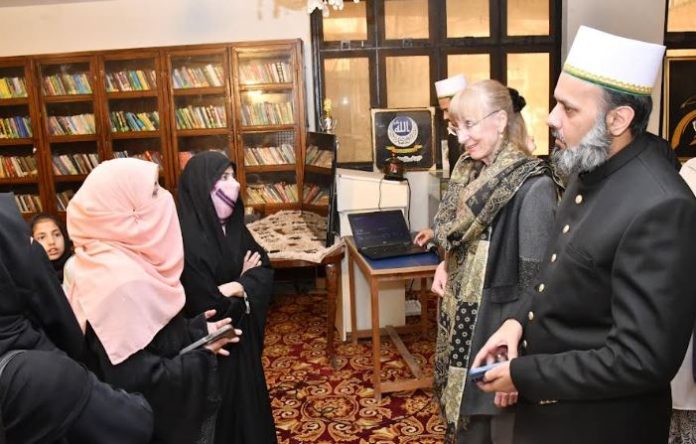
ISLAMABAD, JAN 13 /DNA/ – The German Ambassador to Pakistan, Ina Lepel, visited the madrassa at Mohra Sharif on Wednesday, engaging directly with students in a significant cultural and diplomatic outreach.

Ambassador Lepel spent considerable time interacting with the students, observing their classes, and discussing their curriculum. She expressed her admiration for the students’ dedication and keen interest in their religious studies.

Achakzai to be notified as opposition leader in National Assembly this week: PTI’s Gohar

Achakzai to be notified as opposition leader in National Assembly this week: PTI's Gohar

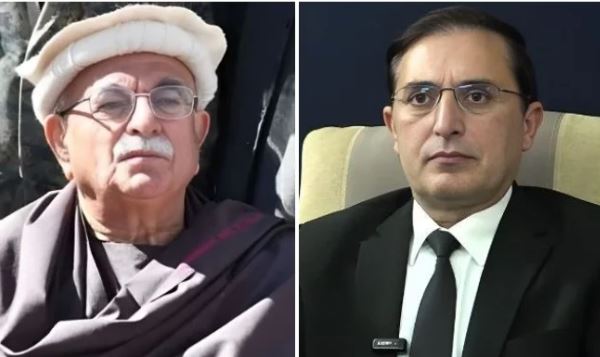
ISLAMABAD, JAN 13: Pakistan Tehreek-e-Insaf (PTI) Chairman Barrister Gohar Ali Khan has said that Tehreek-e-Tahaffuz-e-Ayeen-e-Pakistan chief Mahmood Khan Achakzai will be notified as opposition leader in the National Assembly by Thursday.

Speaking to a media representative in the National Assembly on Tuesday, Barrister Gohar said that the nomination papers of Achakzai — who is also the Pakhtunkhwa Milli Awami Party (PkMAP) chairman — have been submitted, and verification is expected to be completed by tomorrow (Wednesday).

He said that so far, only one nomination has been made.

Speaking on the party’s internal matters, Barrister Gohar said that there is no forward bloc within the PTI, reaffirming that Imran Khan will always be the party’s chief.

“Khan Sahib was, he is, and will be the PTI chairman,” he asserted. Barrister Gohar said that no political decision or apex committee can alter “Khan Sahib’s decision.”

PTI was forced to nominate new opposition leaders in both houses after Leader of the Opposition in the National Assembly Omar Ayub and Senate Opposition Leader Shibli Faraz were removed from their parliamentary positions on August 9 following their convictions in the May 9 cases.

In a separate development, PTI Chief Whip Malik Aamir Dogar, in a letter to National Assembly Speaker Ayaz Sadiq, maintained that the majority of the opposition has “unanimously” nominated Achakzai as the opposition leader.

The letter read that the post has remained vacant since August last year, saying that under democratic traditions, the opposition has the right to choose its own leader.

The PTI chief whip urged the speaker to immediately issue a notification in accordance with Rule 39 of the National Assembly Rules of Procedure and Conduct, 2007.

A day earlier, the PTI delegation led by Barrister Gohar met Speaker Sadiq with regard to the notification of the leader of the opposition.

It was learnt that besides Barrister Gohar, Asad Qaiser, Aamir Dogar, Atif Khan, and other MNAs were present in the meeting, who had assured them about the appointment of the opposition leader by Thursday, The News reported.

The speaker National Assembly had asked the opposition to submit their suggestions for the nomination of the opposition leader by 3pm on January 13.

Speaker Sadiq said that the signatures of MNAs on the nominations will be verified and counted on January 14, after which the appointment of the opposition leader will be announced.

RTO Islamabad holds interactive tax session with business community

RTO Islamabad holds interactive tax session with business community

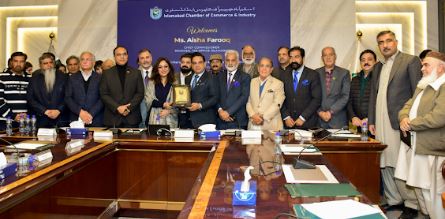
ISLAMABAD, JAN 13 /DNA/ – Chief Commissioner, Regional Tax Office (RTO) Islamabad, Ms. Ayesha Farooq, along with her team members, visited the Islamabad Chamber of Commerce and Industry (ICCI) and held an interactive session with the business community to discuss key tax-related issues, facilitation measures and avenues for strengthening cooperation between tax authorities and stakeholders.

Addressing the session Ms. Aisha Farooq paid tribute to the business community for its vital role in the economic development and prosperity of Pakistan. She emphasized that collaborative efforts between the tax authorities and the business community are essential for sustainable economic growth, adding that her office is fully committed to resolving genuine issues faced by taxpayers. She further stressed the importance of continuous dialogue and announced that RTO, Islamabad shall convene sector-wise meetings to attend industry-specific challenges that are raised by the taxpayers.

The Chief Commissioner apprised the session of digital transformation undertaken by FBR. She further stated that POS is an essential feature which will ensure automatic facilitation for filing returns later on. She added that for the finalization of the Valuation Table the business community will be taken on board and that as far as the inclusion of non-residents in ATL is concerned the process will be expedited.

Welcoming the Chief Commissioner and her delegation, President Islamabad Chamber of Commerce and Industry appreciated the constructive engagement and highlighted several key proposals aimed at improving tax facilitation and ease of doing business.

He raised problems faced by the overseas Pakistanis for issuance of non-resident certificate, claiming refunds or filing returns to avail ATL status and proposed the posting of Inland Revenue Service (IRS) attachés at Pakistani Embassies in the Kingdom of Saudi Arabia (KSA), United Arab Emirates (UAE), United Kingdom (UK), United States of America (USA), and key European Union countries to facilitate the large Pakistani diaspora and overseas business community by providing on-site assistance for tax-related matters and enhancing compliance through improved access.

The Chamber also strongly recommended the restoration of the office of the Commissioner (Appeals), stating that its absence has created serious difficulties for taxpayers seeking timely and effective redress of tax disputes. ICCI emphasized that reinstating this office would ensure an efficient, transparent and accessible mechanism for appeal resolution, thereby strengthening confidence in the tax system.

Furthermore, ICCI proposed that the Additional Commissioner (Headquarters), RTO Islamabad, be formally designated as the focal office for grievance redressal for the business community. This measure, the Chamber noted, would help streamline communication, improve coordination and ensure swift resolution of issues faced by taxpayers.

During the interactive discussion, small traders expressed serious reservations regarding the integration of Point of Sale (POS) systems, urging the authorities to proceed gradually rather than through strict enforcement. They highlighted practical and financial constraints and called for a phased, consultative approach.

President ICCI endorsed these concerns and reiterated the Chamber’s demands, stressing that tax reforms and enforcement measures must be business-friendly, consultative and aligned with ground realities, particularly for small and medium enterprises.

Chairman ICCI Founder Group Sheikh Tariq Sadiq underlined the need for business friendly measures in the best interest of the country.

Senior Vice President Tahir Ayub and Vice President Irfan Chaudhry expressed optimism that continued engagement would lead to improved tax facilitation, enhanced compliance and a stronger partnership between the business community and tax authorities. The Chief Commissioner’s team included Ms. Maria Sharif Commissioner, Ms. Rabia Yasir Durrani Commissioner, Ms. Uzma Munir Commissioner, Abdur Razzaq Commissioner, Naveed Khan Tareen Commissioner, M. Shakil Anwer Additional Commissioner (HQ) and Hattaf Ayub, Assistant Commissioner.

Those present also included former Presidents Mohammad Ejaz Abbasi, Basir Dawood, Executive Members Imran Minhas, Rohail Anwar Butt, Waseem Chaudhry, Zulqurnain Abbasi, Malik Abdul Aziz, Abdul Rehman Siddiqui, Ishaq Sial, Amir Rahim Qureshi, Malik Mohsin Khalid,  Ms. Fatima Azim, Ms. Shumaila Siddiqui, Industry and trade leaders, markets representatives including Ajmal Baloch, Yousuf Rajput and other.

Pakistan, UAE to sign ‘pre-immigration clearance’ pact to facilitate passengers

Pakistan, UAE to sign 'pre-immigration clearance' pact to facilitate passengers

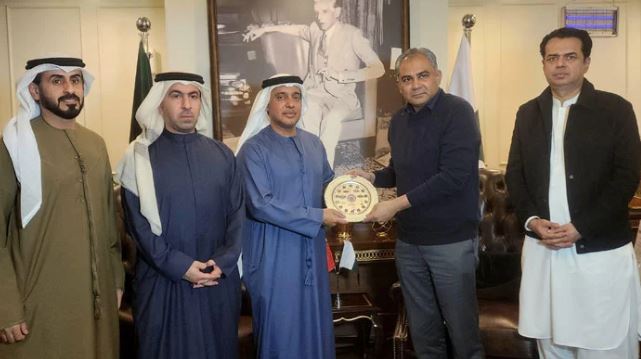
ISLAMABAD/DUBAI: Pakistan and the United Arab Emirates (UAE) have agreed to sign a “pre-immigration clearance” agreement, allowing UAE-bound travellers to complete clearance in Pakistan and exit the airport directly, similar to domestic passengers in the Gulf nation.

The development came during a meeting between Interior Minister Mohsin Naqvi and a UAE delegation led by Director General of Customs Al Dara Border Crossing Ahmed Abdullah Bin Lahej Al Falasi.

The new immigration system will be launched initially on a pilot basis, and it will be implemented in Karachi in the first phase.

Once implemented, passengers will not need to go through the lengthy immigration process, the minister added, pointing out that not only will travelling become convenient, but the new process will save considerable time and improve passengers’ overall experience.

Once the pilot project turns out to be successful, the immigration system will be gradually expanded to more locations, according to the official statement.

The initiative comes against the backdrop of the offloading of passengers owing to improper, incomplete documentation in recent months, in light of stern measures implemented by the authorities to curb human trafficking and illegal travel abroad.

Last week, Naqvi had directed authorities concerned to enforce strict screening of passengers’ travel documents at all airports across the country and had ordered the Federal Investigation Agency (FIA) to ensure the effective implementation of immigration laws and strengthen airport immigration systems along with rigorous screening of travellers’ documents.

Earlier this month, the government also launched “Pre-Departure Facilitation Desks” for assisting passengers travelling abroad.

The desks, as per the interior minister, will provide guidance and assistance to international travellers on immigration procedures and clearances, ensuring a smoother and more hassle-free travel experience.

The desks are accessible in person and also via helplines and email, and relevant details are available at airports, border points and on the FIA website.

The measures are to be taken in the context of a large number of Pakistanis travelling abroad, where the data released by the Bureau of Immigration, as reported by The News, shows that more than 727,000 Pakistanis migrated overseas for employment in 2025.

The figures reveal that the exodus spans all skill levels. Over 400,000 unskilled and more than 200,000 skilled workers secured jobs abroad in 2025, underscoring the scale of labour migration. Saudi Arabia remained the top destination by a wide margin, absorbing the bulk of Pakistani workers.

Overall, the breakdown shows 222,171 skilled, 42,257 semi-skilled and 466,062 unskilled workers leaving the country in 2025. In terms of destinations, Saudi Arabia accounted for more than 530,000 workers, followed by Qatar (68,376), the UAE (52,664) and Bahrain (37,726). Smaller numbers headed to Kuwait, the United States, the UK, Germany, Italy, China, Japan and Romania, while only a handful migrated to countries such as South Korea.

Israel–U.S. Image Warfare Against Iran

Qamar Bashir

Qamar Bashir

Wars in the modern era are no longer fought only with bullets, missiles, fighter jets, or nuclear deterrence. Increasingly, they are fought long before any kinetic action begins—on a quieter, more deceptive battlefield: the battlefield of perception. Images, videos, and narratives now travel faster than diplomacy, bypassing borders, institutions, and even reason. In this new reality, social media has become one of the most dangerous weapons ever devised—capable of destabilizing societies without firing a single shot.

Over recent weeks, a flood of videos has emerged on social media platforms claiming to show massive demonstrations across Iran. The imagery is dramatic: endless crowds filling wide boulevards, national flags lining streets with striking uniformity, and aerial perspectives suggesting a country on the verge of total upheaval. There is no denial that Iran, like many nations under economic pressure and political strain, experiences dissent and protest. That fact is neither new nor controversial. What demands scrutiny, however, is whether the specific videos being circulated reflect organic reality or constructed spectacle.

Having worked as a news producer during a formative period from the late 1980s into the early 1990s, and having remained engaged with media management and state-level communication thereafter, I approach such material with trained skepticism. In professional journalism, the first rule is simple: never accept the image at face value. Images must be interrogated, contextualized, and tested against known patterns of human behavior, geography, and political reality.

Several elements within the widely shared video https://vt.tiktok.com/ZS5ntmNFQ/ raised immediate concerns.

First, the behavior and structure of the crowd itself. Genuine mass demonstrations are inherently chaotic. Human gatherings fluctuate in density, form pressure points at intersections, and show visible irregularities along sidewalks and side streets. Movement is uneven; space opens and closes unpredictably. In the video under scrutiny, the crowd density remains remarkably uniform across extraordinary depth—from the foreground to the far horizon. There are no visible bottlenecks, no dispersal patterns, no natural thinning at the edges. Such visual consistency is rare in real-world human assemblies and suggests construction rather than spontaneous congregation.

Second, the perspective and scaling appear inconsistent with physical reality. Buildings recede naturally with distance, but the human forms within the crowd retain disproportionate clarity far beyond what optics and aerial resolution would allow. In authentic drone footage, individuals quickly lose definition as distance increases, blending into texture and motion. Here, human figures remain visually distinct deep into the frame, defying the expected behavior of light, distance, and atmospheric interference.

Third, the symbolic repetition is striking. Flags appear at near-identical intervals, with uniform size, color saturation, and orientation. In real protest environments, symbols are irregular: some flags hang limp, others ripple unpredictably; many are partially obscured or tilted at varying angles. Perfect visual repetition is a hallmark of design, not of lived reality.

Fourth, there is an absence of micro-chaos. Even a single frame extracted from authentic protest footage captures motion blur, raised hands, head turns, banners at differing angles, and small disturbances rippling through the crowd. The video in question presents magnitude without motion—an image that appears alive but lacks the subtle disorder that defines real human movement.

Fifth, the information environment itself raises questions. Iran is among the most tightly controlled digital spaces during periods of unrest. Internet throttling, platform disruptions, and communication blackouts are common responses to internal instability. Under such conditions, high-definition, uninterrupted aerial footage does not typically circulate freely or repeatedly. Scarcity, not abundance, defines information flow from closed environments. The sudden frequency and clarity of this material therefore contradict known patterns of access and control.

This contradiction prompted further scrutiny. History provides sobering lessons. Before Iraq was invaded, narratives and visuals prepared global opinion. Before Libya collapsed, selective imagery framed intervention as humanitarian necessity. Before Syria descended into prolonged catastrophe, emotionally charged footage simplified complex realities into moral binaries. In each case, media preceded missiles. Images softened resistance, manufactured urgency, and created justification for actions whose consequences were later measured in human tragedy.

The current moment bears uncomfortable similarities. Israeli Prime Minister Benjamin Netanyahu has once again openly revived the language of regime change in Iran, addressing the Iranian public directly and encouraging confrontation with the existing state. This rhetoric is not accidental nor unprecedented. It follows a long-established pattern in which internal unrest is amplified externally to legitimize future action.

At the same time, the familiar and highly combustible narrative of Iran’s alleged nuclear ambitions has been reintroduced with renewed intensity. Despite years of inspections, contradictory intelligence assessments, and shifting red lines, nuclear alarmism is once again being used to mobilize fear—particularly within Western political circles. Its function is clear: to draw the United States back into a regional confrontation centered on Israeli security calculations.

Statements from Washington reinforce this trajectory. When American leadership publicly warns that Iran will be struck “where it hurts” if unrest is met with force, such language serves as a signal—not merely to Tehran, but to global audiences. It signals that escalation is conceivable, that internal disorder could justify external intervention, and that public opinion must be conditioned in advance.

Simultaneously, the re-emergence of Reza Pahlavi, son of Iran’s former monarch, as a proposed alternative leadership figure follows a familiar script. His sudden prominence, international exposure, and expressed willingness to lead mirror past efforts to elevate external figures as symbols of legitimacy during periods of destabilization. History shows that such figures often resonate more with foreign audiences than with populations on the ground—but they serve an important narrative function nonetheless.

It is within this convergence—Israeli advocacy for regime change, American military signaling, revived nuclear fear narratives, and the elevation of an external political alternative—that the circulation of dramatic protest imagery must be understood. These visuals do not merely document events; they construct inevitability. They suggest total collapse, universal opposition, and moral urgency—all prerequisites for public acceptance of actions that would otherwise face resistance.

This does not mean dissent does not exist in Iran. It does. But exaggeration, fabrication, and narrative inflation have historically been used to convert limited unrest into justification for catastrophic intervention. The consequences of such manipulation are not abstract. They are measured in destroyed cities, displaced populations, and generations condemned to instability.

Today, wars begin not with sirens but with shares. Not with explosions but with engagement metrics. By the time missiles are launched, the psychological battlefield has already been won.

The responsibility therefore lies with citizens, journalists, and analysts alike to resist reflexive belief. To pause. To question. To distinguish between organic human expression and manufactured spectacle. Justice demands evidence. Peace demands restraint. And truth demands patience.

In the age of instant imagery, seeing is no longer believing. Verification is.

Qamar Bashir
Press Secretary to the President (Rtd)
Former Press Minister, Embassy of Pakistan to France
Former Press Attaché to Malaysia
Former MD, SRBC | Macomb, Michigan,

Stay Connected

64FansLike
60FollowersFollow

Latest Reviews

Exchange Rates

USD - United States Dollar
EUR
1.14
GBP
1.34
AUD
0.70
CAD
0.71