Home Blog Page 3006

These cars didn’t launch in Pakistan this year despite announcements and leaks

ISLAMABAD – Owing to the phase-wise shutting down and the restarting of the economy due to the pandemic, Pakistan’s automotive industry has had a series of highs and lows in 2020. Fortunately, the auto-sector not only managed to prevail through it all but also welcomed new entrants to its market.

Here is a list of all the vehicles that were supposed to have debuted in Pakistan this year:

Note: As per our knowledge, their launches have merely been delayed and are likely to hit the road within the first quarter of 2021.

BAIC Lineup

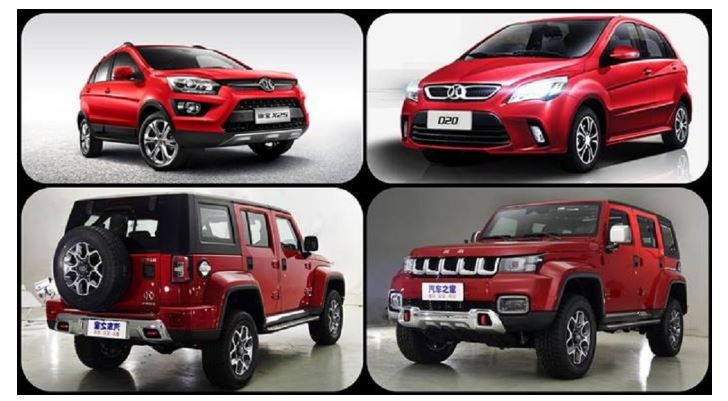
The Chinese state-owned automaker, BAIC, would have made a huge splash in Pakistan this year in partnership with Sazgar Engineering Works Limited (SEWL). It had showcased three vehicles, the D20 hatchback, the X25 Crossover, and the BJ40 SUV, in February at the PAPS 2020 Autoshow in Lahore.

All three had a decent range of features and performance figures on paper, but what was most enticing was their individual prices. They were all priced significantly below the competition and offered a strong value for money.
0

Sources from the company at the auto show told ProPakistani that the vehicles would debut in the market from mid-to-late 2020, but the company has mostly been silent on all platforms since then. The last announcement from Sazgar BAIC was via a Facebook post in which it wished everyone “Eid Mubarak” on Eid-ul-Fitr, which was again followed by complete silence.

Given that the Automotive Development Policy (ADP) 2016-21 will end after the first quarter 0f 2020, it is assumed that the Sazgar BAIC will make its debut then.

Toyota Corolla Cross

Reports on the internet during mid-2020 had stated that Toyota would launch a new crossover SUV in Pakistan to  challenge the Toyota C-HR (both share the same underpinnings), the Honda Vezel/HR-V, the Nissan Juke, the Suzuki Vitara, and other compact crossover SUVs.

The Corolla Cross has the right amount of power, a decent performance, a good number of safety and comfort features, and is aesthetically pleasing. However, it seemed to receive a cold response, especially after it was learned that it would have a starting price of Rs. 8.5 million, making it more expensive than a base-trim Toyota Fortuner which is a mid-size 7 seater SUV.

0

Considering that the Corolla Cross will be sold in Pakistan as a Complete Built-up Unit (CBU) imported from Thailand and that it has a hybrid powertrain, it explains why its price is so high.

Earlier reports had suggested that it would be sold in Pakistan by the end of December 2020 but according to recent updates, Toyota Indus plans to put it on sale in January 2021.

Chery QQ/United Alpha

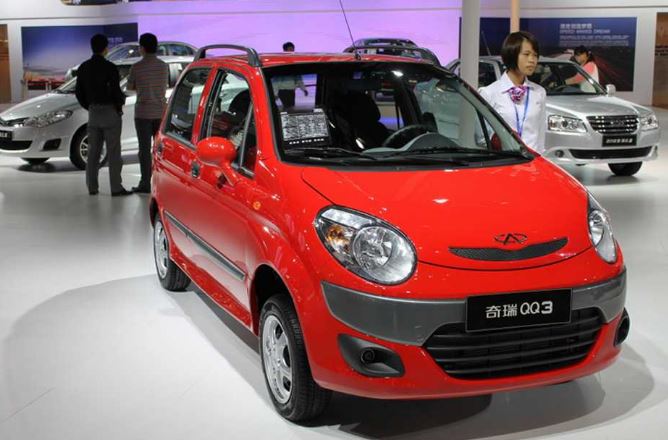
It had been revealed about a month ago that United Motors intends to bring the Chery QQ back to Pakistan as the ‘United Alpha’.

The automaker already has the 800cc Bravo hatchback in its lineup to compete with the Suzuki Alto and Prince Pearl, but it now seeks to challenge Kia Picanto and the Suzuki Cultus with its new 1000cc subcompact hatchback.
0

United Alpha is a Chinese hatchback that was launched by Karakoram Motors over 10 years ago as the Chery QQ. However, due to the highly competitive hatchback segment that had featured the Suzuki Mehran, the Daihatsu Cuore, the Chevrolet Joy, the Hyundai Santro, and the Fiat Uno among others that had been vying for the lion’s share of the market, the QQ had failed to impress and was thus discontinued.

This time around, United Motors sees the current lack of variety as an opportunity to strike again. It had originally planned to debut the car in late December but has postponed it to the first week of January 2021.

Hyundai Elantra

Pakistan offers a good market for the Hyundai Elantra because its compact sedan segment has been lacking a third option for almost more than a decade. The vehicle is a compact sedan that has gone up against the Toyota Corolla, the Honda Civic, and Mazda 3 in the international market.

The Elantra had also been displayed at the PAPS Autoshow 2020 and had drawn a huge crowd because of its sharp design. A source from Hyundai Nishat had told ProPakistani at the show that the Elantra would be debuted before the end of 2020. However, the lockdowns have since put a damper on the plan.

According to recent news that has been confirmed by ProPakistani, Hyundai Nishat has already assembled some units of the Elantra and is planning to put it on sale in the first quarter of 2021. The vehicle is also reportedly loaded with specs and features that are similar to those of the internationally-sold Elantras.

However, the entire package is likely to come at a hefty price. Internationally, the Elantra costs between $18,000 and $22,000 for different trims, which is almost between Rs. 2.8 million and Rs. 3.5 million. However, considering that it will go up against the Toyota Corolla and the Honda Civic, its starting price is estimated to be around Rs. 4 million, and with its specs, features, performance, and aesthetics, it is likely to give a tough time to the competition.

The delayed launches of all these vehicles may just be a blessing in disguise with the promise of something positive and interesting to look forward to in the new year.
Indonesia bans hardline Islamic Defender’s Front group

JAKARTA, Dec 30 — Indonesia has banned the controversial but politically influential hardline group the Islamic Defender’s Front, the country’s chief security minister announced today.

Minister Mahfud MD said the group, widely known by its acronym FPI, was prohibited effective immediately.

“The government has banned FPI activities and will stop any activities carried out by FPI,” Mahfud said. “The FPI no longer has legal standing as an organisation.”

The move follows the November return of the group’s spiritual figurehead Rizieq Shihab, from three years of self-exile in Saudi Arabia, which was celebrated with events attended by thousands.

Rizieq’s return to the world’s largest Muslim-majority nation had fueled concern within government that he could be angling to harness opposition forces.

The 55-year-old cleric was arrested earlier this month charged with violating health protocols and remains in custody, while a fatal highway clash between police and supporters — which saw six of his bodyguards shot dead — is being investigated by the country’s human rights body.

Mahfud said the FPI had officially been disbanded since June last year, but had continued to unlawfully conduct activities.

Six senior government officials, including the attorney general, police chief and counter terrorism agency head were involved in the decision to ban the group, he said.

Deputy justice minister, Edward Omar Sharif Hiariej, said the FPI was outlawed because nearly 30 of its leaders, members and former members had been convicted on terrorism charges, and because the group conflicted with the nation’s state ideology, Pancasila, which emphasises unity and diversity.

Formed soon after the 1998 fall of former strongman Suharto, the FPI were notorious for raiding bars and brothels and intimidating religious minorities, and known also for offering assistance during natural disasters.

Its political sway has risen in recent years, however, particularly after its role in mass protests in 2016 against Jakarta’s former Christian governor who was jailed for insulting Islam.

The government saw the demonstrations as one of the biggest threats to President Joko Widodo’s rule.

Choosing the right path in politics!

Attiya Munawer

The political climate in the country continues to heat up and the intensity of political confrontation is gradually increasing. Then, the question arises as to what will be the outcome of the country seemingly reachinga dead end due to the escalating confrontation between the government and the opposition, and how much irreparable damage will be done to national interests in this turmoil? This question has rightly worried every sensible and conscious Pakistani, with smoky rhetoric from both sides, in which every effort is being made to declare the opposing party hostile to the country and clearly incompetent and dishonest, is fueling the fire. In this war of words, the fact that the other side also represents millions of Pakistanis but it is not taken into account, while power is something to come or gone.

It is clear that the government is trying to stay in power and oust the opposition, while Prime Minister Imran Khan is proving lucky in that the opposition parties that wanted to oust the government through the movement have their own differences and contradictions. MaulanaFazal-ur-Rehman, head of the JamiatUlema-e-Islam, who is credited with uniting the opposition under the banner of the PDM, is facing a major uprising within his own party. MaulanaFazal-ur-Rehman says that all this is the result of government fabrications and conspiracies. He is right, but this is what happens in such cases. If the opposition wants to oust the government, then the government will use all sorts of tactics to thwart them. Maulana should have already dangled his sage as a precaution.

However, Maulana’s grip on his own party is strong and raising the banner of rebellion of these four gentlemen alone will not harm the party. The real problem is the differences within the opposition on various issues and not being on the same page. There is an ambiguity about the goals of the opposition that the desire to overthrow the present government is in place. Earlier, it was claimed that this government would step down in a month, but now there is a clear disagreement over the resignations, the Senate and the by-elections, and the timing of the resignations is also a matter of controversy. Most PML-N leaders say a decision on resignation or sit-in should be taken after the long march, while some opposition parties want to run in the by-elections and Senate elections, while expecting the PPP to resign and will come out of the Sindh government seems illusory, although Bilawal Bhutto has said that we are ready to make this sacrifice, but in the current situation it does not seem possible to do so in practice.

In the face of this situation, the government seems happy that the opposition movement is disintegrating with its own contradictions and that the PDM has broken the deadlock. In fact, the leaders of the opposition did not even consider the far-reaching motives of their strategy in the words of Maulana Fazal-ur-Rehman because Maulana is trying to run the PDM as a political party, even though it is an alliance of opposition parties in which each political party has its own point of view. Maulana himself, even thoug his not a Member of Parliament, is still holding on to their resignations and for other political parties, resigning is fine as far as claims are concerned, but in practice it is unworkable at a time when the government is stable. Although Maryam Nawaz has become quite an eagle and has gone too far on the instructions of her father based in London, it would be good for the anti-establishment figures to be relieved, but the Muslim League (N) concerns are being raised within, As far as Bilawal Bhutto Zardari is concerned, his zeal and enthusiasm are valuable, but the final decision will be made by his father Asif Ali Zardari and he will never throw his party into the fire of resignations.

At present, the country is in the throes of political chaos and speculation, the government and the opposition is taking over each other or politics is turning into animosity and confrontation. Getting out of this situation is the most important need of the hour for the betterment of the country. Both the government and the opposition should realize the deteriorating situation and come up with an appropriate and acceptable mechanism for their own interests, because the politics of siege and annihilation and walling off each other is not in the interest of the country and the nation. Leadership of political parties should prioritize democratic principles and public aspirations, not criticize each other for their own party, factional and personal interests. The people are watching the ongoing confrontation between their elected representatives in a world of frustration and surprise. The leadership of political parties should put democracy before individuals, because their mistakes have been the main reason for the bedrock of democracy, so learning from the past and choosing the right path for the present and the future is the primary responsibility of the political forces.

Twitter: @AttiyaMunawer

The Anatomy of Corruption

Askari Raza Malik

“The concept of the imperceptible is a decisive factor distinguishing man from animal”, said Syed Qutab. Translated in Muslim spiritual parlance, it is God consciousness orTaqwa.Itprovides a strong defence against thebaser human instincts of slipping back into animalism or Jahiliya, characterized by unbridledgreed forzar, zan and zameen, (wealth, women and land).

A religion must have element of ‘the Holy’ as its central theme – the Holy God, the Holy Prophet. All religions create a culture. An ‘ism’, a philosophy or an ideology also moulds life into a certain pattern like‘Socialism’ and creates a culture of its own,but has no spiritual claims.It is the religion alone that creates and demands the awareness of the imperceptible. Thethree Abrahamic religions have the essential of‘holy’ as the focal point in their religious lexicon.This is what creates the difference between a believer and a non-believer.

Man makes laws as a social necessity. God has made laws to govern the universe. Physical or scientific laws like gravity; these are inviolable, compelling andcontrol the universe. A parallel set of laws,‘the spiritual laws’ are contained in the scriptures. These are not immediately applicable but remain unescapable. Their manifestations areslow, subtle but sure. Peopledescribe these as ‘Poetic justice’, ‘Divine Justice’ or ‘deus ex machina’.

The scriptures, the Prophets and the saints elaborate the spiritual laws as Divine principles and traditions. God emphasizes, “And never will you find in the way of Allah any change”(48:23). Patience is His essence. He has granted us unlimited personal freedom. We make the choice, Good or Evil, Honour or disgrace.

To deliberately sin is to defy God. While in rebellion a Momin ceases to be a believer. Persistence with the sin triggers off repercussions, reactions opposite and equal to the actions. We learn that arrogance results in ignominy; adultery invites violence and usurpation of others’ rights ushers in misery and disorder.

Corruption is a multi-dimensional evil. It defies Allah and His Prophet (PBUH) and alsoflouts public laws. It is coercive, exploitative and when it comes to embezzlement of public exchequer,it adds another heinous side to it – breach of a sacred trust. Worst of all,it creates unnatural inequality.

The family of the corruptsuffers multiple psychological and spiritual wounds. It induces a false sense of wellbeing in the family directly affecting thechildren’spsychology, drastically reducing their pain thresh-hold and resilience. It causes inexplicable moral and physical degradation in the coming generations.The absence of God’s grace is evident in the life of the corrupt. Happiness and peace of mind deserts him and his loved ones.

According to the Prophet (PBUH), a leader or ruler is like a shepherd for his people. His entire focus is to safely lead his flock to greener pastures. In Islam, a ruler is only a trustee of the resources that actually belong to his people. He is allowed to spend on himself onlythe minimum for subsistence. Hazarat Abu Bakr while dying returned all the stipend drawn from Bait-ul-Maal as he thought he could have actually lived without it. Jinnah drew only one Rupee as token salary, because he had enough of his own to meet his personal expenses. A corrupt Muslim ruler is doubly unfortunate as he has to be answerable to God and also his people.

We commit excesses on others. We derive material and sadistic pleasure. Allah says we instead excess against ourselves. “Tell them, (O’ Prophet): “My servants who have committed excesses against themselves”(39:53). All the evil and good we invest is returned with interest. How and when? Individual experiences vary. One has to keep eyes wide open. Usually, indicators come as warnings until the inevitable strikes. Then it is too late to repent.

The enormity of Natural Forces around us makes us feel helpless, mere slaves of a pre-destined scheme. The notion is downright passive, pitiful. We live in a neighborhood and follow its by-laws. On our planet we must also obey God’s laws for continued human existence. God gives all the rope to a man, to either hang himself with it or enjoy playing by the rules of the game. It is absolutely freewill. Dumping every good and bad on the destiny is running away from our responsibilities. Some occurrences, like where we are born are not in our control but are insignificant. History is replete with examples where the men of humblest of birth rose to everlasting glory and the noblest were lost in oblivion.

Rituals according to Maulana Maudodi are the physical manifestations of Islam.The ‘Din’ containing social, moral and human obligations is the ‘Soul’, the driving force. Today our body throbsbutthe soul is dead.

Corruption is compromise. When compromise pervades, the purpose of life becomes nebulous. Baser human instincts take control, the consciousness of the ultimate reality becomes meaningless and man is back to animalism. Animalism is a harbinger of destruction, the scriptures warn.

An early morning visitor to Baghdad would hear a melodious humming rising from the city towards the skies, recitation of the holy Quran. All the recitation, night worship and fasting could not save the Muslims from the most shameful and devastating defeat at the hands of the Mongols.

Corruption is just not one of the killer diseases. It is a deadly cancer for the society. It nurtures coercion, exploitation, oppression, inequality, lawlessness, insecurity and injustice. Without justice a country is worse than ‘the Animal kingdom’.

Pakistan is galloping towards the precipice. All those who matter, the judiciary, executive, parliament, law enforcement and the media must join hands together to counter the menace. Animalism can only be eliminated with extraordinary, unconventional, ruthless and extreme measures, not with the laws of a civil society.

(Major General (retd) Askari Raza Malik is author of “Pakistan in Search of a Messiah”)

Outgoing year was very hard for masses and economy

Islamabad, Dec  30, 2020 :Former President ICCI Shahid Rasheed Butt on Wednesday said the outgoing year 2020 was very hard for masses and tough for almost all the sectors of the economy.

Masses faced unprecedented inflation, the industrial sector slowed down while the agriculture sector crumbled while the situation may not improve during the incoming year if the situation remained the same, he said.

Shahid Rasheed Butt said that the agriculture sector faced locust attacks, pandemic, climate change, untimely rains, onslaught of mafia and questionable policies which hit millions of farmers and stoked the food crisis.

He said that the promise of providing millions of jobs and other necessities remained unfulfilled while millions lost their jobs and businesses.

New records of inflation, food insecurity and high energy prices were made and masses were burdened by taxes while the elite enjoyed tax exemptions worth billions of rupees.

Wheat, cotton and maize crops failed due to a host of reasons including the lethargy of the department to produce good seeds and failure to contain seed and fertilizer mafia.

The cotton crop was worst affected which is a record in many decades but no plan was made to bring improvement in the agriculture sector which is more important than the industrial sector.

Mr. Butt noted that provinces have not agreed on a single wheat support price and many issues are awaiting resolution which indicate a tough year ahead during which the import of food worth will continue.

CPEC enters a new stage of high-quality development: Cheng Xizhong

BEIJING, Dec. 30 : The construction of CPEC has entered a new stage of high-quality development, which will continue to play an important role in pushing forward Pakistan’s efforts to improve the socio-economic life of its people.

This was stated by the Chinese scholar Prof. Cheng Xizhong, according to a report published by China Economic Net (CEN).

A large number of projects have been completed, bringing about more than $25 billion direct
investment to Pakistan.

Prof. Cheng stated, “China and Pakistan have jointly overcome challenges and promoted CPEC’s construction and have not withdrawn engineers working on CPEC projects nor laid off Pakistani workers since the outbreak of COVID-19 in Pakistan. Therefore, CPEC has made gratifying progress.

China and Pakistan will complete the projects under construction in time, create more jobs for Pakistanis, vigorously improve people’s livelihood, strengthen cooperation in industrial parks construction, human resource training, poverty alleviation, medical and health care, agriculture and other fields, and continuously release the great potential of CPEC and realize common development and progress.

On December 16, the final Take-over Certificate (TOC) issuing ceremony of Peshawar-Karachi Motorway (PKM) Project (Sukkur-Multan section), the largest transportation infrastructure project of the CPEC undertaken by China State Construction Engineering Corporation (CSCEC), was held in Multan, marking a formal opening to traffic and a perfect implementation of the project.

At present, the completed projects have greatly improved Pakistan’s transportation infrastructure and power supply, created more than 70,000 jobs for Pakistanis, contributed 1 to 2 percentage points to Pakistan’s GDP growth every year, and significantly promoted Pakistan’s economic and social development and people’s well-being.

The PKM highway project is the abbreviation of Peshawar-Karachi Expressway. The expressway starts from Karachi in the south, passes through Hyderabad, Sukkur, Multan, Lahore, Islamabad and other cities, and ends at Peshawar in the north, with a total length of 1,152 km.

PKM was originally planned to start from Karachi, Pakistan’s largest city in the south, and reach Lahore, the second largest city in the north. Now it is planned to extend to Peshawar, an important city in the northwest border.

GDP of the areas along the project accounts for more than 90% of the total amount of Pakistan, with a population of 138 million. After completion, it will become an economic artery connecting the northern and southern part of Pakistan.

CSCEC has undertaken the PKM project (Sukkur-Multan section) in Engineering Procurement Construction (EPC) contract mode, and Export-Import Bank of China has provided financial support.

The total length of the project is 392 km; the design speed is 120 km/h with two-way six lanes; the contract period is 36 months; the contract value is about $2.889 billion.

CPEC, the important pilot project of “Belt and Road” and a landmark project of China-Pakistan cooperation, has made significant progress for last 5 years.

Recently, Metairie-Lahore transmission line, a key project of CPEC, was fully connected, further improving Pakistan’s power supply system.

On October 25, Orange Line Metro in Lahore was officially opened and put into operation, bringing Pakistan into the era of subway. Gwadar Port has handled two batches of fertilizer with a total of 26,000 tons transferred to Afghanistan.”

China continues power transmission project in Pakistan inspite of COVID-19

ISLAMABAD, Dec 30 : China continued its support constructing power transmission line in Pakistan inspite of COVID-19, says a report published by Gwadar Pro on Wednesday.

Affected by the pandemic this year, the domestic economy has been sluggish, and every industry has been attacked at varying degrees. In spite of this, the construction of domestic power transmission and transformation projects has made significant progress with the support of Chinese enterprises in 2020.

According to the report, after two years of preparing and constructing, the Matiari to Lahore ±660kV HVDC Transmission Line Project was completed in November.

The project was expected to be completed in 2021, and its actual commissioning date is one year ahead of schedule.

Matiari to Lahore ±660kV HVDC Transmission Line Project was signed on 2018 May 14th and started constructing on December 1st of the same year.

The project, with a capacity of 4 megawatts and an annual capacity of about 35 billion kilowatt-hours, fills a technical gap in Pakistan’s HVDC sector and creates 5,000 – 7, 000 local jobs.

Besides the mega-project under CPEC frame, several crucial power transmission projects also have made progress.

In October this year, China XD Group signed the DHABEJI 220kV transmission line project contract with K-Electric Limited.

Under the project, a new overhead and buried cable line connecting the DHABEJI substations in Karachi will be built. The contract includes every step of construction such as design, survey, supply, civil engineering, construction, installation, and field testing.

On December 24, China Energy Engineering Corporation Limited (Energy China) signed the EPC contract for ADB-401A 500 kV double circuit power transmission Line project with NTDC.

The project is a 500 kV transmission line from SK Hydropower Station to Neelangjhelum, with a total length of about 75 km, using a double loop and four split mode.

The power transmission project delivering electricity from SK hydropower station will further alleviate Pakistan’s power shortage and boost local economic and social development.

Apart from the lack of generating capacity, poor transmission systems are also reckoned as a major factor of domestic power shortage.

Pakistan was hit by a massive power outage caused by a malfunction of electric transmission line on January 26, 2015, which is considered as one of the worst energy crises in Pakistan’s history, affecting the capital Islamabad as well as a number of towns and villages in the provinces.

As the construction of transmission system under CPEC, the domestic power shortage has been relieved in the past 5 years, and new signed projects will also support Pakistan to cope with the power shortage in the future, the report added.

Challenges in Deployment of Corona Vaccine

Robin Iqbal

In April 2019 a scaremongering video of children becoming unconscious after being administered polio vaccine in Badaber, Peshawer, appeared on social media nearly bringing the entire national immunization program to a grinding halt. Even more unnerving is to note that the perpetrator was a local school teacher. The video is a clear manifestation of the prevailing mindset of masses that greatly swaddles the success of such campaigns in our country.

The last mile for the vaccine i.e. from centralized distribution centres to sub district-level clinics, and finally to the patients, will certainly be strewn with myriad of challenges. Before the vaccine fights the deadly virus in Pakistan, it will have to face the people first.

Conspiracy theories against the existence of the coronavirus are still morbidly rampant in the country including the educated class. One doesn’t have to look far to hear notions like it being a manmade virus, designed to keep a check on global population – the government is killing its own people in the name of coronavirus as it brings foreign aid, they are denying the very existence of the virus altogether, etc. – the list goes on. Our public is by and large equally skeptic about the vaccine.

The likely impediments to the deployment are going to be, as is in the case of polio vaccine, firstly the general distrust against the vaccine. Many a time such programs have been labeled as being un-Islamic (haram) and designed to make the population sterile. Secondly, since the deployment of vaccine will inevitably require government partnering up with World Health Organization (WHO) and other such agencies, it is quite likely to be viewed as a foreign program, which implies an unsettling undercurrent of mistrust.

Thirdly, the inter-district or inter-city movement of people, for various reasons, might leave a certain number of people remaining unimmunized, willfully or otherwise. Additionally, the marginalized population in the country like the transgender and slum dwellers are likely to evade the authorities’ radar thus continuing the overhang of virus’ spread. Fourthly, the risk of substandard or altogether fake vaccine appearing in the market, a phenomenon not so novel in our part of the world, could potentially jeopardize the whole program. Circulation of any such vaccine could further fuel the underlying distrust and ultimately cost lives. The requisite technical wherewithal for deployment to the far-flung areas of the country like cold chain storages, etc., will prove to be a significant challenge in itself.

Equitable distribution of vaccine between provinces by federal authorities, or lack thereof, has a potential to give the situation a political angle. Furthermore, managerial and coordination issues at the level of city or district governments like shortage of staff, lack of inter-departmental liaison, etc., could also pose a serious impediment to the coronavirus vaccine deployment.

Lastly, post-immunization program, if not managed properly, could lead to a host of problems. Unsafe disposal of used syringes may lead to spread of other degenerative diseases like HIV, Hepatitis, etc. Environmental pollution may rise as a result of used pharmaceutical waste; an area in which our country is lagging behind at global level.

Therefore, sensitization of public will be a keystone of the entire immunization program; without public getting onboard, the policy is not likely to yield great dividends. Rigorous campaigning for education of masses at grass root level, in both print and electronic media, will be required in this regard. Awareness on programs like Covax and initiatives on similar lines as ‘Team Halo’ could prove to be highly beneficial.

Additionally, local clergy and tribal chieftains hold the power of swaying public opinion particularly in the rural areas. Making them an instrument of government’s policy, expounding the benefits of vaccination will play a key role. Equitable distribution of drugs between provinces based on headcount and priority of immunization will preclude any chances of political turmoil.

It will also be incredibly important to conduct the immunization program across the length and breadth of the country simultaneously. A robust week-long project, on the lines of general elections, will have to be conducted. A government directive, ensuring that both public and private sectors make their employs available for the vaccination must be issued. The government ought to update its database on the transgender and other marginalized members of the society lest they slip through the cracks.

Also, mass transit between districts and provinces will have to be halted for this period, in order to ensure that the entire population undergoes the program. The Drug Regulatory Authority of Pakistan (DRAP) will have to proactively work in order to keep a check on counterfeit vaccine. A helpline for easy reporting of such infractions should be established by DRAP. In order to avoid friction between managerial echelons, district level teams comprising representatives of public health experts, district health organizations, district management group, partnering agencies like WHO, etc., working under the auspices of Army will have to be formulated for a wholesome response. The inclusion of Army will not only help to overcome the shortfall in manpower faced by the district administration but will also lend credence to the efficacy of the vaccine itself.

Facilities for safe disposal of a monumentally large number of used syringes and associated paraphernalia will also have to be looked into. All in all, the light at the end of the tunnel has started to become visible. With so much already invested in procurement of the vaccine, both the society and government will have to play their part of role to make the campaign a success. The government would be well counseled to anticipate the challenges likely to be encountered beforehand, and start the remedial measures now.

(The writer is a freelance columnist)

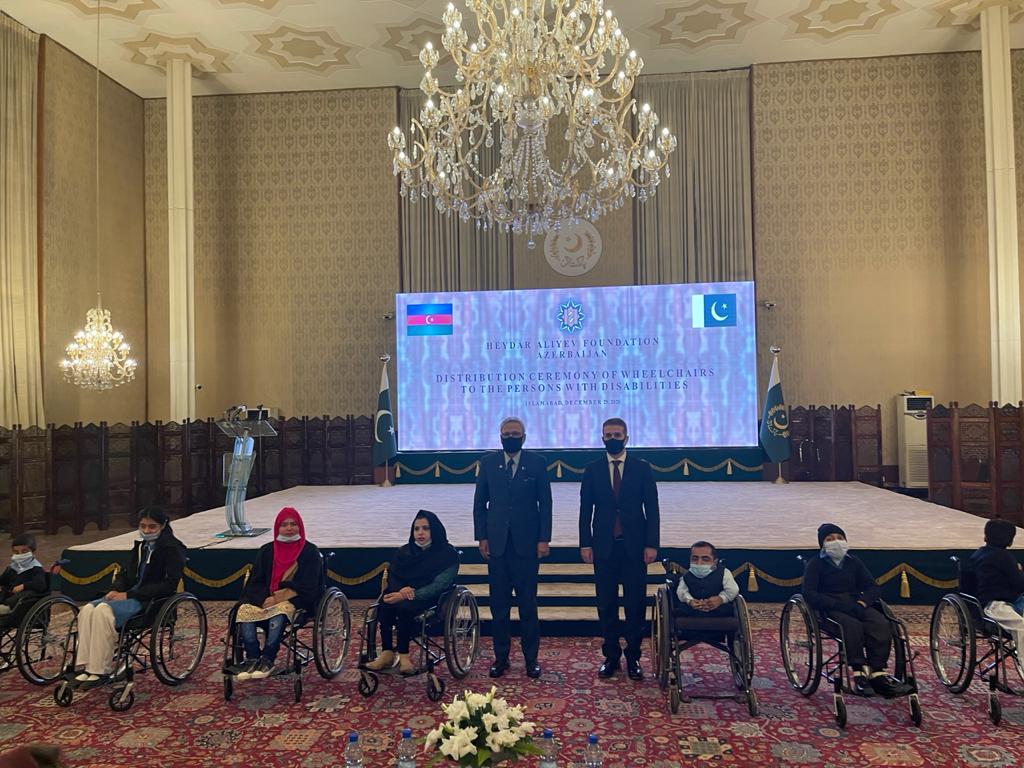
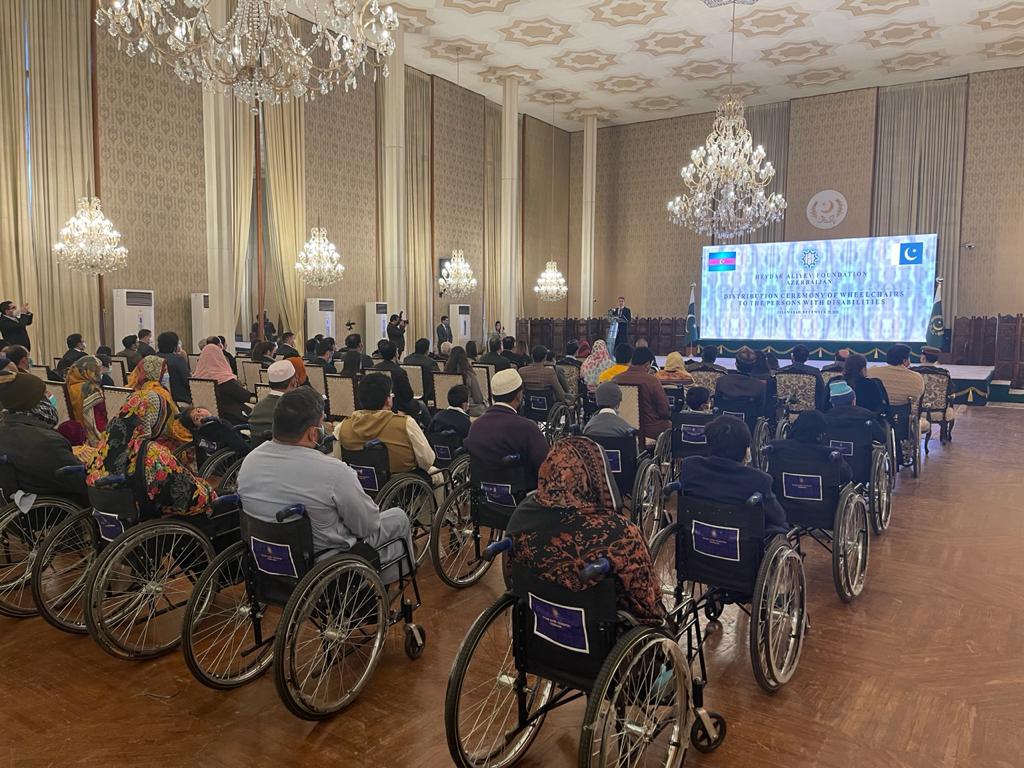
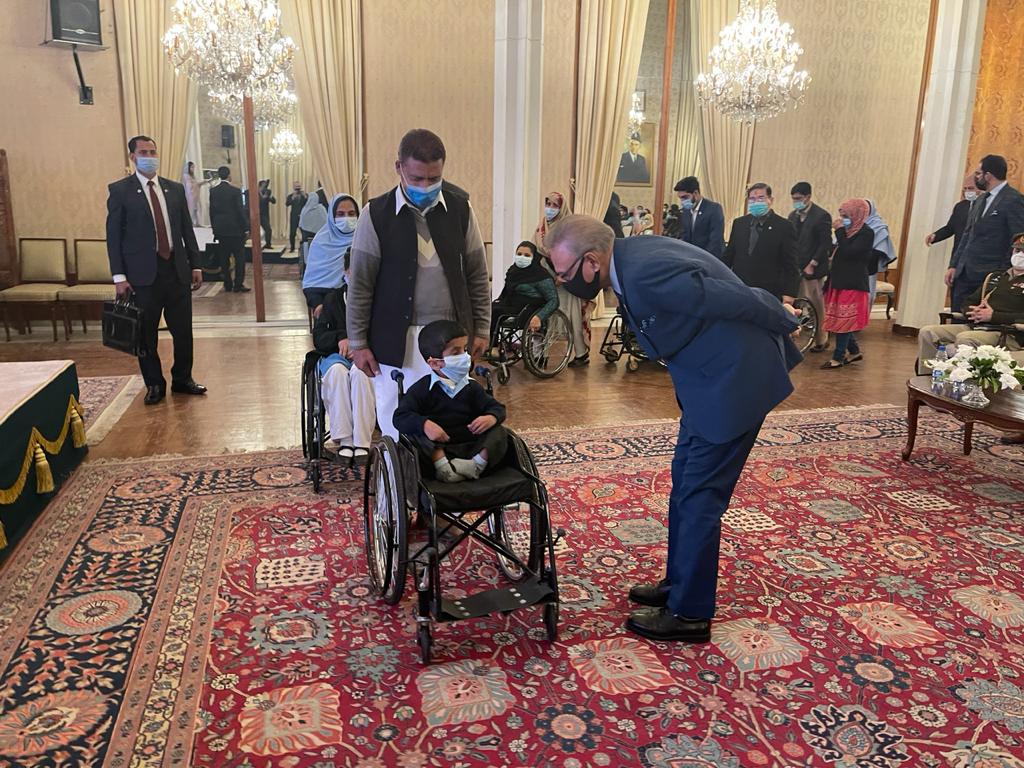
President of Pakistan and First Lady attended Distribution Ceremony of wheelchairs to the Persons organized by the support of Heydar Aliyev Foundation in Islamabad

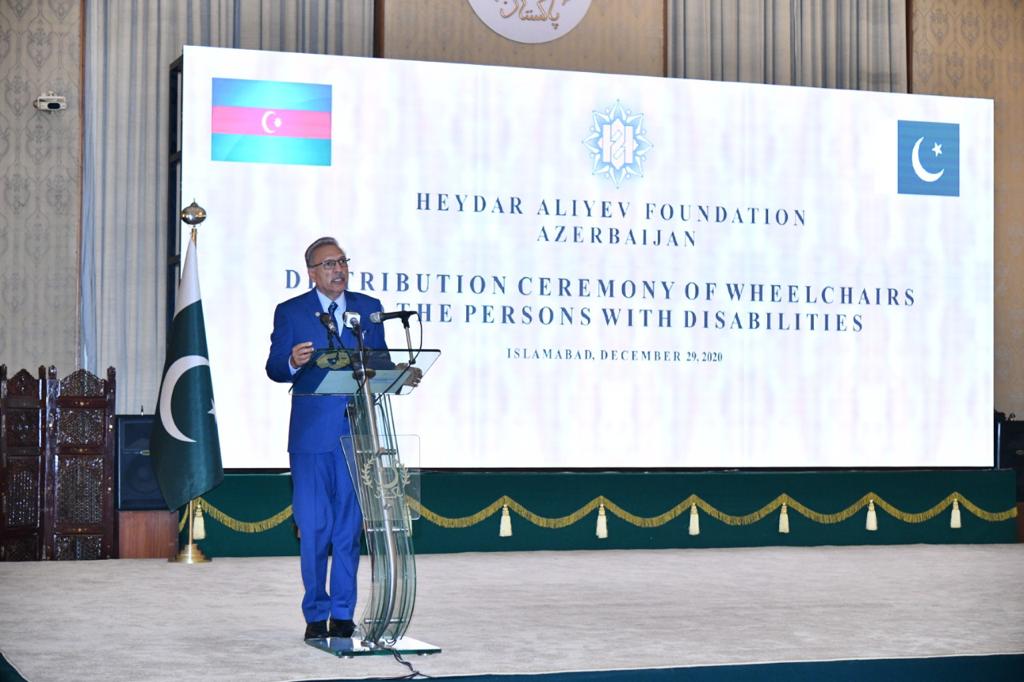
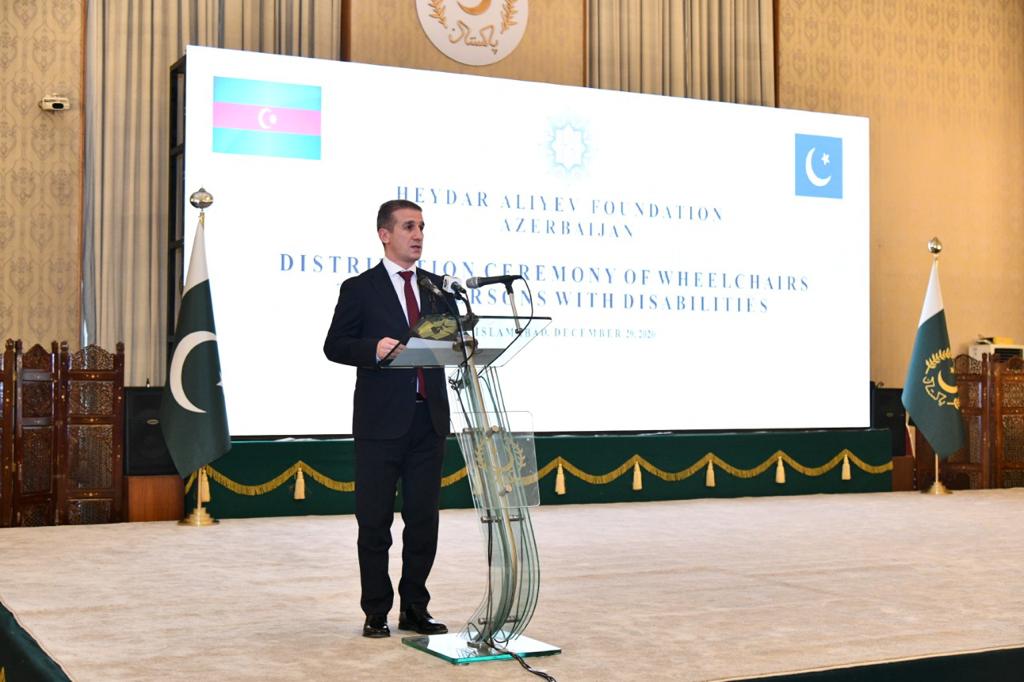
Islamabad : Distribution Ceremony of 100 customized wheelchairs to thedifferently abled persons provided by the support of Heydar Aliyev Foundation, as well as an exhibition of their paintings & handicrafts were held at the President’s House in Islamabad.

9

The President of the Islamic Republic of Pakistan Dr. ArifAlvi and First Lady SaminaAlvi, government officials, MPs, public and political figures, media representatives attended the event.

12

Before the official part of the event, paintings and handicrafts of the special persons were viewed by the President and First Ladyand the other participants of ceremony.

6

Welcoming the special persons and participants of the ceremony on behalf of the President of Heydar Aliyev Foundation, first lady of Azerbaijan Mrs. MehribanAliyeva, the Ambassador of Azerbaijan Ali Alizada said that the rights and freedom, protection, decent living conditions of all persons with disabilities in the Republic of Azerbaijan are firstly guaranteed by the Constitution of Azerbaijan and as in Pakistan, their well-being is also under the constant attention of Azerbaijani government.Ambassador emphasized that a special role in the protection of persons with disabilities in Azerbaijan and beyond belongs also to Heydar Aliyev Foundation of Azerbaijan and by the initiative and support of the President of Foundation, Goodwill Ambassador of UNESCO and ISESCO, Hilale-Pakistan, First Lady of Azerbaijan Mrs. MehribanAliyeva Heydar Aliyev Foundation continues implementation of the different healthcare, education, development, social and  humanitarian projects in Azerbaijan and beyond, including in brotherly Pakistan, with the aim to serve humanity and strengthen friendship between two fraternal nations. Ali Alizada extended his gratitude to Heydar Aliyev Foundation and its President Madam Aliyeva for support of welfare projects and for the special attention towards Azerbaijan-Pakistan relations. Ambassador noted that the full realisation of the rights and well-being of disabled persons demand enormous time and collective efforts and along with the distribution of customized wheelchairs, the holding an exhibition of the paintings and handicrafts of special persons has also the aim to bring their potential out, boost the self-confidence of disabled persons and showcase once again that disability is not inability, and by the support, love and protection special persons are enable to make reality their abilities. Mentioning the various programs for the welfare of disabled persons running by the Government of Pakistan Ambassador Ali Alizada thanked Dr.ArifAlvi,President of Pakistan for hosting this valuable event at Aiwan-e-Sadr and for his continued personal attention to this noble cause.

17
4

Noting the Heydar Aliyev Foundation numerous humanitarian projects in Pakistan, as well as in many other countries around the world,The Chief Guest of the event, President of Pakistan Dr. ArifAlvistressed that the implementation of such programs is really commendable and expressed his deep gratitude to the President of Heydar Aliyev Foundation, first lady of Azerbaijan Mrs.MehribanAliyeva. Expressing satisfaction with the high-level fraternal relations between Azerbaijan and Pakistan, the President reminded his visit to Azerbaijan for the Non-Aligned Movement Summit in 2019 and shared his impression by the special attention, care and hospitality shown to him in Azerbaijan.Speaking about the 44 daysPatriotic War of Azerbaijan, the President congratulated Government and people of Azerbaijan over the liberation of its lands from occupation and victory on the aggressor country Armenia and asked to convey his special felicitation to President of Azerbaijan IlhamAliyev.

Emphasizing  the importance of paying special attention to the persons with disabilities, President Dr.ArifAlvitalked about the projects being implemented by the government of Pakistan for further improvement of the welfare of persons with disabilities, and stressed the necessity to take care of them not only by the state but also by all public representatives.

At the end of the event 100 customized wheelchairsprovided by the support of Heydar Aliyev Foundation of Azerbaijan have been presented to the beneficiaries representing Pakistan Bait-ul-Mal, Directorate General Special Education, Army Special Education Academy and Special Talent Exchange Program (STEP).

Modi’s Islamophobia Driven Policies

Iqbal Khan

In his address to the 75th session of the General Assembly, Prime Minister Imran Khan had highlighted the incidents of Islamophobia and other provocations. He had also called upon the UN to declare an “International Day to Combat Islamophobia”.

Recently, at the 47th session of the Council of Foreign Ministers (CFM) held at Niamey, the OIC called upon the Indian government to take immediate steps to implement its commitment to reconstruct the Babri Mosque on its original site. It also urged India to punish those responsible for the mosque’s demolition, to prevent the construction of a temple on its site, take immediate steps to ensure the protection of the other 3,000 historic mosques, and ensure the safety and protection of the Muslims and their holy sites throughout India.Pakistan has urged the world community, the United Nations and other organizations to play their role in preserving Islamic heritage sites in India from the extremist ‘Hindutva’ government of the BJP and to ensure protection of minorities in the neighbouring country.

Adoption of resolution is part of Pakistan’s concerted efforts calling for universal prohibition on wilful provocation and incitement to violence. It is part of Pakistan’s diplomatic campaign to raise awareness about rising Islamophobia, anti-Muslim hatred, as well as defamation of sacred religious personalities and symbols. India is one of the epicentres of such negativities.

Zafaryab Jilani, convenor of Babri Masjid Action Committee (BMAC) and All India Muslim Personal Law Board executive member, has called the proposed mosque to be built at the government allotted land in Dhanniur of Ayodhya as “against Shariat”. According to Times of India, Jilani said that as per the Waqf Act, mosques and land for the mosques could not be bartered, making the proposed mosque against the Act. Government of Uttar Pradesh had allotted the 5-acre land for the proposed relocation of Babri masjid approximately 25 KM away from actual site of mosque.

Indian Supreme Court allowed the construction of Hindu Temple at the site of the Babri Masjid.The flawed judgment in November 2019 not only reflected the preponderance of faith over justice but also the growing majoritarianism in today’s India, where minorities, particularly Muslims and their places of worship, are increasingly under attack.Later, the Supreme Court conducted an in-chamber hearing of a bunch of review petitions filed against the ruling, court rejected them all in December 2019 after finding no merits.

India has a poor track record with regard to safety and security of religious symbols of its minority communities—especially Muslims.On December 6, 1992, Hindu attackers had demolished and burnt the core structure of the 16th century Babri Masjid.Thousands of Hindu zealots, supported by duty police personnelhad razed to the ground the historic mosquean abominable act of anti-Muslim frenzy and blatant violation of religious and international norms.Thousands were killed in rioting that followed the mosque’s destruction. The

Recently a trial court acquitted all prominent BJP leaders from the case and ruled that demolition of the mosque was not pre-planned. There is compelling evidence with hundreds of eyewitness accounts that proves beyond doubt that the mosque demolition was pre-planned. The shameful acquittal of the criminals represented another egregious travesty of justice.

The painful scenes of the demolition of the mosque still remain fresh in the minds of not only Muslims but all conscientious people in the world. The new illegitimate structure, which the Hindutva-driven BJP has campaigned for and is bent upon constructing as part of its agenda of converting India into a ‘Hindu Rashtra’, is a scar on the face of so-called ‘largest democracy’ in the world.

Twenty eight years down the timeline, the United Nations General Assembly (UNGA) adopted a Pakistan-Philippines sponsored resolution calling for respecting sacred religious symbols. Indeed too little, too late!It’s a non-binding resolution. And the counties which either sponsor such events or look the other way during such happenings have abstained. However, the silver lining is that there wasn’t even a single negative vote.

The resolution appreciates the recent “Call for Mutual Respect” issued by the High Representative of the UN Alliance of Civilizations which stresses that insulting religions and sacred religious symbols provokes hatred and violent extremism leading to polarisation and fragmentation of society. While reaffirming that violence can and should never be justifiable or acceptable response to acts of intolerance, the resolution underscores “that such violence should not be associated with any religion, nationality, civilisation or ethnic group.

Put to head count on December 02, the resolution received a majority of 90 votes, none against, with 52 abstentions. Despite vehement opposition from the European Union and other Western nations as well as India, the UNGA adopted the resolution aimed at promoting inter-religious and intercultural dialogue that for the first time acknowledges the significance and respect for religious symbols.

The only notable exception from the developing world was India that joined the western countries in abstaining on the resolution.India also tried to unsuccessfully mobilise support for the deletion of reference to opening of the Kartarpur Corridor by Pakistan.Resolution welcomes Pakistan’s initiative. Opening ceremony of the corridor on November 9, 2018 before a huge gathering of pilgrims from across the world, marking the 550th birth anniversary of Sikhism founder, Guru Nanak Dev.

Such resolution is passed every year, however, this year, the sponsors amended the resolution to reflect new trends, such as the challenges posed by the coronavirus pandemic, the rise in religious intolerance, xenophobia, hate speech and the upsurge in denigration of religious symbols.

Throughout the negotiations, the EU and other western countries opposed the inclusion of any language on the significance and respect for religious symbols. The EU also tried to block insertions of the clearly established and internationally recognised limitations on the exercise of freedom of expression. Such a stance from the Europe was against the very concept of freedom of expressions, who would know it better than self-acclaimed civilized Europe that  exercise of the right to freedom of expression carries with it special duties and responsibilities, and must therefore be subjected to legitimate restrictions.

Facing strong opposition from the powerful Western bloc mainly based on pretext of freedom of expression, the Pakistan Mission at the UN went an extra mile to rally the OIC and other developing countries to garner support for inclusion of new elements in the resolution.

The UN resolution reaffirmed the solemn commitment of all states to fulfil their obligations to promote universal respect for and protection of all human rights and fundamental freedoms, in accordance with the United Nations Charter and Universal Declaration of Human Rights.The resolution condemned any advocacy of religious hatred that constitutes incitement to violence or discrimination; and underlines the importance of inter-religious and intercultural dialogue as a valuable tool for promoting social cohesion, peace and development in the world.

Extreme haste in starting construction of a temple at the mosque site – amidst the ravaging Covid-19 pandemic, anti-Muslim Citizenship Amendment Act (CAA), the looming National Register of Citizens (NRC) to disenfranchise Muslims, the targeted killings of Muslims in Delhi with state complicity in February 2020, and other anti-Muslim measures shows how Muslims in India are being systematically demonized, dispossessed, marginalized and subjected to targeted violence.

Writer is a freelance contributor; email: [email protected]

Stay Connected

64FansLike
60FollowersFollow

Latest Reviews

Exchange Rates

USD - United States Dollar
EUR
1.17
GBP
1.35
AUD
0.72
CAD
0.73