Home Blog Page 298

Pakistan bowl out England for modest total in U19 World Cup

Pakistan bowl out England for modest total in U19 World Cup

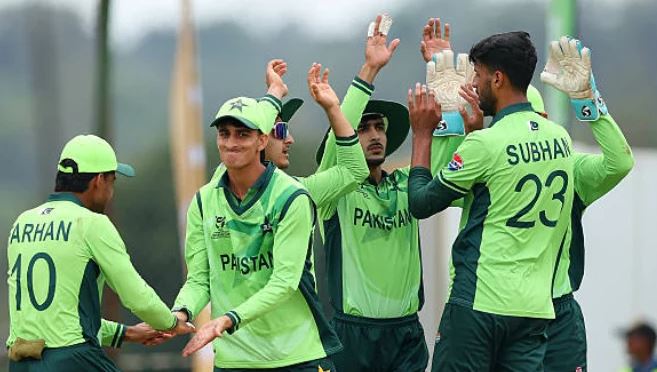
HARARE: Pakistan bowled out England for a modest 210 in 46.5 overs in their opening match of the ICC U19 World Cup 2026, courtesy of a disciplined bowling performance, here at the Takashinga Sports Club on Friday.

After winning the toss and opting to bat first, England made a steady start as openers Ben Dawkins and Joseph Moores laid a solid foundation, scoring at a healthy rate. 

However, the 33-run opening stand was broken when Ali Raza struck, dismissing Moores for seven off 16 deliveries.

England continued to score runs, but suffered another setback when Ahmed Hussain removed Dawkins, who played a sensible knock of 33 off 38 balls, including four fours and a six. 

Hussain soon added another wicket to his tally by dismissing Ben Mayes for 20 off 25 deliveries, which featured three boundaries, leaving England reeling at 67-3 in 15.1 overs.

Skipper Thomas Rew and Caleb Falconer then attempted to steady the innings, but Abdul Subhan halted England’s momentum by dismissing Rew for 13 off 22 balls.

Falconer and Ralphie Albert combined to rebuild the innings, taking England past the 100-run mark. 

Falconer regained his form by smashing two fours and two sixes off an over from Usman Khan, collecting 22 runs as England reached 125-4 in 24 overs.

The 19-year-old Falconer continued his impressive knock and, along with Albert, added a crucial 50-run partnership. He brought up a well-deserved second half-century in Youth ODI cricket, guiding his side beyond the 150-run mark.

However, the 80-run stand was broken when Ahmed Hussain claimed his third wicket, dismissing Albert for 25 off 37 deliveries, which included a four and a six, leaving England at 170-5 in 33.2 overs.

Pakistan then seized control of the innings as Ali Raza picked up his second wicket by removing the dangerous Falconer, who scored 66 off 73 balls, hitting three fours and two sixes.

England came under further pressure when Momin Qamar dismissed Sebastian Morgan for three off nine deliveries, reducing the side to 185-7 in 39.2 overs. 

The eighth wicket fell soon after as Farhan Ahmed was run out for 15 off 28 balls following a direct hit from skipper Farhan Yousuf.

Qamar later claimed his second wicket by dismissing James Minto for four off 12 deliveries, while Abdul Subhan wrapped up the innings by removing Manny Lumsden, who managed two off 13 balls.

For Pakistan, Ahmed Hussain led the bowling attack with figures of 3/38 in 10 overs, while Momin Qamar, Ali Raza and Abdul Subhan chipped in with two wickets apiece.

DPM Dar reviews progress on Pakistan -Indonesia cooperation in health sector

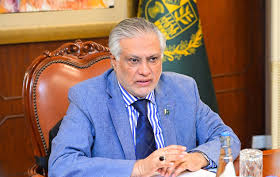
ISLAMABAD: Deputy Prime Minister and Foreign Minister, Senator Mohammad Ishaq Dar on Friday chaired the inter-ministerial meeting following the visit of the President of the Republic of Indonesia, Prabowo Subianto to Pakistan on 8-9 December 2025.

The meeting reviewed progress on Pak-Indonesia cooperation in health sector and discussed opportunities to enhance health collaboration between the two countries.

The deputy PM emphasized the importance of further deepening and broadening relations with Indonesia, a press statement issued by the Foreign Office Spokesperson said.

The meeting was attended by the Minister for Health, Special Assistant to the Prime Minister (SAPM) Tariq Bajwa, and senior officials from the Ministry of Foreign Affairs, the Ministry of National Health Services, Regulations and Coordination (NHSR&C), the Pakistan Medical and Dental Council (PMDC), the Overseas Employment Corporation (OEC), and the Ministry of Overseas Pakistanis and Human Resource Development (OP&HRD).

ECP suspends membership of 159 lawmakers over failure to submit financial statements

ECP suspends membership of 159 lawmakers over failure to submit financial statements

ISLAMABAD: The Election Commission of Pakistan (ECP) on Friday suspended the membership of as many as 159 lawmakers belonging to different legislatures for failing to submit their financial statements.

According to a notification issued by the ECP, the membership of 32 MNAs, 50 Punjab Assembly members, 33 Sindh Assembly lawmakers, 28 KP Assembly members, seven Balochistan Assembly members and nine senators have been suspended.

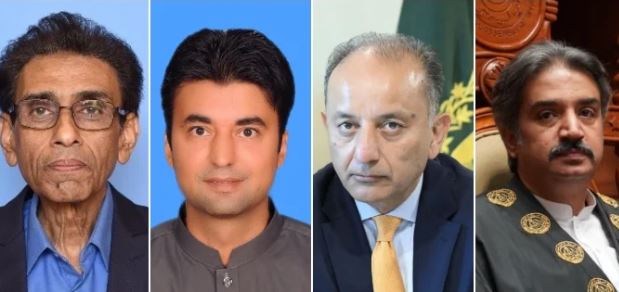
It said Sindh Assembly Speaker Syed Awais Qadir Shah, Federal Education Minister and Muttahida Qaumi Movement-Pakistan (MQM-P) Chairman Khalid Maqbool Siddiqui, Pakistan Peoples Party (PPP) leaders Syed Ali Musa Gilani and Syed Abdul Qadir Gilani, and Pakistan Muslim League-Nawaz (PML-N) MNA Saira Tarar are among those whose memberships have been suspended.

Similarly, the election watchdog also suspended the membership of nine Senators, including Federal Minister for Climate Change Dr Musadik Malik, PML-N’s Abid Sher Ali and Murad Saeed of Pakistan Tehreek-e-Insaf.

The suspension came a day after the ECP warned members who had failed to file their details to do so by January 15 or face suspension.

The ECP also suspended the memberships of 50 members of the Punjab Assembly, including Rana Sikandar Hayat, Adnan Dogar, and Aamir Hayat Hiraj.

Similarly, 33 members of the Sindh Assembly were suspended, including Speaker Syed Awais Qadir Shah, former chief minister Syed Qaim Ali Shah, and provincial minister Saeed Ghani.

Moreover, the Election Commission suspended the memberships of 28 lawmakers from the Khyber Pakhtunkhwa Assembly and seven from the Balochistan Assembly.

All members of the National Assembly, Senate and provincial assemblies are required to submit complete details of their assets and liabilities to the Election Commission by December 31 each year. They must also file the financial statements of their spouse and dependent children on Form-B by June 30 annually.

Failure to submit these details will result in the suspension of the member’s membership until the statement is filed with the commission. During the suspension period, members will be barred from attending sessions and taking part in legislative business, including voting on motions of confidence.

SAPM Haroon meets industrialist SM Tanveer, discusses economic policies

ISLAMABAD: The Special Assistant to the Prime Minister (SAPM) on Industries and Production Haroon Akhtar Khan on Friday held a meeting with prominent Pakistani industrialist and business leader SM Tanveer with his delegation and discussed the country’s economic policies and the prevailing economic situation.

During the meeting, detailed discussions were held on national economic policies, industrial growth, and measures to further strengthen Pakistan’s economy, said a news release.

Haroon Akhtar said that under the leadership of Prime Minister Muhammad Shehbaz Sharif, Pakistan’s economic growth is showing positive improvement.

He emphasized that the government is committed to accelerating industrial growth through a new industrial policy, aligned with the Prime Minister’s vision. He added that effective and forward-looking policies are being formulated to promote industries and attract investment.

The SAPM highlighted that the promotion of Small and Medium Enterprises (SMEs) will play a crucial role in generating employment opportunities, particularly for the youth.

Government is placing special focus on job creation, skills development, and youth empowerment to meet the demands of a modern industrial economy, he added.

The special assistant also underlined the importance of the Pakistan Industrial Development Corporation (PIDC), said adding that its role is being further strengthened to support industrial development across the country.

He reiterated that the government is working closely with the private sector to ensure economic stability, create a business-friendly environment, and remove obstacles faced by industries. He expressed confidence that industrial growth will lead to increased exports and employment, contributing to sustainable economic development.

The meeting reaffirmed the government’s resolve to maintain close engagement with the business community to achieve shared economic goals.

Senator Abid Sher Ali calls on Acting President Gilani

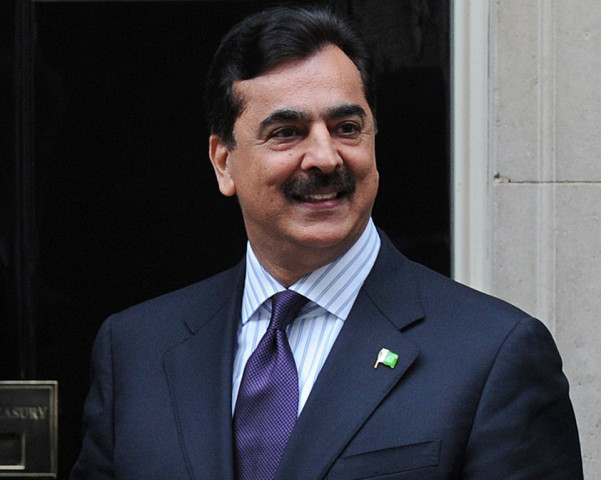
ISLAMABAD: Acting President Syed Yousuf Raza Gilani on Friday held a meeting with newly elected Senator Abid Sher Ali at the Parliament House and discussed the overall political situation of the country and matters relating to the functioning of the Upper House were discussed in detail.

The acting president congratulated Senator Abid Sher Ali on taking oath as a member of the Senate earlier today and extended his best wishes for a successful parliamentary tenure.

He said that Abid Sher Ali is a seasoned and experienced politician, and his induction into the Senate would not only enhance the performance of the Upper House but would also positively contribute to the legislative process through his vast political experience.

Syed Yousuf Raza Gilani expressed the hope that the Senate would continue to play a constructive role in strengthening democratic institutions and promoting effective legislation in the best interest of the people.

Senator Abid Sher Ali, on his part, congratulated Syed Yousuf Raza Gilani on efficiently managing the affairs of the Upper House and conveyed his good wishes for him. He said that the steps taken by Syed Yousuf Raza Gilani for improving the functioning of the Senate are commendable.

He expressed optimism that meaningful legislation would be carried out to steer the country towards development and prosperity and bring positive change in the standard of living of the common people.

Senator Abid Sher Ali also extended his best wishes to the Acting President of Pakistan and reaffirmed his commitment to work for the welfare of the country and its people.

Senator Sherry Rehman and Former Senator, Sardar Yaqub Khan Nasir were also present during the meeting.

Malaysia, Türkiye and Pakistan Trilateral TV channel discussed

Malaysia, Türkiye and Pakistan Trilateral TV channel discussed

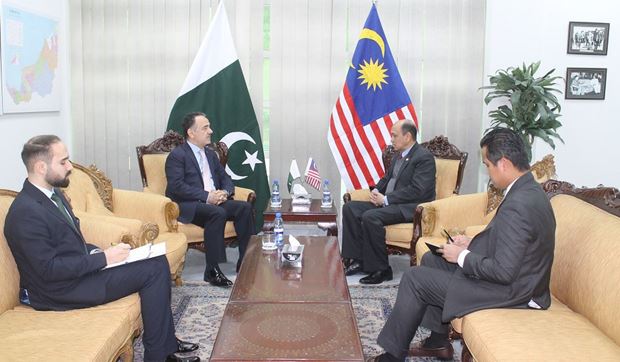
Dr. Irfan Neziroğlu, Ambassador of the Republic of Türkiye met with the High Commissioner of Malaysia Dato Azahar bin Mazlan

Saifullah Ansar

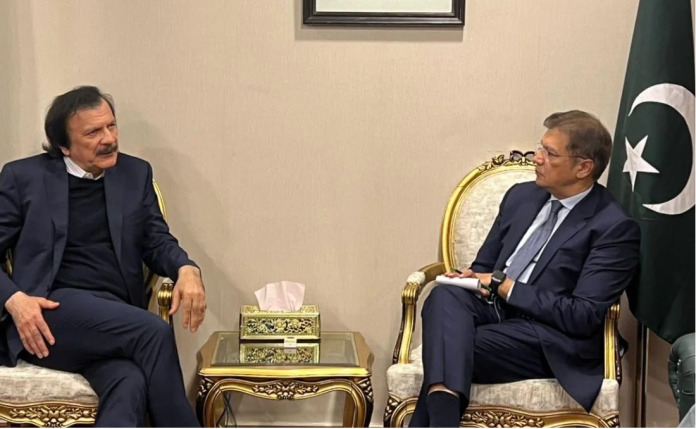
ISLAMABAD, JAN 16 /DNA/ – Ambassador Dato’ Mohammad Azhar Mazlan, High Commissioner of Malaysia to Pakistan, received a courtesy call from Dr. Irfan Neziroğlu, Ambassador of the Republic of Türkiye, at the High Commission of Malaysia in Islamabad. The meeting served as a platform for both envoys to exchange views on Malaysia–Türkiye bilateral relations, with a particular focus on expanding economic cooperation and identifying new areas for closer engagement.

Both sides emphasized the importance of strengthening trade and investment linkages in light of evolving regional and global economic dynamics. The discussions also touched on trilateral cooperation involving Malaysia, Türkiye and Pakistan, especially in the fields of capacity building and development assistance. In this regard, the Ambassadors explored potential collaboration between the Malaysian Technical Cooperation Programme (MTCP) and the Turkish Cooperation and Coordination Agency (TİKA), highlighting opportunities to share expertise and best practices for programmes in Pakistan.

The meeting further addressed efforts to revive the trilateral television channel initiative between Malaysia, Türkiye and Pakistan, aimed at promoting balanced narratives and combating Islamophobia through media cooperation and strategic communication. Regional security issues were also discussed, with both sides underscoring the importance of dialogue, stability and cooperation in addressing common challenges.

The courtesy call reflected the warm and friendly relations between Malaysia and Türkiye, reaffirming the shared commitment of both countries to deepen bilateral ties while exploring practical avenues for cooperation with Pakistan.

Imran Khan-nominated Mahmood Achakzai notified as NA opposition leader

Imran Khan-nominated Mahmood Achakzai notified as NA opposition leader

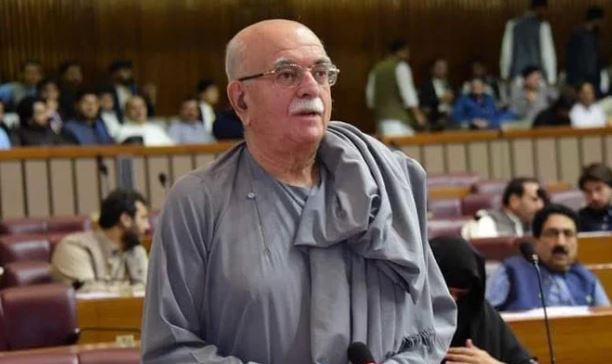
ISLAMABAD: The National Assembly Speaker Ayaz Sadiq on Friday notified Tehreek Tahafuz Ayeen-e-Pakistan (TTAP) chief Mahmood Khan Achakzai as the new opposition leader in the lower house, months after the key post was left vacant.

Achakzai, who also heads Pashtunkhwa Milli Awami Party (PkMAP), was nominated for the top parliamentary post by Pakistan Tehreek-e-Insaf (PTI) founder Imran Khan for NA opposition leader following the disqualification of his predecessor Omar Ayub after being sentenced to 10 years’ imprisonment in a May 9 case.

“In pursuance of rule 39 of the Rules of Procedure and Conduct of Business in NA, 2007, honourable speaker has been pleased to declare Mahmood Khan Achakzai, MNA, as Leader of the Opposition in NA with effect from January 16, 2026,” reads the notification issued by NA acting Secretary Saeed Ahmad Maitla.

The notification was issued after an opposition lawmakers’ delegation, including PTI’s Barrister Gohar Ali Khan, Junaid Akbar, Aamir Dogar, Shahram Khan Tarakai, Latif Khosa and Jamal Ahsan Khan met NA Speaker Sadiq in his chamber.

Reacting to the development, PTI leader Ayub extended “heartiest congratulations” to Achakzai on being notified as NA opposition leader.

“It is a great singular honour and […] Achakzai sahib will InshaAllah fulfil his responsibilities brilliantly,” Ayub said in a post on X.

Achakzai’s appointment holds significance as he has called for a national dialogue among all political parties to steer the country out of crisis.

The PTI leaders also have repeatedly said that the mandate to hold dialogue with the ruling coalition vests with TTAP’s Achakzai and Allama Raja Nasir Abbas.

Speaking to Geo News today, senior PTI leader Shah Mehmood Qureshi said that Imran has authorised Achakzai to negotiate with the government.

“[…] Achakzai can decide better what to do,” he added.

The PTI, ever since former PM Imran’s ouster via a vote of no-confidence in April 2022, has been at loggerheads, with the ruling Pakistan Muslim League-Nawaz (PML-N).

The former ruling party has marched towards Islamabad on multiple occasions, leading to crackdowns and arrests by the police.

Meanwhile, the party also faces an uphill battle on the political and legal front with its founder Imran along with other senior leadership including Qureshi, Yasmin Rashid and others, behind bars over alleged involvement in May 9 incidents.

Earlier this month, PML-N Senator and PM Shehbaz Sharif’s aide Rana Sanaullah tressed the need for trust-building and sustained contact among Pakistan’s top five figures, saying no political breakthrough would be possible without confidence-building measures at the highest level.

Sanaullah suggested that the top five figures, namely Nawaz Sharif, PM Shehbaz, President Asif Ali Zardari, Imran and “another one” could meet and unless steps were taken to restore trust among them, the country would remain trapped in political deadlock, adding that informal contacts at lower levels would not resolve the crisis.

However, PTI Chairman Barrister Gohar rejected the federal government’s proposal.

Neither can the top five big players meet, nor is there any need for it, the PTI chief remarked, stressing that the party had never called off negotiations, but questioned the logic of talks between the top five players.

Meanwhile, PTI Secretary General Barrister Salman Akram Raja urged the PML-N-led federal government to clarify its proposal for talks and noted that no dialogue could move forward without the PTI founder’s participation.

The Doctrine of Putin and the Direction of Russia

The Doctrine of Putin and the Direction of Russia

Dr. Muhammad Akram Zaheer

For more than two decades, Vladimir Putin has been the central figure shaping Russia’s political life and foreign policy outlook. Yet to speak of a single, neatly defined “Putin Doctrine” risks oversimplifying a system that has evolved over time, responding to domestic pressures, regional shifts, and changing global conditions. What can be identified, however, is a coherent set of ideas and practices that together form the guiding logic of contemporary Russian statecraft. This doctrine is not set out in one official text, but emerges from speeches, policy decisions, military actions, and the structure of power within Russia itself.

At its core lies a belief that Russia is not merely another nation-state, but a distinct civilisation with its own historical mission. Putin has repeatedly argued that Russia represents a cultural and political world separate from that of the liberal West. This conviction draws heavily on interpretations of Russian history that stress continuity between the Tsarist Empire, the Soviet Union, and the present Russian Federation. The trauma of the Soviet collapse in 1991 occupies a central place in this worldview. Putin has described it as a major catastrophe of the twentieth century, not only because a superpower disappeared, but because millions of ethnic Russians found themselves outside Russia’s borders, and the state lost both status and strategic depth.

From this reading of history flows a second principle: the restoration of Russia’s strength and authority. The chaotic years of the 1990s, marked by economic hardship, regional fragmentation, and the rise of oligarchic power, are portrayed in official discourse as a period of humiliation imposed by internal weakness and external pressure. Putin’s domestic project has therefore focused on rebuilding a strong central state. Political power has been steadily concentrated in the presidency, independent centres of influence have been brought to heel, and loyalty to the state has been framed as a moral duty. Stability, order, and continuity are presented as higher values than pluralism or rapid political change.

This domestic consolidation is inseparable from Russia’s external posture. The doctrine that has emerged under Putin treats the international system as inherently competitive. Rather than a community of states bound primarily by shared rules, it is seen as an arena where major powers pursue their interests, test one another’s resolve, and seek advantageous positions. In this view, Western talk of universal values often masks geopolitical ambition. NATO enlargement, European Union expansion, and Western involvement in post-Soviet states are interpreted not as benign developments, but as encroachments into a space Russia regards as vital to its own security.

The concept of a privileged sphere of interest is therefore central. Russia’s leadership asserts a special responsibility for, and entitlement to influence over, neighbouring countries that were once part of the Soviet Union. This is justified through arguments about shared history, economic interdependence, and the protection of Russian-speaking communities. It also reflects strategic calculation. Control, or at least strong influence, over nearby territories provides military depth, buffers against perceived threats, and leverage in dealings with other major powers.

This outlook helps explain Moscow’s willingness to use force, or the threat of it, in pursuit of political objectives. The conflicts in Georgia in 2008 and Ukraine since 2014, and on a larger scale from 2022 onwards, illustrate a readiness to challenge existing borders when the Kremlin judges its interests to be at stake. Such actions are framed domestically as defensive, necessary responses to Western-backed moves that would otherwise leave Russia exposed. International law, while invoked when useful, is treated as subordinate to what the leadership defines as historical justice and strategic necessity.

Another defining feature of Putin’s doctrine is the emphasis on sovereignty, interpreted in a strict and expansive sense. Sovereignty does not only mean protection from foreign military intervention, but also insulation from external influence over domestic politics, media, and civil society. Laws targeting foreign funding, restrictions on non-governmental organisations, and controls over information flows are justified as measures to defend Russia’s political independence. The popular uprisings that have occurred in parts of the post-Soviet space are portrayed not as genuine expressions of public discontent, but as operations orchestrated from abroad. Preventing similar movements at home has become a priority, reinforcing the fusion between internal security policy and foreign policy.

Economic policy under this doctrine is similarly shaped by geopolitical considerations. While Russia remains integrated into global markets, especially as an energy supplier, there has been a steady effort to reduce vulnerability to external pressure. Since the mid-2010s, the state has increased its role in key sectors, built up financial reserves, and promoted domestic production in areas ranging from agriculture to technology. Economic resilience is not pursued primarily for prosperity alone, but as a strategic asset, enabling Russia to withstand sanctions and sustain long-term confrontation with unfriendly powers.

Culturally and ideologically, the Putin doctrine presents Russia as a guardian of traditional values. The Kremlin aligns itself with the Orthodox Church, emphasises conservative social norms, and criticises what it depicts as Western moral decline. This narrative serves several functions. It strengthens ties between the state and influential domestic institutions, offers a sense of purpose that goes beyond material concerns, and provides an ideological counterpoint to liberal democracy. Abroad, it allows Russia to position itself as an alternative centre of attraction for those who are sceptical of Western cultural influence.

Yet the doctrine is not solely backward-looking or defensive. It also aspires to shape a more plural international order. Russian officials frequently speak of a world no longer dominated by a single power, but organised around several major centres. In this vision, countries such as China, India, and others across Asia, the Middle East, and the Global South are natural partners in limiting Western predominance. Russia’s growing engagement with non-Western states, its participation in groupings such as BRICS and the Shanghai Cooperation Organisation, and its diplomatic activism in Africa and the Middle East reflect this ambition.

However, the gap between rhetoric and reality is striking. While the Kremlin calls for respect and equality among nations, its own behaviour in its neighbourhood has often been coercive. While it denounces Western interference, it has not hesitated to involve itself in the internal affairs of other states. This tension highlights a central feature of the Putin doctrine: it is less a universal philosophy than a strategy tailored to maximise Russia’s room for manoeuvre.

Over time, this approach has become more rigid. The longer Putin has remained in power, the more closely the state’s identity has been bound to his personal authority. Political opposition is increasingly portrayed not simply as disagreement, but as betrayal. Foreign policy setbacks are blamed on hostile conspiracies. Compromise is often framed as weakness. Such narratives can mobilise support in the short term, especially in a society marked by memories of instability. But they also narrow the range of acceptable policy choices.

For Britain and its European partners, understanding this doctrine is essential. It suggests that tensions with Russia are not merely the product of misunderstanding or temporary disputes, but of deeply rooted assumptions about power, security, and history. Dialogue remains necessary, particularly to manage risks and prevent escalation. Yet expectations of a rapid transformation in Russia’s outlook are unrealistic so long as the current system and its guiding beliefs remain in place.

The doctrine of Putin’s Russia is therefore best seen not as a fixed blueprint, but as an evolving framework. It blends a sense of grievance with ambition, appeals to tradition with modern instruments of power, and defensive rhetoric with assertive action. It has reshaped Russia’s relationship with its neighbours, with the West, and with the wider world. Whether it will endure beyond Putin himself is an open question. What is clear is that it has already left a deep imprint on European security and on the global balance of power, one that will continue to be felt for years to come.

Israel bans Palestinian Jerusalem minister from leaving city

Israel bans Palestinian Jerusalem minister from leaving city

JERUSALEM, JAN 16 /DNA/ – The Ministry of Foreign Affairs and Expatriates strongly condemns the decision of the Israeli colonial occupation authorities to ban the Minister of Jerusalem Affairs, Ashraf Al-A‘war, from leaving the city of Jerusalem to other cities in the West Bank for a period of six months. This decision constitutes a flagrant violation of all international norms, laws, and conventions, including human rights agreements, as well as Israel’s obligations as an occupying power.

The Ministry of Foreign Affairs and Expatriates considers these Israeli decisions and measures to be illegal and arbitrary, and nothing more than a systematic racist political campaign against the Palestinian people. This campaign is carried out through the imposition of collective punishment, restrictions, and constraints on individuals and institutions, with a particular focus on targeting Jerusalemite figures.

The Ministry calls upon the international community and United Nations institutions to assume their responsibilities and take urgent action to halt these violations and ensure protection for the Palestinian people, in accordance with international law.

Trump’s Instigation of Treason: From Venezuela to Iran

Qamar Bashir

Qamar Bashir

Imagine a moment so extreme that it defies the basic logic of national loyalty. Picture American opposition leaders traveling to Moscow, praising Vladimir Putin, and applauding the removal or arrest of a sitting U.S. president. Then imagine them standing before Russian media, thanking the Kremlin for “helping restore democracy” in the United States. Such an act would not be celebrated as dissent. It would be condemned as criminal, as treasonous, as an open assault on the constitutional order and sovereignty of the nation itself.

In this context, Maria Corina Machado’s public gesture toward Donald Trump—offered in appreciation for the economic and financial strangulation of her own country and the abduction of a sitting Venezuelan president by U.S. power during the dark hours of January 3—strikes many as more than political theater. To her critics, it appears as an act of high treason: the symbolic selling of national sovereignty to a foreign power in exchange for political backing to ascend to office.

What makes the moment even more charged is the shadow of the Nobel Prize itself. Donald Trump, once an aspirant for the award and denied by the Nobel Committee, now stands publicly “honored” by a political figure whose rise is seen by some as inseparable from U.S. intervention. To them, this exchange feels less like recognition and more like a taunt—an implicit rebuke of the institution’s decision and a politicization of one of the world’s most revered symbols of peace.

Others interpret it more starkly: as the trading of national dignity for foreign endorsement, a calculated wager that power can be gained without the organic consent of the Venezuelan people. Beneath this view lies an even darker implication—that refusal to comply with Washington’s strategic and economic demands, including Trump’s openly declared ambition to seize Venezuela’s oil wealth for American gain, could invite the same fate that befell Maduro.

She perhaps put the exalted concept as a backburner that  democracies breathe through dissent. From mass protests in Israel demanding accountability from Benjamin Netanyahu, to parliamentary resistance in Pakistan, to congressional scrutiny in Washington, internal struggle is the engine of reform. But there is a line—that line is crossed when a political movement steps outside its national ecosystem and invites a foreign state to intervene directly in the destiny of its own people.

This is why the language of treason enters the conversation. To challenge one’s own government is a political right. To applaud a foreign power for economically suffocating one’s own society is, in the eyes of many, a moral rupture. Sanctions do not fall on presidents alone. They fall on hospitals that cannot import medicine, on families whose wages collapse under inflation, on children whose futures are narrowed by scarcity. To praise these tools as instruments of “liberation” is, for critics, to sever political ambition from national responsibility.

The same pattern, many argue, is now being traced in Iran. For decades, Iranians have demonstrated that organic struggle is not only possible but powerful. In 1979, a mass popular movement overthrew one of the most entrenched, Western-backed monarchies in the region. That transformation, whatever its later consequences, was not engineered in foreign capitals. It was carried by millions in the streets of Tehran, Isfahan, and Shiraz. It was internal, national, and unmistakably indigenous.

Yet today, critics point to the re-emergence of Reza Pahlavi—who left Iran as a child more than four decades ago and has lived his adult life in the West—as a symbol of what they describe as “exiled leadership” being elevated by foreign powers. To them, the idea that someone disconnected from the daily realities of Iranian society can be positioned as a national alternative, while U.S. and Israeli leaders openly signal support for regime change, contaminates the authenticity of domestic protest.

When President Donald Trump issues statements hinting at military action “in support of protesters,” critics argue that the organic nature of Iranian dissent is immediately compromised. What may begin as a homegrown demand for reform becomes vulnerable to being branded—internally and internationally—as a foreign-engineered project. The protester in the street is no longer just a citizen with a grievance. He or she becomes, in the narrative of the state, a potential proxy of external power.

This is not merely a theoretical concern. History is crowded with examples where foreign intervention discredited legitimate internal movements by attaching them to geopolitical agendas. In 1953, Iran’s democratically elected Prime Minister Mohammad Mossadegh was overthrown in a covert U.S.-British operation after nationalizing the country’s oil industry. The Shah who replaced him ruled for more than two decades with Western backing, until a revolution erupted that reshaped the region and locked Iran and the United States into a cycle of hostility that continues to this day.

For those who view Venezuela and Iran through this historical lens, the pattern appears consistent. Sovereignty is tolerated when it aligns with great-power interests and challenged when it does not. Venezuela’s vast oil reserves—estimated at over 300 billion barrels, the largest proven reserves in the world—are not an abstract statistic. They represent strategic leverage in a global energy system where access to supply shapes diplomacy, alliances, and conflict.

This is why the charge of unpatriotism carries such emotional weight. To fight your own government is a political act. To fight your own society’s economic survival by endorsing foreign coercion is, for critics, something far more severe. It is seen as stepping outside the national tent and inviting an overwhelming external force inside—one that may crush institutions, fracture unity, and redraw the country’s future according to interests that are not its own.

Even the Arctic has entered this conversation. Greenland, an autonomous territory of Denmark that consistently ranks among the world’s strongest regions for governance, transparency, and human rights, has become a subject of geopolitical attention because of its rare earth minerals, strategic location, and emerging shipping routes. The implication is stark: in an era of intensifying global rivalry, even the most stable and democratic societies can become strategic assets rather than simply sovereign communities.

At its core, this controversy is not about medals, exiles, or speeches. It is about a red line between internal reform and external allegiance. It is about whether political ambition remains rooted in the will of the people or becomes dependent on the pressure of foreign capitals.

Organic struggle carries legitimacy because it is earned at home. It rises from neighborhoods, workplaces, universities, and streets. It persuades before it compels. It mobilizes before it conquers. Imported struggle arrives differently—through sanctions, asset seizures, diplomatic isolation, and military signaling.

History’s judgment on such alliances is rarely kind. Nations may survive bad governments. They rarely emerge whole when their sovereignty becomes a bargaining chip in someone else’s strategic game. The ultimate right to shape a country’s future, this argument insists, must remain in the hands of its own people—not in the applause of foreign leaders, and not in the shadow of global power.

Stay Connected

64FansLike
60FollowersFollow

Latest Reviews

Exchange Rates

USD - United States Dollar
EUR
1.14
GBP
1.34
AUD
0.70
CAD
0.71