Home Blog Page 296

Trump says no reason ‘right now’ for Insurrection Act in Minnesota

Trump says US military studying 'very strong options' for Iran

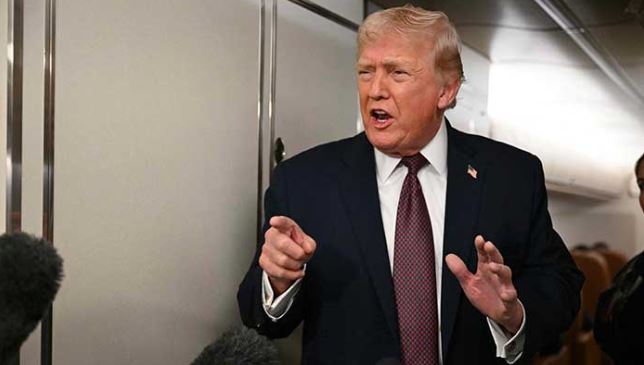
WASHINGTON, JAN 17: US President Donald Trump said Friday there was no immediate need to invoke the Insurrection Act over protests against immigration raids in Minnesota, a day after threatening to use the law.

But in a move that would inflame the standoff between the White House and Minnesota, CBS News reported that the Justice Department was investigating Minnesota governor Tim Walz and Minneapolis mayor Jacob Frey for impeding federal officers.

They have both called for peaceful protests against immigration sweeps in their state. The DOJ did not respond to a request for comment.

Amid the escalating row between Trump and Minnesota leaders this week, the president threatened the drastic measure that would have allowed him to deploy the military to police the protests.

“If I needed it, I would use it. I don’t think there is any reason right now to use it,” Trump told reporters at the White House when asked about the law that grants the deployment of soldiers on US soil.

The Insurrection Act allows a president to sidestep the Posse Comitatus Act to suppress “armed rebellion” or “domestic violence” and use the armed forces “as he considers necessary” to enforce the 19th-century law.

Crowds of protesters have clashed with immigration officers across the city of Minneapolis, opposing their efforts to target undocumented migrants with some officers responding with violence.

Demonstrations dramatically expanded following the killing of Renee Nicole Good, 37, by an Immigration and Customs Enforcement (ICE) officer in Minneapolis on January 7 as the Trump administration pressed operations to catch undocumented migrants.

Americans increasingly reject immigration police methods

WASHINGTON, JAN 17 /DNA/ – US immigration agents now remind many Americans of the Gestapo — and not just the left-wing activists who have taken to the streets to protest violent raids commanded by President Donald Trump.

                  Avid Trump supporter and podcaster Joe Rogan, whose massive audience heard him repeat Republican talking points in the run-up to the 2024 election, fueled debate this week by airing those concerns.

                  “Are we really gonna be the Gestapo, ‘Where’s your papers?’ Is that what we’ve come to?” Rogan asked millions of listeners.

                  “You don’t want militarized people in the streets just roaming around, snatching up people — many of which turn out to be US citizens that just don’t have their papers on them,” he said.

                  A growing number of Americans agree with that sentiment.

                  In every national poll, a majority condemns the actions of the immigration officer who shot and killed 37-year-old Renee Good, a US citizen, in Minneapolis on January 7.

                  A Quinnipiac survey found that 57 percent of voters condemn ICE’s methods, with 94 percent of Democratic voters and 64 percent of independents against Republicans, by contrast, support them at 84 percent.

                  Another poll from Economist/YouGov found that, for the first time, 46 percent of respondents support abolishing Immigration and Customs Enforcement (ICE), exceeding the 43 percent who oppose getting rid of it.

                  – ‘Swing voter’ –

                  “The most useful way to think about Joe Rogan is as America’s most famous swing voter,” left-wing commentator Ben Burgis posted on X this week.

                  Rogan wasn’t the pliant conservative megaphone White House spokeswoman Karoline Leavitt may have had in mind when she reaffirmed the Trump administration’s hard line of the ICE officer’s innocence.

                  ICE agents “are simply trying to enforce the law and the Democratic Party has demeaned these individuals,” Leavitt told reporters Thursday.

                  “They’ve even referred to them as Nazis and as the Gestapo, and that is absolutely leading to the violence we’re seeing in the streets,” she added.

                  Beyond differences on policy or polemics, the methods used by the masked and sometimes heavily armed federal agents run counter to deeply rooted principles within American political and legal culture, Steven Schwinn, a law professor at University of Illinois, Chicago, told AFP.

                  During chaotic raids in Los Angeles, Chicago and Minneapolis —  all Democratic strongholds across the country — Schwinn points to the identity checks and stops that have outraged Rogan, because such stops were only authorized with “reasonable suspicion,” a standard used by law enforcement to stop people in the United States.
Americans increasingly reject immigration police methods

Americans increasingly reject immigration police methods

WASHINGTON, JAN 17: US immigration agents now remind many Americans of the Gestapo — and not just the left-wing activists who have taken to the streets to protest violent raids commanded by President Donald Trump.

                  Avid Trump supporter and podcaster Joe Rogan, whose massive audience heard him repeat Republican talking points in the run-up to the 2024 election, fueled debate this week by airing those concerns.

                  “Are we really gonna be the Gestapo, ‘Where’s your papers?’ Is that what we’ve come to?” Rogan asked millions of listeners.

                  “You don’t want militarized people in the streets just roaming around, snatching up people — many of which turn out to be US citizens that just don’t have their papers on them,” he said.

                  A growing number of Americans agree with that sentiment.

                  In every national poll, a majority condemns the actions of the immigration officer who shot and killed 37-year-old Renee Good, a US citizen, in Minneapolis on January 7.

                  A Quinnipiac survey found that 57 percent of voters condemn ICE’s methods, with 94 percent of Democratic voters and 64 percent of independents against Republicans, by contrast, support them at 84 percent.

                  Another poll from Economist/YouGov found that, for the first time, 46 percent of respondents support abolishing Immigration and Customs Enforcement (ICE), exceeding the 43 percent who oppose getting rid of it.

                  – ‘Swing voter’ –

                  “The most useful way to think about Joe Rogan is as America’s most famous swing voter,” left-wing commentator Ben Burgis posted on X this week.

                  Rogan wasn’t the pliant conservative megaphone White House spokeswoman Karoline Leavitt may have had in mind when she reaffirmed the Trump administration’s hard line of the ICE officer’s innocence.

                  ICE agents “are simply trying to enforce the law and the Democratic Party has demeaned these individuals,” Leavitt told reporters Thursday.

                  “They’ve even referred to them as Nazis and as the Gestapo, and that is absolutely leading to the violence we’re seeing in the streets,” she added.

                  Beyond differences on policy or polemics, the methods used by the masked and sometimes heavily armed federal agents run counter to deeply rooted principles within American political and legal culture, Steven Schwinn, a law professor at University of Illinois, Chicago, told AFP.

                  During chaotic raids in Los Angeles, Chicago and Minneapolis —  all Democratic strongholds across the country — Schwinn points to the identity checks and stops that have outraged Rogan, because such stops were only authorized with “reasonable suspicion,” a standard used by law enforcement to stop people in the United States.
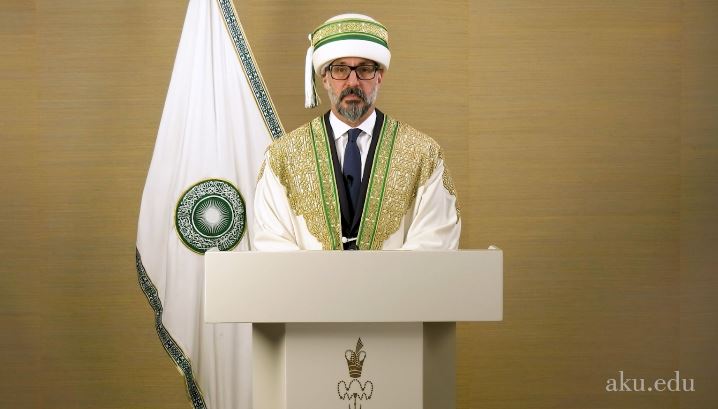
Aga Khan University graduates over 400 students and installs Princess Zahra Aga Khan as Pro-Chancellor

Aga Khan University graduates over 400 students and installs Princess Zahra Aga Khan as Pro-Chancellor

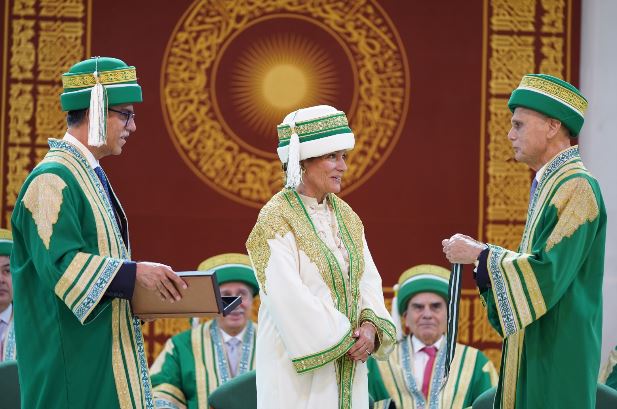
KARACHI, JAN 17 /DNA/ – The Aga Khan University graduated 461 students from 18 degree programmes at its 38th Convocation in Pakistan and formally installed Princess Zahra Aga Khan as the University’s first Pro-Chancellor. As Pro-Chancellor, Princess Zahra will guide AKU in its continuing efforts to improve quality of life.

In his message, AKU’s Chancellor, His Highness the Aga Khan, noted that the Aga Khan University and its graduates carry “both an extraordinary responsibility and an extraordinary opportunity: to create, to disseminate, and to apply knowledge in ways that improve the quality of human life.”

This year saw the graduation of the first cohort from the Institute for Educational Development’s Bachelor of Education programme. The programme offers a rigorous blend of academic and field-based learning that prepares graduates to teach effectively in diverse school contexts.

“The University’s geographic expansion has seen AKU’s presence expand across Pakistan, into more cities and villages than ever before,” said AKU’s Pro-Chancellor, Princess Zahra Aga Khan. “From Karachi to Matiari, from Lahore to Gilgit, the University’s health care professionals, educators, and researchers are part of the fabric of people’s lives.”

The Aga Khan University continues to address Pakistan’s critical development challenges through a commitment to access and excellence. With nearly 70 percent of the graduating class being women, the University is actively addressing the gender gap in a country where millions of girls remain out of school.

Valedictorian Muhammad Taha Nasim thanked AKU’s faculty, noting how they challenged graduates to “reach our highest standards while teaching us that excellence without empathy is empty.”

AKU’s graduates are filling important workforce gaps. For example, in a country with a nurse-to-population ratio of just 5.2 per 10,000, AKU alumni now hold high-level leadership positions in approximately 80 schools of nursing and midwifery.

In 2025, AKU secured more than USD$100 million in research funding, a sign that leading global institutions hold its research capabilities in high regard. Across AKU, 27 faculty members were ranked among the top two percent of scientists globally in a well-known study conducted by a researcher at Stanford University.

“Pakistan’s young people are inclusive, comfortable across faiths and perspectives, and aware that a divided society cannot meet shared challenges. Digitally fluent, they see technology not as disruption but as opportunity — to expand knowledge, build skills, and apply learning in practical ways,” noted Dr Sulaiman Shahabuddin, President of AKU.

To ensure talented students with limited financial means are able to attend AKU, the University provides financial assistance, to a large portion of the student body. In the last academic year, the University provided assistance to 72 percent of students across all classes and programmes in Pakistan.  

Noorish Khan, Syeda Tasmiya Mohiuddin, Dr. Hamzah Jehanzeb, and Sara Karim Sadruddin received Best Graduate Awards in their respective undergraduate programmes in Dental Hygiene, Education, Medicine, and Nursing.

Also present at the ceremony was Shamsh Kassim-Lakha, Founding President of AKU and Chairman of the Board of Trustees of the University of Central Asia, a sister university of AKU within the Aga Khan Development Network.

The University conferred Awards of Distinction upon several faculty and staff, recognising their sustained contributions to innovation, research and leadership. Professor Emeritus Mushtaq Ahmed received the President’s Medal, one of AKU’s highest honours, in recognition of his extraordinary service as an eminent surgeon and academic leader.

South American bloc to ink long-awaited trade deal with EU

South American bloc to ink long-awaited trade deal with EU

ASUNCION, JAN 17: The South American trade bloc Mercosur and the European Union will sign on Saturday a deal 25 years in the making to create one of the world’s largest free trade areas at a time of growing protectionism and volatility.

                  The long-awaited agreement comes amid the sweeping use of tariffs and trade threats by US President Donald Trump’s administration, which has sent countries scrambling for new partnerships.

                  Together, the EU and Mercosur account for 30 percent of global GDP and more than 700 million consumers.

                  The treaty eliminates tariffs on more than 90 percent of bilateral trade.

                  The deal will favor European exports of cars, wine and cheese, while making it easier for South American beef, poultry, sugar, rice, honey and soybeans to enter Europe.

                  The treaty between the EU and Mercosur nations Argentina, Brazil, Paraguay and Uruguay was agreed in Brussels last week despite fierce opposition from European farmers.

                  They fear the deal will lead to an influx of cheaper South American products due to production standards they consider less stringent.

                  Some in South America are also wary about the impact of the treaty.

                  In Argentina, it is estimated that there could be a loss of 200,000 jobs just from the dismantling of the local automotive industry, trade and investment researcher Luciana Ghiotto told AFP.

                  – ‘A powerful message’ –

                  European Commission President Ursula von der Leyen, European Council head Antonio Costa and EU Trade Commissioner Maros Sefcovic will attend the signing ceremony in Asuncion.

                  Paraguay’s President Santiago Pena and Uruguay’s Yamandu Orsi will also be present. The attendance of Argentina’s leader Javier Milei is not confirmed.

                  Brazil’s President Luiz Inacio Lula da Silva, who played a key role in driving negotiations forward, will not attend.

                  His office said the signing had initially been planned as a ministerial-level event, and Paraguay issued “last-minute” invites to presidents.

                  Von der Leyen stopped in Rio de Janeiro on Friday to meet with Lula on the way to Asuncion.

                  She praised Lula’s role in pushing forward the negotiations, and said the deal “sends a powerful message” and shows “the power of partnership and openness. And this is how we create real prosperity.”

                  Lula said the agreement was “very good, especially for the democratic world and for multilateralism.”

                  The treaty is among several that countries are rushing to close in an uncertain global environment shaped by Trump’s tariff threats and protectionism.

                  On Friday, Trump threatened to slap trade tariffs on countries that do not support his plans to take over Greenland, a territory of NATO ally Denmark.

Syrian army says entering area east of Aleppo after Kurds agree to withdraw

Syrian army says entering area east of Aleppo after Kurds agree to withdraw

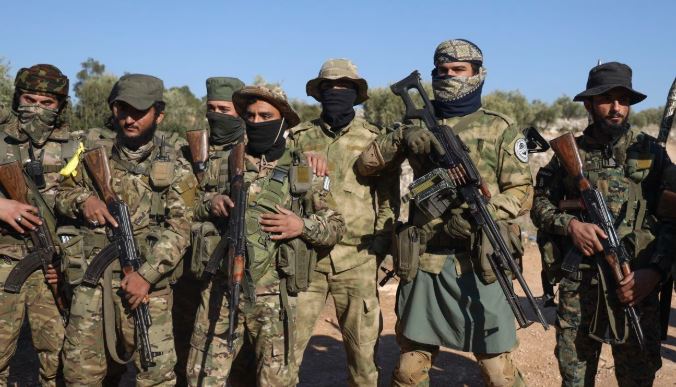
ALEPPO, JAN 17: Syria’s army said Saturday its forces had started entering an area east of the city of Aleppo after Kurdish forces agreed to withdraw from the region following recent clashes.

In a statement carried by state television, the army said its forces “began entering the western Euphrates area, starting with the town of Deir Hafer”, after Kurdish forces had agreed to withdraw on Saturday morning.

An AFP correspondent saw army forces advancing towards the area, including with tanks.

In a statement carried by state television, the military urged civilians “not to enter the operations area” until the army had secured it and “cleared it of all mines and war remnants”.

After driving out Kurdish forces from Aleppo city last week following deadly clashes, Syria’s army deployed reinforcements near Deir Hafer and told the SDF to evacuate the area between the town and the Euphrates River, around 30 kilometres (18 miles) further east.

                  On Friday, Kurdish leader Mazloum Abdi committed to withdrawing his US-backed, Kurdish-led Syrian Democratic Forces on Saturday morning “towards redeployment in areas east of the Euphrates”, based on “calls from friendly countries and mediators”.

                  The defence ministry had welcomed Abdi’s announcement, saying army troops would deploy in the areas after the SDF withdrew.

                  The Syrian army had urged civilians to flee the Deir Hafer area in recent day, with at least 4,000 people leaving according to Syrian authorities.

                  On Friday, Syrian President Ahmed al-Sharaa on Friday issued a decree declaring Kurdish a “national language”, in an apparent gesture of good will towards the minority after the recent violence.

                  Syria’s Islamist-led government is seeking to extend its authority across the country following the ousting of longtime leader Bashar al-Assad in late 2024.

                  Progress on implementing a March deal to integrate the Kurds’ de facto autonomous administration in the north into the state has stalled.

                  But Sharaa’s announcement on Friday is the first formal recognition of Kurdish national rights since Syria’s independence in 1946.

                  The decree stated Kurds were “an essential and integral part” of Syria, where they have suffered decades of marginalisation and oppression under former rulers.

                  It makes Kurdish a “national language” that can be taught in public schools in areas where the minority community is heavily present.

                  Kurdish forces control swathes of Syria’s oil-rich north and northeast, much of which they captured during the country’s civil war and the fight against the Islamic State group over the past decade.

Large crowds expected for ‘Hands off Greenland’ protests

Large crowds expected for 'Hands off Greenland' protests

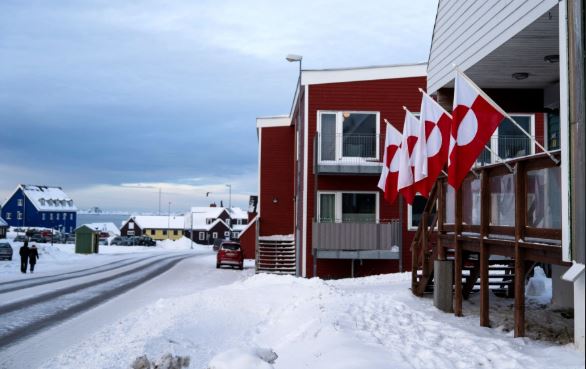
COPENHAGEN, JAN 17: Large demonstrations are planned across Denmark and Greenland on Saturday to protest against US President Donald Trump’s designs to take over the Arctic island.

 Thousands of people have indicated on social media that they intend to take part in marches and rallies organised by Greenlandic associations in Copenhagen, Aarhus, Aalborg, Odense and the Greenlandic capital Nuuk.

“The aim is to send a clear and unified message of respect for Greenland’s democracy and fundamental human rights,” Uagut, an association of Greenlanders in Denmark, said on its website.

The protests follow Trump’s warning on Friday that he “may put a tariff” on countries that oppose his plans to take over Greenland, which is an autonomous territory of Denmark.

The demonstration in Nuuk is scheduled to begin at 4:00 pm (1500 GMT), to protest “against the United States’ illegal plans to take control of Greenland”, organisers said. Demonstrators would march to the US consulate carrying Greenlandic flags.

The Copenhagen rally was due to begin at 12:00 pm (1100 GMT), and make a stop outside the US embassy in the Danish capital around an hour later.

“Recent events have put Greenland and Greenlanders in both Greenland and Denmark under pressure,” Uagut chairwoman Julie Rademacher said in a statement sent to AFP, calling for “unity”.

  “When tensions rise and people go into a state of alarm, we risk creating more problems than solutions for ourselves and for each other. We appeal to Greenlanders in both Greenland and Denmark to stand together,” she said.

– ‘Demand respect’ –

The protests come as a bipartisan delegation of US Congress members visited Copenhagen on a two-day trip to give backing to Denmark and Greenland, saying the US president’s territorial ambitions were not shared by the American people.

Europeans have also been showing support for Greenland in a military reconnaissance mission that a Danish general said Washington was invited to.

Senior Trump adviser Stephen Miller told Fox News on Friday that “positive early talks” had taken place at a White House meeting between senior officials from the United States, Denmark and Greenland this week.

But he reiterated that Trump had been “clear” that he wanted the United States to control the island.

Snow spells turn ‘Neelum Valley’ into a must-visit destination for winter travelers

Snow spells turn 'Neelum Valley' into a must-visit destination for winter travelers

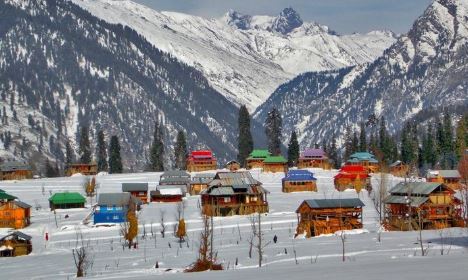
ISLAMABAD, Jan 17 (APP/DNA):’Neelum Valley’ of Azad Kashmir becomes a dreamlike winter paradise as glistening snowflakes settle on forests, lakes and trails with snow spells blanketing its hills in pristine white, drawing tourists from across the country to witness its dramatic beauty and snowy charm.

Neelum Valley of Azad Kashmir is increasingly emerging as a top winter getaway as snow blankets its hills and lakes, turning the region into a stunning winter spectacle where glistening snowflakes settle over forests, trails and water.

A recent local media report noted that the Valley’s snow-covered mountains and pristine landscapes are drawing tourists from across the country, each eager to experience its serene winter views and snowy charm.

Families and travel groups are sharing memorable experiences, with many describing their visit to Neelum Valley as peaceful and unforgettable.

An elderly family group commented that “traveling here together has been wonderful; the serene valleys and gentle streams make it a memorable experience for all generations,” adding to the valley’s appeal as a destination that offers both adventure and relaxation for winter tourists.

Local authorities are stepping up efforts to maintain safety and preserve the natural beauty of the area amid the peak winter season.

“This winter snow has been a blessing for us as tourists are coming in great numbers and our guesthouses and shops are more lively than ever.” a local shopkeeper from Neelum Valley.

“We love seeing visitors enjoy the snow on trails and hills winter is hard but this season brings life and smiles to our valley.” a local resident talking about the winter crowd.

“It is amazing to see snow-covered forests and lakes, the views are unforgettable and every snowflake feels like a tiny jewel on the mountains.” a tourist visiting Ratti Gali Lake commented.

The Pakistan Meteorological Department has reported that the current snow spell in the valley is expected to continue for the next few days. “The snow will intensify over the coming days, which may cause road disruptions and travel difficulties,” said a department official.

The Met Department has advised tourists to take extra precautions, particularly when traveling along mountain routes, and to stay updated on weather forecasts.

Pakistan condemns ‘profiling’ of mosques in occupied Kashmir

Pakistan condemns 'profiling' of mosques in occupied Kashmir

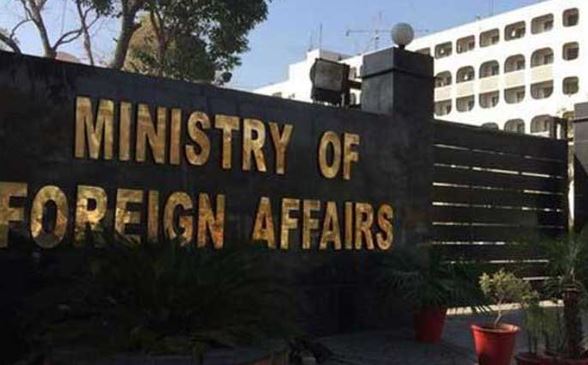
ISLAMABAD, JAN 17 /DNA/ – Pakistan has strongly condemned what it described as the profiling of mosques and mosque management committees in Indian-occupied Kashmir, calling it a grave violation of religious freedom.

Foreign Office Spokesperson Tahir Andrabi said Pakistan firmly rejects the alleged actions targeting mosques and religious institutions in occupied Jammu and Kashmir.

He described the measures as blatant interference in religious affairs and a direct violation of the fundamental right to freedom of religion and belief.

Forced data collection
The spokesperson said the forced collection of personal information, photographs and religious affiliations of mosque officials and religious figures amounts to systematic harassment.

He added that these actions are aimed at creating fear among worshippers and obstructing the free performance of religious duties.

Allegations of institutional Islamophobia
According to the Foreign Office, the targeting of mosques and Muslim scholars reflects what it termed institutional Islamophobia under the Hindutva ideology.

The spokesperson said such actions demonstrate discriminatory and sectarian policies, where only mosques and Islamic religious figures are being singled out.

Andrabi categorically stated that the people of held-Kashmir have an inalienable right to practice their religion without fear, pressure, or coercion. He stressed that Kashmiris have every right to preserve their religious identity and traditions freely.

Criticism of Indian policies
The spokesperson said Indian measures in occupied Kashmir are clearly discriminatory in nature and aimed at undermining religious freedom. He added that such steps are intended to intimidate worshippers and restrict religious practices in the region.

Pakistan reiterated that it will continue to stand in full solidarity with the Kashmiri people. The spokesperson said Pakistan will keep raising its voice against religious oppression at every international forum.

He emphasized that Islamabad remains committed to highlighting alleged human rights and religious freedom violations under the government of Narendra Modi.

Iran protest movement subsides after waves of unrest

Iran protest movement subsides after waves of unrest

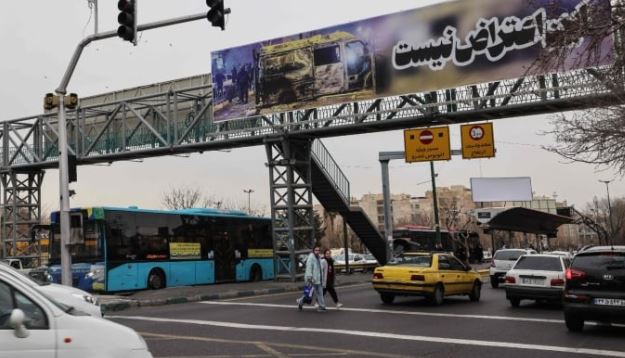
TEHRAN, JAN 16: Tensions in Iran have subsided after three weeks of protests under an internet blackout, monitors said on Friday, a week after the start of the largest demonstrations in years challenging the country’s rulers.

The son of Iran’s late shah, however, said he was confident the government would fall and called for intervention, though the threat of new military action by the United States against Iran has appeared to have receded for the time being.

Protests sparked by economic grievances started with a shutdown in the Tehran bazaar on December 28 but turned into a mass movement demanding the removal of the system that has ruled Iran since the 1979 revolution.

People started pouring into the streets in big cities from January 8, but authorities immediately enforced a shutdown of the internet that has lasted over a week.

Reza Pahlavi, the son of Iran’s late shah, told a news conference in Washington that the government “will fall — not if, but when.”

“I will return to Iran,” he said.

Monitor Netblocks said that the “total internet blackout” in Iran had now lasted over 180 hours, longer than a similar measure that was imposed during the 2019 protests.

Amnesty International said this was being backed up by the use of heavily armed patrols and checkpoints to counter nationwide protests, with security forces visible in the streets.

‘Give Iran a chance’
Trump, who backed and joined Israel’s 12-day war against Iran in June, had not ruled out new military action against Tehran and made clear he was keeping a close eye on if any protesters were executed.

But a senior Saudi official told AFP on Thursday that Saudi Arabia, Qatar and Oman led “a long, frantic, diplomatic last-minute effort to convince President Trump to give Iran a chance to show good intention”.

While Washington appeared to have stepped back, the White House said on Thursday that “all options remain on the table for the president”.

Attention had focused on the fate of a single protester, Erfan Soltani, a 26-year-old who rights activists and Washington said was set to be executed as early as Wednesday.

The Iranian judiciary, however, said Soltani had not been sentenced to death, and his charges meant he did not risk capital punishment.

Rights groups have estimated that up to 20,000 people have been arrested. Security officials cited by the Tasnim news agency on Friday said around 3,000 people were arrested.

‘All Iranians united’
The US Treasury on Thursday announced new sanctions targeting Iranian officials including Ali Larijani, secretary of Iran’s Supreme Council for National Security.

Russian President Vladimir Putin, meanwhile, held telephone talks with Iranian President Masoud Pezeshkian in what the Kremlin described as “efforts to facilitate de-escalation”.

At the UN Security Council in New York, Iranian-American journalist Masih Alinejad, invited to address the body by Washington, said “all Iranians are united” against the government in Iran.

Iran’s representative at the meeting Gholamhossein Darzi accused Washington of “exploitation of peaceful protests for geopolitical purposes.”

There were, however, indications of unrest in some areas.

The state-affiliated Tasnim news outlet reported that rioters set fire to a local education office in Falavarjan County, in central Isfahan Province, on Thursday.

An elderly resident of a town in Iran’s northwestern region, where many Kurdish Iranians live and which has been the focus for many of the biggest flare-ups, said sporadic protests had continued, though not as intensely.

Describing violence earlier in the protests, she said: “I have not seen scenes like that before.”

The state-owned Press TV cited Iran’s police chief as saying calm had been restored across the country.

Tasnim news also reported what it described as the arrest of a large number of leaders of recent riots in the western province of Kermanshah, and the arrest of five people accused of vandalising a gas station and a base belonging to the Basij in the southeastern city of Kerman.

Putin calls for multi-polar world

Putin calls for multi-polar world

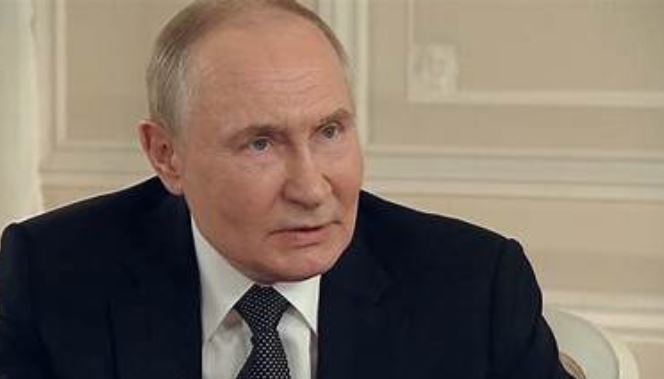
MOSCOW, JAN 16 /DNA/ – Russian President Vladimir Putin, addressing a ceremony for newly appointed ambassadors presenting their credentials, underscored the importance of international cooperation as the foundation for humanity’s sustainable development and prosperity. He stressed that in today’s diverse and interconnected world, global stability and security depend directly on the ability of states to engage constructively with one another. Transparent and honest partnerships, he said, create the environment necessary to tackle common challenges.

Putin emphasized that peace does not come automatically but must be built daily through effort, responsibility, and conscious decision-making. He warned that the global environment is deteriorating, with old conflicts intensifying and new fronts of tension emerging. In this context, he criticized unilateral and dangerous actions that often replace diplomacy and compromise, noting that some actors attempt to impose their own narrative and dictate how others should live, undermining dialogue between states.

Highlighting the plight of dozens of countries facing violations of sovereignty, chaos, and lawlessness without the means to defend themselves, Putin called for adherence to international law and the establishment of a fair multipolar world order. He reaffirmed Russia’s commitment to the concept of a multipolar world and to pursuing a balanced and constructive foreign policy that considers both national interests and global development trends.

The Russian President also advocated strengthening the central role of the United Nations in global affairs, describing it as the institution best placed to ensure collective security. He stressed that no country’s national security can be guaranteed at the expense of another’s, insisting that true security must be comprehensive, equal, and interconnected — principles enshrined in international law.

Putin pointed to the crisis in Ukraine as a clear example of what happens when these principles are ignored, arguing that years of disregarding Russia’s legitimate interests and NATO’s expansion towards Russian borders, contrary to earlier assurances, had created direct threats to Russia’s security. He concluded by reaffirming Russia’s readiness to work with all partners to promote global welfare and development.

Stay Connected

64FansLike
60FollowersFollow

Latest Reviews

Exchange Rates

USD - United States Dollar
EUR
1.14
GBP
1.34
AUD
0.70
CAD
0.71