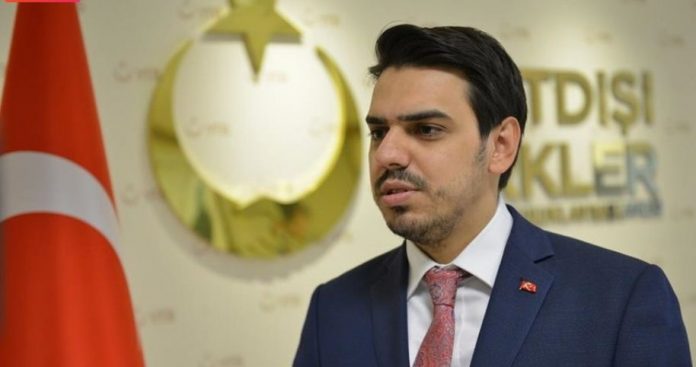
Rashid Alimov
On June 15, 2021, the Shanghai Cooperation Organization will celebrate its 20th anniversary. Born at the junction of two centuries, the Organization has become one of the most important structures of international relations in a short period of time, and cooperation within the SCO plays a leading role in ensuring security and stability in space from the Arctic to the Indian Ocean and from the Pacific to the Baltic.
The leaders of the Eurasian Eight will celebrate the 20th anniversary of the SCO in Dushanbe: on November 10, 2020. Tajikistan assumed the presidency from Russia. We can be sure that the days and months before the summit will be filled with intense contacts at both expert and high levels. This is understandable: even though all decisions in the SCO are taken without a vote based on the consensus reached, the end-result largely depends on diplomatic skill and skillful management of the preparatory process of the presiding party.
Over the past two decades, Tajikistan and its diplomacy have gained solid experience in preparing and successfully hosting major international events, including high-level UN conferences. Dushanbe has a well-deserved reputation as one of the most authoritative centers of international life. Twice, in 2008 and 2014, the Tajik capital hosted SCO Summits, the results of which contributed to the further strengthening of the Organization, the expansion of multifaceted cooperation and cooperation between its member states. At the same time, the upcoming SCO Summit is expected to differ in many respects from the previous ones, and not only because of its anniversary date.
A key feature of the new phase of the Organization’s development is that the SCO will not only have to think deeply about its own path over twenty years, but also determine the vector of development for the foreseeable future considering the much-increased role of the organization in international affairs. In recent years, especially after the transformation of the SCO into the Eurasian Eight by the accession of India and Pakistan, the Organization has become even more visible and authoritative, and most importantly – an independent factor in modern international relations. In this regard, the upcoming SCO Summit in Dushanbe and the 20th anniversary of the Organization can be described as a turning point, in fact, a historic stage of its evolution. Moreover, the Dushanbe summit will be held in new geopolitical realities, against the background of fundamental changes taking place in the system of international relations.
Shanghai Five
The SCO’s Anniversary Summit in Dushanbe is also of special and symbolic importance to the host party. The fact is that the very idea of creating a new type of regional organization was formulated in the Tajik capital. It happened on July 5, 2000 as part of the historic Dushanbe meeting of the leaders of the Shanghai Five.
It is worth recalling that the Shanghai Five entered the international lexicon after the signing of the Agreement on Military Confidence-building near the border in 1996 in Shanghai, the sides of which were Kazakhstan, China, Kyrgyzstan, Russia, and Tajikistan. A year later, in April 1997, the Moscow Agreement on the Mutual Reduction of Armed Forces near the Common Border cemented the intention of China and Russia, as well as the three Central Asian countries, not only to ensure lasting peace and stability around the border, but also to establish a new model of collective security in the vast Asia-Pacific region.
The Shanghai Five heads of state meeting in Dushanbe in early July 2000 was the fifth in a row. However, for the first time, the leaders of the P5 met in the capital of Tajikistan, which, after the peace process was completed, began to address the complex problems of post-conflict peacebuilding. The leaders of China and Russia, Kazakhstan and Kyrgyzstan welcomed the establishment of lasting peace and national harmony in Tajikistan and strongly supported President Emomali Rahmon’s policy of economic and social change. Dushanbe’s call for the international community to provide the necessary support to Tajikistan in rebuilding and further lifting the economy was of great political and practical importance.
As well as the statement of the leaders on the determination of the “five” to jointly fight international terrorism, religious extremism, and national separatism, as well as the illegal trafficking of arms and drugs. It is important that it was reflected in the proposal in Dushanbe to establish a Regional Anti-Terrorism Structure (RATS), which was supported by the Five. At the same time, there was also a shared interest in Central Asia remaining a zone of peace and good neighbourliness, stability and equitable international cooperation that excludes external threats and outside interference. From today’s perspective, one can genuinely appreciate the importance, targeting and persistence of these fears.
Returning to the Dushanbe Summit of 2000, it is worth recalling that the leaders of the Shanghai Five expressed deep satisfaction with the results achieved in building mutual trust and cooperation, especially in maintaining security and stability in the region. Drawing on the experience of regular communication, the five heads of state stood in solidarity with the support of further strengthening cooperation, filling it with new content and expanding the existing framework of cooperation. In this context, it is only logical that the Shanghai Five be transformed into a regional structure for multilateral cooperation in a wide range of fields.
SCO: Origin
The idea of creating a new regional organization in the Eurasian space corresponded to the dictates of the times. The leaders of the Shanghai Five decided, without putting off in a “long box”, to formulate the main goals and principles of the future organization, sphere, and area of cooperation, as well as the common, unifying values that later formed the basis of the “Shanghai spirit”, it was decided that within the framework of the future organization the “five” would deepen cooperation in political, diplomatic, trade, economic, military, military-technical, cultural and humanitarian and other areas. Reflecting the agreements in the Declaration of 5 July 2000, the Shanghai Five sent a clear message to the international community from Dushanbe that the model of cooperation developed had passed the test of time and recognized them as a success. It was noted that the level of mutual trust between the five neighbouring countries had created a solid foundation for continued practical cooperation in a wide range of areas to enhance regional security and stability, joint development, and prosperity.
Thus, the creation of a new regional organization based on the experience of the Shanghai Five was a foregone conclusion. At the same time, it was initially stated that the activities of the future organization would be open and would not be directed against other states. Other interested countries and organizations were welcomed in concrete programmes and projects of the Five cooperation. In this regard, it is worth recalling that for the first time the President of the Republic of Uzbekistan took part at the Dushanbe Summit. A year after the summit in Dushanbe on June 15, 2001, having gathered in the Chinese metropolis – the city of Shanghai, the “five” successfully transformed into the Shanghai Cooperation Organization, whose founders were the six friendly countries: Kazakhstan, China, Kyrgyzstan, Russia, Tajikistan, and Uzbekistan.
SCO: “Going out to sea”
The new organization was named after the city where it was established. As we know, Shanghai is one of the important business and cultural centers of China, it is the world’s largest seaport and is part of a narrow circle of key financial centers in the world. In addition, Shanghai is a platinum hallmark of China, embodying the impressive achievements and triumphant success of the policy of reform and openness. However, before the SCO in the world there were no international organizations bearing the name of the city, where the founding documents were signed. Why did the “founding fathers” of the SCO decide to name “their brainchild” the name of the city of Shanghai?
Let me assume that many components including the desire of leaders to be associated with the Shanghai Five in international politics were considered, when choosing the name of the organization. In addition to the continuity factor, there might have been another important caveat. As you know, one of the interpretations of the two Chinese characters, which are recorded by Shanghai, has the meaning of “go out to sea.” It cannot be ruled out that the heads of the SCO founding states wanted to send a signal to the international community that a new giant ship is coming out of Shanghai in the raging ocean of world politics, which has chosen a course to strengthen friendship, cooperation, and joint development. In any case, a new type of organization has appeared on the political map of the world, the partnership nature of which excludes bloc, ideological and confrontational approaches to solving international and regional problems.
SCO: Formation
The formation and development of the SCO in all its components – political-diplomatic, socio-economic, cultural, and humanitarian – took place in difficult geopolitical conditions. Suffice it to recall that in response to the terrorist attacks of 11 September 2001, the United States and its NATO allies launched the military operation “Enduring Freedom” in Afghanistan. In this regard, the demand of the SCO and Central Asian countries in the fight against international terrorism in general and the settlement of the Afghan conflict in particular has increased significantly. The SCO did not have time to “grow up”. It was necessary to “get back on my feet” on the march.
Largely due to the political will of the “founding fathers”, the stage of organizational and legal formation of the SCO was passed successfully in a truly short time. From the early days of its operation, the Organization has established itself as a vigorous and responsible participant in the established system of international relations; received observer status at the UN General Assembly; began active cooperation with UN, ASEAN, CIS and CSTO institutions. Particular attention was paid to cooperation with Afghanistan: a special Contact Group was established in the SCO for this purpose. The interests of the SCO have been expanding every year, and the Organization itself has become increasingly attractive to other countries in the vast Eurasian region; the first observer group, which included India, Iran, Mongolia, and Pakistan was introduced. The many appeals also raised the question of the prospects for expanding the number of full member States of the Organization.
The parties came close to discussing this topic at the Dushanbe Summit of the SCO, which took place on August 28, 2008. The outcome of the discussion on this issue was the establishment of a special panel of experts to deal with the full range of issues related to the expansion of the Organization. At the same time, to create additional opportunities for mutually beneficial cooperation with interested countries and international organizations, Dushanbe decided to form a new institution – partners in the SCO dialogue. Since then, the SCO platform for cooperation has expanded: along with observer countries, a group of countries has appeared in it, which expressed a desire to develop partnership relations with the Organization in a dialogue format. There are currently six, although the number of applications from countries and international organizations already exceeds 10.
As interest in cooperation with the SCO grew, so did the organization itself. At the same time, the SCO has never forced the expansion of the Organization, approached this issue in a balanced and very responsible manner. This is evidenced by the fact that the SCO Member State’s order, which created a legal basis for the admission of new members was approved at the SCO Dushanbe Summit in September 2014. The subsequent decision to accept India and Pakistan to the SCO is known to have taken place at the Astana Summit (now Nur Sultan) in 2017; 12 years after these influential Asian countries were among the observer countries. The accession of India and Pakistan to full membership, according to the founding leaders, was of truly historic importance both for strengthening the Organization’s capacity and for the development of multifaceted cooperation in the region.
At the same time, it is important to note that the active participation of China and Russia in the SCO – the two largest world powers, permanent members of the UN Security Council, implementing in its foreign policy global agenda – already in the first decade of its activity objectively brought the SCO to the forefront of international relations. After the expansion, the Organization was given additional weight by the fact that of the world’s nine existing nuclear powers, four were members of the SCO; four other countries in the Organization are parties to the Nuclear-weapon-free zone treaty in Central Asia. The expansion of the SCO has turned the organization into the largest trans-regional association on the planet. In today’s increasing turbulence world affairs, all these factors give the SCO special weight and importance, first, in its assessment of world problems and how to solve them.
“Shanghai Spirit”
The question in the media is often how the SCO Member States, which differ significantly in size, population, economic potential, national priorities in international politics, etc., manage to achieve a common understanding not only on all issues of the Organization’s life, but also on the acute issues of the international agenda? The answer can perhaps be found in the early stages of the Organization, a successful solution to the border issue left over from history. At the same time, it is extremely important to understand that the SCO does not divide countries into big and small, rich, and poor.
Another advantage of the Organization is that in the SCO the voice of each member state is not only equally heard, but every voice is listened to carefully. The “Shanghai spirit” helps the ability to hear, listen and listen to each other, a set of ethical principles adopted by all as a kind of “code of conduct” that implies equality, mutual respect, consideration of specific features and values of each nation.
To say that from the first days of interaction of the SCO Member States everything was cloudless and even, and the discussions took place without heated debates, it would be an exaggeration. The path of finding mutually acceptable solutions and mutually beneficial solutions in the SCO has always been and will always be difficult, requiring patience, time, and joint efforts at the negotiating table. The SCO model works in such a way that no matter how acute the issue is, all parties discuss it in detail and seek to find a way to consensus together. This path is not the shortest, but the most reliable. It is possible to talk about the merits and disadvantages of this model, but it is impossible not to recognize that within the institutional framework of the SCO it works effectively and allows to match the national interests of one country with the interests of all partners in the Organization.
SCO: Horizons
The successful cooperation and coordination of the efforts of the SCO Group of Eight based on agreed principles has been working for common interests for almost twenty years. Each regular SCO Summit contributes to improving its effectiveness in all three main areas of cooperation: political, economic, and cultural humanitarian. It is expected that the Jubilee Summit in Dushanbe will not only be distinguished by its special solemnity, but, based on a deep understanding of the path travelled, will create conditions for updating the organization’s activities, set new long-term goals, determine the stages and ways of achieving them. To do this, along with the SCO Development Strategy until 2025, it may be necessary to develop an additional algorithm of specific reforms. First, in the sphere of trade and economic cooperation, which in the new conditions needs solutions that give the green light to projects waiting for their time. Their implementation could contribute to the organization’s qualitatively new, innovative development.
The COVID-19 coronavirus pandemic was a serious test for all of humanity. Timely and gratuitous mutual assistance and support, prompt coordination and cooperation of efforts to counter the spread of the coronavirus infection have become another example of the vitality of the SCO model of partnership. It is important that during the period of “global self-isolation,” the SCO did not close itself off or went to “quarantine,” but continued to be active both on the current agenda and in strengthening international contacts. Thanks largely to Russia’s able and effective chairmanship during the pandemic period and its ability to consolidate collective thinking and conduct business together with partners. Focusing on the result, the SCO has appeared before the international community even stronger and more united than before the pandemic. The SCO Secretary General V. Norov has made a significant contribution to the Organization’s achievements.
Twenty years ago, no one could have taken the liberty of stating that by 2021 the SCO could become a powerful multidisciplinary association with a well-established reliable internal core and external appeal. Suffice it to recall that no regional organization in the world has the same number of external partners as the SCO, and their network continues to expand. The voice of the SCO is increasingly heard on international venues, including the UN General Assembly. Over the years, the Organization has developed wonderful traditions that not only unite the “family” of the SCO, are passed on to the younger generation of partner countries, but also arouse great interest in the community of nations, especially their humanistic orientation.
The Shanghai Cooperation Organization is entering a new phase of its evolution, when the question of jointly forming the matrix of the future appearance of the SCO, firmly aimed at the development of the achieved successes and intensive harmonious development, is on the agenda. How this will appear in the third decade of the Organization will largely depend on adherence to the principles of the “Shanghai spirit” and the continuation of the SCO’s long-term course of further strengthening of friendship, good neighbourliness and multifaceted cooperation.