Home Blog Page 294

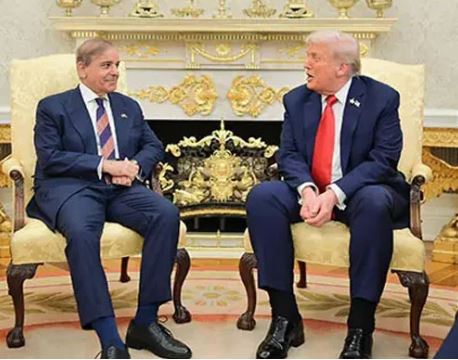
Trump invites PM Shehbaz to join Gaza peace board

Trump invites PM Shehbaz to join Gaza peace board

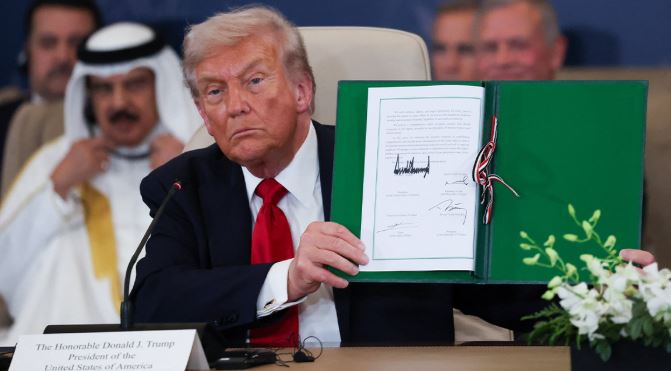
ISLAMABAD, JAN 18: Prime Minister Shehbaz Sharif has received an invitation from United States (US) President Donald Trump to join the Board of Peace on Gaza, the Foreign Office confirmed on Sunday.

In response to media queries, FO Spokesperson Tahir Andrabi said: “Pakistan will remain engaged with international efforts for peace and security in Gaza, leading to a lasting solution to the Palestine issue in accordance with United Nations resolutions.”

Pakistan has reiterated at international forums its readiness to play a “constructive role” in the US peace plan for Palestine.

Deputy Prime Minister and Foreign Minister Ishaq Dar said last month that Pakistan’s civil and military leadership was fully aligned on not sending troops to Gaza to disarm Hamas.

Trump’s so-called “Board of Peace” for postwar Gaza began to take shape Saturday, with the leaders of Egypt, Turkey, Argentina and Canada asked to join.

The announcements from those leaders came after the US president named his Secretary of State Marco Rubio, former British prime minister Tony Blair, and senior negotiators Jared Kushner and Steve Witkoff to the panel.

Trump had already declared himself the chair of the body, as he promotes a controversial vision of economic development in the Palestinian territory, which lies in rubble after two-plus years of relentless Israeli bombardment.

The moves came after a Palestinian committee of technocrats meant to govern Gaza held its first meeting in Cairo, which was attended by Kushner, Trump’s son-in-law, who has partnered with Witkoff for months on the issue.

In Canada, a senior aide to Prime Minister Mark Carney had said he intended to accept Trump’s invitation, while in Turkey, a spokesman for President Recep Tayyip Erdogan said he had been asked to become a “founding member” of the board. Egypt’s Foreign Minister Badr Abdelatty had said Cairo was “studying” a request for President Abdel Fattah al-Sisi to join.

Sharing an image of the invitation letter, Argentine President Javier Milei wrote on X that it would be “an honour” to participate in the initiative.

In a statement sent to AFP, Blair said: “I thank President Trump for his leadership in establishing the Board of Peace and am honoured to be appointed to its Executive Board.”

Blair is a controversial figure in the Middle East because of his role in the 2003 invasion of Iraq.

Trump himself said last year that he wanted to make sure Blair was an “acceptable choice to everybody.” Blair spent years focused on the Israeli-Palestinian issue as representative of the “Middle East Quartet” – the United Nations, European Union, United States and Russia – after leaving Downing Street in 2007.

The White House said the Board of Peace will take on issues such as “governance capacity-building, regional relations, reconstruction, investment attraction, large-scale funding and capital mobilisation.”

Board’s charter seeks $1bn for extended membership
A draft charter sent to about 60 countries by the US administration calls for members to contribute $1 billion in cash if they want their membership to last more than three years, according to the document seen by Reuters.

“Each Member State shall serve a term of no more than three years from this Charter’s entry into force, subject to renewal by the Chairman,” the document, first reported by Bloomberg News, shows.

“The three-year membership term shall not apply to Member States that contribute more than USD $1,000,000,000 in cash funds to the Board of Peace within the first year of the Charter’s entry into force.”

Unchecked development declining Islamabad’s green

Unchecked development declining Islamabad’s green

ISLAMABAD, 18 JAN (DNA) — The concerned citizens and experts speaking at a webinar raised their apprehensions on the growing environmental crisis in Islamabad caused by rapid, unplanned, and largely irreversible urban development by the Capital Development Authority (CDA) and different housing societies in violation of zoning rules and regulations. Speakers stressed that the city’s green spaces are steadily being replaced by concrete due to weak governance, elite capture, and a persistent conflict between populist decision-making and professional, science-based planning.

A key outcome of the discussion was the strong call for a new, collaborative approach to sustainable urban development through the establishment of a dedicated Islamabad-focused think tank. Participants emphasized the need to bring together independent professionals, policymakers, civil society, and creative communities including architects, designers, and artists to develop long-term, people-centered solutions.

The webinar underscored that environmental degradation is not only an ecological issue but also a major public health concern, making citizen engagement and collective responsibility essential.

 The session stressed with a shared resolve that Islamabad’s green future depends on informed decision-making, institutional reform, and sustained public participation in shaping the city’s development trajectory.

The thought-provoking webinar was organised by the Development Communications Network (Devcom-Pakistan) on the subject “Islamabad’s Green Future – Coping with Irrational Development” that brought together environmental experts, policymakers, civil society members, and concerned citizens to deliberate on the growing environmental challenges facing Pakistan’s capital.

Well-known environment expert Dr. Tariq Banuri, highlighted that environmental protection efforts are further undermined by institutional weaknesses and the marginalization and at times harassment of environmental professionals and activists working to safeguard natural areas such as protected hills, forests, and wildlife habitats. Participants agreed that without transparent, democratic, and inclusive governance, Islamabad’s ecological balance will continue to deteriorate.

He focused on the environmental consequences of rapid and often unplanned urban development in Islamabad and underscored the urgent need for sustainable governance models that balance economic growth with environmental conservation.Dr. Banuri highlighted that Islamabad’s environmental degradation is a symptom of deeper governance challenges. He pointed to elite capture, weak institutional frameworks, and the ongoing tension between populism and professionalism as key factors driving the replacement of green spaces with unchecked concrete development.

He also expressed concern over the harassment and marginalization of environmental activists and professionals, including members associated with the Islamabad Wildlife Management Board (IWMB), who have been working to protect the city’s natural heritage. Devcom-Pakistan Executive Director Munir Ahmed said: Islamabad is witnessing an alarming and distressing wave of tree cutting that threatens the very identity of the capital as a green and livable city.

“The unchecked felling of trees in the name of development reflects a serious failure of planning and governance,” said Munir Ahmed, expressing deep concern over the rapid loss of urban greenbelts, roadside trees, and natural green buffers. He warned that this indiscriminate destruction is accelerating urban heat, worsening air quality, increasing flood risks, and eroding biodiversity, while also undermining the mental and physical well-being of citizens.

 According to him, trees are being treated as expendable obstacles rather than essential infrastructure, despite their critical role in climate resilience and public health. — DNA

More fun for kids at Gwadar’s Model Park

More fun for kids at Gwadar’s Model Park

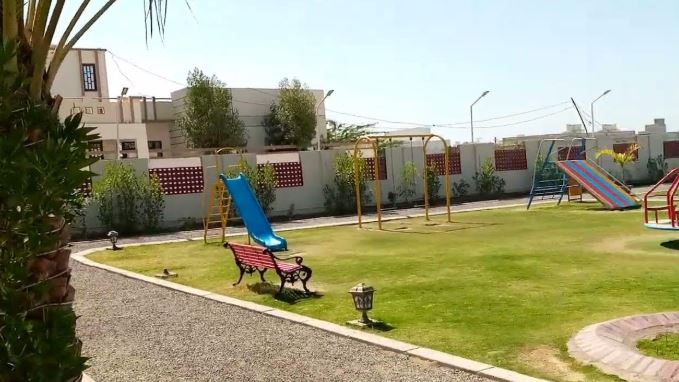
ISLAMABAD, 18 JAN (DNA) —  Families and young visitors in Gwadar now have more to enjoy at Model Beach Park, where a new range of modern electronic amusement rides has been installed to expand recreational options for children.


The coastal park, developed by the Gwadar Development Authority (GDA) as a dedicated space for women and children, has added attractions including Bike, 4 Bee Rides, Badal New Shape, Banmanus Kingkong, Buggi 2 Horse, Moto Car, Moto Cup, Panda Jahaz, Titanic Ship and Train rides, according to a Gwadar Pro’s report.

Officials said the rides have been installed with a strong focus on safety and quality, offering a comfortable and enjoyable environment for families. Located along the scenic coastline, Model Beach Park has become a popular family destination in the port city. The park recently served as a hub for community activities during New Year celebrations, which featured cultural programs and fireworks and drew large numbers of women and children.

Another highlight of the park is the Baloch Insight Café, a three-container café that has emerged as a social space for women and families.  The café hosts gatherings and children’s birthday celebrations and offers a variety of fast food and refreshments. Earlier, GDA highlighted improvements to public parks and recreational facilities as part of broader efforts to promote youth-friendly activities, women’s access and quality of life in Gwadar.


According to an official statement, the new rides and facilities were introduced on the instructions of Director General Chairman Moeen-ur-Rehman Khan, in line with the authority’s ongoing efforts to develop leisure and community spaces alongside urban development. Residents and visitors have welcomed the additions, saying they have further strengthened Model Beach Park’s role as a safe and enjoyable recreational spot for children and families. 

Sector G‑12 known as Mehra Abadi branded ‘No‑go area’

Sector G‑12 known as Mehra Abadi branded ‘No‑go area’

ISLAMABAD, 18 JAN (DNA) — The National Cyber Crime Investigation Agency (NCCIA) has successfully dismantled an organized ATM fraud gang operating in Islamabad and other parts of the country, arresting several suspects including the main female ringleader. Officials confirmed that the prime suspect, identified as Asma Minhaj, was apprehended in Chiniot.

 Following her arrest, NCCIA teams conducted further raids in Mehra Abadi, Islamabad, leading to the detention of additional gang members. Authorities reported that multiple ATM and debit cards, sensitive electronic equipment, and other incriminating materials were recovered during the operation.  

According to initial investigations, the gang specialized in swapping ATM cards of unsuspecting citizens at booths during peak hours, later withdrawing cash from their accounts.  Victims were targeted using deceptive tactics designed to confuse and mislead them in crowded banking environments. Officials revealed that the arrested ringleader was already a proclaimed offender and had been wanted in multiple fraud cases across different jurisdictions.

The crackdown is part of NCCIA’s broader campaign against financial crimes and cyber fraud, with further arrests expected as investigations expand. Authorities emphasized that all facilitators and accomplices connected to the network will be brought to justice, while efforts are underway to trace additional victims and financial links tied to the gang’s operations.

Meanwhile, concerns have been raised about the law‑and‑order situation in Islamabad’s G‑12 sector, particularly the Mehra Abadi locality, which has reportedly become a no‑go area. Residents allege that criminals, including narcotics dealers, have taken refuge there, while police remain hesitant to intervene. Despite being a Capital Development Authority (CDA) sector, enforcement measures have failed to clear the area, raising questions about governance and security.

 The NCCIA operation highlights both the growing sophistication of cybercrime networks and the challenges faced by law enforcement in tackling organized fraud. Officials reiterated their commitment to protecting citizens from financial exploitation and urged the public to remain vigilant while using ATM services.

Citizens are advised to safeguard their personal banking information, avoid assistance from strangers at ATM booths, and immediately report suspicious activity to authorities.  The successful arrest of the female ringleader marks a significant breakthrough in the fight against financial crime, but the broader issue of criminal safe havens in Islamabad underscores the need for coordinated action between cybercrime investigators, police, and civic authorities.

The NCCIA has vowed to continue its crackdown until all members of the fraud network are apprehended and prosecuted, ensuring justice for victims and restoring public confidence in financial security systems. — DNA

Trump announces 10% tariffs on eight European nations over Greenland

Trump announces 10% tariffs on eight European nations over Greenland

WASHINGTON, JAN 18: US President Donald Trump on Saturday vowed to implement a wave of increasing tariffs on European allies until the Washington is allowed to buy Greenland, escalating a row over the future of Denmark’s vast Arctic island.

In a post on Truth Social, Trump said that an additional 10% import tariffs would take effect on February 1 on goods from Denmark, Norway, Sweden, France, Germany, the Netherlands, Finland and Great Britain — all already subject to tariffs imposed by Trump.

Those tariffs would increase to 25% on June 1 and would continue until a deal was reached for the US to purchase Greenland, Trump wrote.

Trump has repeatedly insisted he will settle for nothing less than ownership of Greenland, an autonomous territory of Denmark. Leaders of both Denmark and Greenland have insisted the island is not for sale and does not want to be part of the US.

Security, minerals
The president has repeatedly said Greenland is vital to US security because of its strategic location and large mineral deposits, and has not ruled out using force to take it. European nations this week sent military personnel to the island at Denmark’s request.

“These Countries, who are playing this very dangerous game, have put a level of risk in play that is not tenable or sustainable,” Trump wrote.

Protesters in Denmark and Greenland demonstrated on Saturday against Trump’s demands and called for the territory to be left to determine its own future.

The countries named by Trump on Saturday have backed Denmark, warning that the US military seizure of a territory in NATO could collapse the military alliance that Washington leads.

“The president’s announcement comes as a surprise,” Denmark’s Foreign Minister Lars Lokke Rasmussen said in a statement.

British Prime Minister Keir Starmer was unusually blunt in condemning Trump’s threat, saying on X that his country would raise the issue directly with Washington.

“Applying tariffs on allies for pursuing the collective security of Nato allies is completely wrong,” Starmer said.

European Commission President Ursula von der Leyen and European Council President Antonio Costa said in separate but identical posts on X that the European Union stood in “full solidarity” with Denmark and Greenland.

“Tariffs would undermine transatlantic relations and risk a dangerous downward spiral. Europe will remain united, coordinated, and committed to upholding its sovereignty,” they said.

Officials from Norway, Sweden, France and Germany reiterated support for Denmark on Saturday and said tariffs should not be part of Greenland discussions.

Cyprus, which currently holds the EU presidency, said it has called for an emergency meeting of ambassadors from the union’s 27 countries on Sunday.

Trade deals under threat?
Saturday’s threat could derail tentative deals Trump struck last year with the European Union and Great Britain. The deals included baseline levies of 15% on imports from Europe and 10% on most British goods.

“The biggest danger, it seems to me, is his decision to treat some EU countries differently from others,” said William Reinsch, a trade expert at the Centre for Strategic and International Studies. “I’m not surprised [….] It may well convince the European Parliament that it is pointless to approve the trade agreement with the US, since Trump is already bypassing it.”

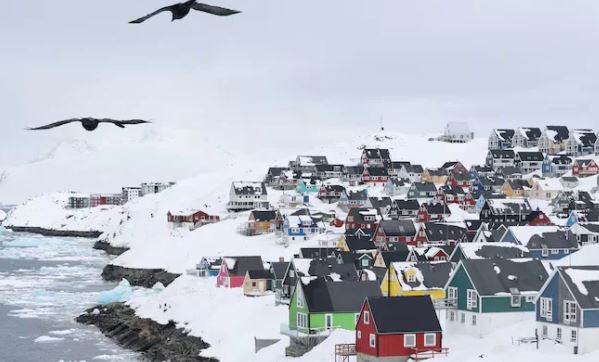
People attend a protest against US President Donald Trumps demand that the Arctic island be ceded to the US, calling for it to be allowed to determine its own future, in Nuuk, Greenland on January 17, 2026. — Reuters
People attend a protest against US President Donald Trump’s demand that the Arctic island be ceded to the US, calling for it to be allowed to determine its own future, in Nuuk, Greenland on January 17, 2026. — Reuters
Trump floated the general idea of tariffs over Greenland on Friday, without citing a legal basis for doing so. Tariffs have become his weapon of choice in seeking to compel American adversaries and allies alike to meet his demands.

He said this week he would put 25% tariffs on any country trading with Iran as that country suppressed anti-government protests, though there has been no official documentation from the White House of the policy on its website, nor information about the legal authority Trump would use.

The US Supreme Court has heard arguments on the legality of Trump’s sweeping tariffs, and any decision by the top US judicial body would have major implications on the global economy and US presidential powers.

The encroaching presence of China and Russia makes Greenland vital to US security interests, Trump has said. Danish and other European officials have pointed out that Greenland is already covered by NATO’s collective security pact.

A US military base, Pituffik Space Base, is already in Greenland, with around 200 personnel, and a 1951 agreement allows the US to deploy as many forces as it wants in the Danish territory.

That has led many European officials to conclude that Trump is motivated more by a desire to expand US territory than by security concerns.

“China and Russia must be having a field day. They are the ones who benefit from divisions among allies,” EU foreign policy chief Kaja Kallas said on X in response to Trump’s threat.

Some US senators also pushed back. “Continuing down this path is bad for America, bad for American businesses and bad for America’s allies,” Senators Jeanne Shaheen and Thom Tillis, bipartisan co-chairs of the Senate Nato Observer Group, said in a statement.

Europeans should not react hastily to Trump’s tariff threat, said Carsten Brzeski, global head of macro at ING Research.

“Just ignore it and wait and see,” Brzeski told Reuters. “Europe has shown that it will not accept everything, and so the tariffs are actually already a step forward compared to the threatened military invasion.”

The Era of Personal Wellness: From Bio Tracking to Biological Health

The Era of Personal Wellness: From Bio Tracking to Biological Health

DR. HANI ZARBAFT ALI

The landscape of health in 2026 has shifted from a one-size-fits-all approach to a model of Precision Wellness. We are no longer just looking to live longer; we are looking to live better.

Modern health focuses on “health span”—the period of life spent in good health—by leveraging cutting-edge science and intentional lifestyle shifts.

1. The Ultra-Processed Food (UPF) Reckoning

Perhaps the most significant shift in modern nutrition is the “UPF Reckoning.” New studies have moved beyond the calorie count to look at the cellular impact of industrially processed foods. Research now links high-UPF diets to a 28% faster rate of cognitive decline and a significant spike in mental health struggles like anxiety and depression.

  • The Problem: UPFs (like sodas, packaged snacks, and reconstituted meats) break down the gut barrier and cause systemic inflammation that reaches the brain.
  • The Solution: The “Whole-Food Swap.” You don’t need to be perfect, but aim for the “80/20 Rule.” Focus on foods with five or fewer ingredients that you recognize. If it comes in a crinkly plastic bag and has a shelf life of years, it’s likely a UPF.

2. The Metabolic Engine: Moving Beyond “No Pain, No Gain”

Modern fitness philosophy has moved away from constant high-intensity exhaustion toward Metabolic Flexibility. This is the body’s ability to switch efficiently between burning carbohydrates and fats for fuel.

Central to this is Zone 2 Training—steady, moderate-intensity exercise like brisk walking or light cycling. By building a strong aerobic base, we increase mitochondrial health, which stabilizes energy levels and reduces the risk of chronic metabolic diseases.

3. Muscle as a Vital Organ

Strength training has been rebranded. Muscle is no longer viewed through the lens of aesthetics, but as a critical endocrine organ. Skeletal muscle helps regulate blood sugar, supports the immune system, and protects against the frailty that often accompanies aging.

Current health standards emphasize a high-protein diet (roughly 1.3g per kg of body weight) paired with resistance training to maintain this “metabolic buffer.”

4. The Gut-Brain Connection

Our understanding of the Microbiome has revolutionized nutrition. We now know that the gut is our “second brain,” influencing everything from mood to cognitive function via the vagus nerve.

Instead of restrictive dieting, modern nutrition focuses on diversity. The goal of consuming 30 different plant-based foods per week—including seeds, herbs, and grains—ensures a diverse bacterial ecosystem that lowers inflammation and supports mental clarity.

5. Circadian and Nervous System Optimizatio

Health in 2026 isn’t just about what you eat or how you move; it’s about rhythm.

  • Light Hygiene: Modern health emphasizes morning sunlight to set the internal clock and evening dimming to protect melatonin.
  • Biometric Feedback: We now use tools like Heart Rate Variability (HRV) to monitor the nervous system. By tracking the balance between stress and recovery, we can prevent burnout before it manifests physically.

Pakistan invited to join US-Led Gaza peace board

Pakistan invited to join US-Led Gaza peace board

Mr. Andrabi underscored that Pakistan’s engagement with the Board of Peace will be guided by its commitment to multilateralism and international law. He noted that the government views this development as an opportunity to contribute meaningfully to regional stability and to amplify the voices of those suffering in Gaza

By Ansar M. Bhatti

ISLAMABAD, JAN 18 /DNA/ – The Ministry of Foreign Affairs has confirmed that the Prime Minister of Pakistan has received an official invitation from the President of the United States to join the newly constituted Board of Peace on Gaza. The announcement was made by the Spokesperson of the Ministry, Mr. Tahir Andrabi, during a press briefing in Islamabad on Sunday.

Responding to media queries, Mr. Andrabi stated that Pakistan will remain actively engaged with international efforts aimed at ensuring peace and security in Gaza. He emphasized that Islamabad’s position on the Palestine issue has been consistent and principled, rooted in the framework of United Nations resolutions and the right of the Palestinian people to self‑determination. “Pakistan will continue to support initiatives that lead to a lasting solution to the Palestine question,” the Spokesperson remarked.

The invitation from Washington comes at a critical juncture, as the humanitarian situation in Gaza remains dire following years of conflict, blockade, and repeated escalations. The Board of Peace on Gaza is expected to bring together key international stakeholders to coordinate diplomatic, humanitarian, and reconstruction efforts. Pakistan’s inclusion reflects recognition of its longstanding advocacy for Palestinian rights at global forums, including the UN General Assembly, the Organization of Islamic Cooperation (OIC), and the Non‑Aligned Movement.

Historically, Pakistan has maintained unwavering support for the Palestinian cause. Successive governments have called for the establishment of an independent Palestinian state with pre‑1967 borders and Al‑Quds Al‑Sharif as its capital. Pakistan has also consistently condemned Israeli military actions in Gaza and voiced concern over civilian casualties. In recent years, Islamabad has participated in humanitarian relief campaigns and diplomatic initiatives aimed at de‑escalation.

Mr. Andrabi underscored that Pakistan’s engagement with the Board of Peace will be guided by its commitment to multilateralism and international law. He noted that the government views this development as an opportunity to contribute meaningfully to regional stability and to amplify the voices of those suffering in Gaza. “Our participation will be constructive, principled, and aligned with the aspirations of the Palestinian people,” he added.

The spokesperson concluded by reiterating Pakistan’s call for the international community to intensify efforts toward a comprehensive and just settlement of the Palestine issue. He stressed that peace in Gaza is not only essential for the Middle East but also for global security and stability.=DNA

============

IWCCI International conference opens to boost women led businesses

IWCCI International conference opens to boost women led businesses

ISLAMABAD, JAN 18 /DNA/ – The 4th All Pakistan Women Chambers Presidents International Conference opened in Islamabad bringing together presidents and senior leaders from more than 30 Women Chambers of Commerce and Industry for a two-day forum focused on strengthening women’s economic institutions and entrepreneurship.

The conference is being hosted by the Islamabad Women Chamber of Commerce and Industry in collaboration with the Azerbaijan Pakistan Joint Chamber of Commerce and Industry. Special Assistant to the Prime Minister for Industries and Production Haroon Akhtar Khan is scheduled to inaugurate the event.

Participants include women chamber leaders, policymakers, regulators, representatives of financial institutions, diplomatic missions, development partners and private sector stakeholders. The forum aims to promote dialogue, shared learning and practical solutions to challenges faced by women led businesses across Pakistan.

Organizers said the central focus of the conference is institutional capacity building of Women Chambers, enabling them to more effectively support women entrepreneurs at a time when women owned businesses are expanding in number and scope. Key themes under discussion include regulatory and DGTO compliance, leadership development, resource mobilization, financial and digital inclusion, and international market access.

President of the Islamabad Women Chamber of Commerce and Industry Samina Fazil said the growing number of Women Chambers across the country reflects progress but also creates new responsibilities. She said that with more than 30 Women Chambers now operating, many of them recently established, there is a need to ensure they have the tools, knowledge and institutional strength to serve women entrepreneurs effectively.

Ahsan Zafar Bakhtawari, Patron in Chief of the Azerbaijan Pakistan Joint Chamber of Commerce and Industry, highlighted the export potential of women owned enterprises and stressed the importance of global connectivity. He said international exposure and institutional support are critical for enabling women led businesses to access regional and global markets, particularly through partnerships with countries such as Azerbaijan.

The conference programme includes expert led sessions and panel discussions with regulators, bankers, development organisations and private sector representatives. A dedicated Pakistan Azerbaijan Women Entrepreneurship Dialogue has also been scheduled to encourage cross border collaboration and knowledge exchange.

Organizers said the conference aims to strengthen coordination among Women Chambers, encourage policy engagement and reinforce the contribution of women led enterprises to Pakistan’s economic growth and export development. A networking gala dinner will also be held to recognise partners and promote further engagement among stakeholders.

Greenwich University honors Senator Sarmad Ali with Doctorate degree

Greenwich University honors Senator Sarmad Ali with Doctorate degree

DNA

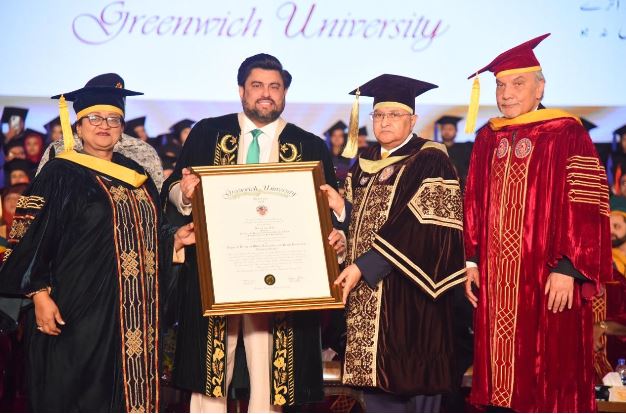
KARACHI, JAN 18: Senator Sarmad Ali, Managing Director of the Jang Group and President of the All Pakistan Newspapers Society (APNS), was today conferred an Honorary Doctorate in Media Innovation and Public Leadership by Greenwich University at its convocation ceremony held at the Governor’s House, Karachi.

The honorary degree was awarded in recognition of his distinguished services to Pakistan’s media industry and his contribution to strengthening media institutions, promoting ethical journalism, and advancing innovation in communication.

In his acceptance speech, Senator Ali said he was “deeply honoured and sincerely grateful” for the recognition, describing it as “an acknowledgement not only of an individual journey, but of a lifetime spent in an industry that shapes ideas, institutions, and societies.”

He said the award recognized his “modest contribution to the field of media and communications that today stands at the intersection of technology, democracy, culture, and public trust.”

Reflecting on Pakistan’s media landscape, he described it as an industry marked by “extraordinary creativity, resilience, and courage,” often operating under political pressure, commercial constraints, and security risks. “To serve in such an environment is not merely a career choice; it is an honour,” he remarked.

Paying tribute to his mentors and colleagues, Senator Ali said that no meaningful journey is undertaken alone, and acknowledged the guidance of his mentors including Javed Jabbar, Syed Naseer Haider, S. H. Hashmi, Iqbal Mir, Hameed Haroon, and Mir Shakil-ur-Rahman. He also credited his colleagues at the Jang/Geo Group, noting that “performance is a team sport.”

Emphasizing the ethical responsibilities of media leadership, he said, “Innovation without integrity is hollow, and influence without accountability is dangerous,” adding that the duty to inform truthfully, criticise fairly, and represent voices honestly remains sacred.

Referring to Pakistan’s emerging generation of public leadership, Senator Ali said it was encouraging to see leaders “speak the language of inclusion, diplomacy, climate responsibility, and democratic continuity,” and cited Chairman Bilawal Bhutto Zardari as an example of this generational shift.

Addressing graduating students, he urged them to remain anchored in ethics while embracing change. Referring to the age of artificial intelligence and rapid technological transformation, he said uncertainty should not paralyse young people but provoke them to “question established models, challenge inherited assumptions, and break moulds that no longer serve progress.”

The convocation ceremony was attended by Governor Sindh Kamran Tessori, Chancellor Greenwich University Seema Mughal, senior government officials, academicians, diplomats, and graduating students as well as their parents.

How Trump  Opened the Polar Door to China

Qamar Bashir

Qamar Bashir

The Arctic, once a frozen frontier of quiet diplomacy and carefully balanced power, is rapidly becoming a theater of geopolitical drama. What makes this moment striking is not merely China’s growing presence in the polar north, but the pathway that has led it there. In a twist of strategic irony, policies designed in Washington to contain Beijing’s global reach appear to have instead nudged America’s closest allies toward deeper engagement with China—transforming the Arctic into a new symbol of a shifting world order.

For decades, Canada stood as one of the United States’ most dependable partners, sharing not only borders and security arrangements but also a sense of political alignment rooted in NATO, democratic values, and mutual defense. Canadian soldiers fought alongside American forces in distant theaters, reinforcing the idea of a partnership that went beyond transactional interests. Yet recent years have strained that bond, as a sharper, more unilateral American posture has unsettled long-standing assumptions about alliance and trust.

The shockwaves intensified when Washington floated the idea of exerting direct control over Greenland, framing the move as a preemptive step to block Chinese and Russian influence in the Arctic. While cast in the language of strategic necessity, the message that reverberated through Europe and North America was one of disregard for sovereignty and partnership. For Denmark and Greenland, the proposal felt less like an offer of cooperation and more like a declaration of intent, prompting unease across the Nordic region.

Against this backdrop, Canada’s reported openness to involving China in Arctic research and development takes on a deeper meaning. It is not simply about scientific collaboration or icebreaker technology; it signals a recalibration of strategic options. The Arctic’s future hinges on access, infrastructure, and year-round navigability, and in these areas, China has invested heavily. Its growing fleet of icebreakers, polar research stations, and logistical capabilities gives it a practical advantage in a region where technological capacity often matters as much as territorial proximity.

This development forms what some observers describe as a “double pincer” dynamic. On one side, China has cultivated research and commercial ties with Nordic countries under international law and bilateral frameworks. On the other, Canada’s engagement opens a transcontinental corridor of cooperation that links North America’s Arctic access with Europe’s northern gateways. The result is a network that extends China’s influence across the polar circle without the need for direct territorial claims, relying instead on partnership, investment, and technical expertise.

The strategic implications are profound. Climate change is steadily reducing ice coverage, shortening shipping routes between Asia, Europe, and North America by as much as 40 percent. What was once a seasonal passage is edging toward year-round viability, transforming the Arctic into a critical artery for global trade, energy transport, and mineral supply chains. Control over icebreaker fleets, ports, and monitoring systems becomes a form of soft power, shaping who sets the rules for access and security.

China’s Arctic engagement also dovetails with its broader Belt and Road Initiative, which has already linked more than 150 countries through infrastructure, logistics, and digital networks. The extension of this vision into polar waters reframes the initiative as not merely a land-and-sea project, but a planetary one—connecting continents through roads, ports, fiber-optic cables, and now, ice-cleared maritime corridors. For partner countries, the appeal lies in tangible investment and shared development rather than overt military alignment.

Europe’s role in this evolving landscape reflects its own reassessment of transatlantic ties. Leaders in Paris and Berlin have spoken openly about strategic autonomy, emphasizing the need to diversify partnerships in a world where U.S. policy can shift sharply with domestic politics. High-level visits to Beijing and renewed economic engagement signal a willingness to explore avenues of cooperation that Washington has discouraged, particularly in areas like research, energy, and infrastructure.

This recalibration is not driven by ideological conversion to China’s worldview, but by a pragmatic reading of interests. European states, facing energy transitions, supply chain vulnerabilities, and economic competition, see value in maintaining multiple channels of partnership. The Arctic, rich in rare earths, hydrocarbons, and strategic shipping lanes, becomes another arena where diversification seems prudent rather than provocative.

The ripple effects extend beyond the polar north. In the Middle East, China and Russia’s consistent calls for sovereignty and non-intervention have positioned them as counterweights to U.S. influence, particularly in countries wary of regime-change rhetoric. In Latin America, Beijing’s infrastructure financing and trade agreements have offered alternatives to traditional U.S.-centric economic models. Together, these trends paint a picture of a world where influence is increasingly earned through development and investment as much as through security guarantees.

For Washington, the challenge lies in reconciling the desire to protect national interests with the realities of alliance management in a multipolar era. Tariffs, threats, and public confrontations may signal resolve domestically, but they can also push partners to hedge their bets internationally. The Arctic case illustrates how strategic pressure, when perceived as overreach, can produce the opposite of its intended effect—encouraging allies to seek balance rather than alignment.

None of this suggests that the United States is losing its capacity to shape global outcomes. Its economic scale, technological leadership, and network of alliances remain formidable. But the nature of influence is evolving. In regions like the Arctic, where long-term investment, scientific cooperation, and infrastructure development determine access and authority, power is exercised quietly and incrementally rather than through dramatic declarations.

The deeper lesson may lie in the unspoken reality of international politics: every nation, whether it proclaims it or not, puts its own interests first. What differentiates successful strategies is not the assertion of primacy, but the ability to align national goals with the aspirations of partners. When cooperation feels mutually beneficial, alliances endure; when it feels conditional or coercive, alternatives emerge.

As the ice recedes and shipping lanes open, the Arctic will continue to draw the attention of powers near and far. It will test whether established alliances can adapt to new economic and environmental realities, or whether emerging networks of partnership will redefine the region’s governance. In this unfolding story, China’s growing presence is not solely the result of its own ambition, but also of the spaces created by others’ missteps.

The coming years will reveal whether Washington chooses to recalibrate—investing in polar infrastructure, engaging allies in shared development plans, and framing Arctic security as a collective endeavor rather than a zero-sum contest. Such an approach could rebuild confidence and reassert leadership without forcing partners to choose sides.

If not, the Arctic may become a lasting symbol of a broader global shift: a world where influence flows toward those who build, connect, and invest, rather than those who command and confront. In that sense, the frozen north is no longer just a remote frontier—it is a mirror reflecting the changing dynamics of power in the twenty-first century.

Qamar Bashir
Press Secretary to the President (Rtd)
Former Press Minister, Embassy of Pakistan to France
Former Press Attaché to Malaysia
Former MD, SRBC | Macomb, Michigan

Stay Connected

64FansLike
60FollowersFollow

Latest Reviews

Exchange Rates

USD - United States Dollar
EUR
1.14
GBP
1.34
AUD
0.70
CAD
0.71