Home Blog Page 293

Morocco’s Historic AFCON Showcases Continent’s Unity and Ambition

Morocco’s Historic AFCON Showcases Continent’s Unity and Ambition

RABAT, JAN 19 /DNA/ – Marked by artistic shows reflecting Africa’s cultural wealth and the vibrant energy of its youth, and embodying the spirit of cooperation, unity, and competitivity carried by this tournament, this ceremony honors a competition that brought together an entire continent and conquered the whole world.

At the close of the match, the Prince Moulay Rachid joined the podium to hand over trophies and medals to the Moroccan finalist team, and to the Senegalese team, winners of this edition of the AFCON.

The CAN was a historic event for the country, far beyond a simple sporting challenge. The CAN has been a major political, strategic and symbolic moment for the Kingdom and for the king Mohammed VI. Through its scale, popular success and the quality of its organisation, it has served as a showcase for contemporary Morocco: a country that is investing in its infrastructure, its international image and its ability to welcome the world, while already looking ahead to 2030, when it will co-host the World Cup with Spain and Portugal.

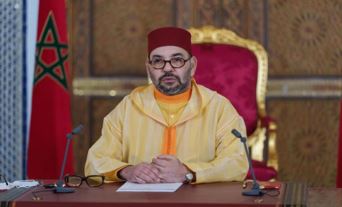
In this occasion, His Majesty the King Mohammed VI, sent a congratulatory telegram to the members of the national football team. His Majesty’s telegram read: “On the occasion of your reaching the final of the Africa Cup of Nations (Morocco 2025), we are pleased to send to you, players, coaches, technical, medical and administrative staff, and officials of the Royal Moroccan Football Federation, our warmest congratulations on this honorable continental achievement.”

His Majesty continued, “Through this distinguished journey, you have proven that perseverance, seriousness, and a collective spirit are the way to achieve accomplishments, and you have presented the world with a model of what Moroccan and African youth can achieve when they are armed with confidence in their talents and abilities.”

The telegram also stated, “You have provided evidence, through your composure and honorable heroic performance, of the importance of our strategic vision in investing in human capital and in modernizing the Kingdom’s infrastructure, which has demonstrated its strength and global readiness in anticipation of hosting the 2030 World Cup.”

The King said, “As much as we consider our country’s hosting of this distinguished championship, with its befitting quality of organization and warm reception stemming from the virtues and ancient values ​​of our Moroccan nation, a great sporting achievement, we also consider it a message of hope and confidence from Morocco to its continent, confirming that African genius is capable of excellence and creativity in all fields”.

His Majesty concluded, “While we commend, with all appreciation, the passionate Moroccan fans who supported the national team throughout this tournament with great enthusiasm and confidence in all its components, we urge you to continue your efforts to achieve more accomplishments and to bring honor to Moroccan football in various international football forums, with our utmost affection and high regard.”

Morocco has developed a strategy for its football programme, aiming to become one of the leading African countries and among the best in the world. In 2008, the country and its king established the Mohammed VI Football Academy, which opened in 2009. The academy mimics the training centres of international clubs, and the project aims to promote Moroccan football, which previously relied heavily on dual-nationality players and lacked continental success. Following the king’s instructions, the state tasked the Mohammed VI Football Academy with ‘discovering and training young Moroccan talent and providing them with athletic and academic support.’ The goal is to ‘encourage the emergence of professional football players and contribute to the overall development of Moroccan football.

The Unlived Lives of Our Mothers

The Unlived Lives of Our Mothers

By Aneesa Mehmood

I did not set out to find her story. I stumbled upon it—quietly, accidentally—on a slow afternoon when the house was unusually still. I found my mother’s past by accident.

It was an ordinary afternoon—load shedding hours, the house unusually quiet. I was clearing an old cupboard when I came across a worn black diary buried beneath folded shawls. It did not look important. It looked forgotten. When I opened it, newspaper cuttings slipped out.

Articles, Short stories, Columns. Carefully trimmed and pasted page after page. And beneath each piece, printed clearly, was my mother’s name “Rubina Meer”.

Not the name we call her now in urgency or affection. Not Maa, Not Mama. Her full name. The name of a woman who once existed beyond domestic responsibilities. Her words were confident, observant, thoughtful. She wrote about social issues, about women, about religion and emotions. There was clarity in her voice—a belief that what she thought was worth sharing.

My mother was once a published writer.

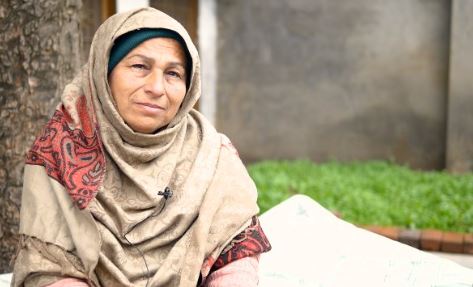
This realization unsettled me—not because my mother is incapable of brilliance, but because growing up, I had never been told this version of her story. I had known her only as the woman who wakes before Fajr, whose days are all about cooked meals, and unfinished chores. The woman whose phone rings endlessly with relatives asking, neighbors needing, children calling. The woman who seems to exist entirely for others.

Somewhere between marriage, motherhood, and survival, she stopped writing. And like countless women in Pakistan, she did so quietly—without announcement, without protest, without acknowledgment. In our society, women are not asked what they give up. They are praised for giving it up. A woman who lets go of her ambitions is called selfless. A woman who puts her dreams aside is called responsible. A woman who erases herself is called a good mother.

I was still reading her work when she entered the room. “koi Uniform dhony wala hai?” she asked casually, arms already full of clothes, dupatta slipping from her shoulder.

I looked up and saw her properly. Sweat lined her forehead. Loose strands of hair clung to her face. Her hands—rough from years of washing and scrubbing—were filled with laundry she was probably about to wash. There was exhaustion in her eyes, not dramatic or loud, just deeply settled.

“Nhi,” I said softly. “Dhuly huy hain” She nodded and walked away, already moving towards the next responsibility. I watched her walk away, the diary still open on my lap, and felt an ache settle deep in my chest. Time had been unkind to her—not cruel, just relentless. It had taken the sharpness of her words and replaced it with silence. It had traded ink for detergent, ideas for obligations. The woman who once waited to see her name in print now measured her day in loads of laundry. The writer whose words once reached strangers now rarely had time to sit with her own thoughts.

This is not just my mother’s story.

It is the story of countless Pakistani women whose ambitions were postponed indefinitely. Women who were curious, creative, capable—but learned that survival required silence. We often call motherhood sacred—and it is. But why does sanctity require self-erasure? Why do we accept a system where a woman’s sacrifices are romanticized, but her losses remain unnamed?

The diary in my hands was proof that my mother did not lack ambition. She lacked permission.

Permission to choose herself.
Permission to continue.
Permission to exist beyond responsibility.

As a society, we rarely ask mothers what they miss. We assume fulfillment replaces desire. We assume love compensates for loss. But does it?

That night, long after she had gone to sleep, I lay awake thinking—not about what she gave us, but about what she gave up. I wondered if she thinks about it when the house finally quiets down and everyone else is asleep.

Does she remember the girl she used to be? the girl who once saw a future filled with words, with possibility, with her name printed somewhere beyond these walls? The girl who believed her thoughts mattered? Does she think of the dreams she carried before life became only duty?

And in those quiet moments, when no one is asking anything of her, does she miss that girl?
Does remembering her still hurt—or has she learned to forget her so well that the absence no longer aches?

By Aneesa Mehmood

“I am a student based in Islamabad with an interest in writing about social issues, particularly women’s experiences and societal challenges.”

Email: [email protected]

Phone: 03135011002

Universities: Nurseries of Future State Leadership, Innovation, and National Power

Universities: Nurseries of Future State Leadership, Innovation, and National Power

Professor Dr Muhammad Jalal Arif

Universities are not merely centers of instruction; they are factories of ideas, nurseries of leadership, and engines of national destiny. They refine human intellect, shape moral character, and transform raw potential into productive national power. History confirms that nations do not rise by chance; they rise when universities produce leaders of vision, competence, and character.

At their best, universities are not degree-awarding factories but institutions that prepare future rulers of systems—state leaders, policymakers, scientists, entrepreneurs, and intellectuals who define governance, economy, and society.

University of Agriculture Faisalabad: Foundation of Food Security and Agri-Leadership

Among Pakistan’s higher education institutions, the University of Agriculture Faisalabad (UAF) stands as a historic pillar of national survival and economic stability. With a legacy of over 120 years, UAF has served as the intellectual backbone of Pakistan’s agriculture, food security, and agri-based industrial economy.

UAF graduates have established and led industries worth more than PKR 200 billion, particularly in pesticides, fertilizers, seeds, poultry, dairy, meat, milk, and halal food sectors. Pakistan’s poultry and allied industries alone now contribute USD 7–8 billion annually to the national economy—an achievement deeply rooted in UAF’s academic grooming, research excellence, and leadership training.

In recent years, UAF has emerged as a national leader in innovation and value creation. Its Office of Research, Innovation and Commercialization (ORIC) consistently ranks among the top in Pakistan, translating research into startups, patents, and industry-ready solutions. The National Incubation Center (NIC) at UAF has further strengthened this ecosystem by nurturing entrepreneurs and job creators from across the country.

At a time when climate change, food insecurity, and sustainability challenges threaten global stability, UAF leads in smart agriculture, precision farming, climate-resilient cropping systems, Integrated Pest Management (IPM), seed science, and sustainable food chains—positioning itself as a strategic national asset.

LUMS: Producing Globally Competitive Leadership

Following UAF, the Lahore University of Management Sciences (LUMS) stands as Pakistan’s premier private-sector institution producing globally competitive corporate, policy, and entrepreneurial leadership. Through its Business School and Syed Babar Ali School of Science and Engineering, LUMS has redefined excellence in business, economics, policy, and technology education.

LUMS graduates lead multinational corporations, establish startups, influence public policy, and represent Pakistan in global institutions—demonstrating that world-class leadership can be cultivated at home.

NUST: Strengthening the Nation through Technology

The National University of Sciences and Technology (NUST) symbolizes Pakistan’s strength in engineering, defense technology, artificial intelligence, cyber security, and applied sciences. Its graduates form the backbone of strategic industries and innovation ecosystems, reinforcing national resilience and technological sovereignty.

Quaid-e-Azam University: Intellectual Command of Policy and Research

Quaid-e-Azam University (QAU) remains Pakistan’s foremost research institution, producing scholars, scientists, diplomats, economists, and policy thinkers. Its alumni serve with distinction in civil services, diplomacy, international organizations, and academia, shaping Pakistan’s intellectual and policy landscape.

Punjab University: Cradle of Governance and National Thought

As Pakistan’s oldest university, the University of the Punjab has historically produced political leaders, judges, bureaucrats, educators, and intellectuals who laid the foundations of Pakistan’s governance, legal system, and national discourse. Its contribution to state-building remains profound and enduring.

GCU Lahore and GCU Faisalabad: Character, Culture, and Continuity

Government College University Lahore represents academic tradition, intellectual refinement, and character building. Its alumni have served with distinction in literature, science, civil services, and national life.

Government College University Faisalabad, a rapidly growing institution, has strengthened regional higher education by producing skilled graduates and researchers contributing to industry, education, and public service.

Universities as Schools of Statecraft

History offers a timeless lesson: leadership is cultivated through education. The most comprehensive model of leadership training is that of the Holy Prophet Muhammad (ﷺ). Through wisdom, training, and moral authority, he transformed individuals into state builders. Masjid-e-Nabvi functioned as a parliament, judiciary, treasury, military command, and educational institution—proving that states are built through knowledge, justice, consultation, and ethics.

Modern universities carry this responsibility today. They are think tanks of the nation, producing future administrators, policymakers, entrepreneurs, and innovators—individuals who govern systems rather than merely seek employment.

Conclusion: Universities as the State’s Strongest Investment

Universities that endure and lead are those that connect education with employability, research with innovation, and knowledge with national purpose. Pakistan’s future lies in strong, autonomous, innovation-driven universities.

From UAF’s agri-economic leadership to LUMS’ global corporate excellence, from NUST’s technological strength to QAU’s research depth, and from Punjab University’s historic legacy to GCU Lahore and GCU Faisalabad’s academic culture—Pakistan possesses the foundations of a powerful knowledge economy.

A nation that invests in its universities is, in reality, investing in its future leadership, governance, justice, economic stability, and global standing.

Pakistan faces diplomatic dilemma over Gaza governance boards

Pakistan faces diplomatic dilemma over Gaza governance boards

Without Palestinian representation at the highest levels, any international effort risks being seen as imposed rather than inclusive a perception that could undermine its effectiveness in the long run

Asnar Mahmood Bhatti

ISLAMABAD, JAN 19 /DNA/ – The unveiling of two senior boards tasked with shaping the future governance of Gaza has sparked intense debate across the region. While the initiative is being presented as a step toward stabilizing Gaza and attracting international investment, the composition of these boards has raised serious concerns—particularly in Pakistan, which has been invited to participate alongside Qatar, Türkiye, and the United Arab Emirates (UAE).

So far, no Palestinian names have been included on the two separate senior boards. The first, called the Founding Executive Board, is designed to focus on high-level investment, diplomacy, and strategic direction. The second, the Gaza Executive Board, is responsible for overseeing the on-the-ground work of the National Committee for the Administration of Gaza (NCAG).

The NCAG itself is composed of technocratic, apolitical Palestinians, led by Dr. Ali Shaath, a civil engineer by training who has previously held ministerial positions within the Palestinian Authority. While this committee is meant to provide local legitimacy, its limited scope and lack of political representation have raised eyebrows among observers.

Despite the existence of the Gaza Executive Board and NCAG, analysts note that the real power lies with the Founding Executive Board. Of its seven members, six are Americans, including US Secretary of State Marco Rubio, Trump’s son-in-law Jared Kushner, and Steve Witkoff, the US Special Envoy to the Middle East and a close friend of President Trump. The only non-American member is former UK Prime Minister Tony Blair, who has long been involved in Middle East diplomacy.

The absence of Palestinian representation on this powerful board has been described as a glaring omission, raising questions about the credibility of the governance structure. Critics argue that decisions about Gaza’s future are being made without the direct involvement of Palestinians themselves.

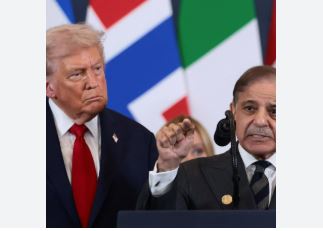
President Trump has extended invitations to Pakistan, Qatar, Türkiye, and the UAE to engage with the boards. However, Saudi Arabia’s name is conspicuously missing. For Pakistan, this presents a diplomatic dilemma.

Islamabad’s foreign policy interests are closely tied to Riyadh, both economically and strategically. Saudi Arabia has historically been a major source of financial support, energy cooperation, and political backing for Pakistan. Any move by Pakistan to participate in a US-led initiative without Saudi involvement risks straining this critical relationship.

Diplomatic sources suggest that Pakistan will need to tread carefully, consulting not only with Saudi Arabia but also with Türkiye and Qatar, who have their own stakes in Gaza’s future. The UAE’s inclusion adds another layer of complexity, given its evolving ties with Israel and the United States.

Beyond the diplomatic balancing act, the structure of the boards themselves has drawn criticism. The fact that six of the seven members of the Founding Executive Board are Americans, with no Palestinian representation, has fueled concerns about legitimacy.

Observers warn that decisions made by a board dominated by US officials and business figures may prioritize investment and geopolitical interests over the needs of ordinary Palestinians. The presence of Tony Blair, while adding international credibility, does little to address the absence of Palestinian voices at the highest level.

Pakistan’s decision will likely hinge on consultations with Saudi Arabia, Türkiye, and Qatar. While Islamabad may be tempted to accept the invitation as a way to enhance its diplomatic profile, it cannot afford to alienate Riyadh.

Foreign policy experts argue that Pakistan should push for greater Palestinian representation on the boards before committing to participation. Doing so would not only strengthen the legitimacy of the governance structure but also provide Islamabad with a principled justification for its involvement.

At the same time, Pakistan must weigh the potential benefits of engaging with the US-led initiative, including opportunities for investment and diplomatic influence. However, any such engagement will need to be carefully calibrated to avoid undermining its long-standing ties with Saudi Arabia.

The unveiling of the Gaza governance boards has opened a new chapter in Middle Eastern diplomacy, but one fraught with challenges. For Pakistan, the invitation to join comes with both opportunities and risks. The absence of Saudi Arabia from the initiative complicates Islamabad’s decision, forcing it to balance its strategic interests with its alliances.

Ultimately, Pakistan’s path forward will depend on careful consultation with regional partners and a clear-eyed assessment of the legitimacy of the governance structures being proposed. Without Palestinian representation at the highest levels, any international effort risks being seen as imposed rather than inclusive a perception that could undermine its effectiveness in the long run.

Junaid Safdar Marries Shanzeh Ali in Grand Lahore Wedding

Junaid Safdar Marries Shanzeh Ali in Grand Lahore Wedding

LAHORE, JAN 19: Junaid Safdar, the son of Punjab Chief Minister Maryam Nawaz, married Shanzeh Ali in a grand ceremony at the Sharif family’s Jati Umra residence in Lahore. The bride is the granddaughter of Rohail Asghar, a long-time ally of former Prime Minister Nawaz Sharif.

The wedding was attended by top political figures, including Prime Minister Shehbaz Sharif, PML-N President Nawaz Sharif, and key party members. The event highlighted the union of two influential political families.

FIA aims to cut wait times, boost service at airport

FIA aims to cut wait times, boost service at airport

ISLAMABAD, JAN 18 (APP/DNA): Director General Federal Investigation Agency (FIA) Riffat Mukhtar Raja visited Islamabad International Airport to review immigration operations and assess steps aimed at improving passenger facilitation.

An official told APP on Sunday that the DG FIA Riffat inspected immigration procedures and was informed that the airport handles 94 international flights daily, clearing more than 10,000 international passengers every day.

The official said that on January 13, immigration staff cleared 2,400 passengers within a single hour, reflecting heavy pressure during peak hours due to the simultaneous arrival of multiple international flights. Temporary congestion also occurs because of flight delays caused by weather conditions and technical issues.

According to the briefing, the FIA Immigration at the airport operates in three shifts, with 15 immigration counters for departures and 13 counters for arrivals currently functional to manage passenger flow.

During the visit, the DG Riffat directed officers to ensure the provision of the best possible immigration services. He ordered the installation of a queue management system, phased implementation of e-gates, and deployment of additional staff to guide passengers during busy hours.

He also directed that a pre-departure mobile application be introduced at the earliest to further speed up immigration clearance, particularly during peak travel periods.

The DG FIA  Riffat emphasized that improving efficiency, reducing waiting time, and enhancing passenger experience remain key priorities of Federal Investigation Agency Immigration.

Nasa’s mega Moon rocket arrives at launch pad for Artemis II mission

Nasa's mega Moon rocket arrives at launch pad for Artemis II mission
Baku, Jan 18: Nasa's mega rocket has been moved to the launch pad in Cape Canaveral, Florida, as the final preparations get underway for the first crewed mission to the Moon in more than 50 year, BBC reports.

Over almost 12 hours, the 98m-tall Space Launch System was carried vertically from the Vehicle Assembly Building on the 4-mile (6.5km) journey to the pad.

Now it is in position, the final tests, checks – and a dress rehearsal – will take place, before the go-ahead is given for the 10-day Artemis II mission that will see four astronauts travel around the Moon.

Nasa says the earliest the rocket can blast off is 6 February, but there are also more launch windows later that month, as well as in March and April.

The rocket began moving at 07:04 local time (12:04 GMT) and arrived at Launch Pad 39B at the Kennedy Space Center at 18:41 local time (23:42 GMT).

The rocket was carried by a huge machine called a crawler-transporter, travelling at a top speed of 0.82 mph (1.3 km/h) as it trundled along. Live coverage captured the slow-moving spectacle.

Nasa said the rocket will be prepared over the next few days for what it calls a “wet dress rehearsal” – a test for fuel operations and countdown procedures.

The Artemis II crew – Nasa’s Reid Wiseman, Victor Glover and Christina Koch and Canadian astronaut Jeremy Hansen – were at the Kennedy Space Center watching the rocket as it was moved.

In just a few weeks, the four astronauts will be strapped into a spacecraft, perched on the top of the rocket, ready to blast off to the Moon.

It will be the first crewed mission to the Moon since Apollo 17 landed on its surface in December 1972.

List-A exams held at Police Dept

List-A exams held at Police Dept

BAHAWALPUR, JAN 18 (APP/DNA): A List-A examination and walk-in interview were held at Police Lines for the promotion of police officials.

The District Police Officer (DPO) Bahawalpur, along with committee members including SP Investigation, DSP Headquarters and DSP Legal, conducted interviews of the candidates who had successfully passed the written test.

It is worth mentioning that a total of 243 constables and lady constables appeared in the written examination held the previous day. Of these, 19 constables who passed the paper underwent turnout inspection,participated in a parade, and were subsequently interviewed. All participants displayed high motivation and appeared well prepared for promotion.

The List A-1 examination focused particular importance as it represents the first step toward continuous promotion within the department. After the finalization of the list of police personnel who qualify on merit in the interviews, it will be displayed soon, the police officials concluded.

Europe won’t be blackmailed’

Europe won’t be blackmailed’

COPENHAGEN, JAN 18: /DNA/ – Europe will not be blackmailed, declared Danish Prime Minister Mette Frederiksen, as she responded to U.S. President Donald Trump’s threat of imposing 10% tariffs on eight NATO members over Greenland.

The move has sparked sharp criticism across Europe, with leaders of Denmark, Finland, France, Germany, the Netherlands, Norway, Sweden, and the United Kingdom warning that such measures risk triggering a “dangerous downward spiral” in transatlantic relations.

In a joint statement, the eight nations reaffirmed their commitment to the principles of sovereignty and territorial integrity for Greenland, rejecting any attempt to use trade penalties as leverage.

The controversy has also ignited public anger, with thousands of protesters taking to the streets in Greenland and Denmark, voicing opposition to Trump’s plan and demanding respect for democratic values.

Six dead, 60 missing in Gul Plaza fire; Sindh CM promises compensation

Six dead, 60 missing in Gul Plaza fire; Sindh CM promises compensation

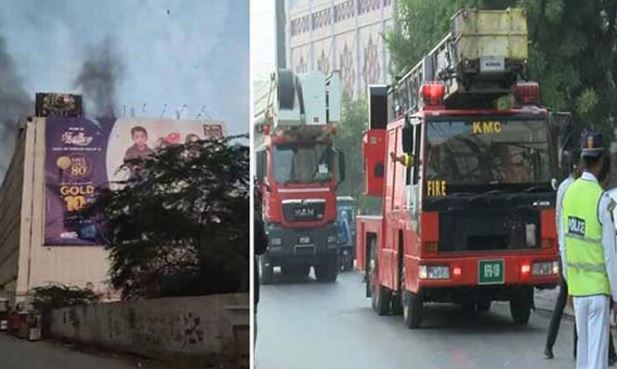
KARACHI, JAN 18: At least six people have died and around 60 remain missing after a massive fire erupted at Karachi’s Gul Plaza, with firefighters battling the blaze for over 20 hours.

Sindh Chief Minister Murad Ali Shah visited the shopping mall on Sunday evening to review rescue and firefighting operations.

Speaking on the occasion, the chief minister expressed sorrow over the loss of precious lives and the economic impact of the incident. He said that around 58 to 60 people were still missing, adding that efforts were underway to rescue them.

The chief minister vowed that the government would compensate the affected people in a transparent manner.

The fire, at the shopping mall, which houses around 1,200 shops, reportedly broke out at a flower shop  on Saturday and had yet to be extinguished more than 18 hours later.

Firefighters stated that the lack of ventilation and the closure of windows at the mall — which spans over 1.75 acres, roughly the size of a football field — has led to smoke filling the interior of the building, hindering rescue efforts.

Pakistan Navy, Rescue 1122, and Karachi Metropolitan Corporation machinery are battling the blaze, which erupted on the ground floor and spread to the third floor. Geo News reporters at the site said they heard parts of the building collapsing, raising fears that the entire structure could give way.

Officials said the third-degree fire has severely gutted the building, compromising its structure and preventing rescue personnel from entering.

A firefighter named Furqan, belonging to the Nazimabad Fire Office, was recovered from the rubble and brought to the Civil Hospital Trauma Centre.

As per the report presented to Sindh CM Shah by South District DC and Karachi commissioner, the fire broke out between 9:45pm to 10:15pm.

With more than 1,200 shops burnt, 60% to 70% of the blaze has been brought under control owing to the firefighting operation.

‘Four victims identified’

So far, six fatalities have been reported along with 22 wounded, all of whom were shifted to the Civil Hospital’s Burns Ward.

Rescue officials said the deceased included Kashif, Faraz, Muhammad Aamir, Furqan and two unidentified individuals

The injured included Haseeb, Waseem, Daniyal, Sadiq, Hamza, Rahim, Fahad, Jawad, Ayan, Abdullah, Usman, Zain and Nadir were among the wounded.

They added that the identities of four injured persons could not yet be ascertained, and efforts were underway to gather their details.

A total of 22 fire brigade vehicles, along with 10 water bowsers, four snorkels and 33 ambulances, took part in the rescue operation.

Reporters at the site said firefighters were continuously dousing the blaze — which erupted in an artificial flower shop on the ground floor — using snorkels, but it had yet to cool down.

Confirming the death toll while speaking to the media, Sindh Labour and Social Protection Minister Saeed Ghani said that there’s still a possibility that many people are inside the building.

“All efforts were made to control the fire in time, and many people were evacuated,” Ghani said as he urged the citizens to cooperate with the authorities.

The minister, while stressing the provision of fire extinguishing equipment in buildings, called for ensuring emergency exit routes.

‘Parts of building collapsed’

The chief fire officer has submitted a detailed report on the devastating fire, as rescue operations continue following the blaze that gutted the multi-storey market.

A KMC spokesperson said that information about the fire was received at 10:26pm and fire tenders reached the site within minutes, adding that the intensity required additional manpower.

According to officials, fire engines from 16 stations have been deployed, while the water board provided tankers and staff to support the operation.

The spokesperson said that several people were rescued safely during the operation; however, one firefighter, Furqan, lost his life while battling the flames.

Pakistan Navy firefighters also assisted civil authorities, deploying seven fire tenders, a fire bowser and a snorkel, with 80 personnel engaged alongside city services.

Rescue 1122 Chief Operating Officer Abid Jalal told Geo News that more than 150 firefighters were working at the site, saying around 75% of the fire had been controlled.

“The building is extremely dangerous. Parts of it have already collapsed, making internal rescue operations highly risky,” he added.

The rear portion of the building had already collapsed and now the front part has also come down, he said. “For the safety of our staff, a search operation will be conducted only after the fire is completely brought under control.”

In a briefing to senior officials, Chief Fire Officer Muhammad Humayun said the more than 1,500 shops in the building caught fire simultaneously.

There was no initial firefighting system or emergency access routes, he said, adding that the cause of the fire remained undetermined, though a short circuit or double phasing could not be ruled out.

Humayun described the incident as unprecedented in his 37-year career, noting that public crowding, rather than water availability, posed the biggest challenge during firefighting efforts.

Deputy Inspector General (DIG) South Asad Raza said police had received reports of 38 missing individuals and information was being compiled to help trace them.

He confirmed that 22 injured people were currently under treatment at Civil Hospital Karachi.

Additional police personnel have been deployed around the shopping mall to maintain order and keep access routes clear for rescue teams, the DIG said.

DIG Raza noted that the cause of the fire would be determined after cooling and a formal investigation.

Helpline established

The government has established helpline to facilitate the public in light of the Gul Plaza blaze via collaboration between South Zone Police and the District South Deputy Commissioner Javed Nabi Khoso.

Information on Gul Plaza tragedy or missing persons should be reported to DC South, said Khoso.

The information can be given by reaching out at the cellphone numbers including 03135048048; 02199206372; and 02199205625.

Meanwhile, the citizens can seek information via helpline numbers 02199205670; 02199201196; and 02199205691.

The DC also said that 16 people were missing so far, and their families had contacted the authorities.

The shopping mall building has become dilapidated due to the blaze’s intensity. The ground and mezzanine floors have been completely burned, whereas the upper two floors are also on fire. The complex houses shops selling a wide range of items, including clothes, crockery, perfume, makeup, electronics and toys.

Speaking to Geo News, District South DC Khoso said that the fire has erupted again in the back of the first floor of the building.

“There are fears that people are on the first and mezzanine floors,” said the DC, adding that the rescue teams have not been able to reach these floors.

Noting that there is no way to exit in case of an emergency, the DC said that investigation is underway to find out why an emergency exit was not made in the building.

“We will check the map and other things with the relevant institutions.”

“It was directed to ensure fire extinguishers [in building], but they were not present in the building,” the official added.

Additionally, Karachi Deputy Mayor Salman Abdullah Murad, who was speaking to the media during a visit of the incident site, another portion of the shopping centre collapsed — reflecting the dire condition of the structure owing to the hours-long inferno

People still trapped

Meanwhile, Sindh Emergency Service Rescue 1122 Chief Operating Officer Dr Abid Jalaluddin Shaikh said that 20 fire tenders and four snorkels are taking part in firefighting operations from three sides of Gul Plaza.

Noting that all available technical equipment is being used to extinguish the fire as quickly as possible, the rescue official added that materials stored inside the plaza are making it difficult for rescue teams to control the blaze.

Fire brigade officials feared that several people were still trapped inside the mall.

“We cannot say at this stage how many people are still trapped inside the building,” the official added.

Shaikh added that a portion of the building’s rear side has collapsed, increasing the risk for both trapped individuals and rescue workers.

The presence of air conditioning shops in the building is creating additional challenges for firefighters, he said.

The blaze quickly spread inside the old building because of certain flammable material stored there, he said, confirming that due to the intense heat, a pillar of the building collapsed, raising fears that more parts of the structure could cave in.

Separately, revealing details of evacuation, Deputy Inspector General (DIG) South Asad Raza has said 25 people have been evacuated from the building so far.

Recurring blaze

Earlier, authorities had said that hours of firefighting efforts had stopped the blaze from spreading further, but it had nevertheless reached the third floor before being contained.

Soon after the fire brigade said the fire had been contained, conflagration again erupted with long flames coming out from the first floor.

Video footage showed flames engulfing several shops as firefighters worked to extinguish them.

The chief fire officer said that people trapped inside the shopping mall were evacuated with the help of snorkels.

The firefighting operation was temporarily paused in the early hours of Sunday before being resumed 15 minutes later.

A powerful explosion took place inside the premises after which the blaze further broke out, according to the chief fire officer, adding that the explosion was caused by gas leakage.

Sindh Rangers personnel, as per the spokesperson, are also taking part in rescue efforts alongside other emergency services.

The cause of the blaze is yet to be ascertained.

CM orders probe

Reacting to the incident, Prime Minister Shehbaz Sharif expressed grief and said that possible steps should be taken to protect people’s lives.

All possible assistance should be provided to affected traders and other people, the PM directed while ordering relevant agencies to work together in the rescue operation.

The PM also hailed martyred firefighter Furqan, saying that he sacrificed his life while saving the lives of the people.

President Asif Ali Zardari also expressed sorrow over the incident and conveyed condolences on the loss of precious lives.

No effort should be left unturned in providing the best medical facilities to the injured, the president said in a statement.

Meanwhile, Sindh Chief Minister Murad Ali Shah has taken notice of the incident, directing Karachi Commissioner Hassan Naqvi to immediately inquire into the incident, find out the reasons behind the fire and submit a report.

Issuing directives for fire safety arrangements in the building to be checked, CM Shah ordered a strict implementation of fire safety laws.

“Fire safety audit should be conducted immediately in commercial buildings of Karachi,” the provincial chief executive stressed.

Talking to Geo News on Sunday, Sindh government spokesperson Sadia Javed said that dousing the blaze is the authorities’ top priority.

“Firefighters are having difficulty entering the building due to the intense heat,” she added.

“The fire spread very quickly, due to which it could not be controlled. There is no emergency exit arrangement in old buildings, the spokesperson noted.

Pakistan Peoples Party Chairman Bilawal Bhutto Zardari also expressed grief over the loss of life and property damage in the conflagration.

The PPP chief offered his condolences to the families of those who died in the blaze.

Sindh Interior Minister Ziaul Hassan Lanjar has called for alternative traffic routes to be established to ensure safe passage for residents.

He has also directed the SSP City to investigate the cause of the fire and instructed officials to prevent the flames from spreading further.

The minister underscored the need to keep access routes clear for fire brigade vehicles and emergency personnel.

Hours after the fire broke out, Karachi Mayor Murtaza Wahab expressed his sorrow over the loss of life in the tragedy.

“We stand with the families of those who died during this difficult time,” Wahab said.

‘Fire fitness certificate’

Shedding light on the lack of safety measures and emergency exits, former chief fire officer Kazim Ali told Geo News that the people and authorities issuing “fire fitness certificates” must be held accountable.

He said that a fire fitness certificate does not translate into fire safety, and that traders and business owners need to take preventive measures themselves.

Urging the installation of sprinkler systems as a key fire-prevention feature, the expert said that fire extinguishers have a limited range, and that smoke in a fire acts as fuel, further spreading it.

The items being sold in Gul Plaza were mostly plastic (petroleum-based products), whose smoke, when burned, produces hydrogen cyanide — which, according to the US Centres for Disease Control and Prevention (CDC), interferes with the normal use of oxygen by nearly every organ of the body and can be rapidly fatal upon exposure.

Traders’ decry govt negligence

The Sindh chapter of the All Pakistan Traders Association expressed deep sorrow over the loss of precious lives in the Gul Plaza tragedy, calling it a devastating blow that has left several families shattered.

In a video statement, All Pakistan Traders Association-Sindh President Javed Qureshi said the incident was not an accident but the result of government negligence and the failure of an inadequate fire safety system. He added that despite the passage of several hours, more than 100 traders remained trapped inside Gul Plaza.

The trade body leader said delays by the fire brigade and a shortage of water significantly increased the loss of life. He stressed that those who lost their lives were not mere statistics but breadwinners and sources of support for their families. The association also lamented that years of hard work worth billions of rupees were reduced to ashes within moments.

Qureshi further criticised the absence of Sindh CM Shah at the site despite the scale of the human tragedy, saying it reflected official indifference. He also questioned the non-appearance of Karachi Mayor Wahab, calling it another sign of the government’s lack of seriousness.

He demanded immediate justice and relief for the affected families and traders, reaffirming that the organisation stands firmly with every family impacted by the Gul Plaza fire.

Earlier, while expressing concerns over the rescue efforts with Gul Plaza Traders’ Association President Tanveer Pasta telling Geo News that nearly 80 to 100 people are believed to be trapped inside the building after the deadly fire.

All customers exited the building, but staff and shopkeepers were still thought to be inside, said Pasta, adding that the building houses 1,200 shops and the fire has caused losses worth billions of rupees.

He criticised the response from senior government officials, saying neither the chief minister nor the mayor of Karachi contacted the traders. “Only Governor Sindh has come so far, no one else,” he said.

He claimed that no rescue personnel had yet entered the building, and that the fire continues to burn on three sides of the structure.

The fire reportedly started in a shop selling artificial flowers located on the ground floor, he added.


Stay Connected

64FansLike
60FollowersFollow

Latest Reviews

Exchange Rates

USD - United States Dollar
EUR
1.14
GBP
1.34
AUD
0.70
CAD
0.71