Home Blog Page 292

Info Minister calls on Chairman Senate

Info Minister calls on Chairman Senate

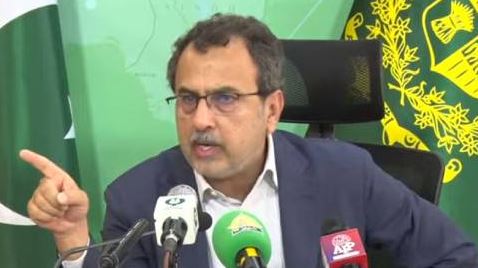
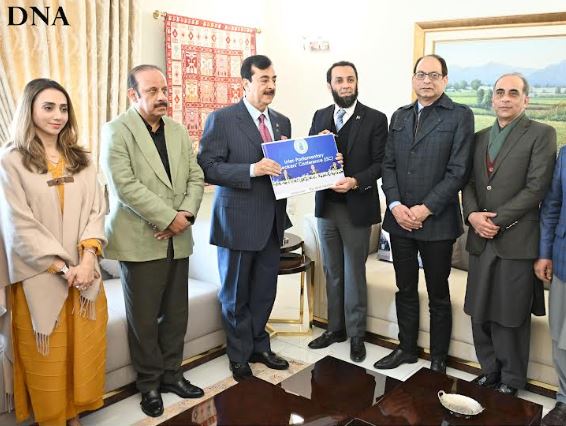
ISLAMABAD, JAN 19 /DNA/ – Chairman Senate of Pakistan, Syed Yousuf Raza Gilani, met Federal Minister for Information and Broadcasting, Attaullah Tarar, who called on him along with his delegation at the Chairman Senate’s official residence. Secretary Information Ashfaq Ahmed Khalil and Principal Information Officer (PIO) Mubashir Hasan were also present during the meeting.

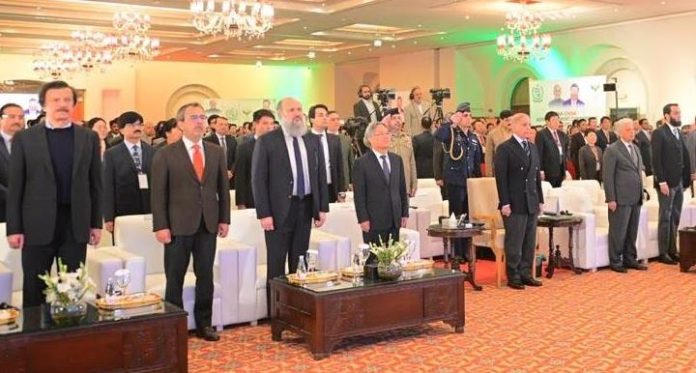
During the meeting, the Federal Minister for Information presented a digital album of the Inter-Parliamentary Speakers’ Conference (ISC), recently held in Islamabad, to the Chairman Senate. The digital album documents key moments of the conference, including the participation of distinguished speakers and parliamentarians from around the world, various sessions, and related activities.

Chairman Senate Syed Yousuf Raza Gilani appreciated the excellent media coverage and effective publicity of the conference and thanked the Federal Minister for Information and his entire team for their professional efforts. He remarked that the positive impacts of the conference are now clearly visible and that Pakistan’s image at the global level has been further strengthened.

The Chairman Senate noted that the central theme of the Inter-Parliamentary Speakers’ Conference was peace, security, and development, under which the Islamabad Declaration was unanimously adopted. He stated that the declaration reaffirmed the collective commitment to promoting global peace, sustainable development, and the establishment of a just and stable international order in line with the principles of the United Nations.

While commending the support and professionalism of the Ministry of Information, Syed Yousuf Raza Gilani said that the Senate of Pakistan hosted this important global conference, which was led by the Chairman Senate himself. He described the conference as a milestone in the promotion of parliamentary diplomacy.

He further stated that the participation of distinguished speakers and parliamentarians from across the world made the conference a historic and decisive development, fostering dialogue, cooperation, and mutual trust among nations.

Speaking on the occasion, Federal Minister for Information Attaullah Tarar said that the successful organization of the Speakers’ Conference highlighted Pakistan’s positive image internationally. He added that under the leadership of the Chairman Senate, parliamentary diplomacy brought together various countries on a single platform, marking a major success for Pakistan’s foreign and parliamentary strategy.
27 universities chosen to roll out AI-Sana program — Sayasat Nurbek

27 universities chosen to roll out AI-Sana program — Sayasat Nurbek

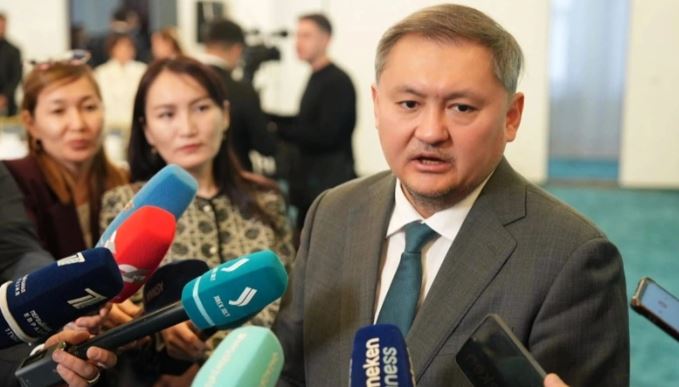
KAZAKSTAN, Jan 19 (DNA): The AI-Sana program, integrating education, research, and practical application, will continue this year, Qazinform News Agency quotes Sayasat Nurbek, Minister of Science and Higher Education of the Republic of Kazakhstan, as saying at a meeting of the education and science section held as part of the V Ulttyq Qurultay (National Assembly).

The program’s continuation will help universities transition from a conventional teaching format to a research-oriented approach and will support the professional development of startups through a phased process, from basic education to market expansion.

“We have been implementing the AI-Sana program since last year, and to date, 668,000 students have completed training. Under the program, all students in the country will be required to take artificial intelligence courses, which are among the strongest available. Through partnerships with companies such as Coursera, Huawei, Microsoft, and Google, we are translating their courses into Kazakh and Russian and delivering them to students. This February, the second phase of the program will begin, during which 100,000 students will study advanced artificial intelligence algorithms,” the minister said.

Universities will be able to deliver training using their own courses and award certificates of an approved standard upon completion.

“To support further rollout of the program, 27 anchor universities have been selected and approved across the country’s regions. The institutions were chosen based on criteria such as the availability of the necessary infrastructure to implement the program, including AI-related training programs, international partnerships, and sufficient computing capacity. These universities will be responsible for delivering AI-Sana training to students and faculty, as well as for implementing the project in their respective regions and neighboring areas,” Sayasat Nurbek added.

The AI-Sana program is designed to foster a supportive ecosystem for the development of artificial intelligence in Kazakhstan. Within this framework, universities have prepared nine AI agents that make up an integrated information ecosystem, offering support from admissions to the successful completion of the educational process.

Earlier, Qazinform News Agency reported that Kazakhstan’s Vice Minister of Science and Higher Education Talgat Yeshenkulov has explained which universities in the country currently host supercomputers and who can access them.

Pak, KSA discuss regional issues

Pak, KSA discuss regional issues

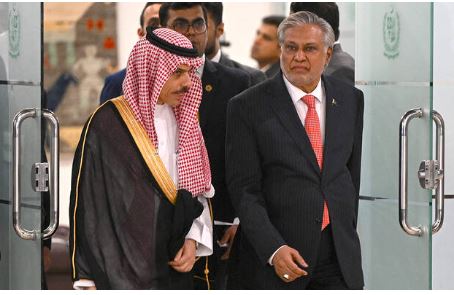
ISLAMABAD, JAN 19 /DNA/ – Deputy Prime Minister and Foreign Minister of Pakistan, Senator Mohammad Ishaq Dar held a telephonic conversation with the Foreign Minister of Saudi Arabia, Prince Faisal bin Farhan .

During the discussion, both leaders reviewed regional developments and explored avenues for deeper bilateral cooperation between Pakistan and Saudi Arabia. The exchange underscored the enduring partnership between the two brotherly nations and their shared commitment to advancing peace, stability, and prosperity in the region.

The two foreign ministers also agreed to continue their dialogue on the sidelines of the upcoming World Economic Forum in Davos, Switzerland, where they are expected to further deliberate on strengthening collaboration across political, economic, and strategic domains.

This engagement reflects the strong and historic ties between Pakistan and Saudi Arabia, rooted in mutual trust, shared values, and a common vision for regional progress.

French Embassy expresses condolences over Karachi fire tragedy

French Embassy expresses condolences over Karachi fire tragedy

DNA

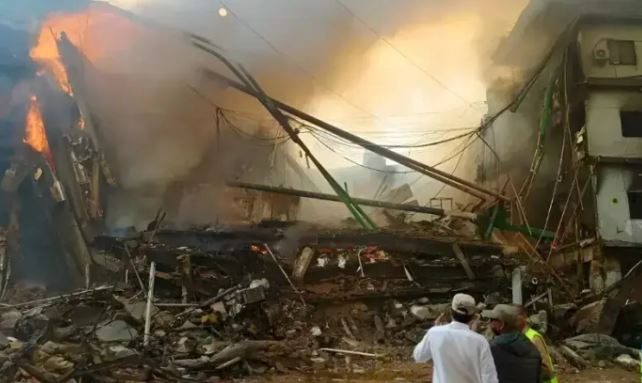
ISLAMABAD, JAN 19: The French Embassy in Pakistan has expressed deep sorrow over the tragic fire incident at Gul Plaza, Karachi, which claimed nearly 16 lives and left more than 100 people affected.

In a statement, the embassy conveyed heartfelt condolences to the bereaved families and reaffirmed solidarity with the people of Pakistan during this difficult time.

The devastating blaze not only caused a heavy human toll but also inflicted severe economic damage. Traders operating in Gul Plaza reported losses amounting to billions of rupees, as shops and warehouses were reduced to ashes.

Authorities are continuing investigations into the cause of the fire, while rescue and relief operations remain underway.

Pakistan, WB, IsDB pledge deeper cooperation for power sector reforms

Pakistan, WB, IsDB pledge deeper cooperation for power sector reforms

Mehtab Pirzada

ISLAMABAD, JAN 19 /DNA/ – Federal Minister for Power Sardar Awais Ahmed Khan Leghari on Monday held meetings with senior delegations of the World Bank and the Islamic Development Bank (IsDB) to discuss strategies for strengthening Pakistan’s energy sector with a focus on sustainability and efficiency.

A World Bank delegation led by Ousmane Dione, Vice President for the Middle East, North Africa, Afghanistan and Pakistan Region, called on the minister, while Dr. Rami Ahmad, Vice President (Operations) of the Islamic Development Bank, also met him to explore avenues for enhanced cooperation in energy development initiatives, said a press release.

Welcoming the World Bank delegation, the minister expressed gratitude for its historical support in development projects. He referenced his recent visit to the World Bank’s headquarters, which highlighted the ongoing need for robust partnerships to address energy challenges effectively.

During the discussions, the World Bank team emphasized the value of reliable and affordable energy systems. Dr. Rami Ahmad from the Islamic Development Bank outlined opportunities for joint initiatives in promoting sustainable energy practices.

The Minister reaffirmed his dedication to reinforcing the power sector through targeted reforms. He outlined current initiatives that span generation, transmission, and distribution. These include the integrated development of expansion plans for generation and transmission. The government has excluded costly power plants from IGCEP of approximately 8,000 MW in capacity which translates savings of around USD 17 billion from future expenses to be borne by the consumers.

Further enhancements involve resolving inefficiencies in distribution companies, which have resulted in improvements worth Rs197 billion. Circular debt has been reduced by Rs 780 billion, and imported coal plants are being converted to use local Thar coal. Transmission bottlenecks are also being addressed, alongside a comprehensive review to achieve full implementation of automated metering.

To stimulate demand and rationalize tariffs, the minister highlighted incentive packages for industrial and agricultural consumers, which aim to boost usage. Captive power facilities are transitioning to the national grid to improve overall efficiency. Tariff incentives for EVs are designed to encourage the adoption of electric vehicles, supporting environmental goals and reducing reliance on fossil fuels. Net metering regulations are being refined for better equity.

In terms of market and governance reforms, the wholesale electricity market is being liberalized to foster competition. Energy planning is gaining a more institutionalized structure, with a five-year national electricity plan now in effect. Key institutions, such as the national grid company, system operator, and private power board, are undergoing restructuring for enhanced performance. PPMC, a technical unit within the Ministry, provides analytical support and monitors reform progress, while IT tools are being deployed to facilitate consumer services and strengthen oversight.

The minister concluded by stressing the transition to clean energy sources, which will underpin long-term energy security and drive economic prosperity.

Ousmane Dione and Dr. Rami Ahmad appreciated the Government of Pakistan’s efforts to reform the power sector and acknowledged the strong commitment shown by the ministry of energy. They commended the practical and timely reforms being implemented to improve efficiency, financial sustainability, and service delivery across the power sector. Noting the visible progress achieved so far, they expressed confidence that these measures would strengthen Pakistan’s energy system, enhance investor confidence, and support long-term economic growth. They also reaffirmed their continued support and cooperation with Pakistan in advancing a sustainable and reliable energy sector.

Pakistan can achieve fast-track transformation in agriculture through Chinese partnership: PM

Pakistan can achieve fast-track transformation in agriculture through Chinese partnership: PM

ISLAMABAD, JAN 19 /DNA/ – Prime Minister Shehbaz Sharif on Monday said that Pakistan, essentially an agrarian economy, held immense and largely untapped potential in agriculture and can transform its agri-sector not in years, but in months by adopting modern technologies, improving productivity and strengthening cooperation with China.

Addressing the Pakistan–China Agri Investment Conference here, the prime minister noted that nearly 65% of Pakistan’s population still lives and works in rural areas, with agriculture remaining the backbone of the national economy. He stressed the need to enhance per-acre yield through modern techniques, efficient water management and optimal use of limited land resources.

The prime minister said sustainable growth in agriculture required coordinated efforts by the federal and provincial governments, the farming community, and scientists and researchers. He underlined the importance of deciding what to grow and export, developing value chains, cold storage, warehousing and value addition to make Pakistani agricultural produce globally competitive.

He described Beijing as a friend who had stood by Pakistan through thick and thin and said China had never hesitated in sharing expertise and advanced technologies.

He said the dispatch of 1,000 Pakistani graduates, selected on merit, to leading Chinese agricultural universities and research centres was a landmark initiative of the federal government. He said the trained graduates had returned and would now help farmers improve quality, productivity and value addition.

Welcoming remarks by Chinese Ambassador Jiang Zaidong, the prime minister praised China’s achievements in agriculture, IT and AI, efficiency in manufacturing, and export competitiveness. He said Pakistan must aim to generate a trade surplus in agriculture through higher yields, competitive costs and superior quality, with Chinese experts providing support.

Referring to improving economic indicators, he said inflation had fallen to 4.5 per cent, the policy rate to 10.5 per cent, and exports were rising, adding that Pakistan must now shift decisively towards growth.

The prime minister also reiterated hope that President Xi Jinping will visit Pakistan soon and said that China Pakistan Economic Corridor (CPEC 2.0) would be a new chapter, focusing on agriculture, IT, AI, mines and minerals, and youth development.

Chinese Ambassador Jiang Zaidong on the occasion said China wanted to increase the bilateral agriculture trade volume up to $1 billion with Pakistan achieving trade surplus. He said, he was delighted to see that under the leadership of Prime Minister Shehbaz Sharif, Pakistan’s economy grew by over 3 per cent last year and recorded a growth rate of 3.7 per cent in the first quarter of the current year.

He noted that many key economic indicators were showing improvement, with inflation easing to around 4 per cent.

He said China was deepening coordination under bilateral action plans and was ready to continue cooperation with Pakistan, particularly prioritising technology-driven agricultural development. He added that China aimed to stabilise bilateral trade at around one billion dollars while maintaining Pakistan’s trade surplus with China.

Minister for National Food Security and Research Rana Tanveer Hussain said that Pakistan remained fully committed to strengthening its strategic economic partnership with China by providing a conducive and investor-friendly environment, particularly in the agriculture and food security sectors.

He said the Ministry of National Food Security and Research stood fully committed to supporting Chinese investors, from facilitating regulatory processes to ensuring seamless coordination with all relevant government bodies.

He added that the government’s goal was to make Pakistan not merely a destination for investment but a place where Chinese enterprises could grow, innovate and succeed alongside Pakistani partners.

Putin invited to Trump’s ‘Board of Peace’: Kremlin

Putin invited to Trump's 'Board of Peace': Kremlin

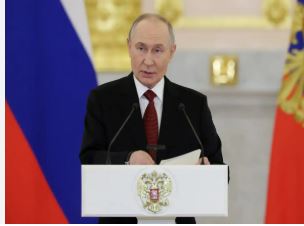
MOSCOW, JAN 19 /DNA/ – Russian President Vladimir Putin has been invited to join US President Donald Trump’s “Board of Peace” aimed at resolving conflicts globally and  oversee governance and reconstruction in Gaza, the Kremlin said Monday.

Moscow for years tried to balance relations with all major players in the Middle East — including Israel and the Palestinians.

But since the Israel-Hamas war and Russia’s assault on Ukraine, Putin has moved away from Israel, boosting ties with its foes like Iran.

Moscow has also sought closer relationships with the Gulf states amid growing Western isolation.

“President Putin also received an invitation to join this Board of Peace,” spokesman Dmitry Peskov told journalists, including AFP.

Russia was seeking to “clarify all the nuances” of the offer with Washington, he said, without adding if the Kremlin chief as inclined to join.

The White House has reached out to various figures around the world to sit on the so-called “Board of Peace”, chaired by the US president himself.

Putin has previously praised Trump’s efforts to resolve conflicts.

                  “He’s really doing a lot to resolve these complex crises, which have lasted for years, even decades,” Putin said last October.

                  Referring to the situation in the Middle East, Putin said: “If we succeed in achieving everything Donald has strived for… it will be a historic event.”

                  The assault on Ukraine and the war in Gaza have strained Moscow’s traditionally good relations with Israel, home to a large Russian-born community.

                  The Kremlin has repeatedly criticised Israel’s response to the October 7 attacks and called for restraint.

                  “The Gaza Strip is experiencing a humanitarian catastrophe in the full sense of the word,” Putin was quoted as saying by the news agency RIA Novosti, at a meeting with Palestinian leader Mahmud Abbas last May.

                  “Russia, as a friend of the Palestinian people, is trying to provide regular assistance,” the Russian president added.

IMF lifts 2026 global growth forecast but flags AI, trade risks

IMF’s $3 bln package encouraging but have to implement tax reforms in true spirit: Dr Aftab

WASHINGTON, JAN 19: The IMF upgraded its 2026 global growth forecast Monday, citing a boost from tech investments but warning that a reevaluation of AI productivity gains or renewed trade tensions could bring disruptions.

World economic growth is projected to hold steady at 3.3 percent this year, the International Monetary Fund said, raising its forecast by 0.2 percentage points from October. This would be the same pace of growth as in 2025.

But the Washington-based lender cautioned in its World Economic Outlook update that “the resilience exhibited so far is driven largely by a few sectors,” signaling vulnerability.

While the global economy appears to be “shaking off the trade and tariff disruptions of 2025,” this does not mean they had no impact, said IMF chief economist Pierre-Olivier Gourinchas.

Instead, the challenges were offset by “tailwinds from the AI and tech investment boom,” he told reporters.

This was especially true in North America and Asia, the IMF said.

The private sector also showed adaptability in dealing with trade shocks, while fiscal and monetary support provided boosts.

Since returning to the White House last January, US President Donald Trump unleashed sweeping tariffs that hit allies and competitors alike, roiling financial markets and supply chains while causing trade tensions to rocket.

But temperatures have cooled over the year as the Trump administration struck tariff deals with several partners and crucially reached a temporary truce with the world’s second-biggest economy, China.

For now, global inflation is expected to drop from an estimated 4.1 percent in 2025 to 3.8 percent in 2026.

A Gathering under the Eurasian Sky

A Gathering under the Eurasian Sky

Dr, Muahammad Akram Zaheer

The latest summit of the Eurasian Economic Union (EAEU) brought together the leaders of its five member states Russia, Belarus, Kazakhstan, Kyrgyzstan, and Armenia at a moment when regional economic groupings are seeking greater clarity of purpose amid shifting global conditions. President Vladimir Putin of Russia, President Alexander Lukashenko of Belarus, President Kassym-Jomart Tokayev of Kazakhstan, President Sadyr Japarov of Kyrgyzstan, and Armenian Prime Minister Nikol Pashinyan, who represents Yerevan in line with Armenia’s constitutional framework, convened to review the bloc’s progress and set priorities for the coming years.

Formed in 2015, the EAEU was conceived as a platform for economic integration among post-Soviet states, with the aim of facilitating the free movement of goods, services, capital, and labor. A decade later, the organization presides over a combined gross domestic product exceeding $2.5 trillion, a figure that underscores its potential economic weight. Yet the summit demonstrated that the Union’s ambitions are no longer confined to internal coordination alone. Instead, the discussions reflected a broader effort to position the EAEU as a meaningful actor in an increasingly fragmented global economy. At the heart of the agenda was a detailed review of current EAEU activities, particularly the pace and depth of economic integration. Leaders focused on practical matters, including trade facilitation, industrial cooperation, and regulatory harmonization. These issues, often technical in nature, are central to the creation of a genuinely unified single market. Persistent barriers ranging from non-tariff restrictions to uneven implementation of agreed standards continue to limit the full realization of the Union’s objectives. The emphasis placed on these challenges suggested a recognition that political declarations must be matched by sustained administrative and institutional effort.

One of the most anticipated outcomes of the summit was the expected signing of a free trade agreement between the EAEU and Indonesia. Negotiations for this agreement were concluded earlier in 2025, and its finalization marks a significant step in the Union’s outward economic engagement. Indonesia, as Southeast Asia’s largest economy, offers access to a dynamic market and strengthens the EAEU’s links with the Asia-Pacific region. The agreement also signals the Union’s intention to diversify its economic partnerships beyond its immediate neighborhood, reducing reliance on a limited set of trading partners. In his remarks, President Putin described the EAEU as a “self-sufficient center of the emerging multipolar world.” This characterization reflects a broader narrative increasingly evident in Moscow’s foreign and economic policy discourse. By framing the Union as both economically resilient and strategically autonomous, Russia seeks to underscore the relevance of regional groupings in a world where global governance structures are under strain. While such language carries a clear political message, it also highlights a practical concern shared by other members: the need to shield their economies from external shocks and geopolitical turbulence.

The summit was not solely about multilateral frameworks. On the margins of the meeting, bilateral discussions played a prominent role. Talks between Presidents Putin and Lukashenko focused on defense coordination and economic cooperation, reinforcing the close alignment between Moscow and Minsk. These exchanges illustrated how the EAEU functions alongside, rather than in place of, bilateral relationships that continue to shape the regional political and security landscape. For smaller member states, this dual structure presents both opportunities and challenges, as they seek to balance collective commitments with national interests. The adoption of several documents during the summit further demonstrated the Union’s incremental approach to integration. While such documents rarely attract public attention, they form the backbone of policy coordination within the EAEU. Their implementation will determine whether the Union can translate its strategic vision into tangible benefits for businesses and citizens, particularly in areas such as customs administration, digital trade, and infrastructure connectivity.

Looking ahead, the EAEU faces a complex set of tests. Internal cohesion remains essential, especially as member states pursue differing economic strategies and external partnerships. At the same time, the Union is expanding network of trade agreements will require careful management to ensure that openness to external markets complements, rather than undermines internal integration. The engagement with Indonesia may well serve as a model for future agreements with other emerging economies.

Rwanda, Pak vow to strengthen cooperation in education, IT

Rwanda, Pak vow to strengthen cooperation in education, IT

A key highlight of the meeting was the reaffirmation of their strong resolve to advance girls’ education, recognizing it as a cornerstone of inclusive and sustainable development

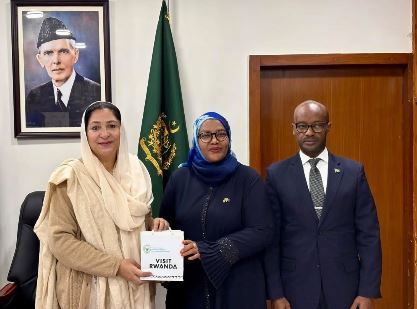
ISLAMABAD, JAN 19 /DNA/ – Ambassador Haririmana Fatou, High Commissioner of Rwanda to Pakistan, paid a courtesy call on Ms. Wajiha Qamar, Minister of State for Federal Education and Professional Training of Pakistan.

During the meeting, both sides reaffirmed their shared commitment to further deepen Rwanda–Pakistan cooperation, particularly in the fields of information technology, nursing, health, artificial intelligence, skills development, and teacher training.

The discussions underscored the importance of building strong educational and professional linkages between the two countries, with a special emphasis on capacity building and knowledge exchange.

A key highlight of the meeting was the reaffirmation of their strong resolve to advance girls’ education, recognizing it as a cornerstone of inclusive and sustainable development. Both officials agreed that empowering women through education is essential for driving social progress and economic growth.

The meeting reflects the growing partnership between Rwanda and Pakistan, as both nations seek to collaborate in areas that can uplift communities and strengthen human capital.

Stay Connected

64FansLike
60FollowersFollow

Latest Reviews

Exchange Rates

USD - United States Dollar
EUR
1.14
GBP
1.34
AUD
0.70
CAD
0.71