Home Blog Page 290

UK aims for £40bn in education exports by 2030

UK aims for £40bn in education exports by 2030

ISLAMABAD, JAN 20 /DNA/ – As part of the UK Government’s plan for national renewal, education is being turbocharged as a major engine of UK economic growth, as UK Ministers set out a new International Education Strategy to export the country’s world-class education and skills offer worldwide.

The strategy sets a clear ambition to grow the value of education exports to £40 billion a year by 2030, backing providers to deliver UK education overseas in new and expanding markets.

Education is already one of countries most valuable exports, bringing in £32 billion to the UK economy annually and worth more than the automotive or food and drink industries.

Education exports include UK schools, colleges and universities delivering British education overseas, international students studying in the UK, and UK qualifications, training and digital learning sold abroad.

The International Education Strategy urges UK providers to take advantage of the UK’s unique position and meet rising global demand for high-quality education. And it will back them by helping to remove the red tape to expand overseas.

Unlike the previous strategy released in 2019, this approach removes targets on international student numbers in the UK and, while continuing to welcome international students, shifts the focus towards growing education exports overseas by backing UK providers to expand internationally, build partnerships abroad and deliver UK education in new markets.

This strategy goes further by backing providers to expand overseas and ensure top students around the world can access a world-class UK education on their own doorsteps.

Supporting overseas education and international partnerships will help universities to diversify and strengthen their business models, widen access to UK qualifications, and support jobs and investment at home.

The strategy is part of the Government’s plan for national renewal, boosting the reputation of our world-class universities, cutting red tape and strengthening a globally competitive education sector.

Education Secretary Bridget Phillipson said:

“UK education is one of our most valuable exports and this strategy backs the sector to go even further – underlining our commitment to fuel UK growth.

“By expanding overseas, our universities, colleges and education providers can diversify income, strengthen global partnerships and give millions more access to a world-class UK education on their doorstep, all whilst boosting growth at home.

“This strategy and our Plan for Change, will drive growth that delivers for our economy and for communities across the UK, as well as our standing in the world.”

The £40 billion target is grounded in strong recent growth across the sector, reflecting rising global demand for UK education, sustained growth in international enrolments, expanding transnational education overseas, as well as expected digital education exports.

Minister for Trade Chris Bryant said:

“Education exports are a major UK success story, and we’re on track grow the sector to £40 billion by 2030, powered by world leading providers driving digital learning, AI enabled innovation and future skills development.

“With a world class system and deep international partnerships, the UK is exceptionally placed to expand its global footprint and ensure that this country’s education continues to set the standard worldwide.”

Alongside economic growth, the strategy strengthens the UK’s global soft power by deepening international partnerships and long-term relationships through education.

UK universities count more than 50 current world leaders among their graduates, highlighting the lasting global influence education in this country.

The strategy sets out the Government’s commitment to unlocking further growth for the sector by identifying partnership opportunities and new markets, including through UK Ambassadors as Local Education Champions overseas.

A new Education Sector Action Group will work with the International Education Champion, UK universities, colleges and schools to help unblock barriers to trade to expand overseas.

International students in the UK already contribute around £560 to the pocket of every UK citizen.

Foreign, Commonwealth and Development Office Minister Baroness Chapman said:

“Our world-class universities and education providers are among the UK’s greatest assets, driving innovation, creating jobs, and attracting investment while forging strong connections across the globe. Generations of world leaders, top scientists and great cultural figures have benefited from some form of UK education, creating lasting partnerships and strengthening links between countries.

“Through this ambitious strategy, we will grow education exports and work with our diplomatic network and the British Council to strengthen education systems around the world.”

Professor Malcolm Press CBE, President, Universities UK:

“Universities UK warmly welcomes the UK Government’s new International Education Strategy.

“It signals a renewed commitment to fostering the global reach, reputation and impact of our universities, and recognises the huge benefits this delivers to our global partners and to communities across the whole of the U.K.

“The new strategy provides a clear framework for growth and partnership that will benefit learners, the economy, and the UK’s international standing.”

Around 620,000 students are already registered with UK universities overseas, with campuses and distance learning across nearly 200 countries and territories.

This comes alongside new government action to ensure those coming here to study are genuine students, and education providers take their responsibilities seriously.

Universities will be subject to toughened compliance standards and those which fail to meet them will face action, including recruitment caps and licence revocation.

Net migration is now at its lowest level in half a decade, having already fallen by more than two-thirds under this government after it exploded to nearly one million under the last government.

The strategy marks a step up in ambition for UK skills and technical education, ensuring the UK does not stand still as global demand for high-quality training accelerates. Work with education providers and businesses will develop action plans to increase the value of UK education exports.

By backing colleges to expand overseas and build international partnerships, the UK Government is committed to being a forerunner in the global skills market, turning UK expertise into long-term growth, jobs and influence at home.

The strategy strengthens opportunities for UK students to study, work and volunteer abroad, with a sixth year of the Turing Scheme confirmed to support international placements. It comes as the Government has also announced the UK will join the Erasmus+ programme in 2027.
Pakistan envoy meets business council to boost UAE-Pakistan trade

Pakistan envoy meets business council to boost UAE-Pakistan trade

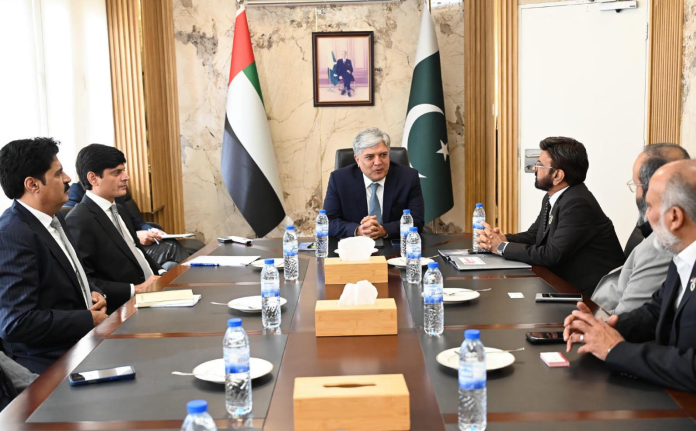
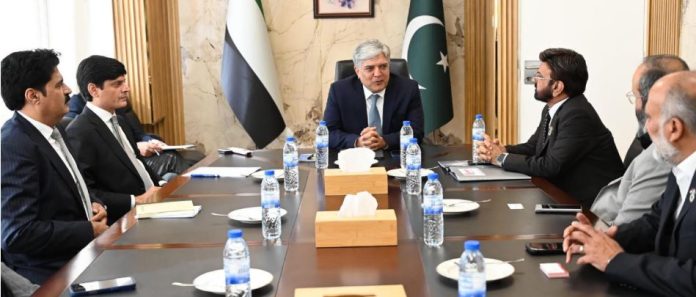
DUBAI, JAN 20 /DNA/ – Ambassador Shafqat Ali Khan held talks with a key business delegation In Dubai today, . The meeting took place at the Consulate General of Pakistan.

The group was from the Pakistan Business Council (PBC) Dubai. It was led by Chairman Muhammad Shabbir Merchant. Several senior management members attended.

The Ambassador praised the PBC’s ongoing work. He highlighted their role in promoting trade and investment between Pakistan and the UAE.

He reaffirmed the full support of Pakistan’s diplomatic missions. This support is for initiatives that strengthen bilateral economic ties.

The meeting aimed to facilitate the Pakistani business community in the UAE. Both sides discussed enhancing economic linkages for mutual benefit.

Spain mourns as train disaster toll rises to 41

ADAMUZ, JAN 20 /DNA/ : Spain began three days of national mourning on Tuesday for 41 people killed after two high-speed trains collided in the country’s deadliest train accident in over a decade.

The disaster took place late Sunday when a train operated by rail company Iryo, travelling from Malaga to Madrid, derailed near Adamuz in the southern Andalusia region.

It crossed to the other track, where it crashed into an oncoming train, which also derailed.

The death toll rose to 41 after the body of a passenger was recovered on Monday evening from one of the Iryo train carriages, the regional government said.

Over 120 people were injured, with 39 still in hospital, including four children, it added.

Flags flew at half-mast on public buildings, television anchors wore black, and cabinet ministers curtailed public appearances as Spain observed the first of three days of national mourning.

Heavy machinery was deployed on Monday to lift the most severely damaged train carriages and give rescuers better access.

The head of Andalusia´s regional government, Juan Manuel Moreno, warned Monday it would take another 24-48 hours “to know with certainty how many deaths have resulted from this terrible accident”.

King Felipe VI and Queen Letizia were scheduled to meet with rescuers and officials in Adamuz later on Tuesday.

Harrowing

Aerial footage of the crash site from Spain’s Guardia Civil police showed the two trains far apart, as rescuers in high-visibility neon vests worked nearby.

Among the survivors is a six-year-old girl who lost her parents, brother and cousin in the crash, according to Spanish media.

The 27-year-old driver of one of the trains was among those killed, daily newspaper El Pais reported.

The collision occurred in a hilly, olive-growing region accessible only by a single-track road, making it difficult for ambulances to reach the area.

Firefighter Angel Uceda, who was among the first rescuers on the scene, told Onda Cero radio that mobile phones were ringing beside injured victims as he entered the wrecked train carriages.

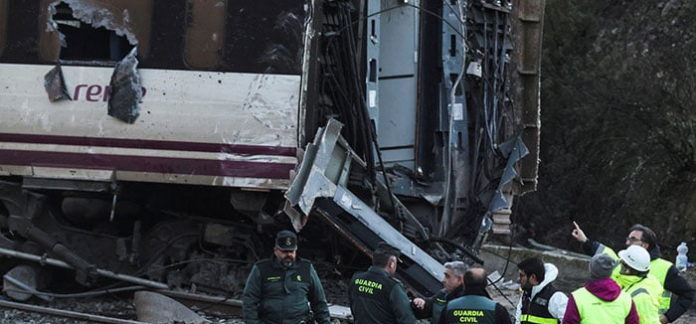
A member of the Spanish Civil Guard searches underneath the wreckage of a train involved in the accident, at the site of a deadly derailment of two high-speed trains near Adamuz, in Cordoba, Spain on January 20, 2026. — AFP

A member of the Spanish Civil Guard searches underneath the wreckage of a train involved in the accident, at the site of a deadly derailment of two high-speed trains near Adamuz, in Cordoba, Spain on January 20, 2026. — AFP

“It was harrowing, but we had to do our job and do what was needed,” he said.

Unlike the 2013 accident, the derailment occurred on a straight section of track, and the trains were travelling within the speed limit, officials said.

Transport Minister Oscar Puente said the first train to derail was “practically new” and the section of the track where the disaster happened had been recently renovated, making the accident “extremely strange”.

The company said around 300 people were on board its service from the Andalusian city of Malaga to the capital, Madrid.

Renfe, the operator of the second train travelling to the southern city of Huelva, said it was carrying 184 passengers.

Solidarity

Human error has “been practically ruled out”, Renfe President Alvaro Fernandez Heredia told Spanish public radio RNE.

Heredia also ruled out speeding as a cause of the accident. He said both trains were travelling just over 200 kilometres (120 miles) per hour, below the 250 kilometres per hour limit for that section of track.

Spain has Europe’s largest high-speed rail network, with more than 3,000 kilometres of dedicated tracks connecting major cities including Madrid, Barcelona, Seville, Valencia and Malaga.

In Adamuz, where white buildings gleam among orange-lined streets, residents rushed to the town hall with supplies as news of the disaster spread.

“We started bringing water, blankets, everything we could,” Manuel Munoz, a 60-year-old olive oil factory worker, told AFP.

Among those offering condolences were Pope Leo XIV and French President Emmanuel Macron.

India PM Modi’s party elects youngest-ever president with eye to youth vote

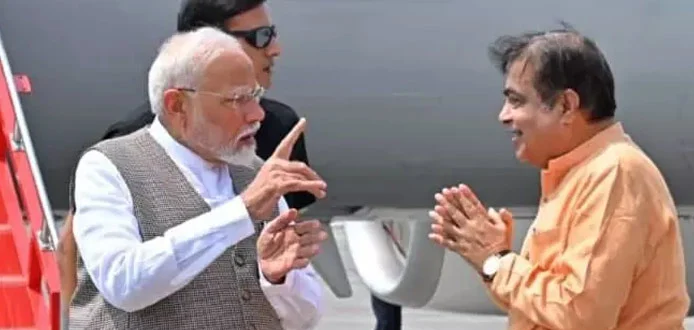
MUMBAI, JAN 20 /DNA/ : Prime Minister Narendra Modi’s Bharatiya Janata Party (BJP) chose a little-known legislator from India’s poorest state as the party’s youngest president on Tuesday, a generational shift in the effort to retain young voters.

Nitin Nabin, 45, takes over from outgoing president JP Nadda, 65, months before key state elections, one of them in the eastern state of West Bengal, which the BJP has never won and is strongly focused on.

A five-time lawmaker from the eastern state of Bihar, Nabin was elected unopposed as the party’s 12th president after Modi and other leaders proposed him.

Hundreds of workers watched at party headquarters in New Delhi as Nabin, his forehead smeared with a vermillion mark and his shoulders wrapped in a scarf with the party symbol, took the oath of office before Modi and four past presidents.

“When it comes to the party, I am a worker and he is my boss,” Modi, 75, said in his remarks, pointing to Nabin, who will serve a three-year term.

In his speech, Nabin repeatedly praised Modi as a generational leader and urged young people to take an active part in politics.

More than 40% of India’s one billion voters are aged between 18 and 39, the Election Commission and analysts estimate.

The BJP suffered a shock setback in the 2024 general election as Modi lost his majority after 10 years in power and had to rely on regional allies to form a government.

But it has since regained ground, winning critical state and civic body elections. The party and its allies govern 19 of India’s 28 states.

Pakistan Ambassador to the UAE Meets Pakistan Business Council Dubai Delegation

ISLAMABAD, JAN 20 /DNA/: Ambassador Shafqat Ali Khan, Pakistan’s Envoy to the UAE, met a delegation of the Pakistan Business Council (PBC) Dubai at the Consulate General of Pakistan today.

The delegation was led by Mr. Muhammad Shabbir Merchant, Chairman PBC, and included management committee members Mr. Kamran Ahmed Riaz, Mr. Iftikhar Ali Tatlah, Mr. Noor Karim Afridi, Mr. Saleem Tabani, and Mr. Muhammad Iqbal Dawood. Mr. Ali Zeb Khan, Trade and Investment Counsellor, along with other officers of the Consulate, were also present during the meeting.

Ambassador Shafqat Ali Khan appreciated the continued efforts of the Pakistan Business Council in promoting trade, investment, and economic linkages between Pakistan and the UAE. He reaffirmed the Embassy’s and Consulate’s support to PBC initiatives aimed at strengthening bilateral trade and facilitating the Pakistani business community in the UAE.

Uzbekistan, Italy strengthen strategic partnership in Tashkent meeting

Uzbekistan, Italy strengthen strategic partnership in Tashkent meeting

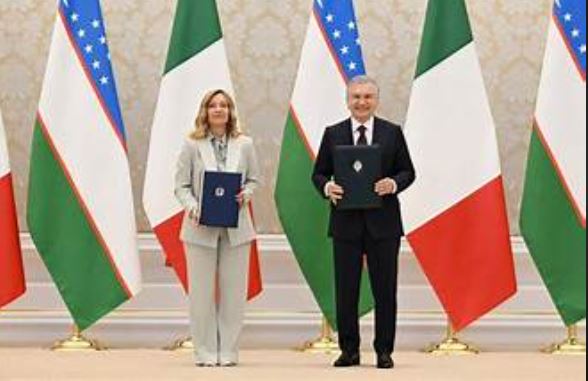
TASHKENT, JAN 20 /DNA/ – In the city of Tashkent, President of the Republic of Uzbekistan Shavkat Mirziyoyev met with the Prime Minister of the Italian Republic Giorgia Meloni, who made a stopover in Tashkent.

Practical aspects of strengthening the strategic partnership and expanding multifaceted cooperation between Uzbekistan and Italy were reviewed.

The consistent implementation of agreements reached at the highest level in the city of Samarkand in May 2025 was noted with satisfaction.

Active contacts at various levels are continuing. Bilateral trade turnover and the number of joint ventures grow steadily. Interregional exchanges, including with Lombardy, are expanding. Quotas have been allocated for the organized labor migration of Uzbekistan citizens.

Large-scale industrial cooperation projects are being implemented in partnership with companies such as Finopera, ANCI, Pietro Fiorentini, Danieli, and others. At the end of last year, a branch of the University of Tuscia was opened in Samarkand.

This year, meetings of the strategic dialogue between the foreign ministries and the intergovernmental commission, as well as the second Forum of Rectors, are scheduled.

Priority attention was given to promoting joint projects in the textile industry, geology, energy, chemicals, construction materials, financial market, and other priority sectors.

An agreement was reached to hold the cross-cultural Days of Uzbek and Italian Cinema. Plans were supported for Uzbekistan’s participation in the next Venice Biennale and for holding exhibitions of applied arts and artifacts in Milan this year.

Views were also exchanged on the international and regional agenda. Following the meeting, President of Uzbekistan Shavkat Mirziyoyev invited Prime Minister of Italy Giorgia Meloni to pay a separate visit to Uzbekistan.

Syria’s Lawyers Union launches first extraordinary conference since the liberation

Syria’s Lawyers Union launches first extraordinary conference since the liberation

DAMASCUS, JAN 20: Syria’s Lawyers Union on Monday launched the first extraordinary conference since liberation, under the theme “Lawyers: Builders of Law and Justice, the Nation’s Pulse,” at Al-Sham Hotel in Damascus, in a step reflecting the legal profession’s role in consolidating justice and rebuilding the state.

Speaking during the conference, Minister of Justice Mazhar al-Wais said that justice is not merely legal texts or formal procedures, but rather a comprehensive system of values, a societal culture and a daily practice, jointly upheld by judges and lawyers within an integrated framework of responsibility.

Al-Wais said the Ministry of Justice has placed among its top priorities the updating of legislation, the development of the administrative and technical infrastructure of the courts, the strengthening of judicial independence, and ensuring the proper application of the law in a manner that achieves justice and preserves the dignity of litigants.

He added that the ministry is keen on constructive cooperation with the Lawyers Union, listening to its views and proposals, and addressing the challenges facing the legal profession.

PTI-backed Allama Raja Nasir Abbas notified as Senate opposition leader

PTI-backed Allama Raja Nasir Abbas notified as Senate opposition leader

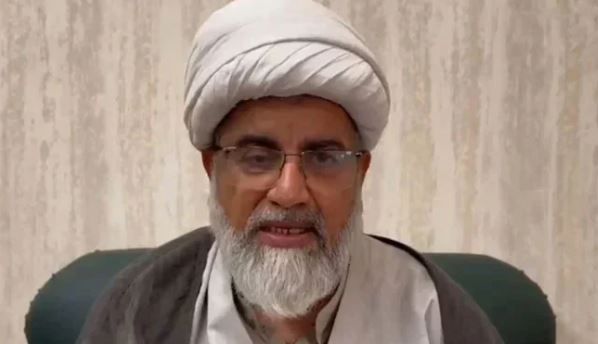
ISLAMABAD, JAN 20: Senate Chairman Yousuf Raza Gilani on Tuesday notified Majlis Wahdat-e-Muslimeen (MWM) chief and PTI-backed Senator Allama Raja Nasir Abbas as the opposition leader in the upper house of parliament.

“In pursuance of sub-rule (3) of Rule 16 of the Rules of Procedure and Conduct of Business in the Senate, 2012, the chairman Senate has been pleased to declare Senator Raja Nasir Abbas as Leader of the Opposition in the Senate, with immediate effect,” said a notification issued by the Senate Secretariat.

The post has been lying vacant since August last year, when the then-opposition leader in the upper house of the parliament, Shibli Faraz, was disqualified by the Election Commission of Pakistan (ECP) following his conviction in cases related to riots on May 9, 2023.

The development came a week after Tehreek Tahafuz Ayeen-e-Pakistan (TTAP) chief Mehmood Khan Achakzai was appointed leader of the opposition in the National Assembly.

Speaking on the floor of the upper house after his notification, Raja Nasir reaffirmed his loyalty to jailed PTI founding chairman Imran Khan and said he would uphold principles without compromise.

The Senate opposition leader called on politicians and parliamentarians to focus on the needs of ordinary citizens rather than elite interests.

He highlighted the struggles of people who lack funds for medicine, electricity, and their children’s education, stressing that the country’s governance should prioritise public welfare. He urged lawmakers to enact laws and policies that directly benefit the people.

Raja Nasir called for freedom of expression, urging authorities to allow people to speak without fear. The opposition leader said resolving the political crisis required the release of the PTI founding chairman, adding that parliament should raise its voice for the release of political prisoners.

Speaking on the Senate floor, Rana Sanaullah congratulated Allama Raja Nasir Abbas on his appointment as Leader of the Opposition and called for collective efforts to strengthen the political system.

“I congratulate Allama Sahib on becoming the opposition leader and hope he will uphold the highest traditions of this House,” Sanaullah said.

Referring to post-election concerns, he remarked: “You say the vote was not respected on February 8 — has this happened for the first time?”

Drawing parallels with past elections, he added: “In 2018, our position was that the results of 45 seats were changed.”

Sanaullah said a commission headed by Pervez Khattak was formed but met only once, saying: “If we do not move beyond February 8, then 2018 will also keep coming up.”

He stressed the need to work together on improving the system and discussing ECP and rules.

Why Greenland Suddenly Matters

Why Greenland Suddenly Matters

by Muhammad Mohsin Iqbal

Greenland, for centuries perceived as a silent expanse of ice at the edge of the known world, has emerged as one of the most consequential pieces on the contemporary geopolitical chessboard. What was once regarded as inhospitable and peripheral is now viewed as pivotal, even decisive, in shaping future balances of power. The renewed American fixation on Greenland, particularly under President Donald Trump’s return to office, is rooted not in impulse but in a sober assessment of geography, resources, and the profound transformations unfolding in the Arctic.

Trump’s earlier proposal in 2019 to purchase Greenland was initially dismissed as eccentric. Yet with the accelerating effects of climate change and intensifying great-power rivalry, the logic behind that idea has gained strategic coherence. The current discourse is less about literal annexation and more about leverage, influence, and long-term control. Diplomatic overtures, economic incentives, and deliberately provocative rhetoric have all been employed to signal that Washington considers Greenland essential to its national security calculus. The language of choice—suggesting an “easy way or a hard way”—is designed less to announce imminent action than to apply pressure and redefine negotiating boundaries.

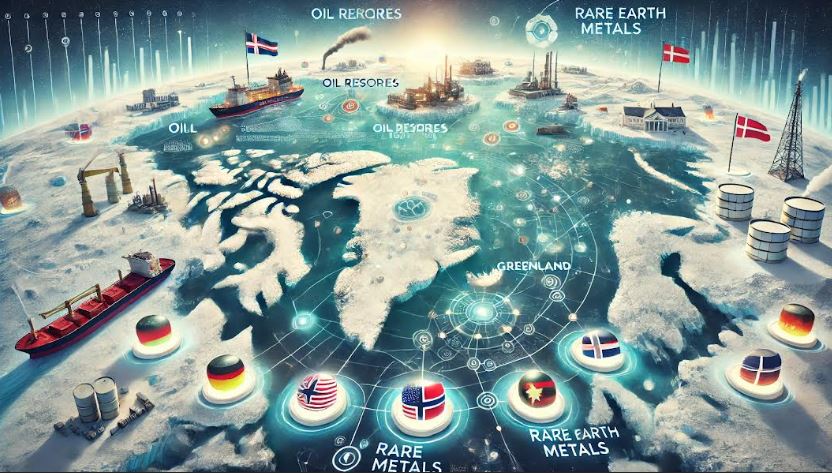
At the core of this interest lies the Arctic’s transformation from a frozen backwater into a navigable and contested space. Melting ice is opening sea routes that dramatically shorten distances between Asia, Europe, and North America. Voyages that once took forty days via the Suez Canal may soon be completed in little more than twenty through Arctic passages. Greenland occupies a commanding position at the Atlantic entrance of these emerging routes, particularly near the Northwest Passage and the future transpolar corridor. Influence over Greenland would grant the United States a vantage point from which to monitor, secure, and potentially shape the rules governing these new arteries of global trade and military movement.

Equally compelling is what lies beneath Greenland’s ice. The island is believed to possess significant deposits of rare earth elements, indispensable for advanced electronics, renewable energy technologies, and modern defence systems. In an era where China’s dominance over rare earth supply chains has become a strategic vulnerability for the West, Greenland offers the prospect of diversification and autonomy. Added to this are potential reserves of oil, gas, and other minerals, whose exploitation becomes more feasible as ice retreats. For an administration intent on economic self-reliance and industrial strength, Greenland appears not merely as territory, but as strategic insurance.

Yet Greenland’s allure is not purely material. There is a symbolic dimension that resonates deeply with Trump’s political ethos. Territorial expansion, bold deal-making, and visible assertions of power align neatly with an “America First” narrative that prizes dominance and psychological advantage. In this framing, Greenland becomes a statement as much as a strategy—a demonstration that the United States intends to shape the future rather than react to it.

This ambition, however, collides with political, legal, and moral constraints. Greenland is an autonomous land whose people have repeatedly and unequivocally rejected the idea of becoming Americans. Their attachment to self-rule, cultural identity, and gradual movement toward greater independence from Denmark is profound. Denmark itself, as a sovereign state and a founding member of NATO, has made clear that any attempt at coercion would be unacceptable. Such a move would not merely strain alliances; it could shatter them, calling into question the very foundations of the post–Second World War order built on respect for sovereignty.

The repercussions of any forced acquisition would be far-reaching. NATO unity could fracture, European allies might impose diplomatic and economic penalties, and international institutions would likely condemn the act as illegal. The anticipated economic benefits of resource access could quickly be outweighed by the costs of military deployment, legal disputes, market volatility, and the long-term obligation to subsidise infrastructure and services for a small, remote population. Within the United States, such an action would provoke intense domestic division, with supporters hailing strategic boldness and critics warning of imperial overreach and constitutional crisis.

Rival powers would almost certainly respond. Russia, which has heavily militarised its Arctic frontier and views the region as central to its future, would regard expanded U.S. influence in Greenland as a direct challenge. Increased patrols, strategic signalling, cyber activity, and closer coordination with China could follow, accelerating an Arctic arms race. What is framed as a move for security could thus generate new insecurities, heightening the risk of miscalculation in a fragile environment.

Environmental and humanitarian concerns further complicate the picture. Accelerated resource extraction could worsen ecological damage, intensify ice melt, and threaten Arctic biodiversity. Greenland’s indigenous communities might face displacement or erosion of rights, transforming a strategic project into a moral dilemma with global repercussions.

Ultimately, the secrets Greenland may reveal extend beyond minerals, shipping lanes, or military bases. They speak to the nature of power in an era defined by interdependence, climate change, and contested norms. Greenland stands at the intersection of ambition and restraint, opportunity and risk. In seeking to unlock its strategic value, the world may discover that the greatest revelation lies not in Greenland itself, but in how nations choose to pursue power in a rapidly changing world.

U.S. CDA praises Sialkot, seeks stronger trade ties

U.S. CDA praises Sialkot, seeks stronger trade ties

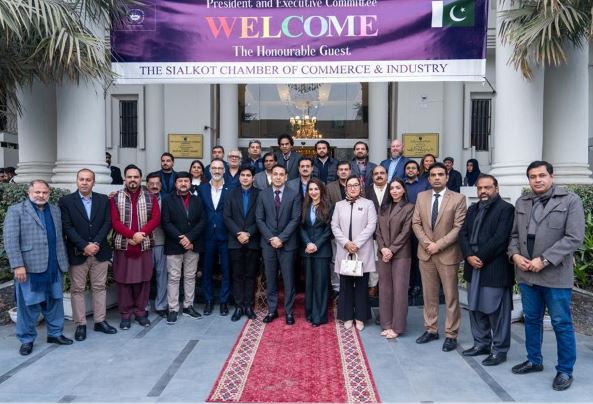
SIALKO, JAN 20 /DNA/ – During her recent visit to Sialkot, U.S. Chargé d’Affaires to Pakistan Natalie A. Baker praised the city’s vibrant business community and underscored the potential for even stronger bilateral U.S.-Pakistan trade and investment to increase mutual prosperity.   

Speaking at a lunch hosted by the Sialkot Chamber of Commerce, CDA Baker underscored the depth of the bilateral commercial relationship.  Highlighting the growth in trade between the United States and Pakistan, which was projected to reach over $8 billion in 2025, she said, “Expanding trade reflects a strong foundation that highlights the positive impact of U.S. economic engagement in Pakistan and globally. 

 The United States and Pakistan are pursuing a fair and balanced trade relationship that creates prosperity for both our nations.”  For more than two decades, the United States has been Pakistan’s largest export market and a leading investor, presenting significant opportunities for expanded trade and shared prosperity. 

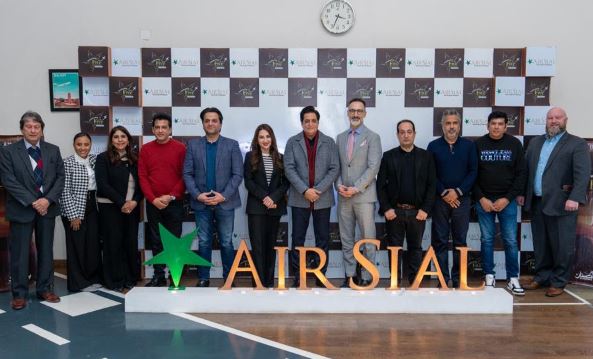
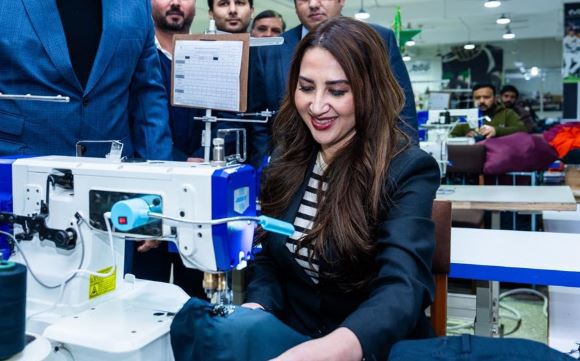
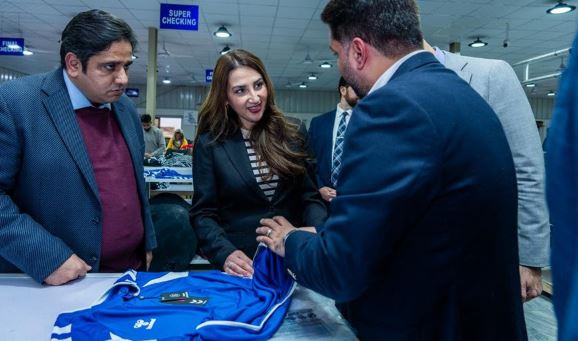
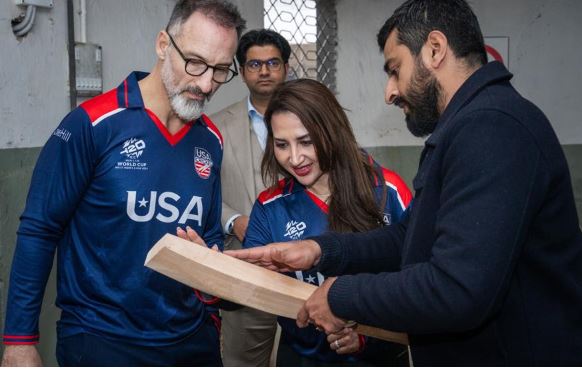
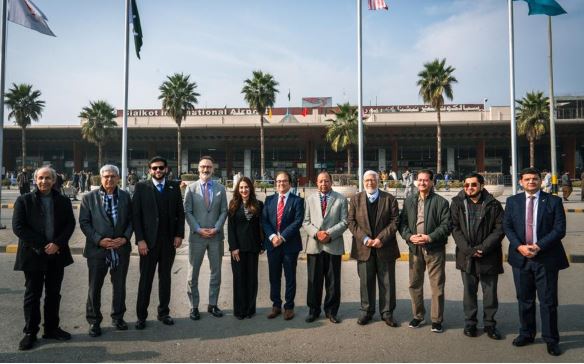
CDA Baker also visited Forward Sports, First American Corporation Limited (FAC), and CA Sports, globally recognized leaders in Sialkot’s sporting goods industry; toured the Sialkot International Airport; and met with AirSial’s leadership.  These engagements underscored the importance of U.S.-Pakistan collaboration in global supply chains, job creation, and trade-led economic development.  

For example, nearly 70 percent of FAC’s exports are to the United States, highlighting the strength of American markets and consumer demand.  “We are committed to bringing the best of American technology, innovation, and entrepreneurship to help create jobs and uplift communities in both our countries,” CDA Baker said. 

The visit coincides with the United States’ celebration of the 250th anniversary of the Declaration of Independence.  It is not just a reflection on the past – it’s a launchpad for the future and leadership in innovation, commerce, and global engagement. 

 As the United States celebrates the ‘American Decade of Sports’ as host of several major upcoming global sporting events, the country continues to strengthen partnerships that connect people, markets, and cultures through sports and business. 

“The United States remains deeply invested in Pakistan and its people,” CDA Baker added, “building on a partnership that dates back to Pakistan’s independence and continues to grow through trade, innovation, education, and cultural exchange.” 

Stay Connected

64FansLike
60FollowersFollow

Latest Reviews

Exchange Rates

USD - United States Dollar
EUR
1.14
GBP
1.34
AUD
0.70
CAD
0.71